Tag: Government

  • Govt. invites applications for e-auction of first batch of phase III FM Radio stations

    Govt. invites applications for e-auction of first batch of phase III FM Radio stations

    NEW DELHI: A notice was issued by the Information and Broadcasting Ministry (I&B) inviting applications for the first batch of phase III FM auctions for 135 stations in 69 cities which already have FM channels.


    In addition, e-auction will be held in eight new cities in Jammu and Kashmir and the northeastern states.


    While the Notice Inviting Applications (NIA) was issued on 2 March, the pre bid conference will be on 10 March, the last date for seeking clarifications on NIA will be on 11 March, clarifications to NIA on 16 March, last date for submission of applications on 23 March, publication of ownership details of applicants on 7 April, Bidder Ownership Compliance Certificate on 10 April, pre-qualification of bidders on 17 April or completion of requisite formalities whichever is later and a mock auction within a week of that and the main e-auction a week thereafter.


    The Ministry has placed the full details of the formalities on its website mib.nic.in and has appointed M/s C1 India Private Limited as the ‘Auctioneer’ to advise the Government on the Auction. Administration of the e-auction shall also be the responsibility of M/s C1 India Private Limited.


    It has also placed on the website the reserve price of each city and station for e-auction.


    The Auction shall be a Simultaneous Multiple Round Ascending (SMRA) e-auction, conducted over the internet. Bidders will be able to access the Electronic Auction System to be used for participation in the auctions using web browsing software: Internet Explorer 11.x, or Mozilla 34.x or Google Chrome 37.x.


    The EAS is a designated computer resource for the receiving of electronic records under the provisions of Section 13(2) of the Information Technology Act 2000, as amended from time to time.


    Prior to the auction, bidders will have to procure Class-III Digital Signature Certificate(s) (DSC) for signing and encryption issued by any valid Certifying Authority (approved by Controller of Certifying Authorities) in India which is mandatory for accessing the Electronic Auction System (EAS). The details of the licensed Certifying Authorities (CAs) are available on www.cca.gov.in.


    Winning Bidders of FM channel(s) in each city shall be determined in the first stage, a Channel Allocation Stage, which will allocate FM channel(s) simultaneously for all the cities. The second stage, a Frequency Allocation Stage, will identify specific frequencies for the winning bidders. 
  • Ban on live anti terror ops a good move, feels news industry

    Ban on live anti terror ops a good move, feels news industry

    MUMBAI: The indelible, dark night of 26 November 2008 (26/11 to us all) and its aftermath is still freshly impinged on our minds. The real-time coverage of the Pakistani Lashkar-e-Taiba terror attacks in Mumbai, not only brought out the ugly face of humanity but also had to face a lot of flak for reckless coverage.

    The frame by frame in-depth coverage of the rescue operation shown on television was condemned by many as it had every chance of jeopardising the entire operation.

    Soon afterwards, the television channels had agreed to ban live phone-ins, avoid broadcasting security operations and drop repeated shots post violent crime as part of a self-regulatory exercise on the part of private broadcasters.

    However, the Home Ministry under the new Narendra Modi-led government is once again considering a   ban on live coverage of anti-terror operations by nation-wide television channels.

    The ban on live coverage of anti-terror operations is not yet official. During the UPA government’s time, Information and Broadcasting (I&B) Minister Anand Sharma had drafted a law for a ban, which was apparently scrapped by the then PM Manmohan Singh.

    The Home Ministry has once again asked the I&B Ministry to amend the rules to stop the airing of such terror-based events and wants more amendments to the 15-point Programme Code prescribed under the Cable Television Network Rules 1994 for this purpose.

     The rules were amended in 2009 when private broadcasters were brought within the ambit of the Cable Television Networks Rules. In 2011, another advisory was issued highlighting that a few TV channels telecast interviews with terrorists or terrorist groups, which according to the Government could help them advance their propagandist agenda.

    In 2012, in a stinging rebuke to the electronic media, the Supreme Court said that driven by commercial interests, TV channels put national security in jeopardy by their “reckless” 24×7 live telecast of security operations against the 10 terrorists during the 26/11 attacks on Mumbai.


    “The shots and visuals that were shown live by TV channels could have also been shown after all the terrorists were neutralised and the security operations were over. But in that case, the TV programmes would not have had the same shrill, scintillating and chilling effect and would not have shot up the TRP ratings of the channels,” a bench of Supreme Court judges Aftab Alam and C K Prasad said. “It must, therefore, be held that by covering live the terrorists attack on Mumbai in the way it was done, Indian TV channels were not serving any national interest or social cause,” they said.

    On the matter of the Home Ministry writing to the I&B Ministry and seriously considering the amendment, the News Broadcasters Association (NBA) president and India TV chairman and editor-in-chief Rajat Sharma is not unduly rattled. He goes on to say, “There is nothing new in this. This was discussed soon after the Mumbai terror attacks and in the interest of national security, broadcasters had agreed in principle.”

    NDTV Group executive director and CEO Vikram Chandra feels that it is a good move because there should be clear-cut guidelines on what should and shouldn’t be shown. “I don’t think they can ban channels from showing it, but can only amend the guidelines so that there is clarity. Also, the government needs to be careful on how they proceed in the matter as the whole press will stand up against any ban or censorship.”

    He further adds, “We also want to work towards what is good for the whole country. But there is a difference between censorship and amendments and that gap shouldn’t be nullified.”

    Times Now consultant and strategic affairs expert Maroof Raza approves of any such amendments taken in the near future. “It is a good idea in general since enthusiastic but irresponsible reporting can have negative consequences,” he opines.

    The debatable amendment is now hanging in the balance….


  • 2014: A year of improved subscriber numbers

    2014: A year of improved subscriber numbers

    The year 2014 has been better than the previous year, in terms of the share of numbers for all direct to home (DTH) players. Subscriber additions were higher and there was more stability in the overall industry. In terms of price discounting, people were more rational through the year. Overall, it has been a much better year than 2013.

    Increased subscriber numbers and ARPU

    Overall additions in subscribers, for all the DTH players, were higher in the magnitude of 25-30 per cent than the previous year.

    That apart, the churn came down substantially, not only for Dish TV, but for all the other DTH players as well.

    2014 also saw a rise in the Average Revenue Per User (ARPU). But there are still problems, since the whole cable TV system hasn’t stabilised and gross billing hasn’t been fully implemented. Though, we do see some encouraging signs, in terms of people getting down to doing that now.

    DTH has been able to take price increases through the year. There was a price increase which took place in April, at the magnitude of 8-9 per cent. But the big collection from the ground will happen only once cable TV gets its act together.

    Different people calculate ARPU differently. For example, Dish TV calculates it on subscriber revenue, whereas Airtel Digital TV, as per its published figures, looks at gross numbers, and so do others. So there is no common matrix being used across the industry for definition of ARPU. But having said that, at the consumer level, the consumer prices are in the average price range of Rs 250-275.

    Challenges in 2014

    One of the major challenges that we continue to present to both the state and central government is on the high level of taxation on DTH. Apart from the taxation element which we have been presenting, we are the only industry which is subject to service tax and entertainment tax. While we were hoping for some relief in the last budget, we didn’t get that, we hope we will get some relief in the coming year.

    Secondly, there is no clarity on the licence fee issue, even though the Telecom Regulatory Authority of India (TRAI) issued a recommendation, there has been no action on that front.

    So while we lived in continued uncertainty in 2014, we hope that the government will take some steps in 2015. People have invested more than Rs 25000 crore in the industry, so at least we have the right to know what the law of the land will be going forward.

    The new launch Zing

    It has been an extremely successful product in all the geographies we launched. The specific proposition that we had, which was regional first and targeting the entire product mix around consumption has clicked very well with the customers. So we are very pleased with the way things have come.

    Highs and lows of 2014

     For Dish TV, it has been a fairly stable year. We regained our share leadership for about last three to four quarters. We launched a significant and tactical product in Zing which has helped us capitalize on the phase III and IV areas. The high point has been that we have been able to, post the balance sheet adjustment that we did last year, been able to get back on the growth path, which is what we have always said and we achieved that in 2014.

    The low point is at two levels: At one level, the whole issue of taxation and licence fee kept dragging for the whole year. Secondly, we expected the cable TV and broadcaster system to stabilize the whole regime. The whole issue of getting proper addressability and customers to actually choose and compare products has still not happened.

    Delayed Digitisation

    First and foremost, the manner of digitisation needs to be addressed. What has happened in the first two phases is simply the change of pipe. This has not been supported by addressability and that is the reason there has been no or marginal change in the revenue flow.

     Until and unless these issues are addressed, a non-addressable digitisation is of no help to anybody, neither to the government nor the stakeholders. We hope that by the time they get down to it, we will have some better roadmap of how to achieve that.


    (These are purely personal views of Dish TV CEO R C Venkateish and indiantelevision.com does not necessarily subscribe to these views)

  • ‘Digital India Conclave 2014’ to intensify the ‘Digital India’ initiative

    ‘Digital India Conclave 2014’ to intensify the ‘Digital India’ initiative

    MUMBAI: The Narendra Modi led Indian government officially clicked through the ambitious ‘Digital India’ programme a few months ago. The vision is simple: to usher India into the digital age where each and every citizen can experience the impact. But this simple vision will require a lot of hard graft and investment towards the right kind of infrastructure.

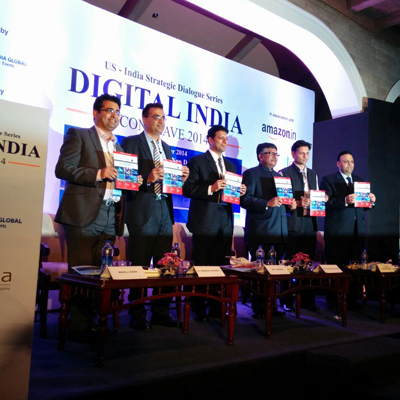
    As a bridge between this vision and reality, India Inc. along with FICCI, Invest India and Chase India is organising a ‘Digital India programme’, a series of online and offline activities pivoting around two roundtables in New Delhi and Washington DC.

    India Inc. has created its own ‘Digital India’ initiative which ties in with the India-US Partnership Hub to bring in a series of online and offline programmes. It will explore the ‘Digital India’ vision and trigger dialogue to plug into this bold new programme.

    This online-offline integrated programme brings in perspectives and participation from senior policy decision makers within government and industry around a discourse to achieve the following objectives:

     • Identify the challenges and opportunities in the ‘Digital India’ initiative
    • Identify synergies that can be created between industries and the government to successfully implement the initiative
    • Explore how the India US collaboration could help achieve the ‘Digital India’ vision
    • Involve key stakeholders in defining a roadmap that will lead to a truly ‘Digital India’
    • Produce a series of online and offline activities to facilitate discourse culminating in a bespoke online publication
    • India is finally coming of digital age and we aim to provide an incisive new digital hub for this new age.

     Commenting on the initiative, Avian Media CEO and Chase India director Nitin Mantri said, “We are proud of this association with India Inc and a key aspect of this initiative is our first Digital India Conclave to be held in New Delhi on 5 December 2014. The sessions will focus on the prominence of the digital advancement across sectors and the requirement to streamline digital with the core business in order to initiate the Digital India initiative.”

    The conclave is in association with Amazon.in, Google and Qualcomm is supported by TCIL and NIXI and is the first phase of the programme which will bring together around 100 -150 key stakeholders across government/public sector, the private sector as well as other influencers such as think tanks, media and specialist experts.

    The first conclave of the ‘Digital India’ Programme is on 5 December 2014 in Delhi while the second conclave will be held in Washington in January 2015.


  • TRAI says get spectrum from Defence, denies Govt. has no authority to ask BSNL to return unused spectrum

    TRAI says get spectrum from Defence, denies Govt. has no authority to ask BSNL to return unused spectrum

    NEW DELHI: Expressing concern that the constrained supply of spectrum poses a real threat to the continuity of services being provided to millions of subscribers by the expiry licensees, the Telecom Regulatory Authority of India (TRAI) has reiterated its earlier recommendation for a dialogue at the level of the Ministers for Finance, Communications, Defence to ensure the availability of additional spectrum for commercial use.
     
    In a letter to the Telecom Secretary, the Authority has said the non-availability of sufficient spectrum is the biggest impediment to the realisation of the stated goals in NTP- 2012 for broadband proliferation. The Authority re-emphasised the need to increase the supply of spectrum.
     
    The letter was in response to the DoT’s reference of 14 November seeking some clarifications on recommendations on Valuation and Reserve Price of Spectrum Licenses expiring in 2015-16 sent on 15 October.  
     
    There is no change in the reserve prices for spectrum in the 900 MHz and 1800 MHz bands from what were recommended earlier.
     
    The   Authority reiterated that steps should be  taken to  make available additional spectrum in  the  900, 1800 and 2100 MHz bands by  taking back 1.2  MHz of 900 MHz spectrum from BSNL,  utilising idle  1800 MHz spectrum in  the  Defence band and vacating spectrum held in excess of 20 MHz by Defence in the 1800 MHz ban.
     
    The Authority’s recommendation for the implementation of E-GSM band is one of the ways to enhance the supply of 900 MHz band spectrum which is considered by operators (the market) to be the most valuable spectrum. The option needs to be given serious consideration by the government.
     
    In the 2100 MHz band, an additional 3 blocks of 2×5 MHz of spectrum can be made available by swapping spectrum in this band with Defence which can be assigned spectrum in the 1900 MHz   band (1910-1920/1980-1990 MHz).
     
    The spectrum in the 800 MHz, 900 MHz, 1800 MHz and 2100 MHz bands should be auctioned together (simultaneously). Uncertainty would continue if auction of spectrum in the 2100 MHz is taken up later.
     
    The government should announce its decision on the adoption of APT700 band plan. It should also announce the roadmap for the auction of spectrum in 700 MHz band. This should be done before the conduct of the upcoming auctions in 900/1800 MHz band. These two decisions will help in the faster development of the device eco-system. It will also help TSPs to take an informed decision when bidding for the upcoming auction in 800/900/1800 MHz bands.
     
    The Authority had recommended that 1.2 MHz spectrum in 900 MHz band should be taken back from BSNL from all the LSAs where licences expire in 2015-16 except in Punjab. In lieu, BSNL should be assigned 1.2 MHz in the 1800 MHz band only in those LSAs where its spectrum holding in that band is less than 3.8 MHz in this band i.e. in Gujarat, Rajasthan and West Bengal. However, the DoT said it had no jurisdiction to take back spectrum from BSNL to which TRAI has said the PSUs (MTNL/BSNL) were awarded the spectrum in the 900 MHz band administratively and free of charge. Both the PSUs are government-owned companies and the government has every right to take the spectrum back from them if they are not using it optimally and efficiently. “It is inexplicable to take the stand that the government, being a sovereign and as owner of the PSU companies cannot resume spectrum given to the PSUs free of charge.” Besides, the DoT, being the licensor, has to ensure that spectrum is put to optimal use and an operator does not squat on invaluable spectrum.
     
    In this context, TRAI said it was worth recalling that being government companies, the government assigned 3G and BWA spectrum to them without their participation in the auctions. This spectrum was literally foisted on the PSUs. Later, when they just could not use the BWA spectrum, the government allowed them to surrender BWA spectrum and decided to refund the payment made by these PSUs.


  • NBA and IBF to approach govt bodies regarding broadcasting woes

    NBA and IBF to approach govt bodies regarding broadcasting woes

    MUMBAI: The broadcasting industry of India has been facing several issues right from carriage fees to the imposition of the ad cap. In order to reduce the burden on the broadcasters, the Indian Broadcasting Foundation (IBF) and the News Broadcasters Association (NBA) have now decided to unite and present their views to the highest authorities in India.  


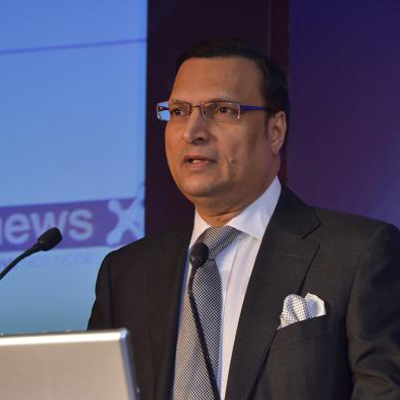
    India TV chairman and editor in chief Rajat Sharma who is also the NBA president and the IBF vice president of strategic affairs, said that the two bodies will meet the Prime Minister Narendra Modi, the Finance Minister Arun Jaitley and the Information and Broadcasting Minister Prakash Javadekar to make them aware about the growing cancer called carriage fees. ”We will also show a revenue model that MSOs can adopt so that we don’t become dependent on carriage fees,” said Sharma.    


    Regarding ad cap he said that they will show the ministers the kind of revenue loss the channels will incur if the 10+2 minute ad cap is implemented. The case is currently being fought by the NBA in the Delhi High Court.  “We will request for the 12 minute advertising cap to be removed from the licencing conditions,” he said. The NBA president added that no channel, be it a news channel or a GEC, wants to show more than five minutes of advertising but the revenue model forces them to do so. “None of us want to compromise on programming,” he said.


    The new ratings system that will be applicable once BARC India starts its operations, should be transparent, he said. ”Till the time these issues are not addressed, the industry will keep suffering,” he opined.   


    While speaking to indiantelevision.com, Sharma said that the meeting is expected to happen in the next few days.


    Sharma was addressing a keynote at the Seventh Indian News Television Summit, organised by indiantelevision.com where he discussed the role of a news channel and the challenges and hurdles that they face.

  • “Govt needs to look at broadcast as an important sector”: Uday Shankar

    “Govt needs to look at broadcast as an important sector”: Uday Shankar

    MUMBAI: It was in September that Star India’s Uday Shankar was once again handed over the reins of Indian Broadcasting Foundation (IBF), and since then, he has been working on a three-point agenda.


    Says the man who has been very vocal about his views on digitisation in India, “When you are heading an organisation like IBF, there are three things that we all need to look at. First and foremost is digitisation. It is the most fundamental thing that the industry requires and so we need to ensure that we engage with government and put the digitisation road map back on track.”


    The second is the carriage fees for both big and small channels, particularly for niche channels which are dying under the weight of this. He points out that the investment done by niche channels on content is totally destroyed because they don’t have the money. “Most of them are going bankrupt and carriage fee is the single biggest destructive influence on the industry. The key objective of digitisation was that it would expand carriage capacity and the carriage fees will get substantially reduced or would go away. That has not happened. We need to work on that,” he says.


    Thirdly, the foundation needs to make sure that the new government looks at broadcast as an important sector. “The government is genuinely reviewing it also,” he adds.


    The view at the IBF , currently, is that broadcast will play a huge role in the Narendra Modi government’s agenda of creating more jobs, creating more opportunities, entrepreneurship and wealth for people. “We as IBF want to take the plan to the government and tell them the way we can carry forward the government’s agenda,” says Shankar.


     With a view to benefit the industry and the customer, the foundation aims to work closely with all its synergies as well as other bodies like BARC India.   

  • New central service officers need to be tech-savvy: Bimal Julka

    New central service officers need to be tech-savvy: Bimal Julka

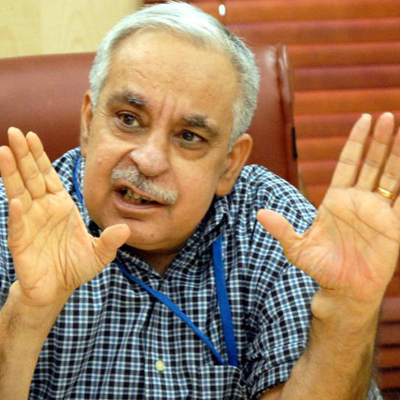
    NEW DELHI: Information and Broadcasting secretary Bimal Julka has said that young officers training in central services need to be tech-savvy and to keep pace with the rapidly changing information and communication scenario.

    The challenge is to respond swiftly and firmly in real-time basis, he added, noting that the electronic media was developing at a very fast pace.

    “Reaching out to the masses at the grass-root and involving them in the development process is one of the biggest challenges before the Government”, he said while delivering his address at the valedictory function of induction training for the officer trainees of Indian Information Service (IIS) – 2013 and 2014 batch – at Indian Institute of Mass Communication.

    Julka said that the role of information service officers was critical in meeting this challenge as it enabled the bridging of the gap between people and the government. He exhorted the officer trainees to develop specialised communication strategies and tools for the successful implementation of various flagship programmes of the government such as Prime Minister’s Jan-dhanYojana, Swachh Bharat Mission, Beti Bachao, and Shramev Jayate Karyakram.

    Julka said his Ministry acts as a facilitator and enabler of government communication


  • Govt will provide all facilities to local STB manufacturers for DAS: Javadekar

    Govt will provide all facilities to local STB manufacturers for DAS: Javadekar

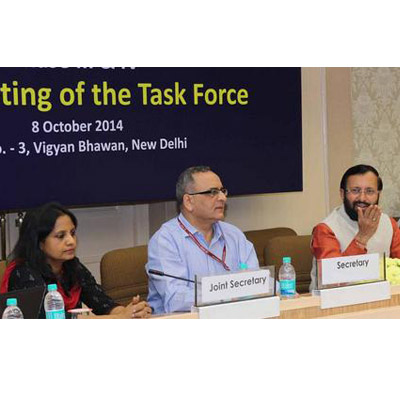
    NEW DELHI: Information and Broadcasting Minister Prakash Javadekar today clarified that the new dates for Phase III and IV for digital addressable system were the outer limits but all attempts would be made to achieve the target well before that.


    Reiterating that the main aim of the new deadlines was to encourage DAS with use of India-made set top boxes, he told the first meeting of the DAS task force for the final two phases here today that the Government has facilitated C form issue for indigenous manufacturers.


    At the outset, he said the entire digitisation programme was an integral part of Prime Minister Narendra Modi’s Digital India plan.


    He also pointed out that he represented the viewer and consumer, who had no voice unlike the other stakeholders who were present at the meeting.


    Javadekar said the cable TV digitisation process aimed at providing the consumer with greater choices and affordable and qualitative options. The overall objective was to be sensitive to the needs and choice of the consumer. The choice of the consumer was paramount in defining the inputs, strategies and roadmap for the remaining phases of the digitisation process.


    He called upon the manufacturers to innovate and explore new technologies for addressing the different consumer tastes and needs.


    The Minister added that in the next phase of digitisation, the price mechanism offered to the consumer would be a key determinant of the process, particularly as DAS was being extended to rural areas. As a consequence, it was mandatory for all stakeholders to sensitise the consumers on the benefits of the process in view of the rural outreach of the programme. 

    Regarding the indigenisation of STBs, the Minister said that the concerns of the industry had been taken up with the Finance and Communications and IT Ministries and STBs were declared as part of ‘telecommunication network’.


    The Minister said the task force ought to identify timelines for implementation so as to ensure the timely completion of Phase III and Phase IV. All issues concerning the key stakeholders needed to be debated at length so as to ensure the mainstreaming of the process with the existing policy. The need of portability of set top boxes so as to provide the option of interoperability to the consumers was an issue that could be looked into by the concerned stakeholders.


    Every meeting of the task force was critical as it identified critical inputs so as to ensure the effective implementation of the timelines and processes. Every viewer should be able to get the best viewing experience over the next two years, he added.


    He also wanted portability for STBs on the lines of portability for mobile phones and said the government and the task force will study this issue.


    Earlier speaking on the occasion, I and B secretary Bimal Julka said the task force provided an important platform to debate and overview issues related to the digitisation implementation. It also provided an opportunity to understand the concern of stakeholders.


    The experience of such meetings during the first and second phase of implementation of the programme had been extremely useful in streamlining the roadmap for effective implementation. He said the consumer is the judge of what he gets to see and content rules. He said a lot of complaints had been received from stakeholders during the implementation of the first two phases but he hoped to get more suggestions as well.


    The meeting saw various stakeholders raise issues concerning them. Taxation was raised by STB manufacturers and auditing was requested by consumer groups. The broadcaster suggested that the deadline should be reduced to 2015 for both phases. No TRAI member attended the meeting.


    Javadekar also assured that there will be sub committees that will monitor the process of digitisation.  

  • Govt sending wrong signals to foreign investors by delaying digitisation: Rahul Khullar

    Govt sending wrong signals to foreign investors by delaying digitisation: Rahul Khullar

    MUMBAI: Recently, a letter written by Telecom Regulatory Authority of India (TRAI) chairman Rahul Khullar pointed out that the government was committing a mistake by extending the deadline for digitisation. Khullar has many more points to present on the regulator and the industry.


    In a conversation with Bloomberg, he said that his views on digitisation were very clear. “It is a very bad decision to defer it. It is bad for digital India, broadband delivery and not in public interest,” he said.


    While the government says that its main aim is to push indigenous production of seven crore set top boxes (STBs) in two years, Khullar feels that this is a ‘pipe dream.’


    Khullar said that last year several investors met him and conveyed that it was a miracle that they managed to get two crore boxes digitised. They also asked that by when will digitisation be completed because they are desperately interested in investments in cable. “By delaying digitisation, you are sending a signal to foreign investors that India isn’t ready for investment yet. This does great harm to public credibility,” he said.


    Meanwhile, rumours are afloat that the government is mulling creation of a ‘super regulator’ that will oversee the communications sector. Khullar believes that it is necessary to keep content and carriage separate. “If your aim is to strengthen TRAI then you don’t need a super regulator, just empower the existing one. But if it is to regulate carriage and content, this is an experiment that hasn’t succeeded in the world,” he said.


    According to him, issues concerning content immediately ‘stir up a hornet’s nest’ that usually involves freedom of speech. “My own sense would be to keep carriage and content separate and ensure that the content regulator has nothing to do with the government. Then you have some sort of fighting chance of regulatory survival,” he said.


    Broadband is a growing medium of revenue that is catching the attention of all in media space. The TRAI is due to come out with a paper on ‘policy issues relating to broadband’ in the next 10 days. “Broadband and convergence is still five to 10 years away. If we are to deliver broadband we need to know how to do it in the cheapest way, who should be involved, what to be done in terms of application and software development,” he highlighted. It will focus on building infrastructure and delivering content.