Tag: Government

  • Allahabad HC accepts Govt’s view to not press on DAS Phase III

    Allahabad HC accepts Govt’s view to not press on DAS Phase III

    NEW DELHI: Taking note of the Government position that “it will not press for requirement of having a set top box as of now,” the Allahabad High Court has put off to 28 January, a petition by the Allahabad Cable TV Operators Welfare Society seeking extension of the deadline of implementation of Phase III of digital addressable system (DAS).


    Justice Dilip Gupta and Justice Mukhtar Ahmad in their order said they did not feel the need of any interim order at this stage.


    The Court took note of the letter from an under secretary in the Information and Broadcasting Ministry citing that according to legal opinion, the extension order issued by the Bombay High Court was valid for the entire country.


    The letter was written to Assistant Solicitor General Chetan Mittal with regard to a similar case in the Punjab and Haryana High Court, which was then dismissed as infructuous.  


    Counsel Vivek Singla had told the Punjab and Haryana High Court that “the Ministry of Information and Broadcasting, Government of India has decided not to press the requirement of having a STB as for now till the decision of the cases, which are pending before various other Honourable High Courts.”


    The Ministry had also sent to Mittal a detailed note on the issue, apart from orders by the Hyderabad and Bombay High Courts.


    The Bombay High Court had relied on the Supreme Court order in the Kusum Ingots and Allous Ltd case where the apex Court had said that a High Court could give an order similar to that given by other High Courts if the circumstances were similar.


    The matter has already been stayed by other High Courts including Sikkim, Odisha, Chhattisgarh for the entire state, and for individual local cable operators in Karnataka and Kerala on the common plea that there was acute shortage in seeding of STBs.


    However, Ministry secretary Sunil Arora had told Indiantelevision.com earlier that the Centre would be moving the Supreme Court in this matter. Ministry sources said that the petition in the apex Court was likely to be an appeal against one High Court with an application that all other matters may also be heard simultaneously.

  • Government’s e-calendar 2016 gives link to AIR, DD News

    Government’s e-calendar 2016 gives link to AIR, DD News

    NEW DELHI: Information and Broadcasting Minister Arun Jaitley said conventional technology did not lose its importance despite the latest trends in technology.


    He was speaking after releasing the Government Calendar 2016, which he said would take forward the developmental agenda of the government highlighting one developmental theme or focus area each month. Each calendar sheet emphasised a particular goal and priority area, which concerned the people at large.


    Minister of State Rajyavardhan Rathore said that the Calendar 2016 enabled people to give feedback to the government. It also gave them access to PIB press releases, tweets and news from All India Radio and Doordarshan news. 


    The calendar is on the theme of ‘Vikas ki Nayi Udaan’. I&B secretary Sunil Arora was also present on the occasion.


    Releasing the digital version of the calendar, Rathore said it had several features to reach the target audience especially the youth and citizens who sought information on programmes and policies. He further stated that success of the schemes of the Government depended largely on the awareness levels of citizens.


    The digital version of the calendar will facilitate the information flow to the youth who were quite aware of new techniques and methods. The Minister also highlighted the initiatives being taken by DAVP to facilitate online functioning including enhancing outreach and promoting transparency. There was also an idea within DAVP to come up with advertisements targeted at specific audiences.


    The calendar has been designed and printed by the Directorate of Advertising and Visual Publicity (DAVP). It is printed in 11 languages apart from Hindi. It is distributed to all Panchayat zilla parishads, centrally aided schools; all missions abroad apart from all elected representatives Central Government Gazetted officers. 


    With the theme ‘Vikas ki Nayi Udaan’ the calendar highlights various developmental schemes launched by Government of India. It centers on Beti Bachao Beti Padhao, Mudra Yojna, smart cities, PMKYV, Jan Dhan Yojna, Digital India, Health, Power and Employment for all, farmers’ welfare and port-led development. The Calendar 2016 ends with Ashtalakshmi that lays stress on development in the North East. The Department of Posts is responsible for distribution of the Calendar across the country.

  • Government launches mobile app to enable citizens to file complaints

    Government launches mobile app to enable citizens to file complaints

    NEW DELHI: Citizens can now register their complaints and even keep track of action taken on a new mobile launched by the Personnel, Public Grievances & Pensions Ministry.


    The app launched by Minister Jitendra Singh is for the Centralized Public Grievances Redress & Monitoring System (CPGRAMS) portal of the Department of Administrative Reforms and Public Grievances (DARPG). 

    A further step has been taken by providing M-access to citizens through mobile phones. A Quick Response (QR) code has been provided on the pg-portal, which can be scanned on to the smart phone after which grievances can be sent from the smart phone directly on to CPGRAMS. 

    Singh said this is another step towards translating Prime Minister Narendra Modi’s vision of “ART of Governance” as spelt out by him, with A for Accountability, R for Responsibility and T for Transparency, forming the bedrock of the Government. He said the goal is that the Administration should be citizen-centric, transparent and responsive. 


    Singh hoped the common public will make maximum use of the mobile app since the mobile phone has emerged as the easiest way of communication from anywhere across the country. 

    DARPG and Department of Pensions & Pensioners’ Welfare Secretary Devendra Chaudhary said the mobile app will not only allow lodging of grievances, but the people can also track the status of the redress of their grievance. 


    The DARPG is also carrying out analysis of the grievances and a systematic response is being worked out on how best to address the grievances, he added. 

    The Mobile App for the CPGRAMS is another innovative initiative of the DARPG, the nodal agency to formulate policy guidelines for citizen-centric governance in the country, redress of citizens’ grievances, being one of the most important initiatives of the department. The DARPG has been making endeavours to bring excellence in public service delivery and to redress grievances of citizens in a meaningful manner by effectively coordinating with different Ministries and Departments of the Government and trying to eliminate the causes of grievances.

  • IT experts & professionals to endorse Digital India

    IT experts & professionals to endorse Digital India

    NEW DELHI: In a break with tradition, four non-celebrities have been appointed as brand ambassadors to promote the Digital India programme.


    The brand ambassadors appointed by the Government for a period of one year include author and ethical hacker Ankit Fadia and computer scientist and author of ‘Sixth Sense’ Pranav Mistry of Samsung in the United States.


    In addition, there are two student brand ambassadors: Satwat Jagwani and Krati Tiwari who are both All India IIT-JEE – Advanced student Toppers for 2015. 

    The Communications and Information Technology Ministry said no other person has been appointed as brand ambassador for Digital India and reports indicating that a Digital India brand ambassador has been appointed other than these four are wrong. 

    As part of the Digital India week (1 – 7 July) these four brand ambassadors were nominated for a period of one year to propagate the product and applications being launched by the Department under Digital India programme. 


    The services of these brand ambassadors will be used, as and when required for generating mass awareness for the programme.

  • Government to link rural areas by optic fibre network for broadband growth

    Government to link rural areas by optic fibre network for broadband growth

    NEW DELHI: In a bid to promote broadband growth in the country, the government is planning to link all the gram panchayats and rural areas through optical fibre cable network.


    Addressing the 11th National Summit e-governance and Digital India inclusive growth through digital empowerment by ASSOCHAM, Bharat Net chairman & MD Aruna Sundarajan said that the country was entering into a new era of digital empowerment. “Our digital project is a giant leap to bridge the digital divide between urban and the rural India by linking all the gram panchayats in the country through the common platform of optical fibre cable. Our vision is to transform our country into a knowledge economy.”


    She said optical fibre is the most economical means of communication as it can carry higher bandwidth applications. “We will ensure high-speed broadband connectivity to all the gram panchayats. This is to be achieved by utilising the existing optical fibre network of public sector companies and extending it to village panchayats,” she added.


    The vision of Digital India aims to transform the country into a digitally empowered society and knowledge economy. The programme is implemented in phases from the current year till 2018. Digital India is transformational in nature and would ensure that Government services are available to citizens electronically. It would also bring in public accountability through mandated delivery of government’s services electronically, a Unique ID and e-Pramaan based on authentic and standard based interoperable and integrated government applications and data basis.


    Telecom Regulatory Authority of India (TRAI) chairman RS Sharma a second warning will be issued to telecom operators about call drops next month. He added opposition to setting up telecom towers in residential areas was based on apprehensions that were baseless. He said the TRAI, telecom operators and government together should promote an awareness campaign on this if service quality has to improve.


    Pointing out that quality was a two-way street, Bharti Enterprises vice chairman Akhil Gupta said that Telecom Minister Ravi Shankar Prasad had written to state chief ministers to provide sites for setting up telecom infrastructure. However, he wanted the State Electricity Boards to take up the electricity supply to telecom towers on a priority basis.


    Deloitte India senior director Santosh Anoo said, “Focused execution using innovative partnership models will expedite the realisation of the Digital India vision. The best of breed localised solutions with focus on total cost of ownership will build on the great start and deliver viable business models.”

  • Govt earns Rs 7.41 crore as processing fee from applicant MSOs

    Govt earns Rs 7.41 crore as processing fee from applicant MSOs

    NEW DELHI: The Government has collected a sum of Rs 7.41 crore during the last three years until 27 January, 2015 from Multi System Operators (MSOs) for providing digital addressable Cable TV service in the country.


    The Ministry of Information and Broadcasting (MIB) collects Rs 1 lakh from each applicant as processing fee at the time of submission of application for registration of MSOs.


    It received Rs 3 lakh in 2011-12, Rs  1.80 crore in 2012-13; Rs 79 lakh in 2013-14; and Rs 79 lakh in 2015 (up to 27 January).


    Ministry sources told Indiantelevision.com that some of the States have levied entertainment tax on cable services, which is collected directly by the concerned State Governments. In addition, cable operators are also required to pay service tax and any other applicable taxes to the Central Government.


    However, the MIB does not maintain any information relating to collection of these taxes.

  • M&E cos plead government for rationality in taxation

    M&E cos plead government for rationality in taxation

    MUMBAI: The Media and Entertainment (M&E) sector is one of the most highly taxed sectors in India. The rollout of the proposed GST (Goods and Service Tax) is expected to be a major game changer as it will simplify the tax regime by combining a multitude of national, state and local taxes. However, whether it will ease the M&E sector’s tax burden or not, remains to be seen.


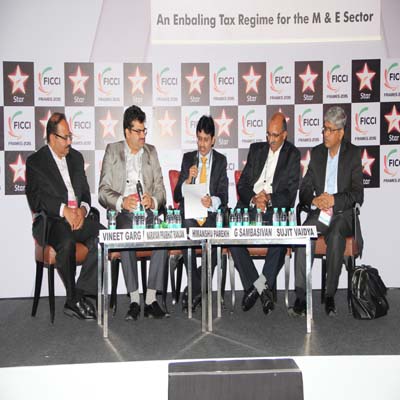
    A detailed panel discussion on the same was held in FICCI Frames moderated by KPMG executive director Himanshu Parekh with Viacom 18 CFO Narayan Prabhat Ranjan, Disney UTV CFO Sujit Vaidya, Tata Sky CFO G Sambasivan and Hathway Datacom deputy CFO Vineet Garg on the panel.


    The financial officers put up the issue of multiple taxation policy in India and inconsistency of the government, which makes scenario less business friendly. Other major issues bothering industry is lack of clarification and the biggest sufferer of that is consumer. Speaking on what the government should do, Ranjan said, “Whenever an amalgamation takes place and there is a loss, the carry forward of losses is allowed and that is something that the government should address with immediate effect. Moreover the issue of service tax VAT and excise duties should also be paid attention at. Why should one product be taxed numerous occasions with various nomenclatures?”


    Echoing Ranjan’s point of view, Vaidya added, “In other countries, if a consumer pays 100, 50 is devoted to the content. Whereas in India, due to the multiple taxation system, only 30 per cent is devoted to content. Service tax has been another pain point and entertainment tax, which varies from state to state and ranged anywhere between 10 to 40 per cent approximately is something government should look after.”


    The government in numerous occasions came on record and accepted the irregularities when it comes to taxation and GST has been portrayed as a solution. But again GST is also in experimentation stage and concrete figures are yet to be displayed in public forum. Sambasivan asserted, “Things which we expected to change did not change and there is no reason to be buoyed by GST. There is no clarity on whether entertainment tax will be subsumed or not. There is a cap of 16 – 27 per cent between which the tax will fluctuate and hence no matter how much ever we plead for a rational uniform policy, nothing of that sort comes out. Now we get 30 when someone spends 100 and if this phenomenon keeps sustaining then share holders will stop putting money as all expect high return.”


    “With digitization phase III and IV to follow, the opportunity of growth increases but at the same time there is a huge requirement of a consistent regulatory body, which has the intention to make scenarios business friendly. All the time we are suppose to devote on improvising and innovating our business model we are devoting on managing tax complacencies. AOP is an unnecessary hassle and hugely unwanted, my request to the government is to come to a consensus and make rational policy which is a win win for both the parties” concluded Garg.

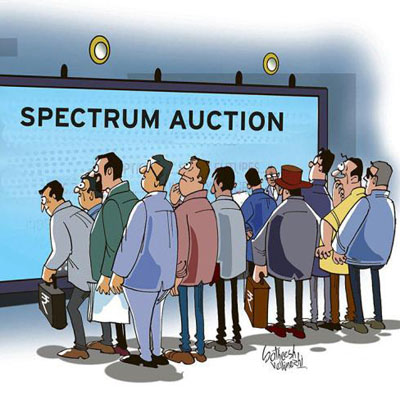
  • Spectrum bid revenue up 37% from last time; Govt denies tariff increase

    Spectrum bid revenue up 37% from last time; Govt denies tariff increase

    NEW DELHI: Even as the government has allocated spectrum worth more than Rs 1.09 lakh crore, Telecom minister Ravi Shankar Prasad has said this will not mean any rise in mobile tariffs.


    Tariff impact after the auctions will not be more than 1.3 paise per minute for users,” he said. About the criticism over high spectrum prices, he said, “It is not correct to speculate that prices of mobile calls will increase. We have seen estimates and analyses.”


    The spectrum won would be with telecom companies for 20 years. Hence, the total bids of about Rs 1.1 lakh crore, if spread over 20 years, would lead to a payout of only Rs 5,300 crore a year for operators. The annual revenues, he said, of mobile companies in India collectively are roughly Rs 2 lakh crore.


    The successful bidders have to pay 33 per cent of the amount within 10 days of the result of the auction and the balance 67 per cent is to be paid by the TSPs over the next 12 years (of which there will be a moratorium of two years and and then ten equally).  


    Meanwhile, the Supreme Court permitted the government yesterday to declare the results of the bidding and also to commence work of allocation.


    However, the judges made it clear that this was subject to the final judgment in the bunch of petitions challenging the conditionalities in the notice inviting applications to join the e-auction process.


    The spectrum auction in 2100 MHz, which caters to 3G, 1800 MHz, 900 MHz, and 800 MHz band, which commenced on 4 March and ended on 25 March after 115 rounds over 19 days, has fetched over Rs 109,874 crore. However, approximately 11 – 12 per cent spectrum remained unsold.


    In all, 470.75 MHz has been put to auction in various local service areas. This compares with 390 MHz in November 2012 and 426 MHz in February 2014.


    There was robust activity in the all the spectrum bands and vibrant bidding. Prices have significantly increased in 50 of the 69 offerings with bid price being as high as 300 per cent over reserve price in some instances. Overall increases over estimated proceeds from auction is about 37 per cent.


    In November 2012, the total realization from auction of spectrum in 1800 MHz band was Rs 9407 crore and in February 2014 Rs 61,162 crore has been realized. 


    Since the Supreme Court has given the leave to proceed further, the provisional results are being declared. Of the eight participants in the auction, seven have been awarded spectrum.


    This is the first time that spectrum has been offered simultaneously in four bands. In previous auctions, different bands were auctioned sequentially. This auction design has enabled bidders to take informed decisions while placing bids and consider alternatives dynamically.


    Another noteworthy feature is that for the first time there is robust demand for 800 MHz band, which in previous auctions had seen very sluggish response.


    Some of the steps taken to enhance transparency as well as to remove barriers to participation included five MHz spectrum in 2100 MHz band released to increase availability of spectrum; in principle approval was received from Defence to release further 15 MHz in 2100 Mhz band to the telecoms sector; earnest money percentage was reduced to between 11-25 per cent, earlier in some instances it was over 40 per cent; taking into account suggestions and request from operators the ‘extension’ budget – that is the extra time allowance for bidding was increased from 240 minutes to 360 minutes.


    Orders on applicable Spectrum Usage Charges (SUC) were issued before the auction, which reduced the regulatory risk of the bidders and the modalities for liberalization of 800 MHz spectrum was notified.


    Transparent and clear rules for allocation of spectrum were notified for the first time. Earlier spectrum other than the contiguous spectrum was allotted randomly.


    The Department also took steps towards putting in place a roadmap for availability of spectrum by notifying the Defence Band and Defence Interest zone.

  • Live events in India need huge impetus from government

    Live events in India need huge impetus from government

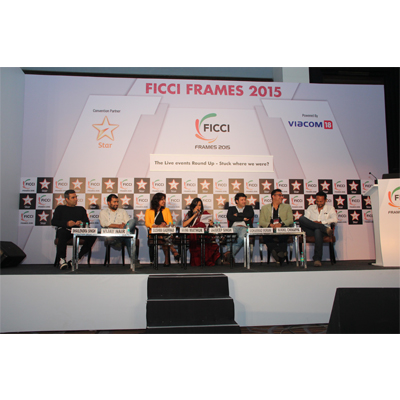
    MUMBAI: In order to discuss the long road ahead in making India a productive profit centre in the global live event landscape, a session dedicated to the same was conducted on the final day of FICCI Frames 2015 held in Mumbai.


    With a vision to wash away the red tape and enable business environment, the discussion was led by a panel comprising entrepreneurs like Cineyug director Mohammad Morani, OML CEO and founder Vijay Nair, Ice Global owner Sushma Gaekwad, Viacom18 INS Jaideep Singh, Coca Cola India VP – marketing Debu Mukherjee and Percept joint MD Shailendra Singh. The session was moderated by anchor Mini Mathur.


    Gaekwad kick-started the discussion by saying that issues relating to licensing norms and taxation policies amongst others needed to be sorted out. “We have to sort out these issues. There is a lot of work ahead of us but yet the industry has the potential to grow,” she said.


    Gaekwad believes that the industry has taken the first step in sorting everything out and like-minded bunch of entrepreneurs have started coming together as an association. “Earlier each business was of its own, but now as an association, we can sort issues that each of us bring to the table.”


    Percept’s Singh went on to add that almost 58 per cent of India’s population was below the age of 25 years and the young population is extremely restless and has tremendous amount of energy. “What young people need in today’s time is entertainment. Live entertainment is a very serious business, but the government has never understood the industry and has not taken it seriously. One can’t even imagine that how much business the industry can bring, how many job opportunities it can create and how well it can entertain. We are deprived as a country for live entertainment just because the Government doesn’t believe that this industry should be taken seriously,” he opined.


    For Festival curator Nikhil Chinappa, making the sense of 1.25 million population in the country is the biggest concern. He believes that in the space, the numbers are vast and so are the opportunities. “Even though we are talking about the opportunities, but we need to know whether there are more people buying tickets or are the same people trying to buy different tickets again and again?”


    Answering his own question, he replied saying that research indicated that there are no new people, who buy tickets but the same ones who are interested in buying always.


    Agreeing with Chinappa, Singh continued to say that in this sector, it has not been able to harness new members in the industry. “We can only grab eyeballs of the newbies by our strong business models and that is going to lead the success path,” he said.


    Picking up to what Gaekwad pinpointed on the licensing part, Nair feels that Maharashtra has been left behind when it comes to licensing policies. “If an artist is performing at the same venue for 10 times in a year, he has to apply for licenses all the time, which is not needed. Moreover, the situation is going to get worse with the new laws coming in. For example, 14 per cent of service tax has been added to buy tickets.”


    Percept’s Singh believes that everything in the society happens from top down. “If there is a ministry sitting at the top to look at these issues at the forefront, then why are we begging in front of them? They have to understand that this is the need of the new Indian. Young India wants entertainment. Why should we pay the price or suffer?” he questioned.


    He further said that it is impossible to make money in live entertainment today. “The opportunity that live events provide is massive. When will the government understand this?” he further lamented.


    On the other hand, Viacom18’s Singh believes that the government alone cannot be blamed alone because the onus lies on the entrepreneurs, who are working in this space too. “I believe that this should come from top, but we are also equally responsible for it maybe because we are not pushing it or fighting enough for it. We need to put our business propositions together and fight for it right up there. We need to prove our might with numbers, which they are not seeing right now.”


    Mathur questions, “Are we doing enough as an industry?” To which, Gaekwad responded that the fraternity has taken the first step by coming together and working towards it and is confident that by next year it will be talking a different language. But she also believed that currently there is a lack of vision, which needs to be improved. “It is not only about the local spender but also about the international spender.”


    Talking about the industry’s future, Chinappa stated that to him vision is accessibility. “If you want the music and dance industry to grow, one needs to ensure that it is easily accessible for people and that can happen best through social media platforms. Digital platforms are the best mediums where people can share and exchange ideas,” he said.


    Viacom18’s Singh further revealed that brands too have been taking the industry very seriously. Where there is reach, there are brands. According to him, in the first year it got close to 10 – 12 brands on board, whereas the second year saw some improvement with close to 25 brands. What’s more, the third year saw a fantastic response with about 60 brands coming on-board.


    Throwing light on the solutions to make the industry more profitable, Percept’s Singh said that the market will grow where there is a sense of security. To top it all, the three E-formulas will always work wonders – educate the market, empower and entertain the consumers.


    The session concluded with each of them focusing on issues like making music more available and accessible to people, strong compelling business to generate numbers, collaborate and work together as an association for faster progress and yet be competitive by focusing on the consumer’s need.
  • Spectrum bid amount crosses Rs 1.02 lakh crore; under 13% still available

    Spectrum bid amount crosses Rs 1.02 lakh crore; under 13% still available

    NEW DELHI: The bid amount for the spectrum auctions has now touched Rs 102,215 crore with just under 13 per cent spectrum still available for allocation.


    With this, over 87 per cent of the spectrum has been provisionally allocated in the 2100 MHz, 1800 MHz, 900 MHz and 800 MHz bands now.


    Though the government claimed aggressive bidding was on at the end of the 61st round with six rounds completed on the tenth day, 14 March, the pace appears to have slowed down.


    The auction will continue in all bands with brisk bidding in 1800 MHz, 900 MHz and 800 MHz bands.


    A majority of service areas are going at a premium over reserve price. With 100 per cent activity requirement and activity in new service areas, competitive bidding is expected to continue today.


    The government had initially expected to reap around Rs 49,000 crore from the auction, though the Communications and IT Ministry sources had later predicted that it would get close to Rs 1 lakh crore.