Tag: Government

  • Govt: No proposal to include electronic media under Wage Board

    Govt: No proposal to include electronic media under Wage Board

    NEW DELHI: The government has categorically said there is no proposal at present to include all journalists in electronic media under the Wage Board.


    Minister of State for Labour & Employment Kodikunnil Suresh clarified in Parliament that journalists from the electronic media are not covered under the Wage Board for journalists.


    The Ministry administers the Working Journalists and Other Newspaper Employees (Conditions of Service) and Miscellaneous Provisions Act, 1955 for the purpose of fixing/revising rates of wages and for regulating service conditions of Working Journalists and Non-Journalist Newspaper Employees only.


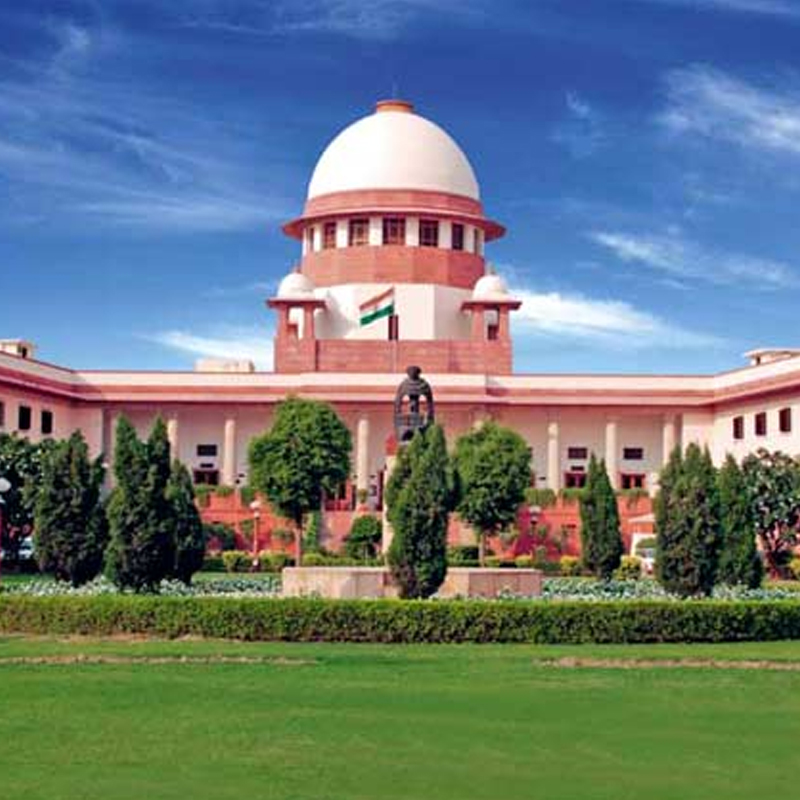
    Currently, the matter relating to Wage Boards for Journalists in pending in the Supreme Court.

  • Ministry of Information and Broadcasting introduces ‘New Media Wing’

    Ministry of Information and Broadcasting introduces ‘New Media Wing’

    NEW DELHI: Almost a year after guidelines were framed for the use of social media by government agencies and citizen engagement for e-governance projects, the proposal for establishing a ‘New Media Wing’ in the Information and Broadcasting Ministry for publicising its initiatives through multiple social media platforms has received the official nod.


    The move has come even as the government is gearing itself for the general elections next year. Both All India Radio and Doordarshan launched its new series yesterday to highlight the initiatives of the government.


    According to the proposal approved by the union cabinet, the new wing to be headed by a joint secretary level officer would address the communication and dissemination requirements of the government on social media platforms. The wing would integrate the communication tools horizontally and vertically through various social media platforms.


    The proposal for establishment of new media wing has been drawn on the basis of the experience of the initiative undertaken by the ministry recently, on a pilot basis to position itself on the social media platforms such as YouTube, Facebook and Twitter.


    The administrative and operational support will be provided by a unit under the ministry – the Research Reference and Training Division – which would be the new wing.


    The expenditure for establishing the wing and the recurring expenditure thereon would cost the exchequer an amount of Rs 22.5 crore during the 12th Five Year Plan (1012-17) which has been approved by the cabinet committee for economic affairs under the development communication and information dissemination plan scheme of the ministry.


    In August last year, the government had issued framework and guidelines to enable the various agencies to create and implement their own strategy for the use of social media. The document was to help them to make an informed choice about the objective, platforms, resources, etc. to meet the requirement of interaction with their varied stakeholders.


    The official statement had then said, “As more and more projects are getting implemented, an increasing need has been felt for wider and deeper participation of an engagement with all stakeholders to ensure that citizen centricity is maintained in all projects. There is now a consensus that citizen participation and civic engagement are the building blocks for good governance and e-governance is a critical component of good governance.


    It had added that, “Media is transforming the way in which people connect with each other and the manner in which information is shared and distributed. While at a personal level, the uptake and usage of social media is gaining rapid popularity, use and utility of such media for official purpose remain ambiguous. Many apprehensions remain including, but not limited to, issues related to authorisation to speak on behalf of department/ agency, technologies and platform to be used for communication, scope of engagement, creating synergies between different channels of communication, compliance with existing legislations etc.”

  • I&B minister wants the industry to define self-regulation levels

    I&B minister wants the industry to define self-regulation levels

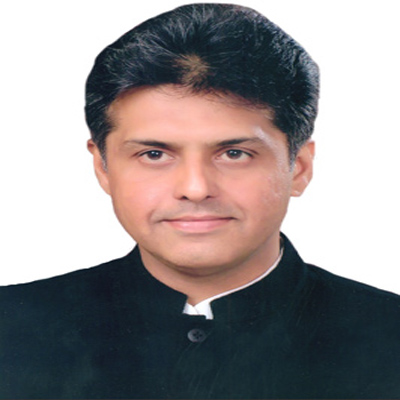
    NEW DELHI: Information and Broadcasting minister Manish Tewari has said the process of mainstreaming self-regulation as a statutory mechanism should be led by the industry and not the government.


    Speaking at a panel discussion on Media Regulation: Is status quo the option?, the minister emphasised that the government’s approach towards the media was an ‘essay in persuasion not regulation’.


    The stakeholders within the industry would have to define the equilibrium levels to ensure that the paradigm of transparency, fairness, sobriety and avoidance of sensationalism becomes the key driver of the national discourse in the media space, Tewari stated.


    He said digitisation as a process could be leveraged to augment sample sizes by re-engineering every Set Top box to function as a virtual people’s meter. Out of the box innovation and creative thinking by media entrepreneurs could surmount the current challenges by a technological leap that could transform the dynamics at the back end of the media sector. Industry could then utilise the data and develop business models that were transparent and workable.


    This process would ensure an alternative to the ongoing conflict surrounding TAM / TRP that the Broadcasting industry held responsible for much of its woes. He emphasised that the way forward was also to fast track Broadcasting Audience Research Council (BARC) as an industry led body that would provide a reliable measurement of popular viewership patterns and help broadcasters overcome corrosive narratives.


    The minister also referred to the growing importance of the new media space which had revolutionised the media landscape. The growth of the internet had led to a situation where there could be a conflict between the physical and virtual civilisation. It was important to comprehend the fact that the power of expression and dissemination through the internet had added a new dimension to innovations in information dissemination. While the opening up of the virtual space had led to democratization of the information paradigm, it had also led to technology becoming a leveller.


    Tewari added that these developments could also lead to a situation where one could also face “Balkanization of the Internet” if agreed rules of international engagement did not emerge as a binding international compact that encompassed states and other entities who controlled the underlying hardware. This situation needed to be avoided at all costs so as to ensure that no artificial divisions are created in the World Wide Web on ideological entities and Westphalian lines.


    The minister also discussed critical paradoxes within the media space that would need to be reconciled. These included proliferation of numerous mediums of communication as qua a growing intolerance to an opposite viewpoint, right to a fair trial qua trial by the media, presence of flawed revenue models qua questionable methods of revenue augmentation, TRP qua the truth and the raging debate between self regulation and statutory regulation.

  • Govt initiates steps to help Hindustan Photo Films

    Govt initiates steps to help Hindustan Photo Films

    NEW DELHI: Hindustan Photo Films Manufacturing which has for long suffered as being on the list of sick industries is one of the six companies to be given the minimum public shareholding of 10 per cent requirement under a proposal accepted by the Union Cabinet.


    The Cabinet Committee on Economic Affairs has approved creation of the Special National Investment Fund for the specific objective of meeting the minimum public shareholding of 10 per cent requirement in six Central Public Sector Enterprises (CPSEs).


    Hindustan Photo Films has for years been responsible for supplying raw stock to filmmakers.


    Since these Companies were not financially sound, it was found difficult to meet the minimum public shareholding by following SEBI approved methods. However, government was keen to comply with the requirement in all government companies. The Department of Disinvestment discussed the matter with SEBI and has proposed to meet the minimum public shareholding in the above six Companies.


    The salient features of the fund are:


    (i) The number of shares that is required to make the six companies compliant with the minimum public shareholding will be transferred to the Special National Investment Fund out of government of India shareholding on irrevocable basis without any consideration.


    (ii) The Fund will be managed by independent professional fund managers.


    (iii) The Fund will sell the shares within a period of five years.


    (iv) The funds realised from the sale of shares would be used for social sector schemes of the government.


    (v) The modalities of the sale of shares in the fund would be decided by the existing EGoM.


    Under the Securities Contracts (Regulations) (Second Amendment) Rules 2010 of 9 August 2010, all government companies are required to have at least 10 per cent public shareholding and where public shareholding is less than 10 per cent, the companies were required to comply with this condition within a period of three years by following methods permitted by SEBI for this purpose.

  • TRAI ad cap: Why news channels want concessions?

    TRAI ad cap: Why news channels want concessions?

    MUMBAI: News channels have been rather miffed with TRAI’s ruling that advertising air time should be restricted to just 12 minutes per hour. And they have been seeking some succor from government. Two weeks ago they got a lifeline when the Telecom Disputes Settlement Appellate Tribunal (TDSAT) allowed them to appeal against the TRAI mandate.


    And apparently, if sources are to be believed that appeal was filed with the TDSAT today, the hearing for which will be on 19 September.


    “In a democracy you have the legal right to approach the court against injustice and that is what we are doing,” says one of the broadcasters who wished to remain unnamed.


    Certain issues that news providers are grappling with are high carriage fees, falling advertising revenues, an unfavourable economy and low subscription rates. These have already nearly crippled the broadcast news industry with all of them being forced to cut back ad time per hour to 20 minutes from 1 July.


    Those in the know say the News Broadcasters Association (NBA) perspective is that other genres can cope with the ad restriction better because their shows are pre-produced. News-based and news-oriented shows which are live are unpredictable.


    “In news, generally there are discussions. What will we do if a discussion ends a minute early or a minute late?” asks the news broadcasting executive. “Sometimes, news channels cover incidents without even a break. In such cases, it puts a lot of strain on news channels as they either violate the rule or fall short of fulfilling it. Also in the case of natural disasters where death has occurred we find it difficult to carry advertising. And this could continue for days. What about the loss of air time then?”


    Lowering of advertising air time will work better in a digitised cable TV universe, is the news broadcasters view, as substantial subscription revenues will kick in (most news channels run as free to air services now) and carriage fees will drop to almost zilch. But that is in the future, they say, as digitisation has still some way to go nationally and has happened in only a limited number of cities.


    “We had asked TDSAT to phase it out in such a way that it comes into effect at the same time that digitisation takes place in the country,” says another broadcaster.


    Sources indicate that TRAI is unlikely to relent on allowing any increases in air time as chairman Rahul Khullar is pretty clear that quality of services is something which is the regulator’s responsibility. But they add that one area where he may give concessions is when round the clock news reportage is forced upon news channels by natural or manmade disasters or events.


    “We believe there has been an informal agreement with the TRAI agreeing to the news broadcasters’ demands that if they don’t consume the air time within the day because of live coverage they will be allowed to consume it in the next 24 hours,” says a source.”Now that has to be written into law.”


    It’s over to the two Ts – TDSAT and TRAI – now.

  • Bhaag Milkha Bhaag to run tax free in MP, Goa

    Bhaag Milkha Bhaag to run tax free in MP, Goa

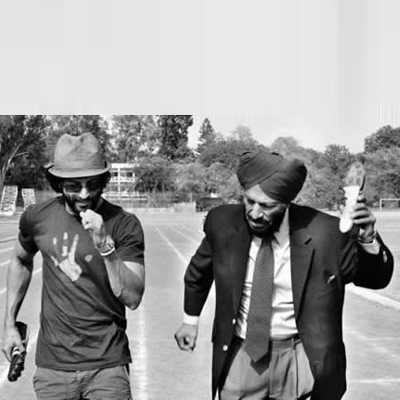
    MUMBAI: Undoubtedly, Farhan Akhtar’s Bhaag Milkha Bhaag is getting commendable responses from the viewers at large. Last week, it was the Maharashtra government that declared the actor’s recent release Bhaag Milkha Bhaag to go tax free in the state. Now, even the state governments of Madhya Pradesh and Goa have declared the film to go tax free.


    In an official statement, Madhya Pradesh chief minister Shivraj Singh Chouhan announced tax exemption to the film in the state, stating that it was quite a while ago that a patriotic movie was made and released.  


    The government of Goa has made the film tax free for three months. This decision was taken by the state finance ministry, late Thursday.


    Directed by Rakeysh Mehra, Bhaag Milkha Bhaag stars Farhan Akhtar, who plays Milkha Singh and Sonam Kapoor.

  • TDSAT to accept news broadcasters’ appeal on ad cap

    TDSAT to accept news broadcasters’ appeal on ad cap

    MUMBAI: Is there some relief in store for India’s TV broadcast sector in terms of advertising allowed to be telecast per hour? A slight glimmer of hope appears to have emerged yesterday.


    Media reports are that the Telecom Disputes Settlement Apellate Tribunal (TDSAT) has given directions to the News Broadcasters Association (NBA) to submit its appeal against the 12 minute per hour Telecom Regulatory Authority of India’s (TRAI’s) mandate. It also gave TRAI two weeks to file its responses to news broadcasters’ concerns. And the NBA has been given a further two weeks to file a rejoinder after that, say media reports. A new chairman Justice Aftab Alam was appointed to the TRAI last month.


    TRAI’s order has forced news channels to reduce their advertising commercial time per clock hour down to 20 minutes and general entertainment channels to 16 minutes per hour from 1 July 2013. This is slated to go down further to 12 minutes per hour from 1 October during the peak season of spending by most brands on TV.


    News channels have for the past decade or so operated by having an advertising inventory of between 25 and 30 minutes per hour of telecast, is what the TRAI had observed. This dragged down the quality of viewing experience of TV viewers and it had hence under the quality of service rules for consumers mandated that the advertising air time be brought down almost immediately mid-last year.

        
    Broadcasters had yelped and protested and even challenged TRAI’s locus standi on this decision last year with the TDSAT. But with no chairperson in place, the appeal had been kept in abeyance. The TRAI then came up with the quality of service regulations for advertising on TV on 22 March which have since then been enforced on the industry.


    ”It is true that broadcasters were going overboard in carrying too much advertising per hour,” says a media observer. ”But the business model of high carriage fees, low distribution revenues and relatively low ad rates has forced this upon news broadcasters. At least, general entertainment channels can charge higher rates. The government could have waited till digitisation was completed and the benefits of higher subscription-lower-carriage fees kicked in.”


    In fact most news broadcasters have pleaded that their survival is at stake. Estimates are that news channels in India account for an approximate six per cent genre viewership share.


    Advertising revenues for the almost 150 plus news channels operating in India in various language tot up to about Rs 2,200 crore. Broadcasters have claimed that the reduction in air time will not concomitantly be compensated by a hike in ad rates as advertisers and their agencies have only been eroding those over the past few years. They have also said that a large group of small advertisers who have been the main revenue source for TV news channels will not be in a position to absorb sharp hikes in ad rates. 10 second TV commercial rates for news channels vary between Rs 200 to Rs 2,500.

  • Against all odds, Prasar Bharati continues to swim upstream : Brigadier V A M Hussain Member (Personnel) Prasar Bharati

    Against all odds, Prasar Bharati continues to swim upstream : Brigadier V A M Hussain Member (Personnel) Prasar Bharati

    An institution that has been the chronicler and mirror of India‘s history is feeling crippled. With a tenacious CEO under a dynamic Minister of Information & Broadcasting, it is striving to reinvent itself to meet the challenges of contemporary media scenario. Many new experiments are on to change the behemoth called Prasar Bharati that cost the exchequer a whopping Rs 150 crore every month. This public service media organisation is one of the oldest statutory bodies with a hoary past. It is under siege and calls for expeditious intervention to revive the glory of the old faithful that is All India Radio. Doordarshan, the audio-visual arm of Prasar Bharati is always in the public eye with viewers asking for more sumptuous and scintillating fare.

    The Organisation is saddled with a disgruntled work force of about 50,000 who did not get a promotion for decades. To make matters worse, there was no attempt to infuse new blood in the system, either. An out-of-the-box solution is inescapable to break shackles of archaic regulation. The definition of autonomy needs to be revisited to meet the upheavals on the audio- visual landscape, in recent years. Section 33 of the Prasar Bharati Act directs prior government approval for all regulations governing conditions of service. Every employee appointed before October 2007 is considered a government servant on deemed deputation and their promotion is in government ambit. Instead of being a nimble, vibrant media organisation driven by merit, seniority and ‘babudom’ rule the roost. Proposal for a Prasar Bharati Recruitment Board as mandated by the Act of Parliament vide Sections 9 and 10 of The Prasar Bharati Act 1990 is gathering dust in files while government persisted in stalling promotions and new recruitments for two decades now. In effect, Prasar Bharati is like a ship caught in the turbulent waters in the mid sea with none to care on the shore for the SOS of the ship-wrecked crew. Merit and flexible structures are essential for a dynamic and extremely competitive media sector. Meeting the content needs of 750 million people through regional and national infra structure and boosting DTH and terrestrial audience are complex challenges, CEO Jawhar Sircar faces, along with ‘Sarkar‘, the real power.

    A recent experiment showed how independence in Prasar Bharati can make an impact. A truly independent team with young professionals in DD News prime time has rattled the industry with ratings showing an upswing.
    _____****_____

    A recent experiment showed how independence in Prasar Bharati can make an impact. A truly independent team with young professionals in DD News prime time has rattled the industry with ratings showing an upswing. Doordarshan launched a big advertising campaign for the revamped time bands of DD News, DD National and DD Urdu. This was the first such campaign in decades. A little more attention and circumspection are needed at AIR too which got maligned unfortunately by recent media reports of alleged harassment of its women Radio Jockeys. It is staring at a PIL now. FM Gold channel, with practically no permanent staff, earns substantial revenue for the entire AIR network while private FM channels are yearning for popularity with smart young professionals even in small towns and villages. The recently appointed Sam Pitroda Committee has set itself tasks suggesting visible changes for reviving Prasar Bharati. There is a wealth of data and content in archives that can propel AIR to the top of the charts. The expert groups are offering many practical suggestions and initiatives on many fronts including technology, content management, financial independence, government relations and human resources. Dr. Pitroda believes that generational change can be brought about by radical thinking instead of mere cosmetic changes.

    The financial situation continues to be precarious for Prasar Bharati with complex legacies. An unprepared bureaucracy opted for accrual system of accounting and enforced income tax while loans in perpetuity and penal interests soared.The government rescued Prasar Bharati by writing off large sums due as segment hiring and space spectrum charges incurred in the course of broadcasting mandated content, non commercial in nature. Income tax claims stand withdrawn while local bodies continue levying the public broadcaster with huge taxes on property of Union of India but Prasar Bharati has just been permitted use of the government emblem. This is a paradox since 50,000 salaried employees of government are using these assets for functions statutorily assigned by an Act of Parliament. Welcome initiatives of the GOM relieved Prasar Bharati from its financial crystal maze for now by converting loans in perpetuity as grants.

    The need of the hour is to professionalise Prasar Bharati with content-driven channels and professional-driven management owing total allegiance to Prasar Bharati to meaningfully accomplish objectives that were originally dreamt and scripted by the authors of an autonomous public service broadcaster. The dream is worth realising.
    _____****_____

    Apprehensions often raised on the need for a government-funded national public broadcaster are ill-founded. We need an unbiased institution to bench mark initiatives on information, education and entertainment. At the same time, the government needs a media window to show case its policies, initiatives and views by running its own video and audio channels. Government staffing of DD News and AIR News Service Division through Indian Information Service is controlled by the Ministry. The easiest course would be to sever the current nebulous association with Prasar Bharati and declare them government channels on the lines of Lok Sabha and Rajya Sabha TVs and leave Prasar Bharati to professionalise with autonomy.

    The efforts of the government to empower through The Sports Broadcasting Signals (Mandatory Sharing with Prasar Bharati) Act 2007 get breached frequently. Private business houses that own broadcasting rights of World Cricket tours use pre-embedded feeds of commercials and cause losses in hundreds of crore to Doordarshan. Expeditious amendments would help Prasar Bharati and the government. Despite its huge work force, Prasar Bharati has inadequate structure of professionals managing its own security, assets, property, content, new media, revenue and marketing at the highest levels. The need of the hour is to professionalise Prasar Bharati with content-driven channels and professional-driven management owing total allegiance to Prasar Bharati to meaningfully accomplish objectives that were originally dreamt and scripted by the authors of an autonomous public service broadcaster. The dream is worth realising.

    Will the Committee of Sam Pitroda be able to persuade the government to truly empower Prasar Bharati? On thoughts like this, we often remember Baba Amte’s saying “Faith is the promise of tomorrow” while the swimming upstream by Prasar Bharati continues.


  • Special spot on ‘Sadbhavana Divas’ on MIB’s YouTube site to remember Rajiv Gandhi

    Special spot on ‘Sadbhavana Divas’ on MIB’s YouTube site to remember Rajiv Gandhi

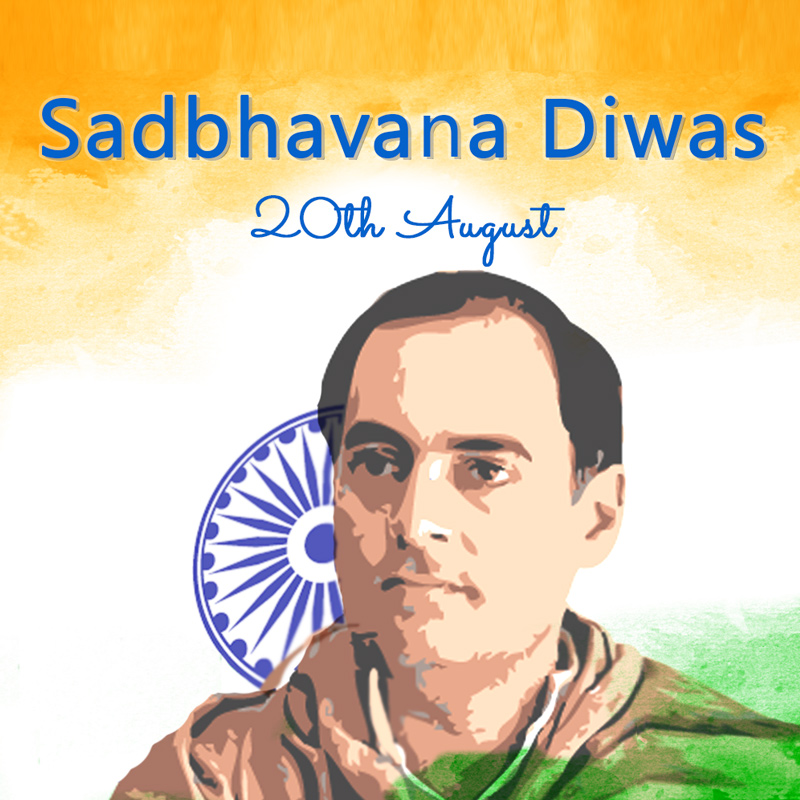
    NEW DELHI: A special TV spot to promote the message of communal harmony on the occasion of ‘Sadbhavna Diwas‘, the death anniversary of former prime minister Rajiv Gandhi, has already got thousands of views on the information and broadcasting ministry‘s YouTube site www.youtube.com/user/INBMINISTRY?.

    Officials said the 1.38 minute spot, directed by noted film maker Pradeep Sarkar, would beam across the media space spreading the message that ‘sadbhav‘ (communal harmony) is the idea of India.

    Sarkar, who has created the clip, had also directed the multimedia campaign ‘Glimpses of India Story‘, which was launched by I&B minister Manish Tewari earlier.
     
    Officials said the digital volunteers of the ministry who spread the government‘s policies and views on the social media would actively spread the message.

    The video has also been put on the ministry‘s blogspot and got over a thousand views till last evening.

  • Auction of 800 Mhz spectrum to commence on 11 March

    Auction of 800 Mhz spectrum to commence on 11 March

    NEW DELHI: Only one applicant – SSTL – registered for the auction of 800 MHz spectrum while no applicants registered for the auction of 1800 and 900 MHz spectrum at the time of close on the last date for receipt of applications, 25 February.

    In view of this, the Government today announced that it will commence the auction for 800 MHz on 11 March.

    Under the original announcement, auction for 1800 and 900 MHz bands was to begin simultaneously starting from 11 March and the 800 MHz band auction was to commence two days after the conclusion of the auction of 1800 and 900 MHz spectrum.

    The Department of Telecom also announced that the next steps in respect of the 1800 and 900 MHz spectrum will be decided shortly after placing the developments and issues arising therefrom before the Empowered Group of Ministers on auction of spectrum.

    A third auction (after the first auction in November 2012 and the second auction due to commence on 11 March) was already announced by the DoT on 20 February consequent to the Supreme Court directions of 15 February.

    This third auction was to cover only the 1800 MHz band to comply with the SC directive to put the entire spectrum surrendered (which was entirely either in the 1800 or 800 MHz bands) by holders of quashed licenses to auction immediately. This would, in any case, have necessitated auction in 20 of the 22 circles wherein the quantum of spectrum put to auction was less than what the apex court had directed on 15 February after the issue of the NIA for the March 2013 auction.

    In Delhi and Mumbai circles, the quantum of spectrum put to auction in March 2013 was already in accordance with the latest orders of the Court. This was also the case in respect of spectrum in the 800 MHz band both in the November 2012 auction and again in the March 2013 auction.

    In the light of these developments, DoT will review the need to include the remaining two circles – Delhi and Mumbai – for 1800 MHz bands in the next round of auctions as also the need for a re-auction in the three metro circles of the 900 MHz band. The quantum of spectrum, the reserve price and the timelines for this auction will be decided after necessary directions are obtained from the EGoM and where required, the cabinet, in this regard.

    DoT is also in the process of filing an affidavit of compliance in the Supreme Court regarding implementation of its orders of 15 February. Any further directions issued by the Court in the matter will be incorporated into the plan of action for the next round of auction to be held as soon as possible after the 11 March auction is completed.

    Separately, the DoT will also take action as directed by the Delhi High Court to dispose of the applications for extension of licenses received from licensees whose licenses are due to expire in November 2014. This action will be completed before the timeline fixed by the High Court of Delhi.