Tag: Government

  • Reproduce newspapers in electronic form: I&B Ministry

    Reproduce newspapers in electronic form: I&B Ministry

    NEW DELHI: The government intends to bring ‘reproduction of any newspaper in electronic form’ within the ambit of the Press and Registration of Books Act.


    In the amendments proposed to the PRB Act, the Information and Broadcasting Ministry (I&B) has also proposed inclusion of a section which says ‘paid news’ means publishing any news or analysis in the publication for a price in cash or kind as consideration.


    The amendments, which have been placed on the website of the ministry, also says that ‘facsimile edition’ of a publication means an exact replica in full or in part of the original edition of a foreign publication ‘in so far as the contents concerned and may not include title’, subject to the condition that any page is not published in part.


    The government also proposes to establish a Press and Registration Appellate Board to be constituted by the central government, by notification in the official gazette, consisting of a chairperson and another member, to be nominated by the Press Council of India, established under section 4 of the Press Council Act 1978 from among its members.


    It says any dispute relating to registration of newspapers or publications would be referred to a ‘specified appellate authority’ that may be prescribed by the central government.


    Under the amendments, publication means newspapers, magazines, journals or newsletters printed periodically and published in India ‘including its reproduction in electronic form or any syndication, facsimile edition, and Indian editions of periodicals published outside India.’


    While noting that the Press Registrar General will consider all applications of new titles ‘as soon as practicable’, the amendment says an application for a title may be rejected if it is ‘same or similar to that of a known foreign publication’, subject to the proviso that ‘the same or similar title shall not be rejected if the Indian entity seeking the title has a tie-up with the owners of the title of such a foreign publication’.


    The amendment further says that no publication shall be printed and published in India except with the prior approval of the central government granted if such publication is owned by or has investment from any individual who is not an Indian citizen or foreign unincorporated body of individuals or body corporate incorporated under the law of any country other than India.


    Furthermore, the Press Registrar General may reject, after giving the person concerned an opportunity of showing cause against the action proposed to be taken, and holding an inquiry into the matter, if he is satisfied that the publication mentioned in the declaration is found indulging or having indulged in the practice of ‘paid news’, on the basis of adjudication by the Press Council of India or any other quasi-judicial/judicial authority. Till a decision is taken, the Press Registrar General may suspend the publication of such publication.


    Furthermore, any person aggrieved by an order of a specified authority refusing to authenticate a declaration under section 10 or cancelling a declaration under section 19 (l) (a) to (d) may appeal within 60 days from the date on which such order is communicated to him to the Press and Registration Appellate Board and may entertain an appeal after the expiry of the said period, if it is satisfied that the appellant was prevented by sufficient cause from appealing on time.


    The Appellate Board may, after calling for the records from the specified authority and after making such further inquiries as it thinks fit, confirm, modify or set aside the order appealed against. The decision of the Appellate Board shall be final in respect of provisions given in sub section 19(1) (a) to (d).


    Any person aggrieved by an order of the specified authority for suspension of publication under the provision of section 19(1)(e) will still be free to approach a court of law.


    In case of change of name or place of press, a fresh declaration will not be necessary if this information is given to the specified authority within five days.


    It shall be the duty of the publisher, and owner in the absence of the publisher, of every publication ‘to furnish details of the advertisement revenue of the publication as and when asked for.


    Whoever prints or publishes any book or publication otherwise than in conformity with the provision of section 3 will have to explain the reasons for this and to complete the formalities as specified in this section.


    In its penal provision, the government has said that any contravention of sub-section (1) will invite a fine not exceeding Rs 5,000 in addition to suspension of the publication for a period of 30 days.


    Furthermore, whoever owns any press, other than in conformity with the provision of section 4 will have to explain for such activity and to complete the formalities as specified in that section. For contravention of sub section (1), the person shall be liable to a fine not exceeding Rs 5,000 in addition to sealing of the printing press for a period of 30 days.


    The amendment says that ‘In particular and without prejudice to the generality of the foregoing power’ such rules may provide for all or any of the following matters, namely: the period of suspension of the declaration under sub-section (i) of section 19 , and the manner of filing appeals to the specified appellate authority under sub-section (1) of section 20.

  • Sony gets permission to downlink more channels into India

    Sony gets permission to downlink more channels into India

    NEW DELHI: The government has approved a proposal by Multi Screen Media for increasing the foreign equity participation for production of television programmes in India.


    The approval has also been given to the company for downlinking certain TV channels, following a recommendation by the Foreign Investments Promotion Board.


    However, the Finance Ministry said this will not require any fresh inflow of foreign direct investment.

  • Tewari issues clarification on Sardar Patel ad releases by govt

    Tewari issues clarification on Sardar Patel ad releases by govt

    NEW DELHI: The Government gave out 2164 newspapers advertisements on the occasion of the birth anniversary of Sardar Vallabhbhai Patel between 1998 and 2003.


    Interestingly, the Information and Broadcasting Ministry said in a statement in response to statements by certain political leaders that no advertisements were released during the years 1999, 2000 and 2001.


    However, 20,915 newspapers were given the advertisement between 2004 and 2013. No advertisement was given in the year 2008.


    The Ministry said the Directorate of Advertising and Visual Publicity had been regularly releasing advertisements on the birth anniversary of prominent national leaders including Sardar Patel.


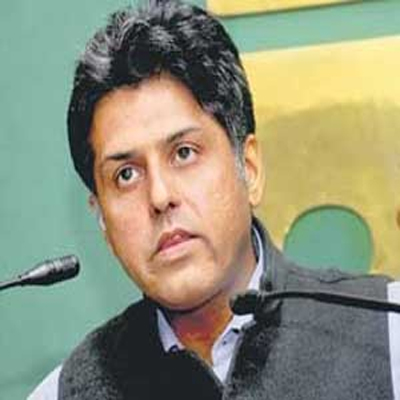
    In this context, I and B Minister Manish Tewari said: “The Ministry of Information & Broadcasting has always followed a policy to acknowledge the contribution of prominent national figures in nation building by releasing advertisements. The advertisements released on the birth anniversary of Sardar Patel are part of the continued policy of this Ministry of expressing gratitude to great leaders for instilling confidence and inspiration in the young minds.” 

  • Allahabad HC asks government to form statutory forum for complaints against electronic media

    Allahabad HC asks government to form statutory forum for complaints against electronic media

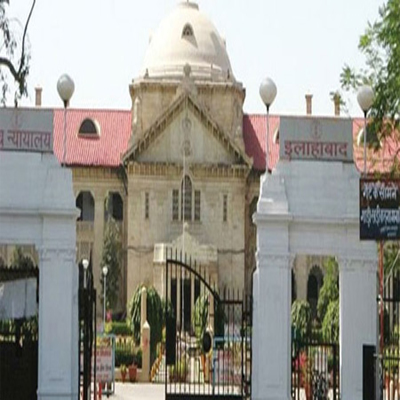
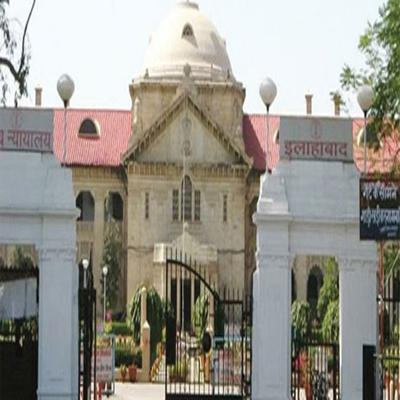
    NEW DELHI: The Allahabad High Court has said that the government needs to provide a statutory forum for electronic-media where people can both approach and ventilate their grievances.


    In the petition filed by social activist Dr Nutan Thakur, Justice Devi Prasad Singh and Justice Ashok Pal Singh of the Lucknow bench said for any misconduct committed by the print media statutory forum is available in the form of Press Council of India but no such forum is available for the electronic media.


    The court felt that no such statutory forum is available and this does not seem to be proper in a country which is run by the rule of law and governed by the democratic polity and hence the union needs to provide statutory forum for electronic-media.

    The order said electronic media immediately affects peoples’ mind and it is well established that paid news items are often used by the media, which is an instance of abuse of power. Hence, prima facie electronic media should also be regulated and supervised by a statutory autonomous forum like the Press Council and the government should have provided some statutory forum to redress the grievance of the news items or other items of the electronic media.

    The order said electronic media immediately affects peoples’ mind and it is well established that paid news items are often used by the media, which is an instance of abuse of power. Hence, prima facie electronic media should also be regulated and supervised by a statutory autonomous forum like the Press Council and the government should have provided some statutory forum to redress the grievance of the news items or other items of the electronic media.


    The court directed the government to file an affidavit bringing on record its stand on this issue, within four weeks.


    The petition had been filed against the Information and Broadcasting Ministry and the News Broadcasters Association.

    The court noted: ‘Though prima facie against the decision taken by the non-statutory body, the writ petition seems to be not maintainable but we are of the view that keeping in view the public importance of the question raised by the petitioner in person for creation of some statutory forum where the people may address their grievance, the writ petition is admitted.’ 

  • TRAI sticks to its recommendations on reserve price

    TRAI sticks to its recommendations on reserve price

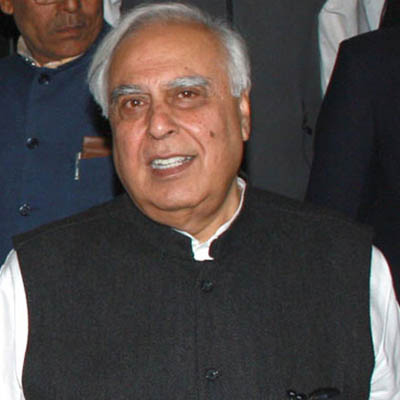
    NEW DELHI: Even as Communications Minister Kapil Sibal said the reserve price for the spectrum auction would go down in December auction, the Telecom Regulatory Authority of India has said the Reserve Prices for 1800 MHz and 900 MHz will remain unchanged and at the level already recommended by the Authority.


    Since the recommendations on the reserve price obtained for different LSAs follow, in logical sequence, from the valuation through adoption of different economic methodologies, the authority did not find any scope to “reconsider” the reserve price, as suggested by the Department of Telecommunications.


    TRAI had sent its recommendations on “Valuation and Reserve Price of Spectrum” on 9 September to the Department of Telecommunications which had on 11 October sought clarifications/ reconsideration on some of the recommendations.


    After considering the comments given by the DoT, the Authority has furnished its response to the Government. The authority has reiterated its earlier recommendations with detailed reasoning.  Thus TRAI has reiterated its recommendation regarding no reservation/priority in the 900/1800 MHz band in order to have an open, transparent, objective, responsive, unrestricted and successful auction of 900 MHz and 1800 MHz spectrum and to ensure a level playing field amongst bidders.
    Other recommendations reiterated by TRAI are:


        In order to correct the present urban-centric bias in the roll-out obligations as also to harmonise the roll-out obligations with the objectives of NTP 2012, the authority has reiterated its recommendations on roll-out obligations to enhance rural coverage.

        The DoT has conveyed its in-principle acceptance on spectrum trading. Accordingly, the authority will shortly work-out the detailed guidelines on spectrum trading.
        On auction of 800 MHz spectrum, the Authority has again recommended that the Government must first explore the feasibility of adoption of the E-GSM band before reaching any hasty conclusion.  

        On Spectrum Usage Charges (SUC), the Authority has reiterated its recommendations for a graduated transition from the existing regime with its many limitations, to a more balanced, equitable and rational system.


  • Notice to I&B Ministry, NBA on allegations of paid news

    Notice to I&B Ministry, NBA on allegations of paid news

    NEW DELHI: The Allahabad High Court today issued notice to the Information and Broadcasting Ministry, the News Broadcasters Association (NBA) and the News Broadcasting Standards Authority (NBSA) in a petition relating to paid news.


    Justice Devi Prasad Singh and Justice Ashok Pal Singh of the Lucknow bench said that in a democratic country while freedom of expression is a basic requirement, there are problems related to paid news and other vested news if there is no forum with the government for complaints to be presented by the public.


    The court has asked the ministry as well as the media organisations to present their reply about social activist Dr Nutan Thakur’s complaint and the present grievance redressal mechanism for viewers against news channels, within four weeks.


    Thakur had previously sent her complaint relating to news channels reports about the role of Raja Bhaiya in DSP Ziaul Haq murder being one-sided, but the NBSA had concluded that no impropriety was done in broadcasting of these news items. She then approached the High Court against this decision.

  • Suspension of IOA will not hamper Indias participation in next Olympics: Govt.

    Suspension of IOA will not hamper Indias participation in next Olympics: Govt.

    NEW DELHI: The government has assured the Allahabad High Court that India will ensure the participation of the country in the next Olympics.


    Additional Solicitor General K C Kaushik told the Lucknow bench of the Court that sports persons will not suffer irrespective of whether the Indian Olympic Association (IOA) amends its Constitution.  


    In the public interest litigation filed by IPS officer Amitabh Thakur and his wife Nutan relating to suspension of IOA from the International Olympics Committee (IOC), Kaushik told Justice Imtiyaz Murtaza and Justice Devendra Kumar Upadhyaya that the participation will be ensured even if suspension is not revoked.


    The next date of hearing is 21 October. IOC suspended IOA in December 2012 for not complying with the directions to suitably amend its Constitution and again recently directed IOA to amend its constitution by 31 October.


    The petitioners had asked the Sports Ministry to be directed to use its authority to ensure that IOC directions are complied in the prescribed period and Indian sports person participate in Olympics.

  • Iranians access Facebook, Twitter accounts for a day – albeit by error

    Iranians access Facebook, Twitter accounts for a day – albeit by error

    NEW DELHI: Facebook and Twitter, which are taboo in Iran, accidentally became available to users on 16 September – only to be shut off the next day with the government blaming a technical glitch for this sudden freedom.

    The two social sites had been shut off in Iran in the summer of 2009 after riots erupted following a disputed win of Mahmoud Ahmadinejad.

    A number of Facebook and Twitter users said on Monday that that they could access the social networking sites without bypassing the firewall which Iranian government had imposed for monitoring the social media.

    Correspondents of almost every western newspaper tweeted that they were able to access their accounts using regular internet services.

    Reuters reported that not only Facebook and Twitter was being accessed, but other blocked sites were also opening.

    But then Secretary of a State Committee Abdolsamad Khoramabadi said it was a technical glitch by a few internet service providers and there were no plans yet to lift the ban. An inquiry has been ordered.

    However, media sources said that the Iranian government may be testing the intensity of response if the ban is lifted. This is borne out by the fact that Iranian Foreign Minister Mohammad Javed Zarid created his Facebook and Twitter accounts during this period.

    Newly-elected President Hassan Rouhani is believed to be more liberal and has already hinted earlier that he would tackle the social media differently.

  • RTI Online Web Portal launched to file applications online

    RTI Online Web Portal launched to file applications online

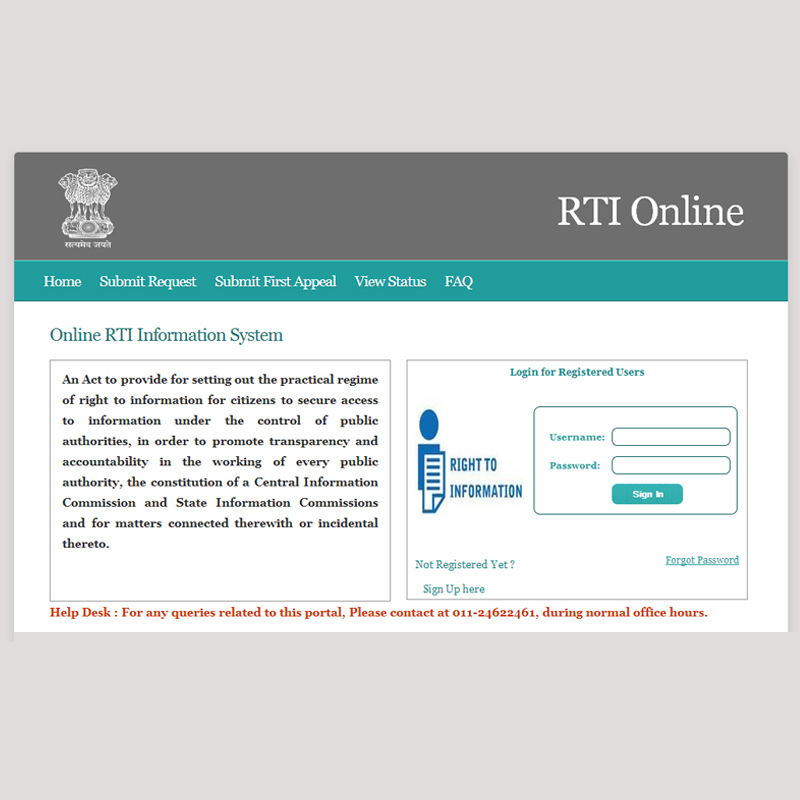
    NEW DELHI: The government today launched a web portal https://rtionline.gov.in to promote participation of our citizens in the process of governance and policy making decisions of the government.

    Minister of State for Personnel, Public Grievances & Pensions and Prime Minister’s Office V Narayanasamy said this facility has presently been provided to Central Ministries but DoPT will consider extending this facility to the subordinate and attached offices of central government also.

    The minister also appealed to the state governments to consider developing similar facility of filing online RTI applications.

    The RTI online web portal has been developed by National Informatics Centre (NIC) at the initiative of Department of Personnel and Training.

    This is a facility for the Indian Citizens to file RTI applications online and first appeals and also to make online payment of RTI fees. The prescribed fees can be paid through internet banking of State Bank of India and its associate banks as well as by Credit/Debit cards of Visa/Master, through the payment gateway of SBI linked to this site. This facility is available for all the Ministries/Departments of Central government.

    This system provides for online reply of RTI applications/ first appeals, though reply could be sent by regular post also. This system works as RTI MIS also. The details of RTI applications received through post could also be entered into this system. The citizens can also check the real time status of their RTI applications/first appeals filed online.

  • Duty Free import of flat screen TVs by air travellers banned

    Duty Free import of flat screen TVs by air travellers banned

    NEW DELHI: The government has banned duty-free import of flat screen television by air travelers in a bid to prop up the rupee, which has plummeted to an all time low (63.73) against the US dollar.


    The government, according to a notification, has decided to “disallow import of flat panel (LCD/LED/Plasma) television as part of free baggage allowance” with effect from 26 August.


    Air travelers currently can bring a flat screen television for personal use without paying any duty.