Tag: Government of India

  • Percept Activ executes Hindtex BSM at Varanasi

    Percept Activ executes Hindtex BSM at Varanasi

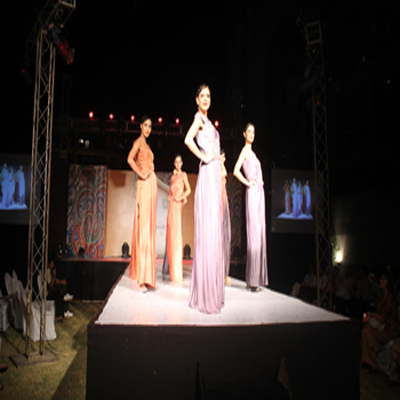
    The Indian Handloom industry is one of the most celebrated industries in India and contributes a lot to Indian Tourism. Tourists flock in to get hold of unique ethnic Indian handloom products which is one of the biggest unique selling points. Percept Activ has grabbed the opportunity as a brand activation partner for Hindtex BSM at Varanasi supported by Ministry of Textiles, Government of India and COHANDS & Eastern U.P. Exporters Association (EUPEA) on September 27, 2013.This fashion show showcased creations on handicrafts by Delhi based designer Rinku Sobti along with Varanasi Silk products by Varanasi based designer Pradeep Anand Singh.


    The luxurious fashion show was choreographed by noted choreographer Rashmi Virmani who conceptualized the fashion show segments to represent traditional Indian designs in a contemporary format.


    This event was attended by the high ranking officials from the Uttar Pradesh bureaucracy along with other noted dignitaries from the fashion industry, the Hindtex Fashion Show redefined traditional Indian fashion wares, and showcased that conventional fashion is still relevant in the dynamic contemporary fashion atmosphere. It also brought together well known names from the field


    Mr. Sanjay Shukla, Chief Executive Officer, Percept Activ said, “The Fashion Show with Ministry of Textile started with a very simple objective of creating awareness and reach the targeted group of consumers especially the young and niche market potential for the Handloom & Handicraft products. We have conducted fashion shows in Delhi, Chennai, Hyderabad, Kolkatta, Masoorie and now in Varanasi. During this journey, we have been able to engaged some very famous and prestigious designers and choreographers using Handloom as well as Handicraft as fashionable products and accessories”


    Added, Shri Balvinder Kumar, IAS, Development Commissioner (Handlooms), Ministry of Textiles, Govt. of India, “Through this initiative, The Ministry of Textiles aims to showcase the ever-increasing popularity of Indian handicrafts in a new light. Faced with the onslaught of new weaving technologies, Indian handicrafts have commendably managed to hold onto its market positioning which we seek to build upon through this exhibition. The involved fashion shows showcase the intricacies of Indian traditional and contemporary hand weaves, and seeks to increase its exposure in the international market. With our partners being the Eastern U.P. Exporters Association, our endeavour is to take Indian handicrafts into the unexplored markets and increase its market outreach.”
  • Percept Activ executes Hindtex BSM at Varanasi

    Percept Activ executes Hindtex BSM at Varanasi

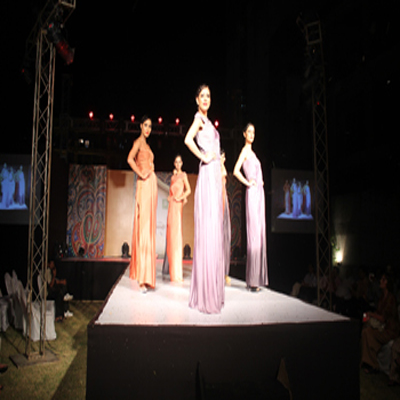
    The Indian Handloom industry is one of the most celebrated industries in India and contributes a lot to Indian Tourism. Tourists flock in to get hold of unique ethnic Indian handloom products which is one of the biggest unique selling points. Percept Activ has grabbed the opportunity as a brand activation partner for Hindtex BSM at Varanasi supported by Ministry of Textiles, Government of India and COHANDS & Eastern U.P. Exporters Association (EUPEA) on September 27, 2013.This fashion show showcased creations on handicrafts by Delhi based designer Rinku Sobti along with Varanasi Silk products by Varanasi based designer Pradeep Anand Singh.

    The luxurious fashion show was choreographed by noted choreographer Rashmi Virmani who conceptualized the fashion show segments to represent traditional Indian designs in a contemporary format.

    This event was attended by the high ranking officials from the Uttar Pradesh bureaucracy along with other noted dignitaries from the fashion industry, the Hindtex Fashion Show redefined traditional Indian fashion wares, and showcased that conventional fashion is still relevant in the dynamic contemporary fashion atmosphere. It also brought together well known names from the field

    Mr. Sanjay Shukla, Chief Executive Officer, Percept Activ said, “The Fashion Show with Ministry of Textile started with a very simple objective of creating awareness and reach the targeted group of consumers especially the young and niche market potential for the Handloom & Handicraft products. We have conducted fashion shows in Delhi, Chennai, Hyderabad, Kolkatta, Masoorie and now in Varanasi. During this journey, we have been able to engaged some very famous and prestigious designers and choreographers using Handloom as well as Handicraft as fashionable products and accessories”

    Added, Shri Balvinder Kumar, IAS, Development Commissioner (Handlooms), Ministry of Textiles, Govt. of India, “Through this initiative, The Ministry of Textiles aims to showcase the ever-increasing popularity of Indian handicrafts in a new light. Faced with the onslaught of new weaving technologies, Indian handicrafts have commendably managed to hold onto its market positioning which we seek to build upon through this exhibition. The involved fashion shows showcase the intricacies of Indian traditional and contemporary hand weaves, and seeks to increase its exposure in the international market. With our partners being the Eastern U.P. Exporters Association, our endeavour is to take Indian handicrafts into the unexplored markets and increase its market outreach.”
     

  • Prasar Bharati spectrum issue may go to TRAI for final decision

    Prasar Bharati spectrum issue may go to TRAI for final decision

    NEW DELHI: An internal panel of the Department of Telecom (DoT) has recommended that the note from the Information and Broadcasting Ministry seeking exemption from auction for spectrum to be allocated to Prasar Bharti be referred to the Telecom Regulatory Authority of India (TRAI).


    Prasar Bharati said “Spectrum to Prasar Bharti would be allocated on rates fixed by Government of India.”


    Meanwhile, a committee has been set up to examine the conditions for allotment of airwaves through routes other than auction, according to Minister of State for Communications and Information Technology Milind Deora.


    The DoT panel will examine various issues related to allotment and pricing of spectrum, “Including conditions which need to be satisfied in order to adopt auction as the preferred/sole mode of allotment of spectrum, conditions and types of spectrum for which administrative allotment of spectrum should be adopted as the norm,” Deora said in Parliament earlier this week.


    Telecom minister Kapil Sibal had earlier said that adopting auction route every time for allocating spectrum “does not make sense” and that the cabinet would decide on the issue based on the committee’s report.


    It is also learnt that the DoT may seek sector regulator TRAI’s views on the process to be adopted for allocation of spectrum to telecom operators without auction, following the draft recommendation in this regard by its internal committee.


    The last spectrum allocation through administrative process for mobile telephony was done in 2009. But later it was put on hold following series of controversial reports regarding spectrum allocation made in 2008 for 122 2G telecom licenses. Later, the Supreme Court in its judgment on February 2, 2012 cancelled these licenses and asked government to allocate the freed spectrum through auction.


    DoT formed an internal committee to look into conditions where auction cannot be always suitable for spectrum allocation. This is especially in cases like allocation of small amount of airwaves to telecom operators who were earlier allocated 4.4 megahertz of frequencies to bring them in sync with new rules of five Mhz spectrum allocation, or for duration in between their license period of 20 years.


    DoT’s Committee on Allotment/Assignment and Pricing of Spectrum, in its draft report, is learnt to have suggested that the department seek recommendation of TRAI on the matter of spectrum assignment and allocation meant for commercial use without auction. The committee in its report said the reference to TRAI be made on “terms of reference of the committee – conditions which need to be satisfied in order to adopt auction as the preferred or sole mode of allotment/assignment of spectrum for the services.” The committee, however, has suggested that airwaves frequencies allocated to organisations for internal use need not be referred to the sector regulator.