Tag: Gordon Smith

  • FCC chief Tom Wheeler to address NAB Show in Las Vegas

    FCC chief Tom Wheeler to address NAB Show in Las Vegas

    NEW DELHI: Federal Communications Commission (FCC) chairman Tom Wheeler is expected to provide insights into the FCC’s policy and regulatory objectives related to broadcasting, technology and communications law generally at the 2015 Show of the National Association of Broadcasters (NAB) in Las Vegas.


    The address will be held on 15 April.


    “This is a great opportunity for NAB Show attendees to hear first-hand from the FCC Chairman on the FCC’s progress on the TV spectrum incentive auction and a host of other items currently under consideration at the Commission,” said NAB President and CEO Gordon Smith.


    Wheeler became the 31st chairman of the Federal Communications Commission on 4 November, 2013. He was appointed by President Barack Obama and unanimously confirmed by the United States Senate.


    For over three decades, Wheeler has been involved with new telecommunications networks and services, experiencing the revolution in telecommunications as a policy expert, an advocate, and a businessman. As an entrepreneur, he started or helped start multiple companies offering innovative cable, wireless and video communications services. He is the only person to be selected to both the Cable Television Hall of Fame and The Wireless Hall of Fame, a fact that caused President Obama to nickname Wheeler “The Bo Jackson of Telecom.”


    Prior to joining the FCC, Wheeler was managing director at Core Capital Partners, a venture capital firm investing in early stage Internet Protocol (IP)-based companies. He served as president and CEO of Shiloh Group, LLC, and co-founded SmartBrief, the internet’s largest electronic information service for vertical markets.


    From 1976 to 1984, Wheeler was associated with the National Cable Television Association (NCTA), where he was president and CEO from 1979 to 1984. Following NCTA, Wheeler was CEO of several high tech companies, including the first company to offer high speed delivery of data to home computers and the first digital video satellite service. From 1992 to 2004, Wheeler served as president and CEO of the Cellular Telecommunications & Internet Association (CTIA).


    Wheeler is a graduate of The Ohio State University and the recipient of its Alumni Medal.

  • Gordon Smith to continue as NAB president till 2018 end

    Gordon Smith to continue as NAB president till 2018 end

    NEW DELHI: National Association of Broadcasters president and CEO Gordon Smith has agreed to a contract extension that will keep him in the position until 31 December 2018, NAB joint board chairman Charles Warfield has announced.


     Smith joined NAB in November 2009 and oversees the advocacy efforts of thousands of local radio and television stations across America. He is a former two-term United States Senator from Oregon (1996-2008) and was a successful entrepreneur before launching his career in politics.


     During his tenure in the American Senate, Smith’s committee assignments included the Senate Commerce Committee, the panel that oversees broadcast-related legislation. He also served on the Senate Energy and Natural Resources Committee, the Senate Finance Committee, and the Senate Foreign Relations Committee.

  • Failing to create New Broadcast Standard for all platforms will harm the industry: Haim Saban

    Failing to create New Broadcast Standard for all platforms will harm the industry: Haim Saban

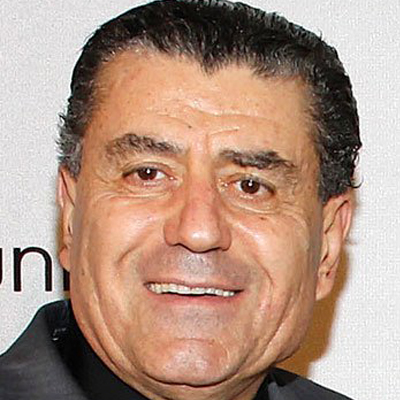
    NEW DELHI: Asserting that it is “not just important, it is vital,” Univision chairman Haim Saban has urged the development of a new broadcast transmission standard “to allow us to deliver our signal to all platforms, all the time.”


    Addressing the National Association of Broadcasters (NAB) show in Las Vegas, Saban said “If we do not, we will be left back in the 20th century. It is not an option.”


    He called on the Advanced Television Systems Committee to “seriously not consider anything else.” “Make it freakin’ happen,” Saban added, urging the NAB to lead the effort.


    Saban’s remarks came during a frank and lively keynote conversation with NAB president and CEO Gordon Smith. 


    During the discussion, Smith additionally asked Saban about his support for retransmission consent. “I don’t understand what the argument is,” Saban said. “‘I have got your content. I’m going to sell it and get paid for it—but I am not going to pay you. It is illogical; it does not make any sense.”


    He got a laugh when he recalled selling Fox Family Worldwide, which included the Mighty Morphin Power Rangers franchise, to Disney, only to buy the Power Rangers back “at a fraction, fraction of the cost.”In that specific case, I guess we were better than them,” he quipped.


    In another session, Oscar-winning cinematographer Emmanuel Lubezki, ASC, AMC, spoke about the film ‘Gravity,’ the groundbreaking Alfonso Cuarón-directed film that has the whole motion picture industry re-examining the once-clear borders between animated and live-action filmmaking.


    Produced in partnership with the American Society of Cinematographers (ASC), the session was presented in the form of a lively interview with the ASC’s Jon Witmer. Set in outer space, the film positions real actors inside an almost entirely virtual environment. Lubezki recalled the first time he heard Cuarón’s idea for ‘Gravity.’


    The film combines the shooting of actors with elaborate CGI work, so VFX supervisor Tim Webber came on board very early in the production process of determining exactly how to create the elements necessary to realize Cuarón’s vision.


    “We can do it very simply,” Lubezki recounts Cuarón saying. “It will be one actor. It’s in space so we can shoot it in front of a black background.”


    Lubezki explained that they immediately realized the procedure was “the opposite of normal. Usually, you shoot the actors and then [the VFX artists] make the CG work with those [elements]. This time, we had to make an entire CG movie, then shoot actors to incorporate into that.”


    The CG artists at visual effects house Framestore built an elaborate pre-visualization of the film with all the shots planned precisely, with roughly animated likenesses where the real actors’ faces would later be composited. Lubezki discussed his collaboration with the 10 animators at Framestore who were creating much of what would become the movie.


    “It was a group of different artists with different ideas and different solutions,” he said. “I would say I want the sun to be a little to the right in this shot and they might see it as ‘cheating.’ ‘That is not where the sun would be if there is a cut from here to here,’ they would object. It was like working with 10 different gaffers!”


    As the CGI took form, the filmmakers were still figuring out how to shoot and light the actors who were going to be composited into the “CGI movie” they were creating. So much of the texture and feeling of cinematography comes from the way the subject, environment and light all interact. And the filmmakers still wanted as much of that magic to take place in camera as possible.


    Lubezki explained that the way the actors floating through space was simulated, was through a combination of moving the actors on platforms, and flying cameras and lights around them using robotic arms. Much of the shooting of the actors was done inside a specially-designed “light box,” a small room of approximately 12 x 12 feet, constructed entirely from LED panels on which the production could project appropriate portions of the pre-vis so that the actors could see what the characters were seeing and the illumination from the projected scenes was actually reflecting on them.


    “If you zoom in on [Sandra Bullock’s] face,” Lubezki said, “you can see the environment and even other characters reflected in her eyes. That’s the kind of thing we really did not want to try to do in post.”


    The then-new ARRI Alexa made the film possible, he reported. This was partly due to its ability to shoot at EI 1600, which he says was sometimes necessary in order to get the exposure he wanted with the LED panels serving as the primary source of illumination. He also explained that despite his love of shooting film, his initial testing indicated that film’s texture — even stocks with the tightest grain — simply didn’t work for the 3D experience.


    The fact that ‘Gravity’ was always designed to be shown in 3D informed everything about the way he shot the live-action portions. He worked primarily with very wide lenses — mostly 18 mm and 21 — and at deep stops—generally T-5.6 —“to give the audience an immersive experience.”


    While his approach was clearly a departure from the simpler style that has helped Lubezki’s work stand out for some time, he emphasized that he didn’t really see his work as a cinematographer as essentially different on “Gravity” than on any other project. “It felt exactly the same. It was about lighting and framing and movement. It was everything I do on a ‘normal’ movie, just using different tools.”

  • FCC chairman Wheeler ready to discuss national broadcast plan

    FCC chairman Wheeler ready to discuss national broadcast plan

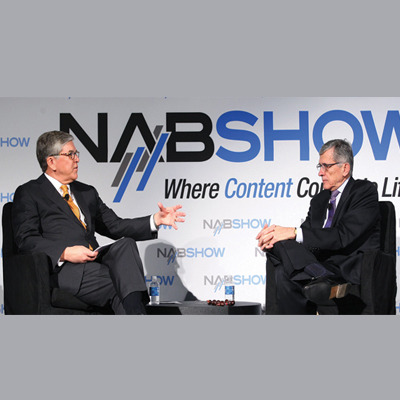
    NEW DELHI: Federal Communications Commission Chairman (FCC) Tom Wheeler has asked broadcasters to share channels, migrate to the Internet and use next year’s incentive auction to adopt a new transmission standard.


    “We’ve just been through one TV transition,” Wheeler said in his remarks at the National Association of Broadcasters (NAB) show in Las Vegas. “We both know the magnitude of that challenge … Government and broadcasting will need to work together on this, because it will be a long and heavy lift.”


    Wheeler’s NAB show debut as chairman came just days after the Commission passed an order cracking down on joint-service agreements (JSAs) and collective retransmission negotiations among certain TV stations. He acknowledged the contention. He admitted: “It’s no secret that broadcast has been critical of some of my actions at the FCC.”


    He said he took NAB president and CEO Gordon Smith’s suggestion for a national broadcast plan “very seriously.” He added: “If Congress were to approve, I guarantee you we’ll support this.”


    Smith suggested such a plan could include an ownership review and transition to a transmission standard based on orthogonal frequency-division multiplexing — a radical change from the current 8-VSB technology mandated by law.


    “When it comes to OFDM, particularly ATSC 3, the FCC will be ready and responsive when the standard is completed,” he said. “If it is possible to get a multiple of throughput on spectrum with OFDM, we as stewards of the spectrum need to be supportive.”


    Wheeler said the Commission would use discretion in reviewing JSAs and shared service agreements.


    “When JSAs and SSAs serve the public interest … they will have no problem passing the FCC,” he said, “so long as they do not impair competition, diversity and localism. Some have impaired that. Those actions have encouraged … us to enforce the rules of the statutory mandate.”


    Smith asked why the FCC focused on broadcast JSAs without taking the same approach to cable interconnects — multiple pay-TV operations that team up on ad sales. Wheeler said the JSA order specifically asked for evidence that interconnects were anticompetitive so the issue could be addressed.


    The chairman pitched the incentive auction as an opportunity for broadcasters, as he has since being confirmed. While his JSA and retrans rulings cast him as a broadcast foe, he said there was “no conspiracy.”


    “The FCC is carrying out the mandate of Congress,” he said. “Those who want to participate, can. Those who do not, do not have to.”


    He said the auctions could provide the cash for TV stations to become over-the-top providers. “OTT represents an open field for stations because of their local news operations,” he said.


    “You have the opportunity to deliver local news down to the neighborhood,” he added. “The Internet has failed to serve localities the same way.”


    With OTT migration in mind, he encouraged broadcasters to support network neutrality, quoting a Pew study saying one-third of Americans consume news online.


    “Many stations, most stations, many people in this room, have websites that deliver news video,” he said. “That means stations are positioned to leverage that trend … Assuring an open Internet is directly relevant to the opportunity the digital future presents to you.”


    He encouraged more exploration of channel-sharing, and said the recent test of the methodology in Los Angeles proved its efficacy.


    “It will allow you to maintain your existing business, while taking home an auction check,” he said. “It’s an once-in-a-lifetime business opportunity to expand your business model on somebody else’s dime” — one that wouldn’t happen again anytime soon. “Neither government nor broadcasters will want to deal with another repacking.”


    Repacking TV channels into less spectrum is expected to be complicated for everyone involved, including over-the-air viewers, whose numbers are growing, Smith noted. Wheeler concurred, offering a personal anecdote.

  • Support our efforts to compete, or get out of the way: NAB to FCC

    Support our efforts to compete, or get out of the way: NAB to FCC

    NEW DELHI: National Association of Broadcasters (NAB) president and CEO Gordon Smith has expressed bewilderment at the manner in which the United States Federation Communications Commission (FCC) chooses to interfere with broadcasters, including its recent ruling that cracks down on joint sales agreements, while giving preference to cable and wireless.


    Addressing the opening session of NAB Show in Las Vegas, Smith said no other medium, including broadband, better serves the public in time of crisis, than broadcast.


    “We are here to be the public’s eyes and ears, to lead them out of darkness during times of crisis, to share profound moments, and to connect to our family, friends and neighbours. We are here to be the voices against oppression and we are here to be megaphones for freedom and democracy,” Smith said.


    Local broadcast, he continued, contributes nearly $1.3 trillion to the gross domestic product.


    Smith proposed a “National Broadcast Plan” — a response to the government’s National Broadband Plan — that would include, among other things, a review of regulations that he said hold back innovation and competition.


    “Why is there no focus to foster innovation and investment in broadcasting to ensure our business continues to be a world leader alongside our broadband industries?” he asked.


    Smith also remarked about the broadband players that are clamouring for swathes of the broadcast spectrum. “The wireless industry covets our spectrum, because they chew through their massive allocation of spectrum, attempting to deliver the video we deliver far more efficiently,” said Smith. “And they continue to milk, bilk and bill by the bit.”


    Smith, a former US Senator, quoted a Wall Street Journal article that said broadcasting kept more than eight million people safe during Hurricane Sandy. “Broadband cannot do that,” he said.


    Smith’s oratory struck a chord with veteran broadcasters assembled at the LVH. “It was a great rallying cry for the television industry,” said Raycom Media president and CEO Paul McTear, “It was good to see him challenge the FCC to allow broadcasters the right to compete in the future, in light of recent rulings that were more exclusionary. I thought he did a good job.”


    Citadel Communications CEO and a former NAB joint board chairman Phil Lombardo said, “He showed that he knows our business and knows our business intimately.”


    Univision anchor Jorge Ramos was presented with the Distinguished Service award by the NAB.


    He challenged reporters to “speak truth to power” at all costs, especially on issues vital to Univision viewers such as immigration. He toasted the enormous growth of the Hispanic population in the United States. “It’s a great time to be a Latino journalist,” he said. “We have found our voice — in English and in Spanish.”


    Univision chairman and Saban Capital Group CEO Haim Saban spoke of his days in a Beatles cover band “I was a really lousy player so they kicked me out and made me the manager”, his success in turning “Mighty Morphin Power Rangers” into a smash, and the unique relationship between Univision and its viewers. “Univision really is the home away from home for our community,” said Saban.


    He also criticised the FCC when he said the letters FCC stand for “Friendly Cable Commission.”


    He stressed the importance of a new transmission standard to help broadcasting thrive on all platforms. Saban’s mandate to the technology people working on the initiative: “Make it freakin’ happen.” 


  • Mobile TV industry group OMVC to integrate functions within Nab

    Mobile TV industry group OMVC to integrate functions within Nab

    MUMBAI: The Open Mobile Video Coalition (OMVC), which has served as the principal proponent for Mobile Television since 2007, has announced that it will integrate functions with the National Association of Broadcasters (NAB).

    Effective 1 January, key functions currently coordinated by the OMVC executive director, including OMVC’s technical groups, advocacy efforts and marketing activities, will be integrated into the Nab.

    Anne P. Schelle, who has served as OMVC’s executive director since shortly after it began, said: “The purpose of the OMVC was to help develop a Mobile TV standard, create an ecosystem for broadcasters, manufacturers and other interested parties and to encourage device development. We’ve done that, and with the recent launch of Dyle mobile TV, operated by a consortium of broadcasters known as the Mobile Content Venture, and similar activities by the Mobile500 Alliance, Mobile TV is available in more than 35 US markets covering some 55 percent of the population. Integration with the NAB is the logical next step as the commercialisation of Mobile TV enters its next exciting phase”.
    Nab president, CEO Gordon Smith applauded the OMVC’s work and pledged the association’s full support for building further momentum for Mobile TV.

    “The NAB is honored to assume the duties carried out so successfully by the OMV. Through the joint efforts of the OMVC, ATSC and innumerable technical groups, the groundwork has been laid for an exciting new TV experience delivered to mobile devices . The NAB, as the voice of the broadcast industry, is the perfect home for this activity as it blossoms into the next great U.S. technology story”.

    Building on her OMVC leadership and accomplishments, Schelle will continue her Mobile TV evangelism as a senior policy consultant to the Nab to help assure a smooth transition.

    “Mobile TV is a key part of broadcasters’ future, and the power of the NAB will enable the industry to speak with one voice, to continue our advocacy efforts before the FCC and Congress and to significantly expand the reach of Mobile TV services for American TV viewers. I look forward to working hard to keep the momentum going, while collaborating with the talented NAB staff, Television Board and broad membership on the transition,” Schelle said.

    Mobile TV, based on the ATSC A/153 broadcast standard, transmits live local news, sports, entertainment and emergency information to a wide variety of mobile devices. By delivering popular video programming to a large audience over existing broadcast spectrum, Mobile TV helps to reduce congestion on less efficient wireless broadband networks.