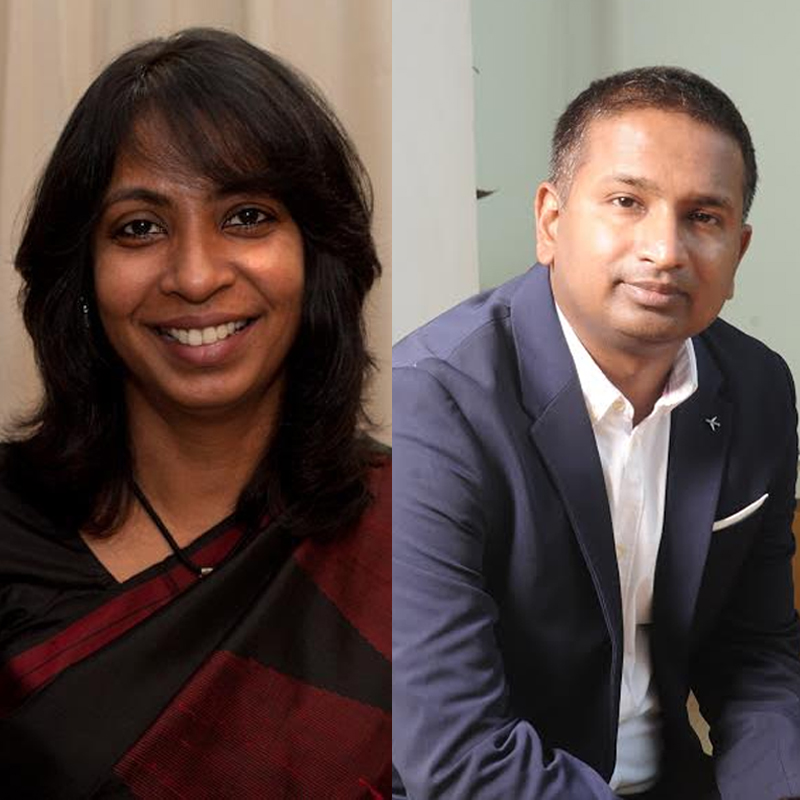
Tag: Gopa Kumar

  • This World Heart Day, Gaana raises awareness about heart health with #DilKiSuno Playlist

    This World Heart Day, Gaana raises awareness about heart health with #DilKiSuno Playlist

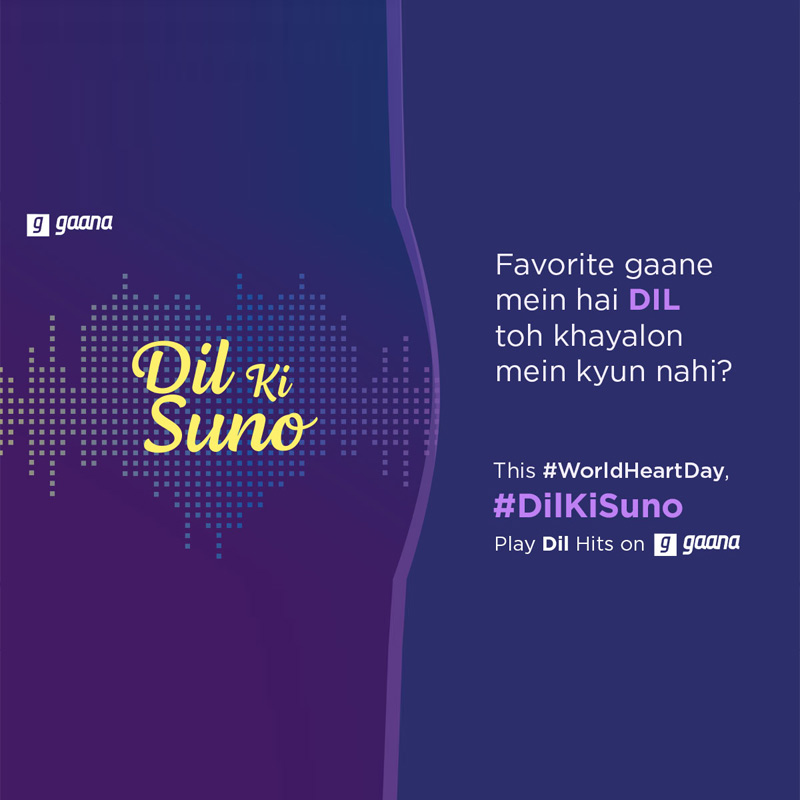
    MUMBAI: On this World Heart Day, India's largest music streaming app, Gaana has partnered with Isobar India to launch an exclusive #DilKiSuno playlist, where every song reminds users to take care of their heart’s health.

    The Gaana playlist uses popular Bollywood songs with the word ‘Dil’ (heart) along with a witty tagline – ‘Apne #DilKiSuno aur rakho apna khayaal. Gaana dwaara, dil-hit mein jaari’, to remind music lovers to get check-ups done for heart-related health risks. The #DilKiSuno campaign is exclusively live across social media and Gaana.

    Speaking of the launch, Prashan Agarwal, CEO – Gaana said, “Music is a true universal form of expression in its ability to be able to entertain while connecting with people at levels where sometimes words cannot take you. This World Heart Day, we want to use this bridging power of music to reach out to every Gaana user and remind them to take care of their heart.”

    Commenting on the launch, Gopa Kumar, Chief Operating Officer, Isobar India said, “The rush of modern life often takes a toll on us, and we tend to ignore the little warning signs from our bodies that all is not well. On the occasion of World Heart Day, we are excited to partner with Gaana to launch the #DilKiSuno playlist that drops a melodic reminder to check one’s heart through songs that talk of the heart!”

  • Isobar India elevates Gopa Kumar as chief operating officer, Anish Varghese as chief creative officer

    Isobar India elevates Gopa Kumar as chief operating officer, Anish Varghese as chief creative officer

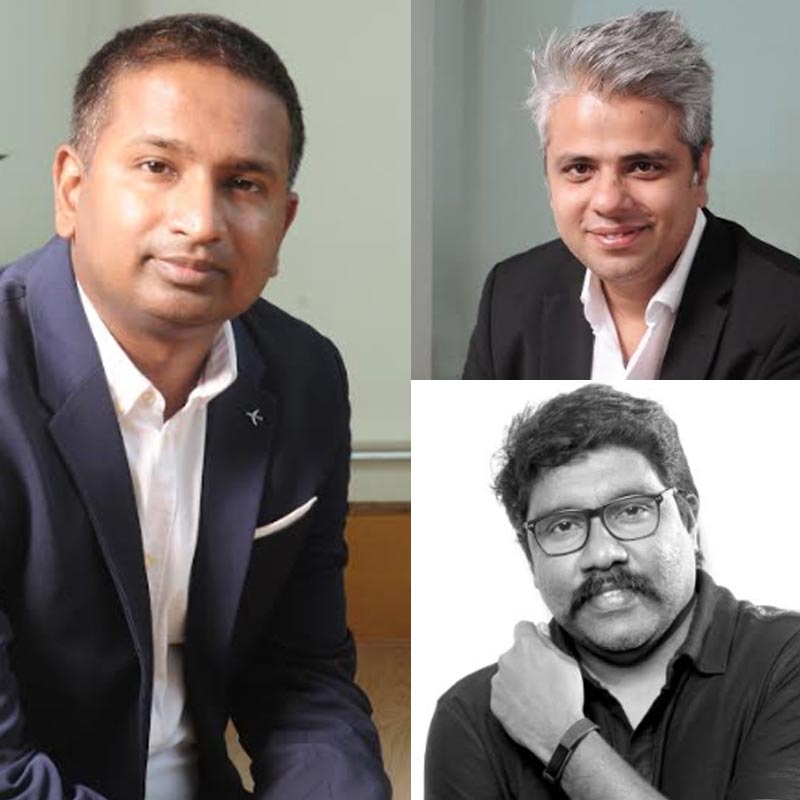
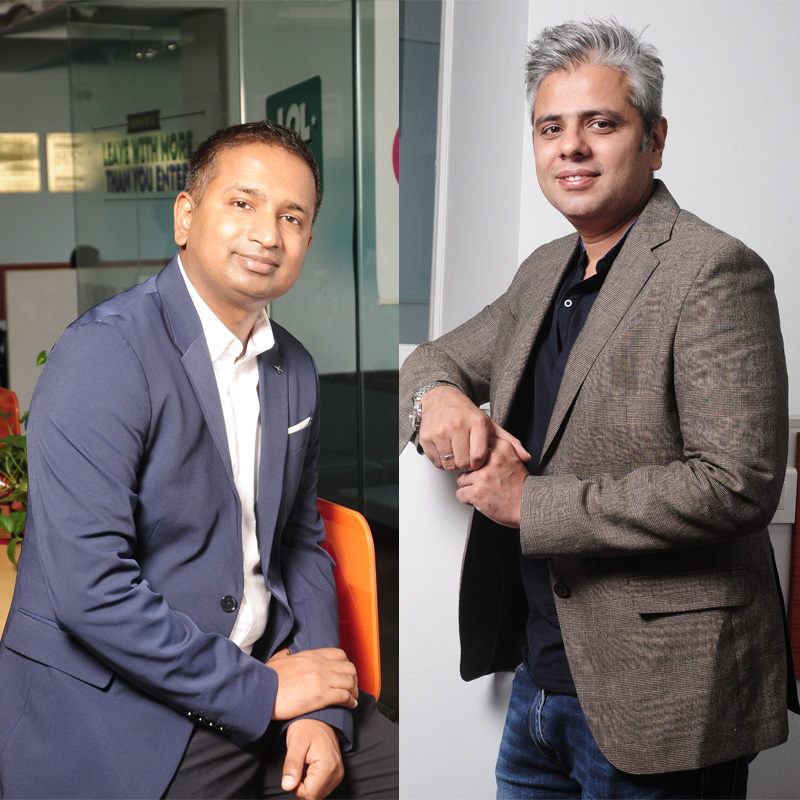
    MUMBAI: Isobar, the digital agency from Dentsu Aegis Network, a global media and marketing communications conglomerate, has elevated Gopa Kumar to Chief Operating Officer and Anish Varghese to Chief Creative Officer with immediate effect. Gopa and Anish will continue to report into Isobar South Asia, Group MD, Shamsuddin Jasani.

    On the appointment, Shamsuddin Jasani, Group MD, Isobar South Asia and executive sponsor for DAN Programmatic states, “Gopa has played a very important part in the growth of Isobar for the past 10 years and was already playing the role of Chief Operating Officer. Our creative product has grown leaps and bounds and we now are truly respected as one of the leading creative forces in the digital age and Anish has been front and centre of this. I truly believe that the two of them along with the leadership team at Isobar will steer us to greater heights for years to come.”

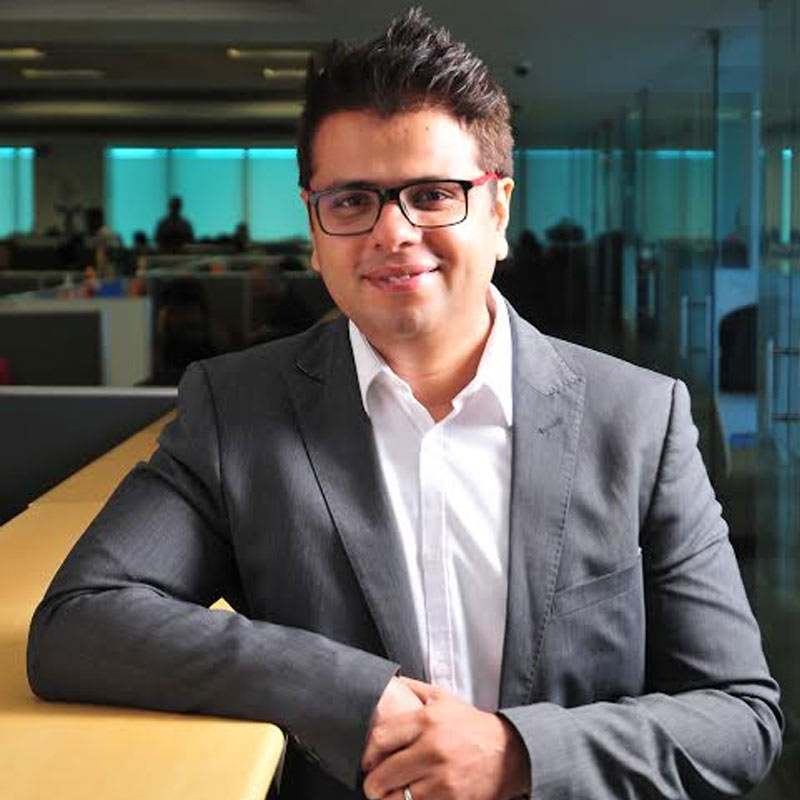
    Gopa Kumar has been promoted to Chief Operating Officer from Executive Vice President, a position he has held since 2017. Gopa has been pivotal to Isobar India’s continued success in both leading and growing the agencies key client relationships and building the business. As Chief Operating Officer, Gopa will be responsible for overseeing Isobar India’s key accounts and business development with a clear strategic vision for growth.

    Anish Varghese has been promoted to Chief Creative Officer from National Creative Director, a position he has held since 2017. Anish will take on the overall responsibility of a refreshed creative proposition and ensure it fills client conversations across Isobar India.

  • MySchoolReviews.com launches #HerCourageLessons campaign

    MySchoolReviews.com launches #HerCourageLessons campaign

    MUMBAI: #HerCourageLessons, the latest campaign by Isobar India, the digital agency from Dentsu Aegis Network, for MySchoolReviews.com, a school listing and reviewing website, is making parents question the way they are raising their girls.  Parents, with love and care, are also unknowingly teaching fear to their daughters through their statements and actions. “Avoid going to certain public spaces”. “Don’t wear certain types of clothes”. “It’s not nice to talk back”. These statements come rightly under a blanket of concern, but inadvertently, what they also do is instill fear in girls.

    The campaign has been launched with a series of 3 films. Taking influence from popular children’s rhymes, each film throws light on a prevalent fear that parents unintentionally pass on to their daughters. In addition, MySchoolReviews.com has especially created an Amazon Alexa skill that would allow parents to check whether they are fear training or courage training their daughters.

    Talking about the campaign, MySchoolReviews.com co-founder and managing partner Lalit Mehra said, “Being courageous is the need of the hour for every girl. As responsible custodians, it is our duty to teach every girl in India to be fearless, confident and strong. Through #HerCourageLessons, we want to prove that teaching courage to daughters from a young age is possible.”

    Isobar India executive vice president Gopa Kumar said, “I believe it’s a fantastic initiative by MySchoolReviews.com to bring out the prevalence of unintentional fear training by parents at large. We may not notice it but it is prevalent and is deep-rooted in what we teach to our girls. We need to move out of this and start teaching courage to our daughters so that the next generation is fearless and is not conditioned in stereotypes. Through a series of brand videos, #HerCourageLessons intends to raise awareness about the same. Along with Alexa skills, other unconventional techniques are being explored to push this message across to parents.”

    Isobar India national creative director Anish Varghese stated, “This International Women's Day, we do not want to discuss the lives of only a few girls. Rather we want to create an impact on an entire generation. And all of this starts with a simple question to parents who are raising their girls – What are you teaching them – fear or courage? Data says that more than 63 per.cent of parents unknowingly teach fear to their daughters through their statements and actions. To make them aware of this, we twisted the very first lessons that kids learn and remember when they get old – the nursery rhymes.  The happy visuals in the films show that teaching is unintentional while what you hear will take you by surprise. #HerCourageLessons, powered by MySchoolReviews.com, urges parents to re-look at the lessons they are teaching their girls from a young age so as to raise the brave girls of tomorrow.”

  • Isobar India bags digital mandate for Colorbar

    Isobar India bags digital mandate for Colorbar

    MUMBAI: Isobar India, the digital agency from Dentsu Aegis Network, has been appointed as the digital partner for Colorbar, one of India’s leading beauty brands that is positioned in the premium segment.

    Isobar India won the account following a multi-agency pitch and will manage the brand from its Delhi office.

    Colorbar head of digital marketing Jayati Modi says, “We are very excited to partner with Isobar. With its global expertise in the digital space, Isobar brings an unparalleled value to the table. We’re looking forward to working together, innovating together and growing together. We are sure that with them by our side, we will be able to build as strong a presence in the digital space as we have in the retail industry.”

    Isobar India executive vice president Gopa Kumar adds, “We are really excited to partner with Colorbar. It is one of the leading players in the fashion and beauty segment. We are looking forward to creating exciting digital-first experiences for the brand Colorbar as the primary mode of communication for this category.”

    Isobar is a global full-service digital agency known for its significant innovations in digital marketing communications.

  • TV in future to be delivered through internet pipe, not DTH: Isobar group MD

    TV in future to be delivered through internet pipe, not DTH: Isobar group MD

    MUMBAI: The year 2008 will always be remembered as the year of the global financial crisis. It was the worst financial crisis the world ever faced since the Great Depression of the 1920s. The crisis that originated in the United States gradually extended over a period of time and eventually brought the entire world under its grip. And India wasn’t spared from the catastrophe as well. It was a time when brands didn't have enough money in their pockets to spend on advertising and manufacturing.

    Digital agency Isobar that started operations in 2008 during the meltdown, recently celebrated its 10-year anniversary. While it was a definite challenge convincing brands to come on board to advertise on a new medium, it definitely paid off. The agency has worked for Godrej securities, V-Guard, Wrangler, Adidas, Lego, Durex, Acer, Voot, CEAT, Barbie, ROUSH among others. Isobar has over 6,500 people in 85 locations across 45 markets globally.

    We sat down with the recently elevated Isobar group MD for South Asia Shamsuddin Jasani along with executive vice president Gopa Kumar where they discussed about their journey at Isobar, what has changed in the last 10 years, the advent of newer technologies, challenges for the industry and much more.

    It was a challenging time when you started the agency. How was it?

    Shamsuddin: We started Isobar when there was a global financial meltdown in 2008. Businesses across were shutting down and it was a bad phase for the entire industry. But it was a good time for us to start the company. It was a different time altogether as digital was just coming up. Ashish Bhasin had joined Dentsu just two months before I joined.

    2006-2008 was a time when brands were new to the digital world. How challenging was it to get brands on board?

    Shamsuddin: In 2008, businesses were reducing spends on media due to the global meltdown. People wanted to start experimenting on digital more than before as the idea was that you need to spend much lesser on digital than on print and television. But yes, we worked really hard to get clients on board for a relatively new medium. We had to use our existing list of contacts but it was more about going to clients and explaining to them how digital works. But clients were also receptive to hearing us out as they wanted to experiment with their money. The years 2008 to 2012 was more about educating clients but digital really hit home in 2012. The digital spends between 2008-12 were around 8-10 per cent which has now gone up to 20-30 per cent.

    How has it been working with Ashish Bhasin? He is known as one of those bosses who really gives you the creative freedom to operate the way you want to.

    Shamsuddin: We have learnt so much from him and we have grown so much because he has allowed us to make our own mistakes and take our own risks while giving us a guiding light. I wouldn’t have been able to build Isobar the way it is if we were a part of a different network.

    Gopa: His ethics and the way he conducts himself is inspirational to us. It has been great working with him. He is a guiding light to everyone at Dentsu Aegis Network.

    Are brands okay and accepting to spend a huge chunk on digital marketing or will it still take them some time to accept digital?

    Shamsuddin: The acceptance has happened and clients now know the importance of digital. Every brand is on digital today but it’s more about how brands are exploring the medium to the fullest. For a long time, digital was seen in isolation from other mediums and that is where it failed. I think soon everything will move to digital. Five years down the line, you will have television that will be delivered digital only through an internet pipe and not through DTH.

    So the way we consume digital will change?

    When Jio fibre comes out with its set top box that will be a game changer for television because you will now watch a lot of content on demand. That will create a sea change in the money we are spending. Television metric will be intrinsic to digital because you will be buying everything through digital. The explosion is already happening due to Reliance Jio. In the next few years, video will drive a lot of the consumption stories and advertising stories along with e-commerce. Increasingly, a lot of people are not searching for brands on Google but directly on e-commerce websites.

    When do you see the shift happen when everything becomes digital?

    Shamsuddin: Even when it becomes a digital world, you will still buy television and outdoor. Outdoor will become 30-40 per cent of the total media spends because you will have digital screens. Advertising will be a digital led industry, not necessarily digital buying in as early as 2020. However, that may not necessarily mean that digital spends will be 40-50 per cent of the ad budget.

    They said out of home a dying medium but increasingly we see a lot of brands exploring the medium to the fullest. Also digital OOH is becoming every advertisers’ favourite medium…

    Shamsuddin: Outdoor and digital have the perfect marriage. Experiential advertising in the next few years will change the face of advertising altogether. Nearly 30-40 per cent of all outdoor in India will be through digital outdoor. That is simply because digital outdoor is very local and also digital now allows us to do hyperlocal. Some exciting times ahead for us!

    There is a constant chatter about digital content regulation. If it happens, won’t that only be a bad decision altogether?

    Shamsuddin: The basic question here is, how will you regulate digital content? It basically means that you will not have free content because you can’t regulate digital content. A player like Netflix or Amazon may abide by that but a lot of created and shared content can’t be regulated. You need to have enough filters to stop communal content but a content that users are paying for shouldn’t be regulated. It has to be more about self regulation by content creators because it’s viewed on a personal device.

    Whats your view on technologies like Augmented Reality and Virtual Reality? Will they become inevitable in advertising few years down the line?

    Gopa: India has used VR as a tactic and gimmick but nothing which has translated into scaleable marketing solution. But around the world, people are using VR and actually adding value to it. I think in India, it won’t only be about AR or VR, but mixed reality and that solution will be sustainable. More brands and agencies need to invest in these technologies and only then we can scale it up in terms of quality as people need to experiment.

    Shamsuddin: I think AR will be bigger than VR in reality between the two technologies. That is simply because you don't need bulky headsets to experience AR. Now smartphones come with preloaded AR kit. But I think it will take another two to three years before AR changes the way we interact and use our phones and see things around us. Google glasses came in too early in the game but this would have been the perfect time.

    In India, it’s only Republic TV and Discovery Jeet that are using VR to show news. Is the Indian audience even ready for such technology?

    Shamsuddin: I don't think VR is ready yet in India and I don't think VR is something that you would want to take on live. The virtual content does not lend itself well for live content. It might work well for a cricket match or a Formula1 race but I don't know how important this is for news because news we are already consuming through video or text and that gives us enough information. The immersive concept works well for concerts and live sports.

    One word of advice that you would want to give to upcoming talent?

    Shamsuddin: You need to work on the basics as the basics don't change just because it is a digital agency. Just because you work in a digital agency, it doesn’t mean this is Silicon Valley where you can come in by 2 pm and leave by 6 pm! It is still work and you need to work! You need to work hard, get your basics right and make yourself better every day.

    Gopa: For me, it’s all about hard work, being passionate and having your integrity is the foundation. The industry is dynamic and everything changes at the fly and if you are not ahead of the curve and you are not reinventing yourself, you will never be able to succeed.

  • Has advertising finally begun to embrace AI?

    Has advertising finally begun to embrace AI?

    MUMBAI: Artificial intelligence (AI), a tool that uses logic to mimic the human brain, has been the buzzword in the advertising industry for quite some time now. 

    AI was founded as an academic discipline in the year 1956, and in the years since, the technology has experienced several waves of optimism, followed by disappointment and the loss of funding (known as an AI winter), thereafter by new approaches and success.

    People often tend to use the term AI interchangeably with machine learning (ML), but they are completely different tools. While AI is the broad concept of teaching machines with data to do things in an efficient way, ML is the technique of using algorithms to process data, learn from insights and make predictions that train AI. As Wunderman AI’s global leader Robbee Minicola rightly says, “You can have machine learning without AI, but you can’t have AI without machine learning.”

    With the implementation of AI in advertising and marketing, brands can discover the price at which networks are willing to pay for an impression and identify the optimum times of data to serve an ad for target consumers.

    public://IKEA.jpg

    AI’s potential for improving campaign effectiveness is only just being unearthed with a limited understanding of impact. AI-driven elements like image and voice recognition on smartphones, algorithm-based viewing suggestions for Netflix and Google’s real language analysis in search are now gaining mainstream status. It is believed that AI will soon become indispensable in advertising. 

    The concept of ‘technological singularity’, in which machines become better at developing themselves, is a reality but human intervention will always be required. Isobar executive vice president Gopa Kumar doesn’t believe in giving everything to automation and AI as it is an indispensable part of the future media ecosystem.

    According to Adobe’s 2018 Digital Trends report, top-performing companies globally are more than twice as likely to be using AI for marketing (28 per cent vs 12 per cent). The report also found that less than one in five global respondents said their companies are pushing forward with AI and nearly half of respondents said their organisation has inconsistent integration between technologies.

    Although advanced and matured markets like the US, UK, China and Japan have been early adopters of the technology, India is catching up at a fast pace because of its risk-taking ability. Programmatic platforms and advertising are the first kind of AI intervention in advertising and is increasingly becoming more and more pervasive. 

    It is still early days for AI in India as compared to the western world in understanding and implanting these technologies. Havas Media Group India MD Mohit Joshi believes that the adoption of technologies is already happening, however, reaching the US level of adoption will require the clients to be equally convinced and more importantly give them some ‘use case’ success stories. 

    Programmatic advertising will contribute to more than 60 per cent of advertising in the next two years in India which is the currently world average.

    Isobar India EVP Gopa Kumar thinks that AI in India is still at a very nascent stage and in media it is just being initiated. He adds that though it will take a while to be the prime choice, but once it does, its adoption will be widespread and then the usage of AI in advertising will be across platforms and mediums. 

    In India, sectors like BFSI, e-commerce and FMCG have been able to make the most of artificial intelligence, big data analysis and machine learning to have better connect with consumers and enhanced consumer experience. But there’s a lot to learn from the daddies like IKEA and Alibaba.

    public://alss.jpg

    Since AI is an expensive tool and hiring an agency for it is often expensive, advertisers today are looking at building their own in-house AI capacities. With benefits including improved consumer engagement through personalisation, leaner marketing operations and cost savings on ad serving, the return on investment (RoI) prospects are rather appealing for advertisers. What it does require is a heavy initial investment in hardware and software for data collection and processing and acquiring the right talent.

    Dentsu Aegis Network chief data officer Gautam Mehra admits that AI is not a magic sauce and it will not change the brand’s RoI overnight and clients (brands) need to understand their business challenges before they plan on investing in these technologies. “The primary challenge for any advertiser is how do you know which data to go after and how do you bring that data into your warehouse (cloud or physical) and maintain that data warehouse to give data insights. Brands need to trust data and have a data driven culture in the organisation,” he adds. 

    Not all advertisers may understand the technicality of AI and the automation of basic data processes and the implementation of integrated analytics. This is precisely where advertising agencies can help their clients, both as trusted advisers and execution partners.

    The lack of good media infrastructure is a barrier to better implementation of AI in India. Our challenge is how do we make AI actionable because our other mediums are not evolved enough and we don’t have programmatic OOH or digital OOH except at airports. Mehra asks how do we bring about a real time change in media when our media itself is not programmatic? While India’s radio is still terrestrial, a majority of set-top boxes for television are not trackable and, therefore, there is reliance on BARC data. 

    India is still a data-starved market and AI works only on data. Joshi concludes that the biggest challenge for India will be getting the right talent, as we need great data scientists and the best of them ignore the media space.

    While India is on its way to becoming AI-ready, some major players including Vodafone, Myntra, Flipkart, HSBC Bank and SBI Bank have started putting in the effort to adopt the technology.

    Also Read :

    The Glitch to leverage GroupM data to reach rural India

    2017 – The year of long-format ads

    How iProspect’s Vivek Bhargava foresaw a digital future two decades ago

    Talent retention is key, says Mindshare’s Prasanth Kumar

  • Isobar India makes hotels friendly to differently abled

    Isobar India makes hotels friendly to differently abled

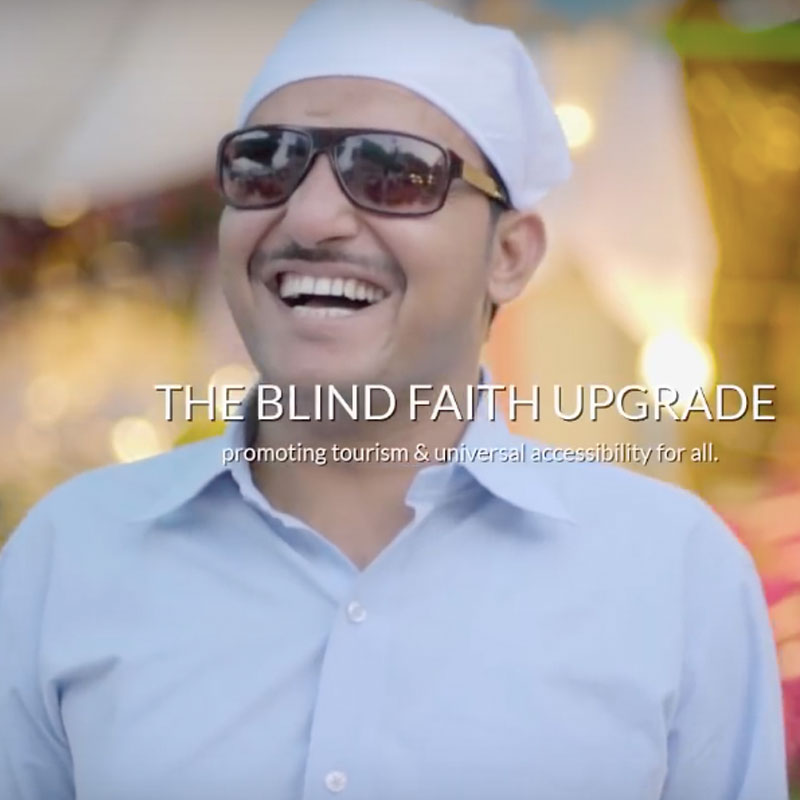
    MUMBAI: Isobar India, the digital agency from Dentsu Aegis Network, has introduced the Blind Faith Upgrade, a thoughtful and cause-oriented initiative under accessible tourism. A sustainable step towards accessible tourism, it explores the challenges faced by visually impaired travellers and allows the hotel to transform any of its rooms into a visually impaired-friendly room. The launch of the initiative was first introduced at Hotel Ramada, Ajmer. 

    The agency looks at expanding the initiative further to other corners of the tourism industry where accessibility is a major concern across the nation. A successful tourism product requires effective partnerships and cooperation across many sectors at the national, regional and international levels. The impact of accessible tourism thus goes beyond the tourist beneficiaries to the wider society, engraining accessibility into the social and economic values of society.

    Hotel Ramada, Ajmer general manager Manish Gupta mentions,“We are glad we could take up the Blind Faith Upgrade initiative; it fits right into our vision. As a hospitality brand, it’s our objective to deliver accessible tourism to all. This is an important step towards it.”

    In the light of the growing awareness for accessible tourism in India and the alarming ratio 1:250 of differently-abled-friendly hotel rooms to the total number of hotel rooms, Isobar introduced this initiative at Hotel Ramada, Ajmer with the Blind Faith Upgrade Kit. The kit includes Braille labels which can convert any phone into a Braille-enabled phone, reusable tactile paving tiles and Braille literature with audio assist. Available for purchase on theblindfaithupgrade.com, the kit is on an open-source model, inviting all players in the tourism industry to implement the same and spread more awareness for accessible tourism.

    Garnering immensely positive feedback, the video has received more than 1 million views since its launch.

    On the launch of this initiative, Isobar India MD Shamsuddin Jasani says, “We’re all accountable towards building a community in which we wish to live – not just for ourselves, but for generations to come. We at Isobar are trying to focus on overcoming key challenges in our quest for a sustainable community. We are looking at taking this a step towards creating an informed society and urging the other key players across tourism industry to adopt the same across their properties in India. ”

    Speaking about the project, Isobar India executive vice president Gopa Kumar adds, “Accessibility is a key concern for letting the elderly and differently-abled people feel confident that they can travel without facing any problems. We hope this initiative would help spread further awareness about accessible tourism and bring further advancements across larger players within the hospitality space.”