Tag: GOPA

  • GTPL Hathway signs grant of permission agreement with MIB for HITS

    GTPL Hathway signs grant of permission agreement with MIB for HITS

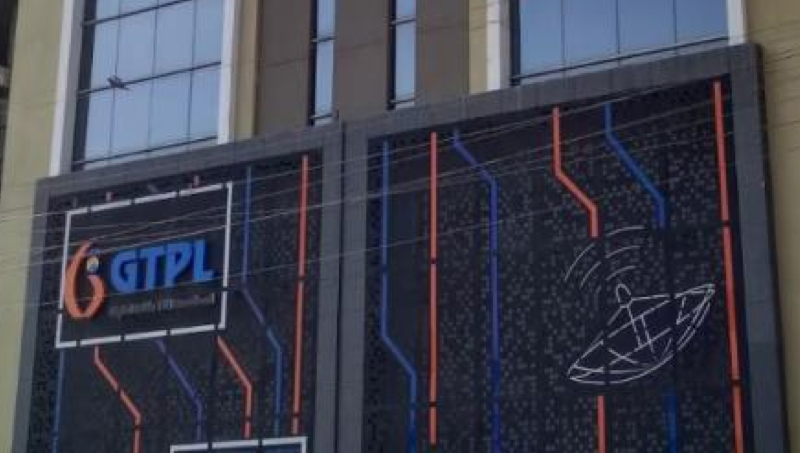
    MUMBAI: In a bold move, GTPL Hathway is preparing to colonise India’s broadcast wilderness. The Reliance Industries-owned cable TV and broadband maverick secured ministry of information & broadcasting (MIB)  approval in July 2024 to launch its Headend-In-The-Sky (HITS) project, with Rs 100 crore earmarked to execute it, subject to it being able to fulfill the laid-down guidelines.

    Having met them successfully, the company inked a grant of permission agreement (GOPA) with the ministry  on 27 March, securing a decade-long broadcast channel distribution mandate. The nerve centre? Ahmedabad for what could be a nationwide entertainment revolution. The company informed the Bombay stock exchange about the development through a regulatory filing. 

    Piyush Pankaj, the company’s chief strategy officer, had revealed during an analysts’ call in January 2025 that the project was 80 per cent complete. The idea was  to target satellite-dark regions, particularly the infrastructure-starved northern territories through the HITS service..

    The strategic thrust: by marrying cable TV and DTH technologies, GTPL aims to beam entertainment into the digital hinterlands where traditional infrastructure fears to lay its cables. It is believed that GTPL has leased twelve Telkomsat C-band transponders to broadcast the company’s digital dreams.

  • State-level television committees to monitor FM & Community Radio

    NEW DELHI: The state / district-level monitoring committees will  henceforth be authorised to monitor the content broadcast on private FM I community radio stations also in addition to private satellite TV channels. The content can be monitored by the committees suo-moto and on the basis of complaints received.

    The information and broadcasting ministry has therefore requested all state governments to constitute these committees wherever these have not been set up so far and to effectively monitor all types of content.  A detailed office memorandum in this regard has been sent to all states.

    This has been done as the ministry is in the process of formalising the complaint redressal mechanism whereby viewers and listeners can file complaints against programmes they find offensive in television channels or radio stations.

    This follows a judgment delivered on 12 January in the case of Common Cause Vs. UOI & Ors where the court advised the government to formalise the complaint redressal mechanism.

    According to MIB sources, if any violations were found, those would be acted upon by the authorised officers or brought to the notice of the ministry for taking necessary action as per relevant guidelines.

    The ministry had, in orders on 6 September 2005 and 19 February letter on 17 January 2017, asked for constitution of monitoring committees to enforce the Cable Television Networks (Regulation) Act, 1995. According to information available with the ministry, the monitoring committees were set up in 19 states, five union territories and 327 districts for monitoring content telecast on private satellite channels.

    Broadcast of FM radio channels and Community Radio Stations (CRS) are in the nature of terrestrial transmission. Hence, monitoring their content centrally is not feasible, the Ministry said.

    The content aired by them rs also of local nature. All private FM channels and Community Radio Stations are required to follow the All India Radio’s Broadcast Code in terms of the Grant of Permission Agreement  (GOPA) signed by them with the Ministry of Information and Broadcasting. 

    The ministry said it is therefore essential that such committees are set up for all types of content monitoring including private FM channels and community radio stations.

    The Ministry has sent to the states a list of permitted private FM channels and Community Radio Stations as on date. However, as this is an evolving list, the states have been told to access the latest list on the ministry’s website.

    The Ministry in its letter also informed the states that TV broadcasters have set up their self regulating system where too the public can lodge complaints. News Broadcasters Association (NBA), a representative body  of news and current  affairs TV channels, set up News Broadcasting Standards Authority  (NBSA), to consider complaints against or in respect of broadcasters relating to content.

    The Indian Broadcasting Foundation (IBF), a representative  body of non-news and current  affairs  TV channels  has set up Broadcasting  Content Complaints Council (BCCC)  to examine the complaints relating to content  telecast  on private satellite TV channels.

    In addition, the ministry said the Advertising Standards Council of India (ASCI) has set up a Consumer Complaints Council (CCC) to consider complaints in respect of advertisements.

    Also Read:

    Govt formalising TV & radio complaints’ redressal mechanism

    After DTT, TRAI launches exercise on digital radio broadcasting
  • North-East plan: DD channel Arun Prabha launch in early Jan; 90% subsidy for community radio

    North-East plan: DD channel Arun Prabha launch in early Jan; 90% subsidy for community radio

    NEW DELHI: Information and Broadcasting Minister M Venkaiah Naidu announced that a new dedicated Doordarshan channel Arun Prabha would be launched in the first half of January 2017.

    The channel would showcase richness, variety and diversity of local culture and would seamlessly integrate North East with the entire country.

    In a scenario where the number of operational community radio stations remains 191 after more than a decade of launch of the scheme, the government today said those setting up community radios can now get a subsidy of 75% in all states except the north eastern states where it will be 90%.

    Naidu made this announcement towards the conclusion of the first session of the 28th State Information Ministers Conference (SIMCON) here. He said the community radio station is an extraordinary medium which disseminates information in localised content.

    A total of 235 entities have signed the grant of permission agreement for community radio and indiantelevision’s sister concern radioandmusic.com reported in March this year that a total of 272 applications were still under the consideration of the government from educational institutions, non-governmental organisations, Krishi Vigyan Kendras and state agricuture universities. Some of these date back to 2011.

    Though the scheme was announced more than a decade earlier, the reach of CRs was extended in 2006 to include NGO and community-based organisations with at least three years legal existence.

    A total of 115 community radio stations recently received interim renewal of their Grant of Permission Agreement (GOPA) till 31 December 2016. An announcement by the ministry had said that the renewal till 31 December 2016 is till the renewal of GOPA on regular basis, whichever is earlier.

  • North-East plan: DD channel Arun Prabha launch in early Jan; 90% subsidy for community radio

    North-East plan: DD channel Arun Prabha launch in early Jan; 90% subsidy for community radio

    NEW DELHI: Information and Broadcasting Minister M Venkaiah Naidu announced that a new dedicated Doordarshan channel Arun Prabha would be launched in the first half of January 2017.

    The channel would showcase richness, variety and diversity of local culture and would seamlessly integrate North East with the entire country.

    In a scenario where the number of operational community radio stations remains 191 after more than a decade of launch of the scheme, the government today said those setting up community radios can now get a subsidy of 75% in all states except the north eastern states where it will be 90%.

    Naidu made this announcement towards the conclusion of the first session of the 28th State Information Ministers Conference (SIMCON) here. He said the community radio station is an extraordinary medium which disseminates information in localised content.

    A total of 235 entities have signed the grant of permission agreement for community radio and indiantelevision’s sister concern radioandmusic.com reported in March this year that a total of 272 applications were still under the consideration of the government from educational institutions, non-governmental organisations, Krishi Vigyan Kendras and state agricuture universities. Some of these date back to 2011.

    Though the scheme was announced more than a decade earlier, the reach of CRs was extended in 2006 to include NGO and community-based organisations with at least three years legal existence.

    A total of 115 community radio stations recently received interim renewal of their Grant of Permission Agreement (GOPA) till 31 December 2016. An announcement by the ministry had said that the renewal till 31 December 2016 is till the renewal of GOPA on regular basis, whichever is earlier.