Tag: Google

  • OpenAI joins C2PA steering committee

    OpenAI joins C2PA steering committee

    Mumbai: The Coalition for Content Provenance and Authenticity (C2PA) announced that OpenAI, a leader in artificial intelligence research and deployment, has joined the C2PA as a steering committee member. This marks a significant milestone for the C2PA and will help advance the coalition’s mission to increase transparency around digital media as AI-generated content becomes more prevalent.

    Joining other steering committee members that include Adobe, BBC, Intel, Microsoft, Google, Publicis Groupe, Sony and Truepic — OpenAI will collaborate to further develop and promote the adoption of Content Credentials, an implementation of the C2PA’s open technical standard for tamper-resident metadata that can be attached to digital content, showing how and when the content was created or modified.

    The announcement today builds on OpenAI’s previously shared initiatives to improve transparency around digital provenance. Earlier this year, OpenAI began attaching Content Credentials to images created and edited by DALL•E 3, the company’s latest image model, in ChatGPT and the OpenAI API. In addition, the company also announced its plans to attach Content Credentials to video generations from Sora, the company’s text-to-video model, when the model is ready to be deployed to the public.      

    OpenAI’s membership and implementation of Content Credentials serve as a strong endorsement for the C2PA technical specification and advance the collective mission to help restore trust in the digital ecosystem.

    “C2PA is playing an essential role in bringing the industry together to advance shared standards around digital provenance,” said Anna Makanju, OpenAI’s VP of Global Affairs. “We look forward to contributing to this effort and see it as an important part of building trust in the authenticity of what people see and hear online.”

    “OpenAI is a long-time supporter of the C2PA’s mission and we’re thrilled that they’ve deepened their engagement by becoming a Steering Committee member,” said Andrew Jenks, C2PA Chair. “OpenAI’s existing adoption, advocacy, and ongoing commitment to Content Credentials will bring an important voice to our membership’s working efforts to guide the development of the C2PA standard.”


  • Priya Barve joins WPP as client lead for HUL

    Priya Barve joins WPP as client lead for HUL

    Mumbai: Priya Barve has joined WPP as India’s Client Lead for Hindustan Unilever Limited. Priya brings over two decades of experience in advertising and marketing, and has held leadership roles with Google, Mondelez, and Leo Burnett across Asia-Pacific. She brings a rich and diverse perspective on communications and media, having worked on both – the agency and client side, as well as with tech platforms.

    She also encompasses a rich knowledge of the fast-changing consumer and digital landscape in emerging markets across Asia. Passionate about F&B, outside of work Priya is best known for having participated in MasterChef Asia in 2015.

    Commenting on the appointment, WPP chief client officer for India, Shubha George, said: “A consummate professional, Priya brings a wealth of experience in aiding business success and digital transformation, as well as key local insights that needed to win in many Indias. HUL is one of WPP’s key clients, one with whom we have had the pleasure of working with for a number of years. We are delighted to see Priya joining the team to lead such an important client relationship and look forward to driving further business growth and innovation together with Unilever.”

  • RIOT LABZ redefining the Indian electronics landscape

    RIOT LABZ redefining the Indian electronics landscape

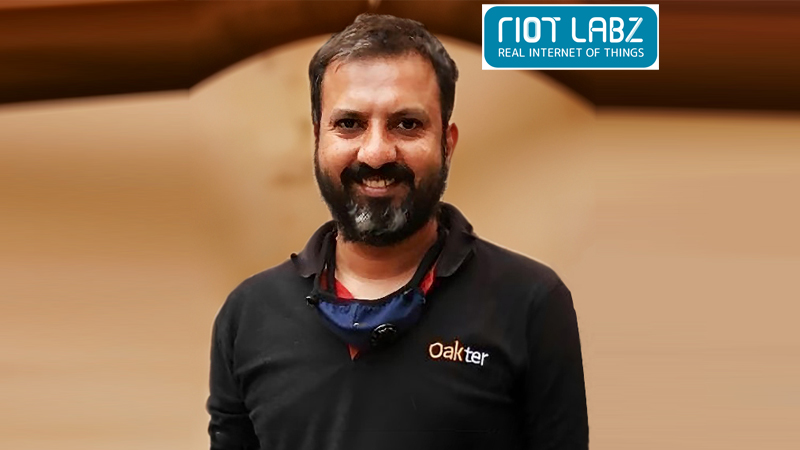
    Mumbai: RIOT LABZ is an Indian Electronic Contract Manufacturing and design company founded in 2015 by visionary minds from IIT Delhi. Specializing in IoT, Consumer Electronics, and Smart Home Automation, RIOT LABZ stands as a beacon of innovation and engineering excellence. With a focus on top-quality products, they offer rapid prototyping, customized hardware configurations, and efficient firmware development. Their state-of-the-art factories ensure precision and adherence to quality standards.

    RIOT LABZ has achieved significant milestones, including partnerships with industry giants like Amazon and Paytm, and has a diverse clientele including leading brands such as Google and Sony.

    Through their subsidiary brand, Oakter, RIOT LABZ empowers homes with a range of innovative IoT solutions, catering to modern lifestyles with products like the Mini UPS and induction cooktops. With a commitment to excellence and customer satisfaction, RIOT LABZ continues to push boundaries and innovate for a brighter future.

    Indiantelevision caught up with Riot Labz CEO Shishir Gupta highlights its defining characteristics, product offerings, growth trajectory since its inception in 2015, adaptation to market demands and technological advancements, as well as strategic partnerships that have contributed to its expansion.

    Edited Excerpts

    On the model of RIOT LABZ as a brand in the Indian electronics industry, and setting itself apart from competitors

    RIOT LABZ stands out in the Indian electronics industry through its emphasis on innovation, engineering excellence, and a customer-centric approach. By collaborating with industry giants like Amazon Alexa and Paytm, we continually introduce cutting-edge solutions to the market, showcasing our commitment to pushing boundaries. Our rigorous product development process ensures that each offering meets the highest quality standards and exceeds customer expectations, supported by 24/7 after-sales service. With a diverse product portfolio spanning IoT, Consumer Electronics, EV Charge Points, Payment Solution Devices, Sound & Audio, and Smart Home Automation, we cater to a wide range of consumer needs, positioning ourselves as a comprehensive solution provider. Furthermore, our commitment to sustainability and responsibility, evident in our eco-friendly practices and ethical business conduct, further distinguishes us from competitors, resonating with environmentally conscious consumers and reinforcing our leadership in the industry. Importantly, we have reduced rejection rates from the industry standard of 5 per cent to an impressive 1 per cent, with an average lead time for design of 6 months, remarkably shorter than the industry standard of 9 to 12 months. This highlights our commitment to efficiency and quality in every aspect of our operations, ensuring timely delivery of high-quality products to meet customer demands.

    On the offerings that RIOT LABZ provides across its various product categories and catering to the needs of consumers in different sectors

    At Riot Labz, our comprehensive range of solutions spans Original Design Manufacturing (ODM), Electronics Manufacturing Services (EMS), and consumer IoT products under the Oakter brand. As an ODM company, we manage end-to-end development for new products, primarily for OEM demands, while in EMS, we provide manufacturing, testing, and repair services based on OEM designs. Our Oakter brand offers consumer IoT products like Mini UPS, induction cooktops, and Smart Plugs, primarily online. Serving both B2B and B2C models, our offerings are meticulously crafted to meet diverse consumer needs. For instance, our IoT products enable remote monitoring and control, enhancing energy efficiency and convenience. Likewise, our Consumer Electronics lineup seamlessly integrates into modern lifestyles, offering enhanced functionality. Additionally, our Payment Solution Devices empower small businesses with flexible payment options, driving convenience and accessibility. With our diverse portfolio, we strive to deliver cost-effective innovative solutions that elevate the ease of living and promote sustainable growth.

    On RIOT LABZ’s growth since its inception in 2015

    Since our inception in 2015, RIOT LABZ has experienced remarkable growth, marked by key milestones that propelled us to the forefront of the industry. In 2016, we inaugurated our in-house electronics manufacturing facility, swiftly ascending to dominance in the Smart Plugs segment. The subsequent year marked a significant milestone as RIOT LABZ became the smart-home launch partner for Amazon Alexa in India. In 2019, our first B2B collaborations with renowned brands like Sony Bravia further solidified our market presence. In 2020, we forged a strategic partnership with the Indian Defense Research and Development Organization (DRDO), laying the groundwork for innovation in defence electronics. Most recently, in 2023, our recognition among 27 esteemed companies for the prestigious PLI 2.0 scheme further validates our commitment to excellence. Notably, our deal with Paytm, leading to the development of Paytm Soundbox, has been groundbreaking for Indian merchants. The device has seen rapid adoption across the country and played a vital role in empowering small and micro-businesses in India. It supports multiple languages such as English, Hindi, Tamil, Telugu, Kannada, Marathi, Malayalam, Bengali, Gujarati, Punjabi, and Odia. With Paytm Soundbox, RIOT LABZ provides flexibility and convenience to merchants with support for multiple payment methods such as Paytm Wallet, Postpaid, Paytm UPI, and other BHIM UPI apps, net banking, and cards.

    On RIOT LABZ adapting its offerings to meet changing market demands and technological advancements

    At RIOT LABZ we have continuously adapted our offerings to meet evolving market demands and technological advancements. Through regular market research and feedback mechanisms, we stay attuned to shifting consumer preferences and emerging trends. This allows us to proactively adjust our product portfolio and development strategies to address new market needs. Additionally, our agile development processes enable rapid iteration and deployment of new features and technologies, ensuring that our products remain competitive and relevant in the fast-paced fluctuating technological market. Moreover, our strategic partnerships with leading technology firms and industry experts provide valuable insights and access to cutting-edge technologies, enabling us to stay ahead of the curve and deliver innovative solutions in a timely manner that exceed customer expectations.

    On strategic partnerships or collaborations that have played a significant role in the growth and expansion of the RIOT LABZ brand

    Over the years, we have strategically leveraged many partnerships to fuel our growth and expansion in the market. One notable partnership we established was with Amazon Alexa, where RIOT LABZ became the smart-home launch partner for Amazon Alexa in India. This collaboration to a great extent boosted our visibility and credibility in the smart home automation sector, allowing us to leverage Amazon’s extensive customer base and distribution network. Additionally, our partnership with the Indian Defense Research and Development Organization (DRDO) has been instrumental in providing us with new opportunities to explore and develop cutting-edge technologies for defence applications. Furthermore, our collaboration with Paytm resulted in the development of Paytm Soundbox, which has been groundbreaking for Indian merchants, empowering small and micro-businesses with flexible payment options and multilingual support. Although we’ve had numerous other tie-ups with industry giants, these very strategic partnerships have particularly played an important role in elevating our market presence, fostering innovation, and ultimately fueling our growth and expansion journey.

  • IAMAI condemns removal of apps and urges Google to reinstate delisted apps

    IAMAI condemns removal of apps and urges Google to reinstate delisted apps

    Mumbai: IAMAI condemns removal of apps and urges Google to reinstate delisted apps.

    IAMAI has strongly condemned the removal of some of the most prominent consumer digital companies’ apps from the Play Store, including those of Bharatmatrimony, Info Edge, Shaadi.com, and TrulyMadly and IAMAI urges Google to reinstate the delisted apps.  

    The association’s governing council has in a statement called the delisting of apps unfair and disproportionate. The association urges Google to urgently reinstate the delisted apps and engage in consultations with the industry body or member companies to find mutually agreeable solutions till the matter is subjudice.

  • Google CEO Sundar announced Pichai Bard Advanced AI chatbot

    Google CEO Sundar announced Pichai Bard Advanced AI chatbot

    Mumbai: In a much-anticipated move, finally Sundar Pichai announced the powerful AI chatbot tool ‘ Google Bard Advanced ‘. The tech world is considering this move to challenge Microsoft Copilot Pro.

    The CEO also confirmed a subscription-based model for a powerful AI chatbot. It will be available to consumers on a subscription basis.

    While speaking on the development, Google CEO Sundar Pichai said, ‘ Bard is now powered by Gemini Pro, and it’s much more capable at things like understanding, summarising, reasoning, coding, planning. It is now in over 40 languages and over 230 countries around the world. Looking ahead we will be rolling out a more advanced version for subscribers powered by Gemini Ultra.’


  • Google to roll out Tracking Protection feature

    Google to roll out Tracking Protection feature

    Mumbai: On 4 January, Google announced on their blog post that it will begin testing Tracking Protection, a new feature that limits cross-site tracking by restricting website access to third-party cookies by default, allowing marketers time to adapt before their complete removal by the end of the year.

    They will roll out this feature to one per cent of Chrome users globally, a key milestone according to them in the Privacy Sandbox initiative to phase out third-party cookies for everyone in the second half of 2024, subject to addressing any remaining competition concerns from the UK’s Competition and Markets Authority.

    Third-party cookies have been a fundamental part of the web for nearly three decades. While they can be used to track your website activities, sites have also used them to support a range of online experiences — like helping viewers log in or showing relevant ads.

    With this move, advertisers are likely to face challenges, especially in terms of conversions, as many third-party programmatic platforms heavily depend on cookies for data. Furthermore, programmatic platforms may seek to mitigate the impact by considering price hikes for their services. These shifts underscore the evolving landscape of digital advertising, posing challenges for advertisers and reshaping industry dynamics.

    Lets see what the industry experts have to say whether this move is beneficial to the marketeers, digital players and how it will impact them…

    Edited excerpts

    TheSmallBigIdea lead- performance marketing Sharath Madhavan

    Google’s Tracking Protection benefits users by enhancing privacy through limiting cross-site tracking. The main advantages include improved online security, reduced personalized ad targeting, and a potential decrease in intrusive online experiences.

    Advertisers may face challenges with conversions due to the restriction on third-party cookies. This hampers the data flow crucial for personalized targeting, potentially impacting ad relevance. Advertisers may need to adapt strategies, focusing on first-party data and alternative targeting methods to mitigate the impact on programmatic platforms heavily reliant on cookies.

    Efficacy Worldwide founder & CEO Vishnu Sharma

    Google’s tracking protection is introduced to safeguard consumers online privacy while ensuring that they still receive personalized experiences. It involves various measures and technologies to limit the tracking of the online activities by third-party websites and advertisers. By implementing features like cookie controls, privacy settings, and restrictions on data sharing, Google aims to give users more control over their personal information. This way, consumers can browse the web with peace of mind, knowing that their privacy is being respected.

    Content creator Akshat Tongia

    Adapting to Google’s Tracking Protection marks an effective transition for digital influencers, presenting both challenges and benefits. Indeed, it could create hurdles in terms of conversions, particularly for those heavily reliant on cookie data. However, there’s a positive side – it encourages a more authentic connection with our audience.

    Adjusting to this shift requires rethinking our approach. Instead of solely relying on data from third-party cookies, we now have an opportunity to prioritize creating high-quality content and fostering genuine connections.

    The positive aspect is that this move guides us towards a more transparent and ethical digital space. It prompts us to tap into our creativity and storytelling skills, showcasing that we offer more than just data-driven content.

    While the journey ahead might encounter some obstacles, consider it a chance to stand out. By delivering content that resonates authentically, we can build trust with our audience and thrive in this evolving digital landscape.

    So, even though the initial adjustment might seem puzzling, the long-term benefits include a more resilient and trustworthy digital space. This shift is a chance for us to welcome change, innovate our strategies, and ultimately grow stronger as influencers. Let’s see it as a step towards progress and an opportunity to redefine the standards of digital influence in a more considerate era.

  • Google Chrome starts blocking data tracking cookies

    Google Chrome starts blocking data tracking cookies

    Mumbai: This is largely in line. Alphabet wanted to implement privacy measures and go completely cookie less in the next six months in June/July in a phased manner which they mentioned in their last two earning calls. Advertisers are likely to face challenges, especially in terms of conversions, as many third-party programmatic platforms heavily depend on cookies for data. Furthermore, programmatic platforms may seek to mitigate the impact by considering price hikes for their services. These shifts underscore the evolving landscape of digital advertising, posing challenges for advertisers and reshaping industry dynamics.

    This move will have a threefold impact. 1) The restriction imposed on platforms for third-party data usage for advertising is expected to lead to a substantial increase in data costs. 2) The shift towards a cookie-less environment and the limited availability of third-party data for advertising is likely to drive a significant surge in e-commerce advertising spends. Advertisers are expected to increasingly favour e-commerce platforms due to their access to valuable first-party data, providing a substantial boost to advertising investments in the e-commerce sector. 3) Platforms/ad tech companies  may also try to raise the prices from the advertisers to recover the high data costs.

    The transition towards a cookie-less environment and potential privacy measures, especially considering the dominance of Android in the global smartphone ecosystem and Apple’s prevalence mainly in emerging nations, is expected to be a disruptive force. While Apple holds less than 10 per cent market share in emerging markets like India, the move is anticipated to reshape the landscape of digital advertising, influencing privacy standards and impacting conversion dynamics. The move is very much in line with our expectation and marks a significant change in the digital advertising landscape.

    The credit of this article is attributed to Elara Capital SVP Karan Taurani.

  • Google laid off 30000 employees with AI-functioning

    Google laid off 30000 employees with AI-functioning

    Mumbai: In a Shocking development, Google decided to lay off 30000 people while restructuring ad sales platforms by Artificial Intelligence (AI) upgrade.

    As reported by The Information, AI surge will replace scalable excessive human resources in ad sales units. The news was internally shared by the president of the Americas and global partners, Google last week.

    As per media reports, Google earlier laid off 12000 employees initially this year.

    Google ensures effective use of AI in operations, probably it can be cost-cutting measures taken by Google. Google introduced AI-powered Ads to foster ad sales.

    The AI-powered campaign planner Performance Max was launched in 2021.

  • Unleashing the power of Instagram reels and YouTube shorts: Crafting engaging brand narratives

    Unleashing the power of Instagram reels and YouTube shorts: Crafting engaging brand narratives

    Mumbai: Short-form video content on social media is Google and Metas’ answer to TikTok, which disrupted the video-sharing industry during the pandemic. Though TikTok became big and was used hugely by brands in the USA, India got YouTube Shorts & Instagram Reels to do the same. Before launching globally in mid-2020, Instagram reels attracted billions of daily views. One year later, in 2021, these short video-sharing platforms surpassed 5 trillion views globally. Thus, what was originally only watched for leisure has become integral to every business’s marketing strategy.

    Brands understood that video creation enables organizations & startups to:-

    1.   To increase brand awareness

    2.   To promote sales

    3.   To grow the social media community

    4.   To educate customers

    5.   To enhance brand strength

    According to a 2022 report by Wyzowl, 86% of businesses now use video as a marketing tool, and 93% say it’s an effective tool for reaching their target audience. Short-form videos (under 10 minutes) are having a major moment on social media, with platforms like TikTok and Instagram Reels seeing explosive growth in recent years. A 2023 report by Cisco found that short-form videos will account for 82% of all internet traffic by 2022. A 2023 report by HubSpot found that 63% of viewers say they are more likely to watch a short-form video than a long-form video.

    With all this happening globally and in India, brands must use video content & ensure it becomes as viral as possible through social media. Let’s ponder deeper into how some well-known Indian brands have benefited from short-form videos on social media.

    Top Indian brands leveraging from short-form videos and how

    Netflix

    Being the most watched OTT platform in the world, short videos have predominately been the best way to promote this brand on social -media. The best part for Netflix is that they already have the commercial rights to pick short snippets from their ongoing movies & TV shows to promote their page. The number of engagements, impressions, and discussions started with the utilization of short-form videos alone are only one of the many elements that make Netflix supreme at online entertainment.


    A post shared by Netflix India (@netflix_in)


    Sabyasachi

    Sabyasachi has been acing in the social media space for a long time now. They have been following the idea of using the video content of their happy customers and garnering a steady follower base through organic methods. Sabyasachi knows this very well because they regularly introduce their customers on their Instagram profiles. This was a pleasant surprise for customers to be featured on the official Sabyasachi page. They are also well-placed among celebrities and thus recruit influencers for raw original content. Engaging influencers helps attract more followers because these influencers have a loyal following. It works wonders for a fashion brand when you see the designs live in action through short-form videos.


    Zomato

    If you’re looking for quirky content and the encouragement to try out tasty food, Zomato helps you binge on some mouthwatering short-form video content. Not only have they become the lead in the food delivery sector, but they have also become one of the country’s best brands on social media. Food discovery brand Zomato knows its audience well and how to retain them. Be it contests, trending topics, or innovative video content, Zomato is attracting attention across all social media platforms.


    A post shared by Taran Singh (@ayootaran)


    Bombay Shaving Company

    This brand wholly & almost has been relying on short-form video content for brand building & upscaling. Since their business proposition is unique, they are here to break through many stereotypes. They are going all out in exploiting the trend of video content to showcase their range of products & effectiveness on Indian Men skin types. Both men & women have been applauding their efforts, and it has become a popular gifting option for Men.


    Pizza Hut

    Pizza Hut is the leader in the pizza market on social networks compared to other pizza chains. The brand regularly launches UGC campaigns for its viewers to participate and increase its follower base. The brand uses social media influencers to discuss its products through challenges, which has worked for them so far. The short videos are raw and real since they reach out to celebrities, food bloggers, and other popular influencers, maximizing their follower base.


    Audi India

    On International Women’s Day, Audi India launched a catchy short video campaign called #drivethechange. The campaign was a big hit as it resonated very well with the changing trends in societal reforms towards women. Also, it tried to break stereotypes about women driving cars in general and all comic remarks around women drivers. It encouraged modern-day women to step out and chase their dreams since they are the true force that drives our lives. Hundreds of women participated and appreciated the initiative.

    Short-form videos are here to stay.

    The rise of social media has changed the concept of online communication and the division between personal and public space online. According to HubSpot’s 2022 Marketing Industry Survey, short-form video has the highest ROI among all social media content. That’s why 30% of marketers prioritized short-form videos in their marketing budget this year.

    These are lessons for all new startups and upcoming brands to use short format messages to tell their story and build a narrative around their brands. Integrating Internet features, such as digital music and video, user-generated content, and digital media sales, improves content consumption. Hence, short-form videos, the brand-owned tool, must be maximized to gain credibility and brand recognition in the long run and sustainable marketing strategies.

    The author of this article is C Com Digital founder/director Chandan Bagwe 

  • BCCI media rights auction set to commence on 31 August

    BCCI media rights auction set to commence on 31 August

    Mumbai: Board of Control for Cricket in India (BCCI) is all set to have an auction on 31 August 2023, for the media rights of international and domestic matches for the upcoming five-year cycle. A few weeks ago, the BCCI released an Invitation to Tender (ITT) seeking proposals from reputable organisations.

    The ITT, which was made available after payment of a non-refundable fee of Rs 15,00,000 along with applicable GST, included the specific rules and regulations regarding the tender process, including eligibility requirements, the method for submitting bids, rights and obligations, etc. The ITT was up for grabs until 25 August 2023.

    For the new cycle, the BCCI is offering two packages: Indian subcontinent TV rights and Indian subcontinent digital rights, both of which are bundled with the remainder of the world’s TV and digital rights. The television bundle has a starting price of Rs 20 crore per match, however, the digital package commences at Rs 25 crore per match. It has also been mentioned that the total amount per match must not be less than Rs 60 crore per game. The upcoming cycle includes a total of 88 games.

    Only three companies have reportedly submitted technical proposals for the BCCI media rights – Disney Star, Sony Sports Network, and Viacom18.

    According to media reports, other entities such as ZEE Entertainment Enterprises and FanCode, as well as two other international corporations, Google and Amazon are not believed to have participated. As a result, the highly anticipated media rights auction for international and domestic fixtures in India will be a three-way fight between Sony and Star, and Viacom18.