Tag: Google

  • Global digital agency Dept brings in David Neal as CFO

    Global digital agency Dept brings in David Neal as CFO

    MUMBAI: He is getting on board to get to the depth of finance in tech and marketing services agency Dept.  Former global CFO for Dentsu Creative and Tag, David Neal has joined the close-to-30-year old digital agency as its new global chief financial officer (CFO). In this role, David Neal will bring together the global finance and operations team at Dept, driving innovation and streamlining processes by positioning finance as a strategic partner to the business.

    “During my conversations with the leadership team and colleagues, I was invigorated by the energy and ambition within Dept,” said Neal. “I realised this is a place where we can do things differently. I hope to transform finance into a true strategic partner, providing insights, analysis, and driving commercial growth.”

    David brings substantial experience as a chief financial officer, with a proven track record in the marketing and advertising sectors across south and southeast Asia and global leadership positions.

    In his new role, David will  be based in London. He will leverage his extensive background to redefine the finance department as a strategic ally within Dept, enhancing collaboration with other business units—especially operations, and people & culture. Neal has been mandated to  harness the potential of AI to transform financial processes, fostering a culture of relentless curiosity and innovation.

    “At Dept,  we’re all about keeping innovation at the core of everything we do. By bringing our finance and operations teams closer together, we are merging two key business areas to drive strategic growth. David will help us unlock new opportunities and ensure that innovation remains at the heart of everything we do,” says Dept global CEO Dimi Albers.

    Neal is stepping into the role as Mickey Kalifa moves on after two years with the company. 

    In the past two years, the company has welcomed seven agencies and achieved remarkable growth, with revenues increasing by over 200 per cent. This impressive performance is heavily supported by its AI services; currently, 50 per cent of its global revenue is AI-enabled. Dept continues to set industry standards as a B-corp-certified agency. It works with top-tier brands like Google, KFC, Philips, Audi, Twitch, Patagonia, and eBay, has offices in 30 countries and employs close to 4,000 digital specialists.

  • Saleha Williams takes over as IABM CEO

    Saleha Williams takes over as IABM CEO

    MUMBAI: The international trade association for broadcast and media (IABM)  today announced the appointment of Saleha Williams as CEO. Williams took up the role with effect from 2 December 2024. She succeeds Jerry Gepner who was CEO from October 2023 to May 2024. He had replaced Peter White who occupied the corner office for around 13 years before stepping down in January 2023.

    As the CEO of the association, Williams will lead IABM’s mission to advance the interests of the global broadcast and media technology industry. She will work closely with its board and team to develop and implement strategies to drive innovation, foster collaboration, and promote the industry’s growth.

    Williams brings a wealth of global experience and a proven track record in the media technology industry. Over her 30 plus  year career, she has spearheaded profitable growth and elevated market positioning for entities, including BBC, Google, WPP, Cognizant, Cisco, Siemens, BT, UK Gov, the Olympics, and media and entertainment clients from Hollywood, Indian cinema and everywhere in between. 

    As a passionate technology ESG advocate, she also serves as a non-executive director at WCMC – the United Nations Environmental Programme World Conservation Monitoring Centre (UNEP-WCMC).

    A multi-award-winning tech thought leader, speaker, and DEIB evangelist (Financial Times Top 100 Tech Leaders, London 2012 Olympics Inspire a Generation, Insead Tech Inspirational Female, NAB Show, IBC Show, Mobile World Congress, Royal Television Society, Broadcast Asia and more), Saleha is deeply committed to driving strategies that foster an inclusive culture of innovation across the global media and entertainment industry. She believes in creating environments where teams and talent can flourish, clients and partners can succeed, and where media and technology stories have the power to positively impact people and the planet.

    IABM chair Josh Arensberg said: “Saleha brings a deep history of leadership in the media industry and understands the potential of our industry to deliver groundbreaking products and services. She is the right mix of thought leader, entrepreneur, and relationship builder to help bring the entire industry together. The board of IABM is eager to work closely with her to build our future vision together. We could not be more excited to welcome her onboard.”

    Said Williams: “IABM has a long history of supporting the global broadcast and media technology industry, and I am excited to work with the board and the team to build on this legacy. Our industry is at a pivotal moment, and I am committed to working with our members to shape the future of media technology and drive innovation across our entire ecosystem.”  

    “Saleha will bring a completely fresh approach to IABM, and I am very much looking forward to working with her as we strive to make it  even better at delivering on its primary purpose – helping all our members to do better business,” said IABM chief finance & operations officer Lucinda Meek.

  • Mitul Shah leapfrogs from Apple to Google

    Mitul Shah leapfrogs from Apple to Google

    MUMBAI: Apple’s loss is Google’s gain. The former’s head of consumer sales Mitul Shah has hopped onto Google as managing director – Google devices & services, India. He is leading Pixel’s sales and expansion in the country.

    Shah had worked at Apple for a good nine years, rising up the ranks as  head – assisted sales to head -consumer sales when he decided to move on from the innovative megacorp.

    Prior to that, Shah had also spent five years at Accenture, based in Gurgaon, working in sectors such as consumer goods and life sciences. He also had a stint with Infosys Technologies focusing on the areas of retail, CPG and logistics.

    Says Shah: “It’s an honor to be part of a company that’s at the forefront of innovation, and I’m particularly thrilled to be working on a product that has the potential to put the magic and power of AI in the pockets of millions of people across my beloved country. Pixel is not just another device. It’s an absolute privilege to be part of this story, to bring the best of Google to Indian consumers and build a more connected and empowered society. “

  • Competition Commission clears Alphabet’s investment in Flipkart

    Competition Commission clears Alphabet’s investment in Flipkart

    MUMBAI: Indian ecommerce giant  Flipkart  -owned by  US retail major Walmart – has a new minority shareholder. India’s monopolies  and fair trade watchdog, the Competition Commission of India, on 26 November, gave the green signal to Alphabet’s subsidiary Shoreline International Holdings LLC to acquire a stake in it. Shoreline International Holdings is a wholly-owned offshoot  of Alphabet,  Google’s parent company. It is a holding firm and does not own or operate any Google products or services.

    “The proposed transaction comprises an investment through subscription of shares of Flipkart Pvt Ltd (Target) by Shoreline International Holdings LLC (acquirer) and an arrangement between an affiliate of the acquirer and the target’s subsidiary for the provision of certain services,” the regulator said in a release.

    Flipkart mainly  offers wholesale cash and carry operations and runs marketplace-based e-commerce platforms to facilitate trade between customers and sellers in India. 

    In 2023, Flipkart had started a funding round of close to a billion  Us dollars which included $350 million from Google and around $600 million from Walmart. The agreement with Google also included, according to reports, access to its cloud services which would allow it expand its digtal infrastructure further. With that its valuation had risen to $36 billion and it said it would use the money to expand into quick commerce and other fintech ventures.

    85 per cent owned by Walmart, Flipkart will probably move towards an IPO in the not-too-distant future, as it is something which the Binny Bansal and Sachin Bansal-founded firm has been thinking about for sometime. 

  • Uday Shankar and his band of three merry men

    Uday Shankar and his band of three merry men

    MUMBAI; They could have gone in for a single CEO like Disney Star India – or Star India before that – had done in the past.

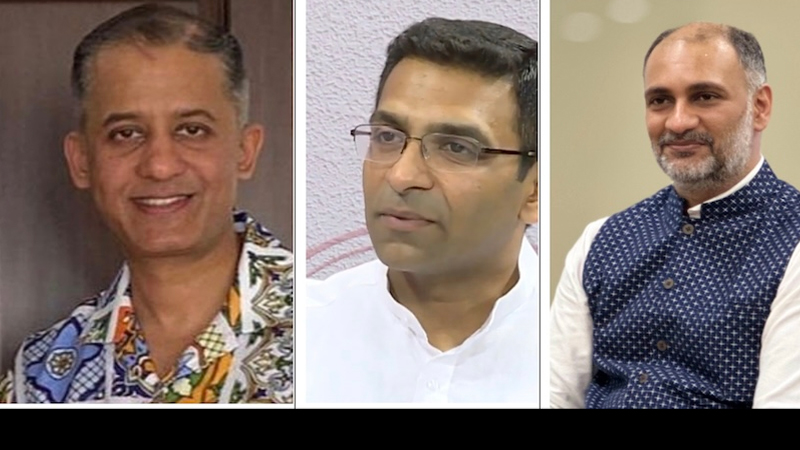
    But with the magical Uday Shankar on top as the vice-chairperson to guide and direct strategy, the trio of Disney, Reliance Industries, and Bodhi Tree systems decided to go in for a troika of CEOs for the joint venture.  Kevin Vaz to lead  entertainment across platforms, Kiran Mani to head the combined digital organisation and the affable but effective Sanjog Gupta to spearhead the combined sports initiatives.

    A press release issued by Reliance Industries announced that the expectation is that the three will lead the new firm into a new era of ambition and disruption. “Together, they will leverage their unique strengths to cultivate a bold transformative vision that challenges the status quo and sets new standards in the industry,” it adds.

    Ambani is known to be a man in a hurry and willing to take risks. Leadership in every sector his group is involved in is all he asks. He is willing to give it time, but his watch runs differently, faster than every other entrepreneur in the business.

    Uday Shankar is built in the same vein. He has built a reputation of being on business steroids. Number one or nothing has always been his credo. Being the best in whatever he takes up. He is known to have taken tremendous risks, some say gambles, and on almost all occasions he has come out on top. The  team below him will have to keep pace.

    Kevin Vaz is a steady, consistent performer, who has stuck by Star for almost a score of years. An astute sales person, he has learnt to run a mean entertainment driven organisation. First, heading English language channels, then regional language ones, kids and infotainment ones. Finally, Hindi entertainment offerings  – the entire gamut before going on to settle at Viacom18 as CEO. With a strong second and third rung of creatives and programming heads leading the shows and series, he will not have too many a challenge from any of the others in the same space.

    Kiran Mani first cut his teeth in advertising working on Unilever brands. Then he spent eight years in IBM in marketing and channel sales in India. He hopped onto Microsoft  where once again he led marketing, strategy and operations. He then turned entrepreneur with an ad tech platform for which he found a buyer in two years. After a short stint at advising the National University of Singapore on its MBA programme, he dived into Google where he stayed for a baker’s dozen years, shuffling between India, the Bay area and Japan and Asia Pacific, finally settling down as general manager of android and Google Play for Asia Pacific and Japan when he was scouted and picked up to head Viacom18 Media. He burned the mid-night oil and weekends advising and angel investing in startups taking bets on emerging platforms and technologies while rapidly shooting up the corporate ladders. 

    Credentials like that are not easy to find, and he is the executive upon whom a lot rests as the world of entertainment consumption continues to transition from cable and linear TV to wireless streaming, handheld devices like mobile phones and tablets and connected TVs. And of course generative AI and machine learning. The area is teeming with competition with global biggies like Prime Video, Disney+ and Netflix and Google’s YouTube. What will hold him in good stead his deep attachment to meditation, mindfulness, and yoga which he has being practising for more than a dozen years.

    The bearded Sanjog Gupta is known to be a backroom executive, reticent, a quiet thinking leader who is more comfortable and does well in meeting rooms with his team and clients. With deep relationships across sports federations – both globally and locally, rights owners, athletes and sportsmen, a close and sharp eye on sports technology that vows the consumer, he has stayed ahead of all broadcast sports executives in the country and even in Asia. His challenge will be to keep the top line and bottom line healthy in an era of  skyrocketing licensing fees for sports like cricket. This apart, the Ambani family has taken upon itself to encourage other sports in the country, especially in the Olympic and Asian Games arena. Sanjog will have to find a way to train Indian viewers to start enjoying  and staying hooked to these sports as India vies to stage the Olympics within its shores in the next decade.   

    To know more about the other leadership teams please click here. https://www.jiostar.com/leadership/

  • IAS launches Curation with Google Ad Manager for brand-suitable inventory

    IAS launches Curation with Google Ad Manager for brand-suitable inventory

    Mumbai: Integral Ad Science (IAS) has introduced IAS Curation in partnership with Google Ad Manager, providing programmatic buyers a deal-based approach to curate inventory directly at the source. This solution is designed to meet advertiser benchmarks for context, brand safety, and viewability, helping drive performance at scale.

    IAS Curation enables advertisers to apply avoidance and contextual targeting strategies across Google Ad Manager, consolidating bids on high-quality inventory and targeting relevant content efficiently. Using predictive science, IAS pre-screens and categorizes pages, allowing brands to identify suitable inventory and avoid undesirable content.

    “Brand suitability and contextual relevance are top priorities for programmatic buyers who are looking to avoid wasting ad spend on poor quality inventory such as MFA or ad clutter,” said IAS chief product officer Srishti Gupta. “IAS Curation gives programmatic buyers on Google Ad Manager a way to elevate their supply strategy and efficiently maximize returns on their media investments through AI-driven optimisation.”

    IAS Curation for Google Ad Manager provides global advertisers with:

    1   Customisable inventory: Advertisers running programmatic campaigns can now incorporate IAS enrichment to tailor supply before it reaches their buying platform.

    2   Precision targeting: IAS’s natural language processing-powered contextual classification enables advertisers to target only relevant, quality content so advertisers can avoid content their brand does not align with.

    3   Quality inventory: With contextual avoidance, brand safety & suitability, and MFA filtration available before it reaches a bidder, advertisers can reduce waste and maximise ROI using AI-driven measurement & optimisation.

    The launch of IAS Curation with Google Ad Manager expands IAS’s ongoing collaboration with Google. In June 2024, IAS extended its brand safety and suitability measurement for YouTube to include reporting for Performance Max and Demand Gen campaigns on Google Ads. In 2023, IAS made its Total Media Quality (TMQ) brand safety and suitability measurement available for YouTube Shorts, providing advertisers broader coverage for brand safety.

  • Piracy, LaLiga, BCCI and the Indian government

    Piracy, LaLiga, BCCI and the Indian government

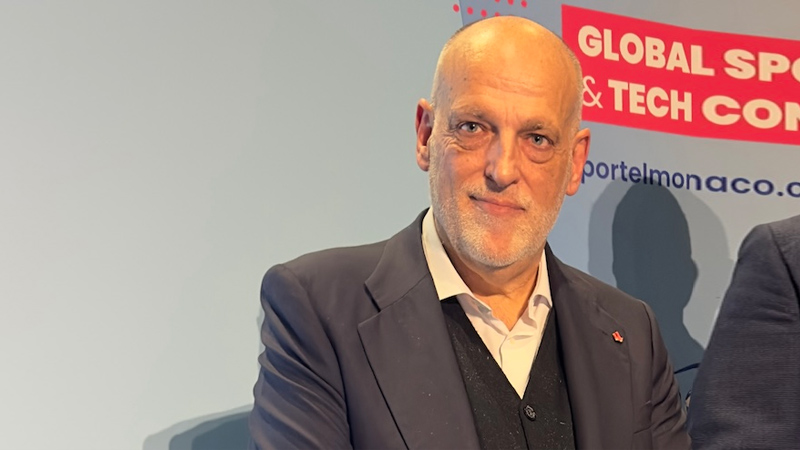
    MUMBAI: LaLiga president Javier Tebas said he is prepared to collaborate with the Board of Control for Cricket in India (BCCI) to stamp out piracy of sports broadcast and streaming signals  in Europe and all over the world.  Speaking at sports and tech conference  Sportel Monaco 2024 on 29 October during a keynote address he addressed his pet subject for the past few years once again: piracy and how big tech is aiding in its spread.

    He pointed that  piracy – especially illegal internet streaming  – is causing huge losses to sports federations, broadcasters, and advertisers with the LaLiga alone losing around Euros 700 million each season.

    His belief is that big tech companies like Google, Cloudflare, X, are actually benefiting from piracy. (He has raised his voice against Google in the past on several forums but he expanded the responsibility towards X and Cloudflare in his latest address during Sportel Monaco.)

    He explained that Google is making money through searches online and on android phones through its ads that pop up during searches for pirated sites by viewers. Downloads of illegitimate apps  on its Playstore give it oodles of money. It has no mechanism – either reactive or otherwise – to tackle piracy.

    Cloudflare is profiting by providing reverse proxy services to pirates and more than 50 per cent of rogue sites are behind it. What’s alarming according to  him is that 70 per cent of delisted content by Google is behind a Cloudflare IP.

    X, he highlighted, is monetising through advertising on pirated streams and has been delaying enforcement by not providing automatic content detection. It does not have a content moderation team, neither is it blocking illegal content on its platform.

    He appealed to sports federations to come together  and raise their voices against big tech. In this regard he extended his hand towards the BCCI welcoming it to come and be a part of the anti-piracy campaign.

    “After football, cricket has a large fan base globally and revenue leakages through piracy could be reduced by making the tech companies  culpable,” he said. “The federations, accompanied by the broadcasters, need to lobby with governments to put in place the proper legislation.”

    Tebas requested governments world over  to pass legislation that would force big tech companies to clamp down on piracy. For the “how of doing it,”  he said, they can turn to Argentina where a federal court ordered Google to block the download and use of a pirate platform Magis TV.  Prior to this, Google had cited its inability to block the android application from being downloaded, but then it was forced to.

    “We need hard measures to be put in place.If we have to stand a chance of reducing the menace of piracy, ” said Tebas in closing. 

  • Google developing AI to control computers, aims for seamless automation

    Google developing AI to control computers, aims for seamless automation

    Mumbai: In a bold leap towards the future of technology, Google is developing an artificial intelligence system capable of fully taking over and operating computers. The tech giant’s latest AI initiative aims to push the boundaries of automation by allowing AI to perform tasks traditionally handled by humans, such as managing applications, executing commands, and even troubleshooting issues. This development was first reported by ‘The Information’ and has since stirred a wave of anticipation and concern within the tech community.

    The project, dubbed ‘Project Tailwind’, seeks to automate computer operations, potentially transforming the way people interact with technology. Google’s approach involves training the AI to execute tasks across various software applications, thereby reducing the need for human intervention. The AI system could streamline tasks ranging from data entry and document formatting to more complex activities like coding and data analysis.

    Google’s ambitious project could redefine automation, particularly in business environments where repetitive tasks dominate. With AI capable of running computers autonomously, organisations might see increased productivity and cost savings. Additionally, this technology could pave the way for new AI-driven solutions across various industries, from customer service to software development.

    However, the initiative has also raised questions about privacy and security. Experts caution that an AI with the ability to control computers may present risks if not properly regulated. There is a growing need to establish guidelines on how such AI systems will be deployed and monitored to ensure they operate within ethical boundaries.

    As AI continues to evolve, its impact on the workforce is a topic of debate. With Project Tailwind, Google could be ushering in a new era where AI becomes an integral part of daily operations, potentially reshaping the future of work. The development is expected to bring significant changes in the way businesses and individuals approach routine tasks, driving greater efficiency.

  • IAB Tech Lab finalises framework for streamlined Ad supply chain privacy compliance

    IAB Tech Lab finalises framework for streamlined Ad supply chain privacy compliance

    Mumbai: IAB Tech Lab, the global digital advertising technical standards-setting body, announced today the release of the final Data Deletion Request Framework, following the conclusion of two extensive public comment periods. This milestone signifies an important step forward in handling consumer data privacy concerns within the digital advertising supply chain.

    The Data Deletion Request Framework establishes a standardized mechanism for transmitting data deletion request signals throughout the digital advertising ecosystem. It provides provisions for validating request origins, ensuring requester authenticity, confirming receipt, and employing cryptographic signatures for authentication. By offering a holistic solution for handling data deletion requests, the framework aligns with the ‘Right to Delete’, a Data Subject Right (DSR) which is currently protected by the GDPR, 16 US state privacy laws, and additional privacy legislation, including Quebec Law 25.

    “The industry has long struggled with the need for a standardized solution to manage data deletion requests,” said IAB Tech Lab director of product, privacy & addressability Jared Moscow. “The Data Deletion Request Framework addresses this challenge head-on, providing clear guidance and strategic insights into effectively handling these requests. Acting as the industry’s first signal for upholding consumer data subject rights, the Framework equips industry players with the technical tools necessary for efficiently managing data deletion requests.”

    The Data Deletion Request Framework builds upon IAB Tech Lab’s portfolio of privacy compliance initiatives, including the Global Privacy Platform, the Accountability Platform, and the Privacy Taxonomy project. Collectively, these initiatives form a foundational framework for streamlining privacy regulatory compliance and advancing responsible data-handling practices in digital advertising.

    Several organizations, including Google, Roku, Ketch, Sourcepoint, Dstillery, Raptive, Mediavine, and Index Exchange, were highly active in shaping the framework during the development process. Their close involvement exemplifies the collaborative nature of this industry-wide effort.

    Google senior staff software engineer Mary Xiaoyong Liu Wang: “The Data Deletion Request Framework addresses a longstanding industry challenge. This framework provides a helpful foundation for managing data deletion requests at scale, and reflects a collaborative commitment to upholding privacy standards.”

    Roku senior product manager, global privacy infrastructure Kale Smith: “The Data Deletion Request Framework is a vital tool for managing privacy at scale. This standard facilitates smoother communication of deletion requests across the ecosystem, significantly simplifying compliance efforts for large organizations like ours.”

    Ketch head of solutions Jonathan Joseph: “The Data Deletion Request Framework will bring much-needed efficiency to the entire ecosystem, helping to automate what has, to date, been a manual, arduous process. We will be adopting and integrating it into our product solutions so our clients can take advantage of the new Framework.”

    Sourcepoint product director Gabe Morazán: “Sourcepoint believes that Data Deletion Request Framework is a significant step forward for the industry. This Framework will help vendors better communicate with each other which will foster more collaboration and communication.”

    Dstillery principal engineer Brian May: “We’re excited about the potential of the Data Deletion Request Framework to streamline efforts to honour user choices. By standardizing the process of communicating data deletion requests, the framework addresses a major pain point for the industry and creates an easier, lower cost path to compliance.”

    Mediavine director of product management John Rosendahl: “The Data Deletion Request Framework solves critical challenges publishers face in transmitting data deletion requests. This new framework reduces the technical complexities in transferring data and provides publishers with the tools they require to remain compliant.”

    Index Exchange senior product manager Patrick Cool: “Index Exchange will support the Data Deletion Request Framework for its ability to ensure secure and efficient propagation of requests to downstream partners. The framework’s use of signing and cryptography enhances trust and interoperability, which are crucial for maintaining privacy compliance across the ad tech supply chain.”

    This interoperable framework supports compliance with existing privacy legislation and lays the groundwork for future privacy initiatives within the ad-tech ecosystem. To encourage adoption and implementation, IAB Tech Lab is offering a 90-day implementation period with increased support for early adopters. In response to requests from working group members, this period ensures that companies adopting new specifications receive a dedicated timeframe during which IAB Tech Lab provides extra assistance and guidance, ensuring they have the support they need during the initial phase.


  • MIB to convene with Netflix, Disney, Amazon, Google and Meta on broadcast regulations

    MIB to convene with Netflix, Disney, Amazon, Google and Meta on broadcast regulations

    Mumbai: The Ministry of Information and Broadcasting (MIB) has summoned the nation’s leading OTT platforms, including Netflix, Disney, Amazon, along with tech giants Google and Meta, for a meeting on 14 June to discuss new broadcast service regulations.

    Stakeholders are worried that the bill’s provisions for official certification and regulatory committees could stifle artistic freedom. It calls for the creation of content evaluation committees with members from various social groups to review and approve shows before their release.

    While films in Indian cinemas are currently reviewed and certified by a government-appointed board, streamed content does not undergo this process.