Tag: Google

  • Gemini AI now remembers chats, offers smarter replies

    Gemini AI now remembers chats, offers smarter replies

    MUMBAI: Google has introduced a new memory feature for its Gemini AI chatbot, enabling it to recall past conversations and provide more context-aware responses.

    Previously, Gemini could only remember user preferences upon request. With its expanded memory, the chatbot can now review entire conversations, answer follow-up questions, and summarise past discussions. This allows users to continue chats seamlessly without searching through old messages.

    Google assures users that they have full control over their stored data. Users can review, delete, or set a retention period for their chat history. The memory feature can also be fully disabled via the settings menu by turning off Gemini apps activity.

    Testing of the feature showed that Gemini effectively retrieved and consolidated information from multiple past chats. A ‘Source and related content’ section is also included, citing previous conversations. However, this functionality is currently limited to fully released models such as Gemini 2.0 flash and 1.5 pro, excluding experimental versions.

  • Netflix nets YouTube exec Lori Conkling

    Netflix nets YouTube exec Lori Conkling

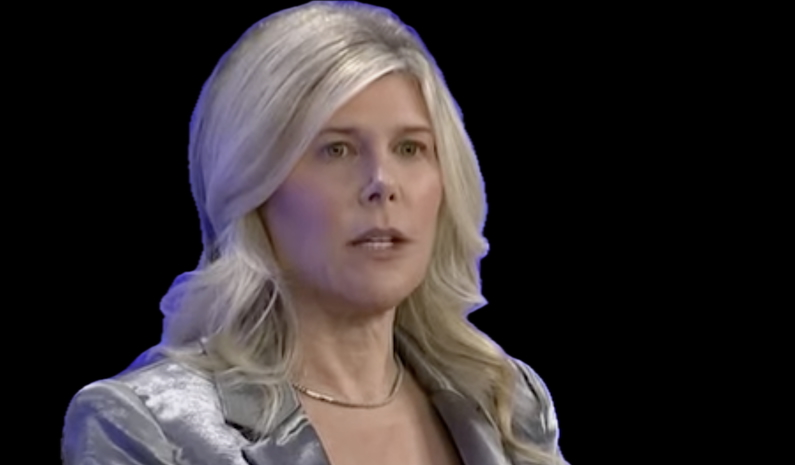
    MUMBAI: Her golden mane and tough no-nonsense negotiation style has given her quite a reputation amongst syndication and licensing folks, And  Lori Conkling has  now been appointed as head of film and TV licensing at Netflix. Based in Los Angeles, she will oversee acquisition for television and film content in the United States.

    She moves from YouTube where she spent nearly six years, most recently as global head of TV, film and sports partnerships. Prior to YouTube, she held senior roles at Google, where she led media company partnerships and YouTube TV initiatives.

    Lori brings extensive media experience, having previously served as executive vice-president of strategy and business development at NBCUniversal, executive vice-president of distribution at A+E Networks, and vice-president at Disney and ESPN Media Networks.

  • Sundar Pichai talks Google and Alphabet financial performance with analysts for Q4 meet

    Sundar Pichai talks Google and Alphabet financial performance with analysts for Q4 meet

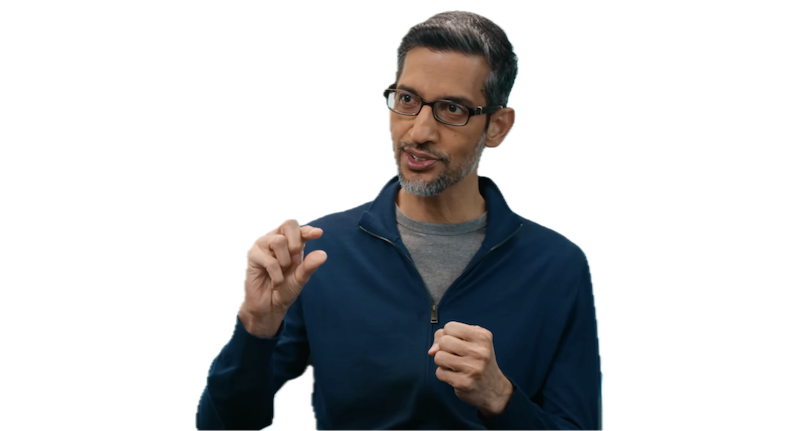
    MUMBAI: Alphabet & Google CEO  Sundar Pichai addressed investors and analysts, highlighting a strong performance in Q4, largely attributed to the company’s advancements in artificial intelligence (AI) and a unique full-stack approach.

    “Q4 showcased our rapid progress in computing capabilities and efficiencies,” Pichai said. He noted significant improvements in product utilisation, consumer engagement, and revenue growth as a result of innovations in AI, including the launch of AI Overviews in over 100 countries and Circle to Search on more than 200 million android devices.

    Notably, Pichai announced that Google cloud and YouTube reached a combined annual revenue run rate of $110 billion at the close of 2024, exceeding their target of $100 billion.

    Focusing on AI, Pichai outlined three key areas of innovation: leading AI infrastructure, world-class research, and product integration. The company has invested in eleven new cloud regions and seven subsea cable projects aimed at enhancing global connectivity. Pichai revealed the launch of the Gemini 2.0 AI model, designed to improve user interactions and drive a more multifaceted search experience.

    In addition, YouTube continues to thrive, maintaining its position as the leading platform for streaming watchtime in the US with over 45 million viewers engaging with election-related content on a single day. The recent integration of podcasts has proved successful, further solidifying its dominant market position.

    Moving to financials, Alphabet’s revenue surged to $350 billion in 2024, a 14 per cent increase year-on-year. Expenditures increased, primarily due to content acquisition costs associated with YouTube and depreciation related to technical investments. Despite rising costs, operating income rose 31 per cent to $31 billion.

    With an optimistic outlook, Pichai stated, “We are well-positioned for continued growth in 2025,” as plans to enhance AI capabilities and expand cloud services take shape. 

    Following Pichai, Philipp Schindler, SVP  and CBO, highlighted the strong performance across Google services, with revenues reaching $84 billion, driven by a significant increase in advertising revenue. 

    Anat Ashkenazi, SVP and CFO, reaffirmed the positive momentum, indicating that the company is prepared for ongoing growth amid anticipated challenges. 

    The market did not believe their posturing totally as Alphabet shares crashed by seven per cent on Wednesday. Investors reacted badly to Pichai’s  plans to spend $75 billion on capital expenditures over  2025 and $16-18 billion in the first quarter  as it builds out its AI offerings and races against megacap rivals to build out data centers and new infrastructure. 

  • Brand Finance Global 500 Brands 2025 report: Apple maintains lead as tech giants dominate

    Brand Finance Global 500 Brands 2025 report: Apple maintains lead as tech giants dominate

    MUMBAI: The band of top brands globally continues to be dominated by tech giants. At least that’s what Brand Finance’s top 500 Global Brands report for 2025 has revealed. Apple has retained its position as the world’s most valuable brand, with a brand value of $574.5 billion. The tech giant is followed closely by Microsoft, Google, and Amazon, which occupy the second, third, and fourth spots, respectively.

    The top 10 most valuable brands are dominated by US-based companies, with Walmart, Facebook, and Nvidia also featuring in the list. However, Chinese brands such as TikTok/Douyin, State Grid Corp of China, and China Construction Bank are rapidly gaining ground, with significant increases in their brand values.

    The report highlights the growing influence of Asian brands, with 17 Chinese companies featuring in the top 100, including newcomers such as Moutai and Wuliangye. Japanese brands such as Toyota, Honda, and Mitsubishi Group also make significant appearances in the list.

    European brands, meanwhile, are struggling to keep pace, with only 12 companies from the continent featuring in the top 100. German brands such as Deutsche Telekom, Mercedes-Benz, and SAP are among the notable exceptions.

    The report also notes that the COVID-19 pandemic has had a significant impact on brand values, with many companies experiencing a decline in their brand worth. However, tech giants such as Apple, Microsoft, and Google have been largely immune to the pandemic’s effects, thanks to their diversified revenue streams and strong brand recognition.

    The top 10 most valuable brands in the world are:

    1. Apple (USA) – $574.5 billion
    2. Microsoft (USA) – $461.1 billion
    3. Google (USA) – $412.9 billion
    4. Amazon (USA) – $356.4 billion
    5. Walmart (USA) – $137.2 billion
    6. Samsung Group (South Korea) – $110.6 billion
    7. TikTok/Douyin (China) – $105.8 billion
    8. Facebook (USA) – $91.5 billion
    9. NVIDIA (USA) – $87.9 billion
    10. State Grid Corporation of China (China) – $85.6 billion

    Brand Finance also analysed what brands have grown the most since 2020, plus TikTok – although Brand Finance began valuing the brand in 2022, its 79 per cent growth in four years puts it in the same league as the other high-growth brands. 

    1. TikTok/Douyin: USD105.8 billion, up from USD59.0 billion (in 2022)
    2. DraftKings: USD5.1 billion, up from USD18 million
    3. FanDuel: USD7.0 billion, up from USD56 million
    4. NVIDIA: USD87.9 billion, up from USD4.7 billion
    5. AMD: USD11.0 billion, up from USD1.4 billion
    6. Pinduoduo: USD13.0 billion, up from USD2.5 billion
    7. BYD: USD14.0 billion, up from USD3.1 billion
    8. Apple: USD574.5 billion, up from USD140.5 billion
    9. TSMC: USD34.2 billion, up from US8.6 billion
    10. Microsoft: USD461.1 billion, up from USD117.1 billion
    11. Lilly: USD8.0 billion, up from USD2.1 billion

    To take a dekko at the Top 100 Global Brands 2025 list click on the word free. Basic data for the top 100 is available for free.

  • Kiran Mani-speak about  Indian OTT at the India Digital Summit

    Kiran Mani-speak about Indian OTT at the India Digital Summit

    MUMBAI: During the India Digital Summit, Kiran Mani, CEO – Digital at Jio Star, spoke compellingly about the urgent need for the over-the-top (OTT) industry to embrace multiple economic models beyond the traditional revenue streams of advertising and subscription. Engaging in a lively fireside chat with Ashish Pherwani of EY India, Mani underlined that sustainable storytelling in the digital age hinges on innovative business strategies.     

    “If you want to justify the economics of storytelling, it has to follow more economic models,” Mani stated, emphasising that a reliance solely on advertising is inadequate. He expressed optimism about the growth potential of both advertising and subscription revenues in India due to robust economic tailwinds. However, he also noted that the true potential of the subscription market has yet to be realised. 

    To illustrate this point, Mani provided striking statistics indicating that while India boasts a massive 700-million OTT viewership base, the actual number of subscriptions currently stands at around 60 to 70 million. He attributed part of this gap to challenges in the payment gateways available in India, stating, “Payment gateways are built for transactions, not for mandates,” which hinders the ability for consumers to engage in subscription models effectively.

     Mani highlighted the extraordinary success of Jio Cinema Premium, which gained an impressive 20 million subscribers in record time. This achievement was largely driven by the platform’s disruptive pricing strategy of just Rs 29, which strategically bypassed middlemen to reach consumers directly. He commented on existing subscription models, saying, “A one-size-fits-all subscription, saying that you can eat all the menu items in a buffet for a fixed price, has its limitations.”

     Drawing on his previous role at Google, Mani criticised the outdated methods commonly used in the advertising sector, which he argued are overly reliant on gut feelings rather than data. “We’re still at the early stages of adopting a data-driven approach to consumer targeting,” he acknowledged. “Once we fully embrace it, we’ll realize we’ve been overspending money in cities while neglecting smaller towns.” Mani assured attendees that the future of advertising will be marked by continued growth and the need for more informed marketing decisions.

    He further pointed out the ineffectiveness of a one-size-fits-all advertising model, stating that platforms which focus solely on brand advertising have specific limitations. “What we offer our advertisers is a dual approach. We say, yes, we are a mass-reach platform, and we will always get you the reach, but we also offer a premium reach platform,” he said.

    As Jio Star—formed from the merger of Star India and Viacom18—continues navigating the rapidly expanding digital ecosystem, Mani noted an exhilarating convergence of connectivity and creativity. “India today is a billion-screen connected audience,” he emphasized, highlighting how various content segments—sports, entertainment, short-form content, and gaming—are flourishing. He credited the influx of venture capitalists into nearly every area of this ecosystem as a testament to the ongoing growth.
     

    Mani Kiran

    Mani also pointed out the seismic shift in the media landscape, noting that digital has recently overtaken television to become the largest segment of the Indian media sector. “There are 325 million households in India, yet the number of households actually paying for digital content remains below 15 million,” he stated, raising important questions about whether digital will ever become a mass product or if subscription models will be left behind compared to traditional TV.

     The CEO was particularly encouraged by the emergence of audiences from Tier 2 and Tier 3 towns, many of whom are gaining access to content for the first time through affordable devices costing less than Rs 5,000. He remarked on the impact of live-streaming events like the IPL on JioCinema, stating, “We saw six million viewers who were previously content-dark join our platform.” This underscores how OTT platforms are unlocking a broader content segment in terms of both depth and reach.

     Mani elaborated on the necessity for subscriptions to adopt sustainable economic models, stressing that “advertising alone cannot support premium content or great storytelling.” He urged industry stakeholders to unlock better economic models while ensuring sustainability for everyone involved. He asserted, “The digital ad market in India is now valued at $9 billion.”

    He elaborated further on the complexities of advertising, stating, “Advertising is about reaching consumers and delivering value. Our role is to ensure advertisers see impactful returns.” With an expanding middle-class consumer base, Mani believes India’s advertising market will surely grow. Nonetheless, he cautioned that the market still operates with outdated practices, such as generic solution models that fail to meet diverse audience needs.

    A noteworthy point in Mani’s discussion was the evolving nature of storytelling in Indian entertainment. He mentioned that narratives are transitioning from “Shiksha” (education) and “Sushil” (docile) to “Saksham” (empowerment) and “Swabhiman” (self-respect), reflecting broader societal progress in India.
         
     Multi-lingual content also emerged as a focal point, especially in sporting and international contexts. Mani proudly remarked on JioStar’s multilingual broadcast of the Olympics, which garnered a seven-fold increase in viewership, adding, “Hindi is now the number one language for Hollywood viewership in India.”      

     When prompted about his investment priorities, Mani chose to invest in platforms over content production or e-commerce, stating, “Platforms scale creativity and monetization like nothing else.” He underlined the transformative power of connectivity in driving the next wave of growth.

     In concluding his remarks, Mani addressed the collective responsibility of the media and tech industries. “As content creators, we must prioritize sustainability in storytelling,” he urged. “For me, I owe it to you all to build a platform where monetization models extend beyond just advertising or subscriptions.”

    Key Points:
    * The OTT industry needs to diversify its economic models beyond traditional revenue streams of advertising and subscription.
    * Relying solely on advertising is insufficient for building a sustainable OTT ecosystem.
    * The true potential of the subscription market is yet to be unlocked.
    * Payment gateways in India are built for transactions, not for mandates.
    * A data-driven approach to consumer targeting is necessary for effective advertising.
    * A one-size-fits-all approach is ineffective in advertising.
    * The digital ad market in India is valued at $9 billion.
    * Advertising is about reaching consumers and delivering value to advertisers.
    * Sustainable economic models are necessary for the OTT industry.

  • HT Media announces leadership change: Sameer Singh to succeed Praveen Someshwar as group CEO

    HT Media announces leadership change: Sameer Singh to succeed Praveen Someshwar as group CEO

    MUMBAI: – HT Media’s board of directors, in a meeting held on 11 January, accepted the resignation of managing director &  CEO Praveen Someshwar, effective 28 February 2025. The board has approved the appointment of Sameer Singh as group chief executive officer, effective 1 March  2025, based on the recommendation of the nomination and remuneration committee.

    An alumnus of IIM Calcutta, Sameer Singh brings over 30 years of experience in digital innovation, brand marketing, and leadership across global markets. He currently heads north America global business solutions at TikTok/ByteDance, leading advertising and sales teams for the region. Previously, he held a similar leadership role for the Asia-Pacific region.

    Sameer has an impressive track record in media and marketing, having served as CEO of GroupM India and south Asia, where he championed digital transformation and content-driven strategies for clients. His career also includes key roles at Google, GSK, Procter & Gamble, and IPG, where he was instrumental in advancing digital strategies and optimising media investments.

    Having worked in cities such as New York, New Delhi, Palo Alto, Boston, London, Dubai, and Guangzhou, Sameer’s global perspective and expertise make him a strategic choice to lead HT Media into its next phase of growth.

    The leadership transition marks a significant step for HT Media as it continues to evolve in a rapidly changing media landscape.

  • Siddharth Dabhade hangs up his boots at MIQ, joins Lemma

    Siddharth Dabhade hangs up his boots at MIQ, joins Lemma

    MUMBAI: After 24 years of navigating the competitive corridors of tech giants like IBM, Microsoft, Google, and Criteo, Siddharth Dabhade steps into the limelight with a new challenge.

    His journey from the boardrooms of global multinationals to the forefront of cutting-edge innovation now finds him driving Lemma’s vision of revolutionising the digital out-of-home (DOOH) landscape.

    As the newly appointed CBO, performance business at Lemma, Dabhade’s mission is clear: to take this omnichannel platform to unprecedented heights with its trailblazing, outcome-focused DOOH solutions.

    Can his wealth of expertise and transformative leadership redefine the boundaries of advertising?

    The stage is set for a new chapter in Lemma’s growth story.

    Dabhade brings over 24 years of leadership experience in the digital advertising and technology sectors. Before joining Lemma, Dabhade served as the MD at MIQ, where he successfully launched and scaled commercial operations across India and China. He has held key leadership roles at industry giants such as IBM, Microsoft, Google, and Criteo, amassing expertise in P&L management, strategic advisory, business development, and customer relationships.

    At Google, Dabhade led the travel business for India, and during his tenure at Criteo, he significantly contributed to the APAC leadership team, driving the company’s growth in the Indian market.

    Commenting on his new role, Dabhade said, “As Digital Out-Of-Home (DOOH) continues to grow, it is now at the heart of omnichannel journeys, offering brands unparalleled opportunities to connect with consumers across screens and digital spaces. I’m excited to be a part of Lemma’s vision to pioneer this shift and to lead the expansion of the new solution as a powerful tool for outcome-driven growth through outdoor media globally.”

    Lemma founder & CEO, Gulab Patil welcomed Dabhade’s appointment, stating, “Siddharth’s track record of driving growth in the digital adtech and programmatic space makes him an invaluable addition to our team. With this solution, we’re offering brands the next level of full-funnel performance driven by OOH, and Siddharth will be key in ensuring its success across markets. His leadership will be instrumental in capitalising on the massive opportunities that OOH now presents in not only shaping but also driving results through a full-funnel approach, from Outdoor to outcomes.”

    Under Dabhade’s leadership, Lemma aims to reinforce its mission to transform emerging media through programmatic adtech. The company is focused on offering brands a comprehensive outdoor-to-outcome solution, leveraging DOOH to drive measurable results. This strategic expansion signals a pivotal moment in Lemma’s journey, positioning it at the forefront of the $65 billion global OOH market.

  • Changemakers 2024: Culver Max’s Gaurav Banerjee’s emergence from the shadows

    Changemakers 2024: Culver Max’s Gaurav Banerjee’s emergence from the shadows

    MUMBAI: Gaurav Banerjee does not come across as CEO nor as MD material when you meet him the first time. The bespectacled unassuming 47-year-old actually reminds you of a writer or a director or a journalist or a scholarly researcher. But today he sits atop Culver Max Entertainment as the chief executive officer & managing director, a handpicked successor to the quiet and unassuming number-crunching CEO NP Singh who built a profitable broadcast network and retired earlier this year.

    Not for GB, as he is known, are all the pomp and flash that others in the business were vaunt to opt for in earlier times when pay TV was a fat man’s business oozing money like there was no tomorrow. Today, pay TV is shrinking, cord-cutting is rampant cord-nevers are growing and the coming generation will probably not know what cable TV and satellite dishes were.

    GB – a history graduate from St Stephen’s College and a masters-degree holder in film making and TV production from Jamia Milia Islamia,  Delhi – belongs to a group of young executives like Arjun Nohwar who leads Warner Bros Discovery for India and south Asia.

    GAURAV BANERJEE

    These folks know they are leading legacy media companies in rapidly-changing times and they have to ensure that their charges stay relevant even in the midst of rapid churn and chaos.  Their response lies in putting their heads down and focusing on the task they have been assigned: protect and build legacy business and ensure they continue to generate cash which –  like in the past – continues fueling their existence and growth and money-gobbling streaming platforms.

    They also have to make the right moves on the streaming side on content, tech, distribution and business models. And they have to do all this profitably, without breaking the bank. For ranging against them are big players in the media and tech ecosystem: Google, Meta, Netflix, Amazon Prime and the potent combo of JioStar – all having deep pockets and a hunger to invest big and dominate the market. Plus there are others such as Zee5 and Sun Nxt and a string of other OTT players which are being spawned by the hour.

    No one in his or her right mind expected GB to be a candidate for the prized position of Culver Max Entertainment MD & CEO. For long the boyish-looking  executive was known to be a close ally, actually protégé, of current JioStar vice-chairman Uday Shankar and every one expected him to follow him to the joint venture that was in the making. (Danish Khan would succeed NP was most media observers’ guess; we at indiantelevision.com did not speculate about this)

    But GB probably knew otherwise; that it would be Kevin Vaz who would be chosen over him. Hence, when the offer to lead Sony came, he accepted it.

    Of course, he was deserving. A very strong content professional (he began his career as an anchor and producer with news channel Aaj Tak and later at Star News) with an uncanny knowledge of audience preferences, he knows how to weave stories into shows that generate high viewership.

    He did that very successfully both on Star Plus and Hotstar when he was president content at Disney Star India, retaining the network’s numero uno status for more than half a decade. It led others – who struggled to come even close – by a mile. To top it all he had the reputation of being a good manager and leader – earning the loyalty of his colleagues and subordinates.

    LA-based chair of global television studios and Sony Pictures Entertainment president & CEO Ravi Ahuja had expressed total confidence in GB’s visionary approach at the time of his appointment. “ Gaurav’s expertise in content creation and strategic leadership will undoubtedly lead SPNI (read Culver Max) into an exciting new chapter of growth and achievement. We are thrilled to have him at the helm and look forward to the continued success of SPNI under his leadership,” he had said.  

    GB has been playing low key ever since he took over in end-August 2024. He has been building up his A team bit by bit. Most old-timers have been retained, though some like Neerja Vyas chose to quit.

    Danish Khan who was EVP & business head Sony Entertainment Television, Studio Next and SonyLiv was recast to head -digital business, Studio Next, and networks channel licensing.   Ajay Bhalwankar, who  led Sony Marathi successfully,  was handed over Sony Sab to manage along with his existing charge.

    Nachiket Pantvaidya, general manager of Sony Pictures International Productions, was additionally made business head of Hindi general entertainment channel Sony Entertainment Television, marking his third stint with the network.

    Tushar Shah who led English, Bengali, and infotainment channels and  was the chief marketing officer (CMO) at the network was additionally asked to oversee Sony MAX, Sony MAX HD, Sony MAX 2, Sony WAH and Sony PAL.  

    Manu Wadhwa who was chief human resources officer was handed additional responsibility of information technology

    Ambesh Tiwari is currently being groomed to take over as kids channel Sony Yay’s business head when Leena Lele Dutta departs at the end of this fiscal year.

    Ritesh Khosla was brought in as general counsel.

    Veteran Rajesh Kaul, continued in his chief revenue officer, distribution and sports business head.  Aditya Mehta who headed corporate strategy, business monetization, and data analytics’ centre of excellence continues in his position.  Sandeep Mehrotra, continued in his position as EVP -sales.

    A new CFO Sibaji Biswas is slated to join come the first week of January 2025.

    The new leaders, in turn, have been building, their respective A teams.

    GAURAV BANERJEE

    In the meanwhile, GB has been working on getting to know  Culver Max Entertainment, its processes, its people, its neurology, its innards  better. He starting rerunning  episodes of old shows (Beyhadh, Bade Achche Lagate Hain, among others) on Sony excepting for  non-fiction shows Kaun Banega Crorepati and Indian Idol. The two were tweaked with better production quality and selection of participants. Each contestant had a dramatic back story or extremely good talent. Or even both.

    Without incurring any great additional programming costs, the ratings of SET  started rising.

    The teams in the meanwhile strategised on what kind of programming audiences would like to see on the network. The answer was classics like CID and Tenali Rama which would be modernised, have better casting, fabulous production values and improved storytelling. The first is being produced by Banijay Asia and the second by Contiloe Films and have already starting airing on their respective channels Sony Entertainment and Sony Sab. The focus in on gauging audience reactions to these two, before launching new shows which are currently being developed with other producers. Shark Tank, which has been drawing eyeballs and attention ever since it launched three seasons ago is slated to launch on 6 January.

    The second strong plank of content at Culver Max is its sports programming under the Sony Sports Network umbrella. Recently, rights to the Asian Cricket Council covering men’s, women’s, under19’s, and men’s and women’s emerging Asia cup tournaments from 2024 to 2031 were  acquired. The network already has rights to  cricket matches in New Zealand, England, Sri Lanka. Formule E race broadcast rights have been inked for the next three years. 

    For football fans, close to 1,600 matches from the 2024-2025, 2025-2026 and the 2026-27 seasons of the UEFA Champions League, UEFA Europa League, UEFA Conference League, UEFA super cup and UEFA Youth League havbeen be been signed up earlier this year. Ultimate Fighting Championship matches till 2028 should continue attracting its loyal audiences, even though it’s quite possible it will lose the WWE (its staple)  programming to Netflix which has paid top dollar for it as part of a global acquisition deal.  Rights to local Hockey India League championships for three years have also been acquired,. Sony has also been a partner to three of the Grand Slam tennis tournaments. Therefore it has enough heft to keep viewers engaged throughout 2025 with their TV and handphones, says GB.

    SonyLiv is the least of GB’s worries. Led by old-timer Danish Khan and content commissioner Saugata Mukherjee, the streamer has been churning out shows which have attained cult status: The Scam, Rocket Boys, Freedom at Midnight, Gullak, Tanaav, Cubicles, Undekhi, among many others. It has loyal subscribers who know what they are going to get on the platform, and they come there to get it. Sources indicate that it has the lowest churn among all the streamers, though its subscriber base is in the 15-20 million range.

    Four months into his job, and GB has begun to make his presence felt on the Indian entertainment landscape. He has just begun emerging from the shadows as a corporate leader. 2025 will see his influence spreading even further.

    Media mavens had better not be surprised if he makes some sharp moves, especially acquisitive ones. For as his boss Ravi Ahuja expressed to him on his December visit to India: “Exceed expectations, take on new challenges, and build your skills and network – that’s the path to leadership!”

    To his advantage, to many in the industry, he is a mystery, known more for his content savviness, not for his managerial or strategic skills. 

    And that is his trump card. 

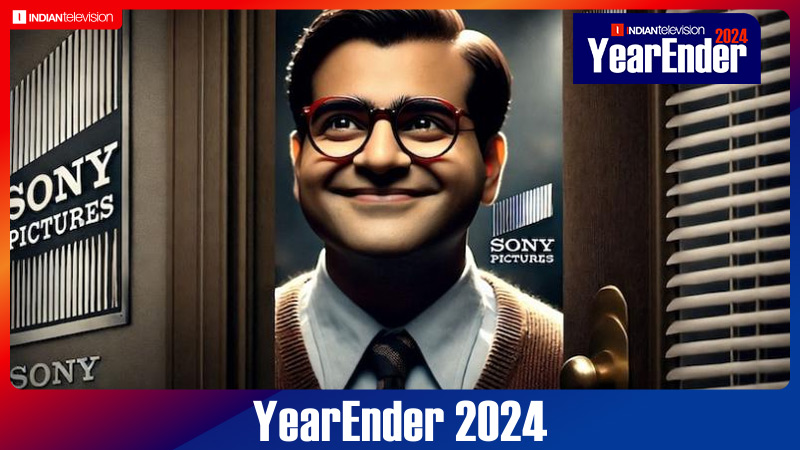
    (We asked an AI pic generator to re-imagine Gauarav Banerjee through its tool, and the main picture on our home page is what it came up with. No malice is intended toward Culver Max, Gaurav Banerjee or anyone else asociated with personally or professionally. No copyright infringement is intended either.)

     

  • Google ropes in Preeti Lobana as country manager India

    Google ropes in Preeti Lobana as country manager India

    MUMBAI: There’s a new country manager who’s come on board at Google India. Google president Asia Pacific Sanjay Gupta announced that Preeti Lobana is joining the company as country & vice-president for India.

    Said he: “Her leadership and passion for customer-centricity has fueled impactful solutions for businesses across industries empowering millions of businesses to thrive in the digital age. Preeti’s leadership will be instrumental as we deepen our engagement with India’s unique ecosystem, leveraging AI advancements like Gemini to accelerate digital inclusion and unlock unprecedented economic opportunities for every Indian. I am confident that her deep market expertise will guide us in shaping a future where technology truly benefits all.”

    “In her new role, Preeti will partner deeply with Roma Datta Chobey, who led as the interim country manager and will continue her exceptional leadership as managing director for Google India’s digital native Industries. Roma’s expertise across diverse sectors, from e-commerce and fintech to gaming and media, will be invaluable as we accelerate innovation and growth for these dynamic businesses.”

    An MBA from IIM Ahmedabad, Preeti  worked mainly in the financial services sector in the early part of her career before she joined Google in 2016 as director APAC customer experience.  Over the next eight years she explored roles such as senior director ads customer care and vice-president publishers, partners, ads content team g Tech. And now she is the country manager and vice-president Google India.

    Her financial services exposure began with ANZ Grindlays Bank  for 10 years where she went on to head the personal loans department. Then as head of banking services at Standard Chartered Bank. She followed that up with a close to 10 year stint at American Express where she headed global services. She then moved on to Natwest group as managing director and head global financial services India where she stayed for four years.   


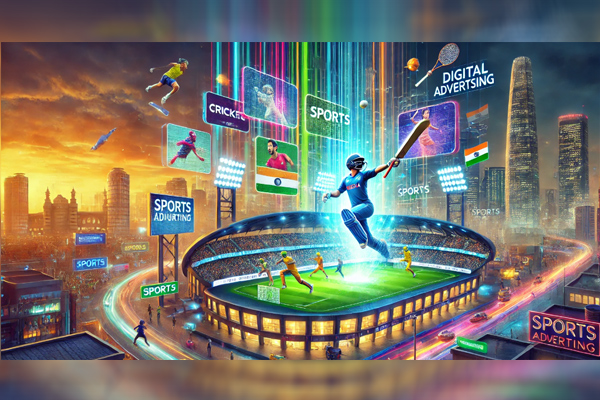
  • India’s sports industry races ahead with digital-first advertising focus

    India’s sports industry races ahead with digital-first advertising focus

    MUMBAI: Sports isn’t just a pastime anymore – it’s a roaring phenomenon that fuels India’s collective heartbeat, more electrifying than a stadium under floodlights during a last-ball thriller. From the thunderous cheers of cricket fans to the passionate chants of football aficionados, the adrenaline rush sports delivers has become the ultimate high – stronger, they say, than the purest Colombian cut.

    And why not?

    The glitzy ads, the digital frenzy, and the unstoppable growth of India’s sports industry have turned it into a $52 billion juggernaut, overtaking several traditional sectors like telecom. Now, poised to shatter records with a jaw-dropping trajectory to $130 billion, according to the Deloitte-Google report, sports in India isn’t just entertainment; it’s an economic revolution with a pace that could leave even the fastest sprinters in awe. With a projected compound annual growth rate (CAGR) of 14 per cent, the sector is rapidly outpacing established industries, including automotive and tourism, and redefining its role in the Indian economy.

    This remarkable growth reflects India’s rising stature in global sports, bolstered by robust government initiatives such as the ministry of youth Affairs & sports’ (MYAS) record 2024 budget allocation. Programs like Khelo India and Target Olympic Podium Scheme (TOPS) are driving systemic changes, ensuring long-term development of sports infrastructure and talent in the country.

    The report underscores the paradigm shift in advertising, with brands prioritising digital platforms over traditional TV broadcasting. Over the past two years, digital sports advertising surged by 63 per cent, while TV sports advertising declined by 10 per cent. Platforms like JioCinema and Disney+ Hotstar are now rivaling linear broadcasting, capitalising on subscription-based revenue models.

    An overwhelming 90 per cent of Indian sports fans engage digitally, with cricket-related videos amassing 50 billion views on YouTube in one year alone. Personalised ad campaigns, such as Mondelez’s AI-powered cricket ads, showcased the immense potential of targeting sports enthusiasts digitally, delivering 92,000 creative variations and doubling ad recall.

    Sponsorship deals in India’s sports sector are expanding at thrice the pace of global benchmarks. Franchise fees grew by 60 per cent in 2023, and campaigns integrated with live sports events, like Swiggy’s IPL drive, saw active user engagement spike by 59 per cent.

    The shift to regional strategies has been pivotal, with 77 per cent of fans preferring sports commentary and content in local languages. Regionalised advertising has tapped into previously untapped rural and semi-urban markets, further solidifying sports’ mass appeal.

    For the first time in Indian sports broadcasting history, the valuation of digital media rights for IPL 2022 equaled that of TV rights. This milestone reflects the industry’s digital-first pivot, as brands and advertisers increasingly gravitate toward the flexibility and reach of OTT platforms.

    As the industry continues to expand, the report highlights that India’s sports sector contributes approximately one per cent to the national GDP, on par with major sporting nations. With significant headroom for growth and increasing digital penetration, India is poised to emerge as a global sports powerhouse.