Tag: Google

  • Google’s Rajan Anandan joins Asci board

    Google’s Rajan Anandan joins Asci board

    MUMBAI: The Advertising Standards Council of India (Asci) has appointed Google India MD and country head Rajan Anandan as a member of its board of directors.

    Anandan’s induction immediately follows the appointment of Asci’s new chairman I Venkat during the last AGM.

    Asci said that Anandan’s appointment is strategic to the council’s plans to step up its efforts to promote fair advertising practises in the online domain. With a large percentage of India’s population being very young, digital adoption is expected to increase going forward as more of the population comes of age and there will be a proportionate increase in online revenue spends. Thus, it becomes imperative for Asci to ensure that advertising on the internet conforms to the current code of conduct, it said.

    Venkat said, “The internet is increasingly becoming a significant touch-point for brands to connect with consumers. Thus, it becomes essential that online advertising is aligned to the primary objects of Asci. Rajan‘s appointment will help Asci generate the necessary consciousness towards fair advertising practises in the online domain.”

    Anandan added, “The Internet in India has over 100 million users is quickly becoming a scale advertising medium for companies in many industries. Being on the Board will quintessentially help Asci and Google to jointly create awareness about fair advertising practises across a large bandwidth of consumer touch-points on the internet.”

  • Katrina Kaif is most searched for celebrity for mobile video

    Katrina Kaif is most searched for celebrity for mobile video

    NEW DELHI: Bollywood star Katrina Kaif is the world‘s most searched for celebrity so far as mobile videos are concerned. Kaif beats the likes of global pop star Britney Spears, says the Global Video Insights report by Vuclip.

    Vuclip is one of the world‘s largest independent mobile video services.

    Vuclip VP (India and Middle East) Salman Hussain said, “A Bollywood star leading ahead of her global peers in mobile video searches worldwide is a testimony to the fact that mobile videos have finally taken off in India in a big way.”

    Not too long ago, Kaif topped the list of the Sexiest Women 2011 conducted by the world‘s largest men‘s lifestyle magazine -FHM, based entirely on online polls and SMS with over 35,000 entries being cast this year.

    She was also the only Bollywood actress to feature on the India Today‘s Elite Power list and has the most Google searches than any other Indian celebrity. Kaif was immortalized by Mattel who created a one-of a-kind ‘I Can Be a Movie Star‘ Barbie Doll sketched on her image.

  • Google in mood to buy more online display ad firms

    Google in mood to buy more online display ad firms

    MUMBAI: Google is planning to buy more companies to accelerate its presence in the sprawling online display ad sector.

    Speaking to a group of reporters at Cannes International festival of creativity, executive chairman Eric Schmidt said the giant would continue gobbling companies that specialised in managing display ads such as video and banners.

    The move will be a challenge for Facebook and comes even as European regulators examine Google‘s dominant web search position.

    Recently, Google announced its plans to buy AdMeld in a bid to capture a larger pie in the area of graphical display ads.

    We started off with mainly text ads, and now the display business has arrived, which can become a $10-20 billion business, Schmidt added.

    Google made approximately $29 billion in 2010 through its small ads that appear alongside the search results.

    But analysts feel that Google can be better-off, if it diversifies its business with products such as social networking. This can prevent advertisers moving over to social network sites such as Facebook.

    In 2011, Facebook will take over Yahoo to take the top position in online display, according to a report released earlier this week by research firm eMarketer.Consequently, Google is in a buying mood.

  • Google and Myspace renew advertising contract

    Google and Myspace renew advertising contract

    MUMBAI: Myspace‘s dropping traffic and decreasing popularity as compared to Facebook hasn‘t deterred Google from extending its long-running advertising contract with the site.

    The financial terms or duration of the contract between Google and Myspace‘s parent company News Corp. is not disclosed. However, the contract reportedly has been renewed for several years. News Corporation chief operating officer Chase Carey mentioned that the new agreement is performance-based.

    The social networking site reported a loss of $100 million in 2009 as it failed to reach traffic commitments in accordance to the 2006 deal. As per the agreement, Google will now handle display marketing on the social media site, an area that Google is increasingly getting more interested in. Also, for the first time advertisers will be able to buy display ads that will appear on MySpace through Google.

    The deal also enables Google to offer search advertising, web search and full display-ad solutions. As MySpace continues to struggle with its balance sheet, the extended deal will no doubt go a long way in addressing the social media site‘s problems.

  • NBA, YouTube challenge fans to post basketball moves

    NBA, YouTube challenge fans to post basketball moves

    MUMBAI: Video sharing site YouTube, Inc. and the National Basketball Association (NBA) have launched Post Up the NBA on the new NBA Channel on YouTube.

    The new channel will provide fans around the world and the entire YouTube community with the opportunity to submit video clips of their best basketball moves, and access original NBA content throughout the remainder of the 2006-07 NBA season.

    NBA fans are encouraged to upload their “best moves” to the site www.youtube.com/nba) and rate other videos posted by fans. The top Post Up the NBA videos submitted will be selected and compiled into a special weekly highlight reel “NBA Top 10 on YouTube” that will be featured on the “NBA Channel.

    YouTube co-founder Chad Hurley says, “By delivering a wide array of programming to YouTube, the NBA will be able to connect with its existing worldwide fan base and reach a vast new audience that is passionate about basketball”.

    Google CEO Eric Schmidt says, “The NBA consistently delivers some of the most exciting content in all of sports. We are thrilled to partner with the NBA to give them access to an amazing platform to further engage their fans around the world.”

    NBA commissioner David Stern says, “NBA fans will be able to interact and share their passion for the game by posting their ‘best moves,’. YouTube’s popularity and wide-reaching community of users provides the NBA with another unique way to reach our fans.”

    Along with providing fans an opportunity to post their best basketball moves, the NBA will post select plays and behind-the-scenes video highlights from NBA.com on the “NBA Channel” on YouTube.

    YouTube and the NBA have extended their partnership beyond video footage and community building. As part of the agreement, the NBA will join the growing number of content partners taking advantage of YouTube’s “Claim Your Content” program. This features a content identification and reporting system for user uploaded videos, allowing the league to identify its copyrighted content. The NBA will have the option to remove content from YouTube or share in the advertising revenue generated, if any.

    Google and the NBA are also currently conducting a test to syndicate NBA video content across Google’s AdSense network, adding to the growing list of content providers sharing engaging, relevant material with participating publishers. As part of this test publishers small and large, cutting across a variety of categories, will receive syndicated clips of NBA action.
     

  • ‘Mobiles will be the first introduction to the internet for an awful lot of people’ : Vinton G Serf – Google’s vice president and chief internet evangelist

    ‘Mobiles will be the first introduction to the internet for an awful lot of people’ : Vinton G Serf – Google’s vice president and chief internet evangelist

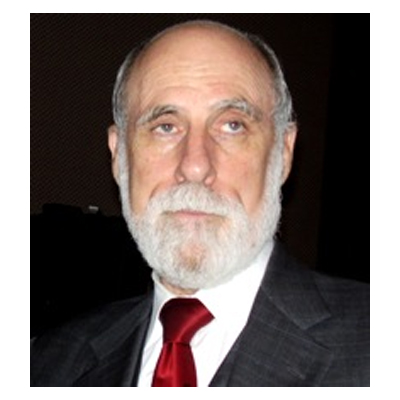
    Google’s Vice President and Chief Internet Evangelist Vinton G Serf is regarded as one of the fathers of the internet. While in Bangalore, he shared his views, Google’s objectives and the future of the internet, with Indiantelevision.com’s Tarachand Wanvari.


    Excerpts:

    IPR issues – You say that Google would like to make information available everywhere globally. Recently a Belgian court passed a ruling against Google over copyright. Google has been accused of dragging its feet in bringing in technology to take care of IP rights and help fight piracy. What does Google propose to do now on this issue?

    First of all, I’d like to point out that Google does not preview the content and we don’t claim any ownership or anything like that. Our intent is to make people aware of content which is already on the network. There are issues arising when someone who pulls copyright material and someone else has put that material improperly on the network. Google is unaware of any of the copyright claims when that information shows up on the net, it was there.


    Our package is very much like the package that was established in the US called the Digital Millennium Copyright Act.

    The US DRM is not as good as the framework in the EU.

    Actually, there is some tension in here between the piracy laws and the copyright laws and there is uncertainty as to how that is going to be resolved. The European Commission is trying to figure out how to adapt their intellectual property and content protection laws to match the US DRM laws.

    Google earth has run into several problems with regards to security. Lot of concerns have been raised about sensitive locations being viewed easily. What do you propose to do about this?

    Our policy is that whenever we have an issue arising with the national authorities, we take it away. We do understand their problems, and in fact there are any number of images that have been adapted. But I do need to point out to you that the data that we are using is not ours, typically it is available for free like the Nasa Landsat. Anyone could have access to it, and so removing it from Google Earth does not necessarily solve the problem, because the imagery is there. It’s also commercially accessible, in other words if you wanted that information, particularly if someone deliberately wanted the security overhead in order to mount an attack, if they have a coherent capability to attack, they probably also may have the ability to purchase this information quite independent from Google. So the problem is more complex than taking things out of Google Earth. The problem is that a lot of the overhead imagery is widely accessible. Period.


    I actually do not know of the specifics of the issues here in India, I can say that for some US installations we have removed or replaced information with less resolution or in some cases actually wiped out – like the White House for example, you can’t see the roof, it’s simply been covered up digitally. So those are things where actions have been taken.


    We face this all the time with regards to content that is indexed in different parts of the world you’ll find governments with different views, usually the Chinese example, the one everyone brings up, but I want to mention that there are other places. For example in France and Germany, it is illegal to profit form Nazi war memorabilia, and so it is considered illegal literally to put up images of these materials. So we have to consciously remove them form the google.de and the google.fr index. We understand that and we try to work with governments.

    The way mobile penetration is going on compared to laptops and desktops, do you see the internet more as a virtual net?

    In some ways yes. I think that we’re going to see expansion in all directions 802.11, Wifi, as opposed to physical networking technology. Lots and lots of mobiles which I think will be the first introduction to the internet for an awful lot of people in the world. Their first opportunity to interact with the internet may be on a mobile device.

    The ability to respond to an individual interaction, and to produce relevant advertising material in these different media is very important for us to consider

    As evangelist at Google, is it right for Google to acquire companies like Youtube, etc. Basically your core competency lies in developing search engines, aren’t you moving away from those core competencies?

    I disagree that we are going away from our core competencies. First of all, we acquire a lot of companies, because their technology we think is helpful. It’s true that our primary business is search and we have never lost track of that. But remember what’s driving the company right now is advertising, because advertising is how we pay for everything. And so you have to remember that the core of the business is revenue generation through target advertising. And we are very interested in all the mediums, not just the online internet, which has turned out to be wonderful for us. But that doesn’t mean that the other advertisement mediums should be ignored. They are still quite valuable.


    Youtube and Google video are media and so is radio. So we have been experimenting with video advertising, with audio advertising and with print advertising. Using similar kinds of techniques, the thing which is probably the most critical is the ability to produce an intervention in real time as opposed to the traditional thing where you produce a video advertisement which is a part of a television show actually prepared months or weeks ahead. The ability to respond to an individual interaction and to produce relevant advertising material in these different media is very important for us to consider.

    Could you speak on Web 2.0 and Web 3.0?

    I actually think those are two marketing terms and I sort of reject them out of hand as being overly simple. I do think however that the web as we know it with xml and html and so on has created an infrastructure layer on top of which you can now do things and so to the extent that there is a Web 2.0, maybe it uses web services and Service Oriented Architecture, it’s still very nascent, still very infantile. Long ways to go before we see it grabbing hold. I even chatted with Infosys this morning abut that and we have a similar view that it is still very much in its infancy.


    But, the concept is very compelling that you could standardize interaction. I hope we do it right this time. We tried once before in 1980, we called it the Webtronic Data Interchange and it didn’t work out because it was too vertical. So I sort of don’t like the terms Web 2.0 and Web 3.0., the thought behind them is standardizing of exchanges creating a layer of infrastructure that everyone can use and build on.

    How much is your India R & D center involved in solving these issues and challenges?

    In very obvious terms, we have a large number of Indian researchers and engineers at Google working very hard on many of these problems. So it’s a direct contribution at least to Google.

  • Viacom asks YouTube to remove unauthorized clips

    Viacom asks YouTube to remove unauthorized clips

    MUMBAI: YouTube, the online video sharing site from Google faces yet another controversy as Viacom asks the website to remove more than 100,000 unauthorized clips from its hugely popular video-sharing site.

    Viacom has been through several rounds of talks with YouTube and Google but has not managed a breakthrough as far as ‘filtering’ or ‘revenue sharing’ for clips and video is concerned.

    Viacom said in a statement that after several months of talks with the website “it has become clear that YouTube is unwilling to come to a fair market agreement that would make Viacom content available to YouTube users.”

    Viacom has repeatedly negotiated with YouTube and Google to deliver on several “filtering tools” to control unauthorized video from appearing on the site.

    Although the company is asking YouTube to take the clips down, it has not taken legal action.

    Under federal copyright law, online services such as YouTube are generally immune from liability as long as it responds to takedown requests. But the legal lines blur when another user posts the same video.

    YouTube said in a statement that it would comply with the request from Viacom and said that it cooperates “with all copyright holders to identify and promptly remove infringing content as soon as we are officially notified.”

    In November, YouTube had agreed to delete nearly 30,000 files after the Japan Society for Rights of Authors, Composers and Publishers complained of copyright infringement.

    Some media companies such as CBS Corp. and General Electric Co., NBC Universal have made deals to allow YouTube to use video clips from their programming. But the site is yet to agree over ways to get compensated for the use of their copyrighted material.

    Universal Music Group had threatened legal action for copyright infringement and piracy of music videos. It later reached a licensing deal with them last year.

    Despite Viacom’s problems with YouTube, the company’s MTV Networks division reached a licensing deal last year with Google that allows the search company’s video service to use clips from MTV and its sibling networks under a revenue-sharing agreement.

  • American Idol, Superbowl, Oscar Awards top viewership in US

    American Idol, Superbowl, Oscar Awards top viewership in US

    MUMBAI: American Idol, the Superbowl, the Oscar Awards and the dance based reality show Dancing With The Stars topped the list of most viewed television shows, according to Nielsen which looked at the most popular media trends among Americans during 2006.

    This is the first time the Nielsen companies have released a compilation of “Top 10’s” for the Nielsen brands.

    . CSI, Desperate Housewives, Without A Trace, Deal Or No Deal and Grey’s Anatomy also made the cut.

    In terms of films Pirates Of The Caribbean 2, Cars, X-Men 3, The Da Vinci Code and Superman Returns were the top grossers. An Inconvenient Truth featuring former US VP Al Gore was the top grossing documentary film. Cars, Ice Age 2 and Over the Hedge were top grossing animation films. In terms of DVD sales Harry Potter And The Goblet Of Fire came out on top followed by The Chronicles Of Narnia, Cars and Pirates Of The Caribbean 2. In terms of web brands Yahoo!, MySpace, Google and eBay were the top four.

    The top advertisers were Procter And Gamble, GM, AT&T, Ford, Daimlerchrysler and Time Warner. In the online space the top advertisers were Gus, Vonage Holdings, Netflix, NexTag and Verizon. In terms of product placement on television the top brands were Coca Cola, Chef Revival Apparel, Nike, 24 Hour Fitness Clubs and Chicago Bears.

    In terms of books sold in the US the top five were For One More Day by Mitch Albom, Beach Road by James Patterson, horror writer Stephen King’s Cell, James Patterson’s The 5th Horseman and Janet Evanovich’s Twelve Sharp. Going forward this informatio

  • Google, Baidu look to create online video solution in China

    Google, Baidu look to create online video solution in China

    MUMBAI: The world’s most valuable media firm Google is competing with rival Baidu.com to find China’s answer to global online video social site YouTube.

    Both the companies are looking to develop online video services in China.

    Media reports indicate that the two firms have independently had early discussions with some local video Web sites for potential business cooperation or possible acquisitions.

    However, neither Internet giant has secured a specific target yet.

    Google has two options. It could just translate its YouTube site into Chinese or build up a brand new ‘YouTube China’, possibly through the acquisition of a local video-sharing Web site.

  • Sky, Google unveil broadband alliance

    Sky, Google unveil broadband alliance

     MUMBAI: UK pay TV service provider BSkyB and the world’s most valuable media firm Google have announced plans to work together in bringing ground-breaking web-based services to Sky’s community of broadband internet customers.

    The set of multi-year agreements sees two of innovators in technology and entertainment join forces to create a customised experience for Sky Broadband customers.

    Sky will be Google’s first partner globally to deploy Google’s suite of search, advertising, communications and video services, all of which will be tailored and branded for Sky’s fast-growing broadband platform. Sky aims to ensure that its broadband customers enjoy the best possible online user experience with customised access to the full benefits of Google’s evolving suite of innovative products for PC, TV and mobile.

    Sky and Google will collaborate in three areas:

    Video: Sky will launch a multi-platform User Generated Video (UGV) portal powered by the first global deployment of Google’s syndicated video content tools. The site will allow users to edit, upload and share their own video content, including the facility to upload and download from a mobile phone. The UGV portal will form part of a content-rich experience for Sky Broadband customers that will enhance the appeal of Sky’s broadband services, build community and promote Sky content to online audiences.

    Communications: Sky Broadband customers will enjoy access to an online communications platform. This will include a fully customised version of Google’s email product, ‘Google Mail’, which will use the popular ‘@sky.com’ email address. Powered by Google with a user interface and functionality customised to Sky’s unique specifications, the platform will also offer access to key communications applications that attract and deepen relationships with internet users, such as contacts, calendar and instant messaging.

    In addition, Sky will explore opportunities to provide further services such as Google’s VoIP (voice over internet protocol) telephony services, enhanced storage and future product developments.

    Search and advertising Google will provide its search tools and targetted search advertising across Sky’s portfolio of online sites. The two companies will also explore future forms of web, TV and mobile advertising. Revenue generated by click-throughs on sponsored links will be shared between Sky and Google, increasing Sky’s exposure to the fastest growing segment of the UK’s advertising market.

    Sky CEO James Murdoch said, “These agreements will bring Sky customers a valuable set of services from the world’s leading search company, including cutting edge tools for video sharing and communications. Google has pioneered many of the web’s most loved and used features, so I’m delighted that Sky Broadband customers will be the very first

    online community to enjoy such unrivalled range and quality as well as a commitment to further innovation.

    In a short time, Sky says that it has emerged as an effective challenger by offering high-quality broadband that offers greater value than traditional cable and telcos. Sky says that it is on track to build a large and successful broadband business and is increasingly well positioned to participate in the rapid growth of online search and advertising.’

    Google chairman and CEO Eric Schmidt said, “Google is committed to giving people the power to explore, create and communicate. This alliance with Sky brings together two of the most innovative media and technology companies for the benefit of users. We will be delivering exciting new services for Sky Broadband customers all over the UK. We’re delighted to team up with Sky in one of the world’s most dynamic markets and we look forward to working together in the years to come.”