Tag: Google

  • Sir Martin Sorrell shares 10 trends shaping the global ad business

    Sir Martin Sorrell shares 10 trends shaping the global ad business

    The world’s biggest media conglomerate, which shapes the advertising and marketing of brands globally, has good news for marketing companies even though some nations are going through economic crises.


    WPP’s founder and CEO Sir Martin Sorrell shared his views on the trends impacting the global marketing service industry on his Linkedin blog.


    “As we plan for the future of our business, looking across the 110 countries in which we operate, we try to identify the trends that we think are shaping the global marketing services industry.


    Here’s our top ten:


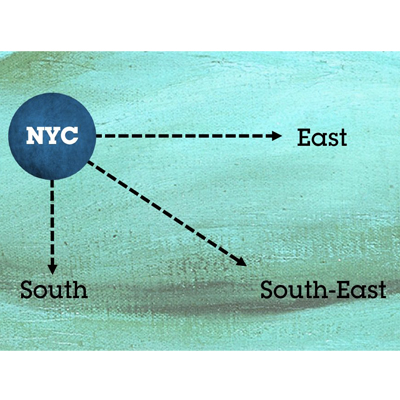
    1. Power is shifting South, East and South East

    New York is still very much the centre of the world, but power (economic, political and social) is becoming more widely distributed, marching South, East and South East: to Latin America, India, China, Russia, Africa and the Middle East, and Central and Eastern Europe.


    Although growth rates in these markets have slowed, the underlying trends persist as economic development lifts countless millions into lives of greater prosperity, aspiration and consumption.


    2. Supply exceeds demand – except in talent

    Despite the events that followed the collapse of Lehman Brothers in 2008, manufacturing production still generally outstrips consumer demand. This is good news for marketing companies, because manufacturers need to invest in branding in order to differentiate their products from the competition.


    Meanwhile, the war for talent, particularly in traditional Western companies, has only just begun. The squeeze is coming from two directions: declining birth rates and smaller family sizes; and the relentless rise of the web and associated digital technologies.


    Simply, there will be fewer entrants to the jobs market and, when they do enter it, young people expect to work for tech-focused, more networked, less bureaucratic companies. It is hard now; it will be harder in 20 years.


    3. Disintermediation (and a post-digital world)

    An ugly word, with even uglier consequences for those who fail to manage it. It’s the name of the game for web giants like Apple, Google and Amazon, which have removed large chunks of the supply chain (think music retailers, business directories and bookshops) in order to deliver goods and services to consumers more simply and at lower cost.


    Take our “frienemy” Google: our biggest trading partner (as the largest recipient of our clients’ media investment) and one of our main rivals, too. It’s a formidable competitor that has grown very big indeed by – some say – eating everyone else’s lunch, but marketing services businesses have a crucial advantage.


    Google (like Facebook, Twitter, LinkedIn and others) is not a neutral intermediary, but a media owner. Google sells Google, Facebook sells Facebook and Twitter sells Twitter.


    We, however, are independent, meaning we can give disinterested, platform-agnostic advice to clients. You wouldn’t hand your media plan to News Corporation or Viacom and let them tell you where to spend your advertising dollars and pounds, so why hand it to Google and co?


    Taking a broader view of our increasingly tech-based world, words like “digital”, “programmatic” and “data” will soon feel out-dated and obsolete as, enmeshed with so many aspects of our daily lives, network-based technologies, automation and the large-scale analysis of information become the norm.


    The internet has been a tremendous net positive for the advertising and communications services business, allowing us to reach consumers more efficiently, more usefully and often more creatively on behalf of clients. But it won’t be long before those clients stop asking our agencies for a “digital” marketing strategy (many already have). It will simply be an inherent part of what we’re expected to offer.


    4. Changing power dynamics in retail

    For the last 20 years or so the big retailers like Walmart, Tesco and Carrefour have had a lot more power than manufacturers because they deal directly with consumers who are accustomed to visiting their stores.


    This won’t change overnight, but manufacturers can now have direct relationships with consumers via the web and e-commerce platforms in particular. Amazon is the example we all think of in the West, but watch out for Alibaba, the Chinese behemoth due to list on the New York Stock Exchange later this summer in what could be the largest IPO in corporate history (and heading a capitalisation of around $200 billion).


    5. The growing reputation of internal communications


    Once an unloved adjunct to the HR department, internal comms has moved up the food chain and enlightened leaders now see it as critical to business success.


    One of the biggest challenges facing any chairman or CEO is how to communicate strategic and structural change within their own organisations. The prestige has traditionally been attached to external communications, but getting internal constituencies on board is at least as important, and arguably more than half of our business.


    6. Global and local on the up, regional down

    The way our clients structure and organise their businesses is changing. Globalisation continues apace, making the need for a strong corporate centre even more important.


    Increasingly, though, what CEOs want is a nimble, much more networked centre, with direct connections to local markets. This hands greater responsibility and accountability to local managers, and puts pressure on regional management layers that act as a buffer, preventing information from flowing and things from happening.


    7. Finance and procurement have too much clout, but this will change

    Some companies seem to think they can cost-cut their way to growth. This misconception is a post-Lehman phenomenon: corporates still bear the mental scars of the crash, and conservatism rules.


    But there’s hope: the accountants will only hold sway over the chief marketing officers in the short-term. There’s a limit to how much you can cut, but top-line growth (driven by investment in marketing) is infinite, at least until you reach 100% market share.


    8. Bigger government


    Governments are becoming ever more important – as regulators, investors and clients. Following the global financial crisis and ensuing recession, governments have had to step in and assert themselves – just as they did during and after the Great Depression in the 1930s and 1940s. And they’re not going to retreat any time soon.


    Administrations need to communicate public policy to citizens, drive health initiatives, recruit people, promote their countries abroad, encourage tourism and foreign investment, and build their digital government capabilities. All of which require the services of our industry.


    9. Sustainability is no longer “soft”

    The days when companies regarded sustainability as a bit of window-dressing (or, worse, a profit-sapping distraction) are, happily, long gone. Today’s business leaders understand that social responsibility goes hand-in-hand with sustained growth and profitability.


    Business needs permission from society to operate, and virtually every CEO recognises that you ignore stakeholders at your peril – if you’re trying to build brands for the long term.


    10. Merger flops won’t put others off

    Despite the failure of one or two recent high-profile mega-mergers, we expect consolidation to continue – among clients, media owners and marketing services agencies. Bigger companies will have the advantages of scale, technology and investment, while those that remain small will have flexibility and a more entrepreneurial spirit on their side.


    FMCG and pharmaceuticals (driven by companies like 3G and Valeant) are where we anticipate the greatest consolidation, while our own industry is likely to see some activity – with IPG and Havas the subject of constant takeover rumours. At WPP we’ll continue to play our part by focusing on small- and medium-sized strategic acquisitions (31 so far this year, and counting).”


     (These are purely personal views of  WPP’s founder and CEO Sir Martin Sorrell and indiantelevision.com does not subscribe to these views.)


  • 219 private websites blocked for showing FIFA, Google does not figure in list

    219 private websites blocked for showing FIFA, Google does not figure in list

    NEW DELHI: The Delhi High Court has been informed by telecom player Airtel that it has already blocked 219 websites which were illegally streaming live the matches of 2014 FIFA World Cup.


    The Court had earlier on 23 June issued an injunction restraining over 400 private websites from showing the matches, following a petition by Multi Screen Media (Sony) that holds the exclusive rights for beaming the matches in India.


    Interestingly, the list given by Airtel does not list any Google website despite the fact that the Court had specifically cited two Google sites.


    The vacation bench of Justice V Kameswar Rao gave a directive to the Department of Information Technology and Telecom to ensure implementation of the order of the court. He also said that his directive would be forwarded to the concerned Ministry.


    The judge, who listed the matter to come up in the last week of July, gave the directive after hearing Saikrishna Rajagopal who was arguing on behalf of MSM.


    The sports arm of MSM, Sony Six is the official broadcaster of the football extravaganza, while its digital platform LIVSports.in has the exclusive rights to live stream the event.
     
    The network had moved the court after it found out that several unauthorised websites were streaming the World Cup matches illegally.


    MSM had said that it has the official rights to telecast matches in six channels in the Indian sub-continent, including Sony Six and offers live streaming on Sony Liv and Liv Sports (for mobile).


    The court order was revised on 1 July and the list of sites was modified after a list was submitted again by MSM. The High Court had also directed that the copy of the order must be sent to DoT and DIT, so that the Internet Service Providers can block the websites.

  • Advertising on mobiles in US shows marked increase

    Advertising on mobiles in US shows marked increase

    NEW DELHI: The mobile appears to be leading the increase in media ad spending this year, at least in the United States.


    Total ad investments will jump 5.3 per cent from last year to reach $180.12 billion in 2014, according to eMarketer, which tracks such spending. 

    Mobile will lead this year’s rise in total U.S. media ad spending, and advertisers will spend 83 per cent more on tablets and smartphones than they did in 2013 — an increase of just over $8 billion.


    By the end of this year, mobile will represent nearly 10 per cent of all media ad spending, surpassing newspapers, magazines and radio for the first time to become the third-largest individual advertising venue, only trailing TV and desktops/laptops, projects the company. 

    Though investments in TV advertising will rise just 3.3 per cent, advertisers will spend $2.19 billion more on the medium than they did in 2013, making it the second-leading category in terms of year-over-year dollar growth, according to eMarketer. 

    The surge on mobile advertising is attributed to the fact that consumers are spending more time with their devices, an average of two hours 51 minutes per day this year, compared to two hours 19 minutes the year before. 

    Google and Facebook lead the top American digital ad-selling companies. The category will represent 18.2 per cent of total media ad spending this year, eMarketer projects.


    Google alone accounts for more than 10 per cent of all advertising spending in the U.S, and in 2016, together Google and Facebook will take a 15 per cent share of the $200 billion total media advertising market.

  • Sircar to address ‘World Global Forum’ in Germany

    Sircar to address ‘World Global Forum’ in Germany

    NEW DELHI: Prasar Bharati chief executive officer Jawhar Sircar is attending the first-ever ‘Global Media Forum 2014’ being organised by Deutsche Welle, Germany’s international broadcaster.


    The three-day international media congress in Bonn from 30 June to 2 July will among other things discuss how media is participating in the global trend towards greater active participation. The theme for this year is: From Information to Participation: Challenges for the Media.


    Prasar Bharati is among the two broadcasters from developing countries to have been invited to attend the meet, the other being Al Jazeera.


    Sircar will be taking part in a session on ‘The Future of Journalism and the Role of International Broadcasters.’ The discussion will be moderated by former BBC newscaster Tim Sebastian.


    The Summit will debate whether conventional media will be able to retain its position in this converged digital world where the lines between commentary and traditional journalistic reporting have been blurred., how international broadcasters can contribute to global diversity, how information services are likely to look like in the future, etc.


    Prominent guest speakers, including Google critic Jeff Jarvis and German Foreign Minister Frank-Walter Steinmeier will discuss how media is participating in the global trend towards community involvement and interest in political processes and decision-making.


    The discussions at GMF 2014 are bound to have far-reaching points of relevance for macro-visioning and formulation of media policy across the globe.

  • Google’s Android eyes TV market

    Google’s Android eyes TV market

    MUMBAI: The fight isn’t limited to content alone; the battle amongst various players is now all about who will come up with a smarter TV viewing experience. Launched recently, Google interface Android TV aims to do just that.


    The new interface is an extension of Google’s operating system which will take Android to the living room in the form of its upcoming version Android L. It can run on various products mainly smart TVs, set top boxes (STBs), smart watches and cars. Google’s earlier TV product, Chromecast, that was launched in 2010 as a plug-in device for television sets allowed viewers to send data from their phones and tabs on to the big screen using wi-fi. The product had failed to excite users.


    The USP of the new interface is that Android tablets, phones and watches can be used as remote control; all one needs is a D-pad and a microphone to send audio commands. The screen has three parts: recommendations, games and applications. It will also hold custom-made apps such as Netflix, Hulu, Pandora along with its own apps like YouTube, Hangout etc. The smart TV powered by Android TV can also reorganise its screen based on usage patterns.


    All of Sony’s HD and 4k (ultra HD), Phillips, Sharp and TP Vision television sets will support Android TV from 2015. Asus and Razor are the only confirmed set-top boxes to have taken up Android TV to focus on gaming.


    The software development kit for Android Auto will be launched later with Google’s list of nearly 40 partners such as Bentley, Ferrari, Audi, Ford, Nissan, Mazda, Suzuki, Skoda and Honda.


    Android TV runs on various hardwares and isn’t restricted to just STBs unlike its competitors Apple TV and Amazon Fire. Its main objective is to enhance the internet viewing experience on television. Google will launch Android TV and Android L simultaneously post September 2014. 

  • Screenz joins hands with Google to revolutionise TV viewing experience

    Screenz joins hands with Google to revolutionise TV viewing experience

    MUMBAI: Screenz has announced its collaboration with Google to host the Screenz Real Time Platform, a global, live, interactive infrastructure for television shows enabling broadcasters and format owners to transform programs into live events.


    The first show to use Screenz Real Time Platform is ‘Rising Star’– Keshet International’s hit TV show that first aired in Israel in September 2013, and will be launched in over 25 countries around the world including on ABC in the US on 22 June.


    ‘Rising Star’ is a trailblazing interactive TV format that marks a new era in home entertainment. The show enables real-time voting by viewers from their sofas via an innovative mobile app, fully integrated to the program. It is the first talent show where the viewer is the judge from start to finish. The show features performers making their debut on stage alone, from behind a giant wall of TV screens. They can only make their entry to the studio round by securing more than 70 per cent of the viewers’, judges’ and live audiences’ vote.  The audience can see the results of their vote in real time and if they vote positively, have a chance that their picture will be shown on the giant wall.  If a contestant achieves 70 per cent of the votes, the wall dramatically lifts revealing the studio audience and expert panel.


    The collaboration between Screenz and Google delivers the scale to process a huge number of interactions per second and has been successfully employed so far to support the show in Brazil, Portugal and Israel. In testing the Real Time Platform processed a remarkable 100 million interactions per minute.


    Screenz is working with broadcasters and TV production companies worldwide to leverage its unique Real Time Platform to create and support innovative new formats. The proven benefit of the Platform for broadcasters is the way it hikes up the level of engagement a viewer has with a show at the exact time when it is aired. The system also enables sophisticated audience targeting allowing broadcasters and brands to effectively identify viewer demographics and interests.


    “Broadcasters and producers are constantly looking to introduce new formats which enable them to engage directly with TV audiences. By working with the Google Cloud Platform, Screenz will empower them to rip up the rule book and combine compelling live content with real time viewer interaction” said Screenz CEO Eli Uzan.


    Google Cloud Platform director Daniel Powers said, “Screenz is at the forefront of a revolution which is changing the way we watch television. We are delighted that they have chosen to build their game-changing products on Google Cloud Platform. Our job is to make sure that the technology behind the Real Time Platform works effortlessly so that all viewers need to worry about is which way they are going to vote.”


    Keshet International general manager production Granit Noham added, “We are very pleased that our partner Screenz is collaborating with the digital prowess of Google Cloud Platform to provide a robust platform and safe pair of hands for each and every international version of ‘Rising Star’.”


    Screenz’s Real Time Platform utilises Google Compute Engine, Google Cloud Storage and Google BigQuery, which are part of Google Cloud Platform. The application is deployed globally on Google’s cloud infrastructure, to provide scalability and robustness. The needs of the local broadcaster and audience will always be met, even if multiple countries are broadcasting the live show simultaneously. By utilising BigQuery, Screenz is able to provide broadcasters with the ability to analyze the large amounts of data collected.

  • Google overtakes Apple to become world’s most valuable brand

    Google overtakes Apple to become world’s most valuable brand

    MUMBAI: After three years at the top, Apple slipped to number two position as Google overtook it to become the world’s most valuable global brand in the ‘2014 BrandZ Top 100 Most Valuable Global Brand’ ranking.

    Google worth $159 billion saw an increase of 40 per cent year on year whereas Apple slipped on the back of a 20 per cent decline in brand value, to $148 billion. Whilst Apple remains a top performing brand, there is a growing perception that it is no longer redefining technology for consumers, reflected by a lack of dramatic new product launches. The world’s leading B2B brand, IBM, held onto its number three position with a brand value of $108 billion.

    Millward Brown Optimor MD Nick Cooper said, “Google has been hugely innovative in the last year with Google Glass, investments in artificial intelligence and a multitude of partnerships that see its Android operating system becoming embedded in other goods such as cars. All of this activity sends a very strong signal to consumers about what Google is about and it has coincided with a slowdown at Apple.”

    “This year’s index highlights the end of the recession, with a strong recovery in valuations and, for the first time, real growth across every category and the Top 100 as a whole,” said WPP’s The Store CEO David Roth. “What’s remarkable is the way that strong brands have led the recovery. Seventy-one of the brands listed in our 2014 Top 100 were there in 2008. Despite the financial turmoil and the digital disruption that have decimated many businesses during the last few years, these brands have remained in the ranking, proving the durability of strong brands.”

    The BrandZ Top 100 Most Valuable Global Brands study, commissioned by WPP and conducted by Millward Brown Optimor, is now in its ninth year.

    The combined value of the Global Top 100 has nearly doubled since the first ranking was produced in 2006. The Top 100 today are worth $2.9 trillion, an increase of 49 per cent compared with the 2008 valuation, which marked the start of the banking and currency crisis.

    The BrandZ Top 10 Most Valuable Global Brands 2014


  • AT&T-DirecTV deal draws mixed reactions from media analysts, shareholders

    AT&T-DirecTV deal draws mixed reactions from media analysts, shareholders

    NEW DELHI: The recent announcement about American telecom carrier AT&T making a $48.5 billion bid for DirecTV has led to heated debate both in the media in the United States as well as among shareholders, stock watchers and industry stakeholders.


    Some analysts are questioning if the deal is so fruitful then why companies like Apple, Verizon and Google never considered purchasing DirecTV.


    According to various reports in the media in the US, DirecTV shareholders are reportedly happy with the price and shareholder rights attorneys at Robbins Arroyo are investigating the proposed acquisition.


    DirecTV shareholders will receive $28.50 in cash and $66.50 in shares of AT&T stock for each share of common stock, for a total consideration of $95.


    Robbins Arroyo’s investigation focuses on whether the board of directors at DirecTV is undertaking a fair process to obtain maximum value and adequately compensate DirecTV shareholders, who were expecting more.


    The $95 merger consideration is significantly below the target price set by at least four analysts, including a target price of $100 set by analysts at Macquarie Group and Atlantic Equities.  The company’s comparable adjusted earnings per share beat analyst estimates in three out of its last four quarters, said Robbins Arroyo.


    DirecTV shareholders have the option to file a class action lawsuit to ensure the board of directors obtains the best possible price for shareholders and the disclosure of material information.


    AT&T has also been under attack from Fitch Ratings that has placed the ‘A’ Issuer Default Ratings (IDRs) and outstanding debt of AT&T and its subsidiaries on Rating Watch Negative. The company’s ‘F1’ short-term IDR and commercial paper rating has also been placed on Rating Watch Negative.


    Meanwhile, Fitch has placed the ‘BBB-’ IDR and outstanding debt ratings assigned to DirecTV Holdings on Rating Watch Positive. Approximately $20.8 billion of debt outstanding at DirecTV as of 31 March 2014 is affected by Fitch’s action.


    Fitch said AT&T’s acquisition of DirecTV will improve its financial flexibility owing to DirecTV’s strong free cash flows and the significant equity component in the transaction financing. The transaction also strengthens the company’s position in the video landscape, offering the potential to capitalise on trends for mobile video and over-the-top (OTT) video delivery. The acquisition also diversifies AT&T’s revenue stream.


    DirecTV’s video assets are complementary to AT&T’s operations, but the longer term strategic benefits are less clear and depend on the post-merger company’s ability to capitalise on emerging trends in the industry, Fitch said.


    But AT&T’s planned acquisition of DirecTV offers benefits in the form of a nationwide footprint for AT&T as a video over the top (OTT) and pay TV operator and ties in with the company’s already strong IPTV, broadband and wireless businesses, said Strategy Analytics.


    “The industry is at a turning point where fixed operators are under tremendous pressure from increasing costs but DirecTV is known for having a higher-end customer base, and the ARPU for the company reflects the premium service,” said Strategy Analytics service provider strategies director Jason Blackwell.


    Multi-play bundling is an important strategy for AT&T, indicated by the high number of its customers who subscribe to three and four services. Targeting high ARPU, premium customers with DirecTV plays well into AT&T’s strategy. Through this deal, AT&T is buying scale in Pay TV, premium customers for greater multi-play service adoption, and a nationwide footprint for quad-play services.


    AT&T will probably be able to integrate DirecTV spectrum and delivery mechanisms as well as OTT Video services even more rapidly if the new FCC Net Neutrality rules are adopted. “It looks as if AT&T has placed a major bet on this happening. These FCC rules could dramatically simplify the delivery of multi-device multi-service ‘multiplay’ bundles across fixed and wireless; and even stimulate innovation in fixed telco services based on mobile features,” said Sue Rudd, director, Service Provider Analysis for Wireless Networks and Platforms.


    America Movil has no plans to buy any significant portion of AT&T’s stake, according to a report from Bloomberg. A public sale of AT&T’s 8 percent holding is seen as the most likely scenario. Such a secondary offering could let America Movil owner Carlos Slim and his family add to their personal stakes if they choose.


    Fortune reported that AT&T’s $49 billion agreement to buy DirecTV is a promise to build and enhance high-speed broadband for 15 million U.S. customers, many of whom live in rural areas that can be difficult to reach at a viable cost.


    The $48.5 billion deal could fall apart if the satellite-TV company is unable to renew its NFL Sunday Ticket service, a premium package offering access to all out-of-market games for $39 per month.


    Football could play a decisive role in the megamerger. The breakup provisions stipulate that AT&T would be able to litigate and potentially collect damages if DirecTV fails to use “it’s reasonable best efforts to obtain such a renewal” of NFL Sunday Ticket, according to a filing with the Securities and Exchange Commission, said a Business Week report.


    Meanwhile, Infonetics Research has reduced its 2017 pay-TV revenue forecast by 35 per cent globally, from $401 billion to just under $260 billion. It said the overall video services ARPU and revenue growth will be constrained. 


    “This is because of the result of increasing competition from OTT (over-the-top) players and the service providers themselves using broadband video as a lower-priced offering,” said Jeff Heynen, principal analyst for broadband access and pay TV at Infonetics Research.

  • AT&T to launch video service with Chernin Group

    AT&T to launch video service with Chernin Group

    NEW DELHI: American telecom service provider AT&T and The Chernin Group are acquiring, launching and investing in video services.


    It is understood that this will be more than a $500 million venture. The massive investment is seen as a response to the ongoing merger talks between Comcast and Time Warner Cable (TWC) and fiber-led Internet ambition of Google.


    AT&T announced its video investment plan hours after Comcast shared its Q1 2014 revenue that rose 13.7 per cent to $17.4 billion. Comcast Q1 income grew 16.3 per cent to $3.56 billion. Out of this, Cable Communications revenue increased 5.3 per cent.


    AT&T, which has invested more than $119 billion in the United States over the last six years, said it wants to tap the online video and OTT video market.


    Comcast, which is currently negotiating a $45 billion merger with TWC, said it added 124,000 cable customers in Q1 2014 and reached 26.8 million. It added 24,000 video customers in the first quarter of 2014. The company also added 383,000 high-speed internet customers. Internet revenue growth of 9 per cent is the strongest growth rate in two years.


    AT&T chief strategy officer John Stankey said: “Combining our expertise in network infrastructure, mobile, broadband and video with The Chernin Group’s management and expertise in content, distribution, and monetization models in online video creates the opportunity for us to develop a compelling offering in the OTT space.”


    One-day before the video announcement, AT&T said it would expand its high speed internet network to an additional 21 cities in the American internet network. It also suggested that the online video venture will make AT&T a leader in the American broadcasting industry. It seems internet search engine Google may not be the big rival for AT&T, but Comcast and others.


    The Chernin Group, which invests in media businesses, brings assets and expertise to the venture, including contribution of its majority stake in Crunchyroll, a subscription video on demand service.


    This alliance positions AT&T and The Chernin Group to take advantage of the rapid growth of online video and OTT video services. The strategic goal of this initiative will be to invest in advertising and subscription VOD channels as well as streaming services.


    AT&T has over 110 million wireless subscribers and more than 16 million total broadband subscribers. Video makes difference to better customer experience. At present, Google and AT&T are competing in high speed internet network roll outs. AT&T will benefit from video as it will compensate possible revenue loss from voice services. 

  • Now brands piggyback elections

    Now brands piggyback elections

    MUMBAI: Move over political parties, election fever has gripped brands as well! As if political outfits telling people how they’ve changed their lives for the better wasn’t enough, we now have brands doing the honors. And while they may be performing a good deed in urging viewers to step out and cast their vote, not all brands that are piggybacking the polls seem to have got it right. Here’s taking a look at the election-based ads doing the rounds of television currently…


    Fevicol uses crazy chairs as a symbol


    Known for its clever, tongue-in-cheek advertisements, Fevicol’s latest too does not disappoint. A chai-wallah enters the shop of a carpenter who is making the next prime minister’s chair. He points out to three variations – one with BJP’s lotus, another with Congress’s hand, and a group of chairs joined unevenly symbolic of the Third Front. The advert is a pun intended on the politicos vying for power.


    Click here to watch the TVC


    Hero Hf Deluxe appeals to vote the one with merit


    Many a times, people vote for candidates/political parties who belong to the same region/community/caste/religion. The latest Hero advert advocates voting for people based on talent/merit instead of these mores.


    Click here to watch the TVC


    Google’s #PledgeToVote with Mr. Shyam Negi


    Part of Google India’s ambitious new campaign that encourages Indians to vote, the inspiring TVC tells the story of Shyam Saran Negi (97) from Himachal Pradesh, who has never missed a chance to exercise his right to vote since 1951 when India’s first general elections were held.


    Click here to watch the TVC


    Tata Tea Jaago Re strikes a strong message for women voters


    The second part of Tata Tea’s ‘Power of 49’ campaign targets women voters. The advert titled ‘kaala teeka’ is aimed at women from the upper strata, who don’t think much about exercising their right to vote.


    Click here to watch the TVC


    Sunfeast shouts a subtle slogan


    In keeping with the nature of the brand, Sunfeast’s latest advert is a fun take on political parties and elections. It features children as leaders and voters who go on to form the ‘Yippee’ party.


    Click here to watch the TVC


    RR Kabel poses a straight question


    Coming from a hardware brand, the advert comes straight to the point and tells voters to “choose wisely”. However, it does hit the right chord with a strong line of communication.


    Click here to watch the TVC


    Idea warns politicians ‘no ullu banoing’


    A typically smart-alecky advert coming from Idea, which is in sync with the brand’s punch-line, ‘no ullu banaoing’ even as it sends out a message to politicos not to fool the junta.


    Click here to watch the TVC


    Havells fans off bribery


    A clever advert that plays on the brand’s ‘Hawaa Badlegi’ proposition to send out the message that the ‘cash for vote’ trick will not work with today’s upright electorate


    Click here to watch the TVC


    Subhash sarees salutes women voters


    How does a clothes brand connect with elections? Subhash Sarees does it by saying that the ‘kaala teeka’ is the best form of adornment for any woman apart from the kaajal, bindi and so on.


    Click here to watch the TVC