Tag: Google

  • HOOQ expands viewing experience with Google Chromecast

    HOOQ expands viewing experience with Google Chromecast

    MUMBAI: In a bid to expand the viewing experience of users in the country and address the home entertainment market, video-on-demand service HOOQ app’s latest version will support Google Chromecast.

    With this, HOOQ subscribers will now be able to use Chromecast to cast movies and TV series from any connected device to their television screens. HOOQ offers unlimited streaming of over 15,000 English, Hindi and regional language films as well as TV shows on its platform. 

    HOOQ chief marketing officer Ravi Vora said, “We are very thrilled to bring the best in class entertainment from HOOQ to Chromecast users enabling them to enjoy the best content on their televisions right in their living rooms. We believe this partnership further solidifies our position as the country’s biggest premium video-on-demand service.”

    Chromecast is a thumb-sized media streaming device that plugs into the HDMI port on TVs. Viewers can use an Android phone, tablet, iPhone, iPad, Mac or Windows laptop, or Chromebook to cast the HOOQ app and its programming onto a television.

    HOOQ launched in India earlier this year with a subscription price of Rs 199 per month. Users can access entertainment content, which can be viewed on upto five connected devices. The service also offers a unique offline download feature of up to five titles at a time ensuring that there is always video content to be enjoyed even when users are offline or facing connectivity challenges.

    Customers, who purchase Google Chromecast through Snapdeal and Reliance Digital, will get free access to HOOQ for six months, which is worth Rs 1500.  

    Some of the content that is available on HOOQ includes movies like The Matrix, The Lord of the Rings, The Dark Knight Rises, Iron Man 3,Don, Chennai Express, Barffi, Kai Po Che, Lai BhaariHarishchandrachi Factory and Chandrmukhi, and TV shows like Friends, Nip Tuck, ER and first and exclusively in Asia – Ash vs. Evil Dead.

    .

  • GroupM & Google’s Grand Diwali Mela gets AskMe Bazaar as title sponsor

    GroupM & Google’s Grand Diwali Mela gets AskMe Bazaar as title sponsor

    MUMBAI: Making the online Diwali festival initiative bigger and better this year, GroupM with along with Google has roped in AskMeBazaar.com as its new title sponsor.


    Brands that renewed their partnership with the Grand Diwali Mela this year are Lakme, Horlicks, Kurkure and Hungama.com, whereas Eno and Godrej Securities have come on board as the new partners.


    Last year, the Grand Diwali Mela received over 5.5 million visitors in a course of 30 days. Over 125,000 hours were spent browsing various online stalls in the mela. These stalls included products, food items, pooja needs, gaming and entertainment. The Grand Diwali Mela emerged as the largest online sampling platform for brands wherein over 150,000 samples were shipped across India, with 70 per cent sample orders going to Tier 2 and Tier 3 towns. The samples ranged from make-up, skincare and household products.


    Askmebazaar.com will be offering a host of deals at the Grand Diwali Mela with discounts on home appliances, mobile phones, fashion apparels, home décor and personal care products.


    For the spiritually inclined, this year the ‘Grand Diwali Mela’ has the option of offering prayers and receiving ‘prasad’ from a number of temples across India. As Diwali is also about greeting loved ones, the Grand Diwali Mela will also offer the facility to send online festive greetings showing your ‘namkeen’ side with fun greeting cards from Kurkure.


    Talking about the sponsorship, Askmebazaar digital strategy group CMO and head Manav Sethi said, “We are excited to be the presenting sponsor of Grand Diwali Mela 2015. One of its kind virtual mela; one stop destination for entertainment, best deals and best brands in the biggest festive season of India. A truly immersive experience in one destination for consumers. This year look forward to the BIG deals everyday delivered at your doorstep. From furniture to fashion, AskmeBazaar has curated the best deals to ensure every home lights up this Diwali. Askme Group looks forward to India joining us on the GDM, 2015; the biggest mela of the year!”


    On the second season of the Grand Diwali Mela, GroupM South Asia CEO CVL Srinivas said, “After the success of the Grand Diwali Mela in year one, we are excited to bring the online festival back again this year. We have a new naming partner on board AskMe.com as well and a range of new brands and products for consumers to choose from.”


    Speaking about the reach of the festival, Srinivas added, “With GDM, we were able to create a great platform for consumers to come and sample products and interact with brands. Last year we saw a clear spike in terms of mobile usage to access the Grand Diwali Mela. With a clear focus on taking the festival to not just metros, but also tier 2 and 3 towns, where the mobile phone is their window to the world, GroupM and our partners are integrating traditional print, TV and radio with mobile and digital marketing.”


    “Grand Diwali Mela organised by GroupM emerged as India’s largest online brand activation initiative during the festival season last year and surpassed any offline brand activation initiative in the country. As more and more consumer products companies embrace the Internet to drive sampling and consumer engagement, we’re delighted to partner Group M to scale this initiative further and help brands make the most of the opportunity online,” asserted Google SEA & India director agency business Punitha Arumugam.


    Hungama.com, has come back on board as one of the partners of the ‘Grand Diwali Mela’. Last year Hungamam.com gave users access to films from its  Indian and International movies catalogue. Users could also create a Grand Diwali Mela playlist of popular Bollywood numbers. This year, Hungama.com brings on board ‘Hungama Play’ – its premium video on demand (VOD) service via the Grand Diwali Mela 2015.


    Besides this, the Grand Diwali Mela is also running contests with prizes to be won.

  • NASSCOM Game Developer Conference 2015 speaker schedule announced

    NASSCOM Game Developer Conference 2015 speaker schedule announced

    NEW DELHI: The National Association of Software and Services Companies (NASSCOM) announced the full speaker and workshop schedule for its Game Developer Conference 2015 being held at the Westin Hotel from 5 to 7 November in Pune.


    The conference will feature speakers from a wide range of regional and international tech companies, developers and publishers, including Microsoft, Unity Technologies, Google, Epic Games, Zynga and Autodesk.


    “With a mix of India’s independent games development industry and international speakers and delegates, this years program will provide attendees with a foundation of knowledge and networking opportunities that will help drive their studios,” said NASSCOM Games Developer Conference chairman Anando Banerjee. “By learning from the success and failures of other studios, hands-on workshops and an expo floor featuring some of India’s most innovative new IP across mobile, PC and VR platforms, this will be our best development conference yet.”


    Featuring five curated tracks: indie development, game design, marketing and PR, game art and technology, and with over 1300 industry delegates, 70 speakers, 50 games, an Expo promoting Indian video games and a dedicated day for workshops, the NASSCOM Game Developer Conference 2015 showcases the creative talent and upcoming industry trends in interactive entertainment in India.


    The conference will kick off on 5 November with a series of games development workshops from Unity Technologies, Google Play, a Design Workshop by Jitesh Panchal, Nazara, a Start-Up Funding Session from Japheth Dillman, Co-Founder of Yetizen and an Art Masterclass from Glu’s Rahul Philip.


    The next day, the full programme begins with a welcome address and introduction, followed by a presentation of the NASSCOM Gaming Forum-Newzoo Report for Indian games development. British games designer Ste Curran, will then keynote the design track with a talk called ‘Love and Violence’. Wednesday speaking highlights include a ‘Post Mortem – UNWYND: From Android Failure to Editor’s Choice on iOS’ by Ankush Madad, ‘Dropout Games, Getting Consumers to Love Your Game in under 3 minutes’ by Anila Andrade, 99 Games and ‘25 Tips for Video Game PR’ by Audra McIver, Plan of Attack.


    On 6 November, Zynga’s chief visual officer Henry LaBounta with keynote address ‘Learning to See’ on visual effects in games design. Thursday speaking highlights include‘Designing Procedural Content – Good Robot’ by Arvind Raja Yadav, ‘Analytics Driven Product Management’ by Rachna Rao, Zynga, a panel discussion on Indian publishing and a women in game development meet up.


    The NGDC 2015 Expo, running alongside the conference, will showcase 50+ games that have been developed or published in India. The NGF 2015 Awards will also recognise achievements in Indian games development and encourage the creation of building original IP in India.

  • TRAI devices simplified online form to gain info on LCOs & linked MSOs

    TRAI devices simplified online form to gain info on LCOs & linked MSOs

    NEW DELHI: With the deadline for Phase III of digital addressable system (DAS) virtually at the doorstep, the Telecom Regulatory Authority of India (TRAI) has created a Google form to gain first-hand information about every local cable operator (LCO) in the country.  


    According to information available with Indiantelevision.com there are more than 60,000 LCOs in the country and no authority at present has the complete information about each of them. 


    According to TRAI, the aim was part of its function to regulate the telecom and broadcasting services; lay-down the standards of quality of service to be provided by service providers and ensure level playing field amongst the service providers and nurture the condition for the growth of the sector.

    The regulator said it had been taking up several activities to protect the interest of cable operators, address their grievances and educate them about their rights and obligations. 


    However it required data to keep the LCOs updated about the policies and regulation made by TRAI, data related to the LCOs such as name, address, e-mail, mobile number and city of operation etc.


    The online information gathering mechanism through a single Google form will help the regulator get all the information about the LCOs, which will be stored by TRAI in its database.


    The form, which is easy to fill, has only sought the full contact details of the LCO, whether he gets his signals from the broadcaster or multi system operators, and the names of the MSOs he is attached to.


    The link to the form is 

    https://docs.google.com/forms/d/1dWCwSlNEkcAqFbQhep9T7OmOhfHZSNN5UMFGr2a1wyc/viewform?usp=send_form or http://goo.gl/forms/q34NG1AHHf

  • Modi convinces Silicon Valley about Digital India, lauds Facebook & Google

    Modi convinces Silicon Valley about Digital India, lauds Facebook & Google

    NEW DELHI: As he entered the extensive office of Facebook in California, he was greeted with the song ‘Chak de India’ and when he left, Prime Narendra Modi left a huge impression about India’s seriousness ongoing digital.


    The euphoria was the same when he visited Google, or addressed a meeting of persons from LinkedIn or start-ups.


    In various speeches during his visit, Modi said Facebook, Twitter and Instagram were the new neighbourhood.


    “If Facebook were a country, it would be the third most populous one and the most connected,” he said. 


    Similarly, he said Google “has made teachers less awe-inspiring and grandparents more idle. Twitter has turned everyone into a reporter. The traffic lights that need to work the best are on CISCO routers.” 


    The status that now matters, he said, “is not whether you are awake or asleep but whether you are online or offline. The most fundamental debate for our youth is the choice between Android, iOS or Windows.”


    From computing to communication, entertainment to education, from printing documents to printing products, and, now to Internet of Things, it’s been a long journey in a short time. 


    Referring to digital networks, he said, “We have attacked poverty by using the power of networks and mobile phones to launch a new era of empowerment and inclusion: 180 million new bank accounts in a few months; direct transfer of benefits to the poor; funds for the unbanked; insurance within the reach of the poorest; and, pension for the sunset years for all.”


    By using Space technology and internet, the country had been able to identify in the last few months 170 applications that will make governance better and development faster. 


    “The pace at which people are taking to digital technology defies our stereotypes of age, education, language and income,” he added.


    “Customers, more than creators, are defining the use of a product. The world may be driven by the same ancient impulses. We will continue to see human struggles and successes. We will witness human glory and tragedies,” Modi said. 


    He added that in this digital age, there was an opportunity to transform lives of people in ways that was hard to imagine just a couple of decades ago. 


    “Today, technology is advancing citizen empowerment and democracy that once drew their strength from Constitutions. Technology is forcing governments to deal with massive volume of data and generate responses, not in 24 hours but in 24 minutes. When you think of the exponential speed and scale of expansion of social media or a service, you have to believe that it is equally possible to rapidly transform the lives of those who have long stood on the margins of hope. So out of this conviction was born the vision of Digital India,” he said. 


    “It is an enterprise for India’s transformation on a scale that is, perhaps, unmatched in human history. Not just to touch the lives of the weakest, farthest and the poorest citizen of India, but change the way our nation will live and work,” he said. “We will transform governance, making it more transparent, accountable, accessible and participative. I spoke of E-Governance as a foundation of better governance – efficient, economical and effective.” 


    After MyGov.in, Modi said he had just launched the Narendra Modi Mobile App.


    Information, education, skills, healthcare, livelihood, financial inclusion, small and village enterprises, opportunities for women, conservation of natural resources, distributed clean energy – entirely new possibilities have emerged to change the development model. 


    “We want our 1.25 billion citizens to be digitally connected. We already have broadband usage across India go up by 63 per cent last year. We need to accelerate this further,” he further said. 


    An aggressive expansion of the National Optical Fibre Network had been launched that will take broadband to our 600,000 villages. “We are expanding our public Wi-Fi hotspots. For example, we want to ensure that free Wi-Fi is not only there in airport lounges, but also on our railway platforms. Teaming up with Google, we will cover 500 railway stations in a short time. We are also setting up Common Service Centres in villages and towns. We will also use information technology to build smart cities,” Modi informed. 


    “We are also setting up an Electronics Development Fund to support design, development and launch of new products,” he added. 


    Indians account for 15 per cent of startups in the United States. “Hundreds of thousands of Indian professionals here and in India are contributing to the global success of US enterprises. Many are leading them today. This is the possibility of the digital bridge – to connect distant lives and change fortunes and future,” he said.


    Modi said he was delighted that Qualcomm announced a fund of $150 million for startups in India.
  • Ogilvy acquires majority stake in Brazilian marketing agency Jüssi

    Ogilvy acquires majority stake in Brazilian marketing agency Jüssi

    MUMBAI: WPP’s wholly-owned operating company Ogilvy has acquired a majority stake of Jüssi Intention Marketing Ltd, an online performance, programmatic and conversion marketing agency in Brazil.
     

    Jüssi’s clients include Allianz Global Assistance & Corporate, Amazon, Decathlon, FNAC, Google, LinkedIn and Terra. Founded in 2010, the company employs 120 people and is based in S?o Paulo. Jüssi will be part of the Ogilvy Group in Brazil (Ogilvy & Mather, David Agency, Nine, Etco and Foster) and will continue to operate under the Jüssi name. 


    This investment continues WPP’s strategy of investing in fast growing sectors such as digital and its commitment to developing its strategic networks throughout Latin America, while bolstering the Group’s leadership position in Brazil.


    In Brazil, the Group (including associates and investments) generates revenues of around $600 million and employs over 7,000 people

  • ASCIonline gets 15% complaints registrations via new mobile app

    ASCIonline gets 15% complaints registrations via new mobile app

    MUMBAI: The ASCIonline mobile app, in just two months of launch, has seen a boost in the number of complaints received. Complaints through the mobile app, now contribute to almost 15 per cent of the total number of complaints received by the Advertising Standards Council of India (ASCI).


    The app has surpassed 1000 downloads within just two months since its launch on 17 June, 2015. 


    ASCIonline mobile app facilitates convenient filing of complaints against misleading advertisements. The app has received a 4.0 /5 star rating by users and some positive feedback.


    ASCI chairman Narendra Ambwani said, “ASCI’s priority for the year was improving its reach to    provide a super-fast and convenient access for consumers to lodge complaints and to increase ASCI’s reach across India trickling down to smaller towns.”   


    While the web-based online complaint registration system has been functional for over three years, the mobile app has broken the “reach” barrier. With the dramatic and ever growing increase in smartphone penetration and its use for various transactions, the mobile app has been a great enabler for end consumers. Analysis of complaints received via mobile app is the real “proof of the pudding.”


    “We have received complaints from more than 15 different states and cities like Darjeeling, Thiruwallur, Almora, Bikaner, Jalandhar, Hingoli etc. Not only that, consumers have complained against advertisements from a wide range of sectors such as education, FMCG, healthcare, telecom, e-commerce, durables, automotive, food and beverages, and across media beyond  print and TV, such as website, radio, SMS, emailers, promotional materials, product packaging and app ads,” informed Ambwani.


    For promoting the mobile app, ASCI coined the “SnapItandAppIt” tagline as the app allows one to take a picture of the objectionable ad and send it through the app to ASCI. Social media is being leveraged to create awareness. Prasar Bharati also took note of this mobile app and actively supported this by tweeting about the app. Even industry stalwarts and twitteratis like Google MD Rajan Anandan, RK Swamy BBDO MD SK Swamy, Intradia head catalyst Sanjeev Kotnala, Provacateur director Paritosh Joshi created a buzz, causing a ripple effect.


    With ASCIonline app, the body has engaged thousands of ASCI ambassadors who are ASCI’s eyes and ears and would put a check on erring advertisers and push for “Responsible Advertising.”

  • Subtle yet creative, Google unveils new logo

    Subtle yet creative, Google unveils new logo

    MUMBAI: The times they are a-changin’! Google acknowledges these evergreen lines from Bob Dylan’s song as it changes its logo and branding yet again. The last change had come about in September 2013.

    As the world bid adieu to the good old days when Google was only accessed from desktops, the company is re-inventing itself yet again. Since Google’s launch 17 years back, a lot has changed. Thanks to the aggressive penetrations of internet and smartphones, Google now is as mobile as human beings are. On 1 September 2015, the world’s largest used search engine changed its logo and identity once again, which reflects this reality and shows people when the Google magic is working for them, even on the tiniest screens.

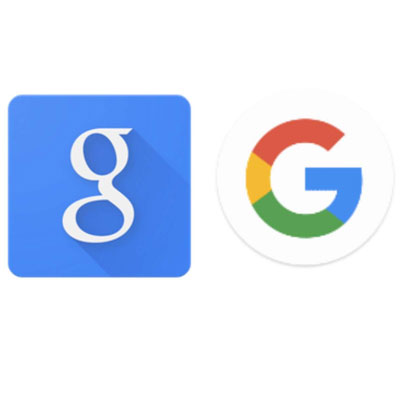
    Google has said goodbye to the small blue ‘g’ and replaced it with a capital ‘G,’ which has all four colors – blue, red, green and yellow – in it.

    So why did they do so? In an announcement, the company said, “As you’ll see, we’ve taken the Google logo and branding, which were originally built for a single desktop browser page, and updated them for a world of seamless computing across an endless number of devices and different kinds of inputs (such as tap, type and talk).”

    Google is known for its subtle changes and the voyage started from 1998 when Larry Page and Sergy Brin used the logo for their Stanford University graduate project.

    August 1998: The team heads to Burning Man and creates the first Doodle as an out of office message.

    September 1998: Google moves to Google.com and shares its beta release with the world.

    May 1999: Still playful, the logo gets a more sophisticated look based on the Catull typeface.

    May 2010: The logo brightens up and sports a reduced drop shadow.

    September 2013: The logo goes flat with some typographical tweaks.

    September 2015: The logo becomes part of a new family that includes the Google dots and ‘G’ icon.

    The new logo doesn’t simply tell consumers that they’re using Google, but also shows them how Google is working for them. For example, new elements like a colourful Google mic helps identify and interact with Google whether a person is talking, tapping or typing.

    Complimenting the subtle yet creative development, RK Swamy Hansa Group chairman S K Swamy said, “Google has been refreshing its logo quite often but the current change is a larger and continuing step. I quite like the modern looking upper case – lower case version.”

    “Google has succeeded in striking a fine balance of form with function in its new logo. It’s a homegrown typerface and vector based, which makes it scalable across devices in so far as legibility is concerned and sports a contemporary look at the same time. Although it will take some time to get used to the new look, it’s nice that Google has retained slight tilt of ‘e’, ” said Leo Burnett’s digital creative agency’s Indigo Consulting national creative director Navin Kansal.

  • Why Google’s new structure is good news

    Why Google’s new structure is good news

    Google has announced a major overhaul of its corporate structure. The new structure creates a holding company which is called Alphabet. This will comprise a collection of companies, the largest of which will be Google. Within Google will sit key services such as Search, Maps, Chrome, YouTube and Android. Outside of Google will sit projects such as Fiber and Nest. The full announcement can be seen here on the new Alphabet website https://abc.xyz/ . In addition to the restructure there are several key management changes, the most notable being the elevation Sundar Pichai to Google CEO.


    Google has long been considered part of the fabric of the internet. In many respects it has been the electricity of the web powering many consumer journeys, driving the largest share of advertising experiences globally, and certainly contributing significantly to the digital economy.


    Google Corp itself was constructed like an electrical circuit running in series (rather than in parallel). The challenge with a ‘series’ organisational structure is that if there is a break in one part of the chain, the whole is affected. For example if Google Glass fails it affects Google’s core business (if only in terms of public perception). Similarly, if Google (Search) faces regulatory scrutiny it is likely to negatively impact the development of other areas of the business such as Nest, driverless cars etc.


    The move to operate in parallel (through the creation of Alphabet) rather than in series will have a positive impact in several areas:


    1.    Innovation: Google can take its moonshots and fail without impacting the core business of advertising. Having this structure should therefore enable it to be more agile.


    2.    Regulation: Google has come under significant regulatory scrutiny particularly in Europe where it has already restructured to give a more singular approach to the authorities. The new structure will protect it further from regulatory issues by enabling it to fight one product/company at a time.


    3.    Organisation: With the new structure the Google subsidiary will be better able to focus on the reorganisation of its advertising and technology sales operations which require closer integration if the company is to take full advantage of its market-leading integrated advertising stack approach.


    4.     FaceOff: Facebook has deliberately kept the majority of its operations (FB, Instagram, Oculus) relatively separate from a B2B and consumer point of view, which has resulted in product innovation, advertising success and much less regulatory scrutiny. Although the Alphabet structure doesn’t exactly replicate that of Facebook, it is certainly an implicit acknowledgement of the successful Facebook corporate strategy.


    5.     Investor Relations: Google’s new structure is a clear signal of the arrival of a new finance director. The structural change and the subsequent increase in organisational clarity and transparency will no doubt be a very positive sign to investors.


    (The author of this article is ZenithOptimedia chief digital officer. The article has been sourced from ZenithOptimedia’s website. The views expressed here are purely personal views of the author and Indiantelevision.com does not necessarily subscribe to them.)