Tag: Google

  • Mayoori Kango returns to Publicis to script an AI-powered new chapter

    Mayoori Kango returns to Publicis to script an AI-powered new chapter

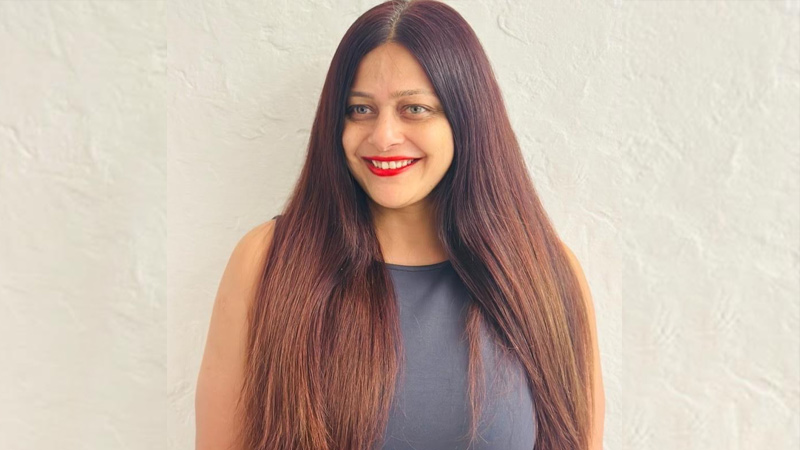
    MUMBAI: From Bollywood spotlight to boardroom strategy, Mayoori Kango has never shied away from reinvention. The digital veteran has now rejoined Publicis Groupe as part of the global executive leadership team at Publicis Global Delivery (PGD), while also stepping in as CEO for PGD’s India Delivery Centre. The move marks a homecoming for Kango, who has already left her imprint on Publicis through earlier leadership roles at Performics (2016–2019) and Zenith (2012–2016). This time, her remit is bigger: driving global strategy across media, data-tech, and AI, and scaling PGD’s India operations into a hub of innovation.

    Kango arrives at Publicis fresh from Google, where she spent six and a half years. Most recently, she served as Industry head for AI, Martech & Media Solutions (Aug 2024–Aug 2025), and before that as head of industry for agency partnership (2019–2024). Her time at the tech giant placed her at the forefront of AI’s impact on marketing and media, a focus she is set to double down on at Publicis.

    Her career trajectory reads like a map of the digital advertising revolution: from 360i (2007–2009), where she worked on campaigns for Natgeo and Red Roof Inn, to Resolution Media (2009–2010), leading SEM for Pepsi, Monster, and Electrolux, to Digitas (2010–2012), running the Delta Search business. By the time she took the reins as chief digital officer at Zenith India, she was already recognised as one of the leading voices in digital transformation.

    Armed with an MBA in Marketing from Zicklin School of Business, Baruch College (2005–2007), Kango has built a rare global career that blends Silicon Valley tech with Madison Avenue storytelling and Indian market scale.

    Her dual role at Publicis is as much about the future as it is about continuity. As AI reshapes workflows, creativity, and consumer engagement, Kango will lead PGD’s efforts to position Publicis as the go-to partner for next-gen marketing solutions with India at its core.

    For an industry that thrives on reinvention, Kango’s return feels fitting. After all, who better to script a new chapter in AI-led marketing than someone who has lived through every act of digital’s ongoing drama?
     

  • HDFC Ergo twins up with Consumr.ai to insure AI-driven customer journeys

    HDFC Ergo twins up with Consumr.ai to insure AI-driven customer journeys

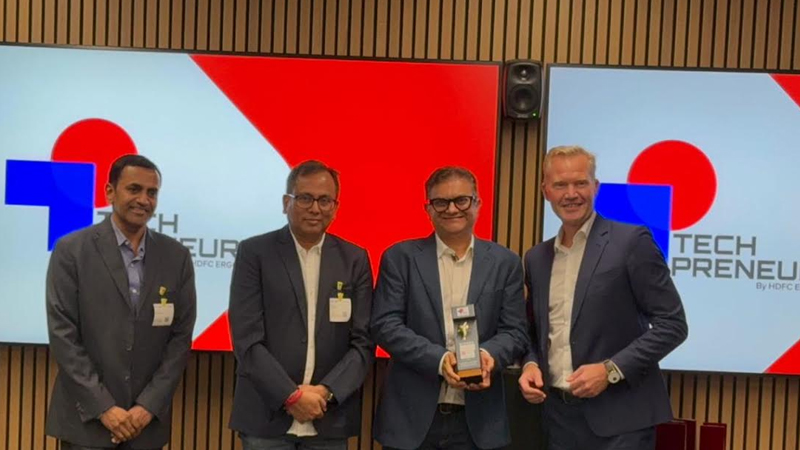
    MUMBAI: Insurance just found its digital double. HDFC Ergo has roped in Consumr.ai, India’s next-gen customer intelligence platform, to pilot a proof-of-concept (POC) that could transform how policyholders experience insurance from the first ad to the final claim. The partnership was sealed after Consumr.ai emerged as one of four winners of Techpreneur Season 2, an innovation programme that drew over 140 AI and tech companies worldwide. Winners were picked through a rigorous evaluation by leaders from BCG, Google, HDFC Ergo and Ergo International.

    At the centre of the POC lies Consumr.ai’s proprietary AI Twins technology virtual doppelgängers of consumer cohorts built on real behavioural data. These AI-powered twins simulate how different audiences respond to creative campaigns, products, and messages, enabling “always-on” customer-informed decision-making. In other words, it helps HDFC Ergo keep the customer firmly in the driver’s seat of every marketing, product, and creative choice.

    The POC will tap into deterministic behavioural data from hundreds of millions of global users via integrations with Meta, Google, DV360, Linkedin, Snap, and Amazon. HDFC Ergo’s own first-party data can also be securely onboarded, anonymised at cohort level, and modelled into AI Twins, all while maintaining full GDPR and CCPA compliance and without ingesting personally identifiable information.

    Consumr.ai co-founder Vivek Bhargava said: “Our AI Twins technology transforms real behavioural data into actionable intelligence that enables real-time personalisation at scale. This aligns perfectly with HDFC Ergo’s vision of a digitally agile, customer-first future.”

    On successful completion, the POC could be scaled across HDFC Ergo’s business lines, distribution channels, and even new frontiers such as influencer marketing, regional positioning, and voice-of-customer programmes. The model could also be replicated for Ergo International’s global markets, turning the Indian POC into a global insurance playbook.

    Consumr.ai already has a strong BFSI track record, having deployed AI Twins for Rustomjee, Aditya Birla Insurance, and even a Fortune 100 US insurer. With HDFC ERGO in the mix, the three-year-old platform has doubled down on its mission to be the innovation engine powering the insurance industry’s leap into the future.

  • ShareChat ropes in Neha Markanda as chief business officer

    ShareChat ropes in Neha Markanda as chief business officer

    MUMBAI: Homegrown social media firm ShareChat (Mohalla Tech) has named Neha Markanda as its new chief business officer, handing her the mandate to scale revenues and deepen advertiser engagement across its flagship ShareChat app and short-video platform Moj.

    Markanda joins from Google, where she spent over three years as head of industry for e-commerce. She earlier led business marketing at Facebook India, and held senior roles at GSK Consumer Healthcare, where she steered brand strategy for Horlicks and family nutrition.

    Her two-decade career spans consumer goods and technology, including stints at HCL Technologies, PepsiCo—where she managed Tropicana, Pepsi Max and Gatorade—and ITC.

    At ShareChat, she will be tasked with sharpening revenue strategy, strengthening advertiser partnerships and pushing growth in a market where short-video and vernacular social platforms are battling for both user attention and ad dollars.

  • Google’s quick move to boost brand sales with Commerce Media Suite

    Google’s quick move to boost brand sales with Commerce Media Suite

    MUMBAI: When it comes to India’s shopping habits, “add to cart” is now often followed by “arrives in 10 minutes” and Google is making sure brands don’t miss the ride. The tech giant has launched its Commerce Media Suite, an AI-powered solution designed to help brands and merchants tap into the surging quick commerce and e-commerce markets. The suite works through Google Ads, letting advertisers reach high-intent shoppers across Search, Shopping, Youtube, Display, Discover, and Gmail, directing them straight to product listings on marketplaces like Blinkit, Swiggy, Zepto, and Myntra.

    The timing is no accident with the festive season around the corner, competition for eyeballs (and wallets) is fierce. “Today, consumers demand immediacy and convenience, clearly demonstrated by the rise of quick commerce,” said Google India director for omni-channel businesses Bhaskar Ramesh. “Commerce Media Suite opens fresh pathways for discovery across Google and Youtube, driving stronger results for brands during peak demand seasons.”

    Early adopters are already seeing gains worth bragging about. ITC Aashirvaad Select clocked a 4x return on ad spend on Blinkit, while Renee Cosmetics reported an 11.5 per cent bump in sales and a 48 per cent drop in cost per order.

    For Blinkit, the solution is a match made in delivery heaven. “Google’s Commerce Media Suite offers brands a significant opportunity to cut through the noise and connect with the modern consumer,” said Blinkit director of ad monetisation and pricing Anish Acharya calling it a “game-changer” ahead of the festive rush.

    Beyond just reach, brands get Google AI-driven performance, first-party marketplace data, product-level measurement, and self-service transparency effectively marrying campaign spend to actual sales impact.

    Or as Renee Cosmetics head of eCommerce Jitendra Rawal put it: “It’s allowed us to efficiently connect with customers looking for our products and significantly drive incremental sales.”

    With India’s quick commerce sector in overdrive, Google’s latest play might just help brands click with customers in more ways than one.


  • WPP partners with IICT to boost creative and digital talent in India

    WPP partners with IICT to boost creative and digital talent in India

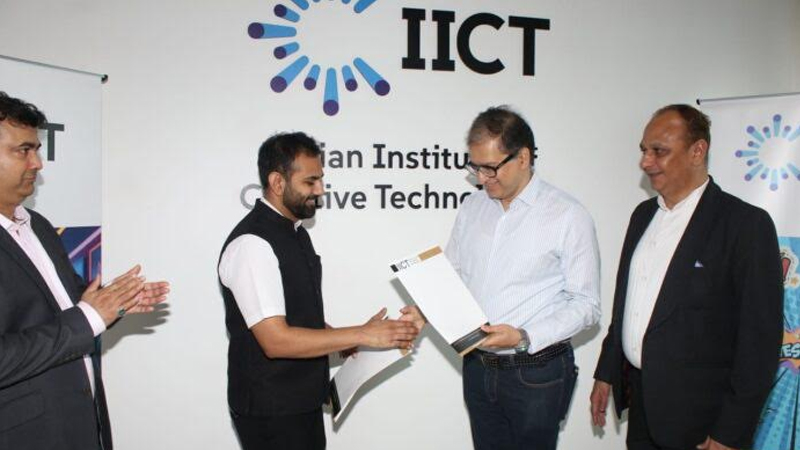
    MUMBAI: When ad world muscle meets academic hustle, you get a creative spark like no other. In a move that blends Madison Avenue with Mumbai’s media dreams, WPP, the global giant in marketing services has signed a landmark Memorandum of Understanding (MoU) with the Indian Institute of Creative Technologies (IICT), a Ministry of I&B-supported initiative that aims to revolutionise creative and digital skilling in India.

    This partnership positions WPP as the first agency group to formalise such a comprehensive engagement with IICT, joining the league of global tech titans like Google, Meta, Microsoft, JioStar, Nvidia, and Adobe all of whom have pledged support to build India’s creator economy.

    India, WPP’s fifth largest and fastest-growing market, now becomes the testing ground for a powerful alliance between academic rigour and industry firepower.

    Under the collaboration, WPP will Co-develop IICT’s curriculum to reflect real-world creative, media, and tech skills, Provide mentorship for IICT’s startup incubator, Engage faculty on live projects and joint research, Support technology planning for the IICT campus, Assist with promotional and outreach strategies.

    “This collaboration is a testament to WPP’s deep commitment to nurturing talent and driving innovation in India’s dynamic media and entertainment sector,” said WPP country manager for India CVL Srinivas. “By combining IICT’s academic rigour with WPP’s global industry leadership, we aim to equip the next generation of creative professionals with the skills and insights needed to thrive in a rapidly evolving technological landscape.”

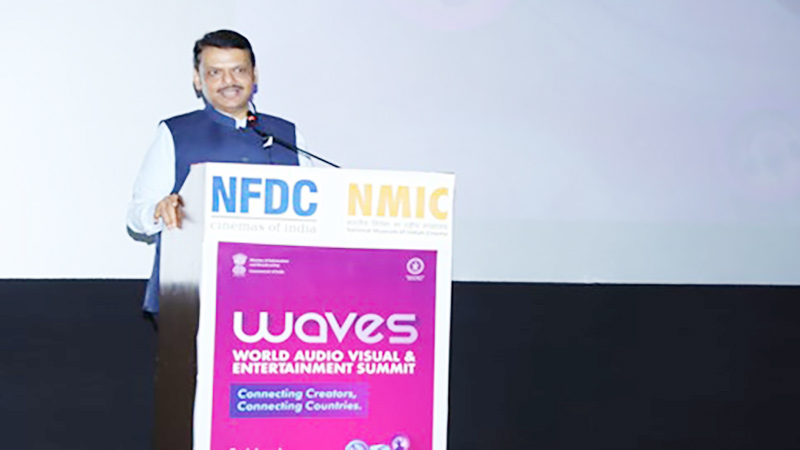
    The alliance comes close on the heels of IICT’s inauguration at the newly established IICT–NFDC campus in Mumbai, a high-profile event attended by Ashwini Vaishnaw, union minister for railways, information & broadcasting, and electronics & IT, and Devendra Fadnavis, chief minister of Maharashtra.

    IICT board member Ashish Kulkarni added, “With WPP, we are bringing together the best in creative, technology, and media. This partnership will help make IICT a world-class institution on par with IITs and IIMs, preparing market-ready talent for tomorrow’s India.”

    With India inching closer to becoming a global creative powerhouse home to over 75 crore internet users and a booming content economy, the timing couldn’t be more apt. If the next big idea is born at the crossroads of commerce and creativity, WPP and IICT might just be laying the road.

  • Moloco plugs into Google’s AdMob and Ad Manager with self-serve SDK

    Moloco plugs into Google’s AdMob and Ad Manager with self-serve SDK

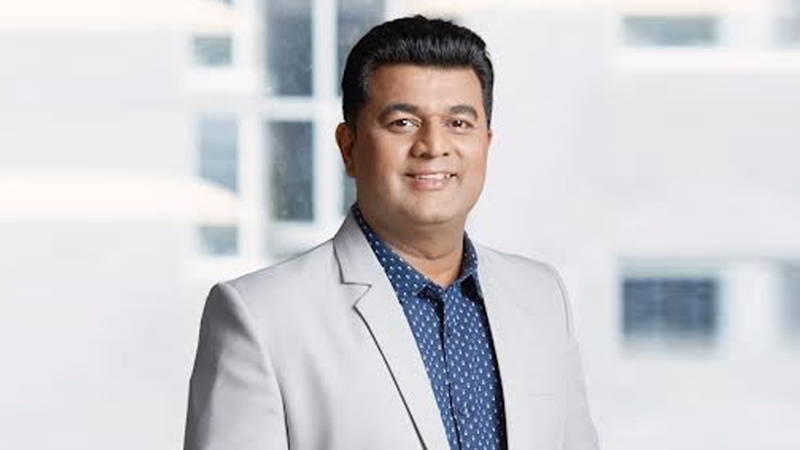
    MUMBAI: Moloco, the AI performance advertising company, has rolled out its SDK on Google’s AdMob bidding and Ad Manager’s SDK bidding platforms, making the tool fully self-serve for publishers.

    The move cements Moloco’s credentials with Google’s stringent performance and reliability standards, giving app developers fresh access to its global advertiser demand while preserving user experience. Publishers already plugged into Google can now tap Moloco’s ecosystem without extra effort.

    “Moloco has consistently been recognised as a top-performing platform for ad monetisation, optimised to drive real business outcomes,” said Moloco supply head Yoni Markovizky He added that with Google onboard—alongside existing integrations with AppLovin’s Max and Unity’s LevelPlay—the company can fuel more publishers’ growth “with no margin fees, applying the cost savings directly to our partners.”

    Nearly 500 publishers, including Voodoo, Crazy Maple and Audiomack, already use Moloco’s SDK. The platform’s AI ensures the right ad finds the right user, maximising revenue while allowing publishers to control how creative formats appear. Advertisers, too, gain sharper targeting and more control, boosting return on investment.

    Moloco, founded in 2013 by ex-Google machine-learning engineers, now operates across the US, Europe and Asia. Its platform powers mobile app growth, retail media and streaming monetisation for businesses worldwide.

  • Google says it prepared to open Play Store gates for real-money gaming in India

    Google says it prepared to open Play Store gates for real-money gaming in India

    MUMBAI: Google has told India’s competition watchdog it is finalising a business model to accommodate the country’s booming real-money gaming (RMG) sector, in a proposal that could see all permissible formats return to the Play Store. The Competition Commission of India (CCI), which is conducting an ongoing antitrust probe, has invited public comments on Google’s plan until 20 August.

    All India Gaming Federation (AIGF) chief executive Roland Landers  called the move “a timely and welcome step” toward a fairer and more transparent digital ecosystem. He noted that Google’s recognition of certificates issued by self-regulatory bodies such as the All India Skill Gaming Council (AISGC) would “empower responsible operators, support innovation, and ensure a safer experience for Indian consumers.”

    The AISGC, chaired by a former supreme court justice, has since 2018 applied a detailed legal and analytical framework to determine whether a game qualifies as one of skill under Indian law.

    AIGF, the country’s largest and oldest gaming industry body, said the proposal could lower entry barriers, level the playing field for smaller firms, and boost jobs and digital inclusion. The federation represents more than 120 members, including many MSME startups, who together serve over 40 crore Indian gamers and are collectively valued at more than $10 billion.

    If the CCI approves the plan, India’s gaming sector — long hobbled by inconsistent platform policies — could be set for a growth spurt.

  • Waves 2025 Brings Big Deals and Bold Dreams to India’s Media Sector

    Waves 2025 Brings Big Deals and Bold Dreams to India’s Media Sector

    MUMBAI: If the Indian media sector were a movie, Waves 2025 would be the montage sequence fast cuts of big money, bold ideas and breakout talent all coming together for a dramatic makeover. Held in Mumbai, the Waves Summit 2025 saw the Government of Maharashtra sign MoUs worth nearly Rs 8,000 crore, giving the media and entertainment sector a starring role in the state’s growth narrative. Among the headliners:

    . Rs 3,000 crore from Prime Focus to build a 200-acre Film City

    Rs 2,000 crore from Godrej for a film, TV and media campus in Panvel

    .  Rs 1,500 crore each from the University of York and the University of Western Australia to set up their first Indian campuses in Mumbai

    And just like that, education and entertainment are sharing billing on the marquee.

    Waves 2025 also introduced the Nifty Waves Index, listing 43 media and entertainment companies finally giving the sector its own Sensex-style snapshot. Meanwhile, the Indian Institute of Creative Technology (IICT) inked partnerships with industry giants including Google, Apple, Microsoft, Meta, Adobe, Nvidia, and Toon Boom, rolling out opportunities for scholarships, internships, rendering parks, game design courses and creative entrepreneurship.

    Waves Bazaar cemented its role as the sector’s B2B-B2G power corridor. Launched in January 2025, the digital-first marketplace has already hosted 2,450 projects, with 6,442 buyers and 6,106 sellers participating across film, animation, XR, gaming and advertising verticals. It’s India’s global swipe-right moment for creative deals.

    Elsewhere, WaveX turned into a high-stakes pitch fest where creative dreams met venture capital muscle. From 1,504 applicants, 30 high-potential M&E startups in gaming, storytelling, immersive tech and the creator economy pitched live to 29 marquee investors including Lumikai, Jio, and Warmup Ventures. With 127 startups securing connections or partnerships, and applications vetted by IAMAI and KPMG, this wasn’t just razzle, it was rigor with returns.  

    Enter the Create in India Challenge, a flagship talent hunt that hosted 34 creative contests across animation, AR/VR, gaming, music and films. Finalists competed in the buzzing Creatosphere, a zone dedicated to next-gen creators. Eight expert masterclasses helped sharpen their edge, while the finals turned the stage into a launchpad.

    Not to be left out, Waves Culturals gave attendees a feel of India’s artistic pulse through performances blending traditional and global forms. The event’s heart, however, was the Bharat Pavilion, inaugurated by prime minister Narendra Modi on 1 May 2025. Designed as an immersive tribute to India’s storytelling roots, it showcased four thematic zones Shruti (oral traditions), Kriti (written heritage), Drishti (visual storytelling), and Creator’s Leap (future tech).

    Over in the FM lane, the 8th National Community Radio Conference saw 12 CR stations receive national awards for innovation and inclusivity. With 531 CR stations and over 400 representatives attending, it was a mic-drop moment for grassroots broadcasters.

    Add to that the launch of the first Indian Film Festival in New Zealand and fresh Indo-UK film collaborations and you’ve got an M&E summit that doesn’t just talk global, it screens it.

    From classroom tie-ups to cultural showcases, and from startup pitches to mega MoUs, Waves 2025 didn’t just imagine India as a global creative powerhouse it laid down the blueprint, cast the crew and started shooting.

    And with Maharashtra calling action on infrastructure, investment and innovation India’s media industry is no longer just watching the story unfold. It’s writing the script.
     

  • From Chai Breaks to AI Breaks: How Indian Marketers Are Letting Robots Handle the Hustle

    From Chai Breaks to AI Breaks: How Indian Marketers Are Letting Robots Handle the Hustle

    MUMBAI: There is a huge change happening in India’s digital marketing scene. 73 per cent of marketing teams worldwide now use AI tools for jobs that used to take up 40 per cent of their workday. However, Indian marketers are at a crucial point right now. Most people are not using AI solutions appropriately; therefore, they miss out on smart automation’s life-changing power.

    The Task Delegation Revolution: A Chance Worth Rs 4 Lakh Crore

    The Indian digital marketing business, worth more than Rs 4 lakh crore, is experiencing what experts call “the productivity revolution.” AI tools are no longer just ideas for the future; they are real tools that are changing the way marketing teams work at advertising agencies in Mumbai, IT startups in Bengaluru, and e-commerce giants in Delhi.

    What AI Tools Do Best for Digital Marketers

    Content Scheduling and Localisation: The fashion store Myntra has successfully used AI tools to manage content scheduling in 12 Indian languages. These agents automatically change campaign messages for regional festivals like Durga Puja in Bengal and Onam in Kerala. Their AI systems currently take care of 80 per cent of social media scheduling, allowing creative teams to concentrate on campaign planning.

    Lead Scoring and Customer Segmentation: Bengaluru’s B2B SaaS business Freshworks used AI tools for lead scoring, which led to a 45 per cent increase in conversion rates. The system looks at how Indian businesses act during certain times, such as when they get budget clearances at the end of the fiscal year and when they buy things during festivals.

    A/B Testing at Scale: Paytm, a Delhi-based finance firm, employs AI tools to conduct large-scale A/B tests across diverse demographics. They evaluate everything from colour preferences (green vs. saffron themes around Independence Day) to messages that work for people with different income levels. Their AI-based testing method has increased click-through rates by 35 per cent and cut campaign setup time by 60 per cent.

    Real Numbers of Impact: During the 2024 holiday season, a well-known e-commerce firm based in Mumbai that sells ethnic clothing cut campaign management time by 40 per cent and increased Return on Ad Spend (ROAS) by 25 per cent. The AI tool changed how much to bid on Google Ads and Facebook campaigns on its own, based on changes in demand in real time during the busiest buying times of Diwali.

    The Human-AI Partnership Model: Changing the Roles of Marketers

    The best Indian marketing teams aren’t using AI instead of people; they’re making strong partnerships that use AI’s speed and human inventiveness.

    What People Are Still Best At

    Cultural Intelligence: AI can digest data, but human marketers are better at identifying cultural differences. A Chennai-based agency’s human team recently stopped a big cultural mistake when its AI proposed utilising beef images in a campaign aimed at South Indian vegetarians.

    Strategic Interpretation: AI tools give information, and people give it meaning. During COVID-19, Flipkart’s AI algorithms showed strange purchase habits. Human strategists saw this as a sign that people wanted more home exercise equipment and kitchen appliances, which led to successful pivot campaigns.

    Crisis Management: During the farmer demonstrations in 2024, human marketers at different companies made quick judgments to stop or change advertisements. AI tools couldn’t do this without human help.

    What AI tools Are Good At

    AI tools monitor social media sentiment in regional languages 24 hours a day, seven days a week, and inform human teams about possible problems before they get worse.

    Predictive Analytics: Zomato’s AI tools can predict when people will want more food during cricket matches and immediately change marketing budgets and inventory suggestions.

    Personalisation at Scale: Hotstar, a streaming service, employs AI tools to make content recommendations for 400 million customers, making it feasible to create unique marketing experiences that would be difficult for human teams to handle.

    A 3-Step Process That Works for Implementation Reality Check

    Step 1: Start small and learn quickly

    Start with easy automated chores, such as scheduling social media posts or sending out basic email marketing. Urbanclap, an Indian startup now called Urban Company, started by automating appointment confirmations and then added more complicated customer journey mapping. Many Indian businesses rush through this phase, making AI work poorly, and teams do not want to work.

    Step 2: Smart Scaling

    Add increasingly difficult duties, such as assessing leads and personalising basic content. Nykaa, an e-commerce site, grew by focusing on one group of customers (urban women aged 25–35) before branching out to other groups. Ensure AI knows how Indians shop, like the importance of wedding and festival seasons and regional preferences.

    Step 3: Strategic Integration

    Use AI tools for strategic tasks like optimising campaigns and performing predictive analytics. Swiggy, a big food delivery company, reached this point by adding AI tools to all of its marketing tools, from acquiring new customers to keeping them.

    How to Avoid Common Mistakes

    The Problem: AI tools often have trouble maintaining a consistent brand voice across Indian languages and cultural settings.

    The Answer: Ogilvy India, an advertising agency located in Mumbai, produced thorough brand voice standards in Hindi, English, and regional languages, with examples for distinct cultural settings.

    Worries About Data Privacy

    The Truth: Marketers need to be extra careful about how they use data now that India has a Personal Data Protection Act.

    Best Practice: Use AI solutions that put privacy first and follow local rules while still being useful.

    Risks of Too Much Automation

    Warning Signs: Customer satisfaction generally goes down when all human touchpoints go away.

    Example from India: A luxury firm based in Delhi first automated all of its customer care responses, which led to complaints about how impersonal they were. They were able to employ AI for early responses while making sure that humans handled more complicated questions.

    Important Success Metrics

    Effect on Revenue: There is a direct link between using AI and sales growth.

    Customer Satisfaction: Keeping high NPS scores even while more work is being done by machines
    Market Share Growth: Having better AI implementation gives you a competitive edge.
    Cultural Relevance Score: How well AI keeps a brand relevant in different Indian marketplaces

    Role Change vs. Role Loss

    Changing Roles:
    Digital Marketing Managers → AI Marketing Strategists
    Content Creators → AI Content Managers
    Performance Marketers → AI Performance Boosters

    New Roles:
    Trainers for AI Marketing
    Experts in Cultural AI
    Managers of Human-AI Collaboration
    The Competitive Edge of Being First

    Indian businesses that employ AI tools early are realising big benefits:

    . Cost Efficiency: Marketing operations costs go down by 30 per cent to 50 per cent

    . Market Responsiveness: the ability to quickly adjust to changes in how customers act

    . Scalability: the ability to grow more quickly in India’s many markets

    Looking Ahead: The Future of AI Marketing in India

    AI tools will be very important for marketers in India as the country progresses toward becoming a 5 trillion dollars economy. India has the most varied market in the world. In the next ten years of Indian digital marketing, the organisations that can find the right mix between AI efficiency and human innovation will be the most successful.
    The transformation isn’t about replacing marketers with AI; it’s about giving Indian marketers the tools they need to make ads that are more culturally relevant, effective, and impactful. It’s not a question of whether to use AI tools; it’s a question of how quickly and effectively you can do it while still keeping the personal touch that Indian customers love.

    The future of Indian marketers belongs to those who can successfully use artificial intelligence and human understanding to create marketing experiences that appeal to a wide range of people and achieve measurable business goals.

    The writer is a digital marketing specialist with extensive experience using AI in Indian markets. His company, C Com Digital, has worked with top companies to successfully add AI tools to their marketing operations while still remaining culturally relevant and connecting with people.    By Chandan Bagwe – Founder/Director of C Com Digital 
  • Ad to the Future Google revs up AI to rewrite the rules of marketing

    Ad to the Future Google revs up AI to rewrite the rules of marketing

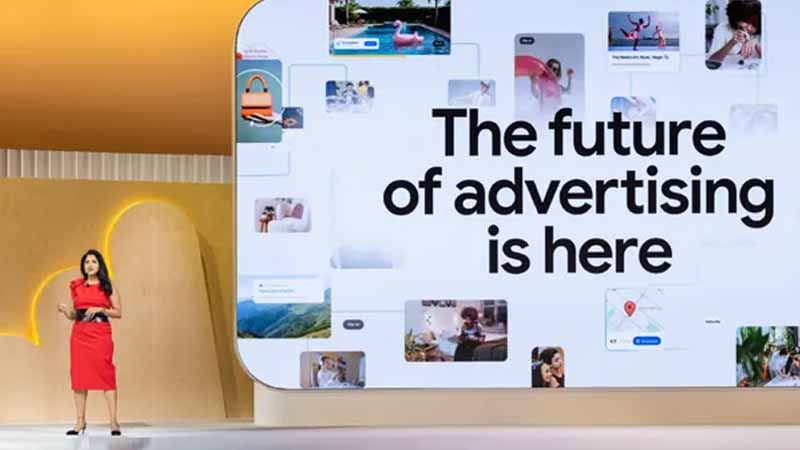
    MUMBAI: Who needs a crystal ball when your ads can now predict, create and convert, all thanks to AI? At its annual Google Marketing Live event, Google rolled out a wave of AI-powered advertising tools designed to flip the marketing playbook from reactive to proactive. From smarter bidding and creative generation to shoppable TV and AI-driven search ads, the tech giant is giving Indian marketers a suite of tools to anticipate consumer behaviour, not just respond to it.

    “The purchase journey isn’t a straight line anymore, it’s a maze of swipes, scrolls and searches,” said Google India MD for digital first businesses Roma Datta Chobey. “Our new launches help brands cut through the chaos, scale creativity, and reach the right people at the right time with precision and impact.”

    Here’s what’s turning heads:
    Smarter Shopping, Streamlined Selling

    ●    Shoppable CTV lets users buy products right from their smart TVs using QR codes or “send to phone” options.

    ●    Youtube Masthead is now shoppable on mobile, giving brands high-visibility, click-to-cart impact.

    ●    Ads in AI Overviews will soon roll out in India, inserting Search and Shopping ads directly within AI-generated search summaries.

    AI-Powered Creativity with “Generated for You”

    ●    Set to launch in Product Studio later this year, this tool will generate images and videos based on product catalogues, trends, and brand identity no design skills required.

    Performance Max Retention Only Mode

    ●    In beta in India, this lets brands focus solely on re-engaging existing users. Swiggy tested it and saw a two-thirds reduction in cost for bringing users back to the app.

    AI Max for Search

    ●    Now live in India, it’s a one-click booster that learns from your site and existing keywords to serve smarter, more relevant ads. Cashify reported a 15 per cent conversion bump in early trials.

    Smart Bidding, Smarter Insights

    ●    A major bidding update now helps brands uncover less obvious conversion paths, with testers reporting an 18 per cent increase in new query categories that convert.

    Meridian Gets an Upgrade

    ●    Google’s open-source Marketing Mix Model (MMM) will now include a dynamic scenario planner and more frequent access to key reach/frequency data via API.

    AI Agents in Ads & Analytics

    ●    New “agentic” AI tools will soon help with campaign setup, keyword strategy, and performance reporting inside Google Ads and Analytics, using conversational prompts and visuals.

    For early adopters like Swiggy, the tools have already shown impact across the funnel from creative acceleration to better cost efficiency and growth in new user cohorts.

    As marketers juggle non-linear journeys across screens, platforms and attention spans, Google’s AI arsenal aims to give them not just tools, but an edge where insights spark action, and creativity scales without compromise.

    In the race for attention, Google isn’t just offering ads. It’s offering answers.