Tag: Google

  • 68 per cent SMEs offline; Google plans smartphone-optimised regional websites

    68 per cent SMEs offline; Google plans smartphone-optimised regional websites

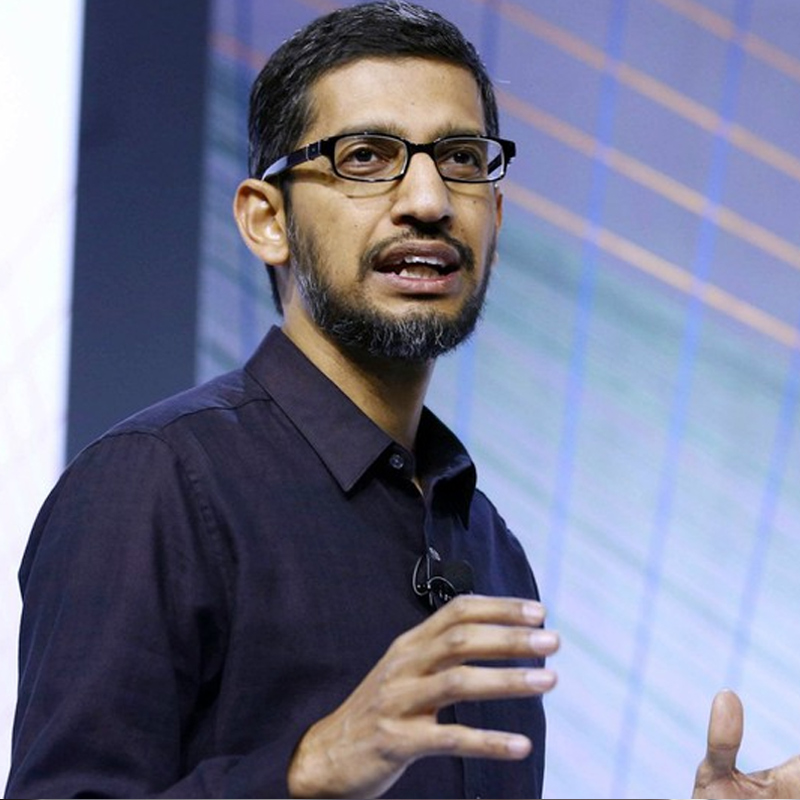
    MUMBAI: Google has announced the launch of Digital Unlocked, a training program to empower thousands of Indian SMBs with essential digital skills that will enable them to get online and start using the power of the internet to grow their business. Google also previewed My Business Websites, an easy-to-use offering to help businesses to have a rich, mobile optimised digital presence that will be launched later this year. Making the announcements at an event held in the city today, Google CEO Sundar Pichai spoke to representatives from hundreds of small and medium business from across the country on the benefits of the web and digital technology.

    My Business Websites will be available in English, Hindi, Bengali, Telugu, Marathi, Tamil, Urdu, Gujarati, Kannada, and Malayalam.

    Google India reaffirmed its commitment to digitally empower India’s 51 million strong small and medium business community.

    During his address, Sundar Pichai said, “The Internet is a powerful equalizer and we are motivated to bring the benefits of information and technology to as many people as possible. Building for everyone and making it available in the hands of as many people is at the heart and core of what we do. And we do this by investing in open ecosystems.”

    Referring specifically to small and medium businesses, Pichai added, “the Internet and digital technology will be an engine of growth for the Indian economy. Today, anyone can become an entrepreneur, a developer, or a creator, but it is important that they have the right tools and skills to digitize. We believe it is important for us to invest in training and equipping these individuals and small businesses to accelerate their journey of growth.”

    Setting the context for the initiative Google unveiled a joint research study with KPMG titled “Impact of internet and digitisation on SMBs in India”. The study reiterates that 68 per cent of the 51m Indian SMBs are offline. Highlighting the macro-economic impact of the internet, the research found that rising penetration and greater uptake for digital by SMBs could help increase their contribution to India’s GDP by 10 percentage points, taking it up to 46-48 per cent by 2020. Ascertaining the benefits of going digital for small businesses, it determined that profits of digitally engaged SMBs grow twice as fast compared to offline SMBs. Likewise digitally engaged businesses are able to grow their customer base significantly with 52 per cent catering to customers beyond their home city versus only 29 per cent offline SMBs. The report cites the lack of understanding of the benefits of digital technologies and technical skills as the essential reasons for being offline.

    With Digital Unlocked, Google is committed to ensuring that every single small business in India that wants to go digital has access to quality training. In keeping with the varied learning needs of the millions of businesses in India, we’ve built this program across online, offline and mobile. The offline training is being conducted in partnership with FICCI and over the next three years, 5,000 workshops will be held across 40 Indian cities. The online training comprises a set of 90 self-paced video tutorials, curated specifically for India and is available free of charge at g.co/digitalunlocked. The tutorials cover a comprehensive set of topics ranging from building a web presence and driving online growth to reaching customers over mobile and video. The trainings are certified by Google, Indian School of Business and FICCI.

    Further, for India’s mobile-first audience, Google also launched Primer, a free mobile app uniquely designed to teach digital marketing skills in a quick, easy and interactive way. It is available for download through the Google Play and iOS app store. Primer also works offline and is currently available in English and Hindi with Tamil, Telugu and Marathi versions coming shortly.

    At the event, Google also previewed My Business Websites, aimed at equipping the vast majority of small businesses with a simple way to start their digital journey by creating a free, mobile optimised website, easily and instantly. Available for Google My Business users later in the year, this new feature will provide simple, templated, editable websites for small businesses created from their data and photos on Google Maps.

    Several small businesses that have leveraged Google’s products and technologies were also present at the event. Three of them – Walnut, Go Co-op and Maganlal Dresswalla – were in conversation with Sundar Pichai and shared their journey to digital using Google offerings including Google My Business, Google AdWords as well as the Google Cloud Platform.

    The announcement today is a continuation of Google’s efforts to support Digital India. Last year Google had launched Google My Business, a program aimed at helping small medium businesses get an online presence on Google Search and Google Maps, without having to invest in a website or domain. Over 8 million Indian SMBs are already on these platforms, with thousands more coming online every month.


  • 68 per cent SMEs offline; Google plans smartphone-optimised regional websites

    68 per cent SMEs offline; Google plans smartphone-optimised regional websites

    MUMBAI: Google has announced the launch of Digital Unlocked, a training program to empower thousands of Indian SMBs with essential digital skills that will enable them to get online and start using the power of the internet to grow their business. Google also previewed My Business Websites, an easy-to-use offering to help businesses to have a rich, mobile optimised digital presence that will be launched later this year. Making the announcements at an event held in the city today, Google CEO Sundar Pichai spoke to representatives from hundreds of small and medium business from across the country on the benefits of the web and digital technology.

    My Business Websites will be available in English, Hindi, Bengali, Telugu, Marathi, Tamil, Urdu, Gujarati, Kannada, and Malayalam.

    Google India reaffirmed its commitment to digitally empower India’s 51 million strong small and medium business community.

    During his address, Sundar Pichai said, “The Internet is a powerful equalizer and we are motivated to bring the benefits of information and technology to as many people as possible. Building for everyone and making it available in the hands of as many people is at the heart and core of what we do. And we do this by investing in open ecosystems.”

    Referring specifically to small and medium businesses, Pichai added, “the Internet and digital technology will be an engine of growth for the Indian economy. Today, anyone can become an entrepreneur, a developer, or a creator, but it is important that they have the right tools and skills to digitize. We believe it is important for us to invest in training and equipping these individuals and small businesses to accelerate their journey of growth.”

    Setting the context for the initiative Google unveiled a joint research study with KPMG titled “Impact of internet and digitisation on SMBs in India”. The study reiterates that 68 per cent of the 51m Indian SMBs are offline. Highlighting the macro-economic impact of the internet, the research found that rising penetration and greater uptake for digital by SMBs could help increase their contribution to India’s GDP by 10 percentage points, taking it up to 46-48 per cent by 2020. Ascertaining the benefits of going digital for small businesses, it determined that profits of digitally engaged SMBs grow twice as fast compared to offline SMBs. Likewise digitally engaged businesses are able to grow their customer base significantly with 52 per cent catering to customers beyond their home city versus only 29 per cent offline SMBs. The report cites the lack of understanding of the benefits of digital technologies and technical skills as the essential reasons for being offline.

    With Digital Unlocked, Google is committed to ensuring that every single small business in India that wants to go digital has access to quality training. In keeping with the varied learning needs of the millions of businesses in India, we’ve built this program across online, offline and mobile. The offline training is being conducted in partnership with FICCI and over the next three years, 5,000 workshops will be held across 40 Indian cities. The online training comprises a set of 90 self-paced video tutorials, curated specifically for India and is available free of charge at g.co/digitalunlocked. The tutorials cover a comprehensive set of topics ranging from building a web presence and driving online growth to reaching customers over mobile and video. The trainings are certified by Google, Indian School of Business and FICCI.

    Further, for India’s mobile-first audience, Google also launched Primer, a free mobile app uniquely designed to teach digital marketing skills in a quick, easy and interactive way. It is available for download through the Google Play and iOS app store. Primer also works offline and is currently available in English and Hindi with Tamil, Telugu and Marathi versions coming shortly.

    At the event, Google also previewed My Business Websites, aimed at equipping the vast majority of small businesses with a simple way to start their digital journey by creating a free, mobile optimised website, easily and instantly. Available for Google My Business users later in the year, this new feature will provide simple, templated, editable websites for small businesses created from their data and photos on Google Maps.

    Several small businesses that have leveraged Google’s products and technologies were also present at the event. Three of them – Walnut, Go Co-op and Maganlal Dresswalla – were in conversation with Sundar Pichai and shared their journey to digital using Google offerings including Google My Business, Google AdWords as well as the Google Cloud Platform.

    The announcement today is a continuation of Google’s efforts to support Digital India. Last year Google had launched Google My Business, a program aimed at helping small medium businesses get an online presence on Google Search and Google Maps, without having to invest in a website or domain. Over 8 million Indian SMBs are already on these platforms, with thousands more coming online every month.
  • Google-Fiat tease Android-based car infotainment system

    Google-Fiat tease Android-based car infotainment system

    MUMBAI: FCA and Google are using CES 2017 to demonstrate a seamless integration of the award-winning Uconnect 8.4-inch connected vehicle system featuring Android, the world’s most popular open-source operating system.

    The collaboration focuses on the next generation of connected car systems, using the Android open-source platform. Android offers automakers user interface customisation, a full-featured automotive infotainment stack and ability to integrate Android apps into the vehicle’s infotainment system.

    A hands-on concept demonstration of the power of combining Uconnect with Android is on display at the global consumer electronics and consumer technology tradeshow CES, 5-8 January in Las Vegas, inside a Chrysler 300 sedan.

    FCA is in collaboration with Google regarding the next-generation connected car systems enabled by the power of an open platform and ecosystem of Android.

    “This collaboration with Google has been an extremely beneficial opportunity for both companies to explore how in-vehicle infotainment and connectivity technology continues to evolve, and what it takes to meet consumers’ increasing desire for innovation of information with minimal distraction,” says FCA head of electrical engineering Chris Barman. “With Android, we are able to maintain our unique and intuitive Uconnect user interface, all while integrating our easy-to-use systems with Android’s features and ecosystem of applications.”

    CES attendees can get one-on-one demonstrations of the Uconnect system powered by the latest version of Android, 7.0 Nougat, which includes core infotainment features such as radio and comfort controls.

    The Uconnect and Android integration also enable a system that is built for connectivity and compatibility with the universe of popular Android applications. The demonstration will show a seamless integration with Google Assistant, Google Maps and popular Android apps like Pandora, Spotify, NPR One and Pocket Casts.

    “Google is committed to building Android as a turn-key automotive platform that integrates deeply with the vehicle in a safe and seamless way,” said Google director of android engineering Patrick Brady. “This collaboration with FCA brings together the industry standard for connected car systems with Android to create powerful infotainment systems designed for the digital age.”

  • Google-Fiat tease Android-based car infotainment system

    Google-Fiat tease Android-based car infotainment system

    MUMBAI: FCA and Google are using CES 2017 to demonstrate a seamless integration of the award-winning Uconnect 8.4-inch connected vehicle system featuring Android, the world’s most popular open-source operating system.

    The collaboration focuses on the next generation of connected car systems, using the Android open-source platform. Android offers automakers user interface customisation, a full-featured automotive infotainment stack and ability to integrate Android apps into the vehicle’s infotainment system.

    A hands-on concept demonstration of the power of combining Uconnect with Android is on display at the global consumer electronics and consumer technology tradeshow CES, 5-8 January in Las Vegas, inside a Chrysler 300 sedan.

    FCA is in collaboration with Google regarding the next-generation connected car systems enabled by the power of an open platform and ecosystem of Android.

    “This collaboration with Google has been an extremely beneficial opportunity for both companies to explore how in-vehicle infotainment and connectivity technology continues to evolve, and what it takes to meet consumers’ increasing desire for innovation of information with minimal distraction,” says FCA head of electrical engineering Chris Barman. “With Android, we are able to maintain our unique and intuitive Uconnect user interface, all while integrating our easy-to-use systems with Android’s features and ecosystem of applications.”

    CES attendees can get one-on-one demonstrations of the Uconnect system powered by the latest version of Android, 7.0 Nougat, which includes core infotainment features such as radio and comfort controls.

    The Uconnect and Android integration also enable a system that is built for connectivity and compatibility with the universe of popular Android applications. The demonstration will show a seamless integration with Google Assistant, Google Maps and popular Android apps like Pandora, Spotify, NPR One and Pocket Casts.

    “Google is committed to building Android as a turn-key automotive platform that integrates deeply with the vehicle in a safe and seamless way,” said Google director of android engineering Patrick Brady. “This collaboration with FCA brings together the industry standard for connected car systems with Android to create powerful infotainment systems designed for the digital age.”

  • ‘Entrepreneur at heart’ Tekwani joins Monk Media

    ‘Entrepreneur at heart’ Tekwani joins Monk Media

    MUMBAI: Monk Media Network has appointed Prashant Tekwani as the senior vice-president to strengthen its leadership team on completing its first year of operations.

    Tekwani, who was the associate vice-president at iContract, headed major accounts such as YouTube, Google and HSBC. He will be spearheading brand strategy unit and business management at Monk Media. He has rich experience across categories and has worked with clients such as UTI Mutual Funds, Hot Star, Shoppers Stop, Truly Madly and Star Sports.

    Tekwani said that he had always been an entrepreneur at heart and the challenge of building one of the most exciting agencies was too enticing.”

    Monk founder & CEO Ashish Patkar said that Tekwani was a rare suit that was as bothered about the idea as he was about the billing. They were sure his cross-category brand experience and incisive insights would be a major value-add for its clients, he added.

  • ‘Entrepreneur at heart’ Tekwani joins Monk Media

    ‘Entrepreneur at heart’ Tekwani joins Monk Media

    MUMBAI: Monk Media Network has appointed Prashant Tekwani as the senior vice-president to strengthen its leadership team on completing its first year of operations.

    Tekwani, who was the associate vice-president at iContract, headed major accounts such as YouTube, Google and HSBC. He will be spearheading brand strategy unit and business management at Monk Media. He has rich experience across categories and has worked with clients such as UTI Mutual Funds, Hot Star, Shoppers Stop, Truly Madly and Star Sports.

    Tekwani said that he had always been an entrepreneur at heart and the challenge of building one of the most exciting agencies was too enticing.”

    Monk founder & CEO Ashish Patkar said that Tekwani was a rare suit that was as bothered about the idea as he was about the billing. They were sure his cross-category brand experience and incisive insights would be a major value-add for its clients, he added.

  • Amazon, Tata Housing tie up for Rio-De-Goa

    Amazon, Tata Housing tie up for Rio-De-Goa

    MUMBAI: Tata Housing, one of India’s leading real estate companies, announced its partnership with amazon for an exclusive scheme on Rio-De-Goa. The company has launched limited 1BHK – 3BHK units in Rio-De-Goa starting 39 lacs. This unique invite code would ensure and allow customers to login on 21 December and book these limited homes on a first come first basis. Spread across five acres, Rio-De-Goa is a premium resort themed residential project currently offering 1 BHK, 2BHK and 3BHK homes. It is strategically located, in close proximity to the Goa International Airport at Dabolim and only 4-5 km from Bogmalo beaches.

    Tata Housing AVP – Sales & Marketing Rajeeb Dash said, “Rio-De-Goa is designed keeping in mind the resplendent beauty of Goa and the association of leisure with the location.”

    Tata Housing pioneered the concept of online home buying in India when it partnered with The Great Online Shopping Festival by Google in December 2013.Tata Housing maintains a complete transparency in all its transactions and the consumer has an option to go through the entire project on the YouTube page and the website. Apart from that he/she can also speak to the customer care to clarify any doubts with regards to the project.

    Tata Housing has listed all its projects online spanning affordable, premium and luxury segments. The company has 29 projects with around 70 million sq. ft. under various stages of development at 13 locations across the country.

  • Amazon, Tata Housing tie up for Rio-De-Goa

    Amazon, Tata Housing tie up for Rio-De-Goa

    MUMBAI: Tata Housing, one of India’s leading real estate companies, announced its partnership with amazon for an exclusive scheme on Rio-De-Goa. The company has launched limited 1BHK – 3BHK units in Rio-De-Goa starting 39 lacs. This unique invite code would ensure and allow customers to login on 21 December and book these limited homes on a first come first basis. Spread across five acres, Rio-De-Goa is a premium resort themed residential project currently offering 1 BHK, 2BHK and 3BHK homes. It is strategically located, in close proximity to the Goa International Airport at Dabolim and only 4-5 km from Bogmalo beaches.

    Tata Housing AVP – Sales & Marketing Rajeeb Dash said, “Rio-De-Goa is designed keeping in mind the resplendent beauty of Goa and the association of leisure with the location.”

    Tata Housing pioneered the concept of online home buying in India when it partnered with The Great Online Shopping Festival by Google in December 2013.Tata Housing maintains a complete transparency in all its transactions and the consumer has an option to go through the entire project on the YouTube page and the website. Apart from that he/she can also speak to the customer care to clarify any doubts with regards to the project.

    Tata Housing has listed all its projects online spanning affordable, premium and luxury segments. The company has 29 projects with around 70 million sq. ft. under various stages of development at 13 locations across the country.

  • Crime videos notice: SC asks Silicon Valley giants to reply by 9 January

    Crime videos notice: SC asks Silicon Valley giants to reply by 9 January

    MUMBAI: The Supreme Court of India has sent notices to Facebook, Google and others over sharing of cyber crime videos. The two, and Yahoo and Microsoft have been asked to reply to the notice by NGO Prajwala by 9 January.

    The apex court had issued the notices on the plea seeking to curb the sharing of videos displaying sexual assault and cyber crime. The NGO had sought plea seeking for the enterprises to have a defined place to report rape videos and seek to block them.

    India’s top court was concerned over illicit activities and cyber abuse that allegedly occured on the four search engines. The court asked the Silicon Valley giants why they were not preventing users from behaviors including circulating rape videos and posting other private content without the subjects’ consent.

    As per a report by PTI, a bench consisting of judges M B Lokur and U U Lalit issued the notices. The court was hearing a letter that was written to former Chief Justice of India, H L Dattu, by the Hyderabad-based NGO. The letter was accompanied by a pen drive, which contained two rape videos.

    Aparna Bhatt, the NGO’s advocate, said that videos depicting sexual offences were shared on social networking sites and these companies should take steps to curb such cybercrime.

    Solicitor-General Maninder Singh, representing the Center, listed the steps taken by the union home ministry and CBI. The bench however said that the, if names of the victims were to be made public, it should be done only after conviction in the offence, and not immediately after the case was lodged.

    Although these companies often prevent offensive content on their platforms, the issue in this instance is the failure of communication between the tech giants, service providers, and government officials.

    This is not the maiden event the Indian court has had an issue with leading companies. In July 2016, the court concluded that Bing, Google and Yahoo put up advertisements for kits and clinics that helped people determine the sex of a foetus which is illegal in India.

  • Crime videos notice: SC asks Silicon Valley giants to reply by 9 January

    Crime videos notice: SC asks Silicon Valley giants to reply by 9 January

    MUMBAI: The Supreme Court of India has sent notices to Facebook, Google and others over sharing of cyber crime videos. The two, and Yahoo and Microsoft have been asked to reply to the notice by NGO Prajwala by 9 January.

    The apex court had issued the notices on the plea seeking to curb the sharing of videos displaying sexual assault and cyber crime. The NGO had sought plea seeking for the enterprises to have a defined place to report rape videos and seek to block them.

    India’s top court was concerned over illicit activities and cyber abuse that allegedly occured on the four search engines. The court asked the Silicon Valley giants why they were not preventing users from behaviors including circulating rape videos and posting other private content without the subjects’ consent.

    As per a report by PTI, a bench consisting of judges M B Lokur and U U Lalit issued the notices. The court was hearing a letter that was written to former Chief Justice of India, H L Dattu, by the Hyderabad-based NGO. The letter was accompanied by a pen drive, which contained two rape videos.

    Aparna Bhatt, the NGO’s advocate, said that videos depicting sexual offences were shared on social networking sites and these companies should take steps to curb such cybercrime.

    Solicitor-General Maninder Singh, representing the Center, listed the steps taken by the union home ministry and CBI. The bench however said that the, if names of the victims were to be made public, it should be done only after conviction in the offence, and not immediately after the case was lodged.

    Although these companies often prevent offensive content on their platforms, the issue in this instance is the failure of communication between the tech giants, service providers, and government officials.

    This is not the maiden event the Indian court has had an issue with leading companies. In July 2016, the court concluded that Bing, Google and Yahoo put up advertisements for kits and clinics that helped people determine the sex of a foetus which is illegal in India.