Tag: Google

  • Google’s Web Rangers 3 to promote internet safety

    Google’s Web Rangers 3 to promote internet safety

    MUMBAI: Google has announced the third edition of its Web Rangers contest on children’s day. It is an initiative to spread awareness about internet safety and promote digital citizenship.

    The competition aims to encourage teenagers to discover their hidden ninjas and unlock their creativity in highlighting the importance of cyber safety. After screening thousands of entries, the program will reward seven Web Rangers — who know all about staying smart, safe and savvy online.

    Google director (trust and safety) Sunita Mohanty said, “With the Web Rangers contest, our idea is to promote safe use of the Internet among school students and create better awareness amongst the teenagers on how to be good digital citizen and staying safe online. We have seen an overwhelming response to our first two editions and the participation numbers are only growing. This year, we are ramping our efforts to reach more and more teenagers across India and will be hosting many online and offline events.”

    The contest is open to students across the country within the age group of 10 and 17 years. Students can pick any one category.

    Details on the three categories:

    Campaign: Run your own internet safety campaign, either individually or as a team of three. It could be one large initiative or a collection of multiple projects like a social media campaign, a video series, awareness drives or all of them – there is no restriction on the format or the number of initiatives.

    Project: If you prefer to work individually and have that one amazing idea, then this is for you. The format is completely open – create a video, website, app or a game – but remember, it should empower users to stay safe on the Internet and learn what it takes to be a good digital citizen

    Poster: Put your creative hat on – design a poster that captures the theme of Internet safety and send it across to us. It is as simple as that.

    As part of its efforts to promote internet safety and digital citizenship, Google has been running programs to train student ambassadors and teachers across 5000 schools across states, covering topics like cyber-bullying, managing digital footprint, identifying fake content, dealing with online scams and more.

    The deadline for submitting the entries is 23:59pm on January 15, 2018.

  • 100 mn hrs of YouTube viewed on TV: Google CEO Sundar Pichai

    100 mn hrs of YouTube viewed on TV: Google CEO Sundar Pichai

    MUMBAI: In the era where consumption is increasing on mobile devices, YouTube is all set to create a new record. In the third quarter earnings call, Google’s parent company Alphabet announced that Youtube’s viewership within living rooms on TV sets is up to 100 million hours per day, with a 70 per cent increase over the previous year. Alphabet also mentioned how YouTube is a major revenue builder for it.

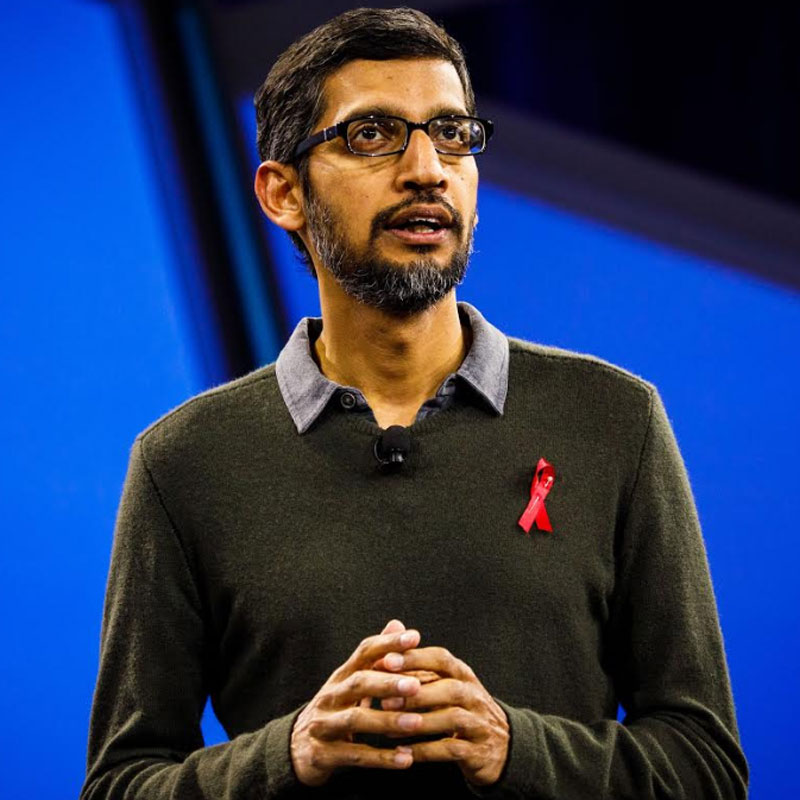
    Google CEO Sundar Pichai talked about the growth and future perspective of YouTube. He said, “Youtube continues to see phenomenal growth” with over 1.5 billion users globally.

    Pichai said that an average user spends 60 minutes at least a day on YouTube on mobile devices. YouTube isn’t just restricted to desktops and smartphones but has also extended to the TV either via the interne ot through devices like set-top boxes or gaming consoles.

    YouTube had previously said that majority of its viewing takes place on mobile devices. Earlier this year, YouTube said people were watching a billion hours of its videos per day. According to the facts and figures issued on July 2017 in Fortunelords, the total number of people who use YouTube is 1.3 billion. In an average month, 8 out of 10 18-49 year-olds watch YouTube. By 2025, half of the viewers under 32 will not subscribe to a pay-TV service. 6 out of 10 people prefer online video platforms to live TV. The total number of hours of video watched on YouTube each month is 3.25 billion.

    Pichai also announced the future plans for YouTube with the company focusing on increasing its subscription-based monetised models. YouTube Red, the company’s first subscription service, would release over 40 original shows through the service this year.

    Stats for YouTube TV which broadcasts live from over 40 networks was also mentioned. YouTube TV now covers two-thirds of US households and is available in 50 metro areas.

    Seems like the remote controlled device has finally made sense to the digital-loving audience.

    Also Read:

    YouTube watch time grew 400% y-o-y, 80% on mobile

    Regional news’ online viewership is billion-plus every month: Vidooly

    Google takes down 1.7 bn. ads for violating policies

  • Google brings user-generated movie and TV show reviews on app, mobile and web to India

    Google brings user-generated movie and TV show reviews on app, mobile and web to India

    MUMBAI: Google recently added a feature which now allows contribution of users’ movie and television reviews within Google search results – a move towards the potential implementation of IMDB-like reviews service or something similar to its own ‘Rotten Tomatoes’. Google said, for the time being, it was only available on mobile, web and the Google app in India in the English language.

    Last year, the search giant had brought in like and dislike buttons on TV shows and movie results cards, Techcrunch reported.

    The users’ reviews are automatically filtered for any inappropriate content through Google’s system. After the user submits it, the reviews themselves will then appear in the Knowledge Panel in search results on Google.in.

    This is an example of Google starting Google Search results to include user-generated content. Google had earlier brought in a feature called “Posts on Google” that permitted local businesses the ability to publish their products, events and services on Google Search. Celebrities, movie studios, sports leagues and museums could also use this feature.

    Google says the new reviews feature is not using technology similar to ‘Posts on Google.’ Google did not confirm plans to expand its reviews product in other markets.

  • Gaurav Gandhi says PWA enhanced content consumption experience as Voot triumphs at IBC

    Gaurav Gandhi says PWA enhanced content consumption experience as Voot triumphs at IBC

    MUMBAI: Content is the king, but technology is the supreme general.

    Voot has won the coveted International Broadcasting Convention 2017 (IBC2017) Innovation Award for Content Distribution for its Progressive Web App (PWA) product – Voot Lite, in Amsterdam on 17 September.

    Viacom18’s ad-supported VoD service, Voot, was the only online video service that was shortlisted for the awards amongst 190 plus global entries.

    Voot COO Gaurav Gandhi said, “In the video streaming business, both content and technology play an equally important role. While Viacom18 is well-known for pioneering efforts and leadership in the content business, it is indeed great to have our company featured on the global technology leaderboard as well. In this business particularly, partnerships and alliances are key to achieving big milestones and we would like to thank the team at Google for providing us support in our PWA.”

    IBC has recognised Voot’s initiative in giving mobile web users an app like experience in consuming digital video. Voot was an early adopter of this technology which led to a huge jump in users and video watch time on its mobile web.

    Voot is the first video platform to have launched a PWA product and that includes offline page caching functionality, fast loading, responsive interface and push notifications. The ‘Add to Home Screen’ feature of PWA allows the user to launch the page from their home screen like a native app and a service worker decreases load times.

    Launched in 2016, Voot at present hosts over 40,000 hours of content on its streaming service and has over 25 million monthly active users.

  • Martin Sorrell on how WPP is combating ad world slowdown

    Martin Sorrell on how WPP is combating ad world slowdown

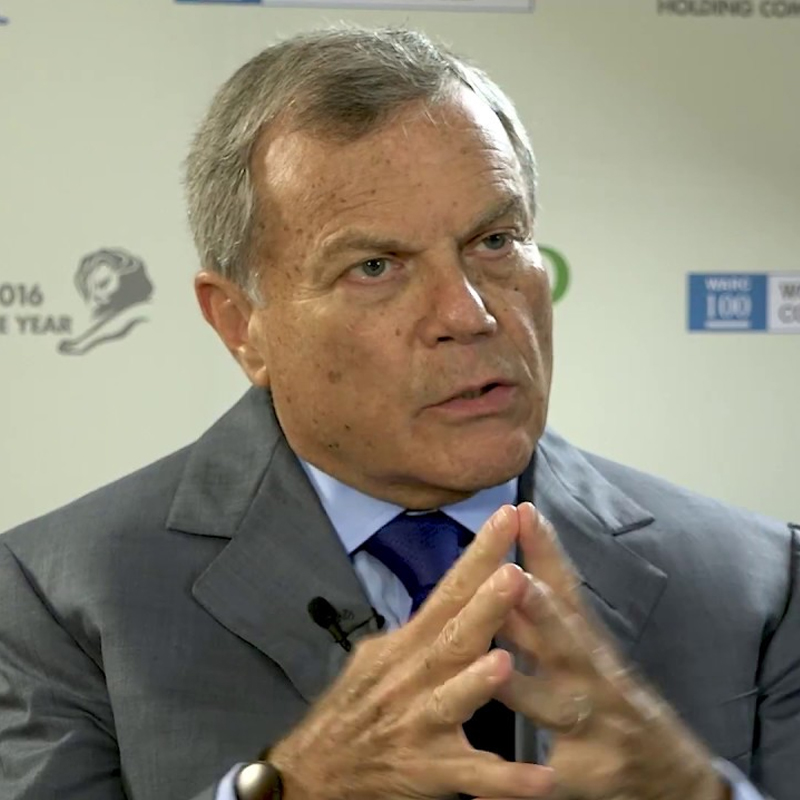
    MUMBAI: It’s been sometime that we have got to listen to advertising heavyweight and guru Martin Sorrell’s unique insights. For those who have missed him, he’s still at his vintage best. The WPP CEO shared his worldview on what’s impacting the advertising business and how the industry is combating with the slowdown in a fireside chat with Goldman Sachs analyst Lisa Yan at the 26th Goldman Sachs Communacopia Conference held last week.

    Sorrell pointed out that the advertising industry has been generally  going through a slow growth-pace for a while now, though it has seen some upward movements for a short period. The reasons: low-economic growth, low-inflation, very little pricing power, and focus on cost, amongst clients. “That’s been tolerable, certainly up until, I would say the end of 2016,” expressed Sorrell. “What we started to see, a little bit of softness…certainly in Q4 of last year.”

    What caused this slowdown? Sorrell gave at least three hypotheses that could have contributed, and could continue to do so, and industry will have to have adequate responses to them.

    The first being consulting firms who have been looking at generating cost savings for bottomline-focused corporations, and the first expense they have been scratching out is advertising.  

    “I think you can build the case, so that consultants, it’s not just an Accenture or Deloitte or BCG or McKinsey or Bain, go into client and say you’re spending too much money generally, your costs are too high, we’ll see if we can do something about it, and that fans out from there,” said Sorrell.

    The second hypothesis is that increasingly agencies and brands have been diverting spends towards Google and Facebook. “Google and Facebook have become significant  destinations… we are the most significant customer with  the two – on behalf of our clients,” he said. “If Google was $5 billion, Murdoch $2.25 billion and Facebook $1.7 billion last year, this year the figures are Google $5.5 billion-$6billion, Facebook $2.5 billion, and Murdoch $2.25 billion.”

    Sorrel labeled the two digital giants as frenemies, though he acknowledged that they have become friendlier than last year, especially Google.

    The third hypothesis – which he called the most plausible reason for the impact this year – “is that in an era of cheap capital, a zero cost — or close to zero-cost capital, there are pools of capital which fund zero-based budgeting approaches or private equity activist approaches that are putting tremendous pressure on particularly packaged goods companies,” said Sorrell. “Their approach has get rid of R&D spending, get reduced marketing spending and its running across sectors…Beyond tech and pharma, top-line growth is very hard to come by. And, I think that’s the central issue. So, as long as there’s cheap capital, as long as there is this very significant pressure of a zero-based budgeting and an activist later, you’re going to see pressure.”

    Sorrell does not expect the era of cheap capital to go away quickly thanks to Hurricane Harvey and the tragedies in Houston and Florida. “The results of this is indices rise, the fed probably is going to keep interest rates down lower longer,” he expressed.

    WPP has been responding to these challenges, he pointed out, through what it calls horizontality – basically integrating the  company in a much more aggressive, seamless, efficient manner.

    The second response has been zooming in on the high growth markets of Asia, Latin America, Africa, Middle East and central and eastern Europe. “That continues. That’s a third of our business; it continues to be a high level of focus,” he said.

    WPP, has got a razor sharp eye on digital which is 40 per cent of its business. “It is very much in the target range that we identified three, four, five years ago. It doesn’t stop at 40 per cent, 41 per cent, which it was in the first half of the year; it has to go beyond that, so probably to the extent where ultimately everything is permeated in one way or another by digital. But that’s some way off, but getting closer,” highlighted Sorrell.

    “Making data, the centre or a significant part of the centre of what we do is critically important, particularly when you have disintermediation in retail from the likes of Amazon or Alibaba or Tencent or JD.com or others where the battlefield will ultimately be about who controls the data,” he added.   He, however, mentioned that the growth of data has not been as good as the industry would like to see it but that doesn’t diminish its importance in relation to horizontality.

    Sorrell expressed his worry that what’s happening in the packaging goods industry could have worrying implications as a whole for the ad business.

    “My hypothesis would be that cheap money is chasing packaged goods and driving up the valuations. And those last three quarters, if you look at revenue growth at 2.4 per cent, it’s mainly price, very little volume. And those of you know how packaged goods companies function know that the moment the volumes stutter and stagnate or even fall, which is the case with a number of packaged goods companies, the trouble starts. If you have fewer consumers, fewer customers,  that’s when the trouble starts. So, I come back to this, and it’s fundamental obviously, it’s our lifeblood, I come back to this thing that investing in innovation and brand is key, and that’s the heart of it,” the WPP chief elaborated.

    WPP has lost out on a lot of business (AT&T and VW) in recent times, and Sorrell stated that competition will always stay but it’s a question of price. “I’ve never heard any of our people say to me it was because we didn’t do a good job, they’ve always said it’s because somebody else discounted and we lost the business on the basis of price. Sometimes, that maybe the case but I think mainly it’s due to the qualitative side of the offer. But, I think we’ve got our act together much better on integration,” he added.

    Google is the biggest destination for WPP’s media spend for their clients. “It is by definition currently the most powerful media channel that you can find, search being the primary product. Boycotting that, not accessing it, I think is a mistake. Working with Google to improve the way that they manage the process is the way to go,” he said.

    Sorrell also mentioned that WPP will be changing its regional management approach encouraging more integration on shared client work across agencies. “Well, with the growth of technology, with the rise of the BRICs — Brazil, Russia, India and China should not be regional reports, they should be direct to the center. Even if that upsets regional managers,” he quipped.

    He said that he saw Amazon becoming a very serious threat to Google on search with 55 per cent of product searches in the US  emanating from it. “Amazon now has a voice activated device. Every one of the Fearsome Five has a voice activated device. What that means for brands is very serious.”


  • Google ex-exec among Discovery’s new hires in digital biz

    Google ex-exec among Discovery’s new hires in digital biz

    MUMBAI: Discovery Communications has announced a series of senior executive hires and new roles as part of its transforming of international digital media business. 

    Francis Keeling, who is a digital music executive, is joining Discovery as the senior vice president (SVP), international digital.  Jay Trinidad, running Discovery Northern Asia, takes on the additional role of the managing director, digital ventures, and Eugene Huang has been appointed to the role of SVP, product and technology.  All three roles report directly to president international development and digital Michael Lang.

    Keeling, in his role as the SVP – international digital will be charged with creating new partnerships and business opportunities for Discovery to bring its content to consumers across every screen and service.  This includes an active role in Discovery’s OTT initiatives, including the recently announced digital video joint venture in Germany with market leader ProSieben.  Keeling will also help to develop and launch new digital products tailored to meet the demands of Discovery’s superfans across numerous content genres.  He will be based in London.

    Keeling was most recently the global head of licensing at Spotify where he defined and implemented a new licensing strategy for the world’s leading digital music service.  Prior to Spotify, Keeling spent ten years at Universal Music Group as the global head of digital, he managed the transition from physical music sales to new digital formats including digital downloads, streaming and subscriptions.

    Lang said, “Francis is an outstanding digital executive who helped transform the music industry when its business model was disrupted by technological change.  He also comes to us from Spotify, a company we respect tremendously, with a proven track record of serving digital consumer needs.  We’re all excited that Francis is bringing these experiences and strong digital and consumer insights to Discovery.”

    As managing director of Discovery’s new digital ventures group based in Los Angeles, Jay Trinidad will focus on expanding Discovery’s brands and entertainment business into digital growth areas globally.  Trinidad spent a decade at Google as one of their early hires, working across advertising, search, strategy, operations and products including Chrome, rising to head of consumer marketing for Asia Pacific.  Trinidad will report to Lang for his new digital role, while continuing to report to Arthur Bastings, president and managing director, Discovery Networks Asia-Pacific with respect to his on-going Northern Asia responsibilities.

    Eugene Huang has joined Discovery as the new SVP product and technology where he will develop Discovery’s international products and services across multiple platforms. Huang comes to Discovery most recently from American Express, where he was VP strategy and planning, developing innovative payment systems and digital commerce opportunities.  Prior to Amex, Huang held several senior government roles, including White House Fellow (president George W. Bush’s administration) and chief technology officer, consumer financial protection bureau for the US department of treasury 

    (president Barack Obama’s administration).  He also served as secretary of technology for the state of Virginia (under governor Mark Warner).  Along with Keeling, he will be based in London.

    Lang said, “Eugene brings exceptional tech leadership to our business which will be incredibly valuable as we develop some significant OTT initiatives across Europe.  Lang continued, “In partnership with the digital, creative and local leaders across our global organization, this senior team will help drive the digital agenda as we accelerate the pace of investment and transformation for Discovery.  Being able to attract world-class digital executives like Francis, Jay and Eugene into our business says a lot about our ambition as well as the opportunity they see for Discovery’s content and brands across the world as digital product offerings.”

    Over the last year Discovery has accelerated its International digital activity significantly from its BAMTech Europe JV, double digit subscriber growth in its Eurosport Player streaming service, to the new OTT JV with ProSieben in Germany and the launch of Discovery and Eurosport channels with Amazon in the UK and most recently announced Eurosport on Amazon Germany.

  • CBS revenues up 9%, gains from retransmission, skinny bundles & OTT

    MUMBAI: CBS Corporation has reported record second quarter revenues, operating income, and diluted earnings per share (“EPS”) from continuing operations.

    “CBS delivered outstanding second quarter results while continuing to take a number of steps to achieve our long-term financial goals,” said Leslie Moonves, Chairman and Chief Executive Officer, CBS Corporation. “First, we had a terrific upfront with gains in pricing and volume, including more and more deals that better reflect how people are watching our programming on a delayed basis. In addition, we took significant steps during the quarter to grow our affiliate fees from both traditional and ‘skinny’ bundles. Retransmission consent and reverse compensation increased 25% in the second quarter. And we are now seeing the benefit of our recent skinny bundle deals with Google’s YouTube TV, Hulu, fuboTV, and just today we announced that we will be a part of DIRECTV NOW as well. At the same time, our in-house over-the-top subscription services, CBS All Access and Showtime OTT, continue to grow beyond our expectations and are on track to surpass a combined four million subscribers by the end of 2017. We are now gearing up to take the next strategic step with All Access by expanding it into the international marketplace, starting with Canada in the first half of 2018. Showtime also had a terrific quarter, led by the successful return of Twin Peaks, which boosted OTT subscriptions dramatically, and we continue to expand the Showtime brand overseas with new deals to license our entire portfolio in France, India, Taiwan, Hong Kong, and others. So, 2017 is turning out to be a great year for the CBS Corporation even without the Super Bowl and political spending that we had in the prior year. And as we look ahead, we are positioned to have an even better year in 2018.”

    Second Quarter 2017 Results

    Revenues for the second quarter of 2017 increased 9% to $3.26 billion from $2.98 billion for the same prior-year period, with growth across all of the Company’s significant revenue streams. Affiliate and subscription fee revenues were up 16%, driven by a 25% increase in retransmission revenues and fees from CBS Television Network affiliated stations, as well as growth from new initiatives, including the Company’s digital subscription services. Advertising revenues were up 4%, led by the broadcast of the semifinals and finals of the NCAA Division I Men’s Basketball Championship (“NCAA Tournament”) on the CBS Television Network. Content licensing and distribution revenues benefited from a higher volume of television licensing sales and grew 12%, despite a difficult comparison to the second quarter of 2016, which included the international sales of five Star Trek series.

    Operating income for the second quarter of 2017 increased 3% to $669 million from $651 million for the same prior-year period, despite higher-margin licensing sales in the second quarter of 2016. Net earnings from continuing operations increased 6% to $397 million for the second quarter of 2017 from $373 million for the same quarter last year, mainly a result of the higher operating income. Adjusted net earnings for the second quarter of 2017 were $427 million compared with net earnings of $423 million for the same prior-year period.

    Net earnings for the second quarter of 2017 were $58 million, which included a noncash charge of $365 million in discontinued operations to reduce the carrying value of CBS Radio to the value indicated by the stock valuation of Entercom Communications Corp. CBS Radio is classified as held for sale and therefore, in accordance with accounting guidance, the carrying value will continue to be adjusted based on the trading price of Entercom’s stock, which could result in future gains or losses.

    Diluted EPS from continuing operations for the second quarter of 2017 increased 18% to $.97 from $.82 for the same quarter in 2016, driven by higher earnings and lower shares outstanding in the second quarter of 2017 from the Company’s ongoing share repurchase program. Diluted EPS for the second quarter of 2017 was $.14 as a result of the above-mentioned noncash charge at CBS Radio, compared with $.93 for the prior-year period. Adjusted diluted EPS increased 12% to $1.04. During the quarter, the Company repurchased 4.7 million of its shares for $300 million.

    Details of the discrete items excluded from financial results, along with reconciliations of adjusted results to their most directly comparable GAAP financial measures, are included at the end of this earnings release.

    Free Cash Flow, Balance Sheet and Liquidity

    For the second quarter of 2017, operating cash flow from continuing operations was $231 million, compared with $216 million for the second quarter of 2016, and for the first six months of 2017, operating cash flow from continuing operations was $909 million, which included discretionary contributions of $100 million to prefund the Company’s qualified pension plans, compared with $1.14 billion for the first six months of 2016, which included CBS’s broadcast of Super Bowl 50. Operating cash flow from continuing operations for 2017 benefited from higher affiliate and subscription fee revenues. Free cash flow was $190 million for the second quarter of 2017 compared with $181 million for the same prior-year period, and for the first six months of the year, free cash flow was $841 million in 2017, which included the aforementioned pension contributions, compared with $1.07 billion in 2016.

    In July 2017, the Company issued $400 million of 2.50% senior notes due 2023 and $500 million of 3.375% senior notes due 2028. The Company used the net proceeds from these issuances to repay its $400 million outstanding 1.95% senior notes which matured on July 1, 2017, and to redeem all of its $300 million outstanding 4.625% senior notes due May 2018. The remaining net proceeds were used for general corporate purposes, including the repayment of short-term borrowings, such as commercial paper.

    Consolidated and Segment Results (dollars in millions)

    The tables below present the Company’s revenues by segment and type; operating income (loss) excluding other operating items, net, by segment (“Segment Operating Income”); and depreciation and amortization by segment for the three and six months ended June 30, 2017, and 2016.

    Entertainment (CBS Television Network, CBS Television Studios, CBS Studios International, CBS Television Distribution, CBS Interactive, and CBS Films)

    Entertainment revenues of $2.18 billion for the second quarter of 2017 were up 12% from $1.95 billion for the same prior-year period. This increase was led by 38% growth in affiliate and subscription fees, driven by higher station affiliation fees and subscriber growth at CBS All Access. Advertising revenues increased 6%, as a result of the broadcast of the semifinals and finals of the NCAA Tournament on the CBS Television Network. Content licensing and distribution revenues benefited from more television licensing activity in the second quarter of 2017 and grew 12%, despite the difficult comparison with the prior-year period, which included the international licensing sales of five Star Trek series.

    Entertainment operating income of $346 million for the second quarter of 2017 decreased 1% from $351 million for the same prior-year period, primarily reflecting higher-margin revenues in the second quarter of 2016.

    Cable Networks (Showtime Networks, CBS Sports Network, and Smithsonian Networks)

    Cable Networks revenues of $571 million for the second quarter of 2017 increased 7% from $536 million for the same prior-year period. The increase was driven by higher affiliate and subscription fees, led by growth of the Showtime digital streaming subscription offering and higher international television licensing sales of Showtime original series.

    Cable Networks operating income of $253 million for the second quarter of 2017 increased 11% from $227 million for the same prior-year period, primarily reflecting the revenue growth.

    Publishing (Simon & Schuster)

    Publishing revenues of $206 million for the second quarter of 2017 grew 10% from $187 million for the same prior-year period. The increase was led by growth in print book sales and digital audio sales. Bestselling titles for the second quarter of 2017 included Lord of Shadows by Cassandra Clare and I Can’t Make This Up by Kevin Hart.

    Publishing operating income of $28 million for the second quarter of 2017 increased 8% from $26 million for the same prior-year period, mainly reflecting the revenue growth.

    Local Media (CBS Television Stations and CBS Local Digital Media)

    Local Media revenues of $412 million for the second quarter of 2017 increased 4% from $396 million for the same prior-year period, driven by higher retransmission revenues. Advertising revenues for the second quarter of 2017 decreased 2%, driven by lower political advertising sales, which were offset by CBS’s broadcast of the semifinals and finals of the NCAA Tournament.

    Local Media operating income of $127 million for the second quarter of 2017 decreased 2% from $130 million for the same prior-year period due to the mix of revenues. Retransmission revenues have associated network affiliation costs paid to the CBS Television Network, whereas political advertising sales carry a high operating income margin.

    Corporate

    Corporate expenses for the second quarter of 2017 were $85 million compared with $83 million for the same prior-year period.

    ALSO READ :

    Hotstar & CBS agree to bring Showtime content & brand to India

    Competing with Google & FB on free side and with Netflix and Amazon on subscription — Hotstar CEO Ajit Mohan

    US$ 232-bn TV ads market expanding at 7% CAGR, online TV fastest growing: Report

    Telly awards: Mediaboss, Discovery, Disney, Fox & Viacom among winners
  • Google parent Alphabet’s profit hit by EU fine

    MUMBAI: Google’s parent Alphabet has reported a quarterly profit of USD 3.5 billion, with a massive fine by the European Commission biting into earnings.

    The technology giant on Monday reported that revenue grew to $ 26 billion in the recently ended quarter, and that profit would have tallied nearly $ 6.3 billion if it weren’t for a $ 2.74 billion anti-trust fine levied on search engine Google by the European Commission, according to an AFP report San Francisco.

    Revenue was up 21 percent from the same quarter last year, according to earnings figures. “We’re delivering strong growth with great underlying momentum, while continuing to make focused investments in new revenue streams,” the AFP report quoted Alphabet chief financial officer Ruth Porat as saying.

    Alphabet shares slid about 2.9 percent to 969.03 in after-market trades that followed release of the earnings figures.

    Investors have been concerned about what the regulatory trouble in Europe means for Alphabet, which gets most of its money from Google advertising while investing in “other bets” such as self-driving cars. Alphabet took in $ 248 million in revenue and posted a narrower loss of $772 million in its “other bets” category in the recently ended quarter.

    Meanwhile, Google and the EU are gearing up for a battle that could last years, with the Silicon Valley behemoth facing a relentless challenge to its ambition to expand beyond search results.

    Brussels has already spent seven years targeting Google, fueled by a deep apprehension of the company’s dominance of Internet search across Europe, where it commands about 90 percent of the market.

    In a verdict that could redraw the online map worldwide, the EU’s top antitrust sheriff Margrethe Vestager in June imposed a record fine on Google for illegally favoring its shopping service in search results, according to the AFP report.

    The EU accuses Google of giving its multitude of services too much priority in search results to the detriment of other price comparison services. The decision — if it survives an expected appeal process – could prove to be momentous for Google, as well as for competition law in general.

    The EU is also examining Google’s AdSense advertising service and its Android mobile phone software.

  • Adspend: Twitter fastest growing, FB & Google control 20%

    MUMBAI: Google and Facebook together accounted for 20% of global advertising expenditure across all media in 2016, up from 11% in 2012, according to the new edition of Zenith’s Top Thirty Global Media Owners. These two companies captured 64% of all the growth in global adspend between 2012 and 2016.

    The Top Thirty Global Media Owners report is Zenith’s unique ranking of the world’s largest media companies, and is being published since 2007. For this edition, it has decided to update its methodology and focus purely on media owners’ revenues from advertising, excluding revenues from all other activities, which gives the true measure of their status in the global advertising market.

    Google (under its holding company Alphabet) is by some distance the largest media owner in the world, attracting US$79.4bn in ad revenue in 2016, three times more than the second-largest – Facebook – which attracted US$26.9bn. The largest traditional media owner is Comcast, which takes third place in our ranking, with US$12.9bn in ad revenue.

    As we stated in our quarterly Advertising Expenditure Forecasts, internet advertising has overtaken television to become the world’s largest advertising medium this year. Accordingly, digital platforms that are funded by internet advertising dominate our top 30 ranking. As well as Alphabet and Facebook, there are five more pure-internet media owners in the top 30: Baidu, Microsoft, Yahoo, Verizon and Twitter. Between them, the seven digital platforms generated US$132.8bn in internet ad revenue in 2016 – that’s 73% of all internet adspend, and 24% of global adspend across all media.

    Verizon became a media owner in 2015 when it bought AOL, and if all goes to plan will become a much larger one when it acquires Yahoo later this year. Verizon takes 21st place in our current ranking; adding Yahoo to AOL would boost it to sixth.

    The fastest-growing media owner in our list is Twitter, which increased its ad revenues by 734% between 2012 and 2016. Tencent is second, having grown by 697% over this period, and Facebook is third, with 528% growth. Two other media owners have more than doubled in size between 2012 and 2016: Baidu, which grew 190%, and Sinclair Broadcasting Group, which grew 171%.

    Most of the media owners in our ranking – 20 out of 30 – are based in the US. The US dominates for several reasons: the US has the biggest ad market, US companies have invested the most in extending their reach abroad, and Silicon Valley innovation has powered the growth of internet advertising. China and Germany each have three media owners in the ranking (Baidu, Tencent and CCTV for China, and Bertelsmann, ProSiebenSat.1 and Axel Springer for Germany). Then there are four countries with one media owners each: France (JCDecaux), Brazil (Grupo Globo), Italy (Mediaset) and the UK (ITV).

    “The scale of the biggest platforms highlights the importance of building strong partnerships between agencies and media owners,” said Vittorio Bonori, Zenith’s Global Brand President. “Brands need to deal with these platforms to communicate with consumers effectively and efficiently, and agencies need to ensure they do so on the best terms available.”

    “Zenith’s new ranking demonstrates just how much the internet advertising platforms are setting the pace for global adspend growth,” said Jonathan Barnard, Head of Forecasting at Zenith. “Google and Facebook alone have accounted for almost two thirds of global adspend growth since 2012.”

    Ranking of Top 30 Global Media Owners 2017

    public://F1_4.jpg

  • FB Express WiFi to deploy 20k hotspots through Airtel, more tie-ups in pipeline

    MUMBAI: Times are a changing. The cable guy no longer carries optical fibre for satellite TV to the consumer’s house. Entrepreneurs will now establish WiFi hotspots through Facebook to provide internet in public places. Google has already rolled out free Net access through public Wi-Fi at 100 railway stations, in partnership with government’s RailTel. 

    India has a population of around about 1.3 billion people, but according to TRAI report, only 390 million are connected to the internet.

    Facebook’s Express WiFi is a sequel to the Free Basics platform, which has partnered with entrepreneurs to help them establish public WiFi hotspots. Facebook has partnered with Airtel to deploy 20,000 internet hotspots through the Wi-Fi service in a few months. However, unlike Free Basics, Express Wi-Fi works on a ‘paid’ model. 

    FB head of connectivity solutions – Asia Pacific Munish Seth said that it was working with ISP and operator partners to test Express WiFi with public WiFi deployments. 

    Indians would now be able to purchase reliable, fast and affordable data packs in four states (Gujarat, Uttarakhand, Rajasthan and Meghalaya). Express WiFi is being deployed in partnership with ISPs — LMES in Rajasthan, AirJaldi in Uttarakhand, Tikona in Gujarat, and with Shaildhar in Meghalaya shortly. Express Wi-Fi is operational in four countries excluding India, that is, Tanzania, Kenya, Nigeria and Indonesia. 

    Airtel COO (India & South Asia) Ajai Puri said that the initiative would provide affordable access to high speed data to the underserved segment thus contributing to the Government’s Digital India vision.

    While Facebook did not elaborate, it plans to have similar tie-ups with other telcos, including Vodafone and Reliance Jio. It is in talks with state governments and government-owned Bharat Sanchar Nigam, to establish similar hotspots.

    Also Read:

    FB targets next billion Indians with local content and Express Wifi

    FB adds India-specific options, shows how to build communities

    Jaitley, stakeholders discuss broadband speed & penetration, wi-fi, digitisation, open Net & cyber security

    Facebook exec ponders: How to hold the brain’s attention?