Tag: Google

  • Google to ban cryptocurrency ads

    Google to ban cryptocurrency ads

    MUMBAI: In a move that will have far-reaching ramifications for speculative trade of digital currencies, technology giant Google has announced that it will prohibit advertisements promoting any kind of cryptocurrency. The move is in sync with Google’s upcoming financial services policy. Such ads will be banned across the tech behehoth’s products

    In a blog post on the company’s website yesterday, Google’s director of sustainable ads Scott Spencer cited the “unregulated” and “speculative” nature of many of the financial products being advertised. 

    Google’s decision mirrors a similar announcement from Facebook earlier this year that reflects a broader push by the advertising giants to rebuild user trust in their platforms. 

    Last year, Google struggled to address advertisers’ concerns that ads were being run alongside objectionable content.

    The ban on crypto-related terms will begin from June this year and will cover search, display and YouTube ads for binary options and synonymous products, cryptocurrencies and related content (including but not limited to initial coin offerings, cryptocurrency exchanges, cryptocurrency wallets and cryptocurrency trading advice). 

    Spencer also stated that the new policy would contain measures to restrict the advertisement of contracts for difference, rolling spot forex and financial spread betting.

    The company further stated that advertisers offering the aforementioned features will be required to be certified by Google before they can advertise through AdWords.

    To be certified by Google, advertisers will need to be licensed by the relevant financial services authority in the country or countries they are targeting; ensure their ads and landing pages comply with all AdWords policies and comply with relevant legal requirements, including those related to complex speculative financial products.

    The company also stated that advertisers can request certification with Google starting March 2018, soon after the application form is published. However, certification will be subject only to select countries.

    Bitcoins and other forms of cryptocurrencies have gained widespread popularity in the recent past. They have, however, been shunned as illegal forms of tender. India’s finance minister Arun Jaitley, in his budget speech for 2018, affirmed that the government would do everything to discontinue the use of bitcoin and other virtual currencies in India. He also pointed out that India did not recognise them as legal tender and would instead encourage blockchain technology in payment systems.

    Also Read:

    Google Pay launched in US, UK; Tez gets new features

    Facebook to ban cryptocurrency ads
    YouTube, FB to corner major ad spend globally over 5 years

    Has advertising finally begun to embrace AI?

  • Google launches support for tamil languages ads

    Google launches support for tamil languages ads

    MUMBAI: Google India announced the launch of Tamil language support for its advertising products – Google AdWords and Google AdSense to support the Tamil language web publishers and also help advertisers to reach out to the large base of Internet users in Tamil. With this launch, Google has now scaled support for Indian language advertising to cover Hindi, Bengali and Tamil.

    Advertisers will now be able to develop a rich and seamless campaigns to target their audience through Tamil-language search and display ads. In addition to that, content creators who have websites and blogs in Tamil will be able to sign up for Google Adsense and run ads on their content and attract advertisers from across the globe.

    According to Google India, Director – Google Marketing Solutions, Shalini Girish, “Majority of India’s Internet users are not fluent in english, and we have been very focussed on enabling Indian language support across our key products to make the Internet more useful for everyone. With the launch of Tamil support in our advertising products, today we are enabling both the content creators and advertisers to connect with the Indian language users in their languages. We saw a huge acceleration in Hindi content creation, when we launched support for Hindi languages, and we hope that the addition of new languages like Bengali (launched late last year) and now Tamil will provide the necessary boost to content creation in local languages and grow digital advertising in Indian languages.”

  • Unilever threatens to pull the plug on digital advertising

    Unilever threatens to pull the plug on digital advertising

    MUMBAI: International major FMCG player Unilever has threatened Facebook and Google that it will withdraw its advertising on the social media platforms if they fail to remove content that creates division in society and promotes hate.

    The biggest multinational player said in a conference held at California that, “As one of the largest advertisers in the world, we cannot have an environment where our consumers don’t trust what they see online.”

    Unilever’s stern step comes while technology and social media companies are facing major criticism for failing to protect children and to erase fake news, hate speech and extremism.

    Unilever chief marketing officer Keith Weed said at the conference that the brand cannot continue to prop up a digital supply chain that delivers over a quarter of their advertising to consumers – which at times is little better than a swamp in terms of its transparency.

    While mentioning that such messages are toxic for the society and only take us backward, Weed added, “Fake news, sexism, toxic content aimed at children, terrorists spreading hate messages are all a part of internet now and we have ended up with a million miles from where we thought it would take us.”

    He goes on to add, “It is in the digital media industry’s interest to listen and act on this. Before viewers stop viewing, advertisers stop advertising and publishers stop publishing.”

    A third of the company’s advertising spend is on the digital medium today and Unilever has decided to cut down on the 3000 ad agencies it uses globally and further cutting costs by making 30 per cent fewer ads. Unilever has promised to boost more ‘responsible content’ that will tackle concerns like gender stereotypes. It will only work with digital networks that agree to use industry standards of ad metrics and improve consumer experience. Discussions with Facebook, Google, Twitter, Amazon and SnapChat are already on.

    Facebook and Google are said to account for nearly three-quarters of the total digital advertising in the US. Last year Procter & Gamble (P&G) issued a similar warning before cutting $100 million of its digital ad spend without any negative impact on sales.

    On the other hand, in the UK, Facebook and Google have more than 60 per cent of digital advertising and 90 per cent of all new digital spending.

    A move like this could adversely impact the digital industry and major advertising agency’s revenue.


  • Culture Machine adds a new category to the leader board for publishers across India

    Culture Machine adds a new category to the leader board for publishers across India

    With the beginning of the New Year, India’s largest digital media company, Culture Machine has made an addition of ‘Food’ category to the existing established leader board for publishers in India.

    Culture Machine’s patent pending tech IP ‘Intelligence Machine’ tracked the month on month performance of Indian channels on YouTube and Facebook to provide a comprehensive view of which publisher has maximum engagement in terms of views, likes, comments, shares and subscribers.

    Continuing to make use of proprietary algorithms and exclusive partnerships with Google and Facebook, Intelligence Machine has the unique ability to track 3 billion videos and categorize and rank publishers extensively. The current report provides insights on three different categories including Food, Entertainment and News.

    For more information visit: https://culturemachines.com/im/leaderboards/

    ​Also, please note:

    · The rankings are based on the number of views clocked only for the respective month

    · Only India based top YouTube and Facebook pages are considered for the analysis

    · Top channels from YouTube and pages from Facebook are carefully chosen using Intelligence Machine Influencer section based upon several factors such as subscriber count /page likes, overall viewership, engagement and consistency of video uploads

    · Top 100 channels/ pages belonging to food, 500 channels/pages from the entertainment genre and 300 news channels/pages categorized by Intelligence Machine are incorporated in the analysis

    · Food category includes pages/channels publishing food recipe related videos like Hebbar’s Kitchen, Curly Tales, Cooking Shooking etc are a part of the report

    · The Entertainment category for December’ 18 includes GEC’s like Star Plus, Sab TV, Zee TV along with digital channels like BB Ki Vines. It also covers popular celebrities, music labels, regional TV channels and movie production houses

    · News category comprises TV news channels, print newspapers and digital news portals like Buzzfeed, NDTVKhabbar.com, Bollywood Now etc.

  • Eros Digital ropes in former Google exec Ali Hussein as COO

    Eros Digital ropes in former Google exec Ali Hussein as COO

    MUMBAI: Kishore Lulla-Rishika Lulla Singh-run Eros Digital is muscling up. The digital content streaming and distribution company has signed up former Google and You Tube executive Ali Hussein as chief operating officer (COO). Rishika Lulla Singh is the CEO of the company.

    Hussein will be spearheading Eros’ digital initiatives including Eros Now, its cutting-edge digital over-the-top (OTT) South Asian entertainment platform.

    Hussein is a co-owner of Monozygotic Productions promoted by Rajiv and Raghu Lakshman, Rajiv Luthria, Siddharth and Rahul Tewary (of Swastik Productions). Sources indicate Hussein will continue to retain his substantial stake in the company.  Monozygotic is behind reality show MTV Drop Out Pvt Ltd, which was launched last year.

    Rishika Lulla Singh said, “We are delighted to have Ali join the leadership team at Eros. The impact of digital technology on media consumption is growing at a rapid space, making this sector one of the most exciting in present times. At ErosNow, we are in a robust growth phase and continue to reinvent ourselves as a digital company. With Ali’s experience in media, entertainment and the digital space, we look forward to further capitalising our digital expansion strategy and I wish him all the best.”

    Prior to Monozygotic, Hussein was head of media partnerships, You Tube, where he spent around two and a half years. Before YouTube, he was assistant vice president of digital at Viacom18—looking after Nickelodeon, MTV and Colors—over a three and a half year period. And prior to that, Hussein was assistant general manager at Hungama Mobile.

    Speaking on his appointment, Hussein said, “This is an exciting time for the Indian digital landscape and we are poised to become India’s largest digital entertainment company. I truly believe Eros Now is an established global player that is best positioned to leverage this space with the strength of its vast content library and dominant market share and I am very happy to be a part of this opportunity to take the company to the next level”.

    Earlier this year, Eros Now, the group’s streaming app, had announced a five million paying subscriber base globally. Eros Now has partnered players worldwide to expand its offerings, including Amazon across the US and the UK, Roku in the US, Canada and the UK, and T-Mobile in the US. The company most recently partnered LG for its Smart TVs worldwide, apart from having deals with companies such as Reliance Jio, Airtel, Vodafone, and Idea Cellular in India.

    Eros Now is slated to launch its original shows soon.

    Also Read:

    Eros Now Available on Amazon Channels

    2017: The year OTTs went regional in India

    Eros reports higher profit margin despite fewer releases

  • TiVo’s new deal with Google includes YouTube TV

    TiVo’s new deal with Google includes YouTube TV

    MUMBAI: TiVo Corporation, a global player in entertainment technology and audience insights, today announced that Google has expanded its multi-year patent licence agreement to include YouTube TV. The agreement covers Google’s use of TiVo’s patented technologies worldwide and offers a license for Google’s products and services across internet-based platforms and devices.

    “The world of video entertainment is expanding with exciting new consumer offerings such as YouTube TV,” said Rovi Corporation (a TiVo company) EVP and chief intellectual property officer Arvin Patel. “We are thrilled to extend our relationship with Google through the licence of TiVo’s innovations and technology that further consumers’ ability to find and enjoy content on the device of their choice.”

    Also Read :

    TiVo’s next-gen solution to help cable operators retain customers

    100 mn hrs of YouTube viewed on TV: Google CEO Sundar Pichai

  • Guest column: Digital outlook for 2018

    Guest column: Digital outlook for 2018

    MUMBAI: The year 2017 is behind us and, as we peek into 2018, there is so much to look forward to. The digital landscape is so dynamic and ever-evolving that an annual trend-spotting article would be unfair. But still there are key areas where digital is heading and I can safely say that 2018 is going to be a year of technology and innovation. 2018 is also the year of the dog, according to the Chinese calendar, and brands and agencies who remain loyal to their technological prowess and who are open to newer territories will emerge as differentiators in the cluttered space. 

    Consolidated big data

    Data is going to the king going forward. Empirical evidence suggests that with exhaustive consumer behaviour and spending patterns, marketers can position their brands accordingly. This, coupled with improved data analysis and research, can improve customer experiences and journeys, personalise marketing initiatives and make the whole experience meaningful and convenient.

    AI will lead the way

    If AI were added to the mix, it becomes a formidable weapon in interpreting data. The data is useless unless there is an intelligent way of analysing it. And AI does that precisely. 2018 will be the year we will see this going mainstream. AI will help to not just optimise customer experiences but also reduce marketing investments by finally removing the subjective nature around the question of what worked and what didn’t.

    Focus on visual search  

    The latest mobile phone from Google has a feature called Google Lens. This was used by Nokia also few years ago but Google is now backing it with their redoubtable AI technology. For instance, Google Lens will help users learn all about a retail outlet by simply pointing their phone camera at it.  The search could throw up discount coupons, too, leading to direct footfalls. Visual search can be leveraged by retail and travel brands. As the feature matures, we will see use cases across the spectrum. 

    Algorithms will keep evolving

    Machine learning will make algorithms much smarter and we will see marketing models changing. 2018 may just be the year that will define the direction marketing automation will take in years to come.

    Blockchain and IndiaChain

    Blockchain was the buzzword of 2017. Blockchain was used by Bitcoin but the scope is not limited to cryptocurrencies only. In lay man’s terms, blockchains are encrypted and secured distributed ledgers of economic transactions. On the same lines, NITI Aayog has an ambitious plan to develop its own blockchain called IndiaChain. The idea is to build a distributed ledger system that makes data manipulation virtually impossible through verification by other stakeholders in the network. Not just across the nation, once operational, IndiaChain will also be the largest blockchain in the world. What’s in it for marketers? Well to start with, Indian fintech companies will benefit a lot from IndiaChain. It will allow them to leverage this network to their advantage. This will speed up contract enforcements, minimise fraudulent transactions, increase transparency and precision in operations.

    Talk and search

    Back in 2016, when Google introduced its new assistant and messaging platform, there were quite a few eyebrows raised. The question was, in the cluttered messaging environment, was this any different? Well to be fair, Google has answered its detractors. The Google Assistant can engage in a two-way conversation with the user and this has been possible because of Google’s language-processing algorithm. With the rise of voice-driven search assistants from Amazon and Apple, spoken search-terms will be the norm.

    The author is founder and CEO of Tonic Worldwide. The views expressed are personal and Indiantelevision.com may not subscribe to them.

    Also Read :

    India ad spend to grow by 12.5% in 2018: DAN report

    Industry applauds Sam Balsara as he turns 67

  • Guest Column: The comeback of full-service agencies in India

    Guest Column: The comeback of full-service agencies in India

    By 2020, we will be close to a billion digitised screens. With the advent of cheaper data and smartphones and by virtue of tech giants such as Google, Facebook and Amazon entering the grassroots of India, digitisation has become inevitable. And it’s going to be mobile plus digitised television (OTT) that’s going to drive most of the scale.

    If digital is where maximum content is going to be consumed, surpassing Dish/Cable TV in most geographies, then brands will slowly and steadily move towards exploring digital in a much-evolved fashion and at a large scale. This means media and creative agencies will have to rethink their game plan, which has not changed much in the past two to three decades. Many questions arise, such as will mainline agencies reverse integrate their creative and media thinking to digital? Will digital agencies be able to manage the scale and responsibilities of managing multi-million-dollar campaigns? Will there be a need of creative and media standardisation? How many agencies will a client want to deal with to achieve the end objective? Who will win the rat race? And the list goes on, as we start thinking about how agency life will be when digitisation takes over completely.

    In my view, consolidation to make a full-service agency that gives solutions across screens plus creative and media is going to be the future. To date, most agencies are not fully prepared to manage this new world of ‘non-line,’ that is not just online or only offline but both together, as the lines are starting to fade. Mainline and digital agencies are poles apart in creative as well as media thinking but both are eventually chasing one goal. And that’s where the need of a full-service agency is, which creates and advertises one campaign with one objective across multiple platforms and formats. Not to ignore the fact that advertising bodies will also play an equal role in the entire standardisation process. And, sooner or later, it’s a self-evolving cycle that we will all get into, like the one mentioned below-

    1)  Consumers will become more and more digitised; thus, brands will want to get them through digital mediums across mobiles, TVs, PCs, tablets, and even hoardings

    2)   One master creative created in various sizes and formats will start to be the new norm with a fair bit of shoulder content for digital

    3)   And then planning will get more standardised across various mediums and consolidate into one form

    4)   KPIs will become more standardised as well to judge campaign effectiveness against various brand objectives

    5)   Possibly, there will be one tool that agency networks will create and connect to plan and buy across in a truly ‘non-line’ fashion

    This model of a full-service agency exists in mature markets such as the US, Japan, Singapore and will soon be a reality in India as well. Such a model increases planning and operational efficiencies and also ensures standardisation, right from planning to execution to industry benchmarking.

    It’s about time large agency networks wake up to the reality of a full-service model or soon a challenger start-up that is nimble to take such decisions will start changing the name of the game!

    The author is VP operations & media – West & South, WATConsult. The views expressed are personal and Indiantelevision.com may not subscribe to them.

  • Pixel gets Rahul Dravid to show its importance in life

    Pixel gets Rahul Dravid to show its importance in life

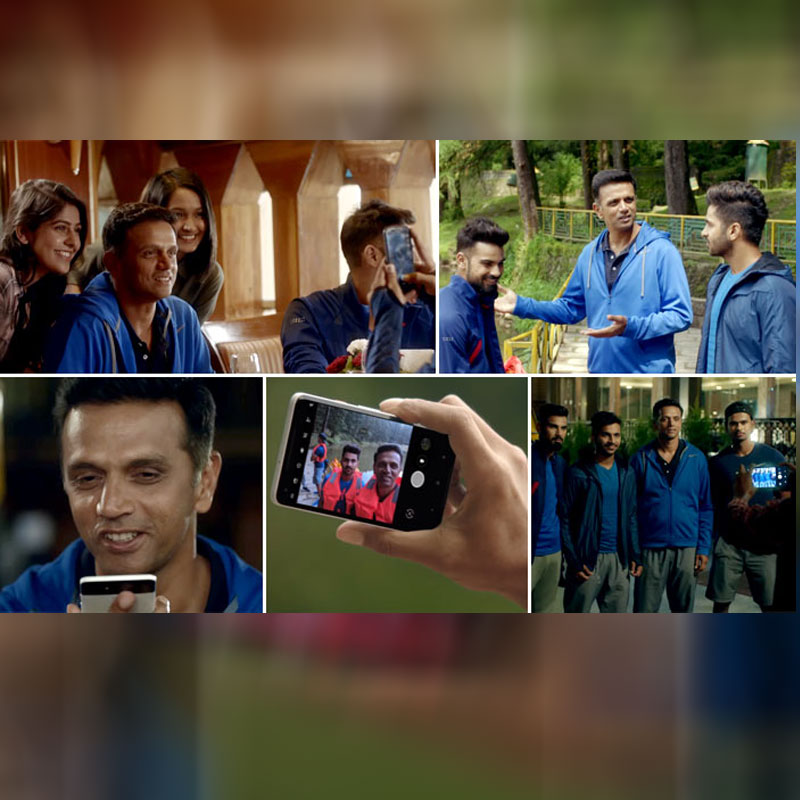
    MUMBAI: On the back of the successful launch of Pixel 2, Google has launched a new campaign featuring Indian cricketer Rahul Dravid. Conceptualised and executed by Lowe Lintas, Delhi, the three-minute film shows how seamlessly Pixel 2 blends with people’s lives.

    Dravid, a cricketing legend and coach, was roped in by the brand to share his experience in the film. The personality traits of Rahul – dependable, honest, passionate, genuine and one with a smart cricketing brain are a perfect sync with the smartness and simplicity Pixel offers and the brand attributes of Google.

    The story revolves around Dravid and his team who are in the picturesque location of Dharamshala for a match. On an off day, three of his proteges (Shreyas Iyer, Shardul Thakur and Mayank Dagar) decide to take the coach out in the city. The film captures the fun filled day in the life of the players, with Pixel being an integral part.

    Google marketing director India and South East Asia Sapna Chadha says, “The range of features such as assistant, maps, search, camera clarity, unlimited storage through photos, etc that Google’s Pixel 2 offers addresses consumer pain points and finds ways to ease our lives. Like everything we do at Google, Pixel is about the user. It’s a belief in the awesome things consumers can do with the best tools we can give them. The new campaign highlights and exemplifies that in an engaging way.”

    With this influencer campaign, the brand aims to build premium credentials, create advocacy and affinity for Pixel 2 among the consumers.

    Lowe Lintas regional president of creative North and East  Joy Mohanty adds, “It was interesting to see what lies on the other side of ‘The Wall – Rahul Dravid, the Coach’. We see him hang out with the new kids on the cricket block and he shows them a trick or two. Aided all along, of course, by his superbly smart Pixel 2.”
     

  • News Corp’s new ad network takes on Facebook, Google

    News Corp’s new ad network takes on Facebook, Google

    MUMBAI: Training its guns at the digital-ad dominance of Google and Facebook, News Corp has launched a platform, News IQ, to let advertisers reach audiences across all of its online properties.

    According to an article on Axios, News IQ will pull audience data from sites such as The Wall Street Journal, New York Post and Barron’s and give advertisers a way to reach specific audiences around safe content. The platform will launch globally over the coming months.

    News Corp is the latest publishing company to launch a data-based advertising network to win back digital ad dollars from Google and Facebook. Disney, NBC and Vox Media, and Verizon and Oath have all taken similar steps. What they lack in scale, they are hoping to offer more brand-safe content at scale—a major selling point for advertisers spooked by terrorist content and suicide videos.

    The product was built in Australia, where News Corp has a significant media footprint, and then brought to the US. The UK will be next.

    The launch partners will include Douglas Elliman, Seabourn Cruise Line, Fox Broadcasting Company, and the Dentsu Aegis Network. The News IQ team will generate specific data on advertising impressions and traffic across all of the publishing properties.