Tag: Google

  • Google elevates Aditya Swamy to head of agency partnerships

    Google elevates Aditya Swamy to head of agency partnerships

    MUMBAI: In a recent development, Google has elevated Aditya Swamy as head of agency  partnerships. In 2017 Swamy joined the company as industry head.

    Adtiya has a experience across technology, e-commerce, M&E and CPG and he is also an active member of BARC and The Adclub of India. He started his career with CocaCola as a sales manager based in Bangaluru. He was with CocaCola India for 8 years.

    Before joining Google, he was senior director at Flipkart where he led the digital and content marketing agenda. Prior to that, Swamy was executive vice president, Viacom18 Media and business head, MTV and MTV Indies. At MTV, he was responsible for growing the channel’s footprint across TV, web, mobile and the live spaces.

    Swamy holds a postgraduate diploma in marketing management from SP Jain Institute of Management and Research, Mumbai.

  • Flipkart, Amazon reduce ad spends on Google

    Flipkart, Amazon reduce ad spends on Google

    MUMBAI: With Google launching an e-commerce platform in the near future, the country’s largest online retail stores, Flipkart and Amazon India, have slashed advertising spends on the web-search company. Both the players see this as a serious threat, as a Mint report quoted two people, familiar with the matter.

    According to a person quoted above, Flipkart and Amazon have reduced spending on Google by more than 30 per cent in the previous three months compared to months before and shifted some of that ad spending to other platforms. Until last year, the two online retailers used to spend hundreds of crores of rupees buying ads on Google.

    Google’s interest in e-commerce stems from its worry that some shoppers are going straight to Amazon to search for products rather than using Google. If this trend continues, it could threaten Google’s core business of digital advertising. Amazon is already generating billions of dollars in ad revenues in the US.

    The people added that, Google was keen on investing in Flipkart because it wanted a strategic partner to help it with its e-commerce push. However, Google wanted a much closer collaboration than Flipkart and its new owner, Walmart, were willing to offer.

    Google’s e-commerce push and the rising importance of Flipkart and Amazon in digital ads are the latest examples of how intertwined the tech business has become and how internet firms are increasingly encroaching on each other’s turf.

    Google’s retail entry may result in higher losses for existing e-commerce firms. The e-commerce market grew 23 per cent to $18 billion in 2017, according to RedSeer Consulting. India’s e-commerce market is a fraction of the size of China’s or the US. Yet, Flipkart, Amazon India and Paytm Mall bear huge losses while specialty e-commerce firms are struggling to grow sales quickly.

    A new serious entrant with deep pockets like Google will strengthen the view that India’s e-commerce market is overcrowded.

  • Public wifi to connect 40 mn Indians by 2019

    Public wifi to connect 40 mn Indians by 2019

    MUMBAI: A joint report by Google and global research firm Ananlysys Mason stated that public Wi-Fi in India has the ability to capture 40 million new connected users by 2019, resulting in at least $20 billion being added to the country’s GDP. Public Wi-Fi could play a key role in driving ubiquitous connectivity and digital inclusion in India.

    The report, titled “Accelerating connectivity through public Wi-Fi: Early lessons from the railway Wi-Fi project,” outlined an opportunity to develop a wider connectivity ecosystem with public Wi-Fi as a key component.

    Analysys Mason principal consultant Ashwinder Sethi said,”By 2019, over 100 million users will spend an extra $3 billion annually on mobile broadband and handsets because of their experience of high-speed public Wi-Fi. This has direct implications on Wi-Fi ecosystem in the country, and indirect implications on the broader connectivity ecosystem, along with government, GDP and productivity.”

    Google has currently partnered with RailTel and Indian Railways to offer public Wi-Fi in railway stations, covering 400 stations with about 7.6 million monthly active Wi-Fi users. The high-speed Wi-Fi network with uncapped bandwidth of 1 Gbit/s per station provides path-breaking digital experience to existing and new users alike.

    Google India partnership Next Billion Users director K Suri said, “India is a big market for the next billion users. Wi-Fi is a huge focus area and opportunity in terms of connecting these users. We have found that if users have free and fast access, it could make a significant change to their lives and overall economic prosperity.”

    Offered as a free utility service under the brand name “RailWire”, users have 30 minutes of free access to the internet, in which they can on an average consume 350 MB of data per session.

    “Currently, the public Wi-Fi has close to eight million monthly active users, two-thirds of which are in a typically young age group. While 50 per cent users access theinternet multiple times a day, 36 per cent are first time Wi-Fi users on the network,” Suri said.

    “The most usage is of online videos streaming content and watching IPL, social networking, finance. Even with multiple users getting connected at the same time, the experience is seamless and fast, with no buffering,” the Google executive noted.

    As part of the next billion users’ initiative, Google is now building on the success of RailTel project to expand the public Wi-Fi outside train stations, into Indian cities and around the world like Indonesia and Mexico, among others, Suri added.

    Also Read:

    V6 News set to launch Telugu GEC

    History TV18, Fyi TV18 to get dedicated Tamil channels

    Infinite shows in demand due to storyline, viewership

  • Google invests $550 million in Chinese e-commerce company

    Google invests $550 million in Chinese e-commerce company

    MUMBAI: American multinational technology company, Google, is all set to invest $550 million in China’s second largest e-commerce company JD.com. The move comes as part of the technology giant’s effort to expand its presence in fast growing Asian market.

    Under the agreement, Google will receive 27,106,948 newly issued JD.com Class A ordinary shares at an issue price of $20.29 per share, equivalent to $40.58 per ADS, based on the volume-weighted average trading price over the prior 10 trading days.

    With this partnership, Google will own less than a per cent stake in the company. Beyond the cash investment, the deal will also include promotion of JD goods on Google’s shopping service. This will also help JD.com expand its base beyond China and Southeast Asia to establish a string presence in U.S. and European markets.

    By applying JD’s supply chain and logistics expertise and Google’s technology strengths, the two companies aim to explore the creation of next generation retail infrastructure solutions, with the goal of offering helpful, personalised and frictionless shopping experiences.

    In a blog post, Google president of Asia-Pacific Karim Temsamani said, “We want to accelerate how retail ecosystems deliver consumer experiences that are helpful, personalised and offer high quality service in a range of countries around the world, including in Southeast Asia.”

    “By applying JD.com’s supply chain and logistics expertise and our technology strengths, we’re going to explore new ways retailers can make shopping effortless for their consumers, giving them the power to shop wherever and however they want,” Karim added.

    It is noteworthy that Google’s main services are essentially blocked in China ver its refusal to censor search results in line with local laws. For this, Google announced that the  agreement initially would not involve any major new Google initiatives in China. 

    JD.com chief strategy officer Jianwen Liao in an official statement said, “This partnership with Google opens up a broad range of possibilities to offer a superior retail experience to consumers throughout the world. This marks an important step in the process of modernising global retail. As we celebrate our June 18 anniversary sale, this partnership opens a new chapter in our history.”

    The Asia-Pacific region is one of the largest and fastest growing e-commerce marketplaces in the world. People in Southeast Asia alone are expected to spend $88.1 billion online by 2025. These consumers in Asia-Pacific are ready to buy, but hard to please. The growth of access to the internet and online retail has led to rising expectations for top-notch experiences at every step of the shopper’s journey.

  • Global OTT subs to cross 265 mn by ’22: Park Associates

    Global OTT subs to cross 265 mn by ’22: Park Associates

    MUMBAI: The number of households worldwide with an OTT video service subscription will exceed 265 million by 2022. The popularity of over-the-top (OTT) video services, such as Netflix, Amazon, and Hulu has driven a steady increase in adoption of smart TVs and streaming media players since 2010, according to `Global Connected Living Outlook: Expanding IoT Momentum’ by Park Associates’.

    “Fifty-three percent of the US broadband households own a smart TV, and both smart TVs and streaming media players are continually improving the user experience to accommodate the shifting habits of consumers, including integration with voice-based digital assistant ecosystems,” said Kristen Hanich, Parks Associates’ research analyst.

    “The rise of these digital assistants is another key trend over the last few years, with Apple Siri, Amazon Alexa, Google Assistant, Microsoft Cortana, and Samsung Bixby, among others, now on the market. Both smart home and connected entertainment developers are working to integrate this functionality into their products,” Hanich was quoted in an official statement put out by Park Associates.

    The `Global Connected Living Outlook: Expanding IoT Momentum’ provides a comprehensive overview and assessment of the markets serving consumers’ connected lifestyle. The report identifies key trends and market developments in service categories, including broadband, television and video, digital content, residential security, home energy management, home support services, and connected health and wellness, as well as connected consumer product categories, including home networks, smart home devices, and connected consumer electronics.

    The report identifies key companies to watch in each product category and includes five-year forecasts for select product categories.

    The global study reveals that consumers now own an average of 8.6 connected CE products in their home, an 87 per cent growth in the average volume of devices since 2010. Some of the highlights of the report are the following:

    More than 70 per cent of the US broadband households have an internet-connected entertainment device.
    17 per cent own both a smart home device and an internet-connected entertainment device.
    Parks Associates estimates over 265 million households worldwide will have a total of more than 400 million OTT video service subscriptions by the end of 2022.

    “With IoT expansion comes added expectations of interoperability,” said Park Associates Research Quality & Product Development director Jennifer Kent, adding, “Consumers prioritize general device interoperability over staying within a specific brand ecosystem when considering a purchase; three-fourths of consumers find it important to consider any smart home product brand that will work with other products in their home and 49 per cent find this very important.”

    Also Read :

    Traditional pay TV under pressure from OTT services: Horowitz report 

    Regional OTT content more than just catch-up TV    

    OTT platforms discuss need for regulation

    Apple bags rights to novel ‘Shantaram’ for drama series

  • Online majors are biggest spenders on TV, says a global report

    Online majors are biggest spenders on TV, says a global report

    MUMBAI: Some of the biggest tech giants are the biggest spenders on TV.Figures from around the world show the extent to which online businesses are now investing in TV advertising.

    For example, in Australia in 2017, Google spent sixtimes as much on TV advertising, reaching A$11.3 million and Apple increased its ad spend by 17.4 per cent to A$20.2 million. Amazon backed its Australian launch with a TV ad investment of A$3.2 million, and Uber increased its TV spend with a first investment of A$3.4 million, according to Nielsen Adex,.

    Using comScore data in the US, the Video Advertising Bureau found that online businesses see an immediate and significant lift in web traffic once they launch TV campaigns – data from 14 online businesses showed the lift ranged from 11 per cent to 1,075 per cent. Studies from around the world have proven the impact that TV advertising has on online activity. A study in France by SNPTV found that organic traffic to a pure players’s website increases by 66 per cent during a TV advertising campaign.

    The global figures were compiled by The Global TV Group, an informal grouping of TV broadcasters’ and sales houses’ trade bodies in Europe, the US, Canada, Australia and Latin America. Findings show that from Brazil to Germany, brands such as Amazon, Zalando, Netflix, Expedia and Airbnb are building their image, reputation and sales through the reach and influence of TV.

    The investment trend demonstrates the strong relationship between TV and online, with viewers armed with Internet-connected devices able to respond to TV advertising immediately.

    According to Google Australia and New Zealand marketing director Aisling Finch,”Like most marketers, we use a range of channels to achieve campaign objectives. We know that audiences engage with content across different platforms at different times, and marketers do the same. For campaigns such as the launch of Google Home we used a combination of radio, TV, cinema, print, outdoor and online channels including search, YouTube and social. In this campaign we found the combination of contextual media and creative drove stronger uplift.”

    In Belgium, during 2016, TV represented a 62 per cent share of the online business sector’s media investments. The Rocket Internet group, the second biggest spender, which owns companies like HelloFresh and Home24, spent a total of €6,072,463 in 2017 on TV advertising.

    Online businesses’ TV ad spend grew by 17 per cent in Brazil between 2015 and 2017. When including the e-commerce players owning physical stores, the increase is almost 20 per cent. In Canada, online businesses represent one of the fastest growing sectors in TV advertising. Online businesses have doubled spend on TV over the past five years, with spend in 2017 topping $105 million.

    Over a 3-year period (2015 to 2017), Airbnb’s TV ad spend increased by 44 per cent. Expedia and Amazon show even more impressive figures with an increase of 65 per cent each. In Italy, online businesses invested a total of €95,653,000 in TV in 2017, representing a 10.7 per cent increase compared to 2015 whereas in Netherlands, e-commerce advertisers increased their TV investment by 26 per cent between 2015 and 2017 to become the fourth biggest category of TV-advertisers. 200 e-commerce advertisers invested €300 million gross in TV in 2017. The highest TV investor was the German booking site Trivago with a gross investment of €25 million. Spain saw Amazon’s TV ad spend go from €106,990 in 2015 to €11,006,360 in 2017, more than 100 times the investment in 2015. Google’s investment in TV went from €40,250 in 2015 to €603,620 in 2017, 15 times more.

    In United Kingdom, online businesses including brands Amazon, Trivago, Google and Purple Bricks invested a total of £682 million in TV advertising in 2017, up from £590 million in 2015. Despite cuts in other categories due to ongoing economic uncertainty, online businesses, which in 2016 became the biggest spenders on TV in the UK, remained steadfast in their TV investment.

    United States of America in 2017, saw digital-native companies including brands like Amazon, Expedia, Wayfair and eBay spend over $5.9 billion US dollars on TV, representing a 10 per cent increase over 2016.  Within this spend is a group of 50 “direct-disruptor” newcomer brands, including Gwynnie Bee, Peloton and Leesa – who only recently began investing in TV but now collectively spend over $1.3 billion US dollars in TV annually.

    The positive trend is set to continue in 2018 as more e-commerce brands around the globe put their trust in TV advertising to strengthen their image, drive traffic and generate return.

    Video Advertising Bureau president and CEO Sean Cunningham said, “We’ve been analysing digital-native companies since 2014 and found that those who turned to a heavy reliance on TV early in their company’s history saw substantial benefits.”

    n a more recent study, featuring various case studies, the VAB looked into how TV drives business outcomes for disruptor brands. For example, expanding brands saw an average increase of 188 per cent in their search volume as they increased their TV investment.

  • How Google views India’s internet landscape

    How Google views India’s internet landscape

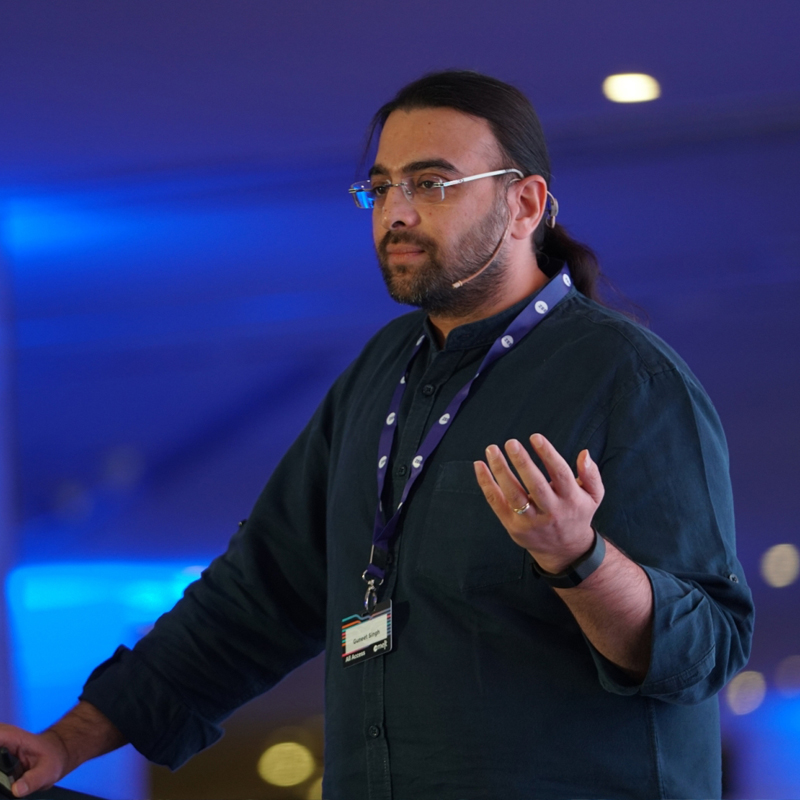
    MUMBAI: After having worked with three tech giants of today – Google, Microsoft and Samsung – Guneet Singh is not hesitant to speak of the power of digital. The Google head of marketing solutions for India and SEA was speaking at the Zee Melt 2018 conference.

    At Google since the time digital market was a minuscule fraction in the country, he believes that digital empowers people to market their products providing equal chance. As the industry transformed from TV to digital, creative ecosystem needs to change to understand how the consumption is happening.

    “Internet market is led by two things. It’s led by the smart device which has to process and the good network. Both of those were struggling. The first big shift came between 2012-15 when prices were going down and quality of data improved. The next shift came after Jio entered the market,” he revealed in an interaction with Indiantelevision.com.

    Owing to the large population, even when only 10 per cent of Indians were on the internet, India was a priority market for Google. Though India’s vast cultural and linguistic diversity makes it a challenging market, Singh thinks every company has to be ready to able to be flexible and appeal to users across the country. According to him, the best way to look at India is not as a country but as a region which has eight to nine geo-clusters or small countries.

    India being a priority market, Google has a large marketing team in India. It likes to keep a multi-cultural team in every office. Along with a high number of local population, it also encourages people from other parts of the world to come and work in different countries paving the way to knowledge-sharing.

    One of the major areas Google focuses on India is always having more people on the internet, to really get the value of the internet which is beyond funny videos. It is also working with manufacturers to look at ways to get great performance at affordable prices on Android devices. In 2016, Google launched, in collaboration with Indian Railways, its free high-speed public wi-fi service at five railway stations which has now reached around 400 stations.

    “The second part is that as you grow beyond the first 100 million users, we have so many different languages, cultures, there’s an effort on trying to build a vernacularity. The focus is on the content on the internet which is primarily in English and then goes to Hindi, Punjabi, Telugu, Malayalam, Bengali, whatever India needs and next generation of Indian users comes up from that effort. That’s another big initiative we are taking,” Singh said.

    While with the recent Cambridge Analytica scandal, GDPR roll out in Europe, protection of consumer data has become a burning issue worldwide, Singh also considers the issue very important. “The internet empowers people. Therefore the way data can be used should be a choice of that individual,” he said. However, he thinks it should not become a rightist movement. People should be given a choice if they are okay with sharing data for getting something better.

    With an experience of more than 15 years in the industry, he thinks digital advertising needs to evolve to grab the eyeballs of an audience which has a very short attention span. Six-second videos aren’t always the goal but the right engagement. The optimistic man, however, firmly believes creativity is not dead.

  • Sorrell pats Mukesh Ambani’s back for telecom explosion

    Sorrell pats Mukesh Ambani’s back for telecom explosion

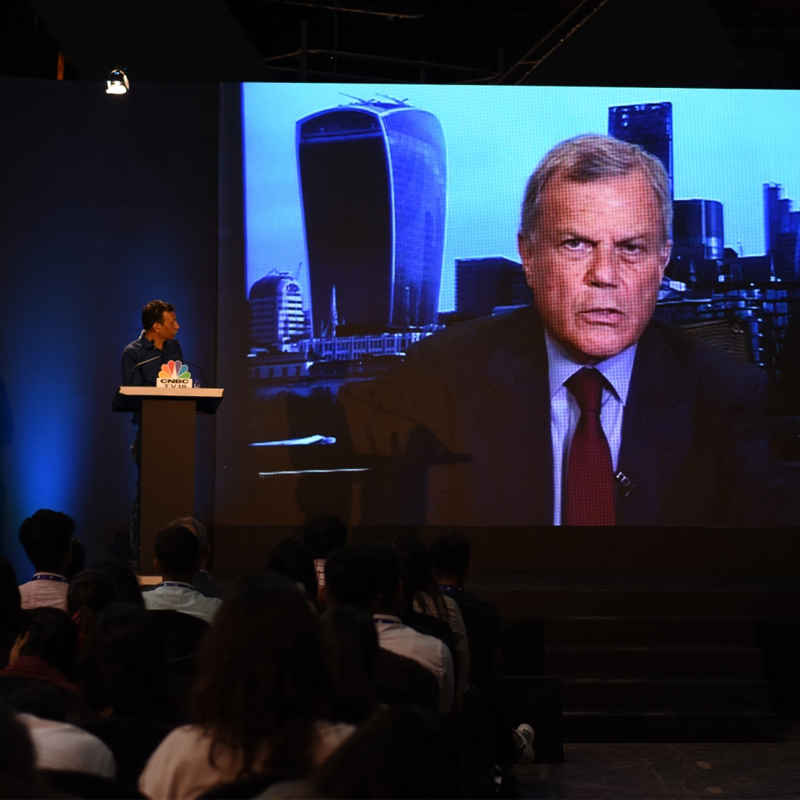
    MUMBAI: Though the announcement of ad guru and former WPP CEO Sir Martin Sorrell’s comeback strategy was announced yesterday in faraway London — a London Stock Exchange notification on Derriston Capital said so — the excitement was running equally high here at the venue where Zee Melt event was being held. And, why not? Sorrell was scheduled for a live video interaction with delegates at the event in the evening.

    But true to his style, Sorrell did not give out any juice to the media and refrained from answering anything particular about his new venture, S4. However, he did have a lot to say about the industry, in general, and India. 

    Sorrell thinks that advertising and marketing industry is in a state of flux today and will only bring opportunities for agencies and brands alike. “The discussion is whether the flux is strategic or structural. But, it is clearly a mixture of both. The A&M [advertising and marketing] industry is worth a trillion dollars with $500 billion in traditional media and traditional communication services, and $500 billion in new media,” Sorrell said speaking to the Zee Melt delegates live via CNBC’s London studio.

    “There is a clear significant change, whether it is because of Google, Facebook, Accenture, IBM or Deloitte. And this flux will bring opportunities. If you look at the $20 billion in WPP, there are parts of it that are growing and there are parts of it that are flat and parts of it that are declining. It is all about identifying those growth opportunities,” he emphasised, giving a hint at what people may expect from him in future with his new venture, which experts say could be a repeat of the WPP story with a modern-day twist.

    For the records, Sorrell is investing $53 million from his own pocket into London Stock Exchange-listed Derriston Capital, a company which will now be remade into S4 Capital, a reference to four generations of Sorrell’s family. While he will become executive chairman in the business that could explore opportunities in technology, data and content, media reports stated institutional investors have pledged 150 million pounds to buy marketing companies — a way Sorrell-founded WPP grew into a global behemoth with presence in 112 countries.

    Coming back to Sorrell-speak for the Mumbai event, the former WPP CEO, ousted on allegations of misconducts about six weeks back, hailed India as being pivotal to WPP growth with 14,000 “talented people”. He noted that India is growing fast in terms of GDP, population and potential.

    Pointing out that India, in the near future, will become the most populous country in the world with the youngest profiles, Sir Martin felt that, from a technological point of view, India has leapfrogged a lot of technologies —such as migrating directly from desktop and normal phones to smartphones. The country has seen huge distribution changes too with and Alibaba entering the market.

    On the distribution side, according to him, Mukesh Ambani’s significant investment in telecommunications and technology in Jio mobiles and SIM card has put India on the global map. In short, India represents opportunities and growth in terms of economy and technology. 

    Year 2017 saw a lot of shakeup and disruption in the industry. Of these, two iconic events that signaled disruption and structural changes for Sorrell and the industry were Unilever’s hostile takeover bid by Kraft Heinz, proving no company is safe today, and when Rupert Murdoch signaled he would negotiate 21st Century Fox business with The Walt Disney Company. What made this 21CF-Disney deal “more complicated” was the involvement of Comcast.

    Holding forth on large agencies and groups owning them, Sorrell felt that that such corporate houses have a “legacy associated with them” and come with a lot of backlog and challenges. When you have a legacy company, the business becomes more of a challenge with time as compared to when you start with a clean sheet, he said. Probably, his new venture S4 will give him and the company an opportunity to build afresh taking into account the changes taking place at client’s end and new structures and approaches that clients want.

    According to Sorrell, a major shakeup in the media industry today has been the General Data Protection Regulation (GDPR), an EU-mandated law on data protection and privacy for all individuals within the European Union (EU) and the European Economic Area (EEA). It also addressed the export of personal data outside the EU and EEA.

    The GDPR primarily aims at giving control to citizens and residents over their personal data and simplify the regulatory environment for international business by unifying the norms within the EU. Sorrell thinks these were early days to assess the impact of GDPR, but from what he’s heard Facebook’s ad sales revenue has remained un-impacted even after the news of Cambridge Analytica. He is also of the opinion that GDPR in early stages seems to favour technology giants as “we have seen smaller or media tech companies withdraw from European market rather than compete”. 

    He ended the session by applauding the Indian government and Prime Minister Narendra Modi for making a significant impact on the Indian economy, although the momentum has slowed down due to GST rollout and after-effects of demonetisation along with other factors. Pointing out that India’s economy will continue to grow and will continue to attract big brands and agencies to put their money in the country, Sorrell concluded, “I continue to be an unashamed, raging India bull and confident that the Indian economy will regain momentum soon.”

    Meanwhile, reporting on Sorrell’s new venture in detail Reuters said Derriston Capital is a little-known two-year-old listed shell company set up to invest in medical technology.

    Over 30 years ago Sorrell built WPP into a company with 200,000 staff in 112 countries by adding market research groups, media buyers, and public relations firms such as Finsbury. Worth 16 billion pounds, WPP returned millions to shareholders, including its CEO, and dominated the industry for decades. According to Thomson Reuters data, Sorrell is still the eighth biggest investor in WPP, with a 1.4 percent stake.

    The Reuters story further stated that Sorrell had vowed to break down the barriers at WPP to make it easier for clients to get all the services they needed from a small team, rather than from a range of people among the more than 400 agencies it owned. WPP competes with US groups Omnicom and IPG, France’s Publicis and Japan’s Dentsu, while thousands of small independent companies provide everything from ads for mobile phones to creative work and data analytics.

    Also Read :

    WPP board begins investigation of its CEO Sir Martin Sorrel, says WSJ

    Sir Martin Sorrell says ta-ta to WPP, Roberto Quarta becomes exec chairman

    Martin Sorrell bullish on India

    TAM or BARC, the market has to decide: Sir Martin Sorrell

  • YouTube Red rebranded as YouTube Premium with expanded reach in 14 countries

    YouTube Red rebranded as YouTube Premium with expanded reach in 14 countries

    MUMBAI: YouTube Red, the ad-free subscription video on demand (VOD) service launched in October 2015, has been rebranded as YouTube Premium on 17 May 2018. The rebranded service, YouTube Premium, will be rolled out soon in existing YouTube Red markets like US, Australia, New Zealand, Mexico and South Korea.

    It will have a higher price point for customers that are new to the premium-level offering which will fetch $11.99 per month, $2 more than the earlier price. Current YouTube Red subs that sign up for YouTube Red service before YouTube Premium is formally launched will get the lower price of $9.99 per month. With respect to updated pricing, one exception is South Korea, which will offer YouTube Premium at the current price of YouTube Red.  

    The new YouTube Premium includes the ad-free YouTube Music (a revamped music streaming service that will take on rival offerings such as Spotify and Apple Music), plus access to original series, including Cobra Kai, and movies (like upcoming sci-fi title Impulse) and other YouTube content without ads.  

    YouTube Premium is also getting a wider reach, as it’s to be rolled out in Canada and 13 European markets including Austria, Denmark, Finland, France, Germany, Ireland, Italy, Norway, Russia, Spain, Sweden, Switzerland, and the United Kingdom.  

    Google hasn’t revealed YouTube Red sub numbers, but the service was reported to have about 1.5 million paying customers a year after launch.

    Also Read :

    YouTube web series to showcase road safety awareness across India

    Three years down, YouTube Kids unable to make an impact

  • GroupM report forecasts global online media time spent to overtake TV in 2018

    GroupM report forecasts global online media time spent to overtake TV in 2018

    MUMBAI: For the first time ever, time spent on online media will overtake linear TV globally in 2018, according to GroupM’s State of Digital report. The report, which researched consumer media consumption and advertising investment trends worldwide, tabulated consumers’ time spent with each media format along with average time spent with media overall.

    GroupM predicts consumers will spend an average of 9.73 hours with media in 2018, up from 9.68 hours in 2017. Online media will have a 38 per cent share of the total engagement; TV will have a share of 37 per cent.

    The increased inclination for online media will support growth of e-commerce, too. GroupM predicts 15 per cent growth to $2.442 trillion in 2018 from cumulative transactions worth $2.105 trillion in 2017.

    In a scenario wherein the digital revolution is gaining more momentum, Google and Facebook continue to be the key growth drivers. While Google search is critical to clients, YouTube is increasingly important for scaled, ‘premium’ video. Facebook’s success is partly due to the delivery of younger audiences via Instagram.

    While examining programmatic (automated) ad investment trends, the report found 44 per cent of online display investment was transacted programmatically in 2017 versus 31 per cent in 2016. This is expected to rise to 47 per cent in 2018.  Programmatic is smaller for online advertisement trends. From 22 per cent in 2017, it is predicted to rise to 24 per cent this year.

    Also Read :

    SonyLIV and Republic World announce a strategic tie-up to expand digital presence

    Viacom18 Motion Pictures forays into digital content