Tag: Google

  • Communications veteran moves to realise Value 360’s growth ambitions

    Communications veteran moves to realise Value 360’s growth ambitions

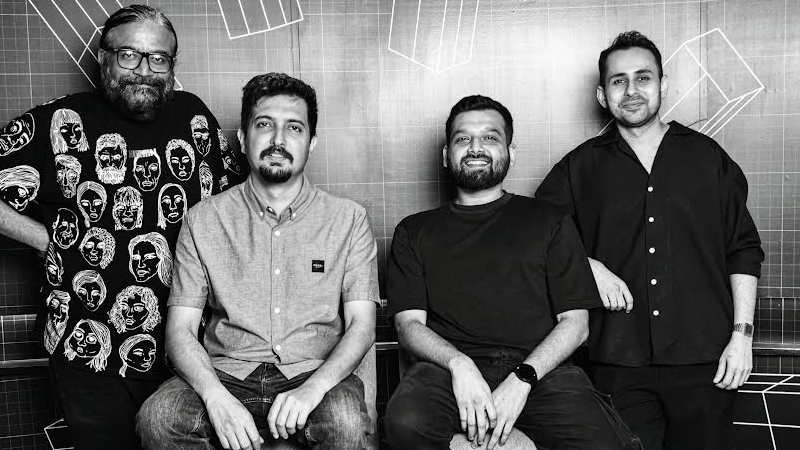
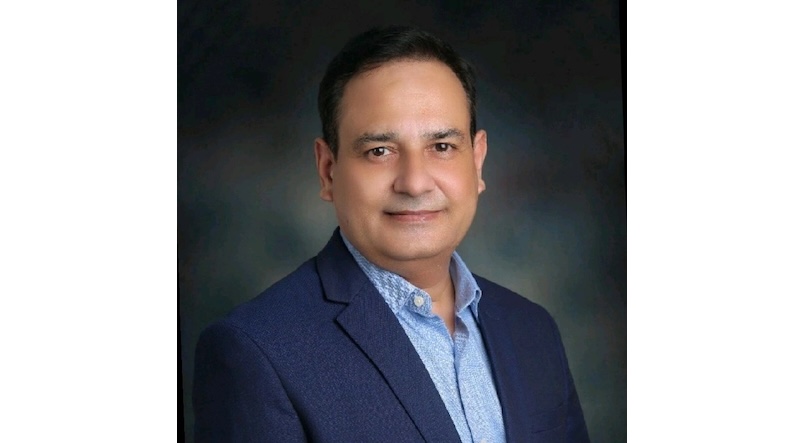
    NEW DELHI: Abhishek Dikshit, a communications specialist with over 20 years of experience crafting narratives for global brands, has joined Value 360 as vice-president. The appointment signals the PR firm’s intent to accelerate its evolution from challenger to trusted partner in India’s competitive communications landscape.

    Dikshit arrives from Kaizzen, where he spent four years as associate vice-president leading campaigns for healthcare, IT, energy and infrastructure clients. His portfolio included high-profile mandates for CMRI Hospital, Cairn Energy, FabIndia and BM Birla, among others.

    The new hire brings particular expertise in crisis management—a skill that earned his previous firm PR Professionals two golds. His crisis communication blueprint helped clients navigate reputational challenges whilst maintaining stakeholder trust.

    Before his agency stint,  Dikshit spent over four years at Amway India, where he led corporate communications across north India. His CSR initiatives there earned him the company’s regional trophy for three consecutive years and a spot representing India at Amway’s global CSR summit in Michigan in 2013.

    His career spans blue-chip clients including Google, Intel, Volkswagen, Canon and TataSky. At 20:20 Media, he orchestrated regional campaigns across 10 states, amplifying brand visibility for technology and automotive brands in tier-one and emerging markets.

    The appointment comes as Value 360 seeks to capitalise on India’s growing demand for strategic communications. The firm, led by Kunal Kishore, Gaurav Patra and Manisha Chaudhary, has built its reputation on what it calls a “will do” culture—emphasising execution over promises.

    Dikshit holds a postgraduate diploma in mass communication from Jaipuria Institute of Management and is certified in digital marketing. His approach combines traditional storytelling with data-driven strategy, tailored for diverse audience ecosystems across traditional, digital and owned media platforms.

    “In a world full of noise, the power of communication lies in crafting clarity that connects,” Dikshit said, outlining his philosophy as he settles into his new role.

  • Dentsu crowns new creative kings as Dhruv Tiwari and Zubin Jauhari join

    Dentsu crowns new creative kings as Dhruv Tiwari and Zubin Jauhari join

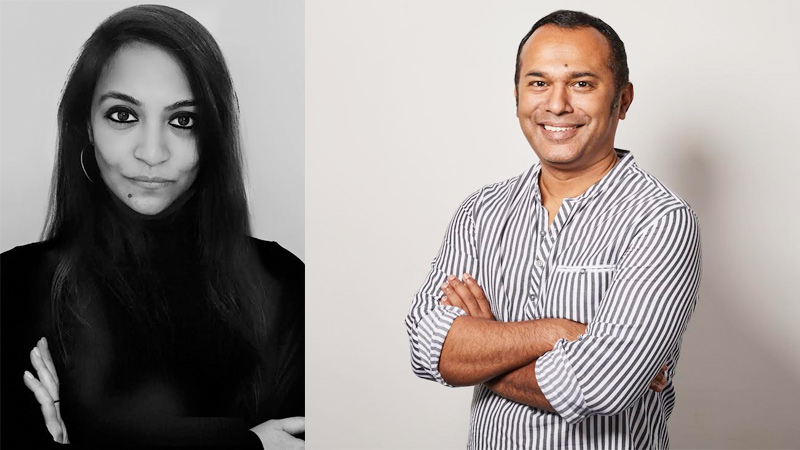
    MUMBAI: Two sharp minds, one bold mission Dentsu Creative Isobar has doubled down on its creative firepower with the appointment of Dhruv Tiwari and Zubin Jauhari as group executive creative directors. The move, announced this week, signals the agency’s intent to marry creativity with culture and commerce, shaping campaigns that don’t just win awards but win hearts across India. Both will report to Dentsu Creative Isobar chief creative officer Abhijat Bharadwaj and will lead a 150 plus strong creative team charged with pushing boundaries for some of the country’s most ambitious brands.

    Dhruv Tiwari arrives from DDB Mudra, where he transformed the North office into a creative powerhouse with work for McDonald’s, Royal Enfield, Kent RO and DLF Mall of India. His campaigns blended cultural spark with business impact and earned recognition at Adfest, The Abbys and Kyoorius. As he quipped: “I’m here to stir things up to craft work where creativity, tech and culture collide. Work that earns attention, sparks conversation, and maybe even rewrites the rulebook. If the shiny metals follow, well… we won’t complain.”

    Zubin Jauhari, meanwhile, is making a homecoming to dentsu. Over the past decade, he has worked on everything from Swiggy and Flipkart to Google, Facebook and Ola Electric, turning brands into cultural icons. His trophy cabinet features Cannes Lions, a Spikes Asia Grand Prix and a Kyoorius Black Elephant. On returning, he said: “It feels incredible to return to a place that shaped some of my fondest professional memories. I’m here to create work that resonates far beyond the industry, help define the future of creativity, and build a team that everyone can’t stop talking about, all while having a ton of fun doing it.”

    For Bharadwaj, the appointments cap a year-and-a-half-long talent build: “Now that the bottom and middle levels of our structure are solidly in place, it’s time to crown the top of this creative pyramid. I can’t think of anyone better than Dhruv and Zubin. Zubin is an award-winning creative who is an expert at new-age creativity and Dhruv is an excellent leader with a vast portfolio of successful campaigns. We’re in the fight and gunning for greatness.”

    Dentsu Creative Isobar CEO Sahil Shah echoed the sentiment: “The future of creativity lies in fusing culture, technology, and influence to deliver impact at scale. Dhruv and Zubin embody this new-age thinking and inspire those around them. Backed by a hugely talented team of 150 plus creatives, they will craft transformative work for brands and society while nurturing a culture that empowers our people to dream bigger and create bolder.”

    Together, Dhruv and Zubin are expected to deliver campaigns that channel India’s diversity and dynamism, harnessing technology to amplify culture and content to drive influence. The duo’s remit aligns with Dentsu Creative’s global mission: building work that’s emotionally resonant, culturally rooted and commercially meaningful.

    As the agency puts it, this is not just about crafting ads, it’s about “celebrating Bharat while speaking to modern India”. With this creative power pairing, Dentsu Creative Isobar seems ready to script its next blockbuster chapter.

  • Portfolio Night 2025 opens for young creatives with Google live brief

    Portfolio Night 2025 opens for young creatives with Google live brief

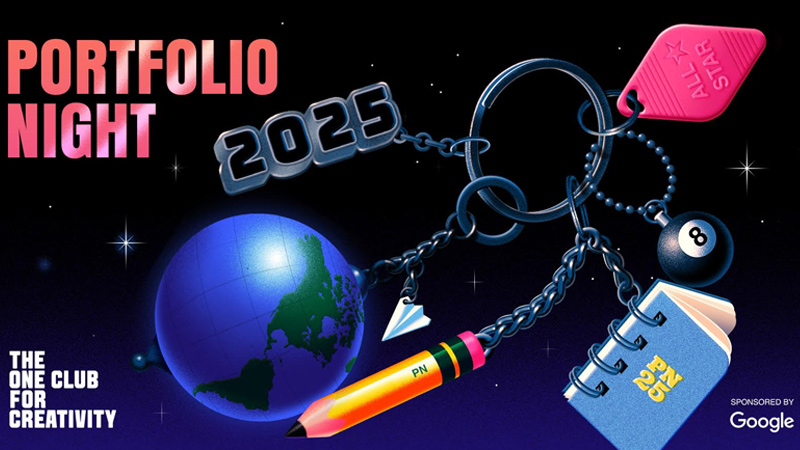
    MUMBAI: Aspiring adlanders, polish those portfolios, your big night is here. ‘The One Club for Creativity’ has opened registrations for ‘Portfolio Night 2025’, with Google on board as exclusive global sponsor. In India, the event will be hosted by BBDO India, DDB Mudra Group and TBWA India. Budding creatives can log in online on 6 October or meet in person on 7 October, with entries closing on 3 October.

    Billed as the world’s premier speed-dating event for talent and top creative leaders, Portfolio Night gives young hopefuls the chance to showcase work, receive one-to-one feedback, and even spark their advertising careers.

    This year, Google is setting the live brief for the Portfolio Night All-Stars competition. Winners will earn a coveted trip to New York in 2026 to present their campaign during The One Club’s creative week.

    On the jury are some of the most celebrated names in Indian advertising, including Josy Paul (BBDO India), Kainaz Karmakar (Ogilvy India), Abhijit Awasthi (Sideways Consulting), Russell Barrett (TBWAIndia), Swati Bhattacharya (Lightbox), Rahul Mathew (DDB Mudra), and Ashish Khazanchi (Enormous), alongside a long list of national creative heavyweights.

    With humour, hustle and a shot at global glory, Portfolio Night 2025 promises not just feedback, but a foot firmly in the door of advertising’s big league.

    For registration visit:

    In-Person Event: https://www.eventbrite.com/e/portfolio-night-2025-mumbai-in-person-tickets-1672125625759

    Virtual (Non-Mumbai Residents): https://www.eventbrite.com/e/portfolio-night-2025-mumbai-virtual-tickets-1664770165379

  • Motorola dials up ‘Big billion moto rush’ with record-low festive smartphone deals

    Motorola dials up ‘Big billion moto rush’ with record-low festive smartphone deals

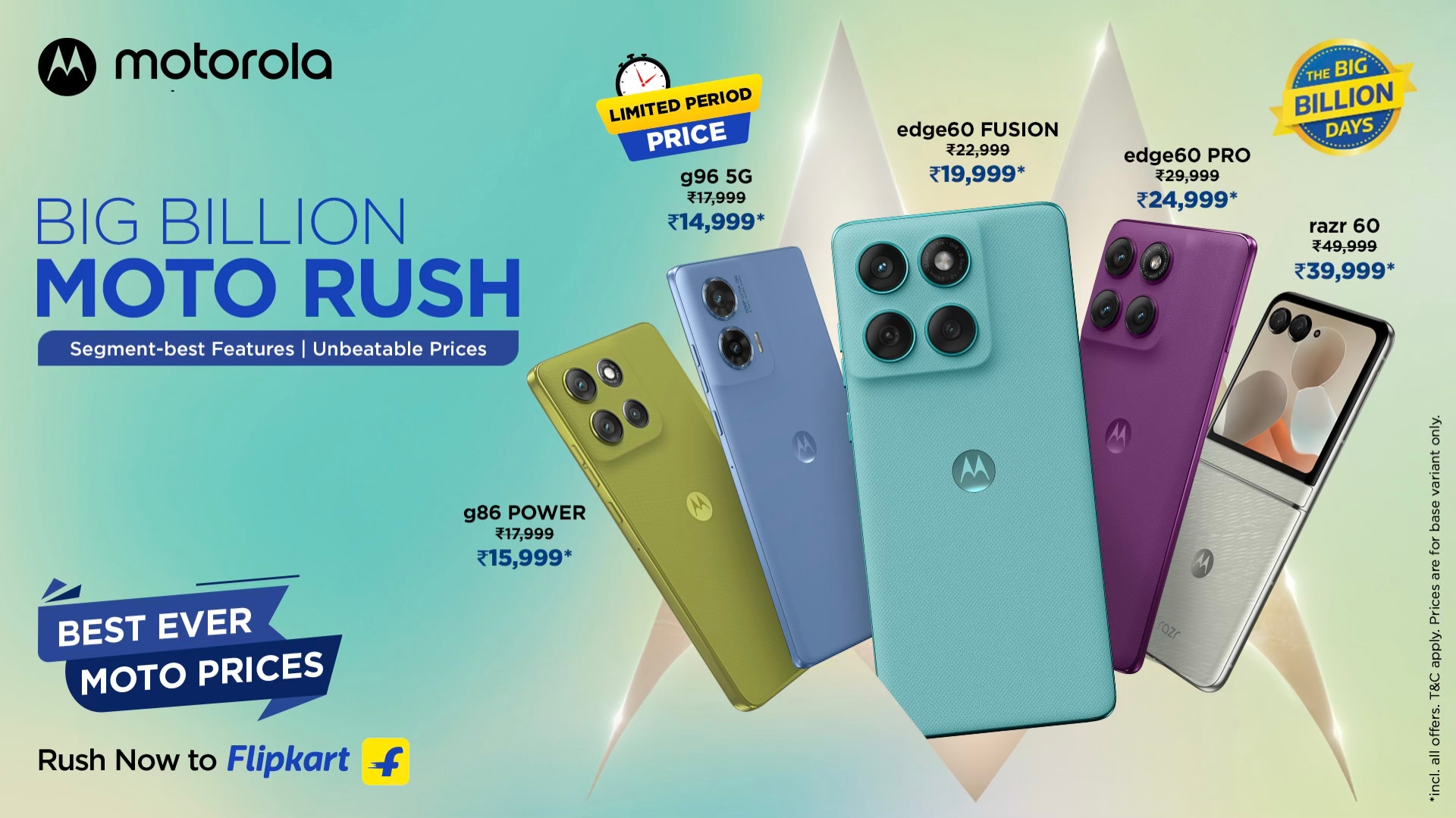
    MUMBAI: The big billion buzz is here, and Motorola is leading the charge. Motorola has announced its ‘Big billion moto rush,’ unveiling its lowest-ever prices on bestselling smartphones during Flipkart’s big billion days sale 2025, which kicks off at midnight on 23rd September (early access from 22nd September).

    Leading the charge is the motorola edge 60 pro, a flagship powerhouse featuring a Pantone-validated triple 50MP camera system, the world’s most durable 6.7” 1.5K true colour quad-curved display, and a 6000mah battery with blazing 90W turbo-power charging. With motoAI and deep integration with Google Gemini, Microsoft Copilot, and Perplexity, it packs cutting-edge AI tools at festive special prices starting Rs 24,999.

    The motorola edge 60 fusion, dubbed the “all-rounder under Rs 20,000,” lands with a Pantone-validated 1.5K display, Sony LYTIA 700C camera, and military-grade durability, available from Rs 19,999.

    In the mid-range, the moto g96 5G brings a 144Hz curved Poled display, Snapdragon 7s Gen 2 processor, and 50MP OIS Sony camera for just Rs 14,999, while the moto g86 power shines with the segment’s brightest 1.5K display and a 6720mAh battery, priced at Rs 15,999.

    Style meets smarts in the motorola razr 60, India’s most stylish flip under Rs 40,000. With a gesture-controlled video camera, titanium-reinforced hinge and the largest 3.6” Poled external display in its class, it’s available at a festive steal of Rs 39,999.

    But the savings don’t stop at phones. Motorola is also offering festive-first discounts on its moto buds ‘Loop’ and ‘Bass’ earbuds, moto pad 60 pro, and even laptops, TVs and washing machines.

    With flagship specs trickling down to mid-range prices, Motorola is clearly setting the tone for a blockbuster festive season.

  • Dish TV switches on VZY Smart TVs to stream into the future of home viewing

    Dish TV switches on VZY Smart TVs to stream into the future of home viewing

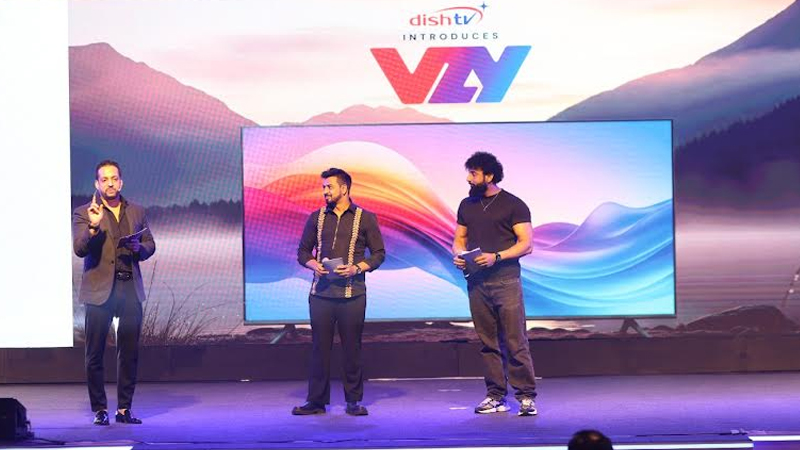
    MUMBAI: Dish TV has flipped the channel on its future and this time, it’s not just about broadcasting. The country’s leading DTH provider, trusted in Indian homes for over 22 years, has launched VZY Smart TVs, marking its grand entry into the integrated Smart TV segment.

    Standing for Vibe, Zone & You, VZY is pitched not as “just another TV” but as a full-blown entertainment universe. It blends Dish TV’s legacy in live television with cutting-edge streaming, creating what the company calls an all-in-one screen where DTH meets OTT.

    “For over two decades, Dish TV has been a trusted name in millions of Indian homes, built on innovation and customer focus. With VZY, we are building an entertainment universe that converges live TV, OTT, smart features, and immersive design,” said Dish TV India CEO & executive director Manoj Dobhal.

    What’s inside the box? Plenty of tech wizardry. VZY Smart TVs will be available in sizes from 32” HD to 55” 4K UHD QLED, with premium features such as Dolby Vision, HDR10, up to 350 nits brightness, and a bezel-less design. For audio, all models feature Dolby Audio, with select premium models stepping up to Dolby Atmos.

    Running on Google TV 5 (Android 14), the TVs come loaded with streaming staples like Netflix, Prime Video, and Youtube. Add to that voice-enabled remotes, Chromecast, Airplay, and in select models, an inbuilt DTH set-top box, offering instant access to both live TV and streaming apps.

    “The modern Indian family is digital-first and experience-driven. VZY goes beyond being just a television to deliver an immersive, curated experience,” added Dish TV India chief revenue officer Sukhpreet Singh.

    For performance, the range supports up to 2GB RAM and 32GB storage, ensuring smooth navigation and app usage. To make the smart shift easier on the wallet, Dish TV is offering Rs 0 down payment and 0 per cent EMI financing options.

    The VZY Smart TV range will hit retail shelves nationwide and will also be available through online platforms, reaching metros as well as Tier 2 and Tier 3 markets.

    With this move, Dish TV isn’t just selling a new screen, it’s making a play to own the living room once again, this time with a smarter, sleeker, and more immersive avatar.

  • DDB Tribal ropes in Anusheela Saha as new creative head

    DDB Tribal ropes in Anusheela Saha as new creative head

    MUMBAI: Talk about a creative twist in the plot. DDB Tribal has brought on board Anusheela Saha as its new creative head, marking a fresh chapter for the Gurugram-based agency within the DDB Mudra Group.

    Saha moves from FCB India, where she was national creative director, spearheading campaigns that paired emotional resonance with cultural impact. With more than two decades of experience at agencies such as Cheil and FCB, she has built a portfolio spanning Unilever, KFC, Mahindra Automobiles, Uber, Google, Samsung, UN AIDS and the Times of India. Her work has earned recognition at Cannes Lions, D&AD, One Show, Clio Awards, Spikes Asia and Kyoorius.

    Notable among her projects is ‘Unbox Me’, which shines a light on gender identity in children and sparks conversations well beyond the advertising world. She marked a personal milestone when she stepped into her FCB role as a new mother.

    Saha will report to DDB Mudra Group, chief creative officer, Rahul Mathew, taking over from Iraj Fraz who transitions into a new role within the company.

    “Over the last few years, we’ve seen DDB Tribal grow stronger and more confident,” Mathew said. “Anusheela will help take this growth into its next phase. She shares many of the values we hold dear, especially when it comes to big ideas and craft.”

    Saha added, “For me DDB is the perfect alignment of culture, creative vision and leadership. I look forward to partnering with Rahul, Ashutosh and the team to take this legacy forward.”

  • ICC teams up with Google to turbocharge women’s cricket

    ICC teams up with Google to turbocharge women’s cricket

    LONDON: The International Cricket Council (ICC) has inked a landmark global partnership with Google to accelerate the growth of women’s cricket, betting that technology can turbocharge fan engagement at a moment when the sport is reaching critical mass.

    The tie-up, unveiled on Friday, comes just as the women’s game prepares for its two biggest stages: the ICC Women’s Cricket World Cup 2025, to be split between India and Sri Lanka, and the ICC Women’s T20 World Cup 2026 in England and Wales.

    For the ICC, the partnership signals a decisive push to make women’s cricket more visible, accessible and lucrative. Earlier this year, Unilever became the ICC’s first global partner for the women’s game. Now, Google’s entry adds the sheen of Silicon Valley to cricket’s most ambitious attempt yet at elevating women’s sport to parity with the men’s version.

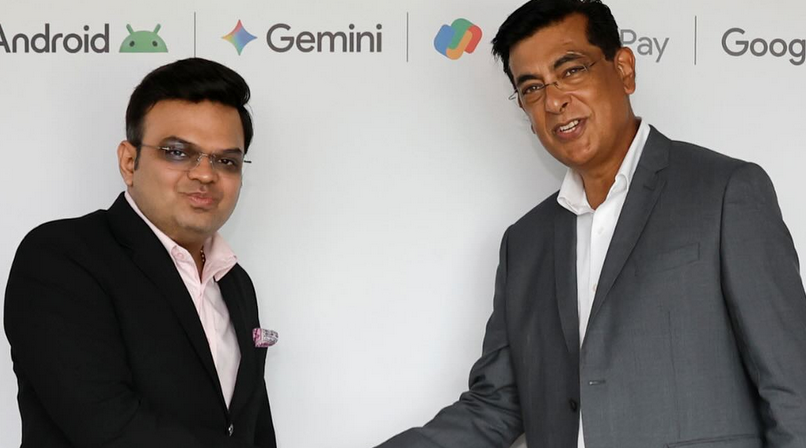
    ICC chairman Jay Shah called the deal “a landmark moment” that would help take women’s cricket “to even greater heights” by inspiring new generations and strengthening the sport’s global reach. “Together with Google, we aim to make women’s cricket a truly global force, resonating with fans in both established and emerging markets,” he said.

    Google’s arsenal of consumer products—Android, Google Pay, Gemini AI, and Pixel smartphones—will form the backbone of this strategy. The idea is to create an integrated ecosystem that enhances every stage of the fan journey: discovering match schedules, watching highlights, engaging with players’ stories, making seamless payments for tickets or merchandise, and celebrating wins online.

    “This alliance is not just about a single tournament; it’s about building deeper engagement,” said Google India vice-president of marketing Shekar Khosla. “We want to make the sport more accessible and enable fans to feel a stronger connection with what they care about.”

    The ICC hopes this “always-on” digital presence will not only expand the fan base but also attract new advertisers eager to reach younger, more digital-native audiences.

    Women’s cricket has been growing rapidly, buoyed by marquee tournaments like the Women’s Premier League (WPL) in India, the Big Bash in Australia, and increasing broadcast commitments. Audience numbers are rising, sponsorship is flowing in, and players such as Smriti Mandhana, Alyssa Healy, and Nat Sciver-Brunt are becoming household names.

    But the economics still lag far behind the men’s game. Rights packages, sponsorship valuations and player salaries remain a fraction of men’s cricket. By hitching the sport to Google’s technology stack, the ICC is signalling it wants to fast-track the commercialisation curve, making women’s cricket a product that broadcasters, advertisers and fans cannot ignore.

    The deal also reflects the growing entanglement of global tech platforms with sport. From Amazon streaming tennis to Apple bankrolling Major League Soccer, Silicon Valley is embedding itself in the sporting ecosystem. For Google, cricket is a natural fit: it is India’s most-followed sport and one of the most powerful cultural exports across the commonwealth. By associating with women’s cricket, Google also gets to position itself as a champion of inclusion and representation—values that resonate with global consumers.

    For the ICC, this is as much about geopolitics as sport. The women’s World Cup in 2025 will be staged in India and Sri Lanka, markets where Google dominates digital infrastructure but where competition from local players like Paytm, PhonePe and Jio is fierce. Embedding its brand through cricket is a way to reinforce dominance at a cultural level.

    For women’s cricket, the timing could not be better. With two World Cups in less than a year, unprecedented visibility is guaranteed. The challenge will be to convert eyeballs into habit, passion into loyalty, and novelty into permanence.

    Cricket’s men’s World Cups have long been billion-dollar properties. The women’s version has so far lived in their shadow, but that is changing. The 2022 Women’s World Cup drew record viewership globally, and the inaugural WPL auction stunned observers with player valuations that rivalled established men’s leagues. The ICC now wants to seize this momentum and institutionalise women’s cricket as a commercially viable product on its own terms.

    The Google alliance, then, is more than a sponsorship. It is an attempt to rewire how women’s cricket is consumed, blending sport with technology to create experiences that transcend stadiums and television screens. If successful, it could turn the women’s game into a global sporting phenomenon, not just a promising sideshow.

    If it fails, critics will dismiss it as another flashy announcement without structural change. But for now, women’s cricket has the wind at its back, the ICC has its boldest partner yet, and Google has found a new pitch to play on.

  • Reliance joins hands with Google Cloud to put India’s AI future on steroids

    Reliance joins hands with Google Cloud to put India’s AI future on steroids

    MUMBAI: Reliance Industries has never done things by halves. On 29 August, India’s largest private company unfurled its latest grand project: a sweeping expansion of its alliance with Google Cloud, centred on a new, dedicated AI-first cloud region in Jamnagar, Gujarat. The ambition is as audacious as it is familiar. Having once upended India’s telecoms industry with Reliance Jio and cheap data, Mukesh Ambani is now training his firepower on artificial intelligence, promising to democratise access to computing muscle for the world’s most populous country.

    The project is being pitched as India’s “AI leapfrog moment.” Reliance will design, build, and power state-of-the-art cloud facilities, all running on renewable energy and plugged into Jio’s sprawling fibre and digital network. Google will provide the brains: its AI hyper computer, a secure and integrated generative AI stack, and the know-how to run workloads of breath taking intensity. The facility, Reliance says, will meet global service-level standards and support the most demanding AI use cases—from training large models to building next-generation applications for consumers and enterprises.

    Why Jamnagar? The coastal city is already the beating heart of Reliance’s refining and petrochemicals empire. It is also becoming a symbol of the company’s reinvention: its green energy giga factory is rising there, and now the AI cloud campus will sit alongside it. Running on renewable power, the project ticks boxes for sustainability even as it scales to hyper speed. Jio, meanwhile, will string high-capacity fibre links connecting Jamnagar to metros like Mumbai and Delhi, effectively wiring India’s AI ambitions to its business and political capitals.

    Mukesh Ambani cast the partnership in almost civilisational terms: “Just as Jio and Google came together to democratise the internet for every Indian, we will now democratise intelligence for every Indian,” he declared. The subtext was clear: Reliance does not want to merely be a customer of AI; it wants to be the platform on which India builds its AI future.

    For Google, the tie-up is equally strategic. The American giant has long struggled to monetise India at scale, despite Android’s dominance. Its alliance with Reliance, first forged through a $4.5bn investment in Jio Platforms in 2020, has been its best bet. Sundar Pichai, Google’s boss, was almost wistful: “Our work together over the last decade has helped bring affordable internet access to millions. And now, we are building on this to help shape the next leap with AI. This is only the beginning.”

    The beginning it may be, but the context is fiercer. Microsoft has partnered with the Adani group to push Azure into Indian enterprises. Amazon Web Services (AWS) has invested heavily in local data centres. By anchoring Google Cloud in Reliance’s infrastructure, Ambani is offering it the biggest distribution muscle in the country—from India’s biggest retailer to its mightiest mobile operator.

    Reliance has always built moats around scale and integration. Hydrocarbons fed petrochemicals; petrochemicals funded telecoms; telecoms birthed digital platforms; retail wrapped around them. Now AI is being woven into every strand. Reliance’s retail arm, one of the world’s fastest-growing, will be powered by predictive analytics and AI-first services. Its digital platforms can churn out generative-AI-powered customer tools. Even its energy and refining business can tap AI for predictive maintenance, efficiency, and emissions management.

    The bet is as much about geopolitics as economics. AI compute has become a strategic resource, akin to oil in the 20th century. By hosting a dedicated, hyperscale AI cloud region in India, Reliance and Google are hedging against global bottlenecks in semiconductors and compute availability. They are also offering Indian enterprises and the government a “sovereign-flavoured” cloud alternative to relying wholly on Western or Chinese platforms.

    The entire project will be underpinned by Reliance’s push into renewable power. The AI data centres, notorious for their energy hunger, will be fed through Reliance’s green energy parks and hydrogen initiatives. Jio’s high-capacity fibre, spanning metros and regions, adds the digital sinew to match the green muscle. The combination allows Reliance to brand the initiative not merely as profitable, but as sustainable—a key card to play with regulators, policymakers, and global investors.

    For India, the stakes are towering. Domestic enterprises, startups, and public sector organisations often face prohibitive costs in accessing cutting-edge AI compute. By pooling Reliance’s infrastructure with Google’s stack, the hope is to lower barriers and accelerate adoption. Small businesses may soon have access to AI tools that were once the preserve of Silicon Valley. Universities and research institutes could run high-performance AI models without prohibitive cost. And the government could scale citizen-facing AI services in health, education, and agriculture.

    But challenges remain. Building AI facilities is one thing; ensuring India has the talent, regulation, and guardrails to use them responsibly is another. AI also raises thorny issues of bias, surveillance, and security. Reliance’s ambition to become India’s AI backbone will inevitably attract scrutiny—whether from privacy hawks, antitrust watchdogs, or foreign competitors.

    Yet, if history is a guide, Reliance has a knack for bending markets to its will. When Jio entered telecoms in 2016, it offered free calls and dirt-cheap data, triggering a brutal price war that wiped out rivals and left India with the world’s cheapest mobile internet. Now, Ambani appears ready to repeat the trick with AI: offer access at scale, bundle services across Reliance’s ecosystem, and set the floor so low that competitors struggle to keep up.

    The Jamnagar AI cloud, then, is not just about servers and software. It is about a new architecture of power: technological, economic, and political. If it works, Reliance and Google may indeed make India a global leader in artificial intelligence. If it fails, it could end up as another white elephant in the deserts of Jamnagar.
    For now, though, one thing is certain. India’s AI race has just been given a jolt of steroids—and Mukesh Ambani is holding the syringe.

    (The picture featured above is representational of two businessmen joining hands and there is no intention to insinuate that it  resembles either Mukesh Ambani or Sunder Pichai. It is an AI generated image)
  • Motorola turns up the volume with Bose-tuned Loop and bass-heavy buds

    Motorola turns up the volume with Bose-tuned Loop and bass-heavy buds

    MUMBAI: When it comes to sound, Motorola just dropped the bass, literally. The smartphone giant, now calling itself India’s leading AI phone brand, has launched two true wireless earbuds designed to take on every mood, beat and playlist: the moto buds Loop powered by Bose Audio, and the moto buds Bass with segment-best 50db active noise cancellation.

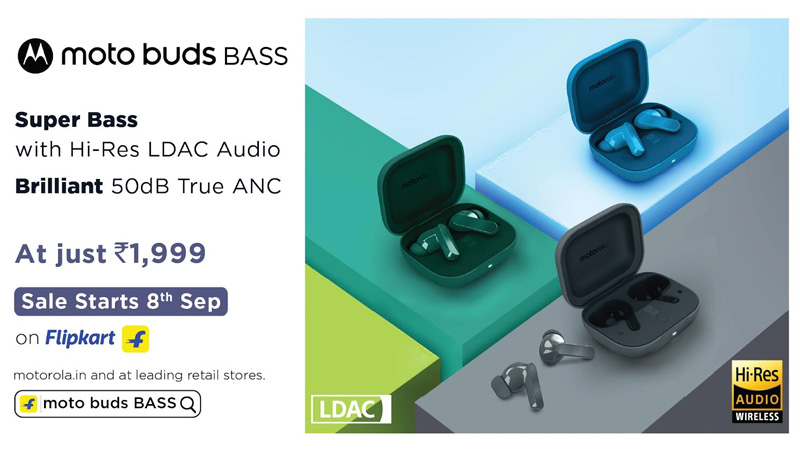
    Priced at Rs 7,999 (with a bank offer cutting Lop to Rs 6,999) and Rs 1,999 for Bass, the earbuds go on sale 1st September and 8 September respectively, across Flipkart, Motorola.in, and retail stores. Both arrive armed with features aimed squarely at India’s growing tribe of music junkies, gamers, and on-the-go professionals.

    The moto buds Loop stand out with an open-ear design tuned by Bose, 12mm ironless drivers, and spatial sound for 3D-like immersion. They deliver 8 hours on a single charge and 39 hours with the case, plus a quick 10-minute top-up for 3 hours of playback. Add IP54 water resistance, a memory alloy frame, and trekking green finish, and Loop is more style statement than accessory.

    For bass-heads, the moto buds Bass promise Super Bass tuning, Hi-Res LDAC audio, and 12.4mm composite dynamic drivers. With 50db ANC across a 4kHz range, users can toggle between Adaptive, Transparency, or Noise Cancelling modes at will. Battery life stretches to 7 hours (ANC off) plus 41 hours with the case, totalling a marathon 48 hours. Quick cadds 2 hours of playback in 10 minutes. At just 51g, with triple-mics on each bud and finishes like dark shadow, blue jewel, and posy green, these are built for marathon listening sessions without compromise.

    Connectivity gets a boost too both models feature Bluetooth 5.3, Google fast Pair, and Crystaltalk AI to cut through background chaos on calls. With smart connect and moto ai integration, users can switch devices or trigger commands (“Catch me up”) hands-free, making them lifestyle companions as much as audio gear.

    Motorola India MD T.M. Narasimhan summed it up: “With Loop and Bass, we’re blending technology, design and usability to create audio experiences that resonate with evolving lifestyles.” Translation? Whether you crave Bose-tuned clarity or chest-thumping bass, Motorola now has a bud for every beat.

  • Saumya Mittal takes charge as McDonald’s chief people officer for Asia

    Saumya Mittal takes charge as McDonald’s chief people officer for Asia

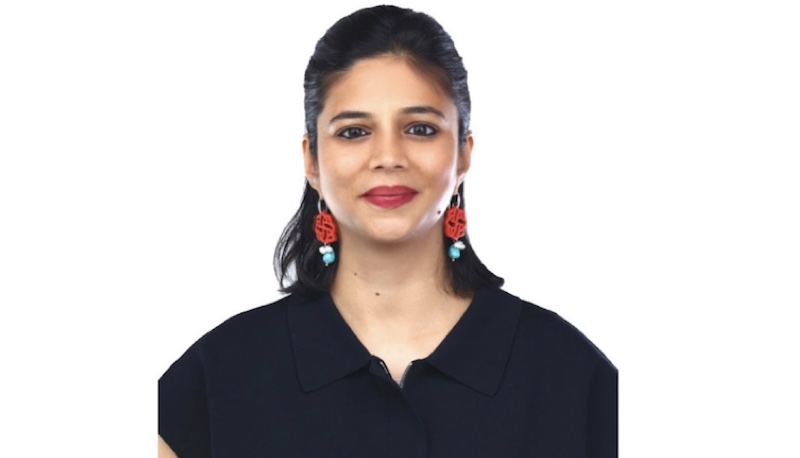
    MUMBAI: McDonald’s Corp has appointed Saumya Mittal as chief people officer for Asia, handing her the keys to one of its most critical growth markets. Mittal, who took charge this month, will oversee the end-to-end people agenda across Asia, partnering with regional leaders to sharpen talent strategy, culture and organisational design.

    She joins from Google, where she spent nearly eight years in senior HR roles, most recently as APAC commercial HR lead, steering transformational programmes across the region. Earlier, she led diversity, equity and inclusion for Google APAC and served as people partner for the region.

    Mittal cut her teeth at PepsiCo, spending a decade across plant HR, IR, talent acquisition, diversity and change management, before rising to head culture, engagement and change. Her early years as management trainee and plant HR manager gave her hands-on grounding in industrial relations and large workforce management.

    Winner of People Matters’ Are You in the List award in 2015, Mittal has also bagged multiple national and international honours during her career at PepsiCo and Google. With 15 years of experience straddling consumer goods and technology, she is expected to play a pivotal role as McDonald’s deepens its bets on Asia’s high-growth markets.