Tag: Google

  • Paytm appoints two ex-Google executives to build its advertising and cloud offerings for Indian businesses

    Paytm appoints two ex-Google executives to build its advertising and cloud offerings for Indian businesses

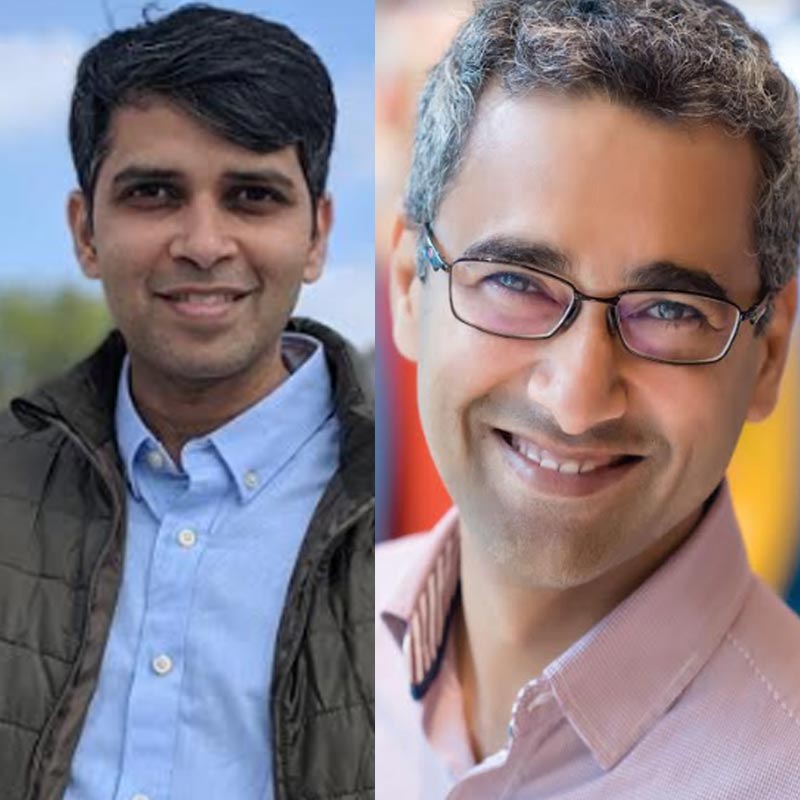
    MUMBAI: Digital payments leader Paytm, the brand owned by One97 Communications has today announced the expansion of its leadership team with two former Google executives, Praveen Sharma, and Ankit Sinha. Praveen Sharma has been appointed as Senior Vice President, Ad Business and will be responsible for leading the group's foray into advertising across Paytm businesses. Ankit Sinha has joined as Vice President, Paytm AI Cloud and will be responsible for productization of the best of Paytm's technology stack. Both of them will report directly to Paytm Founder and CEO Vijay Shekhar Sharma.

    Vijay Shekhar Sharma, founder & CEO of Paytm said, “Over the years, Paytm has built a large consumer and merchant base. Focusing on monetization opportunities, we will have Praveen and Ankit build our advertising and cloud offerings for Indian businesses. Praveen has built the most formidable adverting business and Ankit comes with an understanding of SMB needs.”

    Praveen Sharma comes from Google where he spent the last 9 years in leadership roles across India and APAC. Most recently he was based in Singapore responsible for driving Google's performance media across the Asia Pacific region. This was preceded by his stint in India where he led Google India's YouTube and Display sales organization. Leading up to Google, Praveen held several senior-level positions across some of the major advertising groups like Madison and Group M.

    “Paytm is arguably the most diverse consumer tech company in India with interest ranging from payments, commerce, financial services, ticketing, flights, gaming, etc. With a user base of 350 million and a massive transaction and traffic volume and momentum, it's poised just right to build an ads business that sits on top of all of these services. I'm very excited to be leading this charge”, said Praveen Sharma.

    Ankit Sinha comes with 15 years of professional experience. Previously, he worked as Regional Business Lead at Google Cloud for six years, primarily in the cloud sales and enterprise partnerships role. Prior to Google, he was part of SAP for seven years, building the SMBs focused partner program.

    Talking about his new role at Paytm, Ankit Sinha said, “Paytm has ushered digital payments in India and I am excited to be a part of this team. We expect to start new revenue streams with our SMB merchants, as well as larger corporations across developers and various lines of business. Paytm would leverage its big data and machine learning prowess to provide innovative solutions in different markets.”  

  • YouTube Music enables users to flip between song and music video

    YouTube Music enables users to flip between song and music video

    MUMBAI: YouTube Music has introduced a feature for its user that enables them to flip between listening to a song and watching that song’s music video without any interruption. If a video is available, the top of the app’s screen will now have two buttons that say ‘song’ and ‘video’.

    Tapping on the video button will switch over to the song’s official music video without any hiccups or pauses. Then, clicking on song button will revert to just the audio and the song’s cover art. It’s all time-matched, so switching in the middle of a song will jump to the corresponding point in the video. If the user wants to stick to just audio, then they can go into settings and turn off the music video option by toggling ‘don’t play music videos’.

    YouTube matched over five million music videos to songs for this feature.

    Google launched YouTube Music in India on 12 March, introducing a free ad-supported and a premium ad-free version with a subscription fee. Soon after its launch, it surpassed its opponent Spotify by registering more downloads within a week of the launch. YouTube registered three million downloads in the first week of its launch.

  • IPRS grants music license to Google for India

    IPRS grants music license to Google for India

    MUMBAI: The Indian Performing Right Society Limited (IPRS) has granted a license to Google, enabling the company to utilise IPRS members’ Indian works repertoire in India across YouTube and related services.

    IPRS is the registered copyright society in India authorised to carry out the copyright business in respect of musical works and literary works (lyrics), associated with musical works and members comprising of author (lyricists), music Composers and music publishers.

    IPRS CEO Rakesh Nigam stated, “The IPRS agreement with Google is nothing short of historic. IPRS and its members will benefit greatly from the arrangement with Google. IPRS licensing reach has significantly increased  as a registered copyright society and its mandate to function efficiently and transparently vis-à-vis licensees, members and the public. This is another step to ensure IPRS’ standing as the preeminent copyright society in India”

    YouTube global head of music licensing Christophe Muller said, “This is yet another step in YouTube’s ongoing commitment to ensuring that writers, composers and publishers continue to be paid fairly, and that our users are able to enjoy their favorite songs and discover new music on YouTube.  We’re extremely pleased to have reached this important agreement with IPRS that will bring more value to songwriters and artists, and deliver an incredible experience to music fans in India.”

    Saregama India Ltd CEO IPRS director Vikram Mehra said, “This is an extremely positive development. The deal between IPRS and Google for its YouTube and other related services will surely strengthen the copyright ecosystem in India. Indian Artistes will recognise value from the exploitation of their creations and this arrangement will yield more value for all IPRS members.”

    IPRS chairman Javed Akhtar said, “The IPRS-Google agreement is a historic milestone for Indian authors and music composers as well as music publishers. I congratulate and thank Google for backing Indian artistes, music publishers and the creative fraternity in such a strong way in India. This is the beginning of a very strong relationship with Google. IPRS is determined to ensure that these relationship augers well and proves beneficial to the creative fraternity in India. YouTube has a strong and pioneering role to play in encouraging creators and connecting them with markets and users. This deal between IPRS and Google for its YouTube and other related services will provide benefits to creators and members of IPRS in a tangible and meaningful way.”

  • YouTube to launch music streaming app in India

    YouTube to launch music streaming app in India

    MUMBAI: Google-owned YouTube has announced the launch of its new music streaming app YouTube Music in the country, in a bid to grab a pie of the growing Indian audio streaming industry.

    According to reports, the ad-supported version of YouTube Music is free and to get access to ad-free YouTube Music Premium, consumers will have to pay Rs 99 a month, the company said in a statement.

    YouTube global head of music Lyor Cohen said, "With YouTube Music, we are hoping to bring the best in global and Indian music to millions of fans across India, and give them an immersive music experience."

    The company also announced to bring "YouTube Premium" to India which would be available for Rs 129 a month that included membership to YouTube Music Premium, offline downloads and access to all YouTube originals.

    "Samsung Galaxy S10 users can enjoy four months of free, ad-free access to YouTube Premium," said the company.

    YouTube Music would throw a big competition to services like Gaana, Saavn, Apple Music and Amazon Music. This is the second big debut of global music streaming giant in India after Swedish platform Spotify made its way into the country late last month and garnered over one million users.

  • Google rolls out AR effect tools for YouTube Stories

    Google rolls out AR effect tools for YouTube Stories

    MUMBAI: With the overwhelming popularity of Stories feature on social media platforms, the companies are leaving no stones unturned to make it more attractive. Now, Google is rolling out support for its advanced Augmented Reality (AR) effect tools for YouTube Stories while its rival Facebook and Instagram already support AR filters for Stories on their platforms.

    The new feature will allow users to add animated masks, glasses, 3D hats and more such objects to their selfies. "To make all this possible, we employ machine learning (ML) to infer approximate 3D surface geometry to enable visual effects and ML pipeline for Selfie AR," Google Artificial Intelligence research engineers Artsiom Ablavatski and Ivan Grishchenko wrote in a blog post on Saturday.

    "That way we can grow our dataset to increasingly challenging cases, such as grimaces, oblique angle and occlusions. Dataset augmentation techniques also expanded the available ground truth data, developing model resilience to artefacts like camera imperfections or extreme lighting conditions," the post added.

    The company has also claimed that it will use improved "anchoring" process with the new AR effects to make them look more real and responsive. According to the post, it uses a unique set of technologies "that can track the highly dynamic surface geometry across every smile, frown or smirk."

    However, YouTube Stories is not available to every user yet as the tech giant launched the feature last year but only to creators with more than 10k subscribers.

  • Digital agency execs approve stricter social media control for upcoming general election

    Digital agency execs approve stricter social media control for upcoming general election

    MUMBAI: Digital media has taken the world by storm. The last elections of the two biggest democracies of the world – India and the US – showed the power of efficient digital campaigns in political battles. However, as easy as it is to use social media platforms for campaigning, it is equally capable of being misused.

    With the general elections of India just a month away, the doubt about the power of programmatic advertising on election results is obviously bothering everyone. The involvement of Facebook in the manipulation of election results in the US only thickens the clouds of uncertainty.

    Indiantelevision.com asked a few people in the industry what these measures would mean to the political parties and the election process. Ethinos Digital Marketing MD Siddharth Hegde said, "This is a much-needed move. Most countries across the world already have such policies in place and this will be a first for India for its forthcoming elections. We are likely to see more transparent conversations and campaigns and a decrease in the number of companies/ pseudo-individuals who were earlier running fake campaigns. Fake news has been a huge challenge for social media and such policies will serve as a huge deterrent.”

    To assuage growing criticism from users and investors, global digital media giants, Facebook, Twitter, and Google recently announced new policies to make political advertising more transparent and reliable. Measures like not allowing anonymous ads to run on user feed, making the acquisition of a pre-certificate issued by the Election Commission of India or a source it authorises and getting valid authorisations are a bid to solve a few of these problems.

    TRA Research CEO N Chandramouli called for stronger governmental control on false information. He said, “The ability to manipulate voters with messages that create fear, uncertainty and doubt (known as FUD in communication) has grown manifold after the proliferation of social media. Such messages polarise voters with strong, often inflammatory messages that seem to audiences to be from authentic sources. The need for all social media regulation at a governmental level on areas of misinformation and false information is necessary. This is especially needed when elections and other important events are due in a country, but also needed in all other times when incorrectly motivated citizens can be aroused by false news to cause harm to their own country and society.”

    On the other hand, Monk Media Networks founder and CEO Ashish Patkar felt the measures are being implemented too late. He said, “We are heading into an era where a Facebook 'Like' today will be an equivalent of an EVM machine button tomorrow. Social media on the positive side has politically engaged the millennial generation which has till now stayed away from voting but on the flip side, the Us V/s Them debate is being fuelled by fake media at all levels. The new controls by Facebook, Google, and Twitter is a small start towards putting out endorsed and verified messages but, frankly, I believe it is too little too late. In terms of spending, the official spending will go down but the unaccounted spends through supporter accounts and influencer accounts will continue unabated and in my view actually go up.”

    With over 556 million Indians on the internet this time around, the spectacle will be one to witness as to how political parties harness the power of the medium while at the same time ensure its fair usage.

  • Indian online gaming revenue to touch Rs 119 bn by 2023

    Indian online gaming revenue to touch Rs 119 bn by 2023

    MUMBAI: The rapid growth in digital infrastructure has led to a supercharged growth of online gaming from Rs 20 billion in FY14 to Rs 44 billion in FY18. The industry is expected to grow by 22 per cent Compound Annual Growth Rate (CAGR) by FY23 and reach Rs 119 billion, as per a KPMG Report.

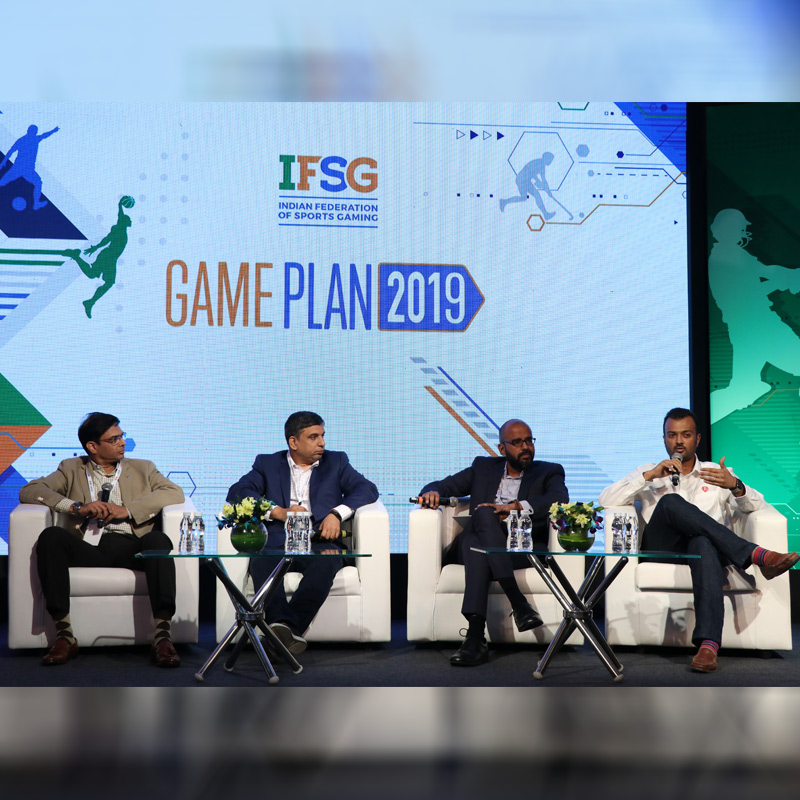
    The Indian Federation of Sports Gaming (IFSG), and KPMG India launched a report on the ‘The Evolving Landscape of Sports Gaming in India’ at its second event – GamePlan 2019. The report provides an overview of the online gaming industry with a focus on fantasy sports and eSports.

    GamePlan 2019 had a session on ‘Future of online sports entertainment in India’ and the panellists were Google India country director sales Vikas Agnihotri, KPMG India partner and head-media and entertainment Girish Menon, Dream11 CEO and co-founder Harsh Jain, Wavemaker CEO south Asia Karthik Sharma and moderated by sports industry expert Gaurav Kapoor.

    Experts believed that the level of engagement is very high when it comes to sports gaming in India. “We have seen 250 million people interact with sports last year and it is expected to reach 350 million this year. During the IPL, the search rates go up by 80 per cent as compared to the previous quarter,” Agnihotri said.

    KPMG conducted a survey on 336 fantasy sports users to understand their preferences and playing patterns. For around 50 per cent of the respondents, the ‘ability to manage teams virtually’, ‘remain connected with the sport’ and ‘utilisation of sports knowledge’ was important motivators for engagement. Out of those 336 users, 71 per cent of the respondents played fantasy cricket followed by 54 per cent playing football. The non-cricket sports leagues in India are also witnessing increasing traction.

    Commenting on the occasion, IFSG president John Loffhagen said, “With the rapidly growing digital infrastructure and emergence of new sports leagues, the Indian online sports gaming industry is witnessing a boom which shows no sign of slowing down. Exponential growth provides users with easy access to a vast variety of sports gaming apps, formats and genres. This could lead to potential confusion and misjudgement among players in choosing the right platform to engage with their favourite sport.

    Due to the growth of digital infrastructure and the emergence of new sports leagues, fantasy sports is witnessing increasing traction in India. The number of fantasy sports operators spiked from 10 in 2016 to 70 in 2018.

    Talking about the engagement of users on Dream11, Jain said, “We had around 95 per cent of our users playing fantasy cricket three years ago and it has come down to 85 per cent. Indian diaspora wants to consume more sports apart from just cricket. Cricket is still growing but other sports are also witnessing exponential growth.”

    “One of the things all of us have to be aware of is that there is still a huge potential keeping the business model, strategy and the approach in mind. When it comes to sports gaming on monetisation, one of the advantages is the ability to build an ecosystem. Typically any online gaming product is largely free or pay and freemium sometimes. The ability to create an ecosystem is because of the high level of user engagement that exists. Those engagements are at a fairly high level of loyalty to their specific club or sport,” Menon said.

    Jain believes that in the next three years cricket engagement will go down to 65 per cent and the remaining part will be from the non-cricketing sports. “The whole industry is waiting for Google to open Google ads for fantasy sports,” he added.

    Online gaming in India is seeing increased traction due to the growth of digital infrastructure, with fantasy sports emerging as an important segment in this space. “With the number of fantasy sports operators growing rapidly and the number of users on fantasy sports platforms expected to cross 100 million by 2020, this segment has the potential to spawn a whole ecosystem around it, and could help deepen user engagement with their favourite sports,” Menon concluded.

  • Google promises more transparency in online election ads

    Google promises more transparency in online election ads

    MUMBAI: Google has vowed to take India specific initiatives aiming at transparency in political advertisements on its platform ahead of general elections in the country. The tech giant will provide details of advertisers as well as money spent on such ads.

    "To bring more transparency to the online election ads, Google will introduce an India-specific Political Advertising Transparency Report and searchable Political Ads Library. These will provide comprehensive information about who is purchasing election ads on Google platforms and how much money is being spent," Google said in a statement. The report and ads library will also enable voters to get the election-related information they need.

    Apart from that, Google has updated election ads for the country. Under the new policy, the platform requires advertisers seeking to run poll ads to provide a ''pre-certificate'' issued by the Election Commission of India (ECI) or anyone authorised by the ECI, for every ad they wish to run. Along with that Google will verify the identity of advertisers before their election ads run on its platforms.

    Google said the advertiser verification process will begin on 14 February, while the India Political Ads Transparency Report and Ads Library will go live in March 2019.
    The digital ad spend forecast report published by Dentsu Aegis Network predicts digital ad spend will touch Rs 14,281 crore by 2019. A majority of this predicted amount will come defiantly come from election ads.

    “In 2019, over 850 million Indians are expected to cast their vote to elect the country’s next government. We’re thinking hard about elections and how we continue to support democratic processes in India and around the world. In line with this, we are bringing more transparency to election advertising online, and surfacing relevant information to help people better navigate the electoral process,” Google India Public Policy director Chetan Krishnaswamy said.

    Google will also make electoral information from the Election Commission and other authoritative sources easily discoverable on search for the upcoming election.

  • OTT platforms may soon adopt self-censorship

    OTT platforms may soon adopt self-censorship

    MUMBAI:  Leading OTT players clearly don’t want the government interfering with their content or creating rules like broadcast. So, Netflix, Hotstar, Reliance Jio and some other streaming services may soon adopt a voluntary censorship code.

    As part of the code, the platforms will remove content that has been banned by the courts and that disrespects the national flag, emblem, hurts religious sentiments or promotes violence or terrorism against the country, or even shows children in sexual acts. These are codes that even the broadcast industry follows.

    Economic Times citing sources reported on the self-censorship initiative. However, tech companies including Amazon, Facebook and Google are unlikely to sign up for the code as this move of could set an example of how to regulate internet and meddle with creative freedom.

    The code is likely to include a “redressal mechanism” allowing the users of the streaming platform to issue complain in case they think that the over-the-top (OTT) services have violated the code. Eventually, this mechanism may transform in an “adjudicatory body” that will resolve the complaints filed by the customers.

    According to the report, ZEE5, Times Internet, Eros Now and AltBalaji are in favour of the code and the Internet and Mobile Association of India (IAMAI) is facilitating the process. It also added that the players who don’t think it as a very wise step opine it would lead to an unnecessarily nervous environment and validates the government’s point of view that the internet needs regulation.

    Allegedly, the whole process has been opaque and closed-door while content creators have not been included in the discussions. The opposition group to the court also believes the process has been swayed by companies that want OTT companies to be at a more level playing field with broadcasters.

  • Mahesh Narayanan appointed country manager for LinkedIn India

    Mahesh Narayanan appointed country manager for LinkedIn India

    MUMBAI: Professional networking website LinkedIn has announced the appointment of Mahesh Narayanan as the company’s country manager for India. He will handle his responsibilities from 7 January 2019.

    Previously, Narayanan has also served as the India managing director for Saavn and led Google India's mobile advertising business from 2010-2013. He also led the digital transformation and market-entry strategies for a host of marquee digital businesses such as Sociomantic Labs and AdMob among others in the past.

    On his appointment, Narayanan said, “I am grateful for the opportunity to further LinkedIn's vision and mission in an important market that is rapidly digitising.”

    Narayanan will be reporting to LinkedIn's Asia Pacific (APAC) region managing director Oliver Legrand and will join the company's Asia Pacific senior management team.

    To Narayanan’s appointment, Legrand said, “India continues to be a strategic market for LinkedIn, and we are pleased to have Mahesh join our team to take our business to its next growth chapter.” Further adding he said, “As we continue to invest in the market, Mahesh's strong track record in leading growth businesses and his deep market experience will bolster our efforts in India.”

    LinkedIn has over 59 crore members globally and more than 5.3 crore members in India. As LinkedIn's fastest-growing and largest market outside the US, India has seen its member base grow from 34 lakh members in November 2009 to more than 5.3 crore members in July 2018.