Tag: Google

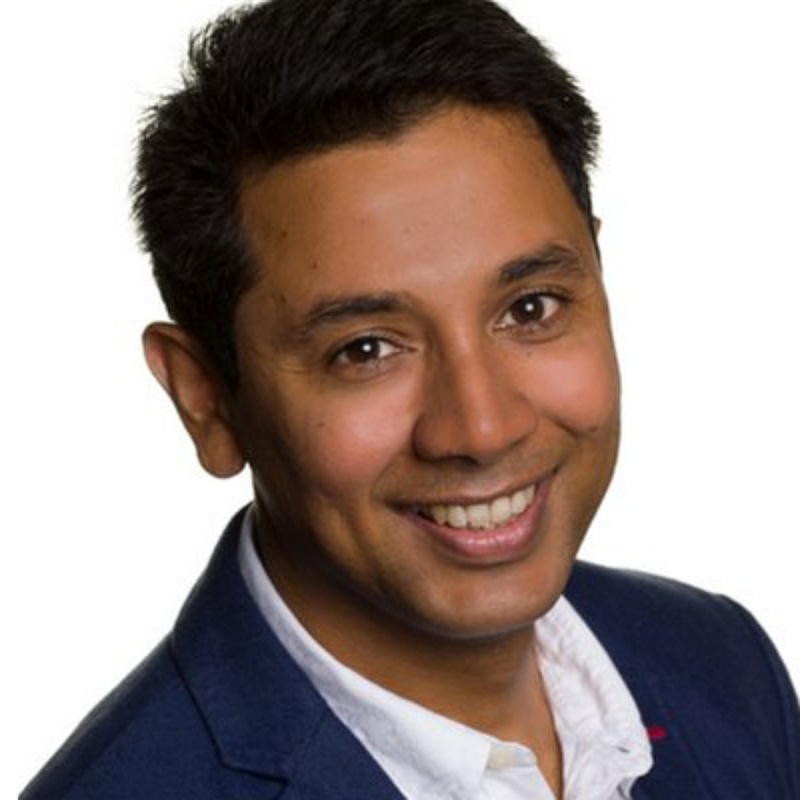
  • Google’s Rahul Roy-Chowdhury joins Grammarly as global head of product

    Google’s Rahul Roy-Chowdhury joins Grammarly as global head of product

    NEW DELHI: Digital writing assistant software Grammarly has roped in Google’s Rahul Roy-Chowdhury as global head of product. Roy-Chowdhury announced the move via a post on professional networking site LinkedIn. He was with the search giant for 14 years in various capacities, the most recent being vice president – product management.

    “I leave Google with a sense of gratitude and tremendous pride at how our work at Google improved the lives of billions of people around the world. From working on Chrome from the early days to scaling it to billions of users to working on making Google’s product offerings more private, safe, and secure, it’s been a blast,” he wrote.

    At Google, Roy-Chowdhury was leading the privacy, safety, and security teams to unified solutions across the tech behemoth's product portfolio. Prior to that, he spent ten years on Chrome, leading the product management teams for Chrome browser and Chrome OS. He has also had stints at Solidcore Systems and Lazard Frères. He has a BA in mathematics from Hamilton College, an MS in computer science from Columbia University, and an MBA from Stanford University Graduate School of Business.

    Grammarly CEO Brad Hoover wrote in a blog post welcoming the new appointee, "Rahul brings deep expertise leading product, data, and design teams to build and scale them to a broad global audience. This includes building out widely used consumer products, developer platforms, and enterprise offerings, with a focus on privacy and user trust.”

  • Next Billion Users head Caesar Sengupta quits Google

    Next Billion Users head Caesar Sengupta quits Google

    NEW DELHI: Google’s Next Billion Users head Caesar Sengupta is on his way out from the company after nearly 15 years, he said in a LinkedIn post on Monday.

    “After over 15 wonderful years at Google, I have decided to venture out and start on a new mission. I remain very positive about Google’s future but it's time for me to see if I can ride without training wheels,” he wrote in a note titled 'Thank you Google…'

    Sengupta, who was based out of Singapore, led the tech behemoth’s ambitious payments plans, including their grand digital payments bet – Google Pay. Since his recruitment to the firm in 2006, he has worked on the ChromeOS, NBU initiative, Google Pay, payments platform and Google Finance— all important business lines and growth areas for Google— and thanked the teams in his post. He also led strategic investments and acquisitions by the search giant in local companies including Jio Platforms, InMobi's Glance, and Dunzo.

    Sengupta's last day as vice president and general manager – payments and NBU initiative will be on 30 April.

    He joined Google right after his MBA at The Wharton School. He completed his Masters in science with distinction in research, computer science, at Stanford University, before his MBA.

    Though his exact plans after Google are not known, it is believed he will float his own new venture.

  • Clash of the tech titans: it’s now Google Vs Microsoft

    Clash of the tech titans: it’s now Google Vs Microsoft

    MUMBAI: Google’s Global Affairs senior VP Kent Walker has lashed out at software giant Microsoft in a blog post, accusing it of “reverting to its familiar playbook of attacking rivals” and “lobbying for regulations that benefit their own interests”.

    This was after his counterpart Microsoft President Brad Smith dissed Google’s business policies while testifying before the United States congressional subcommittee hearing on the Judiciary, Subcommittee on Antitrust, Commercial, and Administrative Law. Microsoft later also published the transcript of Smith's testimony on its blog titled ‘Technology and the Free Press: The Need for Healthy Journalism in a Healthy Democracy’, where he blamed Google's business model for "devouring" ad revenue on which news groups rely.

    The heated war of words between the two conglomerates comes after Microsoft backed legislation that could force big tech companies in the US like Google and Facebook to pay to feature news on their platforms. Google and Facebook have resisted mandatory payments, while Microsoft has taken a more collaborative stance, even going so far as to lobby for other countries to follow Australia's lead in calling for news outlets to be paid for their online content. A move opposed by both the tech companies.

    The software giant took on the search engine leader head on in its blog while talking about the accelerating crisis in news and journalism, that reflected the shift away from traditional advertising  to digital advertising, enabled by the emergence of the internet. It goes on to say, “While Google and Facebook have gained the most revenue from the shift to digital advertising, Google in multiple ways is unique. Google has been the biggest winner, capturing about a third of all digital advertising revenue in US in the last year.”

    It further adds, “Google’s full impact, however, is based not on its large numbers but its multiple roles. Google accesses and uses news in a way that is different from Facebook. More important, it is the dominant technology firm in virtually every corner of the digital advertising ecosystem. Google’s digital advertising business encompasses the entire internet. It enables Google to aggregate the content of others, attract users, harvest their data, and then directly target them with ads at an unprecedented scale.”

    Only stopping short of suggesting that it has “unlawfully” built up its business, it concludes by saying, “Google’s business model is fed by the very content that these ailing news organisations create.”

    Google, on its part, has launched a scathing counter-attack saying it was “no coincidence” that Microsoft’s interest in attacking the tech company came “at a moment when they’ve allowed tens of thousands of their customers-  including government agencies in the US, NATO allies, banks, non-profits, telecommunications providers, public utilities, police, fire and rescue units, hospitals and, presumably, news organisations – to be actively hacked via major Microsoft vulnerabilities.” This was in reference to the SolarWinds Hack ransomware attack, which has left several companies reeling across the world.

    The search engine colossus further states, “This important debate should be about the substance of the issue, and not derailed by naked corporate opportunism”, while also declaring Microsoft’s claims about Google’s business and how it work with news publishers are “just plain wrong”. It concludes by saying, “Microsoft’s attempts at distraction aside, we’ll continue to collaborate with news organisations and policymakers around the world to enable a strong future for journalism. “

  • NBA writes to Google, calls for universal parity in dealing with news content

    NBA writes to Google, calls for universal parity in dealing with news content

    New Delhi: The News Broadcasters Association (NBA) has written to Google highlighting an urgent need to create an equitable relationship and a level playing field between global tech monopolies and traditional media/news organisations.

    The development comes days after Australia passed a law requiring Google and Facebook to pay media companies for content. Apart from Australia, the tech giant has also agreed to compensate and pay publishers in France and the European Union.

    In a letter addressed to Google India country manager Sanjay Gupta, NBA president Rajat Sharma said the advertising revenues which form the backbone of the news broadcasters have been shrinking in the digital space since technology giants are taking away the major chunk.

    “News organisations make heavy investments in employing anchors, journalists and reporters to gather, verify and deliver credible information but are inadequately compensated — the largest share of advertising revenue flows disproportionately to intermediary technology platforms. Google plays a key role in this value chain as an intermediary and plays a part in delivering this news content to its audiences albeit without sufficiently compensating the content owners,” the letter reads.

    One of the largest self-regulatory bodies for TV news channels in the country, the NBA noted that the present situation reflects the unfair distribution of advertising revenues which is causing the digital news businesses to come under tremendous pressure.

    “Being a multinational organisation following global best practices in all the countries it operates, the expectation is that Google will employ principles of universal parity in dealing with news content owners and employ similar norms in India,” the letter read, highlighting that countries like Australia, France and other European countries have already taken the lead in addressing this power imbalance through legislative enactments which ensure that the tech giants adequately pay news publishers for their highest quality news content.

    The NBA requested the tech giant to urgently look into the matter and examine the issues at play to ensure the ecosystem remains sustainable. “We would be happy to have a meeting through VC in this regard,” wrote Sharma.

    Last month, the Indian Newspaper Society (INS) had also asked Google to pay Indian newspapers comprehensively for the use of their content and to share details of its advertising revenue and demanded that publisher’s share of advertising revenue be increased to 85 per cent.

  • Google pledges $25 million to empower women and girls

    Google pledges $25 million to empower women and girls

    NEW DELHI: In a blog post timed for International Women’s Day, Google has put out a call for applications for charitable initiatives focusing on anything from “barriers to economic equality” to “cultivating entrepreneurship.” The tech giant announced a range of programs as well as grants worth $25 million to fund works of non-profits and social enterprises that are committed to empower women and girls.

    “Women and men remain on unequal footing — and these inequalities have worsened in the wake of Covid2019,” Google.org president Jacquelline Fuller said in the post. Fuller cited a statistic showing that women in the US alone have lost more than 5.4 million jobs in 2020, according to the National Women’s Law Center.  Since the coronavirus pandemic started, other organisations have also sounded the alarm about what women stand to lose. A September report from McKinsey & Company warned that the pandemic could undo six years’ worth of progress for women in the workplace.  

    Google.org's new Impact Challenge, unveiled on International Women's Day, is aimed at addressing systemic barriers and inequities so that women have access to economic equality, opportunity to build financial independence and pursue entrepreneurism, said Google chief executive Sundar Pichai at a virtual event.

    Applicants will be reviewed by a panel including US Youth Poet Laureate Amanda Gorman, Google chief diversity officer Melonie Parker and musician Shakira, among others. Amongst them, applicants that meet the criteria of impact, innovation, scalability and feasibility will be selected and receive funding between $300,000 and $2 million in funding. Each selected organisation will also receive non-monetary support like mentorship from Google.

    The deadline to apply is April 9, and the selected organizations will be announced in late 2021. 

    "Whatever these teams need, we are going to be alongside them and help carry out their vision," said Fuller at the event. She also announced that Google.org is going to invest an additional $1 million to help underserved women in India. Even as India is the world’s second largest internet market, women make up a small percentage of online users in the country. 

    Five years ago, Google launched a digital literacy program called Internet Saathi to bring internet literacy to women in rural parts of India. The company said the program, for which it collaborated with Indian conglomerate Tata, significantly helped improve women’s participation on Indian internet.

    Four of 10 internet users in rural India are now women, said Google, up from one in 10 in 2015. The company, citing its own research, said the Internet Saathi program benefited more than 30 million women in India — and that it’s now concluding the program to focus on other efforts to continue this mission.

  • Guest column: SEO is the elixir of brands’ sales & e-commerce strategy

    Guest column: SEO is the elixir of brands’ sales & e-commerce strategy

    GURUGRAM: Industry reports state that 44 per cent of people start their online shopping journey with a Google search and 23.6 per cent of e-commerce orders are directly tied to organic traffic on the brand’s website (Business Insider). This itself determines the importance of search engine optimisation (SEO) for better sales ROI, especially for brands who have their own e-commerce platforms. In fact, even for brands that don’t have their own e-commerce platforms, SEO plays an important role indirectly in sales by guiding the traffic to the respective marketplaces from the brand’s website, helping consumers make the right purchase decision. Another report by SEM Rush states that 37.5 per cent of all traffic to e-commerce sites comes from search engines. 

    Owing to the current pandemic, e-commerce has witnessed a 17 per cent growth and a whopping 65 per cent growth in brands that are establishing their own website. Consumers who were initially sceptical about buying products online are now accustomed to the growing world of e-commerce. Consumer behaviour has also undergone a radical shift with more people buying directly from brand websites.

    In my view, there are three key things brands need to follow to drive maximum benefit from e-commerce SEO:

    a) Keyword planning – The importance of keywords in SEO is known to all. For e-commerce brands, targeting keywords which are category- and product-centric is extremely important, rather than just informational keywords. Amazon would be a good place to look for product-oriented keywords which closely depict the buying intent of the consumer. 

    So what one needs to do is enter a keyword related to the product on Amazon – for example “instant geyser.” Amazon can throw multiple suggestions around the product which would closely depict what the consumer is searching for. For example: “six litre instant geyser”, “instant water heater”, “instant geyser to save electricity”, etc. Some of the keywords could be long tail, and it’s good to pick those up as well to finally result in a healthy mix of long tail and short tail keywords, for a better conversion.

    b) Category and sub-category insights – Amazon is also a good place for finding out keywords related to your category and sub-categories. Further, you can also take a look at competitor keywords for category insights. A good tool to refer to is SEM rush. It does not give keyword suggestions based on inputs made, but shows you keywords that your competitor already ranks for. A deeper analysis can be done on those keywords to find more variety as per consumer intent and your product categories. 

    c) Plan campaign ROI over a longer term – SEO can work wonders for a brand over a sustained period of time and can genuinely improve sales in a cost-effective manner.  According to Kantar’s Getting Media Right 2018 report, 81 per cent of marketers in the Asia Pacific region acknowledged that the most important measure of ROI is a combination of short and longer-term metrics. 

    However, most marketers in India tend to focus on the short-term ROI of a campaign, trying to account for every penny spent immediately. Only around three per cent of digital marketers measure ROI over a six-month period or longer in India. It is one of the lowest amongst all regions, lower than the global average of four per cent. Conversely, about 78 per cent of Indian marketers measure ROI within the first 30 days of the campaign itself. This is too soon, especially considering that sales cycles are usually 60-90 days or longer. 

    With the enormous rate at which e-commerce is growing, it is well on its way to completely redefine the way we do business. This year especially has seen an explosion in the digital space like never before and it’s only going to get bigger from here on. In a world that is populated with all types of content, SEO is the elixir that every business needs to incorporate when executing their brand strategy.

    (The author is founder of Bottle Openers Digital Solutions. Indiantelevision.com may not subscribe to his views.)

  • SoftBank’s Paroma Roy Chowdhury joins Dream Sports

    SoftBank’s Paroma Roy Chowdhury joins Dream Sports

    New Delhi: Soft Bank Group’s former senior director Asia communications and public affairs Paroma Roy Chowdhury is joining Dream Sports as chief communications and advocacy officer.

    Dream Sports is the parent company of Dream11, the recent sponsor of IPL 2020 and the leader in fantasy sports category. 

    Chowdhury stepped down from her role in 2020.

    She has over three decades of experience and has worked as a journalist and communications head across multiple brands such as GE Capital, HP, Bharti Airtel, Google India and SoftBank.

    Founded in 2008, Dream Sports include brands such as FanCode, sports accelerator program DreamX, and sports-focused tour agency DreamSetGo. The company has more than 100m users, capitalising on the passion for cricket in the world's second-largest internet market. 
     

  • Media needs ‘auto-correction’, guidelines to restore order: Venkaiah Naidu

    Media needs ‘auto-correction’, guidelines to restore order: Venkaiah Naidu

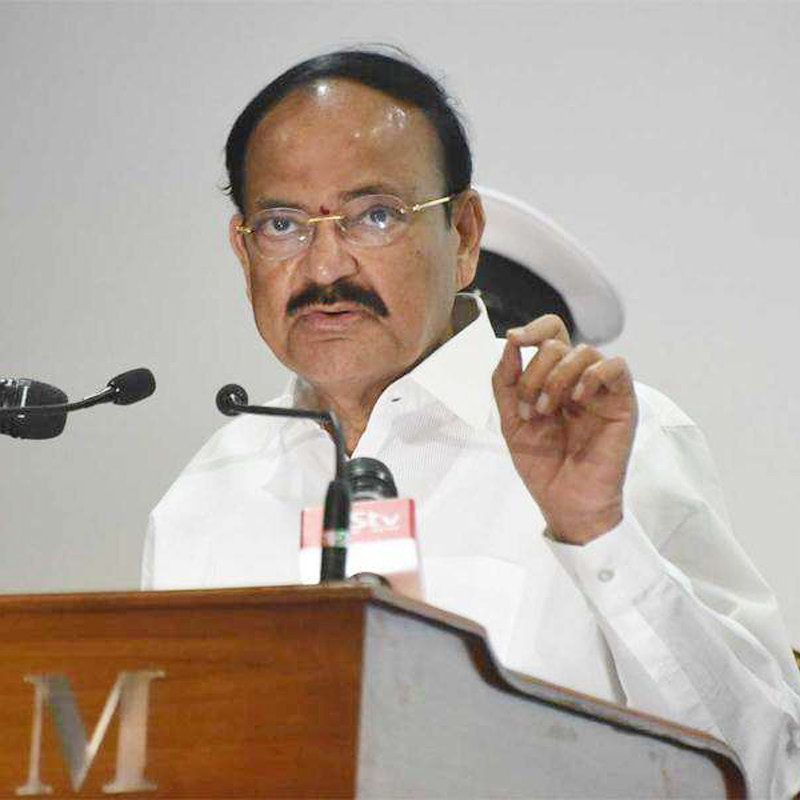
    NEW DELHI: Expressing concern over the future of journalism and the sanctity of news in the face of disruptive technological advances, vice president of India and Rajya Sabha chairman M Venkaiah Naidu urged all stakeholders to ensure credible journalism, since media is an effective tool of empowerment of people for informed public discourse.

    “While the democratisation and decentralisation that followed the rapid expansion of social media enabling freedom of expression are welcome, the world is witnessing the downside of it in the absence of self-regulation and protocols. In this era of saturated information and overabundance of news, the very news is getting devalued,” he pointed out. Naidu was speaking at the MV Kamat Memorial Endowment Lecture.  

    The vice president lamented the side effects of internet driven 'instant journalism' due to which the credibility of fact based journalism has taken a beating. He further noted that technology giants have emerged as algorithmic gatekeepers of information and the web has taken over as the main distributor of news. 

    In particular, he highlighted the financial implications for traditional media like the newspapers when their journalistic products are time and again leveraged by technology giants, who do not share the revenue back with them. 

    Some countries were taking measures to ensure revenue sharing by the social media behemoths like Google and Facebook to the print media. 

    "We also need to take a serious look at this problem and come out with effective guidelines and laws with a consensus to enable print media get their share from the huge revenues of the technology giants," Naidu emphasised. 

    Referring to the crisis situation being faced by the media and journalism for various reasons and uncertain future amidst disruptive changes, Naidu stressed that an ‘auto-correction’ is needed and in fact, inevitable for a better future. He suggested enabling guidelines and regulations for restoring order while maintaining he’s against any restrictive regulations.

    The media has always led the way in reporting and analysing the socio-political and economic transformation of the country. Naidu reminded mediapersons to be consistent in reporting such change instead of using different yardsticks for different periods. 

    He said, “I am not suggesting media to be like a chameleon. Media should use a standard set of reporting and analytical tools that capture the change without imposing respective positions. Media should not be seen by the public as discrediting the change that is happening since such a change is contrary to their long-held positions.” 

    Naidu further listed the concerns about media and journalism as issues relating to; freedom of press, censorship, flouting of norms of reporting, social responsibility of journalists, a decline in the values and ethics of journalism, yellow journalism, journalism of false crusades, reporting for profit, disinformation in the form of fake and paid news, disruptions caused by the internet and the future of media amidst these concerns and challenges.

    “Yellow journalism seeks to cloud the facts by resorting to eye-catching headlines and promotes distortion and misinformation. Journalism based on taking up false crusades as witnessed in the case of suicide of a film actor recently. Both are aimed at increasing readership and viewership and should be avoided,” he said.

    With the rapid rise and use of social media, wherein mobs can be gathered with a WhatsApp message and riots can be sparked off by a tweet, the former I&B minister stressed on the need to ensure sanity given the implications for social harmony, common good, peace, and national security. “Freedom of expression doesn’t mean unfettered outburst of anger and hate against each other that may lead to chaos,” Naidu remarked.

    He urged the media to be a part of the solution and not part of the problem since like every citizen, government and other stakeholders, media too, has a certain responsibility towards the nation.

  • What happens when Google Assistant eats a 5 Star?

    What happens when Google Assistant eats a 5 Star?

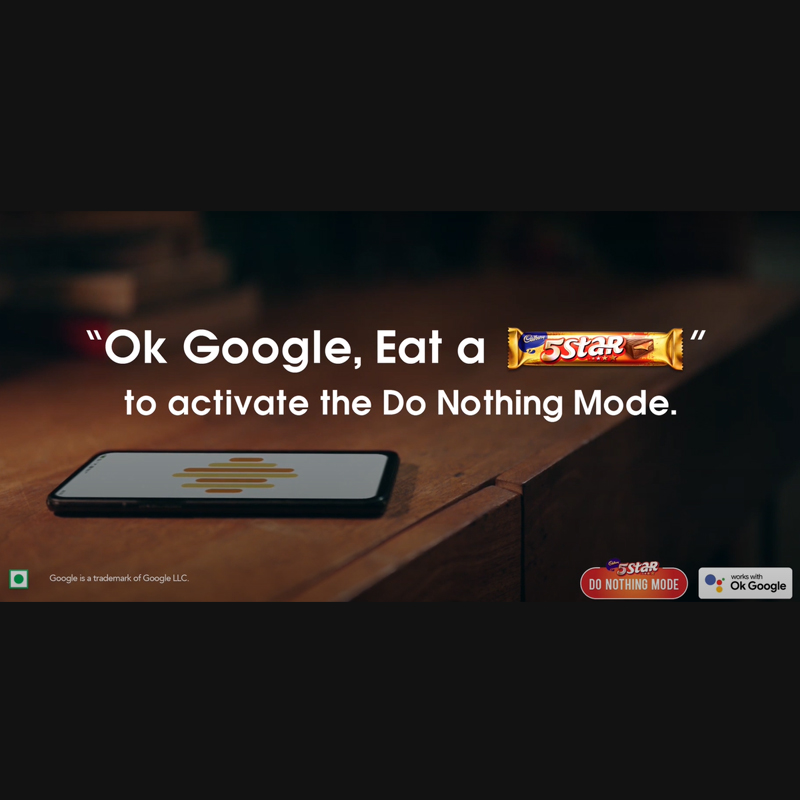
    NEW DELHI: Over the years, Cadbury 5 Star has come up with a few memorable campaigns that immediately lights the bulb of brand recall among consumers. From the humorous Ramesh-Suresh TVCs to the quirky Do Nothing films, the brand always thinks up something out of the box. Now, Five Star has partnered with Google Assistant for its latest campaign ‘Ok Google Eat a 5 Star’. It urges audiences to say eat a 5 Star on their Google Assistant, which then further activates the Do Nothing mode on the device.

    Once the mode is activated, every further command that you give to it such as open app, call a friend, find a number etc is reverted with a different message that actually asks you to stop, take a break and chill for a bit.

    The assistant reacts differently to different users. The idea was to come up with personalised answers for the audiences.

    The innovative campaign is executed by Wavemaker India, Ogilvy India and team Google, and is being amplified via social mediums.

    The brand has also released a film for it.

    5 Star first launched its Do Nothing campaign in early 2020. The film opened with an aged woman asking a young boy to pick up her walking stick that's falls on the road while she is sitting on a roadside bench. Lost in the 5 Star bar he’s eating, he responds with 'Ji Maaji' but does not move. As the old lady gets up to pick the stick herself, a grand piano falls at the very spot where she was sitting. The lady ends up thanking the boy for not doing anything.

    It launched another film in September where in an office scenario, three young executives are working late with their boss at night. The latter cracks jokes and the first two execs share a laugh, however, the third exec is preoccupied with his 5 Star bar and forgets to pretend to laugh at the jokes. In the end, he is relieved of his duties and gets to return home while others continue to work. 

  • Pure-play digital media owners to enjoy 61% of overall ad revenues in 2021: GroupM

    Pure-play digital media owners to enjoy 61% of overall ad revenues in 2021: GroupM

    NEW DELHI: Digital advertising will have a 66 per cent share globally by 2024, indicated the recently released global end-of-year forecast by Group M in the report – This Year Next Year. According to the report, digital advertising is expected to grow by 8.2 per cent during 2020, excluding US political activity. This follows nearly a decade of double-digit growth, including the last six years, when it was better than 20 per cent globally.

    “Digital advertising for pure-play media owners like Amazon, Facebook, Google, etc, should be 61 per cent of advertising in 2021. This share has doubled since 2015 when it was only 30.6 per cent,” the report read. 

    Digital extensions and related media, including advertising associated with traditional media owners’ streaming activities (primarily on connected environments), will grow 7.8 per cent this year and 23.2 per cent in 2021.

    Revising its June predictions for the global advertising industry, the GroupM report has also highlighted that the industry will end up declining by “only” 5.8 per cent on an underlying basis (excluding US political advertising), in 2020. The earlier predictions had marked the decline at 11.9 per cent. However, the overall outcome still remains grim as compared to 8.7 per cent growth it had witnessed in 2019. 

    Television advertising will decline by 15.1 per cent, before rebounding to grow 7.8 per cent in 2021. Outdoor advertising is estimated to decline by 31 per cent during 2020, including digital out-of-home media. Next year should see a partial rebound, with 18 per cent growth.

    “Beyond 2021, we expect outdoor advertising to grow by low- or mid-single digits and generally lose share of total advertising; however, we do expect larger brands generally to allocate more of their budgets to the medium,” it stated. 

    Cinema generated less than $3 billion during 2019 and likely fell more than 75 per cent during 2020 given the absence of major studio releases in most markets around the world.

    Print advertising, including newspapers and magazines, is expected to decline 5 per cent for the year, a significant acceleration over the high-single-digit declines of recent years. However, those single-digital declines should resume following an economic recovery.

    Audio advertising is likely to decline by 24 per cent during 2020 as advertisers disinvest, in part, because of the medium’s dependence on away-from-home activities, such as driving. Digital extensions, including streaming services from terrestrial stations and their digitally-oriented competitors and podcasts, still attract relatively small audiences of a few billion, but help make the broader medium more appealing to marketers.