Tag: Google Plus

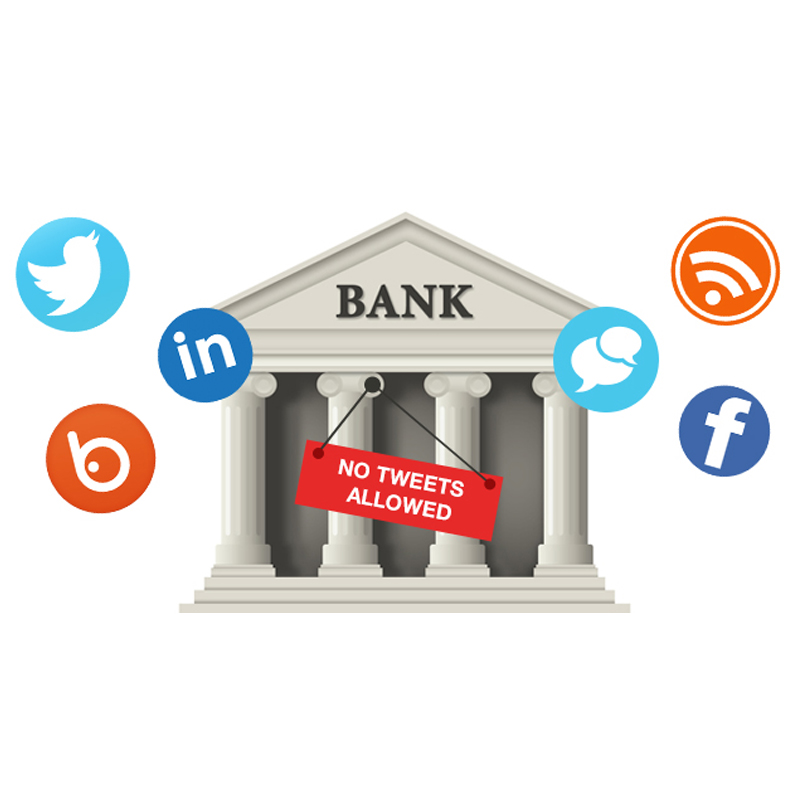
  • Banking on social media

    Banking on social media

    MUMBAI: Given the customer centric nature of banking, financial services and insurance (BFSI) business, it is evident that banks need to constantly engage with their customers. And what better platform than using the digital medium that gives them the scope to interact with their customers on a regular basis.

    It is no surprise to see the banking sector using popular outlets such as Facebook, Twitter, Pinterest, and YouTube to connect with their customers and attract new ones.
    Here‘s how two BFSI entities – SBI Life Insurance and HDFC Bank use social media

    “The digital platform is an opportunity for us. However, to unlock its potential to the maximum, it makes sense to view the possibilities holistically, rather than confining it to merely a function or limiting the scope to a single dimension. We use the digital space for customer acquisition, brand building, service and distribution,” says SBI Life Insurance vice president and head-brand corporate communication and cross sell Chandramohan Mehra.

    SBI Life Insurance which initially followed a strategy of having differentiated content on Facebook and Twitter, now with its increasing fan base is transforming it into a holistic channel. “We are now stretching the scope of social media presence to promote and facilitate online product purchase, customer education and employee and distributor recruitment,” informs Mehra.

    SBI Life is the only life insurance company to have a website in nine Indian languages. “This enables customers to understand our products and services in language they are most comfortable with, before taking a well-informed decision,” he adds. And the company is using its social media presence to draw in potential and existing customers to its own website to keep them informed about developments, products and offerings.

    The insurance company is involved in creating video content in the area of customer education and services, specifically for online visitors. “We have developed apps and games including a virtual life insurance crossword, contests on facebook, e-life insurance dictionary and tax calculator. With increasing penetration of smart phones, we have intensified our efforts on developing apps that will be relevant to both internal and external audiences,” reveals Mehra.

    The use of digital media has helped companies to collect sizable amount of data about the customer‘s needs. The challenge, however, is to make sense of it. “Based on web analytics, integrated with social customer relationship management, one of the possibilities that exists is reaching out to the relevant audience, with targeted message at the right place and time,” Mehra opines.

    SBI Life Insurance creates content for YouTube which caters to varied audiences. “While prospective customers are served through viral ads and educational videos, for existing customers we have service related videos. We engage our employees and potential agents through testimonial videos and the general public through content pertaining to awards and recent recognitions bagged by SBI Life,” informs Mehra. SBI Life Insurance, which currently has 626,272 likes (at the time of writing) on its Facebook page, feels the fans on Facebook are irrelevant if it doesn‘t engage them.

    Engagement score is one of the key metrics we closely follow and we have one of the best engagement scores in the BFSI,” says Mehra. The insurance company has launched many exciting online campaigns. “In light of the Uttarakhand tragic event, we have started speedy claim assistance on our Facebook page. This is one of our initiatives through which we are trying to reach out to our existing customers,” he informs.

    HDFC Bank also engages its customers across social media platforms including Facebook, Twitter, You Tube, Linkedin, Google Plus, Pinterest and Foursquare. “We use updates, offers, financial awareness tips and monthly contests and applications to interact with customers on regular basis,” says a senior official from HDFC Bank. HDFC Bank currently has over 1.5 million fans on Facebook and a total of over 15,000 followers on Twitter handles.

    HDFC Bank gives financial awareness tips and hosts monthly contests to interact with customers

    “Given the customer centric nature of business, we have to ensure that we are present where our customers are and they are present on social media, voicing their views, opinions and engaging with others,” he adds. The bank posts a variety of content on various digital platforms including financial trivia, quizzes, opinion polls, offers on credit and debit cards, bank news, information about their products and services and comments around personal finance, etc.

    “Impressions are generated when viewers see and react to these posts. Updates are created specific to the kind of platform being used for communication,” reveals the senior official.

    “We use digital media to monitor customer feedback, address customer queries/complaints, communicate our products and services and derive insights on them from customers, educate customers, increase financial awareness and also do location based targeting of offers,” he adds.

    HDFC Bank, through its various social networking platforms tracks, identifies and responds to various issues highlighted by customers online. “We are one of the few banks in India which allows users to post on our Facebook page and have been recognised as the most responsive brand on Facebook in India,” he informs.

    The bank has tailored its digital content to help customers learn about their products (including offers and deals), knowledge on managing their finances and gain insights on the economy and finance.

    The digital bug has crawled into the banking sector. With the changing financial paradigm, banks have found an easy way to stay connected to its customers.

  • 41.5% spend around 1-5% of their marketing budget on social media: E&Y

    41.5% spend around 1-5% of their marketing budget on social media: E&Y

    MUMBAI: 41.5 per cent spend around 1 per cent to 5 per cent of their marketing budget on social media, as per the Ernst & Young‘s new report titled ‘Social Media Marketing – India Trends Study 2013‘. Most social media budgets are below Rs 10 million.

    The findings of the report are based on a survey of 48 social media-savvy organisations in India as well as secondary research. The key questions that the study attempts to answer include what is the business objective for using social media, what are the commonly used strategies and measures, the average social media budget and its future prospects.

    Community building and highlighting company news are the top reasons for social media use by organisations in India. They are also increasingly using social media to generate leads, provide customer service, conduct research, get customer feedback, understand customer behavior and do competitive benchmarking, according to the report.

    The report further states, Facebook is the most popular social media platform in India with more than 62 million users, and is the favorite playground for social media savvy organisations to banter in everyday conversations and engage in promotions and contests for its fans. Additionally, almost half of the organisations surveyed are already using emerging platforms such as Pinterest, Google Plus, and Foursquare.

    “Social media is fast emerging as a means of partnership between organisations and their customers, leading to continuous engagement and deeper loyalty. Many Indian organisations are already using social media in an advanced manner, even though there are ample growth opportunities. The future is looking bright with increase in scale and sophistication; however, social media savvy organisations need to analyse their maturity level and explore new opportunities. They can move beyond marketing and see which other departments can benefit from using social media. Clarity of purpose and engaging universally accepted approaches in calculating ROI from social media marketing will help organisations make bigger investments in this area,” Ernst & Young advisory director and leader – customer practice Dinesh Mishra opines.

    More than half of the social media-savvy organisations in India, who participated in the survey, post two to three updates on their Facebook pages a day. A quarter of the organisations surveyed said that they post one update per day on their Facebook pages. About one-third said that they post more than three tweets a day on Twitter, while 28.9 per cent said they tweet two to three times a day. On the speed of response – one-fourth of the surveyed organisations respond to fan queries on Facebook within an average of 30 minutes of the query being posted, which indicates a robust monitoring and response structure in place. On Twitter, 28 per cent respond to their fans and followers within 30 minutes. However, 14 per cent of the organisations still take 13-24 hours to respond.

    With social media becoming a key component of the marketing strategy for companies, the need to appease online fans comes as a natural extension. 64.6 per cent of the surveyed organisations said they have organised exclusive deals for online fans and 20.8 per cent said they are likely to organise such deals in the future. 83 per cent of the surveyed said that they have used social media advertisements majorly to promote a contest/campaign or for brand awareness and 88.6 per cent said they find social media advertisements beneficial in achieving their objectives.

    Almost all of social media efforts in India are managed by in-house teams: 76.7 per cent of the surveyed expressed that social media is handled by their marketing department with the rest being managed by a cross-functional team or by the public relations and communications team. Other than using it for marketing activities, 34.6 per cent said they use social media for thought leadership while 26.9 per cent use it to promote corporate social responsibility. A majority (70.2 per cent) said they have an in-house social media expert in middle management.

    Knowing how the social media governance situation looks like within an organisation comes with many benefits such as recognising strategic opportunities, enhancing competitive advantage, conducting efficient recruitment, cost reduction, generating revenue, creating valued relationships and controlling strategic, operational, reputational and legal risks.

    “Social media-savvy organisations are very optimistic about the role of social media in their organisations. Organisations have realised that social media generates great insights and helps engaging with customers on a continuous basis, and in some cases also generates sales and leads. Social media has helped organisations to create their own communities of fans, customers and prospects. The huge growth and demand of internet connected devices in India is only going to further strengthen the influence and power of social media in customer engagement, and organisations may well look at meeting their strategic goals and business needs through this channel in future,” Mishra concluded.

  • Saavn launches Impact advertising platform in India

    Saavn launches Impact advertising platform in India

    MUMBAI: Indian music service provider South Asian Audio Video Network (Saavn) has launched its new advertisement platform named Impact. This platform will enable brands to identify, connect and engage with its 10.5 million users in India and across the globe.

    Impact’s approach to digital and mobile advertising aims at giving brands 100 per cent share-of-voice. Using Impact, brands get exclusive access to all advertisement units on the Saavn web site and mobile apps for a set time period. These include Custom Skin, Web Display, Web Audio, Mobile Spotlight, Mobile Display, and Mobile Audio. The impact model allows brands to build positive associations with their products and services through music. The model has proven to create strong brand awareness, shape brand preferences and increase purchase consideration through undivided mindshare of listeners of Saavn across platforms.

    Saavn co-founder and CEO Vinodh Bhat said, “In India, we all know that music plays an integral and meaningful part in every individual’s life. IMPACT is a powerful solution that enables the advertisers to build an emotional connection with their target audience during a passionate, social and engaging musical experience. The Saavn IMPACT model is based around engagement, curation and social sharing rather than the archaic click-through. Brands are able to measure ROI in meaningful ways, such as increases in perception, awareness, recall and purchase intent. The by-product of our strong focus on the consumer experience is helping brands grow their businesses.”
     
    Some brands utilizing Saavn to reach million of engaged users in India include Samsung, Lay’s, Pantene, Pepsi, Nokia, Vodafone, Airtel, Hyundai, Domino’s Pizza, 7Up, Nielsen, MakeMyTrip, Max NewYork Life, Google Plus, Nokia, Vanish, Groupon, Intel and several others.

    In addition to its popular web, iOS, Android and J2ME apps, Saavn is currently developing its popular music product for launch on Symbian, BlackBerry and Windows Mobile platforms.