Tag: Google Play.

  • Bite-sized and booming: how FareFlow’s microdramas are conquering the world

    Bite-sized and booming: how FareFlow’s microdramas are conquering the world

    MUMBAI: Three weeks. That’s all it took for FlareFlow to vault from newcomer to number one on America’s free entertainment app charts, on both iOS and Android. The microdrama platform—brief, serialised stories designed for mobile screens—has cracked a formula that’s reshaping how millions consume entertainment. And it’s not stopping at American shores.

    Col group’s international platform hit a new single-day revenue record just three weeks after breaking into America’s top five on Google Play. The surge signals something bigger than a viral moment: audiences worldwide are abandoning hourlong episodes for stories that fit between tube stops.

    According to Sensor Tower data from 22 August to 20 September 2025, FlareFlow now ranks third in Germany, fourth in Australia and fifth in Canada among short-drama and entertainment apps. The momentum reflects a fundamental shift in viewing patterns. Where audiences once defaulted to traditional series or films, they’re increasingly choosing bite-sized narratives that slot seamlessly into daily routines.

    China offers a glimpse of what’s coming. Microdrama revenues there have already overtaken the traditional box office, according to Media Partners Asia, with Col’s intellectual property portfolio driving much of that growth. FlareFlow is now exporting this model globally, adapting genres to local tastes: revenge plots, flash marriages and family conflict dominate in Southeast Asia, whilst young adult fiction, werewolves and CEO-driven dramas resonate in Western markets.

    “This is not a passing trend in China or America—it’s a global shift in storytelling,” said Col group chief executive Ray Tong. “People have consumed vertical content since Instagram Stories and TikTok, but what’s evolving is the storytelling itself. FlareFlow is shaping that evolution for audiences everywhere.”

    To sustain this growth, Col is investing heavily in infrastructure and partnerships. The company has established more than 30 international production teams across Los Angeles, New York, Canada, London and southeast Asia, supported by dual post-production centres in Beijing and Los Angeles. By year-end 2025, it plans to open the industry’s first purpose-built microdrama production studio in Hengqin, Greater Bay Area—a 10,000-square-metre facility with 30 soundstages tailored specifically for short-form content.

    With a pipeline of 280 dramas, FlareFlow is scaling aggressively. Since launching in April 2025, the platform has surpassed 15 million downloads across 177 regions, with monthly user spending increasing more than 500 per cent.

    “What excites us most is that it isn’t just about FlareFlow’s growth—it’s about investing in an ecosystem,” added at Col group general manager for international press and southeast Asia Timothy Oh. “Our investments worldwide are helping the industry adapt and thrive as microdramas become part of everyday viewing.”
    The question now isn’t whether microdramas will succeed, but how quickly they’ll reshape the global entertainment landscape.

  • Puntoon Kids levels up with safe and fun learning-through-play gaming app

    Puntoon Kids levels up with safe and fun learning-through-play gaming app

    MUMBAI: Puntoon Kids, one of India’s fastest-growing fun-learning platforms with over 9 million subscribers, has expanded beyond Youtube with the launch of its first gaming app and the numbers are already impressive. In just one month, the Puntoon Kids games app has crossed 1,05,000 organic downloads on the android play store.

    Built around the brand’s flagship characters Gattu and Chinki, the app is designed for children aged three and above, offering a mix of storytelling, puzzles, and interactive play that also sharpens logical thinking, memory, hand–eye coordination, creativity, and problem-solving.

    Safety and credibility remain at the core. The app has earned Google Play’s teacher approved badge, sits within a select pool of child-safe apps vetted by educators, and is fully COPPA compliant with multiple levels of authentication.

    Puntoon Kids, ceo and founder, Sourabh Kumar said, “At Puntoon Kids, we believe fun and learning are inseparable. Guided by our 3C philosophy: Culture, Curriculum and Curiosity, the app ensures children not only enjoy themselves but also develop important skills and values through play.”

    Priced at Rs 699 a year (Rs 58 a month), the subscription offers premium access to exclusive games alongside free content for all users.

    The launch marks Puntoon Kids’ evolution from a Youtube-led storytelling platform into a broader edutainment ecosystem. For brands, it also opens up meaningful collaboration opportunities in a safe, parent-trusted environment.

  • APOS 2025: Sushant Sreeram and JioHotstar’s masterclass on reinvention

    APOS 2025: Sushant Sreeram and JioHotstar’s masterclass on reinvention

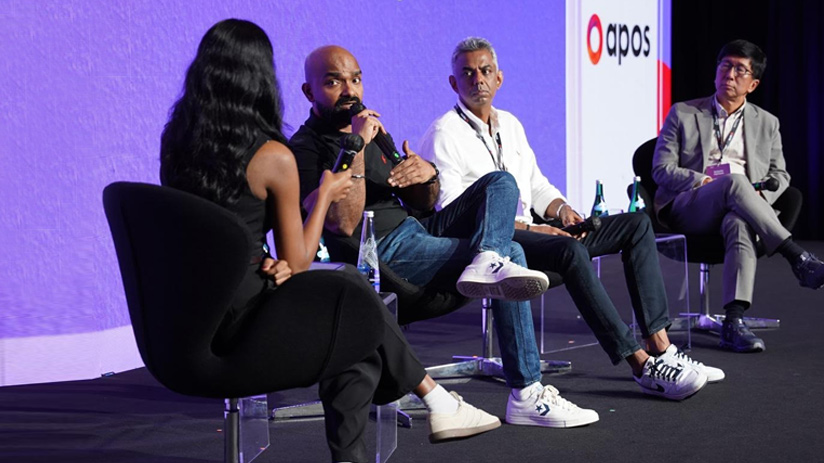
    BALI: JioStar’s Sushant Sreeram came out swinging at APOS 2025, tearing up the traditional streaming script with a bold case for fluid monetisation and empathy-first design. Speaking on a high-voltage panel alongside Aditya Swamy of Google Play and Sutanto Hartono of Emtek, the SVOD chief and CMO laid out JioHotstar’s roadmap for a new era of video engagement.

    “We’re not locked into SVOD or AVOD silos,” Sreeram said. “Serving over 500 million monthly users and nearly 300 million subscribers demands a far more flexible approach to how people watch — and pay.”

    His argument was clear: India’s economic layers defy cookie-cutter pricing. “The top 10 per cent of Indian households have parity with the UK or Germany on a PPP basis. But the next 10 per cent? A whole different world. That’s where true innovation begins.”

    Sreeram credited much of JioHotstar’s traction to product-led thinking, citing the latest IPL season as a masterclass in fan experience. “Viewership surged 40 per cent on opening weekend in year 18. That’s not fatigue — that’s reinvention,” he said, referencing multi-cam feeds, VR features, and deep localisation as core drivers.

    AI and machine learning are now hardwired into the platform. “From predictive personalisation to real-time language adaptation, we’re not chasing attention — we’re courting emotion,” he added.

    His parting shot? “You don’t build for India — you build from India. That means designing with agility, pricing with precision, and listening like your survival depends on it. Because it does.”

  • KidzByte launches India’s first app-based kids news channel

    KidzByte launches India’s first app-based kids news channel

    MUMBAI: There is no dearth of education-related apps. Now, here comes one app which gives an opportunity to schoolchildren to become news anchors.

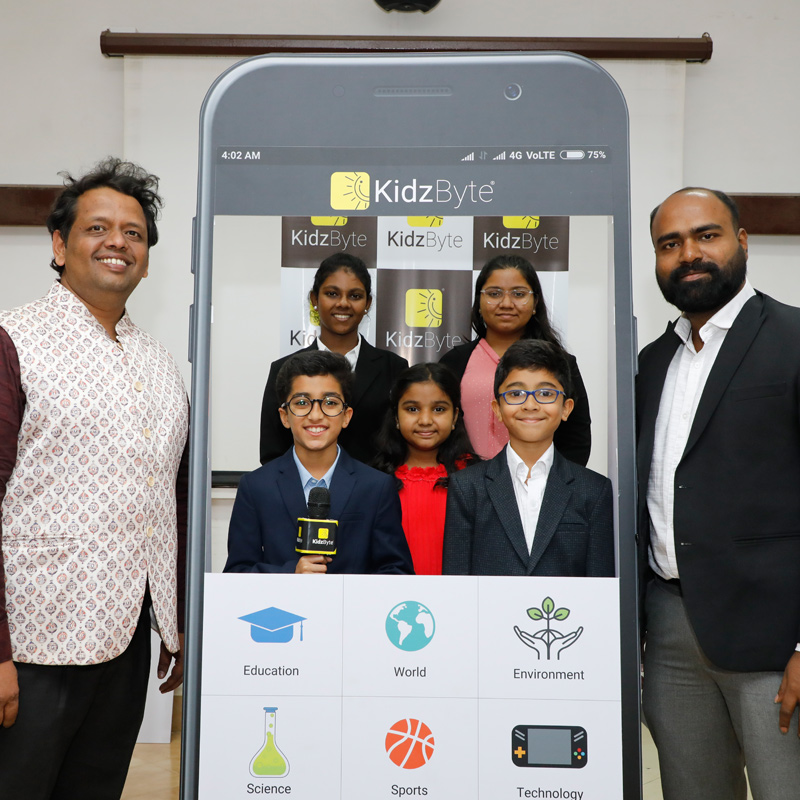
    KidzByte TV, which has its tagline as 'By kids', enables children to read out news on varied topics.

    KidzByte has now rolled out the new video section, besides reading and read-to-me categories. “The aim is to lure the school students between 8-17 years old to get a habit of reading and growing with the general knowledge-based news”, says the founder of the KidzByte MediaTech founder Chetan D’Souza.

    D’Souza, a marketing professional, launched KidzByte, a news, knowledge, and fun mobile application, in 2018 along with Swagat Salunke. The application covers 17 different topics such as India and world, science and discovery, earth and environment, sports and games among others.

    The application is already on Google play store with over 50,000 downloads and 4.2 stars rating. The platform has onboard five students from Mumbai schools between 9-16 age groups to be the news presenter of the channel. It also has at least 100 quality contributors, whose articles, paintings and poems get featured on the platform.

    “KidzByte is the first Indian app that takes care of kids’ non-academic needs. It recently unveiled its new avatar and added multiple offerings to its core app to provide kids with a dynamic user experience,” says D’Souza.

    The selection of these five news anchors was done by contest; the platform ran across premium schools in tier-one cities. The five news anchors are Vivaan Goel (11), Shaunak Kanavia (9), Dania Mascarenhas (9), Joanne Joseph (14) and Shawna Mascarenhas (15).

    Through seed funding, the founders have successfully raised 2 crores in 2019 from the Goyal group of companies managing director Pranay Goyal. “The two major reasons I invested in this project: The initiative is unique as it doesn’t have much clutter and the belief in Chetan and his passion for the application as he has a lot of potential for getting things done to final results", says Goyal.

    Goyal, commenting on the return of investment, says: “More than business, the moral responsibility is important, however, more and more viewers are being attracted to the platform. Moreover, the targets are being achieved before the timeline as model progress believe returns will come back earlier than what was projected by the KidzByte team.”

    “There are only three stakeholders in the KidzByte. The founders being majority stakeholder, Goyal holds minority shareholder position in the company,” says D’Souza.

    The platform has also roped in sponsors such as FMCG product Unibic Cookies, a stationery product BioQ  and the healthy biscuit product the Growing Giraffe among others. The KidzByte CEO says, “We are against showing the advertisement between the news pieces, however, there will be branded content and brand integration of the sponsors during the news broadcast.”

    In terms of revenue, the platform will have a subscription-based model with a charge of Rs 1200/year with 8-10 articles and news broadcast being published on the platform. Moreover, to lure more kids and parents on the platform it has also kept a non-subscription module with four stories per day for kids.

    The platform plans to market itself through word of mouth method by reaching to the kids and their parents who are already benefitted by this application. It also mulls to do the on-ground initiative to hold seminars in schools and institutions with parents and teachers to make them aware of the app.

    On the future goal of the platform, D’Soua says, “Aim to turn the channel into an over-the-top OTT platform and to get it hosted on its server soon. We also wish to make kids aware of fake news concepts, teach them about online safety and cyberbullying, and eventually give them career guidance”.

    “Our next immediate goal is to tap the 25,000 ICSE and CBSE schools located in Mumbai, which is a total of at least 3 crore students within the age group of 8-17 years. However, the larger goal is to reach every kid in the country irrespective of the background and school”, concludes the D’Souza.

  • Bumble’s “Private Detector” goes live to protect users from unsolicited nude photos

    Bumble’s “Private Detector” goes live to protect users from unsolicited nude photos

    MUMBAI: The safety of people on social media and digital connection platforms is a global issue and top of mind in every household. Bullying and harassment online take many forms and the sending of unsolicited nude images is one of the most pervasive and harmful.

    Bumble was launched as a direct response to this kind of abusive behaviour and the company has spent the past five years of its growth developing features to keep its community safe and secure. The latest of those features to go live is “Private Detector”, which is already providing a layer of protection for those who find themselves on the receiving end of unsolicited nude images.

    The “Private Detector” functionality is simple. Once a nude image is shared within a chat, the “Private Detector” automatically blurs that image and alerts the user that they have been sent something potentially inappropriate. From there, the user can decide whether to view or block the image, and if compelled, the user can easily report the image to Bumble.

    “We were always cognizant that the sending of unsolicited nude images was a critical problem, especially for young women. Our survey data confirmed that 1 in 3 women had received such an image in their lives, which is an alarming insight,” said Whitney Wolfe Herd, Bumble Founder and CEO. “The ‘Private Detector’ was designed to deter and prevent such behavior in the same manner that our other safety features are designed to combat issues like abuse, catfishing, and ghosting, and you can expect us to continue to invest heavily in technologies that champion user safety above all else.”

    While the number of nude images sent on Bumble is minimal, early data indicates that “Private Detector” is a feature that users appreciate. Of the nude images captured by “Private Detector,” just over 15 percent of nude images sent to women and just over 5 percent of nude images sent to men have been reported, resulting in the users responsible for the sending of those unsolicited images being banned from Bumble.

    “Private Detector” joins a suite of safety features that Bumble has deployed over the years, including a ban on guns and other weapons of violence in profile pictures, a ban on hate speech in profiles, the establishment of a global moderation team of thousands to handle user needs, the ability for users to call and video chat within Bumble without sharing phone numbers and personal data, and photo verification to eliminate catfishing.

    In a parallel effort, Wolfe Herd spent the last year working with Texas state lawmakers to develop a bill that makes the sharing of unsolicited nude photos a punishable crime. Recently, the bill unanimously passed the Committee on Criminal Jurisprudence and was passed into law by the Texas State Governor on September 1, 2019.

    “Safety online is a global issue of critical importance and it falls upon all of us in the social media and social networking industries to lead by example and to refuse to tolerate inappropriate behavior on our platforms. The ‘Private Detector’ and our support of this bill are just two of the many ways we’re demonstrating our commitment to making the internet safer,” added Wolfe Herd.

    Bumble is a free app and is available to download in the App Store and Google Play. Bumble has over 72 million users in 150 countries and connects people across friendship, dating and professional networking.

  • New Stealthy ad clicking tactics found in popular apps on Google Play

    New Stealthy ad clicking tactics found in popular apps on Google Play

    MUMBAI: Two apps with over 1.5 million downloads use new method to stealthily click ads on users’ devices. Apps present on Play Store for almost a year before being discovered.

    Norton LifeLock recently spotted a new tactic being used by apps on the Google Play Store to stealthily perform ad-clicking on users’ devices. A developer known as Idea Master has published two popular apps on the Play Store in the past year, with a collective download count of approximately 1.5 million. Norton LifeLock, a Symantec brand has informed Google of the observed behavior and the apps have now been removed from the Play Store.

    The two apps, a notepad app (Idea Note: OCR Text Scanner, GTD, Color Notes) and a fitness app (Beauty Fitness: daily workout, best HIIT coach), are packed using legitimate packers originally developed to protect the intellectual property of Android applications. Android packers can change the entire structure and flow of an Android Package Kit (APK) file, which complicates things for security researchers who want to decipher the APK’s behavior. This also explains the developer’s ability to remain on the Play Store performing malicious acts under the radar for nearly a year before being detected.

    The attack starts with a notification in the notification drawer on the user’s device.

    Upon clicking on the notification, Toast is used to display a hidden view containing advertisements (Toast messages are commonly used to display unobtrusive notifications that appear on the current activity UI screen, such as when the volume is adjusted).

    Unlike hidden views where the view is set to transparent in order to hide content from the user, this threat actor deploys a much more cunning way of running the advertisements while keeping them hidden from the user. This is done by first creating a Canvas outside the device’s viewable display such that, technically, the advertisements are drawn on the device. By using the translate() and dispatchDraw() methods (see Figure 4) the position of the drawings are beyond the device’s viewable screen area and the user is unable to see the advertisements on their device. Using this tactic allows advertisements, and any other potentially malicious content, to be displayed freely. The app can then initiate an automated ad-clicking process that produces ad revenue.

    As threat actors generate ghost clicks and ad revenue, impacted devices will suffer from drained batteries, slowed performance, and a potential increase in mobile data usage due to frequent visits to advertisement websites.

    These apps went unnoticed on the Google Play Store for nearly a year, affecting roughly 1.5 million users before we uncovered their sneaky behavior. The apps’ use of Android packers and the unusual method of hiding advertisements adds a level of complexity for security researchers.

    A special thank you to Tommy Dong for his dedicated contribution in analyzing this sample.

  • Hotstar adds offline watching feature for premium content

    Hotstar adds offline watching feature for premium content

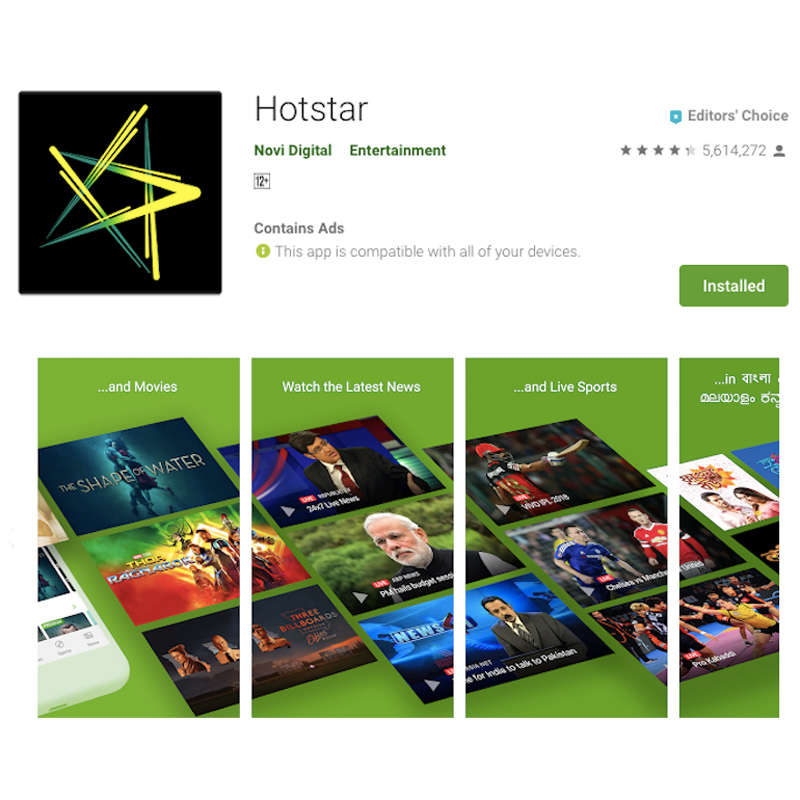
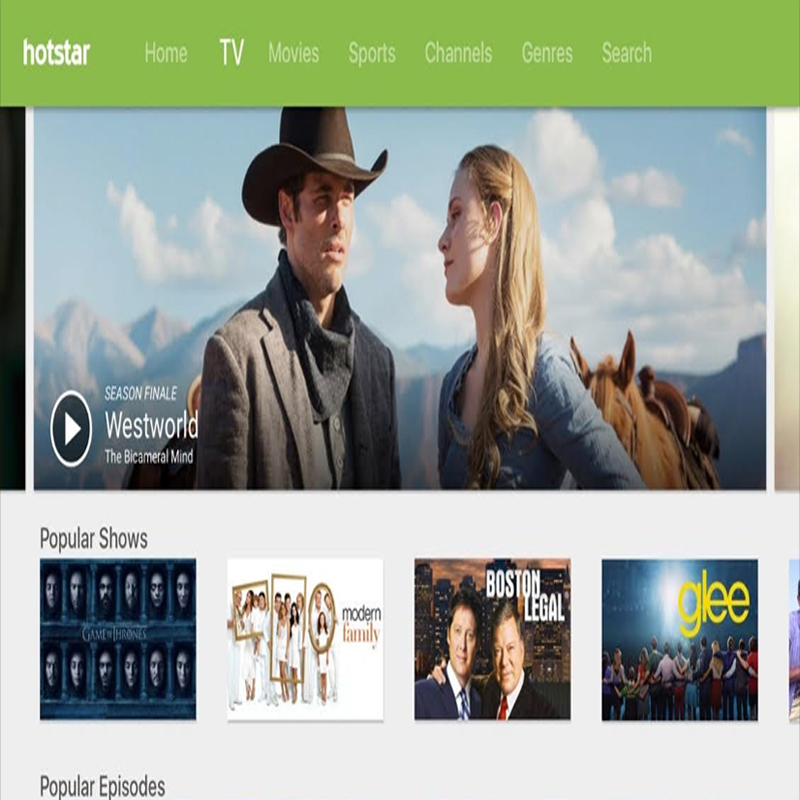
    MUMBAI: Hotstar, the leading streaming platform of India has now made the option of offline viewing available for its premium content. While the in-app download feature on rival platforms like Amazon, Netflix has been well received, Star India’s digital arm restricted the download feature to only non-premium and old content.

    The facility is available now for both Android and iOS users. It has also enabled support for watching videos in 18:9 aspect ratio, which most of the modern full-screen phones offer. However, it is not clear if the support is also available for premium users.

    “Now you can download and watch offline most of your favourite premium shows like Game of Thrones, Friends, Big Bang Theory and many more,” Hotstar Android app changelog noted on Google Play.

    Hotstar users will have the option to choose between low, medium, high and full-HD quality to download. However, downloaded premium content on the app will expire within 7 days of the download or 48 hours since the user starts watching it.

    Among the number of OTT platforms in India, Hotstar is way ahead in the race. Even streaming giant Netflix admitted that YouTube and Hotstar are till now leaders in the Indian market.

  • Netflix Q3 app revenue up 90% y-o-y

    Netflix Q3 app revenue up 90% y-o-y

    MUMBAI: Netflix's financials show it had a strong Q3 on mobile. The app dramatically observed an upswing by generating gross $243.7 million which represented a 90 per cent year-on-year increase as compared to Q3 2017. The popular streaming app has surpassed an estimated $1.4 billion in total gross revenue to date worldwide on the App Store and Google Play.

    According to the Sensor Tower, during Q3, Netflix’s app gained the most new users from the US, Brazil and India accounted for 19, 13, and 10 per cent of all downloads, respectively. Each of these regions saw growth in installs compared to Q2, but none as large as India, which experienced an increase in downloads of more than 100 per cent.

    Overall global consumer spending on the App Store and Google Play totalled $18.2 billion during the third quarter. Apple’s App store widened its lead over Google Play, as the App Store earned $12 billion during Q3 — nearly 93 per cent more than Google Play, and representing the biggest revenue disparity since at least 2014 between the two platforms.

    According to reports, Netflix also saw solid growth in downloads over the course of Q3, adding more than 50 million installs. This estimate marks a 16 per cent increase in downloads compared to Q2, and represents an even larger year-over-year growth of 36 per cent. The more than 50 million new users helped push Netflix past 600 million worldwide installs to date. In terms of number of downloads, Facebook again topped the global chart with four of the top five apps for Q3 — WhatsApp at number one, Messenger at number two, Facebook at number three and Instagram at number five. Bytedance’s social-video app TikTok, which the company merged with Musical.ly in August, took the number fourth spot worldwide, marking 15 per cent growth quarter-over-quarter and 440 per cent year-over-year.

    Downloads of mobile games grew 2.2 per cent year-over-year last quarter to total 9.5 billion on the two platforms. Google Play saw 76 per cent of those, with 7.2 billion download in the period, according to Sensor Tower. 

  • Mobile content: Alibaba’s UCWeb to invest Rs 2 billion in India & Indonesia

    Mobile content: Alibaba’s UCWeb to invest Rs 2 billion in India & Indonesia

    MUMBAI: UCWeb, part of Alibaba Mobile Business Group, has announced its plans to invest Rs 2 billion over the next two years in India and Indonesia market. The funds will primarily be used to tap the huge potential of user-generated content in India via its news distribution and content platform, UC News.

    UC News, a major product of UCWeb Inc. is a big-data powered content distributor, serving as a one-stop source of trending and curated news content covering all popular categories that Indian users can consume on the go, with featured channels including news, cricket, technology, entertainment, movies, lifestyle, health, humor, etc. within five months of its launch, UC News became the top app under News Category on Google Play.

    Alibaba mobile business group president (overseas business) Jack Huang said, “As India enters the age of increased content consumption through its mobile devices, there is a huge potential for the growth of user-generated content in India similar to what has happened in China. There are more than 600 mn mobile users and 20 mn online content creators in China whereas India currently has 371 mn mobile users with miniscule contribution from self-publishing outlining a huge demand-supply gap. UCWeb has adopted a strategy of becoming a leading content distribution platform. As such, our flagship product UC Browser has also transformed itself from being the No.1 mobile browser in India, according to StatCounter.India is the most critical overseas market for UCWeb and this investment will help bring in the global mobile internet to an era of ‘GUF’ (Google, UCWeb, and Facebook).”

    Earlier this month, UC News announced a detailed monetary compensation plan in a bid to offer unique content on UC News and further consolidate its position as a content distribution platform. UC News will also help contributors gain traffic, revenue and followers with the help of Big Data technology and smart content distribution system.

    Alibaba mobile business group GM (overseas business) Kenny Ye said, “With growth in consumption of Information Feeds, non-conventional News Feeds – including blog posts, independent write ups, imagery feeds, video logs, short video content and more have become a huge hit. In the near future, we believe that more professionally trained content contributors will establish themselves as “We-Media”, a collective term for those who turn themselves into independent media brands. We also estimate that more and more digital content consumers will turn themselves into “prosumers” – consumers who also contribute to the content production, which will also contribute to the increase of digital content creators in India.”

    “Our aim is to make the UC We-media Program the No. 1 platform for content consumption, creation and services in India and Indonesia. We plan to add more than 30,000 self-publishers, bloggers and key opinion leaders to our platform in 2017, generating over 10,000 articles for UC News, every single day,” Jack added.

    “The We-media Platform supports with “Money, Service, and Traffic”, providing a well-operated mechanism to self-publishers, bloggers and KOLs in creating income and increasing their popularity. Our platform is to add value to every word they write with not just massive viewership, but also monetary profits, getting them “paid by millions”. For beginners and niche content writers, our program offers methodology for a deeper engagement, helping them draw advertisers and readers, Kenny said.

    UCWeb will add resources to aid quality enhancement of vertical content and news in regional and minority languages. Content in entertainment, sports and technology category will remain the biggest focus areas for 2017. In addition, UCWeb will also offer column operation service to quality self-publishers, bloggers and KOLs.

    UC News, available in three languages (Hindi, Indonesian and English), integrates trending content from social media and partners with traditional media, self-publishers and key opinion leaders for original content. According to a report released earlier this month by UC News analyzing key content preferences of Indian consumers on the mobile, over 87 per cent of UC News users are below-30 age bracket with almost 75 per cent users below 25 years of age. Men continue to be the dominant user group of UC News by almost six times versus women. Humor and Offbeat content in We-media Program are most popular amongst the audience reading in Hindi while Entertainment and Lifestyle scored with users reading in English. Total time spent consuming content on the mobile has seen a sharp uptick of 230 per cent in Q4 versus Q3. The total page views on UC News also rose over 290 per cent with content in Hindi seeing maximum traction. Indian users read in Hindi almost five times more than English on the mobile in 2016.

  • Mobile content: Alibaba’s UCWeb to invest Rs 2 billion in India & Indonesia

    Mobile content: Alibaba’s UCWeb to invest Rs 2 billion in India & Indonesia

    MUMBAI: UCWeb, part of Alibaba Mobile Business Group, has announced its plans to invest Rs 2 billion over the next two years in India and Indonesia market. The funds will primarily be used to tap the huge potential of user-generated content in India via its news distribution and content platform, UC News.

    UC News, a major product of UCWeb Inc. is a big-data powered content distributor, serving as a one-stop source of trending and curated news content covering all popular categories that Indian users can consume on the go, with featured channels including news, cricket, technology, entertainment, movies, lifestyle, health, humor, etc. within five months of its launch, UC News became the top app under News Category on Google Play.

    Alibaba mobile business group president (overseas business) Jack Huang said, “As India enters the age of increased content consumption through its mobile devices, there is a huge potential for the growth of user-generated content in India similar to what has happened in China. There are more than 600 mn mobile users and 20 mn online content creators in China whereas India currently has 371 mn mobile users with miniscule contribution from self-publishing outlining a huge demand-supply gap. UCWeb has adopted a strategy of becoming a leading content distribution platform. As such, our flagship product UC Browser has also transformed itself from being the No.1 mobile browser in India, according to StatCounter.India is the most critical overseas market for UCWeb and this investment will help bring in the global mobile internet to an era of ‘GUF’ (Google, UCWeb, and Facebook).”

    Earlier this month, UC News announced a detailed monetary compensation plan in a bid to offer unique content on UC News and further consolidate its position as a content distribution platform. UC News will also help contributors gain traffic, revenue and followers with the help of Big Data technology and smart content distribution system.

    Alibaba mobile business group GM (overseas business) Kenny Ye said, “With growth in consumption of Information Feeds, non-conventional News Feeds – including blog posts, independent write ups, imagery feeds, video logs, short video content and more have become a huge hit. In the near future, we believe that more professionally trained content contributors will establish themselves as “We-Media”, a collective term for those who turn themselves into independent media brands. We also estimate that more and more digital content consumers will turn themselves into “prosumers” – consumers who also contribute to the content production, which will also contribute to the increase of digital content creators in India.”

    “Our aim is to make the UC We-media Program the No. 1 platform for content consumption, creation and services in India and Indonesia. We plan to add more than 30,000 self-publishers, bloggers and key opinion leaders to our platform in 2017, generating over 10,000 articles for UC News, every single day,” Jack added.

    “The We-media Platform supports with “Money, Service, and Traffic”, providing a well-operated mechanism to self-publishers, bloggers and KOLs in creating income and increasing their popularity. Our platform is to add value to every word they write with not just massive viewership, but also monetary profits, getting them “paid by millions”. For beginners and niche content writers, our program offers methodology for a deeper engagement, helping them draw advertisers and readers, Kenny said.

    UCWeb will add resources to aid quality enhancement of vertical content and news in regional and minority languages. Content in entertainment, sports and technology category will remain the biggest focus areas for 2017. In addition, UCWeb will also offer column operation service to quality self-publishers, bloggers and KOLs.

    UC News, available in three languages (Hindi, Indonesian and English), integrates trending content from social media and partners with traditional media, self-publishers and key opinion leaders for original content. According to a report released earlier this month by UC News analyzing key content preferences of Indian consumers on the mobile, over 87 per cent of UC News users are below-30 age bracket with almost 75 per cent users below 25 years of age. Men continue to be the dominant user group of UC News by almost six times versus women. Humor and Offbeat content in We-media Program are most popular amongst the audience reading in Hindi while Entertainment and Lifestyle scored with users reading in English. Total time spent consuming content on the mobile has seen a sharp uptick of 230 per cent in Q4 versus Q3. The total page views on UC News also rose over 290 per cent with content in Hindi seeing maximum traction. Indian users read in Hindi almost five times more than English on the mobile in 2016.