Tag: Google Cloud

  • Tech Mahindra Chess League teams up with Google Cloud for Season 3

    Tech Mahindra Chess League teams up with Google Cloud for Season 3

    MUMBAI: The Tech Mahindra Global Chess League (GCL), in partnership with FIDE, has joined hands with Google Cloud to serve up real-time player performance analysis for Season 3, turning the ancient game into a modern spectator sport.

    Scheduled for 13–24 December in India, the world’s first franchise-based chess league will now fuse its heritage of strategy with cutting-edge technology. Using Google Cloud’s advanced infrastructure and Tech Mahindra’s AI and ML dashboards, fans can follow real-time insights into every move while broadcasters deliver smarter, more engaging coverage.

    “Each season, we strive to elevate the experience for fans and players by leveraging advanced digital technologies,” said Tech Mahindra Global Chess League, chairperson, Peeyush Dubey. “Our partnership with Google Cloud ensures that Season 3 sets new standards for innovation in global sports.”

    Alongside the live action, fans and partners will also be able to join creative tournaments and interactive fan zones, adding collaboration and innovation to the mix. Multilingual commentary and expanded global broadcasts aim to make this season the most accessible and inclusive yet.

    The league, unique for its mixed-team format where male and female players compete side by side, has already redefined how professional chess is played and viewed. With AI, data analytics and smart broadcasting now in play, Season 3 promises to be not just a contest of kings and queens, but of codes and clouds too.

    Because in this game, it is not only about who makes the winning move, but how millions get to watch it happen in real time.

  • Animeta launches AI film studio

    Animeta launches AI film studio

    MUMBAI: Singapore-based Animeta has fired up an AI film studio in Mumbai, betting that artificial intelligence can turbo-charge content creation for brands and filmmakers hungry for rapid-fire storytelling.

    The creator-tech company’s new vertical marries human creativity with machine-generated visuals, promising to churn out everything from promotional clips to feature-length films at breakneck speed. The venture taps into Google Cloud’s start-up programme, which provides access to the tech giant’s Vertex AI Veo3 video generation model alongside copyright protection.

    “We’ve built a hybrid model where human creativity and AI technology work together seamlessly, empowering creators to tell their stories faster, smarter, and infinitely scalable,” said Animeta founder Anish Mehta who has spent two decades reimagining animation storytelling.

    The Mumbai studio aims to capitalise on India’s booming digital content market whilst addressing creators’ perpetual challenge: producing high-quality material at scale without breaking budgets or timelines. The platform allows writers and filmmakers to blend original scripts, music and voice work with AI-generated visuals.

    Animeta already boasts heavyweight clients including Amazon, Starbucks, Warner Music, L’Oréal Group, Tata Group, McDonald’s and Uber through its Brandstar platform, which corrals over 400,000 creators. The company’s tech arsenal spans computer vision, video encoding, natural language processing and large language models.

    The move signals how AI is reshaping content production as streaming platforms and brands scramble for fresh material. Traditional filmmaking’s lengthy production cycles increasingly clash with digital-first audiences’ appetite for constant content consumption.

    Google Cloud’s backing provides crucial copyright indemnity—a key concern as AI-generated content faces legal scrutiny over intellectual property rights. The partnership positions Animeta to exploit AI’s creative potential whilst shielding clients from potential litigation.

    The venture underscores Mumbai’s emergence as a hub for AI-powered media innovation, challenging Hollywood’s traditional dominance in cutting-edge production technology.

  • Amazon elevates Milind Pande to spearhead India marketing push

    Amazon elevates Milind Pande to spearhead India marketing push

    MUMBAI: Amazon Web Services has promoted Milind Pande to head of marketing for India and South Asia, as the cloud computing giant seeks to strengthen its grip on the country’s $7.2 billion market.

    Pande, who has spent six years climbing AWS’s ranks, was previously head  of independent software vendor marketing, overseeing the company’s startup and software-as-a-service portfolio. His elevation comes as AWS faces mounting pressure from Microsoft Azure and Google Cloud in India’s notoriously price-conscious market.

    The appointment reflects AWS’s determination to maintain its lead in a region where it has pledged $12.7 billion in infrastructure investments through 2030. Industry insiders suggest Pande’s promotion signals the company’s shift towards a more aggressive, marketing-led growth strategy as artificial intelligence adoption accelerates across Indian enterprises.

    Pande brings 16 years of diverse experience spanning telecommunications at Vodafone, media at Viacom18, and consulting at PwC. His track record with Fortune 500 companies and deep enterprise exposure positions him to drive AWS’s next phase of expansion in the subcontinent.

    The move underscores the strategic importance of India to AWS’s global ambitions, as tech giants battle for dominance in one of the world’s fastest-growing cloud markets. With competition heating up, Pande’s challenge will be translating AWS’s technical advantages into sustained market leadership through sharper brand positioning and customer engagement.

  • Centerfruit gets tongues wagging with AI challenge

    Centerfruit gets tongues wagging with AI challenge

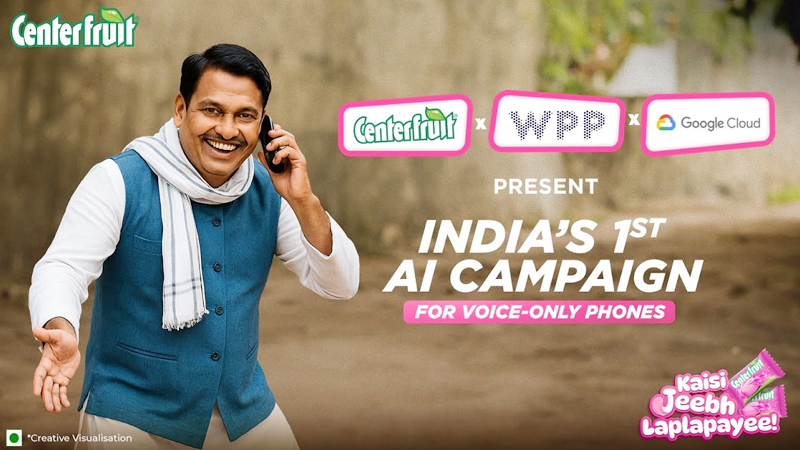
    MUMBAI: What do you get when you mix flavour, fun, and futuristic tech with zero internet? A rural marketing masterstroke. Centerfruit, from the house of Perfetti Van Melle India, has launched an industry-first voice-based AI campaign that’s got rural tongues wagging – quite literally.

    In a bold move to bridge the digital divide, Centerfruit rolled out the Tongue Twister Challenge in partnership with WPP, BharatGPT.ai, and Google Cloud. Targeted at audiences in rural Uttar Pradesh – where smartphone penetration is patchy and data access even patchier – this initiative lets users engage with the brand using nothing more than a basic feature phone.

    Sharing his thoughts on the campaign, Perfetti Van Melle India marketing director Gunjan Khetan said, “Rural Bharat is an important market for Centerfruit, and while we have been able to reach millions through Television, there are still pockets where narrating our brand story has been a challenge. However, the latest Voice AI tech activation is a game-changer, it allows us to not just reach but have conversations with people outside of the traditional digital ecosystem. By using AI and creative storytelling, we bring the Kaisi Jeebh Laplapayee spirit to life in a way that feels local, effortless, and deeply inclusive. We believe this is a powerful step toward ensuring that no consumer is left out of the conversation, no matter where they are or what technology they have access to.”

    As part of its ongoing ‘Kaisi Jeebh Laplapayee’ campaign, the brand deployed a hyperlocal Voice AI that dialled users directly. All they had to do was give a missed call, and they were in – chatting away in local dialects, tackling tongue twisters, and laughing through a gamified, fully voice-led experience.

    The backend was as sophisticated as the frontend was simple. Deployed on Google Cloud, the experience leveraged BharatGPT and CoRover’s desi LLM optimised for Indian languages and dialects. Users’ voices were streamed and converted in real-time, analysed by Gemini (Google’s AI model), and scored on clarity, pronunciation, and speed. No screens, no apps, just good ol’ vocal cords.

    But the experience didn’t stop at tongue twisters. Users could also ask questions in their native dialects via BharatGPT.ai’s ‘Ask Engine’ and receive instant responses, turning every call into a conversation.

    Google Cloud India VP and country MD, Bikram Singh Bedi added, “Google Cloud’s scalable cloud infrastructure will enable brands like Center Fruit to reach consumers in their native language and Gemini’s capabilities will enable real time scoring which will make the whole user journey exciting while creating more brand recognition. This is a testament to how technology can truly empower businesses and consumers around the globe.”

    Wavemaker CEO – South Asia, Ajay Gupte said, “We believe technology should be an equalizer, not a barrier. Our collaboration on the campaign along with BharatGPT.ai and Google Cloud is a powerful example of how voice-based GenAI can bridge the digital divide and bring playful, immersive brand experiences to audiences often overlooked by mainstream media. By combining creativity with scalable tech infrastructure, we’re proud to help create a campaign that’s as inclusive as it is innovative—one that speaks directly to people, in their language, on the devices they already use. This initiative is a step forward in redefining how brands connect with rural India—not just by reaching them, but by truly engaging them in ways that are local, personal, and deeply human.”

    Hogarth India CEO Karthik Nagarajan said, “This partnership between Perfetti Van Melle, WPP, Google Cloud, and BharatGPT wasn’t about tech deployment – it was about cultural engineering. We built AI not just to answer questions, but to reflect the wit, rhythm, and warmth of everyday Bharat. When creativity meets technology, you don’t just reach people – you resonate. As a content experience company, we specialize in delivering engaging, enriching brand experiences irrespective of the medium. In this case, we are very grateful to Perfetti Van Melle for providing a platform that enabled us to create such an experience at scale for its audience.”

    With this move, Centerfruit hasn’t just taken the road less travelled – it’s made it multilingual, hyperlocal, and powered by next-gen tech. Who said you need 5G to have fun?

  • Cyber switch as Tenable taps ex-Google exec Eric Doerr for product power play

    Cyber switch as Tenable taps ex-Google exec Eric Doerr for product power play

    MUMBAI: Tenable just made a heavyweight addition to its cybersecurity war room and it’s a Doerr-opener. The exposure management company has roped in Eric Doerr as its new chief product officer, betting big on his two decades-plus of experience at Microsoft and, most recently, Google Cloud.

    The move comes at a strategic inflection point for Tenable, which is gearing up to roll out a major expansion of its flagship Tenable One platform. Doerr will now be in charge of global product strategy and innovation, as the company sharpens its focus on unified visibility, prioritisation, and remediation the trifecta of modern cybersecurity.

    “Tenable has a clear and compelling vision for the future of cybersecurity, one that unifies visibility, prioritisation and remediation across the modern attack surface,” said Tenable co-CEO, Steve Vintz. “Eric’s deep expertise in cloud-native security, threat intelligence, and large-scale product innovation makes him the ideal leader to advance our exposure management vision and accelerate our impact across the enterprise.”

    Doerr’s résumé reads like a cybersecurity masterclass. At Google Cloud, he oversaw security products including Chronicle (now Google Secops) and Google Threat Intelligence, and played a pivotal role in integrating Mandiant. Before that, he was a Microsoft veteran holding key positions like General Manager of Microsoft Account and corporate VP of Cloud Security and the Microsoft Security Response Center (MSRC).

    “Tenable is transforming how organisations think about and reduce cyber risk,” said Doerr. “Its forward-thinking approach to exposure management and its rapid innovation in cloud security make this an incredibly exciting time to join. I’m thrilled to be part of a team that’s building the future of cybersecurity.”

    Doerr replaces Shai Morag, who will remain during the transition. The company acknowledged Morag’s contributions to product growth during his tenure.

    With cyber threats multiplying and attack surfaces expanding, Tenable’s timing is no coincidence. And with Doerr at the helm of product strategy, the company is doubling down on building not just the tools to respond but the vision to stay ahead.

    In the battle for digital security, Tenable’s latest move signals it’s not just playing defence, it’s drawing up a bold new offence.
     

  • LTIMindtree and Google Cloud team up for AI-powered business makeovers

    LTIMindtree and Google Cloud team up for AI-powered business makeovers

    MUMBAI: LTIMindtree, the digital transformation firm, has announced a strategic alliance with Google Cloud, promising to inject a dose of agentic AI into businesses worldwide. Think of it as giving your company a digital shot of espresso, powered by Google’s Gemini models and a whole lot of cloud magic.

    This isn’t just a casual fling; it’s a full-blown partnership aimed at redefining the cloud landscape. LTIMindtree plans to whip up industry-specific solutions, creating a “green corridor” for AI-powered innovation. The company is talking market development initiatives, go-to-market strategies, and enough training to turn its workforce into AI whisperers.

    The collaboration will see LTIMindtree leverage Google Cloud’s Vertex AI to create bespoke solutions for the BFSI, manufacturing, hi-tech media and entertainment, retail, and CPG sectors. It’s aiming for rapid deployment and top-notch customer support, promising to maximise ROI while modernising infrastructure.

    LTIMindtree president global AI services, strategic deals, partnerships and whole time director Nachiket Deshpande said: “Our partnership with Google Cloud marks a significant milestone in our journey towards innovation and growth. By combining our strengths, we are poised to deliver unparalleled value to our customers and drive transformative change in the cloud ecosystem.”

    Google Cloud  president global partner organisation Kevin Ichhpurani added, “Generative AI has the power to increase business efficiencies and transform how organisations operate. With LTIMindtree’s expertise and Google Cloud’s leading AI technology, customers can deploy powerful solutions that solve industry challenges and significantly improve business performance.”

    LTIMindtree is setting up a dedicated team of AI aficionados to ensure a smooth ride, promising seamless implementation and consistent growth for its  clients. In essence, this partnership isn’t just about cloud computing; it’s about cloud conquering, with a dash of AI flair.

  • Netskope Threat Labs: IoT botnets and infostealers target retail sector

    Netskope Threat Labs: IoT botnets and infostealers target retail sector

    Mumbai: Netskope Threat Labs has published its latest research report, focused on cloud threats in the retail sector. The report finds that IoT botnets, remote access tools and infostealers were the key malware families deployed by attackers targeting retail in the past year. Retail has also undergone a shift over the past year from predominantly Google Cloud-based applications towards Microsoft apps like Outlook.

    Key findings include:

    1. Attackers using infostealers to target retail: Infostealers are a prominent malware family for the retail sector as attackers attempt to steal valuable data such as payment details from organisations and customers.

    . Infostealers also feed into the wider cybercrime ecosystem with attackers selling harvested credentials and personal financial details.

    2. Botnets and trojans targeting network devices: The Mirai botnet family has increasingly been seen to target exposed networking devices running Linux such as routers, cameras, and other IoT devices in the retail environment

    . IoT devices are often overlooked as a security risk, but can be effective in providing visual or sensor information that can assist in cybercrime, or even abused to launch DDoS attacks against other targets.

    . Similarly, remote access trojans (RAT) were popular as they allow access to browsers and remote cameras, sending information to attackers or receiving commands.

    . Since the leak of Mirai malware’s source code, the number of variants of this malware has increased considerably and poses a risk to retail as a sector with multiple vulnerable endpoints.

    3. Microsoft Suite increasingly a target: In last year’s report, Google applications were far more popular in the retail sector than in other industries, but over the past year the researchers have seen a resurgence of Microsoft’s popularity. This is particularly evident for storage with the gap between OneDrive and Google Drive widening over the past year, with the average percentage of users shifting from 43% to 51% for OneDrive and falling from 34% to 23% for Google Drive. We see similar trends with Outlook (21%) supplanting Gmail (13%) as the most popular email app.  

    . Microsoft OneDrive remains the most popular cloud application for malware delivery across all sectors including retail. Attackers gravitate towards tactics that capitalise on users’ trust and familiarity with OneDrive, increasing the likelihood they will click on the links and download the malware.  

    . In retail, attacks via Outlook are more successful than in other sectors – retail sees twice as many malware downloads via Outlook (10%) as other industry averages (5%).

    . WhatsApp’s popularity in retail: The app was three times as popular in retail (14%) than other industries (5.8%) both for average usage and downloads. However, WhatsApp was not listed among the current top apps for malware downloads. This may change as threat actors start to see its popularity justifying the economic case to direct more attacks via the app.

    Social media applications like X (12%), Facebook (10%) and Instagram (1.5% for uploads) were all more popular in retail than other industry averages.

    Speaking on the findings, Paolo Passeri, Cyber Intelligence Principal at Netskope said;

    “It’s surprising that the retail sector still finds itself specifically targeted with botnets like Mirai as attackers look to compromise vulnerable or misconfigured IoT devices across retail locations and abuse them to dramatically amplify the effect of a Distributed Denial of Service (DDoS) attack. Mirai is not a particularly recent threat, and since its discovery in 2016, there are now multiple variants used today. The fact that attackers continue to use it to target IoT devices shows that too many organisations continue to dangerously overlook the security posture of their internet-connected devices. This poses a significant risk not only for the targets of the attacks launched from the IoT botnet but also for the organisation whose IoT devices are enslaved into the botnet, since their exploitation can easily lead to outages that impact the functioning of the business.

    “This vulnerability, coupled with the use of infostealers and remote access malware to extract credentials and customer financial data makes the retail sector a potentially lucrative target.

    “I was particularly interested to see that Qakbot is among the top threats for retailers, even though this operation was taken down by the FBI at the end of August 2023. Its infrastructure has been quickly refitted by the attackers to distribute additional malware payloads, providing additional opportunities for the attackers; and some isolated Qakbot campaigns have been detected even after its disruption.

    “The fact that botnets like Mirai and infostealers like Quakbot continue to be among the top methods attackers use to target retail organisations shows security leaders still have much to do to fortify their infrastructure and endpoints. Fortunately, following fundamental cyber hygiene best practices like inspecting web and cloud traffic and ensuring you can block malicious traffic and isolate compromised endpoints or domains will reduce the risk that you fall victim to these attackers.”  

    Netskope Threat Labs recommends enterprises in the retail sector review their security posture and make several recommendations for best practices to counter these threats:

    1. Inspect all HTTP and HTTPS downloads, including all web and cloud traffic, to prevent malware from infiltrating your network.

    2. Ensure that high-risk file types like executables and archives are thoroughly inspected using a combination of static and dynamic analysis before being downloaded.

    3. Configure policies to block downloads and uploads from apps and instances that are not used in your organisation to reduce your risk surface to only those apps and instances that are necessary for the business and minimise the risk of accidental or deliberate data exposure from insiders or abuse by attackers.

    4. Use an Intrusion Prevention System (IPS) that can identify and block malicious traffic patterns, such as command and control traffic associated with popular malware. Blocking this type of communication can prevent further damage by limiting the attacker’s ability to perform additional actions.

    5. Use Remote Browser Isolation (RBI) technology to provide additional protection when there is a need to visit websites that fall into categories that can present higher risk, like newly observed and newly registered domains.

    The report is based on anonymised usage data collected about a retail sector subset of Netskope’s 2,500+ customers, all of whom give prior authorisation for their data to be analysed in this manner.

    visit here 

  • Virginia Sharma appointed as Head of Marketing at Google Cloud Public Sector

    Virginia Sharma appointed as Head of Marketing at Google Cloud Public Sector

    Mumbai: In a recent development, Virginia Sharma has been appointed as head of marketing at Google Cloud Services. Google Cloud is a data intelligence platform for building effective data infrastructure. Virginia Sharma now takes charge as head of the marketing public sector to build a brand more sustainable.

    Earlier she worked in companies like LinkedIn, and Jio Saavn. She is also a LinkedIn influencer with over 52000 followers. Earlier she was also Chairperson for Marketing Society India Chapter and IAMAI Digital Transformation Council.

    https://www.linkedin.com/feed/update/urn:li:activity:7147819880140947456/

  • Eros Investments, Wipro sign agreement to develop content localisation solution

    Eros Investments, Wipro sign agreement to develop content localisation solution

    Mumbai: Eros Investments on Thursday announced that it has signed an alliance agreement with IT firm Wipro to evolve and scale the artificial intelligence (AI) and machine learning (ML) based content localisation solution.

    The solution will automate the time-consuming manual content localization process of subtitling and dubbing with near human-level accuracy, driving significant cost and time savings for global media organizations, post-production, and direct-to-consumer over-the-top (OTT) streaming platforms.

    Eros Investments’ data science experts, in collaboration with Wipro’s technology team, will leverage latter’s Vantage solution, an AI/ML-powered content intelligence platform which uses Google Cloud’s Translation AI suite of services to develop both ‘Speech to Text models’ and ‘computer-generated voice from Text to speech’, including voice cloning, emotion tagging, and speed syncing in various languages.

    The first phase of automated translation (Subtitling) will be available in multiple languages, including English, French, Spanish, Arabic, Mandarin, Malay, Bahasa, Tamil, Telugu, Hindi, and Bengali. The ‘use cases’ will be useful in training models to develop the solution in other languages later. Wipro’s Vantage helps extract intelligence/metadata from various forms of content, video, audio, images, printed text and more.

    Eros Investments and Wipro’s joint content localization service will be available to media and entertainment companies in two deployment models: platform-as-a-service and private cloud deployment.

    “Organizations across the media and entertainment space are increasingly seeking out solutions that enable language translation with accuracy and at scale,” said Google Cloud managing director- global systems integrator partnerships Victor Morales. “Wipro and Eros Investments’ content localization service, combined with Google Cloud’s machine learning capabilities, will provide customers the functionality they need to deliver audiences everywhere exceptional viewing experiences”.

    “In a world where content is taking precedence and crossing the cultural & language barrier, subtitles and dubbing have become a critical component of the video viewing experience,” said Eros Investments director Swaneet Singh. “It is well known that ‘good subtitles can’t save a bad film, but bad subtitles can ruin a good one,’ which is one of the reasons why we are co-investing with Wipro in a robust and automated translation solution. As global content reach grows, accelerated and accurate localization will be key in making premium original and catalog programming available to new global subscribers and audiences.”

    “With the ability to scale easily based on client needs, our AI translation solution is ideal for media companies looking to expand their global audience footprint,” said Wipro senior vice president and sector head-communications, media and information technology Malay Joshi. “In addition to improving the accuracy of translated content, our offering will reduce the manual effort involved in translation, bringing down costs and time to market significantly. Improving the ability of viewers worldwide to access and enjoy content from other markets will help increase overall global viewing and OTT platform growth and we are very proud to support this effort.”

    Eros Investments is a global media, entertainment and technology portfolio of ventures including Eros Media World, Eros Now, Xfinite’s Mzaalo and others.

  • Yellow.ai onboards former Google leader Surbhi Agarwal as head of global marketing

    Yellow.ai onboards former Google leader Surbhi Agarwal as head of global marketing

    Mumbai: AI solutions company, Yellow.ai announced on Tuesday the appointment of Surbhi Agarwal, as its senior vice president (SVP) of global marketing. Agarwal joins Yellow.ai from Google Cloud, where she led product and solution marketing for Data Analytics and Cloud AI portfolio, including Contact Center AI.

    “Agarwal comes with over two decades of leadership across product life cycle management, sales enablement, product marketing and product-led growth in early-stage start-ups and large enterprises. Previously, she has also run product management and corporate strategy at Intel Corporation and McAfee,” the company said in a statement.

    Yellow.ai CEO and co-founder Raghu Ravinutala said, “We are thrilled to bring Surbhi onboard at Yellow.ai as part of our executive team.” 

    “This is a crucial appointment for us at a time when we are sharpening our global strategy as a Total Experience (TX) solutions provider. As we scale our operations and expand our capabilities, Surbhi’s leadership will augment our efforts towards defining our brand and driving revenue. We look forward to her leadership and believe her experiences with global industry leaders will be invaluable as we grow across markets,” he added.

    In this role, Agarwal will be managing all of the marketing initiatives for Yellow.ai across geographies to grow business in the US, Europe, Middle East, Africa, Asia and the Pacific regions. Based out of the San Francisco bay area, she will be actively expanding the automation platform’s global footprint by building a highly impactful go-to-market team that would strengthen Yellow.ai’s position in the market.  

    Speaking on her appointment, Agarwal said, “Yellow.ai is at a pivotal point of entering new geographies with its proven product capabilities, making this a very exciting time to join the executive team. With Yellow.ai’s driven culture, differentiated offerings, leadership and market potential, I believe the company is strongly positioned to define and lead the Conversational AI space. I look forward to building the best-in-class marketing organization at Yellow.ai to increase our market share and achieve new heights.”

    With over 800 employees globally, Yellow.ai continues to hire talent across sales, marketing, product and engineering, the company added.