Tag: google ads

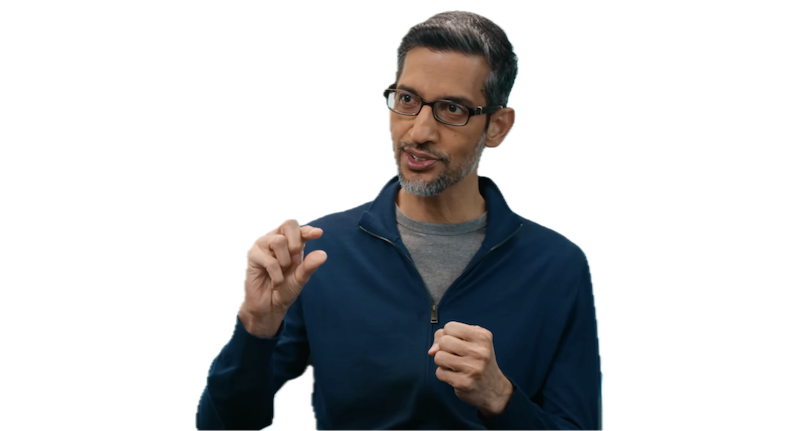
  • Sundar Pichai talks Google and Alphabet financial performance with analysts for Q4 meet

    Sundar Pichai talks Google and Alphabet financial performance with analysts for Q4 meet

    MUMBAI: Alphabet & Google CEO  Sundar Pichai addressed investors and analysts, highlighting a strong performance in Q4, largely attributed to the company’s advancements in artificial intelligence (AI) and a unique full-stack approach.

    “Q4 showcased our rapid progress in computing capabilities and efficiencies,” Pichai said. He noted significant improvements in product utilisation, consumer engagement, and revenue growth as a result of innovations in AI, including the launch of AI Overviews in over 100 countries and Circle to Search on more than 200 million android devices.

    Notably, Pichai announced that Google cloud and YouTube reached a combined annual revenue run rate of $110 billion at the close of 2024, exceeding their target of $100 billion.

    Focusing on AI, Pichai outlined three key areas of innovation: leading AI infrastructure, world-class research, and product integration. The company has invested in eleven new cloud regions and seven subsea cable projects aimed at enhancing global connectivity. Pichai revealed the launch of the Gemini 2.0 AI model, designed to improve user interactions and drive a more multifaceted search experience.

    In addition, YouTube continues to thrive, maintaining its position as the leading platform for streaming watchtime in the US with over 45 million viewers engaging with election-related content on a single day. The recent integration of podcasts has proved successful, further solidifying its dominant market position.

    Moving to financials, Alphabet’s revenue surged to $350 billion in 2024, a 14 per cent increase year-on-year. Expenditures increased, primarily due to content acquisition costs associated with YouTube and depreciation related to technical investments. Despite rising costs, operating income rose 31 per cent to $31 billion.

    With an optimistic outlook, Pichai stated, “We are well-positioned for continued growth in 2025,” as plans to enhance AI capabilities and expand cloud services take shape. 

    Following Pichai, Philipp Schindler, SVP  and CBO, highlighted the strong performance across Google services, with revenues reaching $84 billion, driven by a significant increase in advertising revenue. 

    Anat Ashkenazi, SVP and CFO, reaffirmed the positive momentum, indicating that the company is prepared for ongoing growth amid anticipated challenges. 

    The market did not believe their posturing totally as Alphabet shares crashed by seven per cent on Wednesday. Investors reacted badly to Pichai’s  plans to spend $75 billion on capital expenditures over  2025 and $16-18 billion in the first quarter  as it builds out its AI offerings and races against megacap rivals to build out data centers and new infrastructure. 

  • Akshit Kaushik goes from Google to Lenskart as performance marketing head

    Akshit Kaushik goes from Google to Lenskart as performance marketing head

    MUMBAI: When you get an opportunity to lead performance marketing at a company which is building a category would you take it up or let it go?

    Well, Akshit Kaushik said yes and he’s joined Lenskart as head of performance marketing. He says he’s going to make every marketing penny count and drive best in class ROI.

    The company is sure to benefit from the his experience at Google which he quit after a five and a year stint learning the tricks and trade as senior campaign manager, performance marketing lead and finally as global CX and quality lead- Google ads.

    Akshit has also had a four-year assignment with Amazon where he had varied roles right from marketing manager (for Junglee) to category manager to senior category manager -Amazon Renewed. A two-year term with Godrej Interio as marketing manager resulted in him picking up the skills of demand generation, understand media trends and build relationships. 
     

  • The Future of Google Ads: Insights from Leading Agency Professionals

    The Future of Google Ads: Insights from Leading Agency Professionals

    Google Ads have become an essential tool for businesses of all sizes, aiming to reach their target audience effectively and efficiently. According to Analyzify, Over 60% of marketers now prioritize Google and Facebook Ads to drive business growth. As we move further into the digital age, the landscape of online advertising is continuously evolving.

    To stay ahead of the curve, businesses need to understand these changes and adapt accordingly just as Intent Farm, a Google Premier Partner did.

    In this comprehensive blog, We’ll delve into the future of Google Ads, drawing insights from leading agency professionals. We’ll also highlight the role of the best google ads agency in India in shaping these trends and driving successful campaigns.

    Emerging Trends Shaping the Future of Google Ads

    As technology and consumer behaviour continues to evolve, several emerging trends are shaping the future of Google Ads. Insights from top Google Ads agency professionals indicate that the following trends will significantly impact the landscape in the coming years.

    1. Artificial Intelligence and Machine Learning

    Artificial Intelligence (AI) and Machine Learning (ML) are transforming how Google Ads operate. AI and ML algorithms analyse vast amounts of data to optimise ad targeting, bidding, and creative elements automatically.

    Smart Bidding

    Smart Bidding is a set of automated bidding strategies that use machine learning to optimize for conversions or conversion value in each auction. Leading professionals from top Google Ads agencies in India emphasize that Smart Bidding will become more sophisticated, helping advertisers achieve better ROI with less manual intervention.

    Enhanced Ad Personalization

    AI and ML will enable more personalized ad experiences. By analyzing user behavior and preferences, these technologies can deliver highly relevant ads that resonate with individual users. This level of personalization is expected to drive higher engagement and conversion rates.

    2. Voice Search Optimization

    With the increasing popularity of voice-activated devices like Google Home and Amazon Echo, voice search is becoming a significant aspect of online behavior. Advertisers need to adapt their strategies to cater to voice search queries, which are often longer and more conversational.

    Adapting Keywords for Voice Search

    Keywords for voice search are typically more natural and question-based. For instance, instead of “best speaker under 2000,” users might say, “What is the best portable speaker to buy under 2000 Rs?” Top Google Ads agencies in India are already incorporating voice search optimization into their strategies to ensure their clients remain competitive.

    3. The Rise of Video Ads

    Video content continues to dominate the digital space, and Google Ads is no exception. YouTube, owned by Google, is the second largest search engine globally, making it a crucial platform for video advertising.

    YouTube Advertising

    YouTube ads offer a variety of formats, including skippable and non-skippable ads, bumper ads, and sponsored cards. Insights from leading agency professionals indicate that businesses will increasingly leverage YouTube advertising to capture audience attention more effectively.  
    Most people believe that YouTube ads are only for awareness but there are several successful case studies of brands using YouTube ads to drive performance and specific business outcomes.

    Interactive Video Ads

    Interactive video ads, which allow viewers to engage with the content through clickable elements, are gaining traction. These ads can enhance user experience and drive higher engagement and conversion rates.

    4. The Importance of Mobile Optimization

    With the majority of internet users accessing content via mobile devices, mobile optimization is more critical than ever. Google Ads must ensure that ads are mobile-friendly to reach this vast audience effectively.  
    Landing pages must be built as mobile first specially in consumer categories as 70-90% of the traffic comes from mobile devices but still most developers make websites / landing pages as desktop first and then adapted on mobile.

    5. Data Privacy and User Consent

    Data privacy concerns and regulations, such as the General Data Protection Regulation (GDPR) and the California Consumer Privacy Act (CCPA), are reshaping how businesses collect and use data. Advertisers must prioritize user consent and transparent data practices.

    First-Party Data Utilization

    With third-party cookies being phased out, the focus is shifting towards first-party data. Collecting data directly from customers through interactions on owned channels (like websites and apps) is becoming increasingly important. Leading Google Ads agencies are helping businesses build robust first-party data strategies to maintain effective targeting.

    Expert Insights: How Top Google Ads Agency in India Are Leading the Way

    Hitesh Lalwani, Founder and CEO at Intent Farm, recently in an interview said, “forces of AI when combined with strategic Digital Marketing, leave an imprint deeper in the hearts of our audiences. Google Ads are performing better, now more than ever, thanks to AI led optimisation. It has made targeting an audience more accurate and campaigns effective and result-driven. Along with this, Video and Mobile advertising are on the verge of a breakthrough while voice search brings new opportunities for advertisers. But what is at the core here? – Not to take a backseat while AI does all the work, and seek to strike the balance between what AI has to offer and what the target audience desires.” says Hitesh Lalwani  

    Top Google Ads agencies in India like Intent Farm are at the forefront of these trends, leveraging their expertise to drive successful campaigns for their clients. Here are some insights from leading professionals in the industry on the way forward:

    Data-Driven Strategies– Using sophisticated tools for data collection and analysis which helps in understanding customer behavior, preferences, and trends for better targeted and effective ad campaigns.

    Local Market Expertise – To make a digital imprint one needs a deep understanding of the nuances of the Indian market like regional languages, cultural nuances, and local consumer behavior.

    Leveraging Innovative Ad Formats – To experiment is to grow. Try out new ad formats from Google like responsive search ads, YouTube video ads, and different types of display ads are constantly under tryouts to identify best-performing blends.

    Embracing Automation and AI – AI  technologies help in enhancing ad targeting and bidding strategies, therefore, predicting which ads are more likely to convert and automate bidding processes to maximize ROI.

    Training and Development –  the fast-evolving digital marketing landscape requires continuous learning and staying updated with the latest Google Ads features, industry trends, and best practices.

  • “We ensure that every campaign carries a clear, compelling message”: Adbuffs’s Ananya Roy

    “We ensure that every campaign carries a clear, compelling message”: Adbuffs’s Ananya Roy

    Mumbai: Adbuffs is a Kolkata-based digital-first performance marketing agency which automates digital advertisements for businesses to deliver tangible results. The brand is endeavouring to carve a niche in the D2C marketing industry with its laser focus on launching and scaling eCommerce brands worldwide, accelerating growth for their eCommerce companies’ partners.

    The agency offers a plethora of services related to Facebook & Instagram Ads, Google Ads, Amazon Ads, Email Marketing, WhatsApp Marketing, Creatives and a secondary line of services including Quora, Building Shopify and WooCommerce sites, and Influencer Consultation.

    Being in a robust client-oriented sector and with high thriving competition, the agency’s diligent work by their team of 80 professionals has sailed their boat through the waters. In this era of the talent war, the top marketing agency has thrived hard to maintain a positive culture with high retention rates.

    Within the short span of four years, the company’s strength has grown from 6 to 100 and has successfully served 200+ D2C brands and clients.

    Looking ahead, Adbuffs is poised for even greater accomplishments, with an anticipated growth rate of 80% in the fiscal year 2023-24. Bolstered by its solid foundation and unwavering vision, the company is well-equipped to navigate the challenges of the digital landscape and emerge victorious.

    Indiantelevision.com caught up with Adbuffs media buying manager Ananya Roy, where she shared numerous insights of their agency…

    Edited excerpts

    On Adbuffs setting apart from traditional marketing agencies and its approach towards digital-first strategies

    What truly differentiates Adbuffs from traditional marketing agencies is our creative-first philosophy woven into a digital-first approach. In a landscape where every brand’s fight for attention is unique, Adbuffs understands that a bespoke plan of attack is crucial. We don’t just apply standard strategies; we create narratives that encapsulate a brand’s essence and speak directly to its audience.

    Our methodology begins with a deep dive into the brand’s existing ecosystem, dissecting data to uncover what works and pinpointing untapped opportunities. This rigorous analysis ensures that the strategies we deploy are not only creative but grounded in hard evidence of what resonates with the target market.

    The digital-first lens through which we view the marketing world isn’t just about being online; it’s about thinking in terms of connectivity, real-time engagement, and leveraging data insights to craft campaigns that are as effective as they are inventive. This approach isn’t limited to digital execution; it permeates every aspect of our planning, from ensuring technical integrations are seamless to interpreting analytics for a continuous cycle of improvement.

    Adbuffs’ culture celebrates experimentation, encouraging a test-and-learn environment that’s agile and responsive. This mindset allows us to stay ahead of trends and adapt to the ever-evolving digital space, ensuring that clients’ brands don’t just compete but set the pace in their respective industries.

    In summary, Adbuffs isn’t just a marketing agency; it’s a digital powerhouse that uses creativity and a digital-first approach to build powerhouse brands ready to dominate the digital arena.

    On the agency tailoring its strategies to target specific audiences and demographics effectively

    At our agency, we craft our strategies by focusing on three key elements: creative personas, thematic creatives, and message-driven approaches.

    Firstly, we build detailed creative personas—these are like sketches of the specific groups of people we want to reach. By understanding their interests, behaviors, and preferences, we can tailor our content to resonate with them on a personal level.

    Next, we develop creatives that are not just visually appealing but also follow a theme that speaks to our target demographic. This thematic approach ensures that our campaigns are cohesive and tell a story that aligns with the audience’s values and interests.

    Lastly, we ensure that every campaign carries a clear, compelling message. This message-driven approach guarantees that our ads do more than just grab attention—they also communicate the brand’s message in a way that’s relevant and engaging to the specific audience we’re targeting.

    By combining these elements, we create campaigns that effectively connect with different audiences and demographics, turning viewers into loyal customers.

    On specific tools you use to optimize campaign performance

    We use internal reporting tools & google sheets to get daily reports.

    On any innovative approach that Adbuffs employs to stay ahead in the competitive digital marketing landscape

    Adbuffs integrates a deeper level of financial analysis into our marketing strategies by focusing on key financial metrics such as COGS (Cost of Goods Sold), CM1 (Contribution Margin 1), and CM2 (Contribution Margin 2). This enhanced Finance & Marketing approach ensures we’re not just driving revenue, but also improving the bottom line for our clients.

    Here’s the expanded approach with this integration:

    Financially-Driven Decision-Making: Beyond ROI, we examine how marketing efforts impact overall financial health, scrutinizing metrics like COGS to ensure marketing spend translates into profitable growth.

    Budget Optimization with COGS in Mind: Understanding the cost of goods sold helps us better allocate marketing budgets, ensuring that we’re promoting products with a favorable cost structure and high potential for profit.

    Data-Driven Insights Into Profitability: By analyzing CM1 and CM2, we gain insights into the direct contribution of marketing efforts towards covering fixed costs and generating profit. This allows us to prioritize campaigns that significantly lift these margins.

    KPI-Focused Campaigns Aligned with Financial Health: Our marketing KPIs are directly aligned with financial metrics like CM1 and CM2, ensuring that we’re not just driving sales, but are also enhancing the profitability of each sale.

    Risk Management Through Financial Metrics: By keeping a close eye on COGS, CM1, and CM2, we manage the risk associated with marketing investments more effectively, adjusting strategies to maintain or improve these key financial indicators.

    Strategic Investment Based on CM1 and CM2: We strategically invest in marketing channels and campaigns that have proven to improve CM1 and CM2, ensuring that marketing efforts are directly contributing to the economic value of the business.

    Incorporating these financial metrics into our strategy not only sets Adbuffs apart in the digital marketing field but also aligns marketing initiatives closely with our clients’ overall business performance, ensuring that every campaign we run is a step towards greater profitability.

    On the future of generative AI as it is still in its infancy stage

    The future of generative AI, particularly in its application to digital marketing, is poised to revolutionize how businesses understand and interact with their customers, especially through advanced metrics like Customer Lifetime Value (LTV) and Customer Cohorts analysis. Here’s a more detailed look into its potential impact:

    Deepening Customer LTV Understanding: Generative AI can process vast amounts of data to predict Customer Lifetime Value with greater accuracy. By analyzing customer behavior, purchase history, and engagement patterns, AI can identify key factors that influence LTV. Marketers can use these insights to tailor strategies that enhance customer retention, optimize acquisition costs, and increase overall profitability.

    Segmentation and Personalization through Customer Cohorts: With generative AI, marketers can create more nuanced customer cohorts based on a variety of behaviors and preferences. This segmentation enables highly personalized marketing campaigns, product recommendations, and content delivery that resonates with each group. AI’s ability to continuously learn and adjust these cohorts in real-time means marketing efforts can become more targeted and effective over time.

    Automating and Optimizing Customer Journeys: By leveraging insights from Customer LTV and Cohort analysis, generative AI can automate personalized customer journeys at scale. From the initial point of contact through various touchpoints to post-purchase follow-ups, AI can ensure that every interaction is optimized for individual customer needs and preferences, significantly enhancing the customer experience.

    Predictive Analytics for Strategic Decision Making: The predictive capabilities of generative AI extend beyond marketing tactics to strategic decision-making. Understanding Customer LTV and Cohort behaviors helps businesses allocate resources more efficiently, develop products that better meet customer needs, and identify potential market opportunities before they become obvious.

    Ethical Data Use and Customer Trust: As businesses rely more on AI for Customer LTV and Cohort analysis, maintaining ethical standards in data use becomes crucial. Generative AI must be deployed in ways that respect customer privacy and build trust, ensuring that personalization efforts are perceived as valuable rather than intrusive.

    Enhanced ROI through Efficient Marketing Spend: By focusing on high-LTV customers and understanding the unique characteristics of different cohorts, businesses can optimize their marketing spend. Generative AI enables more efficient use of resources by targeting efforts where they are most likely to yield long-term returns.

    In conclusion, the integration of generative AI into digital marketing strategies, particularly through the lens of Customer LTV and Cohort analysis, promises a future where marketing is more personalized, efficient, and aligned with customer needs than ever before. As generative AI technologies evolve, they will undoubtedly become a cornerstone of successful digital marketing strategies, driving innovation and competitive advantage in a crowded marketplace.

  • Pure-play digital media owners to enjoy 61% of overall ad revenues in 2021: GroupM

    Pure-play digital media owners to enjoy 61% of overall ad revenues in 2021: GroupM

    NEW DELHI: Digital advertising will have a 66 per cent share globally by 2024, indicated the recently released global end-of-year forecast by Group M in the report – This Year Next Year. According to the report, digital advertising is expected to grow by 8.2 per cent during 2020, excluding US political activity. This follows nearly a decade of double-digit growth, including the last six years, when it was better than 20 per cent globally.

    “Digital advertising for pure-play media owners like Amazon, Facebook, Google, etc, should be 61 per cent of advertising in 2021. This share has doubled since 2015 when it was only 30.6 per cent,” the report read. 

    Digital extensions and related media, including advertising associated with traditional media owners’ streaming activities (primarily on connected environments), will grow 7.8 per cent this year and 23.2 per cent in 2021.

    Revising its June predictions for the global advertising industry, the GroupM report has also highlighted that the industry will end up declining by “only” 5.8 per cent on an underlying basis (excluding US political advertising), in 2020. The earlier predictions had marked the decline at 11.9 per cent. However, the overall outcome still remains grim as compared to 8.7 per cent growth it had witnessed in 2019. 

    Television advertising will decline by 15.1 per cent, before rebounding to grow 7.8 per cent in 2021. Outdoor advertising is estimated to decline by 31 per cent during 2020, including digital out-of-home media. Next year should see a partial rebound, with 18 per cent growth.

    “Beyond 2021, we expect outdoor advertising to grow by low- or mid-single digits and generally lose share of total advertising; however, we do expect larger brands generally to allocate more of their budgets to the medium,” it stated. 

    Cinema generated less than $3 billion during 2019 and likely fell more than 75 per cent during 2020 given the absence of major studio releases in most markets around the world.

    Print advertising, including newspapers and magazines, is expected to decline 5 per cent for the year, a significant acceleration over the high-single-digit declines of recent years. However, those single-digital declines should resume following an economic recovery.

    Audio advertising is likely to decline by 24 per cent during 2020 as advertisers disinvest, in part, because of the medium’s dependence on away-from-home activities, such as driving. Digital extensions, including streaming services from terrestrial stations and their digitally-oriented competitors and podcasts, still attract relatively small audiences of a few billion, but help make the broader medium more appealing to marketers.