Tag: Google

  • Bloomingdale PR grows its northern roots with Sanya Jain

    Bloomingdale PR grows its northern roots with Sanya Jain

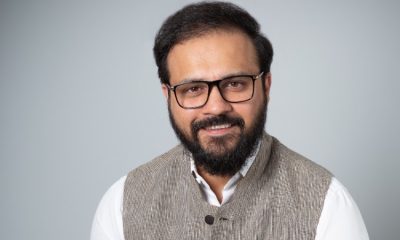
    MUMBAI: Bloomingdale Public Relations is turning the spotlight on Delhi with a key leadership move. The boutique PR firm, known for its strategic storytelling and stronghold across Asia, has appointed Sanya Jain as strategic communications lead – north, reinforcing its focus on expanding operations in the capital.

    Based in New Delhi, Sanya will head Bloomingdale’s regional growth, client relations, and team culture across North India, reporting directly to Bloomingdale PR CEO Vikram Kharvi.

    With a decade of experience spanning consumer, corporate, crisis, and internal communications, Sanya has collaborated with industry giants including HP, Google, Microsoft, and TikTok. Her track record in shaping narratives and leading reputation strategies makes her a strong fit for Bloomingdale’s next growth phase.

    “We’re thrilled to welcome Sanya to lead our Delhi operations,” said Bloomingdale PR CEO Vikram Kharvi. “Her strategic acumen and forward-looking approach will be instrumental in strengthening our presence in one of India’s most dynamic markets.”

    On her appointment, Sanya Jain shared, “I’m excited to take on this role and contribute to Bloomingdale’s creative and strategic legacy. I look forward to building impactful partnerships and meaningful campaigns across Delhi and beyond.”

    The move marks another step in Bloomingdale PR’s nationwide expansion, as the firm continues to deepen its roots in key Indian markets with a focus on innovation, talent, and impactful communication.

  • Oppo’s got the Mind Space to make AI more personal with Google

    Oppo’s got the Mind Space to make AI more personal with Google

    MUMBAI: Oppo is giving artificial intelligence a human touch and a safe space to think. The smartphone maker has joined forces with Google to take mobile AI beyond the buzzword, with a partnership designed to make smart devices not just intuitive, but also private, personal, and powerful.

    The collaboration centres on creating what Oppo calls “personalised and secure mobile AI”, blending the company’s software finesse with Google’s Gemini ecosystem. The goal? To deliver next-gen AI experiences that understand users better while keeping their data off-limits to everyone else.

    “Working closely with partners like Google allows us to integrate next-generation AI experiences that are not only powerful but also highly personalised and secure,” said Oppo president of software engineering Kai Tang. “Our goal is to provide users with an AI assistant that truly understands their needs and is worthy of their trust.”

    At the heart of this collaboration lies Mind Space, a smart productivity app debuting on the upcoming Find X9 Series. Think of it as a digital diary that remembers everything for you. With a simple three-finger swipe, users can save text, images, or web pages into one unified hub. Mind Space then auto-categorises and stores the content, so your ideas, plans, and to-dos live in one tidy corner of your phone.

    But the real power play begins when Mind Space meets Gemini. The integration allows Gemini to draw from saved information with the user’s permission and help take action. Planning a vacation? Just stash your notes and articles in Mind Space and ask Gemini to whip up an itinerary. Need a reminder for tomorrow’s meeting or a follow-up email draft? Gemini’s got it covered.

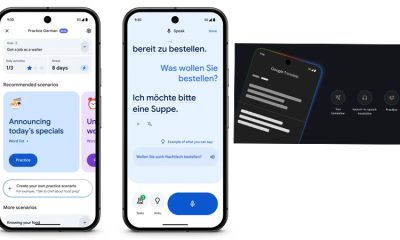
    The collaboration doesn’t stop there. Users can now chat with Gemini across Oppo’s suite of apps, use Gemini Live to ask questions about what’s on their screen or camera, and even edit photos using Gemini’s new AI model, Nano Banana. With a simple prompt, Nano Banana can retouch, enhance, or creatively transform images, turning quick snaps into scroll-stopping visuals.

    And while Gemini is the brain of the operation, Oppo’s AI Private Computing Cloud (PCC) ensures it all runs in a locked vault. Built on Google Cloud’s confidential computing technology, PCC encrypts and processes data in a secure environment invisible even to Oppo itself. Core AI features like AI Mind Space, AI Search, AI Recorder, AI Call Summary, AI VoiceScribe, and AI Writer all operate under this privacy-first architecture.

    This powerful blend of intelligence and integrity will first roll out with Oppo’s Find X9 Series and ColorOS 16 flagship devices. To sweeten the deal, buyers of the Find X9 or X9 Pro will receive a complimentary three-month subscription to Google AI Pro offering early access to premium Gemini features and 2TB of cloud storage.

    By combining Oppo’s design sensibilities with Google’s AI muscle, the partnership is setting the stage for smartphones that don’t just think fast, they think for you, with you, and about you. Because in Oppo’s world, the smartest AI is the one that minds your space.

  • TRAI rings the spam alarm as digital consent and 1600-series plans take charge

    TRAI rings the spam alarm as digital consent and 1600-series plans take charge

    MUMBAI: Spam beware, India’s digital regulators are tightening the screws. The Telecom Regulatory Authority of India (TRAI) convened the 9th Joint Committee of Regulators (JCoR) at its New Delhi headquarters on October 16, 2025, marking another decisive step towards a safer, cleaner digital ecosystem.

    The high-level meet brought together representatives from the Reserve Bank of India (RBI), Securities and Exchange Board of India (SEBI), Pension Fund Regulatory and Development Authority (PFRDA), and the Ministry of Electronics and Information Technology (MeitY), alongside officials from the Department of Telecommunications (DoT), Ministry of Home Affairs (MHA), Ministry of Consumer Affairs (MoCA), and the National Payments Corporation of India (NPCI). Industry heavyweights including Google, Meta, GSMA, and COAI were also present to discuss collective measures against spam and cyber fraud.

    Central to the deliberations was the progress of the Digital Consent Acquisition pilot, currently underway at 11 banks under joint supervision by TRAI and RBI. On track for completion by February 2026, the pilot aims to ensure consumers have greater control over consent for commercial communications, a key tool in fighting spam.

    Meanwhile, TRAI pushed ahead with plans to fully adopt the 1600-series numbering system for banking, financial services, and insurance (BFSI) communications, with a phased sunset timeline agreed in collaboration with sector regulators. The committee also flagged the need for flexibility for small-scale businesses, with TRAI set to issue guidance soon.

    Other significant outcomes included mandatory whitelisting of all URLs, OTT links, APKs, and callback numbers used in SMS communications. This initiative, paired with a crackdown on shortened links and blacklisting errant entities, aims to curb fraudulent messaging at scale. The committee also discussed enhanced PE-end security measures, including real-time credential validation and CAPTCHA enforcement for OTP systems, to bolster trust and safeguard users’ digital interactions.

    TRAI chairman Anil Kumar Lahoti highlighted the importance of collaboration. “In a digitally connected economy, cooperation among regulators for digital services, financial services, consumer protection, and law enforcement is paramount. The JCoR continues to be a crucial platform for ensuring orderly digital connectivity and cracking down on spam and cyber fraud. Today’s decisions underscore our shared commitment to a secure and transparent digital communication ecosystem,” he said.

    The committee’s discussions also reflected an emphasis on public deterrence, with plans for TSPs and TRAI to publish blacklisted entities involved in spamming activities. Such transparency is expected to reinforce compliance while warning potential violators.

    By combining regulatory oversight, technological interventions, and industry collaboration, TRAI and its partners aim to transform India’s digital messaging landscape making spam less profitable, fraud less frequent, and user trust more robust. With these initiatives, the 9th JCoR meeting set a precedent for proactive governance in India’s rapidly evolving digital communication space.

  • Google gets festive with smarter searches through new AI Mode

    Google gets festive with smarter searches through new AI Mode

    MUMBAI: Move over Khans and Kapoors, there’s a new star making its big-screen debut this festive season, and it answers to Hey Google. As India dives head-first into Diwali chaos and cinematic emotions, Google’s AI Mode on Search arrives like a filmy hero with perfect timing armed not with dance moves, but with data.

    Picture this: instead of scrolling through a dozen links, you toss Google a question that’s as layered as a family drama and out comes a full-blown, conversational answer that ties it all together. That’s AI Mode for you: your all-knowing, never-judging, eternally patient sidekick who remembers everything you say. Think of it as the Jeeves to your Kabhi Khushi Kabhie Gham moments.

    And because no Indian launch is complete without a dose of filmi flair, Google has rolled out a two-part digital film campaign conceptualised by the clever minds at Bare Bones Collective, the same team behind the viral GenZ Chudail and Gangoogly campaigns. This time, they’ve turned everyday dilemmas into high drama with a tongue-in-cheek tribute to the Bollywood tropes we love (and love to laugh at).

    The first film, released just as the country entered festive overdrive, follows a young man on a mission to win over his girlfriend’s father, every rom-com’s biggest villain-turned-softie. When his attempts at decorating the house flop harder than a box-office dud, he turns to AI Mode for step-by-step guidance. With its clever prompts, he transforms the chaos into a picture-perfect home, earning both the father’s nod and a new nickname: Festihul Tyohari.

    The second film flips the script with a “heroine ki entry” moment worthy of a Karan Johar production. Enter Riya, who lights up a festive party with a dazzling look all curated with help from AI Mode. From outfit inspo to accessory suggestions, Google plays stylist, ensuring her grand entrance is nothing short of a blockbuster reveal.

    Then comes the delightful cameo nobody saw coming: Farah Khan. In a hilariously meta moment, the choreographer-filmmaker trades banter with veteran actor Dilipji, only to have AI Mode jump in and “manage” the kitchen chaos better than any sous-chef. If only all family gatherings came with that feature.

    Launched right as India plunges into the most chaotic, colourful, and emotionally charged time of year, the campaign cleverly reimagines Google Search as the go-to problem-solver for the season helping users plan smarter, shop faster, decorate better, and celebrate calmer. From “how to impress an angry father” to “best last-minute Diwali gifts,” AI Mode doesn’t just give you answers, it gives you peace of mind (and a cinematic sense of timing).

    Bare Bones Collective nails the tone playful, self-aware, and oh-so-desi while giving Search the spotlight it deserves. The films blend humour with heart, showing how technology can keep up with India’s most dramatic, high-stakes, and glitter-coated time of year.

    Because when it comes to over-the-top emotions and even more over-the-top solutions, let’s be honest no one does drama quite like us. And this Diwali, Google’s AI Mode is ready for its hero shot.


  • WPP and Google forge $400m AI alliance to turbocharge marketing campaigns

    WPP and Google forge $400m AI alliance to turbocharge marketing campaigns

    CALIFORNIA: WPP and Google have announced a five-year expansion of their partnership that represents nothing short of a full-throated embrace of artificial intelligence as the defining competitive advantage in modern marketing. The creative powerhouse will pour $400m into Google technologies—cloud infrastructure, generative models, cutting-edge AI systems—betting that the combination can compress months of campaign planning, creative development and media buying into days, and unlock growth that conventional efficiency drives could never reach.

    The deal, cemented at Google’s Mountain View headquarters with WPP chief executive Cindy Rose, Google Cloud chief Thomas Kurian, and senior leadership from both organisations gathered around the table, aims to fundamentally revolutionise how brands connect with customers at scale. Rather than simply speeding up existing processes or squeezing more productivity from existing workflows, the partners plan to enable something far more radical: real-time personalisation for millions of people simultaneously, powered by bespoke AI models that learn, adapt and optimise on the fly.

    The ambition is extraordinary. WPP will receive preferred early access to Google’s latest generative models—Veo for video generation, Imagen for image creation, and a suite of others still in development—all integrated directly into WPP Open, the firm’s proprietary AI platform for marketing. The practical impact is already staggering. Campaign-ready creative assets that would traditionally take weeks to produce can now be generated in days. Efficiency gains are reaching 70 per cent. Asset utilisation is accelerating 2.5 times over. For one global retailer pilot, these aren’t abstract metrics: they translated to 98 per cent accuracy in audience targeting and an 80 per cent boost in operational efficiency, freeing entire marketing teams to focus on strategy rather than execution.

    WPP Media, the group’s media planning and buying division, will deploy bespoke audience models powered by Google DeepMind’s AI products through a new solution called Open Intelligence. The promise: build custom audience segments and deploy hyper-targeted campaigns across all channels—including Google Ad Platforms—with unprecedented speed and precision. For a multinational energy company, this looked like developing a custom AI Marketing Agent that automatically generates comprehensive marketing briefs, connects stakeholders to a single point of contact, and draws on a library of best-practice documents, past campaign performance and proven playbooks. The system works in real time, adapting to local challenges across multiple markets.

    The partnership extends into the creative layer itself. AKQA, WPP’s design and innovation company, is developing a new generation of AI-powered experiences that transform static websites into intelligent, generative platforms. The live AKQA Generative Store recreates the experience of personalised luxury retail service digitally—dynamically adapting product visuals, messaging and recommendations for each customer in real time. AKQA Generative UI, launching imminently, will instantly generate tailored, on-brand pages for users across enterprise and B2B contexts, with no manual intervention required.

    Privacy and data security thread through the entire architecture. Using InfoSum’s Bunkers technology, now integrated into WPP Open and available on Google Marketplace, WPP can enforce secure data collaboration without physically moving sensitive customer data. This allows brands to harvest deeper, richer insights for AI marketing whilst maintaining ironclad privacy protection—a crucial advantage in an era of tightening data regulation and consumer scrutiny.

    The talent dimension is equally ambitious. WPP’s Creative Technology Apprenticeship programme, which has placed more than 50 early-career technologists across WPP agencies since 2022, will expand dramatically with Google joining as the primary curriculum partner. The goal is audacious: train over 1,000 creative technologists by 2030 in a world-leading curriculum covering creative coding, generative AI and robotics. These apprentices will work on real-world challenges from major clients—L’Oréal, Unilever and others—building the next generation of marketing talent fluent in machine learning, AI prompt engineering and algorithmic thinking.

    Beyond client work, Google AI will also transform WPP’s internal operations. Automated data analysis, intelligent resource allocation and instant access to global insights will flow through WPP’s workflows, accelerating the development of solutions, sharpening team responses and ultimately delivering superior speed and value to clients worldwide. The logic is clear: make the machine fast enough and the organisation responds like an organism, not a bureaucracy.

    There is a feedback loop built into the model that gives WPP an unusual advantage. New solutions are collaborated on, tested and validated first within Google’s own marketing operations—real-world testing grounds where ideas either survive or die quickly. The insights flow back to WPP clients, who receive solutions already battle-tested against the toughest marketing challenges. In a rapidly evolving AI landscape crowded with noise and overpromise, that’s a rare competitive edge.

    Rose called it a redefinition of what’s possible for clients. Kurian framed it as harnessing generative and agentic AI to transform business outcomes. Google global marketing senior vice-president Lorraine Twohill spoke of exploring what marketing and storytelling look like in a new era.

    But beneath the corporate language lies a harder truth: the pace of marketing innovation just accelerated dramatically, and the winners will be those organisations—agencies, brands, technologists—that can think and move at machine speed. Everyone else faces a widening gap between aspiration and execution.

  • AI writes the next scene in storytelling

    AI writes the next scene in storytelling

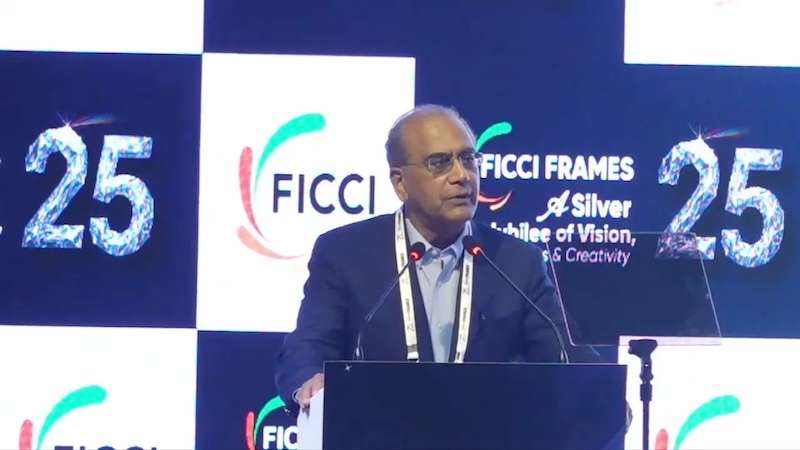
    MUMBAI: From scripts to circuits, storytelling just got smarter. At FICCI Frames 2025, the stage buzzed with ideas as tech titans from Jiohotstar, Meta, and Google explored how artificial intelligence is reshaping the way India watches, interacts, and connects with stories.

    In a session titled “The AI-Powered Media Revolution: From Personalisation to Interactive Storytelling,” the panel featured Jiohotstar chief product officer Bharath Ram, Meta India group director – finserv, media, travel and services Shweta Bajpai, and Google India head of industry for tech, media & telecom Siddharth Shekhar, moderated by NDTV Entertainment editor Abira Dhar

    Bharath Ram highlighted how Jiohotstar’s India-built AI is revolutionising both content and advertising. “The biggest advantage of developing AI solutions in India is the ability to iterate fast, learn fast, and build products rooted in local sensibilities,” he said, adding that Jiohotstar’s vast catalogue, from Special Ops to Bigg Boss, provides fertile ground for AI-driven insights.

    “Our AI helps us decode what truly captures viewers’ imagination and connects brands to audiences more meaningfully,” he explained, noting that smarter prediction models are already enabling advertisers to reach the right audience at the right moment.

    Taking storytelling beyond the screen, Bharath also spoke about the rise of fandom participation, where viewers don’t just watch content, they live it. “People want to be part of the story. The future lies in building interactive experiences that let fans express their passion,” he said, hinting at Jiohotstar’s plans to boost audience engagement across its entertainment properties.

    The discussion painted a vivid picture of a media landscape in motion, one where AI transforms viewers into collaborators, and platforms like Jiohotstar, Meta, and Google are scripting a new era of personalised, participatory entertainment.

    Because in the age of AI, the story doesn’t just unfold, it evolves with you.

  • Motorola gets an edge with Android 16 rollout

    Motorola gets an edge with Android 16 rollout

    MUMBAI: Talk about ringing in the future! Motorola has officially started rolling out Android 16 across its premium smartphone range, giving users a smarter, sleeker, and more secure experience.

    The tech giant, known for blending reliable hardware with clean software, is once again proving it’s ahead of the curve when it comes to timely updates. The rollout begins with the motorola edge 60 pro, edge 60 fusion, and edge 50 pro, devices already celebrated for their design and camera prowess, now powered up with Android 16’s enhanced features.

    This latest update isn’t just a polish, it’s a power-up. From notification auto grouping for a clutter-free experience to instant hotspot for password-free connectivity across Google devices, Android 16 brings a new level of ease to daily use. The addition of modes allows users to customise their phone’s behaviour whether they’re sleeping, driving, or working, while advanced protection fortifies privacy with a single tap.

    Motorola has also introduced Moto secure 5.5, featuring “Secure power-off,” a safeguard preventing stolen phones from being switched off. Add to that detailed battery health stats, smarter diagnostics, and enhanced accessibility, and you’ve got an update that’s both brainy and brawny.

    “The rollout of Android 16 on our smartphones demonstrates our commitment to providing faster, smarter, and more secure updates,” said Motorola India managing director T.M. Narasimhan. “Starting with our premium Edge series, we’re ensuring users enjoy the very best of innovation and experience.”

    The rollout will expand soon across more Motorola devices, cementing the brand’s reputation for blending innovation with user-centric design. In short, Motorola’s message is loud and clear: stay updated, stay ahead.


  • Google taps Raveesh Dev to chase small business growth across the Americas

    Google taps Raveesh Dev to chase small business growth across the Americas

    NEW DELHI: Climbing the ladder at Google takes stamina. Raveesh Dev has just demonstrated plenty of it. After nearly ten years shuttling between roles at the tech giant, Dev has been named head of en-Americas, SMB growth, a position that puts him in charge of scaling Google’s small and medium-sized business operations across the Americas from the company’s Gurugram office.

    The promotion, announced in October 2025, caps a rapid ascent through Google’s commerce division. Dev spent the past two years as head of commerce for India, leading go-to-market strategy for advertisers in travel, retail, beauty and healthcare. Before that, he briefly helmed multichannel and consumer packaged goods operations. His track record includes steering a business generating hundreds of millions of dollars in annual recurring revenue and winning Google’s 2024 APAC sales leader award.

    Dev’s 15-year career spans media and technology. Before joining Google in 2016, he cut his teeth in advertising sales at Times Television Network, where he rose to associate account director, and earlier at Red FM and Reliance Broadcast Network. His pitch is straightforward: scale businesses, mentor teams, drive operational excellence. It’s corporate speak, but his promotions suggest he delivers.

    The Americas SMB role is no easy brief. Small businesses are notoriously fickle customers, quick to churn when platforms don’t deliver immediate results. Google’s challenge is keeping them hooked on advertising products whilst fending off rivals like Meta and Amazon. Dev’s experience in India’s chaotic, price-sensitive market may prove useful, though the Americas present their own headaches.

    Dev’s LinkedIn post struck the obligatory note of gratitude—thanking mentors, celebrating teams, expressing excitement. What matters more is whether he can translate India’s lessons into growth across vastly different markets. Google clearly thinks he can. Time will tell if they’re right.

  • India’s news industry is eating itself, warns veteran publisher

    India’s news industry is eating itself, warns veteran publisher

    MUMBAI: Fifty years in the media business buys you the right to speak bluntly. Aroon Purie exercised that right at Ficci Frames 2025 in Mumbai, delivering a blistering critique of India’s news industry—an ecosystem he says is simultaneously massive, unprofitable and increasingly compromised.

    The numbers are staggering. India has over 140,000 registered publications, 375 twenty-four-hour news channels (with more in the pipeline), and a broadcasting industry employing 1.7 million people. Delhi alone wakes up to dozens of English and regional newspapers daily. No other country comes close to this scale. Yet 99 per cent of news channels lose money.

    The problem, Purie argues, is structural. India’s news industry runs on what he calls “raddi economics”—newspapers priced so low that readers profit from selling them as scrap. Broadcasters pay cable operators carriage fees just to reach viewers, a practice that persisted even after digitisation. The Telecom Regulatory Authority of India’s price controls strangle market forces, treating cable television like wheat or rice. “The government has made a mess of the broadcasting industry due to lack of foresight and regressive policies,” Purie said.

    Worse still is the funding model. With consumers paying next to nothing, advertisers bankroll nearly the entire industry. “When journalism’s survival depends almost entirely on advertising from corporations and governments, its independence is under a constant threat of compromise,” Purie warned. The hand that gives can also take away.

    Enter what Purie calls “billionaire news channels”—industrial houses launching news operations not as businesses but as tools for influence and access. They have deep pockets and no profit motive, destroying economic models for legitimate players. “Their entrance makes the public believe that every channel is a mouthpiece for a vested interest,” he said. It’s the only business, Purie noted drily, where the industry loses money yet people queue to enter it.

    Digital promised salvation but delivered more of the same. Publishers chased scale and eyeballs, giving content away for free. Google, Facebook, YouTube and Twitter became the world’s “new editors-in-chief”, controlling distribution and monetisation whilst producing no journalism. They hoover up over 70 per cent of total media revenue—digital advertising now claims 55 per cent of all ad spending—leaving crumbs for actual newsrooms. The algorithm rewards outrage and virality, not depth or accuracy. “Newsrooms that once invested in reporters now have to invest in SEO specialists,” Purie said.

    Artificial intelligence poses the next existential threat. AI can scrape, synthesise and regurgitate news without credit or revenue, summarising five articles into one paragraph. “What happens to the original news organisations—the ones who pay reporters and fight court cases—when our content is scraped?” Purie asked. It’s a question the industry is only beginning to grapple with.

    Purie, whose India Today Group reaches 750 million viewers, readers and subscribers, doesn’t claim to have all the answers. But he’s clear about the solution’s shape: stop apologising for journalism’s value, innovate business models, and persuade audiences that credible news is a public good with a price. “A subscription is not just a transaction; it’s a vote for the kind of media you want to exist,” he said.

    After five decades navigating disruption—from print to television to digital to AI—Purie’s diagnosis is stark. The old models are broken, the new gatekeepers ruthless, and professionally generated content under siege. Yet he remains defiant. “Disruption is not the enemy, it’s the new normal,” he said. “The real question is, do we have the courage, imagination, innovation, resilience and integrity to seize it?”

    Whether India’s news industry can answer that question may determine the health of its democracy. No pressure, then.

  • Jiostar fields big brands for Women’s World Cup 2025

    Jiostar fields big brands for Women’s World Cup 2025

    MUMBAI: Cricket isn’t the only thing hitting boundaries this season, brands are too. As the ICC Women’s World Cup 2025 kicks off on 30th September, broadcaster and streaming partner Jiostar has unveiled a sponsorship squad as glittering as the trophy itself.

    From Google’s tech powerhouses: Gemini, Pay, Android and Pixel, to household giant HUL’s Rexona, banking behemoth SBI, and luxury authority IGI, the line-up underscores how women’s cricket has become the big-ticket stage for global and Indian brands alike. More names are set to join the roster in the weeks ahead.

    “We are thrilled to welcome this incredible mix of sponsors,” said JioStar chief revenue officer-sports Anup Govindan. “Each brings unique strengths and a shared vision to elevate women’s cricket worldwide. With these marquee partners, the tournament will inspire millions and open up high-impact engagement opportunities.”

    For IGI, the tie-up is more than branding. “Just as every diamond is shaped under pressure to shine, so too are these exceptional athletes,” said IGI’s global CEO Tehmasp Printer. “This partnership celebrates brilliance, authenticity, and women embracing their true shine on and off the field.”

    Running till 2 November, the World Cup brings together the best of women’s cricket, with India opening its campaign against Sri Lanka. Fans can watch every ball live on Star Sports or stream exclusively on Jiohotstar.

    This festive season, expect not just fours and sixes, but brand fireworks too.