Tag: GoM

  • GoM on paid news to meet soon: Soni

    GoM on paid news to meet soon: Soni

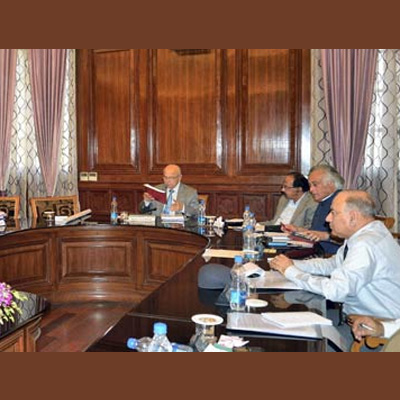
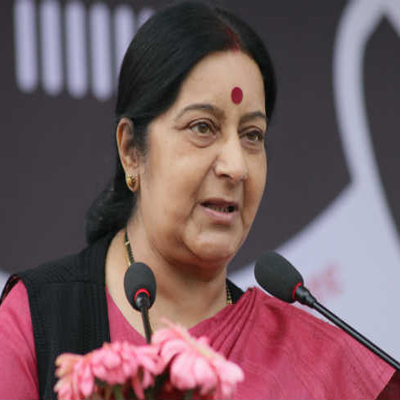
    NEW DELHI: A Group of Ministers (GoM) will shortly meet to examine the report of the Press Council of India on paid news, according to Information and Broadcasting minister Ambika Soni.

    Soni informed the Rajya Sabha today that the GoM was constituted in January last year but could not meet before September due to various reasons including the fact that Panel chairperson and Finance Minister Pranab Mukherjee was tied up in other matters.

    The Press Council had submitted a report on paid news to the government for necessary action after a sub-committee studied the issue. Although the Government had initially released only a short summary of the report, it had later placed the report on the Council’s website following an RTI application.

    The Minister said the GoM was set up in view of the “wider ramifications” of the recommendations, to prepare a comprehensive policy and institutional mechanism to address the issue.

    The PCI has recommended amendment to the Representation of the People’s Act 1951 to make incidence of paid news a punishable electoral malpractice and suggested that the PCI must be fully empowered to adjudicate the complaints of “paid news” to give final judgment in the matter among others.

    The report has also suggested measures to curb the menace of paid news like setting up of a special cell in the Election Commission for action on such complaints and self-regulation by media and awareness generation.

    PCI has cautioned the media to refrain from publishing news masquerading as advertisement and vice-versa.

    The Election Commission has also taken cognizance of this malaise and initiated steps to check incidence of election time paid news, which includes transparency in the money spent by candidates on advertising, a ban on exit and opinion polls until the last round is over, and similar other measures.

  • 2010 a year of wait for FM radio

    2010 a year of wait for FM radio

    For the private FM radio broadcasters, 2010 was more of a wait for positive government policies that would fuel the sector’s growth that has been somewhat stunted.

    But the year ended on a positive note that things would move in 2011 – at least as far as permitting news and launching Phase III of FM radio was concerned. And some steps were also taken towards taking a decision on increasing foreign direct investment in the radio sector.

    Besides, some positive steps were taken towards revenue sharing on copyright of radio and other music, though this still needs to be ironed out with the music industry not too happy with the outcome so far.

    With the Group of Ministers (GoM) on FM radio Phase III finalising the e-auction model, the radio sector is poised for an exponential growth in India. The e-auction will also pave the path for a transparent process much along the lines of the 3G auctions held last year.
     
    There is a proposal for allowing 806 private FM Radio stations in Phase III in addition to the 245 channels at present. In addition, All India Radio (AIR) is getting ready to launch a total of 320 FM radio stations.

    The GoM headed by Finance Minister Pranab Mukherjee decided against the conventional open auction model and instead chose the e-auction method.

    A total of 216 cities and towns are to get private FM radio for the first time in Phase III, out of the 302 identified by the Government and split into four categories. Of the 86 cities and towns which have private FM radio channels, 67 are to get additional channels.

    Among the four main metros (which fall in first category), Mumbai will get two more channels while Delhi and Chennai will get one each. Kolkata has filled its quota of nine private FM channels.

    The GoM also extended the licence period for the radio stations to 15 years from the existing 10 years. Some decisions were also taken with regard to Prasar Bharati rentals and music royalty by the GoM.

    The GoM accepted the Government proposal to permit relay of All India Radio news (unaltered) by private FM channels on terms and conditions worked out with Prasar Bharati, thus rejecting the view of the Telecom Regulatory Authority of India and the industry-led Federation of Indian Chambers of Commerce and Industry (FICCI). The regulator had recommended that news should be allowed to be accessed from AIR, Doordarshan, Press Trust of India, United News of India, and any other authorised news agency or television news channel.

    In the absence of a regulatory authority with a localised presence and absence of monitoring arrangements for private channels and in view of the sensitivities involved, the Government feels it is not possible to allow complete freedom to broadcast news even though the news may be sourced from authorised sources. There was a possibility of sensationalising news by the private channels in their presentation.

    However, it is clear that the issue has not ended since some private FM operators are contemplating taking up the issue with the government.

    However, no final decision has been taken so far on lifting the foreign direct investment (FDI) cap on the sector to 26 per cent from the current 20 per cent. Trai had initially proposed to raise the FDI limit to 49 per cent but cut it down to 26 per cent in its June recommendations last year. A meeting of the Committee of Secretaries headed by the Cabinet Secretary had towards 2010-end decided the note prepared by the Information and Broadcasting Ministry should be referred to the Union Cabinet. The current foreign investment limit in FM radio stands at 20 per cent.

    With FM Phase III expanding to smaller tier ‘D‘ cities, it is likely to provide greater freedom and multiple ownership, promotion of local content, talent and culture. Formats like talk shows, dramas, classic and folk music concerts, programming specifically for children, short stories and plays with a social message too are likely to be incorporated.

    Currently, the radio sector generates annual revenues worth $49.5 million and is growing at around 20 per cent annually,

    according to the joint report by KPMG and Ficci. The radio advertising industry is projected to grow at a CAGR of 12.2 per cent over 2010-14, reaching $ 342.7 million in 2014 from the present $192.8 million in 2009, as per PriceWaterhouseCoopers.

    Meanwhile not too happy with the growth of community radio, the government is organising consultation workshops in different parts of the country to increase awareness of the advantages of local radio stations.

    The country at present has a total of just over 100 community radio stations (71 with Educational Institutions, 24 with non-Governmental Organizations, and eight with Krishak Vigyan Kendras and agricultural

    science universities though the scheme was announced in April 2005.

    The Ministry says it encourages setting up of the Community Radio Stations as CRS promises to provide opportunities to the local communities to express themselves, and empower women. The main aim of starting the CRS in educational institutions is to provide different and useful information to the people in nearby villages.

    Although community radios were allowed since April 2005, the Central Government in December 2006 had liberalised the Policy on Community Radio by bringing in the civil society and voluntary organisations, agricultural universities, ICAR institutions, Krishi Vigyan Kendras etc, under its ambit. The policy was liberalised to allow greater participation by the civil society on issues of development and social change. Earlier, only educational institutions were permitted to launch community radio channels. Under the new guidelines, limited advertising and announcements relating to local events, local businesses and services and employment opportunities has been allowed up to a maximum duration of five minutes per hour of broadcast.

    A total of 48 Community Radio Stations are presently functioning in 16 states and union territories which included 42 from educational institutions and six from non-governmental organisations. Twenty letters of Intent have been issued in 2009, taking the total to 189 LoI so far.

    A total of 584 applications, including 240 applications from educational institutions, have been received from various organisations for setting up CRSs. While 79 had been rejected, a total of 316 applications were under process.

    Tamil Nadu has the largest number of CRS – 26 (up from ten at the end of 2009), followed by Uttar Pradesh with 13, Maharashtra with ten, Karnataka with nine, and Delhi with six. The number of stations in other states – Andhra Pradesh, Bihar, Chandigarh, Gujarat, Haryana, Kerala, Madhya Pradesh, Orissa, Puducherry, Punjab, Rajasthan, Uttarakhand, and West Bengal – varied between one and five.
    Clearly waiting for Phase III, no new FM channel has been launched in the country over the past 18 months. There are just over 245 private FM radio channels in the country, and the government earned revenue of Rs 1.33 billion between 2006 and September 2009 from private FM radio stations.

    FM Radio broadcasting was first launched in the country in 1999.

    Maharashtra has the largest number of private FM stations – 31 – followed by Uttar Pradesh and Tamil Nadu with 21 each and Rajasthan with 19.

    Kerala has 17 stations, while Gujarat and Madhya Pradesh have 16 each. West Bengal has 15 channels, Karnataka has 14, Andhra Pradesh has 13, Punjab has 12 and Delhi has ten stations.

    Permission given to 20 FM channels has been revoked by the Information and Broadcasting Ministry for various reasons. Of the channels that were revoked, nine belonged to Century Communications, eight to Pan India Network Infravest, two to Kushal Global, and one to Singla Properties.

    While the majority of these were refused because the channels were not operationalised within the prescribed time, the others commenced but after some time remained non-operational for a period of more than six months.

    While the Government gave permission to 266 channels including the 20 revoked later, one could not be operationalized in Aizawl in Mizoram as the Common Transmission Infrastructure is not yet ready. Under the Grant of Permission Agreement, the channels are expected to commence operations within one year of such agreement.

    Meanwhile, the Copyright Board sought to resolve the friction between the music companies and the FM radio, laying out a revenue share model for the industry that was earlier working on a fixed cost structure. FM radio companies will have to share two per cent of their net advertising revenues (total ad income minus agency commission and government taxes) with the music companies as royalty, according to the Copyright Board directive.

    The new revenue share model will work in favour of the FM radio broadcasters, while upsetting the music companies who are already weighing legal options as they see their earnings from the sector shrink.

    The FM radio broadcasters coughed out Rs 1.2 billion, or 18 per cent of their net ad revenues, as music royalty in FY‘10, according to industry estimates. A two per cent share, as the Copyright Board has directed now, would mean the music companies would have taken away just Rs 140 million in FY‘10.

    In May 2008, the Supreme Court authorised the Copyright Board to decide on the royalty rates for the industry. The Copyright Board had asked the radio and music companies to file evidence supporting their stand on the royalty issue earlier this year.

    The year 2010 ended with the music industry serving notices to various hotels and pubs in many cities and towns to pay requisite music licence fee to play music, events at these venues to mark the end of the year. Following intervention by the Phonographic Performance Ltd. (PPL), legal notices were issued to venues that have not paid the requisite music licence fee to play music at their year-end events. PPL plans to initiate strict legal action against defaulters in case the licence fee does not get paid ahead of their planned events.

    Under the statutory sanction of section 35 in the Indian Copyright Act, playing commercial music in public without paying the requisite licence fee is an offence liable to contempt of court. Section 35 grants exclusivity to PPL to issue licences to hotels/pubs for playing music during the events in their respective premises. The tariff is calculated on the basis of the number of hours the music is to be played and the number of people expected to attend the event. The penalty can be imprisonment for three years and a fine of up to Rs 200,000.

    For the sector that is under severe revenue crunch, 2011 could be the turning point as the government opens up new geographies under Phase III.

  • I&B ministry finalizing terms of law on broadcast regulator

    I&B ministry finalizing terms of law on broadcast regulator

    MUMBAI: The terms of reference of a law that will bring about a separate broadcast regulator are almost ready.
    This was revealed to Indiantelevision.com by Information & Broadcasting secretary SK Arora on the sidelines of the convention for the business of entertainment, Ficci Frames, this morning in Mumbai.

    Once the framework of the law is finalized, it would be distributed among the interministerial committee for comments and any possible fine tuning, Arora said,”From here, the document would have to be scrutinized for a final say by the Union cabinet, after which it would then be presented before Parliament.”

    While Arora declined to give a time frame under which this process would move forward, he expressed confidence that from his ministry’s end, the law would be ready “at the soonest”.

    Queried about the role of the current regulator for both the telecom and broadcast sector, Telecom Regulatory Authority of India (Trai), Arora noted that the challenges for the broadcast industry and telecom are different. First, it is important that convergence is facilitated within the broadcast sector. After that one can look at facilitating convergence between sectors i.e. broadcast and telecom. The regulatory body will work towards ensuring that the fruits of development are not vitiated by adversarial relations. “The aim of regulation is to preserve development. We will also be coming out with a regulation on content code,” he said.

    Ficci is assisting in formulating the draft of the regulation. The Group of Ministers (GoM) who concentrate on the Ice industry will fine-tune it. Then it will be sent to the cabinet. It will be passed when the cabinet approves of it. A further announcement on this regulation is expected in the coming weeks.

    Basically it is aimed at being a self regulatory mechanism. Arora however conceded that regulation always lags behind technological changes. The broadcast industry has been no exception. He also stressed the importance of content providers and creators reaching remote areas of the country. “Whether it is cable, DTH, cinema halls, no villager should be left behind. If we work on this, then the potential will be double than what has already been achieved.”

    Arora also highlighted the concern of piracy. He said that the government has been working with Ficci on the Optical Disc Law and this work will continue in the months ahead. “The reason why we approach the industry is that we want to have a regulatory framework that helps the industry move forward.”

    “Another important area that is growing is animation and gaming. We need investment from foreign players and leaders in this area. The challenge for us is to attract foreign firms in this area. At this time, there are foreign firms coming into India while Indian firms travel abroad. Foreign firms bring their brand in. However, Indian firms when they go abroad do so under an international brand. The exception is the Indian film industry and for this I want to congratulate them,” said Arora.