Tag: Goldmines Telefilms

  • #Retrace2021: Entertainment trends that swept the media industry in 2021

    #Retrace2021: Entertainment trends that swept the media industry in 2021

    Los Angeles: As the credits roll on 2021 and the curtain prepares to rise on 2022, we’ve put together a few previews of entertainment trends to look forward to in the coming year and beyond. The convergence of new technologies, increasing domination of smart devices like smartphones and smart TVs, 5G internet, the growing demand for streaming content combined with the omnipresent Covid lockdowns have been the driving forces behind these trends.

    OTT STREAMING SERVICES

    The global over-the-top (OTT) streaming industry is booming. According to a report published by Research Dive, the OTT market is expected to generate a revenue of $438.5 billion by 2026, growing at a compound annual growth rate (CAGR) of 19.1 per cent. The outbreak of Covid-19 has contributed to this growth, however, leading players are focusing on developing strategies to bolster growth in a post-pandemic market. Netflix leads the pack of providers with 35 per cent of the global OTT streaming market share followed by Disney+, Hulu, ESPN+, Prime Video, and HBO Max.

    SOCIAL VIDEO

    By 2022, it is estimated that online videos will make up more than 82 per cent of internet traffic. These clips may be short, only 30 seconds or so long, but the ones that go viral have been viewed over a million times. Social media platforms such as Facebook and YouTube have been trying to retain the social video throne but rising star TikTok is working hard to overthrow them benefitting from Gen-Z users during the Covid lockdowns. Growth has also been seen on Instagram which has been putting a heavy focus on optimising users’ video experience. Likewise, LinkedIn users are increasingly preferring video content over other types of posts. Twitter, Snapchat, and Vimeo are also seeing a significant uptick in video content. However, no matter which platforms are able to increase their share of users, one thing is for sure: social videos are here to stay.

    CLOUD GAMING

    The ability to play the best video games out there without the need for a console has now become a reality and has pushed this industry forward. There are estimated to be about 3.2 billion gamers in the world and very few have the hardware required to play the latest, most demanding games. Cloud gaming solves this problem by streaming video game content from remote servers to your device. The range of video games is extensive from casino to adventure. Major offerings include Nvidia’s GeForce Now, Google’s Stadia, Sony’s PlayStation Now, and Xbox’s Project xCloud. It’s new and evolving technology but a growing trend to watch for in 2022. According to a report published by Allied Market Research, the global cloud gaming market generated $244.8 million in 2020 and is expected to reach $21.95 billion by 2030, seeing a CAGR of 57.2 per cent from 2021 to 2030.

    PODCASTS

    The number of people listening to podcasts in 2022 is expected to grow to 164 million and that’s just in the US alone. Podcasts have taken off and are no longer considered a hobby but a legitimate business model with new opportunities for brands and businesses. In a world where influencers are kings and people trust them more than traditional outlets, podcasts have been an effective way for their hosts to grow their influence and share their niche viewpoints and knowledge on specific topics. In addition, with increasing tolerance for advertising – a recent survey by Nielsen found 78 per cent of listeners don’t mind sponsorship ads – podcast ad revenue is expected to grow to $1.33 billion in 2022. Now, big-name companies like 20th Century Fox and Spotify are jumping onto the podcast bandwagon, backing and developing content and, in the process, increasing the production quality and value.

    GAME STREAMING

    Game streaming has been around since the early 2000s but now is gaining traction. It involves the streaming of video games where people broadcast themselves playing games to a live audience online. Professional streamers often combine high-level play and entertaining commentary and earn income from sponsors, subscriptions, ad revenue, and donations. Game streaming became popular on the US-based site Twitch before growing to other sites particularly in China.

    In 2014, Twitch was acquired by Amazon and since then it has experienced explosive growth. In Q1 2020 alone, Twitch had more than three billion hours watched, 100 million hours streamed, and an average of 1.4 million concurrent viewers, firmly cementing it as the number one platform for game streaming worldwide.

    THE KOREAN WAVE

    The Korean Wave or “Hallyu” refers to the rise in South Korea’s growing international popularity for its culture encompassing dance, music, TV dramas, movies, food, and more. In 2012, the music video for “Gangnam Style” by recording artist PSY was one of the first Korean hits to go global, became the first YouTube video to reach one billion views, and spun off an international dance craze. K-Pop bands exploded onto the music scene in the early 2000s and currently boy band, BTS is South Korea’s biggest cultural currency whose sales rival big names like Ariana Grande, Taylor Swift, and Billie Eilish.

    In 2020, South Korea’s black comedy thriller, ‘Parasite’, written and directed by Bong Joon-ho, won a leading four awards at the 92nd Academy Awards: Best Picture, Best Director, Best Original Screenplay, and Best International Feature Film, becoming the first non-English language film to win the Academy Award for Best Picture.

    Now, this September, ‘Squid Game’, the South Korean survival drama series quietly premiered on Netflix and then took off like a rocket ship. With more fans coming on board every day, Bloomberg has reported that the show will bring in $900 million for Netflix (it was produced for 21.4 million). The Korean Wave is going strong and worldwide fans are enjoying the ride.

    It will be interesting to see how some of these trends fare in a post-pandemic world but, at least for now, we have come to value these forms of entertainment just as the devices we access them from – our mobile phones, smart devices, laptops, and PCs.

  • #Retrace2021: Advertising campaigns that struck a chord in 2021

    #Retrace2021: Advertising campaigns that struck a chord in 2021

    Mumbai: The pandemic has changed the way businesses function all around the world. As organisations start limping back to the new normal, they also had to find ways to adapt to the changing dynamics of the market- from consumer behaviour to the way brands communicate to their consumers.

    2021 year saw brands and advertisers experimenting with new trends, and taking a detour from their original marketing strategies. A lot of them embraced empathy and compassion to connect with their consumers, who too were learning to adapt to the new normal. From Savlon to Byju’s and from Coca Cola to Dove, let’s look at some of these brand campaigns that struck a chord with the masses, as the year draws to a close.

    Savlon- #NoHandUnwashed by Ogilvy

    Regular hand washing became a norm during the pandemic. Savlon launched the campaign ‘No Hand Unwashed’ in association with Ogilvy. The campaign featured a video that depicts the story of an artist without arms who paints with her legs and can sanitise her limbs. “If she could, why can’t you?” was the inspiration behind.

    Dove- #StopTheBeautyTest by Oglivy

    The empathetic advertising continued even after the Covid wave subsided. Dove took this approach to address other issues of Indian society. In its ad campaign #StopTheBeatuyTest Dove addressed body shaming and skin colour biases in the Indian matrimony space. Dove has always been vocal about such negative norms of society. In 2021, it came up with its ad film #StopTheBeautyTest by Ogilvy.

    Domino’s ke Saath #HaathBadhaoIndia #VaccineLagaoIndia by FCB

    The empathetic ad film by Domino’s takes a look back at the struggles that people went through during the pandemic. Domino’s tells people to extend their hands once again and get vaccinated together through its ad film. FCB India conceptualised the campaign. The ad film was directed by Amit Roy of Love Aaj Kal fame, and lyrics penned by Swanand Kirkire.

    Unacademy- #TeachThemYoung by Lowe Lintas

    This ad campaign by Unacademy and Lowe Lintas, Made by Lowe Lintas, tells how a brother opening her sister’s bag is nothing but an invasion of her privacy and boundaries. It talks about empowering women and teaching gender equality to boys at a young age.

    Cadbury- Not just a Cadbury ad by Ogilvy

    Undoubtedly the pandemic has shaken the spine of the Indian economy. While the big brands managed to bring back their business quickly, the local ones couldn’t do much due to the lack of resources. The spot by Ogilvy features Shah Rukh Khan, who is seen promoting local cloth merchants, shoe shops, electronic stores and the nearby Kirana shop. The ad showcased 7000+ stores across 34mn consumers in two weeks.

    Facebook- Pooja Didi by Taproot Dentsu

    The ad campaign designed by Taproot Dentsu ignites hope among the users. The ad highlighted how we could reach out to the many unorganised sector workers who had lost their livelihoods.

  • How short video apps took media brands to masses in 2021

    How short video apps took media brands to masses in 2021

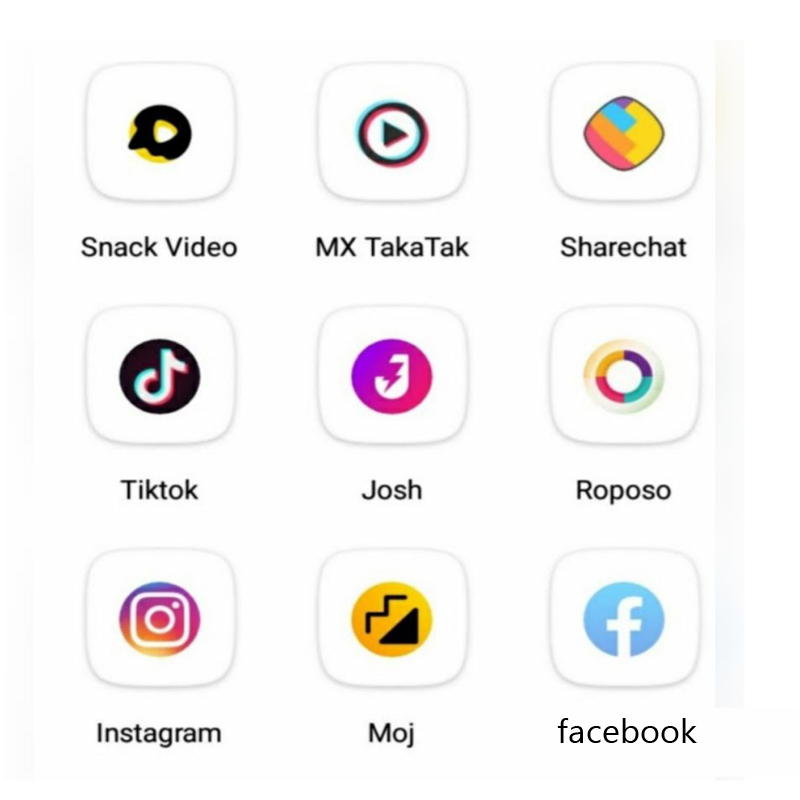
    Mumbai: “It came, it saw, it conquered…” the statement perfectly describes the meteoric rise of ByteDance-owned short video app TikTok in India. Such was the momentum created by it that by December 2020 – that just six months after TikTok was banned – the market was flooded by its Indian counterparts with Dailyhunt’s Josh leading the pack. Roposo, MXTakaTak, Chingari, Moj and others followed. 

    According to consulting firm RedSeer by April-June this year, the short-form video user base at 40-45 million creators hailing mostly from smaller towns and cities, was back to nearly 100 per cent of pre-TikTok ban, with strong loyalty to Indian apps. Monthly average users were up 1.2 times, while time spent on the apps was about 0.4 times higher.

    2021 was the time for short video app owners to tap into the goldmines that they were now sitting on. For players in the ecosystem partnerships and monetisation emerged as the key theme for the year, as all kinds of media brands like TV channels, OTT platforms and music labels latched on to the opportunity. Short-video apps were their window to ‘Bharat’.

    “Short video and entertainment platforms have seen one of the highest increases in monthly active users (MAUs) and the engagement time spent during the second wave of Covid-19. The changes in people’s emotions, platforms and emerging trends led to this growth. 

    With content offerings in 14 Indian languages, Josh boasts of 124 million Monthly Active Users (MAUs) and 60 million Daily Active Users (DAUs) coming from across 19000 pin codes in the country.

    Commenting on how the country’s dynamic digital landscape driven by ‘Bharat’ has affected partnerships and collaborations for him, Josh head of creator and content ecosystem Sunder Venketraman, says, “Tier-2 and tier-3 cities have widely been considered a niche market in terms of content, despite holding a majority of the country’s actual population. While initially it was the telcos, FMCG and handset manufacturers that targeted these markets, there has been growing interest from every major category from auto, retail, e-commerce, OTT and financial services.”

    With regard to media brands in particular, he adds, “At Josh we operate at the intersection of video and vernacular which presents a unique opportunity for media brands to reach out to a vast majority of the country’s audiences, given the growing popularity of vernacular content.”

    To promote season 15 of the popular show ‘Bigg Boss’ Josh collaborated with Voot in producing a rap song and a hashtag #BIGGBOSSS15ASLIFAN, resulting in 250 million + video views, 10,000 + UGC videos and 17 million + likes. Zee Bangla’s ‘Uma’ was promoted with a challenge around the show’s main theme Cricket. Female users on Josh were asked to balance a ball on the Cricket bat for 10 seconds. The collaboration resulted in over eight million + views, 140 + UGC videos and 630,000 + likes.

    The app also collaborated with Shemaroo, SVF Entertainment (Bengali film, television and OTT content production house), Pitaara TV (Punjabi movies channel, and recently launched OTT platform Chaupal), ALTBalaji (‘Cartel’), and ten leading music labels including Saregama. “This is revealing of how short-video apps are now a viable route for music labels to reach new audiences, and how new and upcoming artists can use platforms such as ours to reach out to niche audiences organically,” notes Venketraman.

    ALTBalaji’s senior vice-president – marketing and revenue Divya Dixit believes that such collaborations open up multiple gateways to reach out to the youth and the masses with the right message. “Short video and entertainment platforms saw one of the highest increases in MAUs, and ‘time spent’ during the second wave of Covid-19. Their tremendous growth in terms of number of content creators, brands, as well as ads on these apps, was led by changes in people’s emotions, choice of media platforms and other emerging trends,” she observes.

    A large part of ALTBalaji’s organic reach comes from short-video apps. The platform has carried out various promotional activities with the likes of Josh (‘Cartel’ and ‘Girgit’), ‘Chingari, Roposo, Moj (‘Pavitra Rishta) and Firework.

    Sharing the impact of these campaigns, Dixit states, “Our collaboration with MOJ for ‘Pavitra Rishta’ and Josh for shows like ‘Cartel’ and ‘Girgit’ helped in generating eyeballs for various show assets like songs, trailers, and dialogues that were amplified by the creators on their respective platforms via UGC push. It gave us reach in the hinterland markets, thus indirectly impacting the engagement numbers.”

    The Q COO Krishna Menon notes that while the pandemic made entertainment a bit of a challenge for most broadcasting houses and digital production houses as well, short video apps proved to be a boon for creators. “These creators are mostly the GenZ/millennials. Not only have they taken engagement on the platform higher, but are today setting day-to-day trends for people. Because The Q’s basic DNA is to work with the best of digital creators, short video platforms become like a strategic alliance for us as a source of content.”

    A recent example was the channel’s partnership with Chingari wherein it carried out digital auditions for its recently launched show ‘Jurm Ka Chehra’. Close to a million entries were received through the collaboration.  The Q runs multiple VOD platforms on Snap where the best of linear programming is cut into VOD episodes and made available for viewing. Some of the prominent platforms include ‘Daraawni Kahaaniyaan’ which has grown from few thousands to one million subscribers in the last year itself, ‘Khaao Gali’ and ‘Comedy Centre’.

    Elaborating on the significance of short video format for the Q, Menon shares, “Most broadcasting houses have their own digital storefronts. We haven’t created one for us because we want to go with those in the market. They are an additional source of revenue for us, and of entertainment for people.”

    Chingari started its collaboration journey with promoting all OTT content and moved on to launching exclusive trailers on the app, promoting web series/ music albums to now launching its own IPs.

    The app’s co-founder & COO, Deepak Salvi says, “We saw a huge surge in the time spent and engagement by users on the app during the pandemic and this is exactly what is needed by brands to promote themselves and their content. Knowing that a large population of the audience that belongs to their TG is spending time on Chingari, media companies like TV channels, OTT platforms, music labels and even production houses started associating with us for the promotion of their latest content.”

    Some of Chingari’s latest brand associations include Shemaroo Entertainment Ltd, Alt Balaji, Hoichoi, and Radio City.

    Due to the growing accessibility and affordability of the internet and the digital boost experienced in 2020-21, people in the tier 2 and 3 towns are now not only consuming content but are also very actively creating it. Salvi shares, “One of the main focus points for Chingari therefore is to create a very strong network of creators and consumers in the tier 2 and 3 cities. We are trying to reach out to the remotest areas of India by conducting events, partnering with regional content creators, OTT platforms, and music labels.”

  • Global pay-TV, telecom services to reach $1.5 trillion in 2021: report

    Global pay-TV, telecom services to reach $1.5 trillion in 2021: report

    Mumbai: Worldwide spending on telecommunications and pay-TV services is forecast to reach $1.5 trillion in 2021, representing an increase of one per cent over 2020, according to the latest report released by Intelligence Data Corporation (IDC).

    This growth will largely be driven by remote working, collaboration, and rising online media consumption said the market intelligence firm. The fastest expansion is still expected in the Asia-Pacific region.

    While the value of fixed voice and mobile voice services segments will gradually decline, the value of fixed data and mobile data services portions will slowly grow.

    As per the report, the major driver in the mobile segment will be a gradual recovery of roaming revenues fuelled by the recuperation of the global tourist industry. The market for traditional pay-TV services will continue to decline slowly due to the migration of customers to over-the-top (OTT) video services platforms, it added further.

    The overall market’s growth rates are expected to remain stable during the entire forecast period and even speed up slightly in 2025.

    5G will constitute 38.8 per cent of total mobile connections and 41.3 per cent of total mobile spending by the end of the forecast period in 2025.

    “The troubles related to Covid-19 are still not in the rear-view mirror as the worsening pandemic dynamics in some low-income countries and the global supply-chain disruptions threaten to harm the fragile recovery of the market,” said IDC research director, telecommunications Kresimir Alic. “But because of the resiliency the industry showed during 2020, we are convinced that the market will remain in a positive mood for at least the next couple of years.”a

  • Reigning champions MI to take on CSK when IPL 2021 resumes on 19 Sep

    Reigning champions MI to take on CSK when IPL 2021 resumes on 19 Sep

    New Delhi: Defending champions Mumbai Indians will take on Chennai Super Kings on 19 September when the much-awaited edition of the Indian Premier League (IPL) 2021 resumes in the United Arab Emirates (UAE).

    The cricket league was suspended mid-way after a sudden surge in Covid-19 cases breached the bio-bubble, and infected a few players and support staff.

    “The 14th season, which was postponed in May this year in the wake of the pandemic, will resume on 19 September in Dubai with a blockbuster clash between Chennai Super Kings and Mumbai Indians,” said the Board of Cricket Control in India (BCCI) in its latest announcement.

    A total number of 31 matches will be played over a period of 27 days including seven doubles headers (five were held in India). In all, 13 matches will be held in Dubai, 10 in Sharjah and 8 in Abu Dhabi.

    “There will be seven double headers (five matches already played in India – total of 12 matches) with the first match starting at 3:30PM IST (2:00PM Gulf Standard Time). All evening matches will start at 7:30PM IST (6:00PM Gulf Standard Time),” added BCCI.

    This year, the official broadcaster Star Sports had also made arrangements to live broadcast the IPL 2021 in eight different languages, and arranged a new virtual set and a myriad of augmented reality graphics to impress audiences who remained under lockdown when the tournament began in April.

    The final league game will be played between RCB and Delhi Capitals on 8 October.


  • Digital & TV steer ad industry’s recovery to pre-pandemic levels in 2021: dentsu

    Digital & TV steer ad industry’s recovery to pre-pandemic levels in 2021: dentsu

    MUMBAI: India has emerged as one of the top five markets with high year-on-year growth rate in advertising spends, said dentsu in its latest Global Ad Spend Forecast June 2021. After suffering a steep 12.9 per cent decline in 2020, the ad spend is expected to bounce back with 10.8 per cent growth in 2021, according to the report.

    The forecast suggests the overall ad spend will reach $ nine billion this year, and expand further by 12.4 per cent in 2022. The growth will largely be led by Television and Digital, as Print, Cinema, OOH and Radio are expected to take a longer time to recover.

    According to the data, Television continues to remain the most popular and resilient media in India, retaining a 40.9 per cent share in ad spend despite the pandemic. The medium also showed a 7.7 per cent spike in growth, as compared to the 2020 spend. Digital’s share of spend has grown rapidly, from 20.0 per cent in 2019 to 29.4 per cent in 2021, and is expected to reach 32.7 per cent by the end of 2022

    India in top 5 mkts-denstu

    The bi-annual report based on data from 59 markets, anticipates a full recovery for the global ad market in 2021, with spends exceeding pre-pandemic levels sooner than was previously forecast. 

    While 2020 remains the weakest performing year since the global financial crisis, the decline in growth during 2020 has improved since the January 2021 forecast from -8.8 per cent to -7.2 per cent. The pandemic-induced decline in global advertising spend during 2020 has also proved less severe than anticipated, it states. The overall ad market outlook for 2021 shows recovery with 10.4 per cent growth and a spend of $634 billion, which represents an improvement of 4.6 percentage points over January 2021 prediction.

    Ad-spend in APAC

    Overall, the ad spend in APAC is expected to grow by eight per cent, with Australia and India showing higher growth rates in 2021 compared to other countries. In APAC, the 6.2 per cent rise in digital spend last year is likely to grow by 12.8 per cent in 2021 to reach $124.5 billion, representing a 54 per cent share of total ad spend. 

    Regional live events such Tokyo Olympics and Paralympics Games will remain significant drivers of growth in Linear TV ad spend in APAC (3.9 per cent increase in 2021 to reach $59.2 billion). The report also indicates a shift towards CTV (Connected TV) and OTT (Over The Top). With audiences moving more towards digital media consumption, Linear TV spend will remain below pre-pandemic levels until beyond 2021.

    With gradual lifting of restrictions on social activities, OOH will bounce back post impact of the pandemic, rising 7.5 per cent in 2021 in the region. Cinema has a slightly longer recovery, with a further decline in 2021 (-5.0 per cent) but expected to bounce back in 2022. Radio will also see growth (4.3 per cent) in 2021.

    While most channels will return to growth in 2021 (Cinema in 2022), Print is seeing a slight decline in 2021 (–2.7 per cent) and expected to continue declining in 2022, as it evolves towards new modes of digital delivery.

    Meanwhile, government spending remained a key growth area, supporting the Covid vaccine rollout and other related initiatives. In APAC’s key markets, the travel and transport sectors, will still be affected by the uncertainty of the past year and see a muted increase in demand (4.9 per cent), while Media & Entertainment is forecast to see growth (9.7 per cent).

    dentsu International APAC CEO Ashish Bhasin said, “It is promising to see a return to growth in the APAC region with two of our markets in the top five contributors of ad spend growth; China and Japan. While China continues to see strong levels of growth driven by Digital and OOH, Japan’s growth will be buoyed by events like the 2020 Olympic & Paralympic Games, and the House of Representative elections and the advertising spend associated with it, particularly in TV.

    By market, the top five contributors to the $ 59.7 billion of growth in incremental ad spend during 2021 will be the US, China, UK, Japan and Australia. The US share of ad spend remains significantly above all other markets in 2021. The highest growth rates in 2021 are forecast to come from spend in India, Canada, the US, Australia and the UK.

    Media APAC CEO & Media Singapore MD Prerna Mehrotra said, “We are optimistic that the region will bounce back to positive growth in ad spend, with some channels likely boosted higher than pre-pandemic levels. The main drivers behind the growth is economic recovery, with the APAC GDP set to increase by 7.3 per cent, and a stronger-than-ever push to digital marketing.”

  • Amazon, Apple emerge as most valuable global brands 2021: Kantar

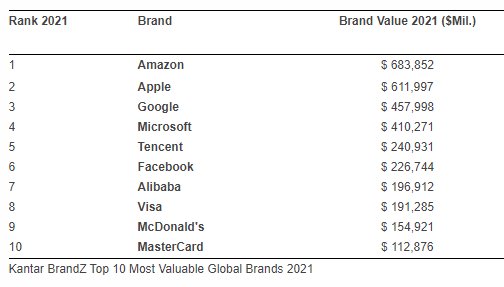
    New Delhi: Multinational giant Amazon consolidated its position as the world’s most valuable brand, growing 64 per cent to $ 684 billion, Kantar said in its latest BrandZTM Most Valuable Global Brands 2021 ranking released on Monday.

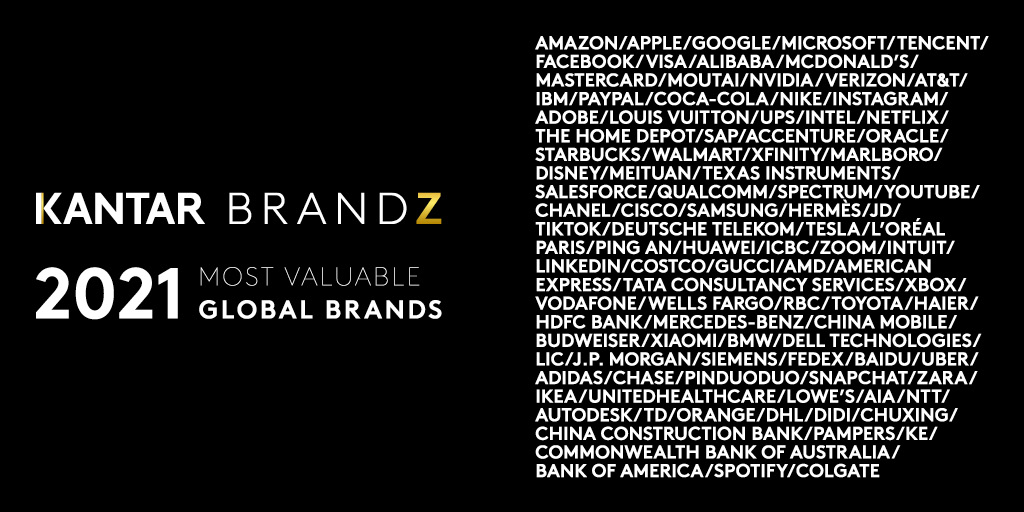
    Amazon’s brand value grew by almost $268 billion this year and it became the first half-a-trillion-dollar brand, alongside Apple, at number two, valued at $612bn. The other brands that figured in the top ten most valuable global brands in 2021 were: Google, Microsoft, Tencent, Facebook, Alibaba, Visa, McDonald’s, and MasterCard.

    China’s TikTok and USA’s Tesla are among the brands that doubled their brand values during the pandemic. Tesla even emerged as the fastest growing brand and became the most valuable car brand, growing its value by 275 per cent year-on-year to $ 42.6 billion, said the report.

    Tech brands dominate global rankings

    Seven of the top ten brands are from the tech sector. Tech has also enabled non-tech brands to achieve significant growth, for example Gucci – harnessing the power of TikTok during the pandemic, and Domino’s – leveraging online and delivery services. New entrant Zoom was one of the big tech stories of 2021, with its ease of use and reliability driving momentum with business and personal users. It entered the ranking at 52 with a valuation of $36.9bn.

    World’s most valuable brands show record growth

    Despite the economic downturn brought by the devastating wave of Covid-19, the report found that the world’s most valuable brands experienced record growth. Their total worth reached $7.1 trillion – equivalent to the combined GDP of France and Germany. This was largely driven by confidence derived from vaccine availability, economic stimulus packages, and improving GDP outlooks, said Kantar Group.

    “Despite many facing a difficult year, our research has again proven that strong brands deliver superior shareholder returns, are more resilient, and recover more quickly,” said Kantar CMO, Nathalie Burdet. “With global e-commerce growing from 12 per cent to 15 per cent of all sales in 2020, it has been a positive year for brands involved in that value chain.”

    Apparel brands overtake M&E brands

    Despite reduced travel and lockdowns globally, apparel brands have collectively grown even more than media and entertainment brands in the ranking, as people redefined the boundaries between work and leisurewear. Adidas, Nike, and Puma all secured over 50 per cent value growth. Whilst, collectively, fast fashion did not grow as fast, notably, Uniqlo (+88 per cent) and H&M (+47 per cent) grew valuations significantly. The Top 20 retailers grew their brand value by a combined 48 per cent.

    Success of subscription-based models

    Microsoft innovated offers to adapt to new working environments and transitioned to subscription models to improve convenience and scalability, recording a growth of 26 per cent. Xbox (+55 per cent), Disney (+13 per cent), and Netflix (+55 per cent) all saw growth, while Spotify entered the ranking following a 454 per cent growth in subscribers from 2015-20 and a significant improvement in consumer brand equity.

    Reputation: A Key factor

    According to the report, reputation, especially for sustainable and ethical purposes, is increasingly a driver for brand growth. The luxury category saw 34 per cent brand growth with, predominantly, French and Italian luxury companies such as LVMH investing in their corporate reputation through pandemic-related initiatives, sustainable transformation, and support for social movements such as BLM. Similarly, L’Oréal Paris successfully bucked the trend across beauty brands in the pandemic, securing brand growth by flexing its assets and driving female empowerment.

    Emphasis on Trust and Reliability

    “Our analytics have uncovered that 70 per cent of what makes a brand successful is executing four fundamentals well: providing superior experience across consistently branded touchpoints, a range of well-designed and functional products and services, convenience, and exposure through great advertising. However, COVID-19 has emphasised consumer values such as trust and reliability. Those brands that are evolving their values, projecting leadership on these issues are demonstrating differentiation and standing out,” said Burdet.

  • Colors Tamil wins big at Promax India Regional 2021 conference

    New Delhi: Colors Tamil has won six coveted awards at the first edition of the Promax India Regional 2021 Conference- The Art of the Pivot, announced this week. Competing across 25 categories, the regional GEC bagged four Gold in the Best Programme Campaign, Something for Nothing, Best Entertainment Promo and Best Launch Campaign categories and two Silver in the Best Movie Promo and Best Directing categories for its innovative works and promotions.

    Among the six illustrious Awards, Colors Tamil’s Kodeeswari – the Tamil version of Kaun Banega Crorepati (KBC) – bagged three Gold and one Silver for its first-of-its-kind format, direction, and innovative campaign. Showcased as Asia’s first all-women version of the popular game show ‘Who Wants To Be A Millionaire’ and hosted by Radikaa Sarathkumar, Kodeeswari was also listed among the finalists under the Best Themed Campaign category.

    Colors Tamil bagged the Gold for its innovative Independence Day promo and the Silver for its best movie promo (Watchman). The channel was also listed among the finalists in Best Children’s Promo category.

    COLORS Tamil, business head, Anup Chandrasekharan, said, “Colors Tamil has always distinguished itself with its innovative content that aims at inspiring, enhancing and engaging individuals. Kodeeswari is one of the biggest milestones in the history of Colors Tamil, where we had put in a lot of effort to create an exclusive platform for women aimed at giving wings to their small dreams and desires. While the show has won millions of hearts, it gives us immense pleasure to witness the same winning the hearts of the eminent jury of Promax, which further motivates us to offer more such unique and innovative content with top-notch quality.”

    Despite the unprecedented times and various challenges during the pandemic, Colors Tamil was among the first GEC to return with brand new episodes and exciting concepts like Mahasangamams to make its fiction shows more exhilarating. The channel has already curated an interesting line-up of shows like Abhi Tailor, which has already created a buzz with its first promo, witnessing over one million views in just 24 hours. It is also set to unveil a few more fresh shows under the fiction category and a couple of innovative non-fiction shows like Dance vs Dance 2, the channel said

  • India’s ad-revenue to rebound over 2020-25 with 13 % CAGR : MPA

    New Delhi: After a 27 per cent plunge in 2020, ad revenue in India is forecast to rebound strongly over 2020-25 with a CAGR of 13 per cent, said a new report released by Media Partners Asia (MPA) on Monday.

    According to the report- Asia Pacific Advertising Trends 2021, digital advertising is expected to benefit from India’s expanding digital economy across online gaming, ed-tech, food and delivery platforms, outgrowing television to become the largest advertising segment by 2024.

    Overall, APAC advertising expenditure is forecast to grow at 5.4 per cent CAGR to reach $245 billion by 2025, powered by growth across key markets such as China, India, Japan, and Korea, says the report.

    Digital ad-revenue most resilient

    According to the report, digital ad revenue remained most resilient through the pandemic, with consumers across APAC spending more time online and brands accelerating digitization efforts. The medium is projected to contribute 67 per cent of APAC ad revenue in 2025, eating into TV’s share (18 per cent), it said.

    The role of e-commerce in advertising surged in 2020, with e-commerce contributing an estimated 39 per cent of China’s ad revenues, while growing significantly, albeit from a small base, in India, Indonesia, Japan and Korea. Search and social advertising benefited as well. As per MPA’s projections, digital advertising’s share of net advertising spend is likely to grow from 59 per cent in 2020 to 67 per cent in 2025.

    TV ad-spend to rebound in 2021 growing 4.6 per cent Y/Y

    Television advertising faced further pressure in 2020 as advertisers accelerated their transition to digital, declining 15 per cent Y/Y to $43.3 billion.

    While the dips in TV ad spend are expected to be permanent in mature markets such as Australia and Japan, the medium remains important in key markets like India, Indonesia, the Philippines and Thailand where it retains its position as the largest ad segment as of end-2020. Overall, TV advertising is expected to rebound in 2021, growing 4.6 per cent Y/Y, before secular decline sets in again in 2023, according to the report.

    MPA projects total Asia Pacific TV advertising spend to grow at a CAGR of 0.7 per cent over 2020-2025 to reach $44.8 billion in 2025.

    Online video advertising to grow $ 33.3 billion in 2025

    TV broadcasters are growing online video ad market share through catch up and dedicated AVOD streaming services, particularly in connected TV markets such as Australia, Japan and Korea. MPA estimates online video advertising, led by YouTube, contributed 16 per cent to APAC digital ad revenue in 2020. With various local and regional AVOD and freemium platforms, including broadcaster-led platforms driving growth, online video advertising is forecast to grow to $33.3 billion in 2025, representing 20 per cent of the APAC digital ad pie while topping 40 per cent in emerging markets such as India & Indonesia.

    Ad-spend to exceed $ 200 billion by end-2021 in Asia-Pacific

    According to the report, net advertising expenditure in Asia Pacific, calculated after discounts, declined 4.3 per cent Y/Y in 2020 as Covid-19 ravaged the countries across the globe. Pandemic-induced macroeconomic uncertainty softened advertiser demand in the first half of 2020.

    However, as economies rebound, recovery is underway with ad spend forecast to exceed $200 billion by end 2021, topping pre-pandemic levels for the region. China was the single largest contributor to advertising expenditure, with 55 per cent share of APAC ad spend. The growth was largely led by digital advertising, which accounted for 70 per cent of China’s total ad spend, anchored to short video, live streaming, social, and e-commerce platforms. Ad markets in Korea and Vietnam will also return to pre-pandemic net ad spend levels by end-2021.

    Most other countries including India will follow in 2022, bolstered by the growth of digital advertising; TV advertising will return to pre-pandemic levels in India, Thailand and Vietnam, it said.

    KOREA: Ad spend fell one per cent in 2020, with a 9 per cent decline in TV advertising and bolstered by 12 per cent growth in digital advertising, led by mobile, display and search ads. The Korean advertising market is forecast to grow at 6 per cent CAGR over 2020-25. TV has bounced back strongly in Q1 2021 and digital advertising, including video, continues to maintain double digit growth levels.

    JAPAN AND AUSTRALIA: Ad spend is projected to grow by 2 per cent over 2020-25, led by digital. TV remains scalable in both markets. Video’s share of digital advertising is growing in both markets with global tech majors dominant though broadcasters are growing rapidly from low base through dedicated streaming platforms.

    SOUTHEAST ASIA (INDONESIA, PHILIPPINES, THAILAND AND VIETNAM): Ad markets are recovering rapidly with TV & online benefiting. Indonesia remains Southeast Asia’s largest advertising market and is projected to grow at 4 per cent CAGR over 2020-25, powered by digital (including video) and free TV.

  • IPL suspension may hit Disney+ subscribers’ growth, ad revenue, says top exec

    IPL suspension may hit Disney+ subscribers’ growth, ad revenue, says top exec

    KOLKATA: When the Board of Cricket Council of India (BCCI)’s announced on 4 May, that it is indefinitely suspending the Indian Premier League (IPL) mid-way, the decision was backed by advertisers and broadcasters alike. The health and safety of players and staff was indeed paramount in  wake of the current Covid crisis in the country.

    But it also left media and advertising professionals guessing the impact that the suspension of one of the biggest cricket tournaments could have on the businesses, especially IPL’s official broadcaster – Star India.

    According to a top Disney executive, there could be an immediate effect on Disney+ subscriber addition guidance for the next two quarters. Despite lesser revenue with a low ARPU, Disney+Hotstar contributes significantly to the overall subscriber base of The Walt Disney Co’s biggest streaming bet since Disney’s entry in India last year merging with existing Hotstar service.

    While Disney+ paid subscribers have reached 103.6 million subscribers, Disney+Hotstar has nearly crossed around 34.5 million subscribers, which accounts for one-third of the overall base.

    The company spokespersons in the earnings call revealed that they expect “fewer net subscribers’ addition in the second half of the year given the Covid-related suspension of the IPL season and the decision to move the Star+ Latin America launch to the fourth quarter.” After the launch of Disney+Hotstar in India, the network had taken the tournament entirely behind the paywall for the first time.

    Other than millions of viewers who tune in to TV or OTT platforms to watch one of the biggest cricket spectacles, numerous brands also line up for quick reach and brand recall. Disney+Hotstar had roped in 14 sponsors for IPL 2021 and was expected to rake in higher ad revenue this year. But with the recent turn of events, IPL suspension could hit the advertising revenue too. “You could see a decrease in the ARPU and the subscribers in India if that plays out like we just said,” Christine McCarthy said during the earnings call.

    The 14th edition of the IPL was suspended after the bio-secure bubble was invaded by the Covid-19 and several players and team staff contracted the disease. The fate of the tournament now hangs in balance, as BCCI now faces the challenge of finding a suitable window to play the rest of the matches this year. BCCI president Sourav Ganguly has already made it clear that there is no option, but to play the remainder of the season outside India.

    “About half of the 60 IPL matches that were expected to be played this season have already taken place. So you’re looking at the back half, 30 games to be played. So sure, if they were able to successfully relocate the tournament, we would hopefully see an impact, especially on advertising,” McCarthy replied while asked if rescheduling of IPL would change the outlook for the second half of the financial year.

    With the second wave of Covid-19 ravaging the country, and a third wave likely, it remains to be seen how BCCI will navigate through the pandemic and schedule the remaining matches in a Cricket-packed year. The big-ticket events like ICC T20 World Cup are also scheduled for October-November 2021.

    “The big issue is going to be when in the quarter and if it overlaps into q4, or if it goes into the first fiscal quarter, which starts for us and the beginning of October. So it would have an impact on it, it just depends on when it would come in. Let’s hope they can relocate it,” McCarthy added further.