Tag: Goldman Sachs

  • Lemma ropes in Puneet Biyani as company president

    Lemma ropes in Puneet Biyani as company president

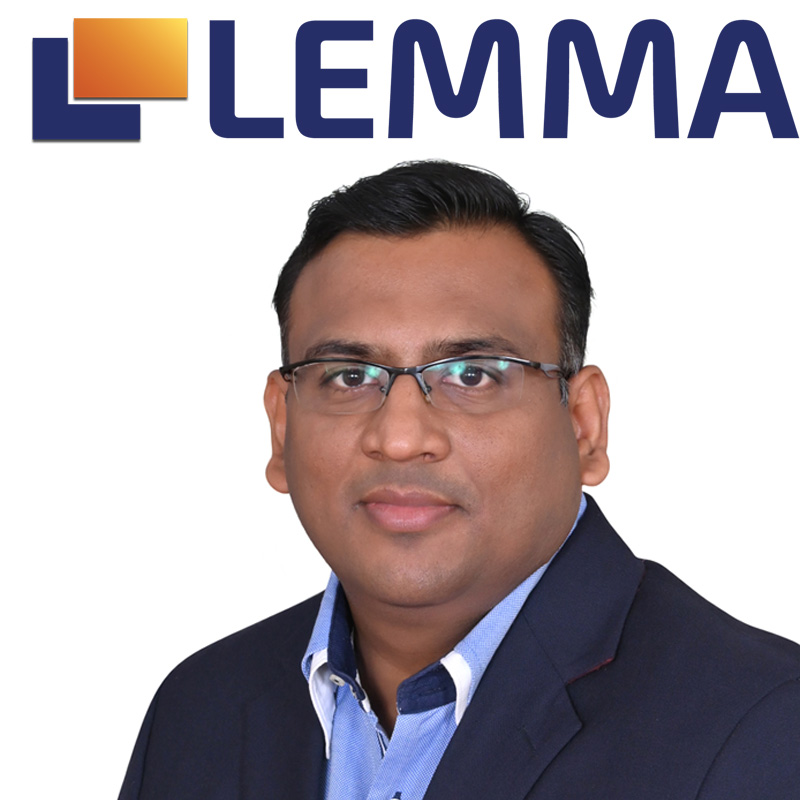
    Mumbai: Lemma, an independent supply-side platform for digital out-of-home, announced the appointment of Puneet Biyani as company president. He will take on his new role immediately and be a key contributor to enhancing Lemma’s global footprint.

    Biyani joins Lemma with over two decades of experience in business operations, finance, international marketing, and strategy. His most recent stint was with Times OOH, a subsidiary of Bennett Coleman & Co. Ltd.

    As president, Biyani will work closely with the board and the leadership team across APAC and other regions to craft the company’s business growth vision and expansion strategy into global markets. He will also oversee finance, business planning, process automation, fundraising, & business operations for Lemma across all markets.

    Having spent the larger part of his career with The Times of India Group, Biyani has extensive out-of-home advertising experience. He held the position of chief financial officer for Times Innovative Media Ltd. (Times OOH) while also leading their Mauritius business.

    Biyani has worked with global organisations like Price Waterhouse and Goldman Sachs. On the academic front, he is a gold-medal-winning chartered accountant and Harvard Business School alumnus.

    Lemma has become the go-to platform for enabling programmatic buying of out-of-home (OOH) media by a wide range of clients, including top digital media agencies, advertising giants, and major brands around the world today.

    On joining Lemma, Biyani said, “I am really excited to be part of this amazing team. Lemma has been a pioneer in the digital advertising segment. I look forward to working closely with the team on the exciting journey ahead. The space is bound to expand rapidly, and on the technology front, Lemma is well positioned to lead and shape the development.”

    “Having Biyani onboard as company president at Lemma will inject a new level of energy and innovative thinking to help accelerate the company’s growth and attain our vision of transforming DOOH into mainstream digital as we enter a new phase of scaling business,” said Lemma founder & CEO Gulab Patil.

    Patil adds, “His expertise aligns perfectly with our business expansion plan as we continue to strengthen our technology and team globally and enhance our programmatic DOOH presence.”

    Biyani will be based out of Lemma’s Delhi office and will serve as the liaison between all teams and markets from the capital city.

  • Essel Group engages Goldman Sachs to sell half its stake in Zee Entertainment

    Essel Group engages Goldman Sachs to sell half its stake in Zee Entertainment

    Mumbai: 13th November 2018, Subhash Chandra and family along with its advisors met in Mumbai over the Diwali weekend to undertake a strategic review of its businesses in view of the changing global media landscape. The strategic review underscored the importance of technological advancements such as AI, IOT, 3D printing AR, VR and many more. There is informed recognition that the world is convergent today and the lines across media, telecom, manufacturing and technology are thinner than ever. The semi-conductor business also appeared to be a promising opportunity, but due to its large capital requirement it was ruled out. It was observed that these developments will impact virtually all businesses across sectors and business practices will be driven by technological innovation. The review showed that the family needs to accelerate efforts to stay ahead of fast changing trends.

    The review noted that with the current 1.3 billion viewers and close to 50 million digital viewers growing at a fast pace, ZEEL is well placed to benefit from current market trends due to its strong brand & bouquet of domestic & international channels. Adding to that strength, ZEE5 will further enable the company to leverage the benefits of changing video consumption trends, contributing significantly over the coming years. The management of ZEEL under Punit Goenka and Amit Goenka has been well appreciated by all stakeholders and reflected in the performance of the company. Speaking on where the business stands today, Jawahar Goel said, "Punit and Amit have made the right sustainable investments for the future and the business is growing ahead on all fronts in a focused and disciplined way".

    On its own, ZEEL would remain a leader in both linear and digital distribution. It has the consumer insights and knows how to produce and deliver content for the South Asian diaspora globally. The management depth the Company has built over last two decades distributing content globally in 12 foreign languages puts the Company in a unique position. It has strong revenue streams including advertising and subscription – domestic and international. However, there is recognition that a right global strategic partner will help in transforming ZEEL further, and maximise long term value. It will transform it into a global media-tech player with a unique offering of content to the main stream audiences in 170 plus countries.

    It has been decided to undertake a strategic review of Essel's shareholding in ZEEL with a view to maximize value for the business. The proposed transaction to divest upto 50% of Essel's
    holding to such a partner, is expected to address the Essel Group's capital allocation priorities and will allow ZEEL shareholders to capture the full value of India's largest entertainment broadcaster with an ever strengthening bouquet Essel has decided to appoint Goldman Sachs Securities (India) Ltd. as their investment banker and US and European based LionTree as an international strategic advisor for this exercise. Essel expects the outcome of the strategic review to be concluded by March/April 2019. This transaction will meet the objectives of the Essel Group as well as the minority shareholders of ZEEL.

    India remains a priority market for Subhash Chandra and the Essel Group and the family believes that India is at the cusp of significant growth. The family will continue to invest in growth opportunities in India. Regardless of the outcome of this exercise, Essel is committed to create significant long term value in ZEEL and shall keep on contributing in every possible way going forward.

  • Reliance Jio acquires RCom’s wireless infra assets

    Reliance Jio acquires RCom’s wireless infra assets

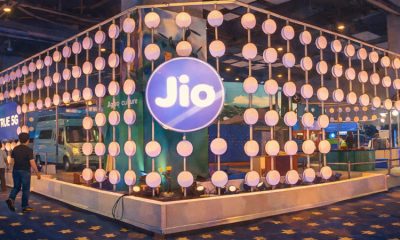
    Mumbai: Reliance Jio Infocomm Ltd (RJio), a subsidiary of Reliance Industries Ltd (RIL), today signed a definitive agreement for the acquisition of the wireless infrastructure assets of Reliance Communications Ltd (RCom).

    An asset monetisation process for RCom assets was mandated by the lenders of RCom, who appointed SBI Capital Markets Ltd to run the process. The process was supervised by an independent group of industry experts. RJio emerged as the successful bidder in the two-stage bidding process.

    Consequent to the agreement, RJio will acquire assets under four categories–towers, optic fibre cable network, spectrum and media convergence nodes from RCom and its affiliates. These assets are strategic in nature and are expected to contribute significantly to the large scale roll-out of wireless and fibre to home and enterprise services by RJio.

    The acquisition is subject to receipt of requisite approvals from governmental and regulatory authorities, consent from all lenders, release of all encumbrances on the said assets and other conditions precedent. 

    Consolidation has been the buzzword in the telecommunications industry. From as many as 13 players at one point in time, we are now left with just four major contenders.  Earlier this year, Vodafone India and Idea Cellular decided to merge operations to create India’s largest telecom operator worth more than $23 billion beating Sunil Bharti Mittal-led Airtel. 

    RJio is being advised by Goldman Sachs, Citigroup Global Markets, JM Financial Private Limited, Davis Polk & Wardwell LLP, Cyril Amarchand Mangaldas, Khaitan & Co and Ernst & Young on this transaction.

    Also Read:

    The year the telecom sector quaked

    Jio continues leading broadband subs addition while wireline internet loses subs in Oct

  • Martin Sorrell on how WPP is combating ad world slowdown

    Martin Sorrell on how WPP is combating ad world slowdown

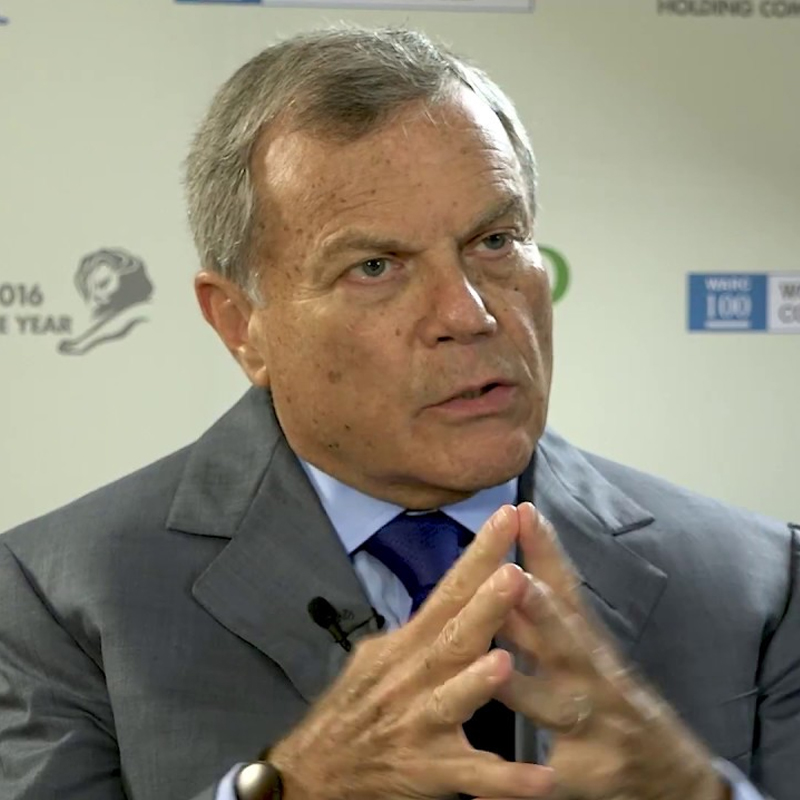
    MUMBAI: It’s been sometime that we have got to listen to advertising heavyweight and guru Martin Sorrell’s unique insights. For those who have missed him, he’s still at his vintage best. The WPP CEO shared his worldview on what’s impacting the advertising business and how the industry is combating with the slowdown in a fireside chat with Goldman Sachs analyst Lisa Yan at the 26th Goldman Sachs Communacopia Conference held last week.

    Sorrell pointed out that the advertising industry has been generally  going through a slow growth-pace for a while now, though it has seen some upward movements for a short period. The reasons: low-economic growth, low-inflation, very little pricing power, and focus on cost, amongst clients. “That’s been tolerable, certainly up until, I would say the end of 2016,” expressed Sorrell. “What we started to see, a little bit of softness…certainly in Q4 of last year.”

    What caused this slowdown? Sorrell gave at least three hypotheses that could have contributed, and could continue to do so, and industry will have to have adequate responses to them.

    The first being consulting firms who have been looking at generating cost savings for bottomline-focused corporations, and the first expense they have been scratching out is advertising.  

    “I think you can build the case, so that consultants, it’s not just an Accenture or Deloitte or BCG or McKinsey or Bain, go into client and say you’re spending too much money generally, your costs are too high, we’ll see if we can do something about it, and that fans out from there,” said Sorrell.

    The second hypothesis is that increasingly agencies and brands have been diverting spends towards Google and Facebook. “Google and Facebook have become significant  destinations… we are the most significant customer with  the two – on behalf of our clients,” he said. “If Google was $5 billion, Murdoch $2.25 billion and Facebook $1.7 billion last year, this year the figures are Google $5.5 billion-$6billion, Facebook $2.5 billion, and Murdoch $2.25 billion.”

    Sorrel labeled the two digital giants as frenemies, though he acknowledged that they have become friendlier than last year, especially Google.

    The third hypothesis – which he called the most plausible reason for the impact this year – “is that in an era of cheap capital, a zero cost — or close to zero-cost capital, there are pools of capital which fund zero-based budgeting approaches or private equity activist approaches that are putting tremendous pressure on particularly packaged goods companies,” said Sorrell. “Their approach has get rid of R&D spending, get reduced marketing spending and its running across sectors…Beyond tech and pharma, top-line growth is very hard to come by. And, I think that’s the central issue. So, as long as there’s cheap capital, as long as there is this very significant pressure of a zero-based budgeting and an activist later, you’re going to see pressure.”

    Sorrell does not expect the era of cheap capital to go away quickly thanks to Hurricane Harvey and the tragedies in Houston and Florida. “The results of this is indices rise, the fed probably is going to keep interest rates down lower longer,” he expressed.

    WPP has been responding to these challenges, he pointed out, through what it calls horizontality – basically integrating the  company in a much more aggressive, seamless, efficient manner.

    The second response has been zooming in on the high growth markets of Asia, Latin America, Africa, Middle East and central and eastern Europe. “That continues. That’s a third of our business; it continues to be a high level of focus,” he said.

    WPP, has got a razor sharp eye on digital which is 40 per cent of its business. “It is very much in the target range that we identified three, four, five years ago. It doesn’t stop at 40 per cent, 41 per cent, which it was in the first half of the year; it has to go beyond that, so probably to the extent where ultimately everything is permeated in one way or another by digital. But that’s some way off, but getting closer,” highlighted Sorrell.

    “Making data, the centre or a significant part of the centre of what we do is critically important, particularly when you have disintermediation in retail from the likes of Amazon or Alibaba or Tencent or JD.com or others where the battlefield will ultimately be about who controls the data,” he added.   He, however, mentioned that the growth of data has not been as good as the industry would like to see it but that doesn’t diminish its importance in relation to horizontality.

    Sorrell expressed his worry that what’s happening in the packaging goods industry could have worrying implications as a whole for the ad business.

    “My hypothesis would be that cheap money is chasing packaged goods and driving up the valuations. And those last three quarters, if you look at revenue growth at 2.4 per cent, it’s mainly price, very little volume. And those of you know how packaged goods companies function know that the moment the volumes stutter and stagnate or even fall, which is the case with a number of packaged goods companies, the trouble starts. If you have fewer consumers, fewer customers,  that’s when the trouble starts. So, I come back to this, and it’s fundamental obviously, it’s our lifeblood, I come back to this thing that investing in innovation and brand is key, and that’s the heart of it,” the WPP chief elaborated.

    WPP has lost out on a lot of business (AT&T and VW) in recent times, and Sorrell stated that competition will always stay but it’s a question of price. “I’ve never heard any of our people say to me it was because we didn’t do a good job, they’ve always said it’s because somebody else discounted and we lost the business on the basis of price. Sometimes, that maybe the case but I think mainly it’s due to the qualitative side of the offer. But, I think we’ve got our act together much better on integration,” he added.

    Google is the biggest destination for WPP’s media spend for their clients. “It is by definition currently the most powerful media channel that you can find, search being the primary product. Boycotting that, not accessing it, I think is a mistake. Working with Google to improve the way that they manage the process is the way to go,” he said.

    Sorrell also mentioned that WPP will be changing its regional management approach encouraging more integration on shared client work across agencies. “Well, with the growth of technology, with the rise of the BRICs — Brazil, Russia, India and China should not be regional reports, they should be direct to the center. Even if that upsets regional managers,” he quipped.

    He said that he saw Amazon becoming a very serious threat to Google on search with 55 per cent of product searches in the US  emanating from it. “Amazon now has a voice activated device. Every one of the Fearsome Five has a voice activated device. What that means for brands is very serious.”


  • DEN divests further 25 per cent from Delhi Dynamos

    DEN divests further 25 per cent from Delhi Dynamos

    MUMBAI: Indian cable TV major DEN Networks is increasingly getting itself out of the sports den it had gotten itself into earlier. Today, the Sameer Manchanda-promoted SN Sharma-run Goldman Sachs-backed multisystem operator (MSO) informed the BSE that it had divested another 25 per cent equity from its sports initiative DEN Sports in favour of Wall Street Investments.

    The latter represents the business interests of the UAE-based entrepreneur Dr Anil Sharma-run GMS group. GMS is a world major buyer of ships for recycling.

    The price at which the equity stake has been transferred was not disclosed to the stock exchange, but Wall Street Investments holding in DEN Sports has gone up to 80 per cent equity while DEN Network’s has fallen to 20 per cent. DEN Sports controls 100 per cent of DEN Soccer which manages the Indian Soccer League Delhi-franchise owning Delhi Dynamos F.C.

    Wall Street Investments, on its part, has received Registrar of Companies permission to change the name of the two firms to Delhi Sports and Delhi Soccer. And DEN Networks also gave the name change the go-ahead following a board meeting.

    Earlier this year, DEN Networks had lopped off 55 per cent of its stake in DEN Sports to Wall Street Investments at a price of Rs 43.32 crore.

    The cable TV firm has been under pressure from its investors to get back to business basics and monetise better the cable TV digitisation process that India has been going through over the past three years. It rehired co-founder SN Sharma from Reliance Jio as the CEO to get its house in order.

  • DEN divests further 25 per cent from Delhi Dynamos

    DEN divests further 25 per cent from Delhi Dynamos

    MUMBAI: Indian cable TV major DEN Networks is increasingly getting itself out of the sports den it had gotten itself into earlier. Today, the Sameer Manchanda-promoted SN Sharma-run Goldman Sachs-backed multisystem operator (MSO) informed the BSE that it had divested another 25 per cent equity from its sports initiative DEN Sports in favour of Wall Street Investments.

    The latter represents the business interests of the UAE-based entrepreneur Dr Anil Sharma-run GMS group. GMS is a world major buyer of ships for recycling.

    The price at which the equity stake has been transferred was not disclosed to the stock exchange, but Wall Street Investments holding in DEN Sports has gone up to 80 per cent equity while DEN Network’s has fallen to 20 per cent. DEN Sports controls 100 per cent of DEN Soccer which manages the Indian Soccer League Delhi-franchise owning Delhi Dynamos F.C.

    Wall Street Investments, on its part, has received Registrar of Companies permission to change the name of the two firms to Delhi Sports and Delhi Soccer. And DEN Networks also gave the name change the go-ahead following a board meeting.

    Earlier this year, DEN Networks had lopped off 55 per cent of its stake in DEN Sports to Wall Street Investments at a price of Rs 43.32 crore.

    The cable TV firm has been under pressure from its investors to get back to business basics and monetise better the cable TV digitisation process that India has been going through over the past three years. It rehired co-founder SN Sharma from Reliance Jio as the CEO to get its house in order.

  • Competition regulator okays Goldman Sachs stake purchase in Den Networks

    Competition regulator okays Goldman Sachs stake purchase in Den Networks

    MUMBAI: Investment banking major Goldman Sachs has received the Competition Commission’s approval to increase its stake in Den Networks to over 24 per cent by acquiring additional shares through preferential allotment route.

    indiantelevision had reported that MSO Den Networks existing shareholder Goldman Sachs is picking up 1.58 crore equity shares at a price of Rs 90 per share via a preferential allotment. This will take Goldman Sachs’ equity stake in the cable TV service provider up from 17.79 per cent to 24.49 per cent and involve an injection of much needed capital to the tune of Rs 142.43 crore. The divestment is expected to trim promoter stake in the company to 37 per cent.

    Media observers say that the Indian cable TV ecosystem – including the government, the regulator TRAI, broadcasters, MSOs and cable TV operators – has stumbled in the digitization process which was mandated by the ministry of information and broadcasting four years back. They have also been saying that investor sentiment towards the sector is pretty weak. Shares of most leading Indian cable TV companies have been depressed, and have been parked at lows. However, DEN Networks has been taking steps to correct the perception. It has brought back its CEO SN Sharma who has since been working on raising revenues and profitability.

    The transaction has now been cleared by the Competition Commission of India (CCI), as per the regulator’s website.

    The additional acquisition would be done by the holding companies of Goldman Sachs — Broad Street Investments (Singapore) Pte (BSIPL) and MBD Bridge Street 2016 Investments (Singapore) Pte (MBD), according to filing submitted to CCI. BSIPL and MBD are investment holding companies and are not engaged in business of manufacturing of products or the provision of service, PTI reported. Den Networks is into distribution of television channels through analog as well as digital modes.

    The Goldman investment came as a shot in the arm for Den Networks as well as the Indian cable TV sector which is grappling with reinventing its business model.

    Investors had greeted the Goldman Sachs announcement with delight. Den Networks had made an investor presentation in which it stated that its digital rollout is progressing well. Of the 13 million subscribers it has had, almost 9.8 million of them upgraded to digital in Q1 2017. Five million of these are in DAS Phase I & II areas with the remainder being in Phase III and phase IV.

  • Competition regulator okays Goldman Sachs stake purchase in Den Networks

    Competition regulator okays Goldman Sachs stake purchase in Den Networks

    MUMBAI: Investment banking major Goldman Sachs has received the Competition Commission’s approval to increase its stake in Den Networks to over 24 per cent by acquiring additional shares through preferential allotment route.

    indiantelevision had reported that MSO Den Networks existing shareholder Goldman Sachs is picking up 1.58 crore equity shares at a price of Rs 90 per share via a preferential allotment. This will take Goldman Sachs’ equity stake in the cable TV service provider up from 17.79 per cent to 24.49 per cent and involve an injection of much needed capital to the tune of Rs 142.43 crore. The divestment is expected to trim promoter stake in the company to 37 per cent.

    Media observers say that the Indian cable TV ecosystem – including the government, the regulator TRAI, broadcasters, MSOs and cable TV operators – has stumbled in the digitization process which was mandated by the ministry of information and broadcasting four years back. They have also been saying that investor sentiment towards the sector is pretty weak. Shares of most leading Indian cable TV companies have been depressed, and have been parked at lows. However, DEN Networks has been taking steps to correct the perception. It has brought back its CEO SN Sharma who has since been working on raising revenues and profitability.

    The transaction has now been cleared by the Competition Commission of India (CCI), as per the regulator’s website.

    The additional acquisition would be done by the holding companies of Goldman Sachs — Broad Street Investments (Singapore) Pte (BSIPL) and MBD Bridge Street 2016 Investments (Singapore) Pte (MBD), according to filing submitted to CCI. BSIPL and MBD are investment holding companies and are not engaged in business of manufacturing of products or the provision of service, PTI reported. Den Networks is into distribution of television channels through analog as well as digital modes.

    The Goldman investment came as a shot in the arm for Den Networks as well as the Indian cable TV sector which is grappling with reinventing its business model.

    Investors had greeted the Goldman Sachs announcement with delight. Den Networks had made an investor presentation in which it stated that its digital rollout is progressing well. Of the 13 million subscribers it has had, almost 9.8 million of them upgraded to digital in Q1 2017. Five million of these are in DAS Phase I & II areas with the remainder being in Phase III and phase IV.

  • DEN seeks Goldman Sachs investment nod from shareholders

    DEN seeks Goldman Sachs investment nod from shareholders

    MUMBAI: Leading Indian multisystem cable TV operator (MSO) DEN Networks –promoted by Sameer Manchanda- which got its board’s nod to issue another 1.58 crore shares at a price of Rs 90 per share to existing investor Goldman Sachs is now seeking shareholder approval for the same through an extraordinary general meeting to be held on 14 October 2016.

    DEN says it will be issuing the preferential shares to Goldman Sachs affiliate firms Broad Street Investments (Singapore) Pte Ltd and MBD Bridge Street 2016 Investments Pte Ltd. The former will subscribe to 1.30 crore shares taking its holding to 4.18 crore shares. Constituting 21.6 per cent of Den Networks equity. The latter will mop up 28.24 lakh shares and a first time investor in DEN its holding will be at 1.46 per cent.

    Once completed the preferential share issue will see the promoters’ shareholding falling from 28.52 per cent to 26.19 per cent; corporate bodies from 11.53 per cent to 10.59 per cent; institutional investors from 22.20 to 20.39 per cent; private corporate bodies from 7.30 per cent to 6.71 per cent and finally the holding of foreign bodies will jump from 22.93 per cent to 29.21.

    DEN Networks has said it will use the $21 million funds to pare down its debt from Rs 852 crore in June 2016 and also expand its broadband business through its subsidiary. The company’s debt stood at Rs 895 crore in March 2016 and at Rs 930 crore in March 2015. Between 31 March 2016 and June 2016, DEN Networks raised Rs 89 crore in debt and repaid Rs 132 crore.

  • DEN seeks Goldman Sachs investment nod from shareholders

    DEN seeks Goldman Sachs investment nod from shareholders

    MUMBAI: Leading Indian multisystem cable TV operator (MSO) DEN Networks –promoted by Sameer Manchanda- which got its board’s nod to issue another 1.58 crore shares at a price of Rs 90 per share to existing investor Goldman Sachs is now seeking shareholder approval for the same through an extraordinary general meeting to be held on 14 October 2016.

    DEN says it will be issuing the preferential shares to Goldman Sachs affiliate firms Broad Street Investments (Singapore) Pte Ltd and MBD Bridge Street 2016 Investments Pte Ltd. The former will subscribe to 1.30 crore shares taking its holding to 4.18 crore shares. Constituting 21.6 per cent of Den Networks equity. The latter will mop up 28.24 lakh shares and a first time investor in DEN its holding will be at 1.46 per cent.

    Once completed the preferential share issue will see the promoters’ shareholding falling from 28.52 per cent to 26.19 per cent; corporate bodies from 11.53 per cent to 10.59 per cent; institutional investors from 22.20 to 20.39 per cent; private corporate bodies from 7.30 per cent to 6.71 per cent and finally the holding of foreign bodies will jump from 22.93 per cent to 29.21.

    DEN Networks has said it will use the $21 million funds to pare down its debt from Rs 852 crore in June 2016 and also expand its broadband business through its subsidiary. The company’s debt stood at Rs 895 crore in March 2016 and at Rs 930 crore in March 2015. Between 31 March 2016 and June 2016, DEN Networks raised Rs 89 crore in debt and repaid Rs 132 crore.