Tag: Goafest 2025

  • Ad reels and recall: Senthil Kumar reveals what set the jury screens ablaze at Goafest 2025

    Ad reels and recall: Senthil Kumar reveals what set the jury screens ablaze at Goafest 2025

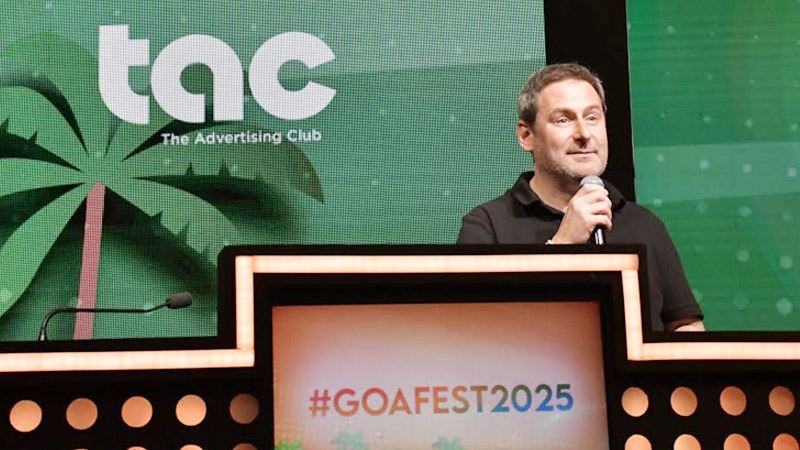
    MUMBAI: In a session that played out like a director’s cut of India’s most memorable commercials, VML India CCO Senthil Kumar took the Goafest 2025 audience inside the jury room for a deep dive into what makes an ad truly work. The verdict? If you’d willingly watch it again, it’s doing something right.

    Speaking under the session banner ‘What Ignited the Jury Room?’, Kumar opened with a simple litmus test: “The best ad films aren’t just one-watch wonders. A great film has repeat value”.

    Kumar walked attendees through a curated list of top-performing ad films that had not just caught the jury’s eye, but had also burned themselves into the audience’s collective memory.

    One of the top contenders was the Lahori Zeera commercial. “Every frame had the brand. That’s rare today”, Kumar said, noting how strong visual branding contributed to high recall.

    Another winner was the Veeba Desi Chinese spot, which cleverly flipped expectations. “Chinese characters behaving like Indians—it’s fresh, culturally playful, and paired with a sticky soundtrack. That’s what lands”, he said.

    He also tipped his hat to the Snickers ad directed by Rohit Shetty. While Kumar admitted it wasn’t a novel idea globally, its execution was unmistakably local and creatively bold. “’Grab a Snickers’ may not be new, but how you grab attention is”, he said.

    In the Dream11 campaign, Kumar praised its sharp scripting and cast synergy. “It’s not easy to pull off dialogue-led storytelling with both actors and cricketers, but this one had audiences asking, ‘Aapki team mein kaun hai?’ on loop”.

    He rounded off with the Adani campaign highlighting rural electrification. “’Pehle pankha aayega, phir bijli aayegi’ wasn’t just a line, it was a layered narrative of transformation”. Kumar added.

    Throughout the session, Kumar emphasised one consistent metric: resonance. “An idea may be clever, but if it doesn’t move you—or make you laugh, pause, or hum—it’s just noise”, he concluded.

    Goafest’s jury, he noted, rewarded ads that nailed both craft and clarity, but above all, evoked genuine emotion or reaction. In the scroll-and-skip era, Kumar reminded creatives that the real test of storytelling lies in its staying power.

  • Being uncomfortable is a creative superpower, says Marcel CEO Youri Guerassimov at Goafest 2025

    Being uncomfortable is a creative superpower, says Marcel CEO Youri Guerassimov at Goafest 2025

    MUMBAI: At Day three of Goafest 2025, Marcel (Paris) chief creative officer & CEO Youri Guerassimov delivered a wake-up call to a packed house, reminding brands that playing safe is a fast-track ticket to irrelevance. His keynote, titled ‘Creativity That Dares to Disrupt’, challenged marketers to ditch comfort and lean into creative bravery.

    “Bravery in advertising is about stepping outside comfort zones and challenging norms”, said Guerassimov, adding that brands face an uphill battle for attention with over 6,000 ads bombarding consumers each day. Visibility alone no longer cuts it; what cuts through is conviction.

    Citing global studies, he noted that 86 per cent of consumers (Edelman) now expect brands to take a stand on social or environmental issues, and 66 per cent (Accenture) are willing to switch allegiance if companies remain silent. “Fear is temporary”, he warned. “Regret is forever”.

    Drawing from iconic campaigns, Guerassimov spotlighted Nike’s controversial Colin Kaepernick ad as a case of calculated defiance and cultural impact. He also praised Volvo for its courage in sharing a safety innovation with rivals—an act that served both purpose and people.

    Importantly, he clarified that bravery in branding doesn’t always require provocation. “Bravery can be strategic, design-led, or business-oriented”, he said, showcasing Mcdonald’s minimalist billboard and Marcel’s ‘Inglorious Fruits and Vegetables’ campaign. The latter began as a simple retail concept and grew into a national movement tackling food waste.

    Guerassimov also emphasised that bravery lies not in budgets but in belief. Whether it’s a few purposeful words added to a contract or overhauling a store layout to reflect values, real change comes from intent and execution.

    He celebrated Patagonia’s headline-making move to donate its profits to climate activism as a prime example of purpose-driven disruption. “Bravery is a strategic tool”, he affirmed. “A superpower to connect with consumers and lead markets”.

    Ultimately, Guerassimov urged brands to trust their ideas and act on them decisively. “When you feel a little uncomfortable with your idea, that’s often the sign you’re on the right track”.

  • Jury duty or ad brief? Raj Kamble lays down the real test of creative craft at Goafest

    Jury duty or ad brief? Raj Kamble lays down the real test of creative craft at Goafest

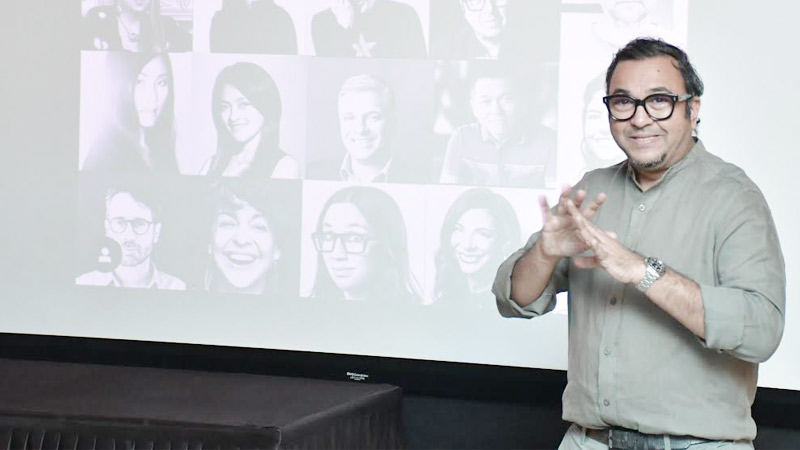
    MUMBAI: It was less red carpet, more war room as Famous Innovations founder & CCO Raj Kamble took centre stage on Day three of Goafest 2025. Speaking at the session titled ‘What Ignited the Jury Room?’, Kamble broke down the behind-the-scenes chaos, chemistry, and cold truths of judging at one of the industry’s most-watched award marathons.

    With over 500 entries to sift through in just three days, Kamble said the pressure was nothing short of a creative crucible. “You have 15 restless judges, limited sleep, and 30-second coffees. It’s not glamorous. It’s gladiatorial”, he quipped, setting the tone for an unfiltered dive into how work truly gets weighed.

    At the heart of his message was a blunt reminder: industry cliques still exist. “Networks can feel like cartels. But craft can still break through if it punches above its weight”, Kamble remarked. He urged creators to think of their case study videos not as routine documentation but as persuasive pitches. “It’s your best ad – and the jury is your target audience”.

    In a time-crunched jury room, the first few seconds can make or break a campaign. Kamble emphasised, “Hook them in the first seven seconds. Don’t save your best for last – they may not get there”.

    He challenged the cookie-cutter rulebook too. “There’s no law that says your case study has to be two minutes long. If your story needs three, take it. If it needs one, be sharper”.

    Most importantly, he differentiated between ideas and execution. “A strong idea can fail because of poor storytelling. Show the change, not just the communication”.

    Closing his talk, Kamble urged agencies to honour both their ambition and their audience. “Don’t just chase a Lion. Chase impact. That’s what gets the jury talking”.

  • Ideas took the stand as Goafest jury Anupama Ramaswamy championed storytelling that stirred minds and movements

    Ideas took the stand as Goafest jury Anupama Ramaswamy championed storytelling that stirred minds and movements

    MUMBAI: Havas Creative India CCO & JMD Anupama Ramaswamy took the Goafest 2025 day three stage with a fiery address that tore through apathy and spotlighted the ideas that truly set the jury room ablaze. Speaking at the session titled ‘What Ignited the Jury Room?’ under the theme ‘Ignite Your Mind’, Ramaswamy walked the audience through a curated list of campaigns that, in her words, “didn’t just tick boxes but flipped the narrative”.

    The Jury leaned into creativity not as an embellishment but as a battering ram against social inertia. Among the campaigns highlighted was the Lays x UNA collaboration – ‘Farm Equal’, which reframed the lens on gender equality by spotlighting female farmers. The storytelling was more than empathetic; it was revolutionary in the way it reclaimed space for women in India’s agricultural narrative.

    Reliance’s ‘Pink Star Rating’ received a nod as the world’s first global safety app dedicated to women travellers, turning safety from a concern into a creative proposition. The app served both function and form, giving users the tools to stay informed while providing marketers with an inspiring brief: build tech that protects.

    Football found a new pitch in Mahindra’s ‘Nanhi Kali’ campaign, which shattered traditional ideas about girlhood by encouraging girls to embrace ambition through sport. The ad steered away from stereotypical portrayals and celebrated freedom, focus, and the fierce footwork of aspiration.

    In the same breath, Navneet’s Colour Blindness Book tackled the overlooked needs of children with colour vision deficiency. The campaign aimed to help one crore Indian students, merging design thinking with inclusive education policy.

    Sabhyata’s Diwali ad, made in collaboration with Motherhood Hospitals, shifted the spotlight to working mothers, balancing duty and desire with poise. Meanwhile, Vaseline’s initiative for the transgender community offered skincare designed specifically for their needs—a product-led campaign built on the foundation of visibility and respect.

    Beyond India, a Japanese campaign supporting surname reform for women questioned why marriage should erase identity. By giving voice to choice, the work opened a broader conversation on equality through culture.

    Wrapping up, Ramaswamy reminded the room that it wasn’t causes but creativity that clinched the win. “Big ideas lead—causes follow”, she asserted, adding, “Creativity is the catalyst, not the charity”.


  • AI, angst and applause: Goafest day three blends bold ideas with brave tech in storytelling

    AI, angst and applause: Goafest day three blends bold ideas with brave tech in storytelling

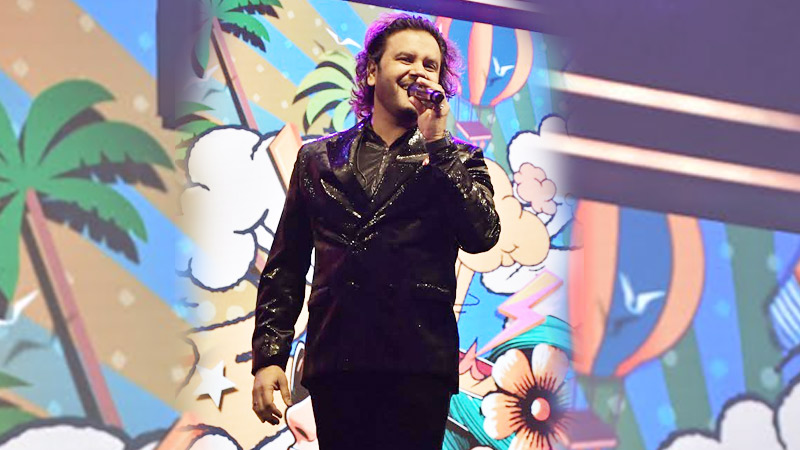
    MUMBAI: Day three at Goafest 2025 opened not with a whisper but a roar. Under the theme Ignite Hungama, Indian playback singer Javed Ali lit up the morning with a rousing set, presented by Mahindra Auto and Mahindra Electric Origin SUV in association with Bingo! What followed was a cocktail of courage, code, and craft.

    Marcel France CCO & CEO Youri Guerassimov delivered a punchy keynote on ‘Creativity That Dares to Disrupt’ – presented by Youtube under the theme Ignite Bravery. He challenged the room to get comfortable with discomfort. “Fear is temporary. Regret lasts far longer”, he said, quoting campaigns like Nike’s Colin Kaepernick ad and Marcel’s own ‘Inglorious Fruits and Vegetables’. Guerassimov pointed out that 86 per cent of consumers expect brands to take a stand, and 66 per cent are willing to jump ship if they don’t.

    Next, the session ‘How AI is Rewriting the Language of Visual Storytelling’ took centre stage. Amazing Indian Stories founder & CEO Vivek Anchalia demonstrated how AI was bulldozing old production paradigms. From replacing animatics to cutting the need for bloated crews and locations, AI was making storytelling faster, cheaper, and sharper. His upcoming AI-powered film Naisha will feature machine-generated drone shots of Uttarakhand. In the fireside chat that followed, Landor president-APAC Lulu Raghavan summed it up: “AI is underhyped. Master it early, lead the next wave”.

    Anchalia added nuance: while AI could mimic drone pans and 3D shots, it couldn’t replace emotional tonality in sound or a filmmaker’s rhythm. He also advised self-learning over formal AI education, hailing online creative communities as the real labs of experimentation.

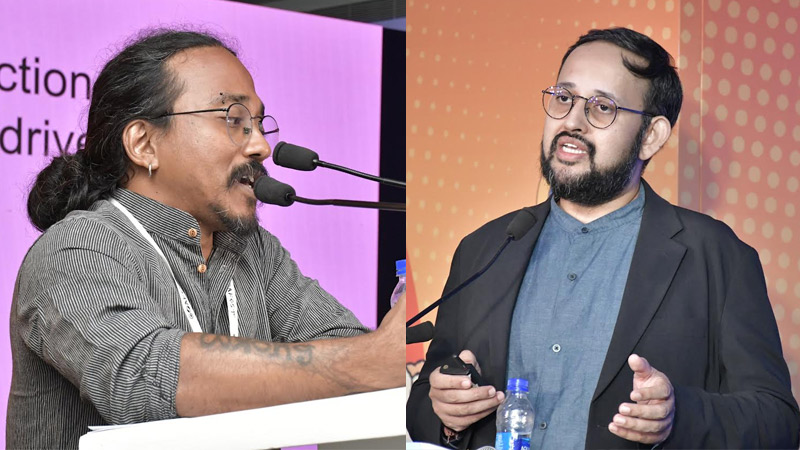
    Meanwhile, the Bioscope – The Cinema ran a series of sessions under the theme ‘What Ignited the Jury Room?’. Havas Creative India CCO & JMD Anupama Ramaswamy insisted the jury prioritised the power of creative ideas over just causes. Famous Innovations founder & CCO Raj Kamble brought his signature candour, likening case studies to ads that must hook judges in seven seconds. VML India CCO Senthil Kumar reminded the room: “If a film makes you want to watch it again, it’s doing its job”. Youri Guerassimov rounded off the jury talks, reiterating that creativity must remain consistent across platforms.

    Adding a personal note, The Advertising Club COO Bipin Pandit launched his book presented by Amazon MX Player and powered by Mediakart. From a viral Linkedin post to a deadline set by AdClub president Rana Barua, the book’s origin story was as compelling as its content. It featured a foreword by Piyush Pandey and an article by Prasoon Joshi. A microsite, www.bipinpandit.com, was launched, along with a Walk of Work display at Cascade.

    Day three also served up a buffet of masterclasses. Gowthaman Ragothaman led a session on data, privacy and intelligence, followed by Vijay Singh’s take on game commerce. Nick Eagleton of D&AD unpacked creative liberation with ‘Ideas Unlocked’. Sana Shaikh from Flipkart Ads outlined their latest innovations. Amogh Dusad from Amazon MX Player guided attendees on seamless brand integration. Meanwhile, Krishnendu Dutta and Vara Prasad of MRSI demystified AI’s impact on consumer insights.

    Lunch was hosted by Vijayavani, wrapping up a first half that balanced firebrand ideas with futuristic tech.


  • Goafest day two blends bold ideas, brand battles and billboard truths under the Goan sun

    Goafest day two blends bold ideas, brand battles and billboard truths under the Goan sun

    MUMBAI: The second day at Goafest 2025 closed on a power-packed note, stitching together the evolving face of leadership, storytelling, advertising, and digital strategy with candid charm and calculated insight.

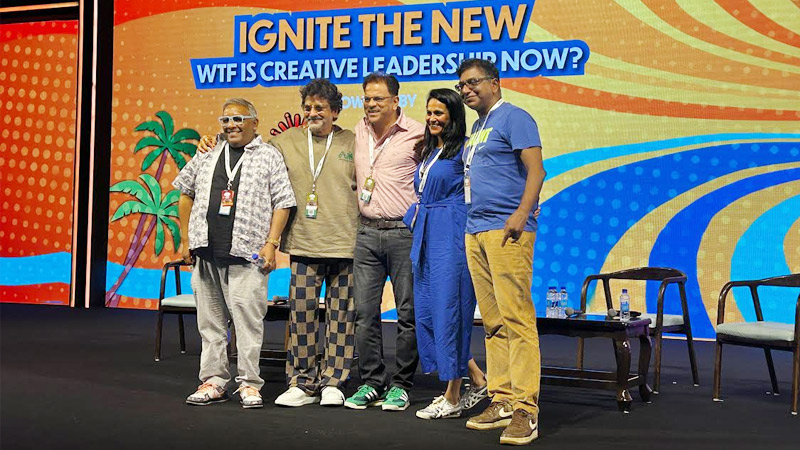
    The post-lunch energy got a creative jolt with the session ‘WTF is Creative Leadership Now?’, where industry veterans Bobby Pawar, Sonal Dabral, Senthil Kumar and Lulu Raghavan broke down the evolving role of the CCO. “If you’re not in an agency where the CCO is central, you’re in the wrong one”, Bobby declared, dubbing the creative head the “instigator-in-chief”. Lulu called for reinstating the CCO as the creative spine, not a spreadsheet slave. Sonal framed the role as a bridge between brand vision and talent culture. Rohit Ohri summed it up: “The CCO today isn’t the loudest in the room but the one who builds safe, collaborative spaces”.

    Next, Amazon MX Player’s Karan Bedi spotlighted the streaming surge. With over 1.4 billion downloads and 250 million active users, MX is doubling down on drama, romance, and reality content across Amazon platforms. “Streaming video ads are outperforming other formats in brand recall”, Bedi noted, predicting digital video advertising will eclipse TV within a year. He laid out a full-funnel strategy integrating shopping signals, micro-dramas and show-based storytelling to help brands find their tribe.

    The attention then shifted outdoors in the IOAA-backed panel ‘The Last Unskippable Medium’. Times OOH’s Shekhar Narayanaswami noted, “You can’t swipe past a billboard”. Ajay Kakar called for killing the ‘digital vs non-digital’ binary. Promita Saha urged brands to go beyond metros, tapping cultural hotspots like melas. Sandeep Bommireddi argued that digital is a horizontal layer across all media. Dipankar Sanyal closed with a reminder: “OOH isn’t guesswork anymore. It’s data-backed, measurable and fiercely effective”.

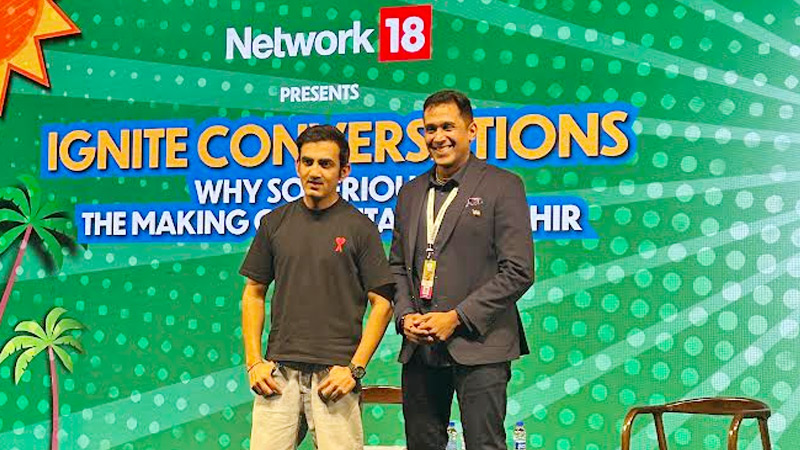
    In a lighter yet no-nonsense fireside chat titled ‘Why So Serious?’, Gautam Gambhir disarmed the crowd with brutal honesty. “10,000 runs don’t matter. Match-winning moments define you”, he said. Speaking on leadership and legacy, Gambhir urged youth to make peace with mistakes: “If you take a decision with the right intent, it’s okay to be wrong”. His message: play for the common man, not the broadcaster.

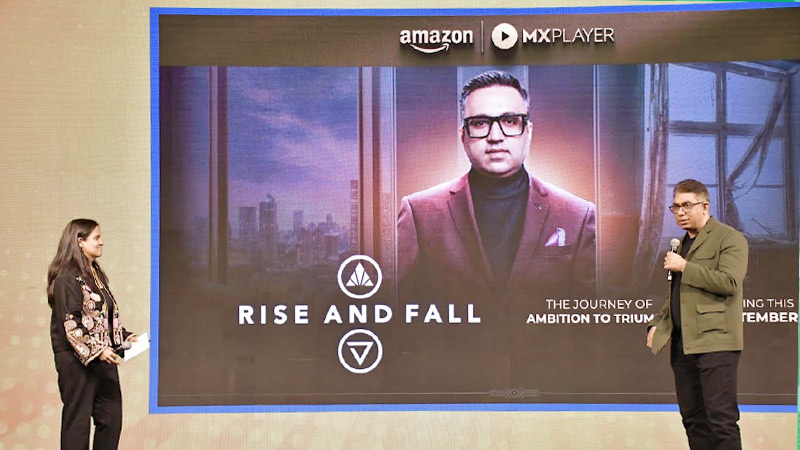
    The storytelling baton passed to ‘Rewriting the Rules of Storytelling’ featuring Suniel Shetty and Deepak Dhar. Shetty spoke of action, discipline and emotional arcs. “Fitness isn’t just muscles, it’s sustainable health”, he said, describing Hunter Season 2 as more heart than hammer. Dhar unpacked Rise and Fall as a metaphorical hustle between privilege and grit. “Great content is built on process and passion”, he said.

    The day wound down with Wine & Cheese hosted by Amazon MX Player, followed by a musical showdown at ‘Advertising Rocks’, giving agency folks their moment to rock the mic. Delegates gathered for a breezy sundowner powered by Truecaller & Big Live before the night turned up with Abby Awards 2025. Set India, Sony Sab and Sharechat handed out honours in digital, design, PR, mobile, and broadcaster categories.

    Masterclasses by Shahad Anand (MediaKart), Sana Shaikh (Flipkart), Nick Eagleton (D&AD), and Senthil Kumar (VML) provided hands-on insights into next-gen ads, innovation pipelines, storytelling craft, and split-second narratives.

    As Goa’s salty breeze cooled the creative heat, day two proved that in a world of scrolls and skips, stories, strategy and serendipity still rule the game.

    Stay tuned as Goafest 2025 enters its final day. For the day three agenda, visit: https://www.goafest.com/goafest2025/event-schedule.php

  • Gautam Gambhir bares it all at Goafest 2025: “Cricket is a part of my life, not my life”

    Gautam Gambhir bares it all at Goafest 2025: “Cricket is a part of my life, not my life”

    MUMBAI: If there were any doubts about Gautam Gambhir being a straight shooter, they were obliterated in the opening minutes of his fireside chat at Goafest 2025. Titled “Why So Serious? The Making of Gautam Gambhir”, the session was anything but sombre. Moderated by CNN News18’s Anand Narasimhan, the hour-long conversation unpacked the mind of one of Indian cricket’s most intense figures—and revealed the grit behind the game face.

    “10,000 runs are not important”, Gambhir asserted early on, dismissing the fetish for stats in favour of match-defining moments. “You don’t play for broadcasters or the media; you play for the common man”. That common man, he noted, has always been his ultimate judge, not press headlines or highlight reels.

    Gambhir emphasised that public memory may be short, but for players, the work behind the scenes is lifelong. His mantra to aspiring cricketers and leaders: “It’s okay to make mistakes. Take decisions with conviction”.

    The conversation took a personal turn as Gambhir spoke of his singular regret—not serving in the army. “If given a choice today, I would give up everything to join”, he said. That spirit, he added, defines both his approach to cricket and life. “I’m not into Bollywood, I’m not into corporates. I’m just here to win”.

    Touching on his coaching stint, Gambhir credited India’s Champions Trophy win to the entire dressing room. “It wasn’t about me or the captain. Everyone contributed”.

    When asked about his notorious intensity, he responded, “There is nothing wrong with having a game face. Cricket is a profession where only one side wins”.

    On heated dressing room exchanges and media narratives, Gambhir remained stoic. “If it’s not personal, it ends on the field. Once the match is done, it’s dinner and back to normal”.

    He admitted that India’s transition phase in red-ball cricket demands patience. “You can’t compare formats. Australia was tough, but so will England be. The key is to stay the course”.

    On retirement, he recalled waking up one morning in 2018 and realising the fire was gone. “If you can’t be the best, it’s time to go. And once you go, don’t look back”.

    Politics, he claimed, “just happened”. He entered with a desire to change things, but eventually returned to cricket. “Five years in politics taught me my peace lies on the pitch”.

    His closing advice was aimed at India’s next generation of leaders: “If your intent is right, don’t fear failure. Lead from the front, be vulnerable, and never stop being honest”.

  • Gender bender agenda breaks bias on brands’ storytelling assembly line

    Gender bender agenda breaks bias on brands’ storytelling assembly line

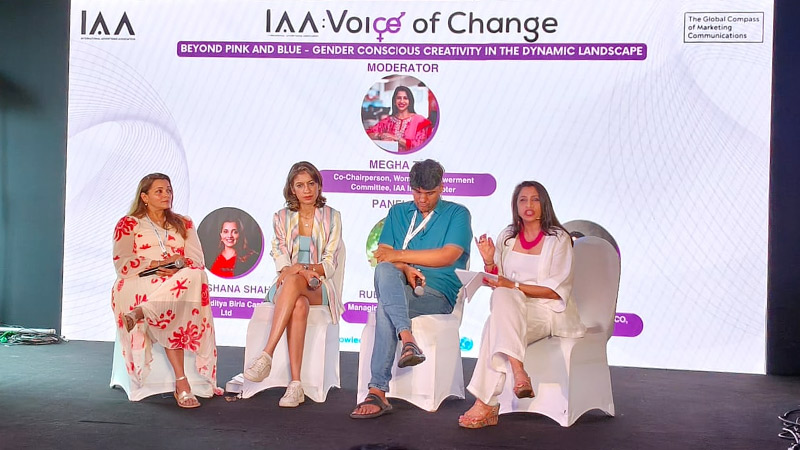
    MUMBAI: Stirring the pot, not the soup, panel shreds the gender script in adland, Forget ‘pink for girls’ and ‘blue for boys’ at the GoaFest 2025 panel Beyond Pink and Blue, industry leaders dismantled the creative clichés still haunting adland like ghosts of campaigns past. From financial services to fashion, panelists shared both their victories and roadblocks in trying to make marketing more inclusive, authentic, and frankly, less boring.

    Moderated by Megha Tata, the discussion brought together voices from across the spectrum like Aditya Birla Capital CMO Darshana Shah, Neil Patel Digital MD Rubeena Singh, Talented co-founder and CCO P.G. Aditya, and Makemytrip CMO Raj Rishi Singh.

    Darshana Shah laid bare the startling findings of a study supported by UNICEF and the Gina Davis Institute: of over 1,000 TV and digital ads analysed using AI, women appeared as often as men but were largely stuck in kitchens or beauty aisles. Men, unsurprisingly, got to handle the chequebooks and cars.

    Even more worrying was how these stereotypes are being hardcoded into generative AI tools. Shah recalled prompting image generators for a 40-year-old Indian woman, only to be served stocky brown-skinned figures wearing bindis with yoga pants. “Even when you say ‘no saree,’ the AI insists on putting her in one,” she quipped, pointing out how algorithms are learning from outdated media input.

    As she explained, “We’re teaching AI stereotypes faster than we’re unlearning them ourselves.”

    Despite leading marketing in a “quintessentially male-targeted” financial services firm, Shah has spearheaded campaigns like Motherhood on Hold, addressing the rising trend of women delaying childbirth due to financial independence. A staggering 45% of Indian women now make that choice, a reality rarely reflected in advertising.

    Still, progress hits walls. Shah shared how she turned down a bold campaign idea around gender-transition challenges in financial documentation simply because the infrastructure and regulation weren’t ready. “We can’t just talk inclusivity if the backend systems still say ‘no’ to identity updates,” she said candidly.

    P.G. Aditiya offered a refreshingly blunt perspective: “Old tropes are not just sexist, they’re creatively lazy.” Behind Talented’s much-lauded work for brands like Tanishq and Urban Company, he credited not just client bravery, but female creators leading the charge from strategy to direction.

    He urged agencies to reframe inclusivity not just as ‘good business’ but ‘good storytelling’. Referencing the Bechdel Test (which Shawshank Redemption famously flunks), he said creatives should challenge the tired setups: men watching TV while women cook. “If your ad only works with that setup, your idea probably isn’t strong enough,” he said.

    Digital may be dynamic, but it’s not immune to legacy mindsets. Rubeena Singh observed that while Gen Z consumers fluidly reject binary gender norms, media decision-makers largely male and over 45, still cling to archaic assumptions.

    From fertility brands that shy away from including men in IVF discussions, to women’s safety campaigns unwilling to speak to male allies, Singh said, “We’ve won some battles, but most briefs still come in wearing blinders.”

    And when briefs do break bias? “It’s usually the younger teams pushing it,” she said, advocating for greater representation at all levels—especially in client rooms where bold ideas often get neutered.

    Across the board, the panel agreed: change starts with who’s in the room. Shah now insists on reviewing director lists for gender diversity before any campaign shoot. “If we want diverse stories, we need diverse storytellers,” she said.

    The path to gender-conscious creativity may not be smooth, but panels like this prove the appetite for transformation is alive and well. As one speaker put it, “Doing the right thing is also often the more interesting creative path.”

    Now that’s a plot twist adland could use.

  • From AI to identity: Goafest day two opens with punchy panels and purpose-driven ideas

    From AI to identity: Goafest day two opens with punchy panels and purpose-driven ideas

    MUMBAI: Day two of Goafest 2025 opened on a high note—literally—with Indian musician Raghav Sachar delivering a live performance titled Ignite Hungama, presented by Sharechat, Moj, and Truecaller. As the crowd swayed, the festival shifted gears into strategy mode with conversations that touched tech, gender, identity, creativity, and commerce.

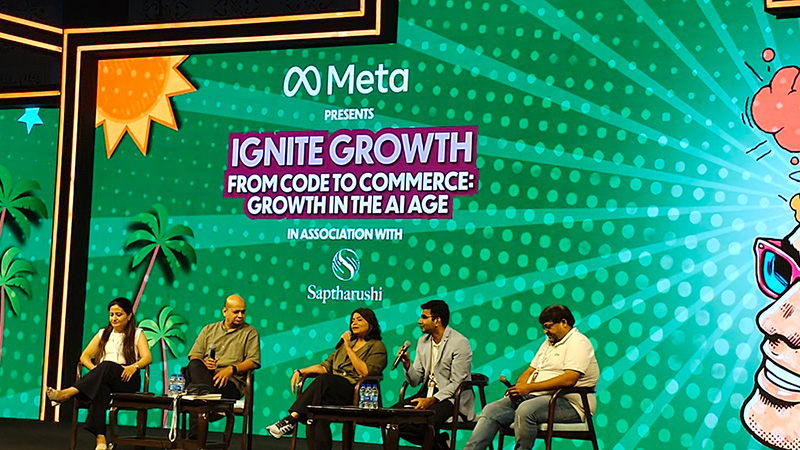
    The morning’s keynote panel, ‘From Code to Commerce: Growth in the AI Age’, brought together Arjun Choudhary (Swiggy), Sanket Prakash Tulangekar (MakeMyTrip), Tejas Apte (HUL), and Pragya Bijalwan (Voltas), moderated by journalist Anuradha SenGupta. Presented by Meta and Saptharushi under the Ignite Growth theme, the discussion centred on how generative AI is upending business operations, creativity and consumer journeys.

    Choudhary described AI as “as fundamental as math”, citing how non-tech teams now use it for demos, dashboards and decision-making. Bijalwan called AI an enabler of “personalisation and predictive maintenance”, adding that it “humanises technology in consumer products”. Hul’s Apte showcased tools like Shikhar and internal GenAI platforms for R&D, while Tulangekar introduced Myra, Makemytrip’s AI-powered assistant built on multi-agent orchestration. Each panellist agreed: AI is a skill, not a threat—and reskilling is the need of the hour.

    At the Gyaan Podium, Warc and Andersen Consulting India unveiled the Pace Principles report. Biprorshee Das and Sujeet Kulkarni called for a balanced media strategy: 50 per cent on long-term brand-building and 50 per cent on performance marketing. “It’s not ‘brand plus performance’, it’s ‘brand-time-performance’”, Kulkarni said. Das urged marketers to stop isolating equity work, calling the ‘multiply effect’ a winning integration model.

    At the Makemytrip Presents AdAsia Macau Road Show, AFAA chairman Srinivasan Swamy confirmed the 39 edition of AdAsia will be held in Macau on 27 August. Swamy called for over 100 Indian delegates and assured attendees of familiar comforts: “Indian food and hospitality will be arranged”.

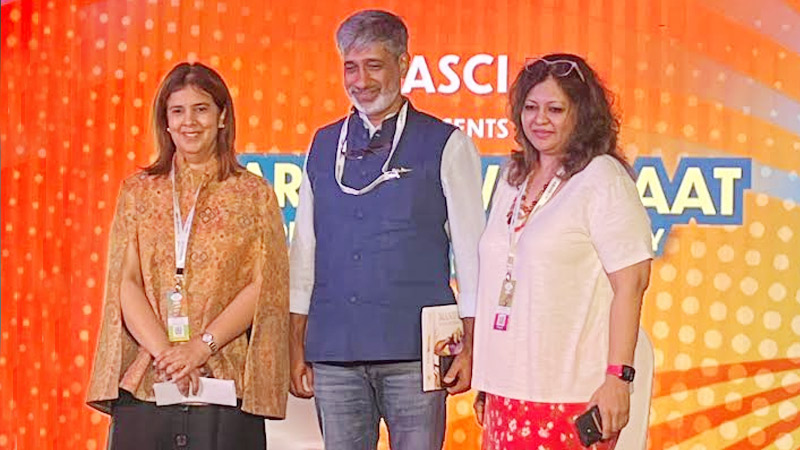
    Back at the Knowledge Partner – ASCI panel, “Mardon Wali Baat: A Discussion on Masculinity in Advertising” brought together Karthi Marshan and Nisha Singhania, moderated by Manisha Kapoor. Singhania tore into the trope of men as ‘fixable’ through marriage. “India is changing, and so are its men”, she said. Marshan added, “Disruption grabs attention, and attention drives engagement—regardless of who you target”. The panel called for a more honest portrayal of modern masculinity.

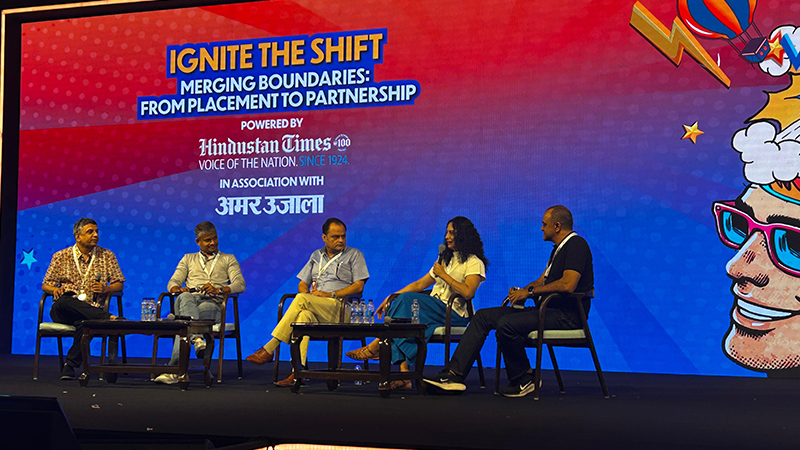
    Under the Ignite The Shift banner, the panel “Merging Boundaries: From Placement to Partnership”, powered by Hindustan Times and Amar Ujala, featured Satya Raghavan (Google), Rathi Gangappa (Starcom), Ajit Varghese (JioStar), and Shubhranshu Singh (Tata CVs). Moderator Kartik Sharma led the conversation through themes of integration, consumer insight, and operational scalability. Gangappa summed it up: “It’s no longer about placements; it’s about building cohesive narratives”.

    Another panel, “Beyond Pink and Blue”, presented by IAA, featured Darshana Shah (Aditya Birla Capital), Rubeena Singh (Neil Patel Digital), and P.G. Aditiya (Talented), moderated by Megha Tata. Shah called out early-life bias and systemic exclusion. Singh championed gen z’s gender-fluid mindset and called for progressive narratives. Aditiya urged leaders to act from belief, not tokenism. “Don’t just fix the old”, he said. “Build new stories with inclusion at the core”.

    Goafest also took a green turn with a tree plantation ceremony hosted in collaboration with Earthday.org. Attended by industry veterans including Sam Balsara, Anupriya Acharya and Raj Nayak, the initiative underscored a collective commitment to sustainability.

    Meanwhile, at the Bioscope – Cinema Room, Ashish Khazanchi (Enormous) reminded creatives that “self-expression, not awards”, should drive campaigns. The first half of day two also featured a host of masterclasses, offering deep dives into AI, storytelling and strategic branding.

    Lunch was presented by Sync Media.

  • Masculinity needs a makeover, not a rescue mission, say ad leaders at Goafest 2025

    Masculinity needs a makeover, not a rescue mission, say ad leaders at Goafest 2025

    MUMBAI: Goafest 2025’s day two lit up with sharp insights and simmering provocations during the session “Mardon Wali Baat: A discussion on Masculinity in Advertising”. Held under the banner of ASCI Academy’s report ‘Manifest: Masculinities beyond the Mask’, the panel challenged brands to move past rigid and reductive representations of men.

    Moderated by Advertising Standards Council of India (ASCI) CEO & secretary general Manisha Kapoor, the panel featured Marshan.Ink (formerly Kotak) principal Karthi Marshan, and Infectious Advertising co-founder & director Nisha Singhania.

    “Masculinity is not unidimensional—it has many facets”, said Singhania, kicking off the discussion. She stressed that the emotional complexity of men is often neglected in ad narratives, where strength is still seen through a bicep rather than vulnerability. “Men are tired of being portrayed as a ‘work in progress’ or needing to be fixed”.

    She also took aim at legacy brands. “They rely too much on past data and lack the patience to build new narratives”, she said, pointing out that India’s evolving masculinity isn’t as entitled or rigid as marketers presume. “The narrative of ‘get him married and he’ll change’ is outdated and unfair”.

    Marshan pushed for a fundamental mindset shift: “Masculinity vs. feminism is a false dichotomy—we need to move beyond gender and sexuality labels”. He challenged the belief that long-term investment alone makes a campaign successful. “Disruption works—if a brand gets attention, people will engage, regardless of target audience”.

    Echoing Singhania’s view, Marshan said, “Marketers underestimate audiences—viewers are more progressive than assumed”. He called on creatives to stop playing safe and start trusting viewers’ ability to embrace evolved storytelling.

    The session served less as a sermon and more as a mirror—reflecting both the flaws in the way men are marketed and the possibilities that await when brands loosen their grip on stale stereotypes.