Tag: Goa

  • Goa franchise crowd sources team name for ISL

    Goa franchise crowd sources team name for ISL

    MUMBAI: The Indian Super League, the new football league started by IMG-Reliance, Star & the All India Football Federation, is set to kick off in September 2014. The league will have eight franchisees competing with each other and will include major international players.


    The Goa franchisee of the Indian Super League is owned by a consortium of Dattaraj Salgaocar, Srinivas V Dempo and Venugopal Dhoot of Videocon.


    The Goa franchise intends to tap the potential talent and channelise the fervor and passion for football across the country, to enhance the quality and competitive level of the sport. It is a great opportunity to develop a platform for the youngsters to enhance their talent & develop into exceptional players.


    The Goa franchise has already begun engaging with the football fans across the country.  It has adopted a unique fan sourcing method asking followers of the sport across the country to suggest a name & a nickname for the Goa team.


    Goa has a long history of domestic club football and the franchise intends to undertake various programs and engagements with football fans across, to promote the franchise and football in the country. The fans are sure to be treated to high-quality football once the league commences.

  • The Election Tracker & Agar Abhi Chunav Ho Toh

    The Election Tracker & Agar Abhi Chunav Ho Toh

    MUMBAI: As a prelude to the upcoming General Elections, CNN-IBN & IBN7 in partnership with THE WEEK are again back with the last round of The Election Tracker.’

     
    CNN-IBN & IBN7 began this massive effort with its first round of The Election Tracker in July 2013, which was a one-of-its-kind study that tested the mood of the nation on key governance issues and attempted to track the fortunes of key political leaders; eventually endeavoring to answer the BIGGEST QUESTION – Who will rule India for the next five years?

     
    The upcoming round of The Election Tracker on CNN-IBN and Agar Abhi Chunav Hon Toh on IBN7 scheduled from 31st March to 4th April, 2014 will see participation of approximately 18,050 respondents to be surveyed across 22 states with focus on social and political issues of national importance. Based on a rigorous methodology, this study, conducted by the ‘Centre for the Study of Developing Societies’ (CSDS) will project likely voting patterns and outcome.

     
    The states to be covered will be: Andhra Pradesh, Assam, Bihar, Goa, Gujarat, Haryana, Himachal Pradesh, Jammu & Kashmir, Karnataka, Kerala, Madhya Pradesh, Maharashtra, Odisha, Punjab, Rajasthan, Tamil Nadu, Uttar Pradesh, West Bengal, Delhi, Jharkhand, Chhattisgarh and Uttarakhand.

     
    Rajdeep Sardesai, Editor-in-Chief, IBN Network, said, “As we approach one of the most complex and debatably the most fascinating and exciting elections so far, we believe that our viewers need to be  well armed with extensive and accurate information related to our present political and social scenario. This is crucial in order to enable them to make informed decisions while voting which will help take our country forward in the right direction. Through ‘The Election Tracker’ and ‘Agar Abhi Chunav Ho Toh’ on CNN-IBN and IBN7 respectively, our network aims to do precisely this.”

     
    Philip Mathew, Managing Editor, THE WEEK, said, “THE WEEK is known for its incisive political reporting and exhaustive analytical articles. The election prediction polls we have been associated with over the years have always been credible and accurate. As we prepare to elect a new government, THE WEEK is happy to be part of an effort to gauge the mood of the electorate, and predict which way the wind blows.”

     
    Don’t miss The Election Tracker on CNN-IBN and Agar Abhi Chunav Hon Toh on IBN7 from 31st March to 4th April, 2014 @ 8:00 PM.
    You can also read the detailed results and analysis of the survey in the issue of THE WEEK hitting stands on 4th April 2014.


  • It was a gamble, okay!

    It was a gamble, okay!

    MUMBAI: Jackpot is the name of the floating casino in Goa as well as the five crore jackpot at stake one big night. The motto of any gambling house is that ‘The House Always Wins’ which is to say a player may sometimes win some money but, eventually at the end of the day the house is the winner. The film also stresses on the principle in which case it is hard to understand why the casino is bent on gifting a five crore jackpot to any gambler? And when one talks of big time jackpot, what is five crore when even a TV show like Kaun Banega Crorepati offers more than that?

    Naseeruddin Shah is a residual hippie in Goa who sports some odd colour long hair of the kind Indian sadhus do. He owns the casino Jackpot. Sunny Leone works for his casino and has a five-year stint as the manager of a Las Vegas casino to boast of. She may work with Shah but sleeps with Sachiin Joshi, a drifter who leads an idle Goa life; his major talent is tricks with playing cards. He is a cardsharp. Tired of his idle life, Sachiin gets an itch to make some easy money and since easy money is not really easy to make, he plans a con on Jackpot. From the look of it, everybody is planning one, Sunny as well as Shah. The idea is to outwit the rest.

    So far so good but this is all you manage to gather in this film as it goes into its last few minutes and the characters themselves volunteer to tell you what it was all about. One consolation is that the film is only 92 minutes long.

    Producer: Raina Sachiin Joshi.
    Director: Kaizad Gustad.
    Cast: : Naseeruddin Shah, Sachiin Joshi, Sunny Leone, Makrand Deshpande.

    Just about everything in the plot is juvenile. Shah owns a casino worth crores where huge sums exchange hands while the casino is the only assured winner but he can’t raise five crores for a plot of land that is on offer. That he should want to deal with a street-side lad like Sachin at all whatever the bait makes no sense either. The film has been spread over 10 segments with each having its own title and the narration keeps jumping from present to flashback adding to the confusion.

    There is nothing much to performances as Shah only makes loud gestures for acting, Leone is not even in the  film for her acting skills. Sachiin tries not to act which is wise. Direction is poor. Musically, one song, Kabhi jo badal barse…is good.

    The word Jackpot has no antonym but that is what this film would be if there was one

  • Myntra.com urges people to shop online

    Myntra.com urges people to shop online

    NEW DELHI: In the last few years, online shopping has become big. It has been a blessing in disguise for people in the small town India who got an access to many brands which were almost unreachable for them earlier. With its new television campaign titled “Ayega, Ghar Baithe Payega”, ecommerce portal for fashion and lifestyle brands Myntra.com is stressing on the convenience that online shopping gives. The theme of the campaign is “Real Life Mein Aisa Hota Hai Kya”.

    The commercial was first launched on Myntra.com’s social media platforms Youtube and Facebook before being aired across major TV channels starting 30 November.

    The TVC establishes Myntra.com as the online fashion destination and positions it as one of the country’s most comprehensive online fashion stores. Demystifying the inbuilt inertias of shopping online, Myntra.com’s latest ad gives an innovative treatment to educate and captivate the audience on the perks of online shopping over offline.

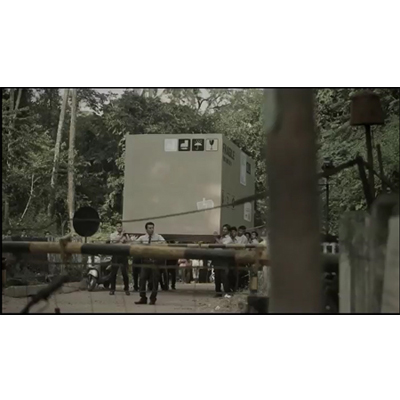
    The ad showcases a mammoth parcel being carried across crowded streets by a large number of Myntra delivery boys. The parcel gets ferried across the river, over the bridge and through tiny lanes to reach its final destination. The parcel upon arrival unveils the numerous fashion apparel and accessory options that Myntra.com offers its customers, reiterating its position as the one-stop-shop for fashion. The catchy background score picks pace through the journey and conveys advantages of shopping with Myntra.com in a simple, realistic manner.

    Shot in Panjim, Goa, the film was directed by Nikhil Rao and produced by Jamic Films. The campaign was conceptualised by Agnello Dias from Taproot Agency.

  • MCOF seminar aims to educate LMOs

    MCOF seminar aims to educate LMOs

    MUMBAI: Constituted just over a year ago to protect cable operators and safeguard their business, the Maharashtra Cable Operators’ Federation (MCOF), today organised its first business and education seminar in Mumbai.


    Held in Hindi and English,around 400 Last Mile Operators (LMOs) travelled from neighbouring states like Gujarat, Andhra Pradesh, Goa and Karnataka for it.


    The first session was to educate LMOs about the importance of customer care and enhancing the quality of service. Vishwamangal Education CEO Suman Keluskar who deals in soft skills highlighted the need for LMOs to be well groomed as well as train their subordinates to be the same to make customers feel good.
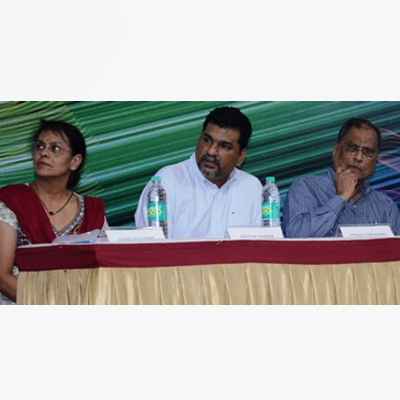
    Suman Keluskar, Vynsley Fernandes and Tony D’Silva spoke about customer care, global trends in cable TV and the upcoming HITS technology respectively


    “The reason why customers welcome a Pizza Hut boy is because he is nice to them,” she said, stressing that customers today were ready to pay for good service but for that to happen, LMOs needed to know the opportunities available to them as well as what customers were demanding. “Innovate in your production. Use the internet to advance yourself,” she said.


    Session two discussed how while LMOs across the globe have learnt to monetise their business, back home, it continues to be a loss-making one. Addressing the session, Castle Media director Vynsley Fernandes, started off by describing how developed countries such as the US, UK and Taiwan had faced the same issues that India is currently facing. But the cable ops dealt with them through innovation and have today grown to last mile digital system providers.


    “From the time the Gulf War happened and everybody wanted to watch TV, things are much different now. Multi-screen viewing is what is happening now,” he said.
    Citing the example of the US, where operators have increased their revenues despite a drop in the number of TV homes, and are expecting the ARPU to go up to $40 from $21 currently in the next five years, Fernandes reasoned this was because they had adapted to using TV along with the Internet and were offering viewers a multi-screen experience.


    He pointed out that concepts like Hybrid Broadband TV, second screen, catch up TV, time shift TV, TV on mobile etc. had already penetrated the US markets and helped cable operators exponentially.


    “Think long term as to whether you can monetise your product. Whenever you are investing in a technology, what is its future road map?” he urged, saying that the only challenge would come from OTT services such as Netflix and Hulu where movies and channels will go directly on the Internet without the need for an MSO or LMO. However, he was quick to add that this hasn’t met with much success in India, yet.

    While advertisers are approaching LMOs to target specific demographics on TV, the STBs taken up by LMOs are not so advanced, Fernandes said. Pointing out that in the US, LMOs provide a posse of services including entertainment, home monitoring, automation comfort, energy management and wellness assisted living, in India too, “an LMO should be the one-stop digital services’ stop for customers,” he concluded.


    Drawing upon his experience in broadcast and DTH to present his project on Headends in the Sky (HITS), former Sun TV CEO Tony D’Silva said this was a good prospect for LMOs to think about.


    D’Silva said that most consumers watch not more than 12 to 15 channels and so, it was necessary to create such packages and device-shifting technologies for the future.


    “You are at the threshold of a game change. Our main threat is the DTH players and we need to be above them and have a robust system,” he said, stressing that HITS was a much better option for LMOs than taking signals from MSOs. Under HITS, the agreements are directly with broadcasters, there are no carriage fees, and it would yield higher revenue (Rs 108) as compared to dealing with an MSO (Rs 59.5) or even independently (Rs 85).


    “The biggest cable company in the world today is Comcast. 17 million out of Comcast’s 22 million subscribers get supply services from HITS and Comcast gives its customers all the benefits that Fernandes spoke about,” said D’Silva, urging LMOs to adopt HITS through which they could choose and demand things as well as insert local channels, the revenue from which would be completely theirs.


    A local cable operator from Goregaon, Bernadette Dsouza, said: “I have come for the seminar to know about new opportunities as well as how to save my business from MSOs’ domination.”

    The good news is MCOF plans to hold such seminars in other states as well in the coming months.
  • The alarming L’affaire Tejpal

    The alarming L’affaire Tejpal

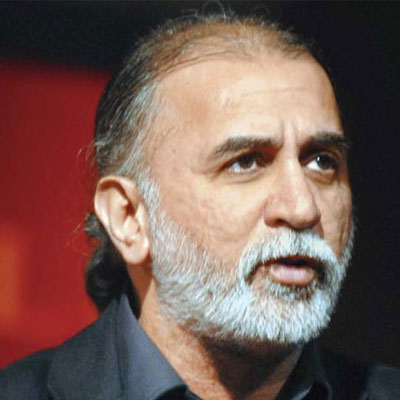
    The media industry as well as the common man was shocked yesterday when Tehelka magazine editor Tarun Tejpal reportedly admitted ‘misconduct’ against a woman journalist and offered to step aside from the post, and the office, for six months as a penance. The journo in question had alleged that Tejpal sexually assaulted her at an event organised by the magazine in Goa earlier this month.


    So what’s all the fuss about? We live in times when adults having consensual sex has become quite common at workplaces. From Fatal Attraction to Inkaar, the subject has been captured on celluloid and written about a zillion times. There’s a term coined for it as well, ‘office spouse.’ We hear about such relationships every other day; be it in classrooms or boardrooms.


    And the media, much as it may like to pretend otherwise, isn’t too far behind in these matters. Prominent journalists have had consensual relationships which are a known fact among the fraternity but no one really talks about them, openly, at least.


    One wouldn’t be wrong if he/she calls media as a cesspool. Just that those who are in the business of washing other people’s dirty linen in public, won’t wash theirs in full public view. That would be just so wrong!


    One wouldn’t be wrong if he/she calls media as a cesspool. Just that those who are in the business of washing other people’s dirty linen in public, won’t wash theirs in full public view. That would be just so wrong!
    _____****__________________________________________________________

    Like Tehelka managing editor Shoma Chaudhary side-stepped a news reporter’s query saying, “This is an internal matter”. Wouldn’t others of her ilk have said the same thing if they were in such a mess?


    There are many Tejpals striding the passages in media organisations around India. And more and more women are entering the media industry – whether in television news or general entertainment channels or newspapers – especially at the junior level. It is they who become an easy target for the ones sitting in their cozy cabins. Some of the younger lot might “cooperate” to get a helping hand in their careers while others who become victims might choose to keep mum so as to not harm their progress.


    It takes a lot of courage for one to step-up and take on the boss. The young Tehelka journalist did so and needs to be patted on her back for not letting the possible repercussions hold her back. But how many of them will do so? That is the worrying part.


    But there is a saving grace. Those in senior positions or positions of power should remember: Everyone is under scrutiny and no one — no matter how powerful — can escape from one’s actions in the liberalised social media environment of today. This is borne out by l’affaire Tejpal which has once again brought the much celebrated journalist in focus. But unlike earlier times when he was in the limelight unearthing scandals, this time, he is the scandal. The once media darling is now being crucified by one and all as a beast, and rightly so. Indeed, Tejpal and Tehelka, which made headlines with umpteen sting operations, finds itself being stung by scandal and that too rather badly.


    For a magazine known to take a stance, no matter what the consequences, it has come under severe criticism for taking a rather serious issue lightly. “He stepped down. It was not something she’d asked for. It was over and above that”, says Chaudhary matter-of-factly.


    Not only is the world shocked to know that Tejpal sexually harassed a junior colleague, who happens to be his daughter’s close friend, his decision to step aside from the editorship of the magazine and from the Tehelka office for six months as ‘atonement’ for what he describes as ‘a bad lapse of judgement, an awful misreading of the situation…’ has been labelled ‘inappropriate and grossly insufficient’ by many.


    Those in senior positions or positions of power should remember: Everyone is under scrutiny and no one — no matter how powerful — can escape from one’s actions in the liberalised social media environment of today. This is borne out by l’affaire Tejpal which has once again brought the much celebrated journalist in focus.
    _____****____________________________________________________

    Apparently, Tejpal, in his letter to Chaudhary, has said he repents his ‘drunken banter’ and offered to step aside from his post and the office for six months to ‘atone for his misconduct’. But does that absolve him from all responsibility? Maybe he hopes his close connections with the Congress president will help him in return of all the snooping he has done on the rival party.


    And what do we say to Chaudhary, otherwise known to be at the forefront of all women’s causes, who has in this instance chosen to support Tejpal, requesting Tehelka employees to ‘stand by the institution in this hard time.’


    Institution yes… but one whose future hangs in the balance. Will it outlast Tejpal when he is tried and thrown into jail as is being demanded by many on Twitter and on social media? This is probably what was playing in the mind of the victim, which is why she is still considering constitution of a committee by the magazine to go into the issue and take action. Remember, Tejpal allegedly forced himself on the girl in an elevator in a five star hotel more than 10 days ago. With a slew of publications downing shutters, and television channels shedding staff, another magazine folding up will not be good news for the industry, that too because of one man…


    While one can’t foresee the future, a niggling question remains: “What was Tejpal thinking (or smoking or guzzling) when a man of his stature did what he calls ‘a bad lapse of judgement’?”


    Maybe he doesn’t believe in practicing what he preaches.


  • NFDC Film Bazaar 2013 to kick start on 20 November in Goa

    NFDC Film Bazaar 2013 to kick start on 20 November in Goa

    MUMBAI: Film Bazaar- South Asia’s global film market, National Film Development Corporation’s (NFDC) promotional arm, is set to kick start from 20 – 24 November and will be in its seventh edition this year. The film market, like every year, will be held at Marriott Resort, Goa, alongside International Film Festival of India (IFFI).


    The market this year will have an eclectic mix of influential people like Christian Jeune- Cannes Film Festival; Thierry Fremaux – Cannes Film Festival; Marco Mueller- Rome Film Festival; Derek Malcolm – British Film Critic and Historian; Chris Paton, Fortissimo; Jacobine Van Der Vloed- Cinemart (Rotterdam); Remi Burah- Arte France Cinema; Sergio Fant –Locarno International Film Festival; Charles Tesson – Semaine De La Critique; Frederic Boyer- Tribeca Film Festival; Anne Delseth- Director’s Fortnight Cannes Film Festival, to name a few.


    Film Bazaar this year will launch a new program ‘Producers’ Lab’, which aims at providing training and networking opportunities to upcoming producers from across the country and will also consist of workshop sessions, case studies and one-on-one meetings spread over three days. These sessions will be conducted by well known domestic and international film fraternity.


    The ‘Screenwriters’ Lab’, with its six independent screenwriters this year, conducted its first phase of mentored workshop at Toronto International Film Festival and will conclude with its second phase, like every year, at Film Bazaar. Co-production Market finalists comprises an interesting line-up from countries, namely Afghanistan, UK, Canada, Switzerland, Poland, Luthuania, and projects by Govind Nihalani’s A Holy Fire, Shyam Benegal’sRoads To Freedom, Umesh Kulkarni’s Highway, Anup Singh’sA Scorpion’s Song to name a few.


    The recently announced ‘Film Bazaar Recommends’ list of films includes Pakistan’s official submission for foreign language film at the 86th Academy Awards- Zinda Bhaag starring Naseeruddin Shah, Jai Ho– A docu-feature based on Indian music composer and singer A.R.Rahman and auteur filmmaker Kamal Swaroop’s Rangbhoomi, amongst other.

  • IFFI to highlight north-east cinema for the first time

    IFFI to highlight north-east cinema for the first time

    MUMBAI: The 44th International Film Festival of India (IFFI) to be held in Panaji, Goa will for the first time highlight cinema from the north eastern states of India. The opening ceremony for this section will include actors Seema Biswas and Adil Hussain.


    The festival has created a special north-east package named ‘Focus: North East’. The section will be inaugurated on 22 November and close on 27 November. A total of 23 films from the north east will be screened between these dates. This will include Ek Pal, as a special homage to its producer Hemendra Prasad Barooah.


    The opening movie of the section will be Khawnlung Run, the first-ever Mizo film to be screened in any international festival. Among the other films to be screened is Rupkonwar Jyotiprasad Aru Joymoti, which was directed by the late Bhupen Hazarika.

  • How will DTH drive value in future?

    How will DTH drive value in future?

    GOA: Thus far, DTH has not been able to create the kind of consumer base it rightly deserves. Reason being: DTH players have been faced with several obstacles including subscriber leakage on ground, high levels of cash burn and the perennial issue of satellite capacity. What then are the key ingredients required for DTH’s value creation story, going forward? Exactly the question this session tried to address.

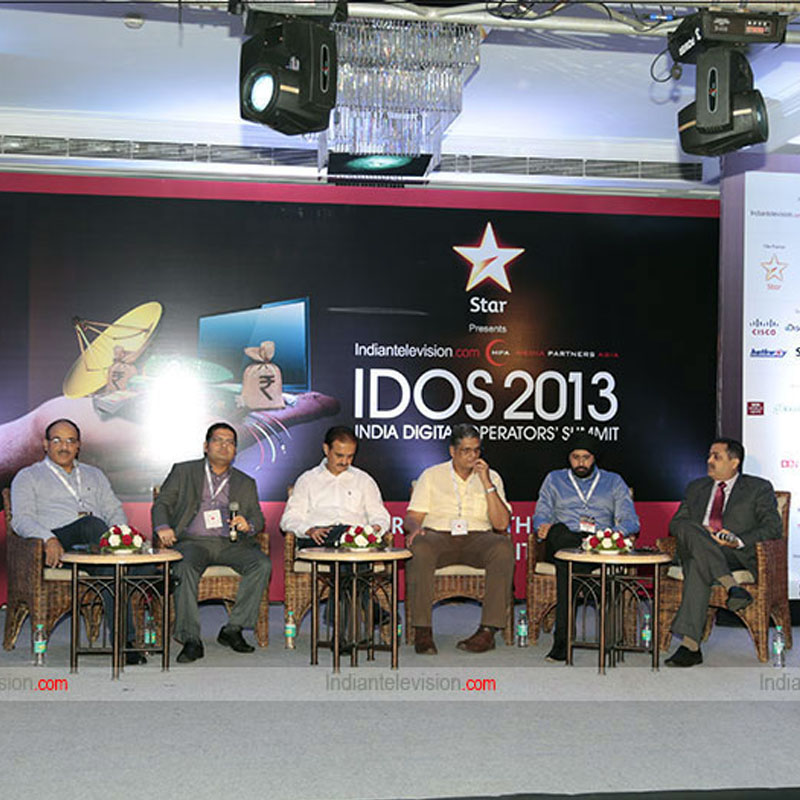
    Moderated by Vivek Couto, the panel comprised Videocon D2H CEO Anil Khera, Dish TV executive vice-president and strategy Gaurav Goel, MEASAT Vishal Mathur, Kotak Securities senior analyst Amit Kumar and Macquairie capital senior VP Ausang Shukla.

    “The major challenge that we face is to correct pricing of STBs from Rs 1600-1700 to just Rs 400-500, thus preventing rotational churn,” voiced Khera.

    Goel supported this problem adding: “The pre-paid model is tough, as the subscriber pays for let’s say only for two months in a year as the existence of analogue in 50-60 per cent households is still a hindrance and we end up having a loss in revenue.”

    Addressing capacity and investment-related issues faced by DTH players, Tata Sky CEO Harit Nagpal said: “I am writing my own destiny and thus investing Rs 900 crore on the conversion of old MPEG-2 services to MPEG-4. We have already done it for a million subscribers and soon will look at changing it for six million more.”

    The panel observes that the DTH sector will see positive development only once it stops chasing additional subscribers and looks at the bigger picture of catering to consumer needs instead. In the past three to four years, DTH players have realised that with more channel carrying capacity, their prices are also headed north and that will cater to better ARPUs.

    Said Kumar: “The key issue to address is the pricing of packages and the fact that they are offering 200 channels now as compared to 80-100 channels earlier and still haven’t seen a change in their ARPUS.”

    Shukla agreed: “The major problem with the DTH sector getting investments is that there hasn’t really been much growth witnessed in terms of either subscription growth or cash flow.”

    Another revelation is how dealing with capacity is a major problem although there is demand for HD and Indians are easily influenced by the experience of watching a cricket match or their favourite movie in HD. With 4K technology coming into live events with FIFA, more than capacity, the need of the hour is having a back-up satellite.

    “What Sun Network experienced in 2009 was a real sorry affair, as it witnessed a complete blackout because of satellite failure, that could have been avoided if it had a back-up satellite,” said Mathur.

    Also, no thought has been given to other avenues like using a BSS (Broadcast Satellite Service) band along with the FSS (Fixed Satellite Service) band – which is already in use. The difference between the two is that even as FSS can carry channels between 14-17GHz, the BSS band can carry an equal number of channels on a 12 GHz signal.

    Added Mathur: “The issue is that there are seven DTH players who among them share 70 transponders with each of them requiring eight to ten transponders.”

    The panel felt that there has to be some logic behind the consolidation of platforms as there is only a 25 per cent churn and with consolidation, there will be a further reduction in the number of subscribers.

    So the panel agreed that consolidation of DTH platforms is not the panacea for getting investors. Rather, they have to focus on catering to subscribers’ needs.

  • The final word on cable TV digitisation

    The final word on cable TV digitisation

    GOA: With phase I and phase II on the cusp of completion, what are the lessons the digitising cable TV ecosystem has learned from their efforts? And how can this be put to use when industry moves into phase III and phase IV? This was the focus of the last session of the well-attended (it was houseful even on day two) IDOS 2013 in Goa.

    DEN Networks CEO SN Sharma said that his cable TV network was willing to take the punt and had enough investment to push into the territories it was targeting. “It won’t be easy but we are totally committed to doing it. Additionally, a lot of phase II was also done by local MSOs.  We see consolidation. In UK it happened. Five MSOs consolidated and are feeding around 90 per cent of the population there.”

    Hathway president Milind Karnik said that the last mile owner in many parts of phase III and phase IV has already upgraded and has awareness of and has already done some upgradation of infrastructure. “They will form cooperatives and consolidate and do what is needed. We too are going to move ahead forging relationships with local cable operators there, apart from serving some communities with our own headends.”

    Telecom Regulatory Authority of India (TRAI) principal advisor N Parameswaran said: “We expect like the telecom sector there will be some sharing of infrastructure.  We have learnt from phase I and phase II and there are many things we could have done better and will put those learnings in practice. There has to be some hygiene brought in terms of transparency and every other part of the process. Bill has to be generated to the subscriber. Service has to be provided. There will not be any looking back after that.”

    He urged MSOs and other players to understand that the dividends from phase I and phase II will start coming in with the addition of broadband delivery to subscribers. He further said a model has to be worked out between the MSOs and LCOs and TRAI would facilitate that.

    Also, in the wake of the continued depreciation of the Indian rupee against the dollar, the MSOs and LCOs feel that the government should give some subsidy to local manufacturers who are interested in setting up local units in the county to give a fillip to the industry.

    “We have got to come together. It has to be done together to resolve all the issues,” said Indian Broadcasting Foundation secretary general Shailesh Shah.

    Shah further added that the stakeholders would have to think how they can go deeper while addressing infrastructure problems. Carriage issue would also get resolved in a phased manner.

    Magnaquest CMO Ramakrishna Mashetty felt the landscape for the next phase of digitisation is different as compared to phase I and II as the cities are fragmented and low markets are there in the chart. “Most of the LCOs and market are unorganised,” he said.

    Telecom and Media lead analyst Rajiv Sharma said if the digitised headends start delivering incremental revenues in terms of services and ARPUs go up, return on investment (ROI) will improve. “Lot of external foreign investors are watching the space carefully,” he stated, adding that this imperative that some element of broadband be built in to the set top box so that the incremental revenues start accruing very quickly.

    Chrome Data Analytics & Media founder and MD Pankaj Krishna said the campaign in phase III and IV would be different. “The first two phases communicated and played on the principle of fear of blackout for consumers. The communications to the consumer during the third and fourth phase should focus on the benefits that a box can provide to users.”

    Parameswaran also addressed the issue of entertainment tax. “We have been working on understanding taxation levels which are a state subject versus a federal TDS or income tax,” he said. “But we are not averse to once again address this issue.”

    But what added spark to the panel discussion was the disclosure that the ministry of information and broadcasting was working with the department of telecommunications and MSOs to enable them to use already existing government and other infrastructure to help them as things start moving into phase III.

    The other good news is that bills – especially in Delhi – are slated to go out to subscribers in October, and online bills will follow later but interests of the LMO will be kept in mind.

    Parameswaran had the final word. Said he: “Digitisation will go ahead as planned. We are totally committed to it.”