Tag: Goa Fest 2025

  • Breathe easy burnout is not your creative destiny

    Breathe easy burnout is not your creative destiny

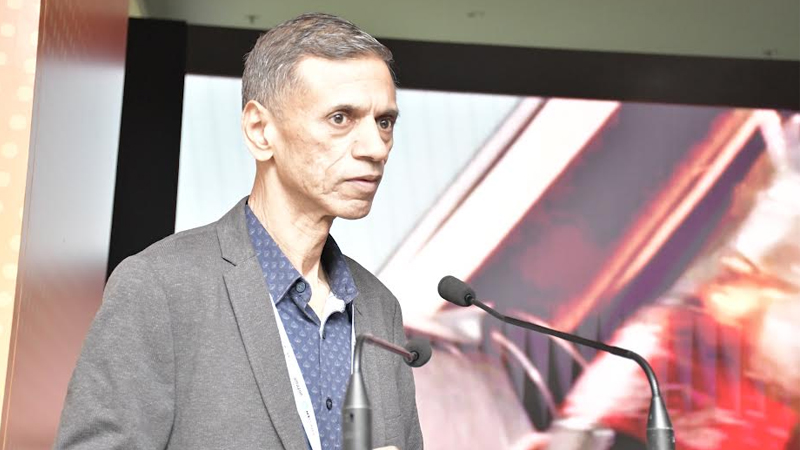
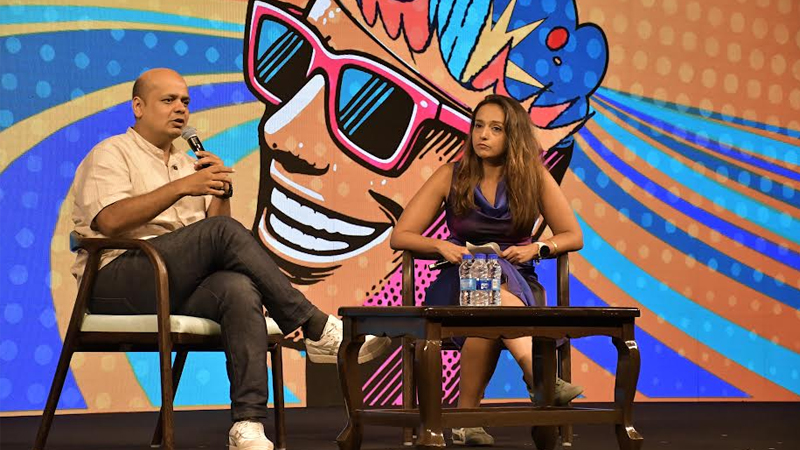
    MUMBAI: Tired is not a personality trait. And if your big ideas feel more foggy than fiery, wellness expert Luke Coutinho might know why. At the Goa Fest 2025 fireside chat with VML India’s Babita Baruah, he unpacked the anatomy of burnout and why hustle culture is creativity’s worst enemy. “Are you exhausted or just on autopilot?” That was Luke Coutinho’s call to action to a room full of creative professionals who raised their hands at the mere mention of burnout. But Coutinho, integrative medicine expert and long-time advisor to India’s armed forces wasn’t here to peddle another green juice. He was here to challenge the cult of grind and offer a surprisingly simple antidote: adapt.

    Burnout, he explained, isn’t just about being busy. It’s chronic stress that numbs joy, dulls creativity, and disconnects people from the very things that once brought them meaning. “It’s when your favourite song doesn’t hit the same, your child’s smile doesn’t light you up, and your morning coffee is just a prop to survive,” he said.

    Contrary to social media’s rigid checklists, Coutinho advised attendees to stop chasing generic wellness trends and instead tailor health practices to their own lives. “Trying to live like a reel will burn you out faster than your deadlines,” he quipped. The solution? A mindful mix of food, sleep, movement, and emotion.

    Four lifestyle levers for creative spark:

    ●    Nutrition: Ditch junk and stimulants. They tank energy and ideas.

    ●    Sleep: It’s not about waking up early, it’s about completing your sleep cycle.

    ●    Emotional wellness: Channel pain into power, not procrastination.

    ●    Movement: Walk, stretch, breathe—endorphins boost the prefrontal cortex, your creative HQ.

    Coutinho dismantled hustle culture as “glorified exhaustion”. Instead, he urged for a shift from performative busyness to “purposeful urgency”. As proof, he shared a story about the architect of Dubai’s Burj Khalifa who, before his big pitch, didn’t power through but went for a swim to reconnect with himself. “Stillness before action. That’s how true creativity emerges,” said Coutinho.

    He also offered a practical fix: six minutes a day. That’s all you need, he said, to begin rewiring your burnout brain:

    1.    Mind Sweep (Morning) – List 3 things you’re grateful for. Set a daily intention.

    2.    Breath Stacking (Midday) – Take 8–10 deep, slow breaths. Reset.

    3.    Digital Sunset (Evening) – Switch off all screens and reflect on a small win.

    These micro-rituals anchor you in the present, a place creatives rarely linger.

    He concluded with a reality check shaped by his work with terminal patients: “Not one of them talks about their titles or salary. They remember love, laughter, and memories.” The lesson? Life isn’t a sprint, and your legacy won’t be built in unread emails.

    So the next time your creativity stalls, don’t scroll or sprint pause, breathe, and ask: what really makes me feel alive?

  • Pulse on point as DS Group proves culture is the sweetest strategy

    Pulse on point as DS Group proves culture is the sweetest strategy

    MUMBAI: When a candy meant for grown-ups causes a social media frenzy and movie stars post about it for free, you know you’ve struck marketing gold. That’s precisely what DS Group sr. vice president of corporate marketing Rajeev Jain laid out in his eye-opening session at Goa Fest 2025 titled ‘Cultural Marketing Can Be a Winner: Pulse Candy a Case Study’.

    Jain opened with a powerful quote from CK Prahalad, “While it is true that multinationals will change emerging markets forever, the reverse is also true.” And Pulse, it turns out, is a case of the latter, an unapologetically Indian brand that rewrote the rules of candy marketing.

    The secret sauce? Culture. Not just flavours, but deep-seated values and norms. Jain drew parallels from around the globe: how Coca-Cola supported Saudi women driving under its “Keys of Change” campaign, or how Nescafé cracked Japan by first selling coffee-flavoured toffees to build a taste habit among kids who grew into coffee-loving adults.

    Pulse did something equally audacious back home.

    Backed by two years of intense R&D, Pulse launched a centre-filled candy that catered to Indian palates think tang, spice, and chatpata chaos. It wasn’t your average sweet treat. It was a nostalgia bomb, a street-side snack, and a meme-worthy munch all rolled into one.

    The brand boldly went where few dare: marketing candy to adults. “Why should kids have all the fun?” wasn’t just a slogan, it was a war cry. And consumers responded with their thumbs generating a flood of user-generated content without a rupee spent on influencer tie-ups.

    Case in point? Disha Patani posting about Pulse on her own. “That’s when we knew we weren’t just in the candy business,” said Jain. “We were in the cultural relevance business.”

    The talk underscored a central truth: great cultural marketing isn’t loud, it’s resonant. Pulse didn’t follow trends; it tapped into India’s taste DNA. The result? A product that felt tailor-made for the local market yet had the swagger of a global disruptor.

    In a world flooded with algorithm-driven campaigns and AI-generated creatives, Pulse’s story is refreshingly analogue, it’s about listening before selling, and tapping into what people crave emotionally, not just gastronomically.

    At a fest packed with tech talk and future-forward buzzwords, Jain’s candy-coated case study reminded everyone that flavour still wins when it hits the culture nerve just right.

  • Clickbait to clean slate as HUL leads media trust reset drive

    Clickbait to clean slate as HUL leads media trust reset drive

     MUMBAI: What’s invisible, expensive, and possibly not even human? Thirty percent of your ad impressions. Hindustan Unilever Ltd (HUL),  head of media and digital marketing Tejas Apte didn’t mince words at Goa Fest 2025 as he peeled back the pixel-perfect surface of digital advertising to reveal a mess of murky metrics and media mayhem.

    Speaking in a session titled ‘Building a Safer, Smarter, Cleaner Media Ecosystem’, Apte laid bare the underbelly of modern marketing where ad fraud, bot views, and misuse of data are quietly eating away at ROI and trust. With up to 30 per cent of digital impressions possibly fake, brands aren’t just losing money; they’re losing credibility.

    “Legacy media had a balance subscription and ad-funded models. But digital is almost entirely ad-funded,” he noted. “And that makes transparency and safety non-negotiable.”

    As part of the Indian Society of Advertisers (ISA), HUL has taken a lead in drafting a four-point media charter that aims to disinfect digital with real-world rigour:Safe placements for both brands and users, Viewability standards to filter out the fake, Fraud prevention that spans all formats and platforms, Responsible first-party data usage grounded in clear consent.

    Apte underscored that these principles weren’t just boardroom theory, they were co-created with platforms like Google and Meta, ensuring that everyone speaks the same metric language. The focus is shifting from shallow click metrics to meaningful business outcomes.

    The ad world’s changing algorithm isn’t just affecting platforms, it’s rewriting agency job descriptions. With automation and AI replacing mechanical tasks, Apte sees agencies morphing from campaign vendors to strategic business partners. “In-housing is real, but rarely complete. Agencies remain critical, if they evolve from service delivery to impact delivery.”

    While some brands are building internal muscle, the ISA charter pushes for an ecosystem-wide adoption from nimble startups to legacy giants. The ultimate goal? A future where every impression counts, every ad is seen by a human, and every click has consequence.

    Practising what they preach, HUL has already implemented these guidelines internally. The result? Sharper first-party data strategies, better media ROI, and a wave of new, trustworthy media partners.

    So, next time your ad gets a million impressions, pause to ask were any of them real? Or are we all just chasing ghosts in the machine?

    As Apte put it with a smile, “Click fraud is not just a tech issue. It’s a trust issue.”

  • Brave new ads win hearts while playing it safe fades into the feed

    Brave new ads win hearts while playing it safe fades into the feed

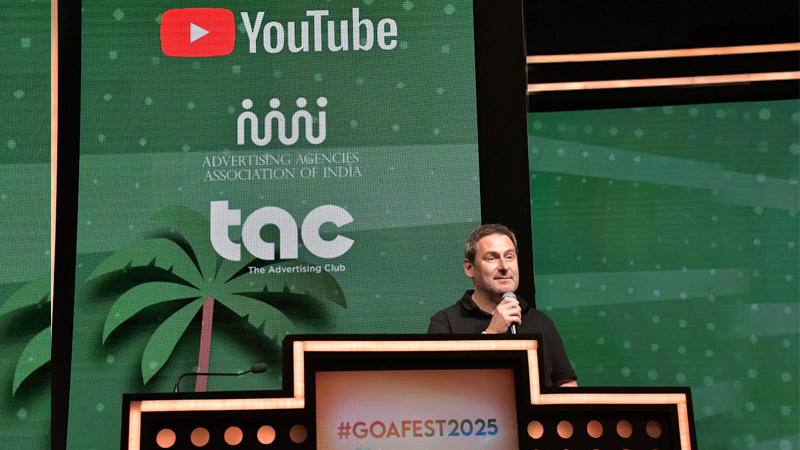
    MUMBAI: If your campaign doesn’t make you squirm a little, you’re probably doing it wrong. That was the bold takeaway from Paris-based creative powerhouse Marcel CCO & CEO Youri Guerassimov who took the Goa Fest 2025 stage with a keynote titled Creativity That Dares to Disrupt.

    In an age where consumers are bombarded with over 6,000 ads a day, Guerassimov made a case for courage over comfort. “Visibility is not enough,” he said. “To stand out, you have to stand for something.”

    And the numbers agree. According to Edelman, 86 per cent of consumers expect brands to take a stand on social or environmental issues. Two-thirds (66 per cent) are even willing to switch loyalties if a brand stays silent on values that matter. In short: if you’re not bold, you’re forgettable.

    Guerassimov pointed to iconic examples of brand bravery from Nike’s controversial Colin Kaepernick campaign to Volvo’s decision to open-source their safety innovations. Whether it’s risking backlash or sharing competitive advantage, these brands chose purpose over polish and won loyalty in the process.

    But bravery, he clarified, isn’t just activism. “It can be design-led, strategic, or operational.” Take McDonald’s minimal outdoor ad that simply showed its fries arches pointing to the nearest outlet. Or Marcel’s own work with Intermarché, turning ugly produce into a national movement with the “Inglorious Fruits and Vegetables” campaign.

    Some acts of courage are barely visible like adding a few meaningful words to a supplier contract. But when done with conviction, even the smallest gestures echo the brand’s beliefs. “True bravery can show up in backrooms and boardrooms,” he said.

    He also highlighted Patagonia’s radical profit pledge, where the brand’s CEO donated all company profits to fight climate change, as the ultimate example of purpose-driven marketing that became part of global culture.

    According to Guerassimov, bravery is not about budget or bravado, it’s about belief. It’s a tool to cut through the noise, create culture, and connect with consumers on a level that spreadsheets can’t quantify.

    As he put it with disarming simplicity, “Fear is temporary. Regret is forever.”

    So the next time a campaign idea gives you a nervous twitch, take it as a sign you might be on the right track.

  • Hunter becomes the heartthrob as Suniel Shetty flips the script on action

    Hunter becomes the heartthrob as Suniel Shetty flips the script on action

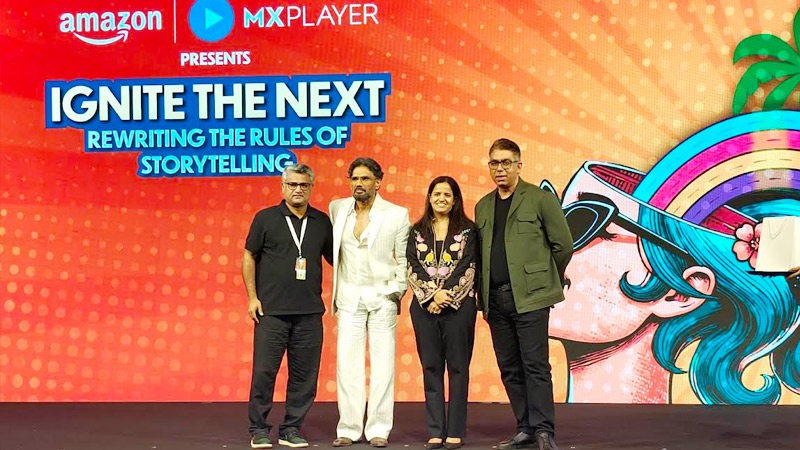
    MUMBAI: Who says action heroes can’t make you cry between chase scenes? At Goa Fest 2025, Hunter star Suniel Shetty proved that sometimes the most explosive moves are emotional. In a candid fireside chat with Amazon MX Player director Aruna Daryanani Shetty opened up about reinventing action storytelling, ageing on screen with grace, and why advertisers need to drop the “brand unsafe” tag when it comes to meaningful action.

    “There’s no point in high-octane fights without high-voltage emotion,” said Shetty, speaking of Hunter, where he plays ACP Vikram Sinha, a bruised but burning father determined to reunite with his daughter. He revealed that the show’s soul, family, music, emotion is what made it a pan-generational success.

    “Season 1 was brash,” he said, “but Season 2 is about transformation.”

    The new arc?

    Vikram, believing his daughter is dead, suddenly receives a call: “Papa, get me out of here.” The series then follows his redemption quest across borders and boundaries, less fists, more feelings.

    Shetty’s own return to screen mirrored his character’s struggles. “When I signed Hunter, I’d just recovered from a heart attack. Dad was unwell. Work wasn’t exciting. I felt like I had no market left,” he confessed. But the journey gave him a second wind. “At 38, I thought I was done. Now I’m raising the bar every time I step on set.”

    And action has changed too. “Earlier I’d rehearse 15 times. Now I watch 14 times and hit it once with full conviction,” he smiled.

    Despite Hunter’s popularity, Shetty called out advertisers who label such shows as “brand unsafe”. “You’re kidding me, right?” he asked the crowd. “Hunter isn’t gore. It’s about a father getting his daughter back. It’s emotional, not explosive for the sake of it.”

    When a media professional cited caution around showing violence to children, Shetty countered: “This is about family. Marriage, love, loss, redemption, there’s more to this than punches.”

    In a powerful moment, Shetty turned to the audience and asked: “How many of you binge-watch action series? Family Man, Jack Ryan?” As hands tentatively rose, he fired back: “Then why not back us with ads?”

    He also addressed the industry’s obsession with sanitised content. “Advertisers should take risks on stories that matter. We’re telling stories that move people sometimes with a fist, sometimes with a tear.”

    Having survived multiple career reinventions, Shetty credited his enduring fan base to one simple rule: honesty. “I give 100% to every project whether it’s a Rs 100 crore film or a tight-budget drama.” That effort shows, he believes, in audience reactions. “Once, in Patna, a fan saw me in a theatre and jumped off a balcony to imitate a stunt. That’s the intensity of connection.”

    And what’s his advice to the younger generation of actors? “Respect your craft, your producer, your body. It’s not about taking your shirt off anymore. It’s about staying relevant and real.”

    With Hunter’s new season blending raw emotion, complex storytelling, and age-defying action, Suniel Shetty has truly rewritten the rules not just of genre, but of how stories age, evolve and punch back. And if advertisers are still stuck on “safe” spaces, they might just be missing the biggest hero arc of them all.

  • Flipkart rewrites retail media with speed data and a dash of drama

    Flipkart rewrites retail media with speed data and a dash of drama

    MUMBAI: What do love, Lays and logistics have in common? Flipkart, apparently. At its Goa Fest 2025 masterclass, the e-commerce giant rolled out a full-funnel manifesto for how brands can advertise smarter, sell faster and even deliver anti-love chocolates in 10 minutes flat. Packed with metrics, media strategy, and a sprinkling of Valentine’s wit, the session was a whirlwind tour of how retail media is no longer just about deals but about data, delight and deep hyperlocal targeting.

    At the Flipkart masterclass held at Goa Fest 2025, the brand flipped the script on what e-commerce advertising can do showcasing how its ecosystem is now a robust, intelligent ad-tech playground for everyone from FMCG giants to rural D2C sellers.

    Launched as Flipkart’s quick commerce vertical, Flipkart Minutes is not just delivering tomatoes in 10 minutes, it’s shipping electronics. Over 25–28 per cent of all orders now include phones and gadgets, especially in Tier 2 India, where users increasingly need a “Pogo phone” faster than their Wi-Fi can buffer.

    But the brilliance isn’t just logistical, it’s hyperlocal advertising. Brands can now target delivery guys’ helmets in Koramangala or run a Valentine’s Day campaign only for Bangalore. Flipkart cited Cadbury’s 42 per cent YoY sales growth from a split “pro-love” and “anti-love” campaign using Minutes, a strategy that played both sides of the heart-shaped field.

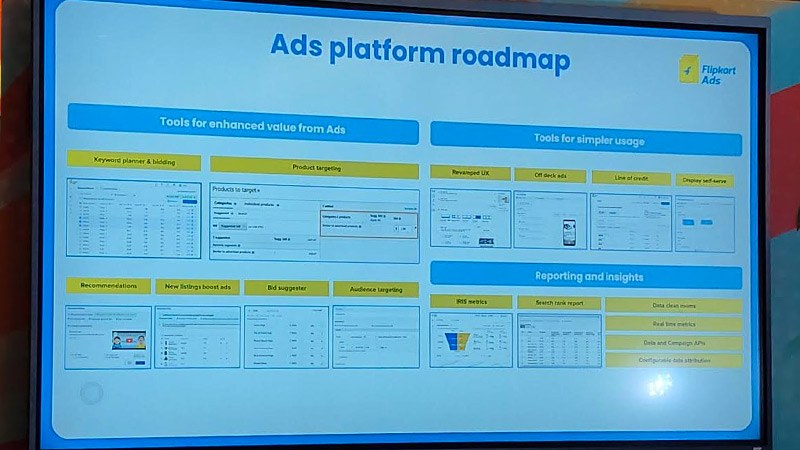
    Flipkart’s Iris analytics platform empowers advertisers with full-funnel insights. Beyond ROAS (Return on Advertising Spend), brands now get New-to-Brand (NTB) metrics measuring how many fresh eyeballs saw and clicked their products.

    With over 2,000 types of audience signals in play and 80 per cent of advertisers using them, Flipkart is serious about understanding behaviour, not just demographics. Think: not just who’s browsing, but what they previously bought, which pin codes they search from, and what their most-used credit card says about them.

    Perhaps the most disruptive insight? Flipkart is offering a line of ad credit to small and rural advertisers based on past performance. Instead of upfront payments, sellers can now use ad credit and pay back as a percentage of actual sales freeing up crucial cash flows.

    Flipkart’s Brand Self-Serve portal has gone from being a display hub to an intelligent coach. Its Keyword Planner allows precise targeting (e.g. phones under Rs 30,000), while PCS Spotlight brings masthead-style prominence right inside search results.

    Thanks to 6–7 layers of search recommendations, even first-time advertisers can run effective campaigns. Add to that Product Performance Ads and a creative Brand Solutions team, and what you have is not just ads, but entire storytelling experiences optimised for ROAS and reach.

    Flipkart’s anecdotal evidence packs punch. Coke targeted party hours before New Year’s by finding users buying Lays and Chakna—not soda. Cadbury ran two opposing Valentine’s Day campaigns, pro-love for Silk, anti-love for Gems and saw their sales shoot up 42% over last year’s campaign.

    With Big Billion Day on the horizon, Flipkart is focusing on customer loyalty targeting, allowing brands to reach habitual discount-hunters during specific periods.

    Their ambitious roadmap includes pushing retail media as a top-funnel tool too. It’s no longer just a performance play. Retail media is now about brand discovery, contextual engagement, and creative risk-taking without betting the whole national ad budget.

    From smart shopping insights to delivering slow-mo smartphones faster than you can say “Galaxy S24 FE,” Flipkart’s masterclass proved one thing: retail media isn’t just booming, it’s blooming.