Tag: Glocalisation

  • Cosmos Maya’s glocalisation plan for animation in India

    Cosmos Maya’s glocalisation plan for animation in India

    MUMBAI: Cosmos Maya, a Singapore and India-based animation company, has revealed its plan to explore the concept of glocalisation. It believes there is a need for glocalisation to pave the way for new ideas, concepts and different styles of storytelling. The company is all set to experiment with four international co-owned IPs in the Indian market. It has already launched Atchoo in the name of Jaadu ki Cheenk on Amazon Prime Video and the other three – OPS will be launched by the name My Bhoot Friend, Leo Da Vinci will be launched as Aryan and Berry Bees as Dabanng Girls by end of this financial year.

    Cosmos Maya SVP revenue and corporate strategy Devdatta Potnis, in an interaction with Indiatelevision.com, spoke on the need for glocalisation. He said," We need glocalisation because we are so ingrained in our own style of storytelling. The kind of content that we have been consuming is the same. With the concept of glocalisation we will have new and different ideas coming in."

    Stating an example of Doraemon, which is a Japanese show on an American network and one of the popular shows in India, Potnis said, "The show is a classic example of glocalisation. It is one of the anchor shows of one of the biggest networks mainly because of tdevhe way it has been localised. So glocalisation is there by necessity. We are open to looking at these but we will try and present them in a different way.”

    He further informed, "We have four IPs and as the international market will open up, which I hope will in 2020, we will be on the verge of signing contracts." Out of the four international co-owned IPs one of them is out on Amazon- Atchoo is the English name and in Hindi it is Jaadu ki Cheenk. The other shows are in production."Today we have a bank of 104 half hours of international co-productions and it will be ready by the end of this financial year. There is going to be a slight change by the time, whether it is for a commercial reason or overall from an industry standpoint. We are going to be ready with shows," he said.

    Potnis believes that there is lot to learn from not only the western market but from the market in the east also. He shared his views on exploring the opportunities in China. He said, "If we look at the east, my current focus area is China; we have recently been interacting with a couple of Chinese companies. That market is so evolved and has quality offering for the domestic market."

    Giving an insight into the domestic front, Potnis said, "The beauty of this industry is that a lot of us cannot predict what is coming next.  Something becomes a success and then we try to reverse engineer saying this is what we want. It is upon us, the creative studio, to bring in such novelty and make it reach to such a destination that it is familiarity with novelty. It should be familiar as you want to sample it for that reason and it should be novel to prick your interest."

    Understanding the market trend, Cosmos Maya set up its 2D division after the 3D one to cater to the demand in the domestic market. "Generally that’s not how it works. Sometime back in 2014, our first 2D show went on air, which is Kisna with Discovery Kids and now we see a shift that there is so much demand for 2D. In fact, next year there is like a massive line-up of 2D shows,” he explained.

    He further said, "Initially when I go back to 2012- there was a demand from the pay-TV broadcasters that started out and the demand has been growing consistently. Of course, not everything can be continuously on an exponential growth track and yet have a CAGR which is very fancy. But then that would kind of taper when we had OTT come in 2-3 years ago. It’s still growing effectively as a quantum growth. When that demand has kind of tapered, our own OTT platform has grown. YouTube is doing really well for us; we have been looking at diversifying into other platforms. Every time there has been a growth trajectory, the level goes up automatically. We are foraying into the licensing and merchandising space as well, which will now be the next one. I think something or the other will keep coming in."

    While speaking on the opportunities, Potnis opined that there is a need to take something from India to the global market. He added that licensing & merchandising is another opportunity as is WowKidz. The company will also launch another IP called Bapu on 2 October. It had made an announcement in January that the show will be out on the 150th anniversary of Gandhiji.

  • ‘Made in India’ characters pave way for glocalisation of kids genre: Nina Jaipuria

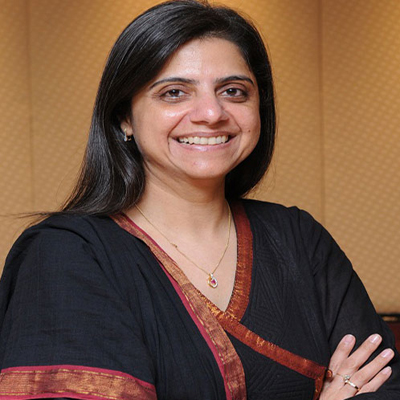
    ‘Made in India’ characters pave way for glocalisation of kids genre: Nina Jaipuria

    Children are a dynamic audience and their entertainment preferences are constantly evolving. The kids’ category in India is therefore reposed with the challenging task of keeping the most dynamic set of audiences constantly engaged and entertained. Over the last few years the most noted shift amongst kids has been an increasing inclination towards local characters that they relate to and can engage with even beyond television. Great story telling based in familiar settings brought alive through elements like dialect and lifestyle have been key to ensuring that children strike a bond with the character. Infusing local nuances that drive familiarity, a sense of belonging and relatability have hence become drivers to creating affinity for local characters. Local content curated from start to finish in India is therefore proving to be the game changer for the kids’ genre and has defined the way kids’ channels have evolved in India. Unlike the earlier days, today the most popular characters in the kid’s genre are local Indian characters like Motu, Patlu, Chota Bheem, Doggy Don, etc. The warm welcoming of the latest entrant into the kid’s category i.e. Nickelodeon’s very own super-kid Shiva is another example of the love and affinity that kids have for local characters and shows.

    With the soaring popularity of these “Made in India” characters, the genre has further widened its appeal with local character based “Made for TV films,” thus adding to the engagement and viewing experience for children. Such made for TV films of our popular characters Motu Patlu and Doggy Don of the Pakdam Pakdai gang continue to top the rating charts, emerging as a clear favourite amongst children. These characters are no more just a mere viewing experience for children but have forged a lasting bond with them. These local characters have now become a part of every child’s inner circle as their best friend, role model and confidante.

    At Nickelodeon, we truly believe in the power of local content to engage and connect with children. Each of our iconic “Made in India” characters like Motu, Patlu, Shiva, Doggy Don and Chotu have helped us create great resonance amongst children. We have taken these iconic characters out of television screens into the daily lives of children through on ground events, consumer products, digital games, etc aligning to the evolving consumption patterns of entertainment through various platforms.

    Curating local content comes with its own set of challenges. However we are in the business of engaging and entertaining children and have always endeavoured to give them the best of stories, characters and quality of animation. We have thus overcome challenges like escalating animation costs, lack of specialised talent to create good content and scripts by investing in a business model that is a win-win for all stakeholders. It has provided great quality of content for the viewer translating to better viewership for the broadcaster, widespread reach for brands within their target groups and also facilitated interesting and innovative integrations for advertisers. This has also fuelled the growth momentum of the animation industry in India.

    Kids are at the core of all we do at Nickelodeon. Curating local content and owning IPs thus enables us to create an ecosystem that amplifies our engagement further. For instance

    1. Motu Patlu merchandise like, ride on’s, apparel, stationery and the back to school range have allowed children to make them a part of their inner circle

    2. Games of Motu Patlu and Shiva have kept them engaged online and allowed off screen interactivity with their favourite characters. 

    3. On ground meet and greets with Motu Patlu, Shiva and the Pakdam Pakdai gang have given children up-close and personal experiences with their favourite toons.

    4. Promo licensing partnerships like the latest Motu Patlu promotional pack of Mc Vities biscuits and Yellow diamonds have allowed kids to enjoy their favourite treats with their favourite characters.

    These engagement opportunities also provide ancillary revenue streams thus bringing more scale to the entire ecosystem.

    With India witnessing a digitisation drive, premium local content has emerged as a key differentiator for the discerning viewers with a wider variety of entertainment choices. Having made our mark in India, this superior local content has also demonstrated great potential and has made an indelible mark in the global animation landscape. We are already seeing instances of this with many of our local animation productions making a global foray. For instance Motu Patlu is now present across five countries, Pakdam Pakdai as Rat-a-Tat has been syndicated across seven countries. Our latest character, the super kid Shiva showcased at the latest chapter of MIPCOM has also received tremendous response and talks of international syndication for our new hero are underway.

    The Indian animation industry led by the kid’s entertainment genre is at the cusp of the next echelon of growth where opportunities are galore. High quality of animation, great story telling and engaging “Made in India” characters are not only capturing hearts and minds in India but also making global in-roads, paving the way for glocalisation of the kids genre. Jai Ho!

    (Disclaimer: These are purely personal views of Viacom18 EVP and head – kids cluster Nina Jaipuria and Indiantelevision.com does not necessarily subscribe to these views.)