Tag: global music

  • IPRS celebrates 55 years with “Soundscapes of India: Gateway to the World”

    IPRS celebrates 55 years with “Soundscapes of India: Gateway to the World”

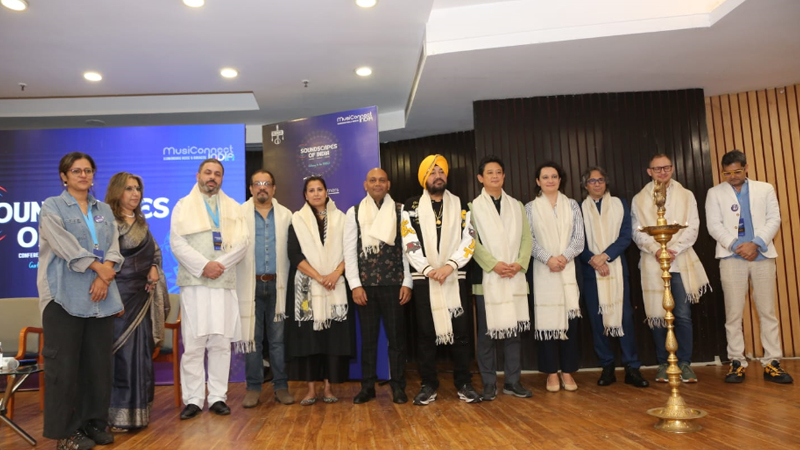
    Mumbai: IPRS (Indian Performing Rights Society) celebrated 55 years by hosting Soundscapes of India: Gateway to the World, an event aimed at elevating Indian musicians to global stages. Organised with MusiConnect India, the event highlighted the vast opportunities for Indian music in the global market.

    The three-day event brought together Indian musicians, industry leaders, and international festival representatives. It included a conference and a showcase of 16 Indian bands, offering musicians a platform to connect with delegates from festivals such as the Rainforest World Music Festival (Malaysia), Playtime Festival (Mongolia), and more.

    The event’s first speaker, Daler Mehndi shared his inspiring journey in music, setting the tone for discussions led by experts on topics such as IP rights, digital growth, and international collaborations.

    IPRS board member Mayur Puri stated, “Soundscapes Of India was an incredible experience packed with introductions to inspiring journeys of legendary music creators as well as invaluable insights into the music business.”

    MusiConnect’s founder Kaushik Datta said, “The Indian music is so diverse. People are aware of Bollywood music and the commercial part of the culture has been getting out, but in terms of folk, traditional, and independent music they are so rich and diverse, yet internationally people are suffering from knowing who are the best.”

    ICCR deputy director general Abhay Kumar participated in a fireside chat on the 74-year journey of ICCR in elevating Indian music globally. He addressed the issue raised by Kaushik Datta, stating, “ICCR has played a key role in introducing Indian music to the world, taking more than 100,000 songs abroad. However, the sheer volume of music is now overwhelming, and the government cannot handle it alone. Private organisations should step in to support artists. I believe a partnership between private and government entities is the way forward.”

    Datta added, “In some ways some artists who are touring are extraordinary but on the other hand, there are a lot more waiting to be discovered. ‘Soundscapes of India’ is an event which is not only opening unsighted doors for the artists but is also creating an opportunity for the international delegates to hear in a concentrated way more music they can come across randomly on their own.”

    IPRS’s CIO Surhit Bhattacharya emphasised the importance of IP registration for musicians, saying, “Individually we all are creating great work but it’s time to start connecting the dots. Many musicians still don’t know this, but music is connected to meta data. Today, reach is tremendous, and identification is tough. That’s why we need codes, ISWC and IPI numbers are like Aadhar, identification for you across the board. If you have an IPI number and your song plays anywhere in the world it tracks back to you. All you have to do is register with IPRS to get started.”

    Sarawak Tourism Board’s CEO Sharzede Datu Hj Salleh Askor addressed the challenges of maintaining sustainability and preserving culture at festivals. She highlighted the Rainforest Music Festival as an example of balancing increased attendance with cultural integrity. She emphasised, “Even after thousands of people coming to the event, after the event there’s barely any littering. We don’t want too many people. We want quality. We look at better ROI, which is Return on Intention because RWMF is not just celebrating music but increasing tourism with sustainable efforts. We believe cultures converge & music resonates. And that’s why our commitment to the art extends beyond the festival.” Sharzade emphasised the importance of being an artist and sharing your work with the world adding, “It is very important to stay true to who we are. The world will continuously try to change you, but you can only be an author when you’re authentic.”

    And to support her statement, Seoul Music Week, Gwangju Busking World Cup, and Ulsan Jazz Festival, founder and general director Jung Hun Lee from South Korea added, “You don’t have to be so mainstream all the time, there must be space for alternate music as well.” Which fits so well with Indian music and the legacy we are trying to build.

    To conclude, Mayur Puri shared his thoughts about IPRS and the event, saying, “We, at IPRS, are extremely proud that we could execute this mammoth task so efficiently. Because of consistent initiatives such as CreativeShalas, Learn and Earn workshops, regular campaigns like #CreditTheCreators, #HerMusicIPRS, and now Soundscapes – IPRS has become the flag bearer of creators rights and amplifying music business. No wonder, today IPRS is the only Indian company unequivocally trusted by music makers as well as stakeholders in the music industry. Time after time, under the visionary guidance of our luminous Chairperson Shri Javed Akhtar Sahab, we have set new benchmarks for the business as well as community service. I’m positive that Soundscapes Of India will write a new chapter in understanding and fostering music festivals and live events; which are the very fundamental verticals of the music industry.”

    As India emerges as a key player in global music, IPRS aims to continue creating platforms that bridge cultures through the sounds of India.

  • Digital arena is driving global music sales

    Digital arena is driving global music sales

    MUMBAI: Sales of digital music in the first half of this year rose by 106 per cent to $945 million when compared with the first six months of last year.

    Globally, digital sales now account for 11 per cent of the total recorded music market worldwide, up from 5.5 per cent in December 2005.

    According to a report put out by the Ifpi the US is still leading the digital revolution, with 18 per cent of recorded music sales now being made through digital channels. Digital music sales in the US increased by 84 per cent to US$ 513 million in the first six months of 2006.

    Digital music also accounts for a significant part of the overall market in South Korea (51 per cent), Japan (11 per cent), Italy (9 per cent) and the UK (8 per cent).

    The explosion in digital music services, spurred by consumer demand and a widening array of delivery channels, has seen online and mobile music sales grow from $134 million in the first half of 2004 to $945 million in the first half of 2006.

    In Japan, Italy and Spain mobile dominates the digital market, accounting for 85 per cent, 76 per cent and 78 per cent of the overall sales respectively. Online downloading is more prominent in markets such as the UK, Germany and the US, where online sales account for 70 per cent, 69 per cent and 64 per cent of digital sales respectively.

    Physical music sales declined in the first half period, down by 10 per cent worldwide. This led to total music sales falling by four per cent in the period to $8.4 billion in trade values ($13.7 billion in retail values). Piracy and competition for consumer spending contributed to the first half fall.

    There was growth in some markets, such as Japan (12 per cent), South Korea (5 per cent) and Australia (6 per cent), counter-balanced by declines in Germany (-4 per cent), the US (-7 per cent) and France (-9 per cent).

    Ifpi promotes the interests of the international recording industry worldwide. Its membership comprises over 1400 major and independent companies in more than 70 countries. It also has affiliated industry national groups in 48 countries. Ifpi’s mission is to fight music piracy; promote fair market access and good copyright laws; help develop the legal conditions and the technologies for the recording industry to prosper in the digital era; and to promote the value of music.