Tag: Global Business

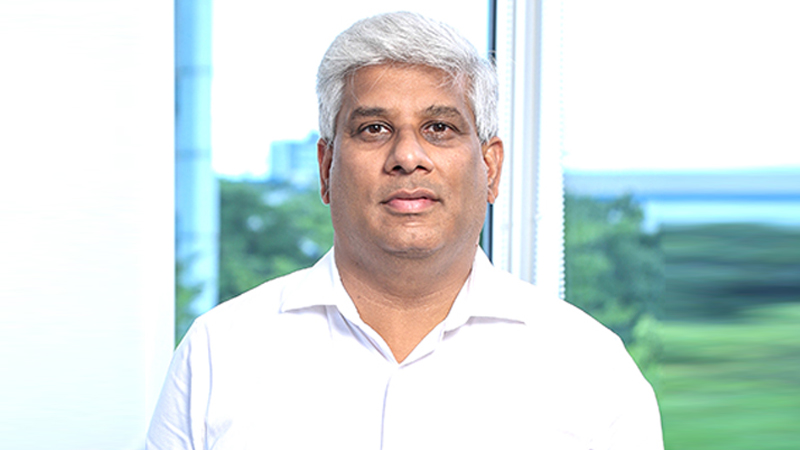
  • GCPL Indonesia CEO Rajesh Sethuraman takes on additional role as global business transformation & IT head

    GCPL Indonesia CEO Rajesh Sethuraman takes on additional role as global business transformation & IT head

    MUMBAI: Some executives climb the corporate ladder-Rajesh Sethuraman seems to be sprinting up it. The CEO of Godrej Consumer Products Limited (GCPL) Indonesia has now added another powerful title to his arsenal: Global business transformation and IT head. It’s a double act that promises to steer the multinational consumer goods giant into its next phase of innovation and digital excellence.

    Announcing his expanded role on Linkedin, Sethuraman shared, “I’m happy to share that besides being CEO Indonesia, I also take on the additional responsibility of global business transformation and IT head at Godrej Consumer Products Limited!”

    Sethuraman’s career reads like a corporate action thriller—each role a new challenge, each promotion another power move. He kicked off his career at Heinz India Limited, spent years crafting brand strategies at Hindustan Unilever, and honed his leadership across multiple continents at Unilever south Africa and Unilever Africa. From shaping Africa’s laundry strategy to spearheading homecare divisions, his trajectory was marked by sharp decision-making and market disruption.

    At Hindustan Unilever, he orchestrated large-scale integrated operations, rewiring business processes for a superior customer experience. Then came his Indonesian chapter at Godrej, where he transformed the entity into a formidable FMCG force.

    Godrej Consumer Products has consistently positioned itself at the forefront of consumer goods innovation. With Sethuraman’s expanded leadership, the brand signals a stronger commitment to efficiency, digital transformation, and unlocking new opportunities across international markets.

    Now, with his added global responsibilities, he’s not just leading—he’s redefining the future of business transformation and IT for GCPL. With this expanded mandate, Sethuraman is expected to merge operational efficiency with tech-driven transformation, pioneering innovations that don’t just boost the bottom line but reshape the industry’s playing field.

  • Vestige is empowering youth toward their entrepreneurial journey

    Vestige is empowering youth toward their entrepreneurial journey

    Mumbai: The global business landscape has seen the direct selling industry rise to a significant position, providing a unique pathway for young individuals to embark on their entrepreneurial ventures while contributing to economic growth. In recent years, there has been a growing interest among the youth in this sector, offering opportunities to enhance their skills and aid entrepreneurial growth. The thriving direct selling industry, valued at Rs 16,000 crore, is expected to reach Rs 64,500 crore by 2025, as per the FICCI-KPMG report.

    The direct-selling workforce in India experienced a substantial increase, reaching 5.7 million individuals in 2018-19, and it’s anticipated to soar to 18 million by 2025, according to the WFDSA. Over 60 percent of this workforce comprises youth. Engaging in direct selling provides young people with an opportunity to cultivate a diverse set of essential skills. They acquire the abilities to persuade effectively, communicate proficiently, and nurture relationships with customers, all of which are fundamental in various careers or entrepreneurial pursuits. Within this sector, they frequently assume leadership responsibilities, refining their capacity to lead teams — expertise easily transferable to managing a business.

    Moreover, it imparts practical financial knowledge, encompassing aspects such as income planning and management.

    Ultimately, it underscores the significance of networking and relationship-building for both personal and professional advancement.
    Vestige Marketing, India’s leading home-grown direct-selling company, reflects on its twenty-year journey of empowering the nation’s youth. This journey signifies more than just economic progress; it represents a stride toward narrowing the unemployment gap.

    Vestige Marketing MD Gautam Bali said, “Empowering youth through direct selling gives them a chance to learn business skills hands-on and be their boss. At Vestige, we’re dedicated to nurturing economic independence among the youth, paving the way for innovation and entrepreneurship.

    With our V20 campaign, we foresee a platform that not only celebrates Vestige’s 20 years of success but also ignites the spirit of entrepreneurial achievement among the younger generation. This initiative is a testament to our dedication to creating pathways for economic independence and skill development for the youth. Through self-reliance and a focus on entrepreneurship, Vestige continues to bring positive change, uplifting both individuals and the nation as a whole.”

    Vestige holds a notable position within the direct-selling industry, notably with approximately 40 per cent of its distributors being young individuals. The company is committed to nurturing opportunities for these youth, aiming to empower them towards economic independence and entrepreneurial pursuits.

    Two decades into a mission that began in 2004, Vestige has made significant contributions to empowering the youth by providing skill-building initiatives and promoting an environment conducive to entrepreneurial ambitions. Through its distinctive business model, the company has transformed the landscape of direct selling in India, creating not just a business, but a movement that propels young individuals towards independence and financial autonomy.

    Over 70 per cent of Vestige’s network comes from tier 2 and tier 3 cities, illustrating the company’s efforts to ensure that the impact of economic independence reaches every corner of the nation. The direct selling sector has effectively utilised these attributes within its extensive network of distributors. It has evolved into a significant avenue for young individuals to enhance their economic prospects and entrepreneurial development.

    Vestige Marketing stands out as a pivotal contributor to this constructive shift, taking the lead in empowering young individuals, particularly in fast-growing urban centers. Vestige, in its efforts for the youth and the nation, is spearheading a new era that not only encourages but celebrates ambition and financial self-sufficiency.

  • Neeraj Sharma joins Globale Media as vice president, global business

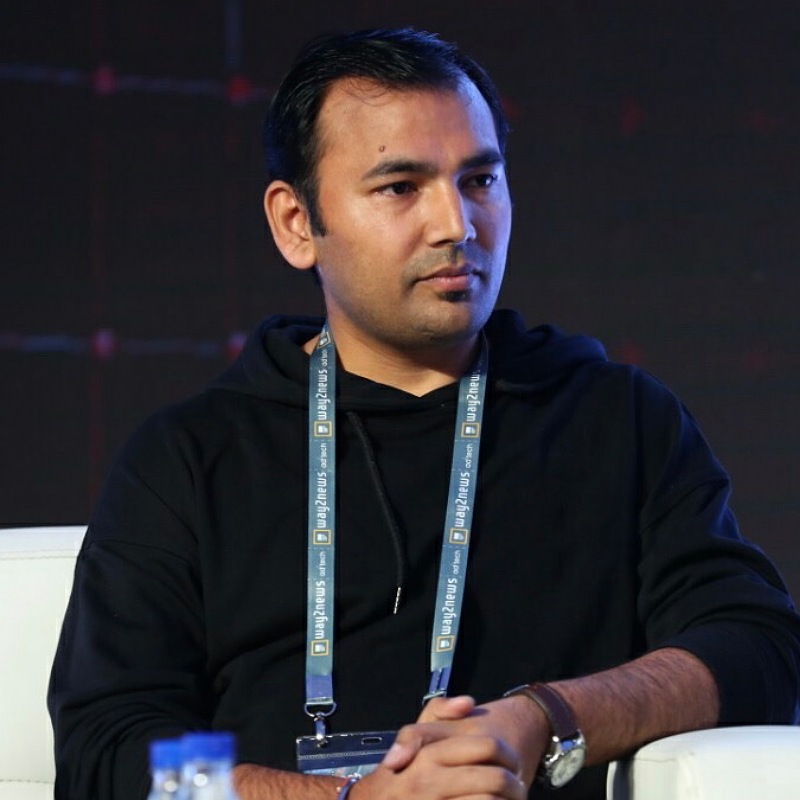
    Neeraj Sharma joins Globale Media as vice president, global business

    Mumbai: AI-driven mobile advertising platform Globale Media has announced Neeraj Sharma’s appointment as vice president, global business. In this role, Sharma will advise on the strategy and critical decisions in the APAC market where digital penetration is skyrocketing, said the company in a statement.

    Sharma brings over 14 years of experience in digital and mobile advertising, with his previous experience at Mobvista as country manager South Asia & MEA. He has also served at Seventynine – SVG Media Pvt Ltd as regional manager of sales.

    “We are delighted to continue our growth in APAC. With Neeraj Sharma’s appointment, we are marking a significant milestone for our global vision,” said Globale Media founder and CEO Bhavesh Talreja. “Neeraj has extensive experience working within rapidly scaling organizations and digital marketing technology. He excels at defining GTM & revenue strategies, strategic alliances, and at leading multicultural teams across different business verticals. His experience will undoubtedly help us to get the message of Globale Media’s unparalleled offering out to the market.”

    In his previous role at Mobvista, Sharma has successfully defined GTM strategy for the Indian subcontinent, Middle East & Africa, led business growth and marketing initiatives, and represented the company at various platforms and industry events. In 2020 he was also felicitated by World Marketing Congress and CMO Asia as one of the 100 smartest Digital Marketing Leaders.

    “I am looking forward to working closely on strategy with the dynamic team of Globale Media, as the business continues upon its growth trajectory,” said Sharma on his new assignment. “I am excited to be equipped with the opportunity to help Globale Media further extend innovative solutions and deliver world-class service to the app marketers.”

  • Critical Mention to Distribute Al Jazeera Media Network’s Channels into Global Business Intelligence Markets

    Critical Mention to Distribute Al Jazeera Media Network’s Channels into Global Business Intelligence Markets

    MUMBAI: Critical Mention, the global leader in real-time TV Intelligence, enabling many of the world’s largest business intelligence and big data platforms to efficiently include breaking news and other broadcast content from around the globe into their subscription platforms, announced a partnership with Al Jazeera Media Network today.


    The agreement extends to both direct subscribers of Critical Mention as well as the users of third-party media monitoring and business intelligence platforms that rely on the Critical Mention API.  Terms were not disclosed. 


    “With 70 bureaus around the world reaching 260 million households and a fast-growing presence on US cable systems,  Al Jazeera reporters are covering the stories and issues that matter to the public and private sector,” said Critical Mention founder and CEO Sean Morgan.  “The importance of this real-time content to public and private markets across the world is profound.”


    Today’s Al Jazeera Media Network partnership comes as the global, broad-based multibillion-dollar business intelligence and big data marketplace is grappling with a lack of real-time broadcast content.


    “Despite huge audience sizes and extended time spent by viewers consuming content, TV has been kept on the sidelines and virtually untapped in real-time intelligence applications,” said Morgan. “Due to the mass infrastructure requirements to aggregate broadcast on a global scale and technical requirements to make it all searchable and distributable, the broadcast industry has never been able to effectively monetize the business intelligence markets as newspapers, magazines and newswires have been able to do, and business intelligence markets have never been able to leverage real-time broadcast data on a global scale to derive insights and drive real-time decisions.”


    Recent media consumption and ad-spend studies from Pew Research Center , McKinsey, and Marketcharts bolster the argument that TV is the most persuasive and pervasive mass medium.


    With content partnerships in place with close to 300 of the most trusted TV and radio news brands across three continents, Critical Mention’s API is driving a paradigm shift in the utility of broadcast in business intelligence and big data platforms while pioneering new opportunities for broadcasters, who gain clear visibility into usage across all platforms. Al Jazeera Media Network gains immediate distribution into the business intelligence markets. In addition to Critical Mention’s direct client base, the Al Jazeera Media Network’s broadcasts will gain immediate distribution to Critical Mention’s channel partners in the media monitoring, lead gen, ad intelligence and general research markets that are licensing access through the Critical Mention API and AMQP low-latency feeds to add the TV medium into their platforms. These platforms receive either near-real-time or low-latency enhanced and expanded text feeds through the service with all video remaining on the Critical Mention cloud for viewing.


    In the integration with Critical Mention, the Al Jazeera Media Network’s properties are optimized through Critical Mention’s content engine. All signals run through the Critical Mention speech-to-text network, making the content searchable by every spoken word in real time and providing other meaningful metadata including program title, estimated audience and ad equivalency. Subscribers to the Critical Mention platform also benefit from natural language processing of Al Jazeera content, exposing proper nouns and sentiment.


    “We are pleased to partner with Critical Mention to extend the reach of Al Jazeera’s award-winning editorial coverage into corporations, NGOs, government and other organizations,” said Al Jazeera executive director of marketing and distribution Ehab Sahawneh.  “The wide adoption of the Critical Mention API by other business intelligence platforms simplifies and streamlines our efforts.”

  • Sir Martin Sorrell shares 10 trends shaping the global ad business

    Sir Martin Sorrell shares 10 trends shaping the global ad business

    The world’s biggest media conglomerate, which shapes the advertising and marketing of brands globally, has good news for marketing companies even though some nations are going through economic crises.


    WPP’s founder and CEO Sir Martin Sorrell shared his views on the trends impacting the global marketing service industry on his Linkedin blog.


    “As we plan for the future of our business, looking across the 110 countries in which we operate, we try to identify the trends that we think are shaping the global marketing services industry.


    Here’s our top ten:


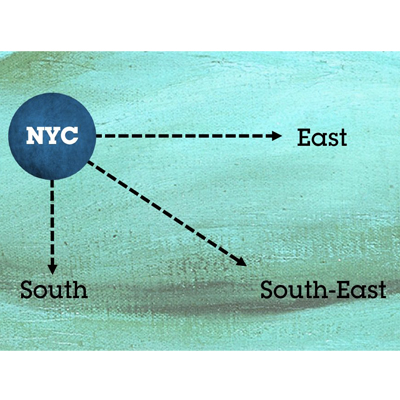
    1. Power is shifting South, East and South East

    New York is still very much the centre of the world, but power (economic, political and social) is becoming more widely distributed, marching South, East and South East: to Latin America, India, China, Russia, Africa and the Middle East, and Central and Eastern Europe.


    Although growth rates in these markets have slowed, the underlying trends persist as economic development lifts countless millions into lives of greater prosperity, aspiration and consumption.


    2. Supply exceeds demand – except in talent

    Despite the events that followed the collapse of Lehman Brothers in 2008, manufacturing production still generally outstrips consumer demand. This is good news for marketing companies, because manufacturers need to invest in branding in order to differentiate their products from the competition.


    Meanwhile, the war for talent, particularly in traditional Western companies, has only just begun. The squeeze is coming from two directions: declining birth rates and smaller family sizes; and the relentless rise of the web and associated digital technologies.


    Simply, there will be fewer entrants to the jobs market and, when they do enter it, young people expect to work for tech-focused, more networked, less bureaucratic companies. It is hard now; it will be harder in 20 years.


    3. Disintermediation (and a post-digital world)

    An ugly word, with even uglier consequences for those who fail to manage it. It’s the name of the game for web giants like Apple, Google and Amazon, which have removed large chunks of the supply chain (think music retailers, business directories and bookshops) in order to deliver goods and services to consumers more simply and at lower cost.


    Take our “frienemy” Google: our biggest trading partner (as the largest recipient of our clients’ media investment) and one of our main rivals, too. It’s a formidable competitor that has grown very big indeed by – some say – eating everyone else’s lunch, but marketing services businesses have a crucial advantage.


    Google (like Facebook, Twitter, LinkedIn and others) is not a neutral intermediary, but a media owner. Google sells Google, Facebook sells Facebook and Twitter sells Twitter.


    We, however, are independent, meaning we can give disinterested, platform-agnostic advice to clients. You wouldn’t hand your media plan to News Corporation or Viacom and let them tell you where to spend your advertising dollars and pounds, so why hand it to Google and co?


    Taking a broader view of our increasingly tech-based world, words like “digital”, “programmatic” and “data” will soon feel out-dated and obsolete as, enmeshed with so many aspects of our daily lives, network-based technologies, automation and the large-scale analysis of information become the norm.


    The internet has been a tremendous net positive for the advertising and communications services business, allowing us to reach consumers more efficiently, more usefully and often more creatively on behalf of clients. But it won’t be long before those clients stop asking our agencies for a “digital” marketing strategy (many already have). It will simply be an inherent part of what we’re expected to offer.


    4. Changing power dynamics in retail

    For the last 20 years or so the big retailers like Walmart, Tesco and Carrefour have had a lot more power than manufacturers because they deal directly with consumers who are accustomed to visiting their stores.


    This won’t change overnight, but manufacturers can now have direct relationships with consumers via the web and e-commerce platforms in particular. Amazon is the example we all think of in the West, but watch out for Alibaba, the Chinese behemoth due to list on the New York Stock Exchange later this summer in what could be the largest IPO in corporate history (and heading a capitalisation of around $200 billion).


    5. The growing reputation of internal communications


    Once an unloved adjunct to the HR department, internal comms has moved up the food chain and enlightened leaders now see it as critical to business success.


    One of the biggest challenges facing any chairman or CEO is how to communicate strategic and structural change within their own organisations. The prestige has traditionally been attached to external communications, but getting internal constituencies on board is at least as important, and arguably more than half of our business.


    6. Global and local on the up, regional down

    The way our clients structure and organise their businesses is changing. Globalisation continues apace, making the need for a strong corporate centre even more important.


    Increasingly, though, what CEOs want is a nimble, much more networked centre, with direct connections to local markets. This hands greater responsibility and accountability to local managers, and puts pressure on regional management layers that act as a buffer, preventing information from flowing and things from happening.


    7. Finance and procurement have too much clout, but this will change

    Some companies seem to think they can cost-cut their way to growth. This misconception is a post-Lehman phenomenon: corporates still bear the mental scars of the crash, and conservatism rules.


    But there’s hope: the accountants will only hold sway over the chief marketing officers in the short-term. There’s a limit to how much you can cut, but top-line growth (driven by investment in marketing) is infinite, at least until you reach 100% market share.


    8. Bigger government


    Governments are becoming ever more important – as regulators, investors and clients. Following the global financial crisis and ensuing recession, governments have had to step in and assert themselves – just as they did during and after the Great Depression in the 1930s and 1940s. And they’re not going to retreat any time soon.


    Administrations need to communicate public policy to citizens, drive health initiatives, recruit people, promote their countries abroad, encourage tourism and foreign investment, and build their digital government capabilities. All of which require the services of our industry.


    9. Sustainability is no longer “soft”

    The days when companies regarded sustainability as a bit of window-dressing (or, worse, a profit-sapping distraction) are, happily, long gone. Today’s business leaders understand that social responsibility goes hand-in-hand with sustained growth and profitability.


    Business needs permission from society to operate, and virtually every CEO recognises that you ignore stakeholders at your peril – if you’re trying to build brands for the long term.


    10. Merger flops won’t put others off

    Despite the failure of one or two recent high-profile mega-mergers, we expect consolidation to continue – among clients, media owners and marketing services agencies. Bigger companies will have the advantages of scale, technology and investment, while those that remain small will have flexibility and a more entrepreneurial spirit on their side.


    FMCG and pharmaceuticals (driven by companies like 3G and Valeant) are where we anticipate the greatest consolidation, while our own industry is likely to see some activity – with IPG and Havas the subject of constant takeover rumours. At WPP we’ll continue to play our part by focusing on small- and medium-sized strategic acquisitions (31 so far this year, and counting).”


     (These are purely personal views of  WPP’s founder and CEO Sir Martin Sorrell and indiantelevision.com does not subscribe to these views.)