Tag: Gitanjali Rao

  • Over 4000 films received for Swachh Bharat Short Film Festival

    Over 4000 films received for Swachh Bharat Short Film Festival

    NEW DELHI: Over 4000 entries have been received from across the country in various Indian languages on the theme of the Swachh Bharat Mission.

    The winners of the best films will be felicitated by Information and Broadcasting Minister M Venkaiah Naidu in New Delhi on 2 October 2016. MoS I and B Rajyavardhan Rathore will also be present on the occasion.

    The Swachh Bharat Short Film Festival was organized by the National Film Development Corporation on behalf of the Ministry. The key objective of the Festival was to generate awareness, inspire people and include them as stakeholders in the Swachh Bharat Abhiyan.

    The short films festival was a competition inviting films of duration not more than 3 minutes. The jury comprised eminent theatre and film actor–producer Vani Tripathi, award-winning filmmaker Ms. Gitanjali Rao, and celebrated advertising personality Prahlad Kakar, has selected 20 short films out of the 4346 entries.

    The Directors of the top ten films would be given cash awards of Rs 10 lakhs (One Million for top film), Rs 500,000 (next three films) and Rs 200,000 respectively (last 6 films), while the next ten would be awarded certificates. All participants would be given certificates of participation.

  • Over 4000 films received for Swachh Bharat Short Film Festival

    Over 4000 films received for Swachh Bharat Short Film Festival

    NEW DELHI: Over 4000 entries have been received from across the country in various Indian languages on the theme of the Swachh Bharat Mission.

    The winners of the best films will be felicitated by Information and Broadcasting Minister M Venkaiah Naidu in New Delhi on 2 October 2016. MoS I and B Rajyavardhan Rathore will also be present on the occasion.

    The Swachh Bharat Short Film Festival was organized by the National Film Development Corporation on behalf of the Ministry. The key objective of the Festival was to generate awareness, inspire people and include them as stakeholders in the Swachh Bharat Abhiyan.

    The short films festival was a competition inviting films of duration not more than 3 minutes. The jury comprised eminent theatre and film actor–producer Vani Tripathi, award-winning filmmaker Ms. Gitanjali Rao, and celebrated advertising personality Prahlad Kakar, has selected 20 short films out of the 4346 entries.

    The Directors of the top ten films would be given cash awards of Rs 10 lakhs (One Million for top film), Rs 500,000 (next three films) and Rs 200,000 respectively (last 6 films), while the next ten would be awarded certificates. All participants would be given certificates of participation.

  • Ankhon Dekhi to open Dharmshala Film Festival later this month

    Ankhon Dekhi to open Dharmshala Film Festival later this month

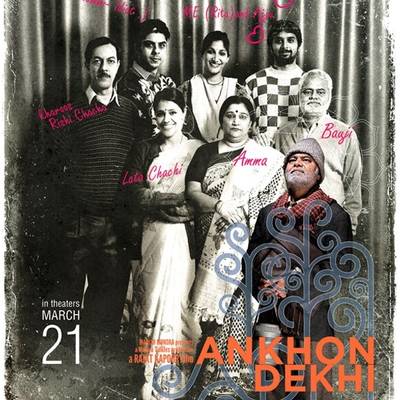
    NEW DELHI: Rajat Kapoor’s critically acclaimed film Ankhon Dekhi will open the third Dharamshala International Film Festival on 30 October.
    The four-day festival will showcase feature films, documentaries, short films and animation films. Besides, DIFF will also host Masterclasses, panel discussions and Harun Farocki Retrospective.

    Feature films to be screened at the festival include Chaitanya Tamhane’s Court, Hansal Mehta’s Citylights, Geetu Mohandas’ Liar’s Dice, Avinash Arun’s Killa, Khyentse Norbu’s Vara: A Blessing, Meenu Gaur and Farjad Nabi’s Zinda Bhaag, Hany Abu-Assad’s Omar, Gabriela Pichler’s Eat Sleep Die, Byamba Sakhya’sRemote Control, Joanna Kos-Krauze and Krzysztof Krauze’s Papusza and Jim Jarmusch’s Only Lovers Left Alive.

    Gitanjali Rao will conduct a masterclass titled Paintings in Motion where she will take the audience from the origin of the idea, to the characters – who they are, where they come from – the style and design, the animatics with sound and music and finally the film in animation through her film which featured in the Critics Week at Cannes. She will go through the different explorations of mood, colors, sounds and music that shaped the film, and how to spin these together to create an emotional experience.

    The animation section will screen films by Shilpa Ranade, Gitanjali Rao and Nina Sabnani, among others.

    Q’s Nabarun, a documentary about famous Bengali writer Nabarun Bhattacharya who passed away in July, will have its world premiere at the festival.


  • Cannes Palme d’Or goes to Turkey’s Nuri Bilge Ceylan for feature and to Simón Mesa Soto for shorts

    Cannes Palme d’Or goes to Turkey’s Nuri Bilge Ceylan for feature and to Simón Mesa Soto for shorts

    NEW DELHI: Renowned Turkish filmmaker Nuri Bilge Ceylan has won the Palme d’or for his film Winter Sleep on the conclusion of the 67th Cannes Film Festival.


    The award – to the best of the 18 in competition – was presented to him by the American actress Uma Thurman and the American director Quentin Tarantino. The Jury was presided over by Jane Campion.


    Nuri Bilge Ceylan said: “This is a huge surprise for me, I wasn’t expecting it. I don’t know what to say. This year marks the 100th anniversary of Turkish cinema, which is a happy coincidence. I would like to thank the Festival de Cannes for supporting this long project. Thank you to the Jury, to Thierry Frémaux and Gilles Jacob. I would like to dedicate this Palme d’or to the young people of Turkey and to those who lost their lives during the year. Thank you very much”. 


    The film also won the top award given by The FIPRESCI (International Association of film critics) jury headed by Esin Kücüktepepinar of Turkey.


    While Titli by Kanu Bahl from India was highly lauded, the film that was selected for Un Certain Regard and Gitanjali Rao’s 19-minute animated romance True Love Story in the Critics’ Week failed to make any mark. Behl was also a contender for the Camera d’Or, the award for feature directing debut.


    Sergio Leone’s Per un pugno di dollari (A Fistful of Dollars) presented by Quentin Tarantino, was screened at the end of the ceremony.


    Le Meraviglie (The Wonders) by Alice Rohrwacher received the Grand Prix award while the best Director Award went to Bennett Miller for Foxcatcher.


    The Jury Prize ex-aequo went to Mommy by Xavier Dolan (the youngest winner at 25) and Adieu Au Langage (Goodbye to language) by the renowned Jean-Luc Godard.


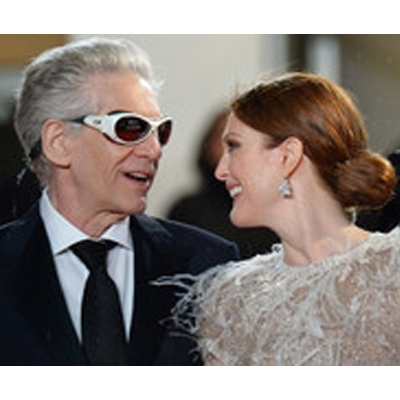
    The best acting awards went to actress Julianne Moore in Maps to the Stars by David Cronenberg and actor Timothy Spall in Mr Turner by Mike Leigh. Mr Turner also won the award of the Vulcan Award for Technical Artist of the Jury of the CST to Dick Pope, director of photography, for bringing to light the works of Turner.


    The Best Screenplay Award was awarded to Andrey Zvyagintsev and Oleg Negin for Leviathan.


    The Palme d’Or for Short Films went to Leidi by Simon Mesa Soto.


    A Special Mention – Ex-aequo – was made of A?ssa by Clément Trehin-Lalanne and Ja Vi Elsker (Yes we love) by Hallvar Witzo.


    The Un Certain Regard Prize went to Fehér Isten by Kornél Mundruczó. FIPRESCI gave the Un Certain Regard award to Jauja by Lisandro Alonso.


    The Jury Prize went to Turist by Ruben Östlund while the Un Certain Regard Special Prize was awarded to The Salt of the Earth by the lauded Wim Wenders and Juliano Ribeiro Salgado.


    The Ensemble Prize was given to Party Girl by Marie Amachoukeli, Claire Burger and Samuel Theis, and the film also received the Camera d’Or award in the Un Certain Regard, while the Best Actor Award went to David Gulpilil in Charlie’s Country by Rolf de Heer.


    In the Cinefondation category for student films, the first prize went to Skunk by Annie Silverstein from the Texas University at Austin in the United States, while the second prize went to Oh Lucy!  by Atsuko Hirayanagi of the NYU Tisch School of the Arts Asia, Singapore and the third prize was given jointly to Lievito Madre by Fulvio Risuleo of Centro Sperimentale di Cinematografia, Italy and The Bigger Picture by Daisy Jacobs of the National Film and Television School in the United Kingdom.


    The Nespresso Grand Prize in the Critics’ Award category went to The Tribe by Myroslav Slaboshpytskiy, which also received the France 4 Visionary Award. It additionally got the Gan Foundation Support for Distribution.


    The SACD Award went to Hope by Boris Lojkine.


    A Ciambra by Jonas Carpignano received the Sony CineAlta Discovery Prize for short film and the Canal+ Award for short film went to Crocodile by Gaëlle Denis.


    In the Directors’ Fortnight section, the Europa Cinema Label, the SACD Prize and the Art Cinema Award went to Love At First Fight (Les Combattants) by Thomas Cailley. The film also received the FIPRESCI award.


    The Illy prize for short film was given to Heartless (Sem Coraç?o) by Nara Normande and Ti?o.


    A special mention was made of It Can Pass through the Wall (Trece si Prin Perete) by Radu Jude.


    Ceylan’s film is a 210 minute morality tale about a former actor who runs a hotel in remote Anatolia. As winter approaches, he is alone with his young wife and her sister going through a divorce. The cold weather makes the hotel not only a shelter but a site where the three must confront their growing feelings of animosity.


    Mommy, like the films of Jean Luc Godard, has broken ground, and ironically Dolan shared the jury prize with the French New Wave director with the daring hand held camera and jump cuts. Godard’s film Adieu au Langage (Goodbye to Language) in the official competition uses colorized scenes and fragmentation in a rather well shaped non-linear narrative. Dolan’s “Mommy” represents a paradigm shift for cinematic language. Defying established aspect ratios, Dolan and his director of photography André Turpin used a perfectly square 1.1 instead of today’s widescreen formats. Mommy shot on 35mm explores futuristic Canada with new mental-health laws in this film about a mother with a violent son.

  • India and the Cannes Film Fest

    India and the Cannes Film Fest

    MUMBAI: Eight months down the line, and there’s nostalgia and a longing to be in Cannes again. The Cannes Film Festival had this habit of growing on you. The high cost of living (hotel and apartment rates in Cannes rise four to six times offseason rates during the fest), and the punishing schedules for the press conferences and for the screenings notwithstanding. (Bed time is 2:30 am, awakening time is 7:00 am as the first screening is at 8:30 am and it’s a 20 minute walk from one’s apartment to the Palais des Festivals’ Grand Auditorium).

    2007 is the 60th year of the Cannes Fest, the 60th year of India’s indedpendence and a great deal of gigs are planned highlighting the world’s second or is it most attractive economy.

    Hopefully, the volume of noise will be higher this year because India’s efforts get lost in the cacophony that is the mark of the festival. The American studios, the UK independents, the Chinese film makers, Latin American and European directors attract so much of the limelight, that India’s efforts simple don’t make much of an impact. Of course, the Indian media will send back reports saying how well India is doing at Cannes, when the truth is far from that.

    Hopefully, the Indian pavilion along the Croisette will be better organized this time around. The CII – which puts the Indian participation together – needs to be patted for the initiative, but a little more organization on the ground, will mean so much for the industry. Obviously, it is learning from its experiences and this year it promises that it will be an eyepopping experience for all.

    The Indian independent film makers group – which had got the support of the Reliance group’s Adlabs in the form of a pavilion – apparently is going to be back. In a much bigger way, says film maker Aditya Bhattacharrya. “It’s become a movement globally, Almost any independent Indian outside of India who is making movies has become a part of it,” he says. “It’s good for the movie business.”

    The nostalgia that wells up is that of Tom Hanks charming one and all even as the da Vici Code got blasted as a disaster by all,Jon Voigt mumbling in an undecipherable language,. the gorgeous Maria Belluci, the maverick outlook of Wong kar Wai, the applause that Babel, Volver, Pan’s Labrynth, received, among many other classy movies which were presented at the festival.

    From the Indian perspective there is the victory of animatrix Gitanjali Rao who won a couple of awards being the sole Indian flag bearer. She in her way charmed one and all by her grace and dignity at the film mart. Then there was this group of French girls who came up to this writer pleading to meet with Karan Johar and Shah rukh Khan. The former was there they were told, the latter would not be coming. But did they meet him? Then there was the Omkara book launch, the Jagmohan Mundra’s Provoked, WEG India’s Avinash Jumaani’s lavish party near the old port, Sunil Doshi’s screening of Mixed Doubles in the Palais, the Film Producer Guild party which had more Indians than the overseas trade which is what it was meant to attract.

    In its 60th year, India’s entertainment barons have an opportunity to set things right. And leave no stone unturned while attempting to do it.

    Below is a snapshot of Cannes Film Fest 2006

    Films in competition

    * L’Amico di famiglia – Paolo Sorrentino
    * Babel – Alejandro González Iñárritu
    * Crónica De Una Fuga – Israel Adrián Caetano
    * Il caimano – Nanni Moretti
    * Iklimler – Nuri Bilge Ceylan
    * Fast Food Nation – Richard Linklater
    * Flandres – Bruno Dumont
    * Indigènes – Rachid Bouchareb
    * Juventude Em Marcha (Colossal Youth) – Pedro Costa
    * El Laberinto del Fauno – Guillermo del Toro
    * Laitakaupungin valot – Aki Kaurismäki
    * Marie-Antoinette – Sofia Coppola
    * Quand j’étais chanteur – Xavier Giannoli
    * La raison du plus faible – Lucas Belvaux
    * Red Road – Andrea Arnold
    * Selon Charlie – Nicole Garcia
    * Southland Tales – Richard Kelly
    * Summer Palace – Lou Ye
    * Volver – Pedro Almodóvar
    * The Wind That Shakes the Barley – Ken Loach

    Films out of Competition

    * The Da Vinci Code, by Ron Howard (Opening Film)
    * Transylvania,by Tony Gatlif (Closing Film)
    * United 93, by Paul Greengrass
    * X-Men: The Last Stand, by Brett Ratner
    * Over the Hedge, by Tim Johnson, Karey Kirkpatrick
    * Election 2 (aka Triad Election ), by Johnnie To
    * Clerks II, by Kevin Smith
    * Silk, by Su Chao-pin
    * Shortbus, by John Cameron Mitchell
    * An Inconvenient Truth, by Davis Guggenheim
    * Boffo! Tinseltown’s Bombs and Blockbusters, by Bill Couturie
    * Volevo Solo Vivere, by Mimmo Calopresti
    * Bamako, by Abderrahmane Sissako
    * Ici Najac, a vous la terre, by Jean-Henri Meunier
    * Avida, by Benoit Delepine
    * El-Banate Dol (aka These Girls ), by Tahani Rached
    * Zidane, A 21st Century Portrait, by Philippe Parreno ,Douglas Gordon
    * Nouvelle Chance, by Anne Fontaine
    * The House Is Burning, by Holger Ernst
    * Chlopiec na galopujacym koniu (aka The Boy on the Galloping Horse ), by Adam Guzinski

    Un Certain Regard

    * 977 – Nikolay Khomeriki
    * A Scanner Darkly – Richard Linklater
    * Bihisht Faqat Baroi Murdagon – Djamshed Usmonov
    * Bled Number One – Rabah Ameur-Zaimeche
    * Cum Mi-am Petrecut Sfarsitul Lumii – Catalin Mitulescu
    * El Violin – Francisco Vargas Quevdeo
    * Gwaï wik – Oxide Pang & Danny Pang
    * Hamaca Paraguaya – Paz Encina
    * Il Regista Di Matrimoni – Marco Belloccio
    * La Californie – Jacques Fieschi
    * La Tourneuse de pages – Denis Dercourt
    * Luxury Car – Chao Wang
    * Meurtrieres – Patrick Grandperret
    * Paris, je t’aime – Gurinder Chadha, Bruno Podalydès, Gus van Sant, Ethan Coen, Joel Coen, Walter Salles, Daniela Thomas, Christopher Doyle, Isabel Coixet, Suwa Nobuhiro, Sylvain Chomet, Alfonso Cuarón, Olivier Assayas, Oliver Schmitz, Richard LaGravenese, Vincenzo Natali, Wes Craven, Tom Tykwer, Gérard Depardieu, Frédéric Auburtin, Alexander Payne
    * Salvador – Manuel Huerga
    * Serambi – Garin Nugroho, Tonny Trimarsanto, Viva Westi, Lianto Luseno
    * Suburban Mayhem – Paul Goldman
    * Taxidermia – György Pálfi
    * Ten Canoes – Rolf de Heer
    * The Unforgiven – Jong-bin Yoon
    * 2:37 – Murali K. Thalluri
    * Uro – Stefan Faldbakken
    * You Am I – Kristijonas Vildziunas
    * Z Odzysku – Slawomir Fabicki

    Winners

    * Palme d’Or (Won by Ken Loach for The Wind That Shakes the Barley)
    * Grand Prix (Won by Bruno Dumont for Flandres)
    * Prix de la mise en scène (Won by Alejandro González Iñárritu director of Babel)
    * Prix du Jury (Won by Andrea Arnold for Red Road)
    * Prix du scénario (Won by Pedro Almodovar for Volver)
    * Prix d’interprétation féminine du Festival de Cannes (Won by the cast of Volver including Penelope Cruz)
    * Prix d’interprétation masculine du Festival de Cannes (Won by the cast of Indigènes)
    * Prix un certain regard (Won by Chao Wang for Luxury Car).