Tag: GIS

  • MIB asks teleport operators to give exact location in 7 days

    NEW DELHI: All teleports operators have been asked by the ministry of information and broadcasting (MIB) to provide information with regard to the exact location of their teleport alongwith the longitude and latitude details.

    This follows the decision of the ministry to prepare a GIS (Geographic Information Systems) Plotting of all teleports permitted by the ministry. Teleports have been asked to furnish the required information within seven days from the date of issue of the notice.

    In March this year, the ministry had reminded all teleports about giving information about television channels uplinked or downlinked by them and warned that permissions other than those in the report of the Teleport Operators will be considered as lapsed and action will be taken to cancel such permissions.

    The ministry said on 17 March that all teleports have to report within 15 days according to the formula attached to the notice on the ministry’s site.

    The ministry had, on 7 January 20I3, directed all the teleport operators having permission for up-linking and down-linking of TV channels to furnish the detailed list of TV Channels being uplinked from their teleport every month.

    The note said: “It has come to the notice of this Ministry that some of the teleport operators are still not furnishing the above monthly report and those who are furnishing the report, the data do not match with the permissions issued by this Ministry for uplinking/downlinking of TV channels from their respective teleports.

    The Ministry had decided that all the teleport operators having permission for up-linking and down-linking of TV channels shall immediately furnish details of the permissions issued by Ministry till date for uplinking/downlinking of TV channels from their teleports in the fixed proforma.

    Teleports who do not give such information will be presumed to be non-functional and action will be initiated for cancellation of the teleport permission.

    “Furnishing this information is mandatory and non-compliance will be construed as violation of the uplinking guidelines,” the Ministry said.

    Also Read:

    Report details of TV channels by Mar-end or face action, teleports warned

    81 teleports permitted to uplink, downlink TV channels

    53 TV channels, six teleports’ licences up for renewal in ’17

  • PSLV-C34 successfully launches 20 satellites in a single flight

    PSLV-C34 successfully launches 20 satellites in a single flight

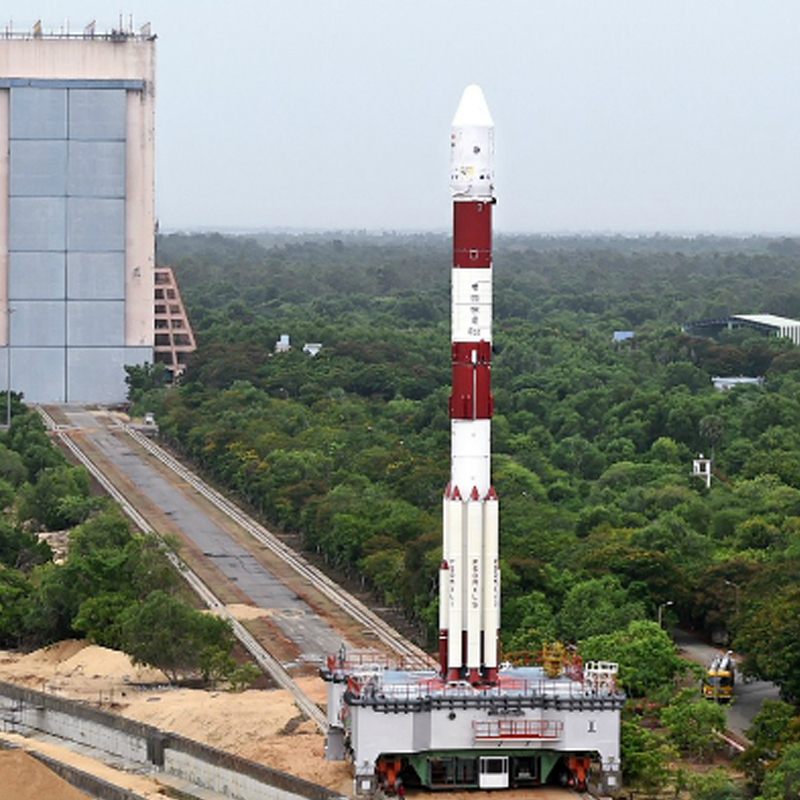
    MUMBAI: In its thirty sixth flights (PSLV-C34), ISRO’s Polar Satellite launch Vehicle successfully launched the 727.5 kg Cartosat-2 Series Satellite along with 19 co-passenger satellites today morning (June 22, 2016) from Satish Dhawan Space Centre SHAR, Sriharikota. This is the thirty fifth consecutively successful mission of PSLV and the fourteenth in its ‘XL’ configuration.  The total weight of all the 20 satellites carried on-board PSLV-C34 was 1288 kg.

    After PSLV-C34 lift-off at 0926 hrs (9:26 am) IST from the Second Launch Pad with the ignition of the first stage, the subsequent important flight events, namely, strap-on ignitions and separations, first stage separation, second stage ignition, heat-shield separation, second stage separation, third stage ignition and separation, fourth stage ignition and cut-off, took place as planned. After a flight of 16 minutes 30 seconds, the satellites achieved a polar Sun Synchronous Orbit of 508 km inclined at an angle of 97.5 degree to the equator (very close to the intended orbit) and in the succeeding 10 minutes, all the 20 satellites successfully separated from the PSLV fourth stage in a predetermined sequence.

    After separation, the two solar arrays of Cartosat-2 series satellite were deployed automatically and ISRO’s Telemetry, Tracking and Command Network (ISTRAC) at Bangalore took over the control of the satellite. In the coming days, the satellite will be brought to its final operational configuration following which it will begin to provide remote sensing services using its panchromatic (black and white) and multispectral (colour) cameras.

    The imagery sent by the Cartosat-2 series satellite will be useful for cartographic applications, urban and rural applications, coastal land use and regulation, utility management like road network monitoring, water distribution, creation of land use maps, precision study, change detection to bring out geographical and manmade features and various other Land Information System (LIS) and Geographical Information System (GIS) applications.

    Of the 19 co-passenger satellites carried by PSLV-C34, two – SATHYABAMASAT weighing 1.5 kg and SWAYAM weighing 1 kg – are University/Academic institute satellites and were built with the involvement of students from Sathyabama University, Chennai and College Of Engineering, Pune, respectively.

    The remaining 17 co-passenger satellites were international customer satellites from Canada (2), Germany (1), Indonesia (1) and the United States (13). 

    With today’s successful launch, the total number of satellites launched by India’s workhorse launch vehicle PSLV has reached 113, of which 39 are Indian and the remaining 74 from abroad.

  • PSLV-C34 successfully launches 20 satellites in a single flight

    PSLV-C34 successfully launches 20 satellites in a single flight

    MUMBAI: In its thirty sixth flights (PSLV-C34), ISRO’s Polar Satellite launch Vehicle successfully launched the 727.5 kg Cartosat-2 Series Satellite along with 19 co-passenger satellites today morning (June 22, 2016) from Satish Dhawan Space Centre SHAR, Sriharikota. This is the thirty fifth consecutively successful mission of PSLV and the fourteenth in its ‘XL’ configuration.  The total weight of all the 20 satellites carried on-board PSLV-C34 was 1288 kg.

    After PSLV-C34 lift-off at 0926 hrs (9:26 am) IST from the Second Launch Pad with the ignition of the first stage, the subsequent important flight events, namely, strap-on ignitions and separations, first stage separation, second stage ignition, heat-shield separation, second stage separation, third stage ignition and separation, fourth stage ignition and cut-off, took place as planned. After a flight of 16 minutes 30 seconds, the satellites achieved a polar Sun Synchronous Orbit of 508 km inclined at an angle of 97.5 degree to the equator (very close to the intended orbit) and in the succeeding 10 minutes, all the 20 satellites successfully separated from the PSLV fourth stage in a predetermined sequence.

    After separation, the two solar arrays of Cartosat-2 series satellite were deployed automatically and ISRO’s Telemetry, Tracking and Command Network (ISTRAC) at Bangalore took over the control of the satellite. In the coming days, the satellite will be brought to its final operational configuration following which it will begin to provide remote sensing services using its panchromatic (black and white) and multispectral (colour) cameras.

    The imagery sent by the Cartosat-2 series satellite will be useful for cartographic applications, urban and rural applications, coastal land use and regulation, utility management like road network monitoring, water distribution, creation of land use maps, precision study, change detection to bring out geographical and manmade features and various other Land Information System (LIS) and Geographical Information System (GIS) applications.

    Of the 19 co-passenger satellites carried by PSLV-C34, two – SATHYABAMASAT weighing 1.5 kg and SWAYAM weighing 1 kg – are University/Academic institute satellites and were built with the involvement of students from Sathyabama University, Chennai and College Of Engineering, Pune, respectively.

    The remaining 17 co-passenger satellites were international customer satellites from Canada (2), Germany (1), Indonesia (1) and the United States (13). 

    With today’s successful launch, the total number of satellites launched by India’s workhorse launch vehicle PSLV has reached 113, of which 39 are Indian and the remaining 74 from abroad.