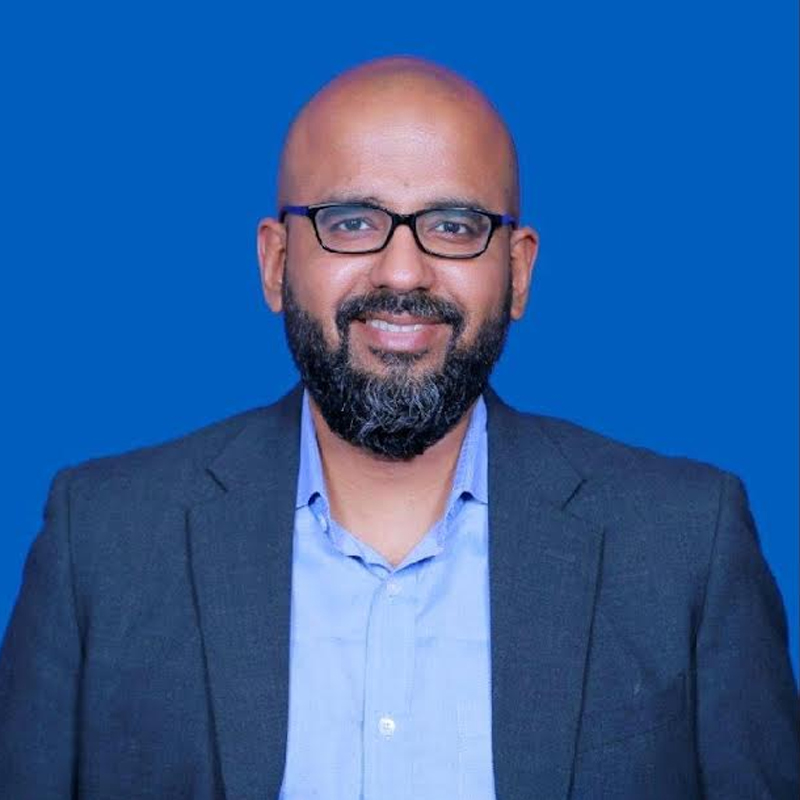
Tag: Girish Menon

  • Girish Menon joins Jetsynthesys as chief strategy officer

    Girish Menon joins Jetsynthesys as chief strategy officer

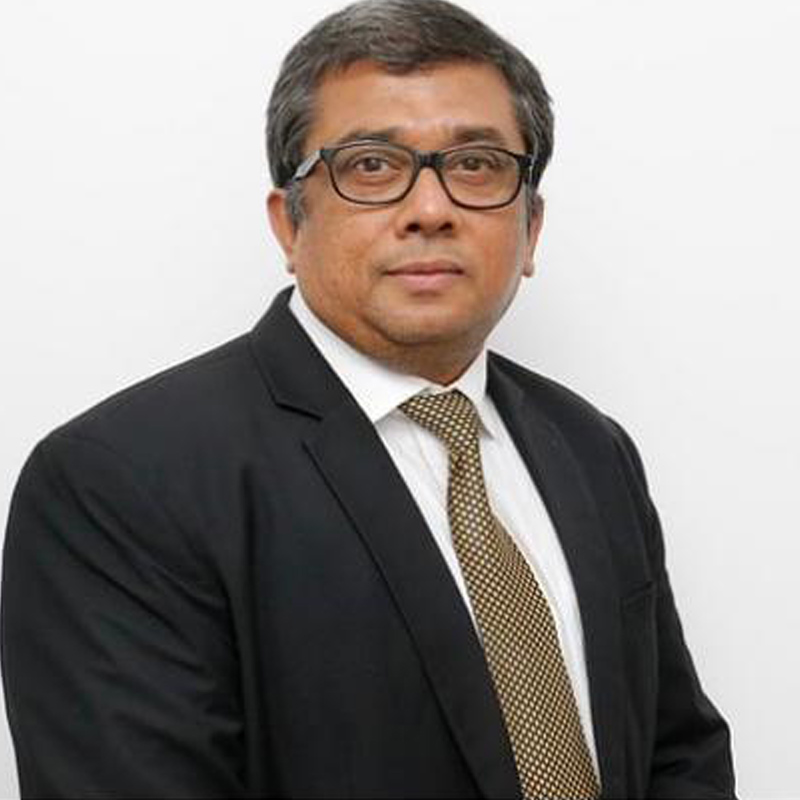
    Mumbai: Jetsynthesys has appointed Girish Menon as chief strategy officer, according to his recent LinkedIn update.

    He was previously associated with KPMG as a partner for its media and entertainment practice. Jetsynthesys is an IT services and consulting company specialising in gaming, esports and entertainment domain.

    Menon is a professional with over 25 years of experience in mergers & acquisitions, strategy and consulting with a specialisation in media, digital, gaming & consumer internet domains.

    He has been associated with KPMG for 21 years out of which 14 years were spent in the deal advisory practice covering strategy and mergers and acquisitions (M&A) advisory. He has also had an entrepreneurial stint heading a film studio venture and also held the role of head strategy at Balaji Telefilms.

  • How Dangal TV is ruling the heartland

    How Dangal TV is ruling the heartland

    MUMBAI: Nearly a decade after it was launched, Dangal TV has emerged as one of the most-watched channels in India across genres, thanks to a well-thought-out strategy of curating selective old shows and producing originals on Indian history and mythology, apart from the usual soap-operas.

    The Hindi GEC Channel Dangal TV, part of Enterr10 TV Network, has consistently topped the weekly list across genres of channels in 2019 (Source: BARC) and is a delight for media agencies and advertisers the media plan.

    Dangal has emerged as an undisputed leader in the rural Hindi-speaking market (HSM), while maintaining a decent hold in urban areas as well.

    Joy Chakraborthy, CEO, Enterr10tv, says, "It’s not just by luck that we have consistently topped the list of most popular channel in India."

    To what extent has the FTA model helped Dangal?

    Dangal was launched as a free-to-air (FTA) channel in 2009. However, since TRAI’s 2019 new tariff order (NTO) that mandates that customers select the channels and bouquets they want to subscribe and broadcasters announce the MRP of the same, Dangal has emerged as the undisputed leader in all genres of channels.

    KPMG India partner and head, media and entertainment Girish Menon says: “The top FTA GEC channels, especially on the DD Freedish platform, have commanded a high viewership share post the NTO regime, especially in the rural markets. The primary reason for the same has been the flanking channels of the top 4 broadcasters turning pay after the transition to the NTO regime, and the removal of these channels from the DD Freedish platform; which in itself has access to 30 million HHs.”

    Industry experts say that Dangal has an edge over its competitors as it is an FTA channel, a great advantage in a price sensitive market like India. Interestingly, Dangal is often the only FTA channel in the weekly BARC list of Top 10 channels by viewership. 

    Chakraborthy, however, is dismissive of those who credit Dangal’s success solely to its FTA strategy.

    “Look, after the NTO order, every media network had the option to remain in FTA space or to become paid channel. If FTA is our only mantra for success, tell me why Dangal is often the only FTA channel in the list of top 10 channels. Dangal is not the No.1 free channel. It’s the top channel across genres,” quips Chakraborthy, showing us the viewership chart for Dangal TV in 2019.

    Chakraborthy, who joined Enterr10 TV Network in March and has over 25 years of experience in M&E industry, working with Times Group, Star India, Zee, Network18 and TV Today Network, is also clear that he wants Dangal to remain free of cost: “I have no intention to convert Dangal to a paid channel. We will remain FTA channel.”

    How is Dangal making money without subscription revenue?

    Chakraborthy, who calls himself an all-in-all revenue guy, says advertising is its only source of revenue. “ROI is at the heart of all our operations. Before we commission a new show or syndicate one, we do a detailed research and check on advertising potential.”

    He points out that while advertisers have multiple options to reach consumers in metro cities, like, TV, print, OTT, etc…Dangal provides companies access to millions of consumers in the Hindi heartland where these other mediums are comparatively weak or not cost effective. It is this market where Dangal TV simply cannot be ignored and this brings advertisers.

    But, has not ad revenue declined with the GDP falling to a six-year low of 5% in August 2019?

    Chakraborthy says that while ad revenue in some mediums may have shown a decline, TV has remained mostly unaffected. On GECs, FMCG goods are the primary source of revenue and their demand has not dampened despite slowing economy. “FMCG advertisers are our bread and butter and they are doing well and pumping in monies on television. Up to 80 per cent of our ad revenue is coming from FMCG firms. Dangal’s objective is to get all potential advertisers on board without compromising in rates and values.”

    The strategy behind mythological/historical fiction shows

    Industry experts believe Dangal is successful as it has carved out a niche space for itself in the crowded Indian broadcast market. The channel has been able to maintain its distinct identity by carefully curating old shows and producing originals in the genre of Indian history, spirituality and mythology; Mahima Shanidev Ki, Ramayan, Dwarkadheesh Bhagwaan Shree Krishna, Sikandar vs porus, Chandragupta Maurya, Veer Shivaji, to name just a few.

    Dangal TV is clear about its identity and upfront about its strategy. Its website clearly defines its endeavour as an attempt to meet the “demand(s) of entertainment and information to make audience feel connected to our (Indian) ancient history and mythology.”

    The key to success for the top FTA GECs is to focus on fresh programming, with a judicious mix of shows across genres such as daily soaps, mythological and socially relevant programming, Menon says.

    That Dangal’s success is in large part owing to the unique programming line-up of mythological entertainment shows is clear from the fact that in week 19 of 2019, when Dangal TV topped the list for most popular channel across genres, its most popular show was Mahima Shanidev Ki, followed by Ramayana.

    Dangal’s brilliance lies in the fact that it was the first to realise and move in the space for a Hindi entertainment channel, focusing primarily on shows about Indian history and mythology, apart from the usual run-of-the-mill crime thriller, horror shows and family dramas.

    This space was consistently ignored by programming heads for nearly three decades despite the success of shows like Ramayana and Mahabaratha in the late eighties.

    Chakraborthy agrees: “Mythological shows are sure-shot winners. Metro cities are often oblivious to the fact that India is a deeply religious country. In addition, mythological shows can be watched with families. TV watching in India is still a family experience and parents would rather have their children watch Ramayana than Narcos or Breaking Bad.”

    Strategy behind acquiring old shows

    Dangal ratings, undoubtedly, have also been helped by successfully monetising already aired shows. Shows like Chandragupta Maurya, Bhagwaan Shree Krishna ran on Imagine TV before the channel shut abruptly in April 2012 and already aired titles like Bandini, Ramayana, Mahima Shanidev Ki, have done exceptionally well on Dangal.

    “We go through a lot of historical data before acquiring the license for any show. There are many reasons behind the success of any show. We look at shows that did not do well and analyse why it happened. Perhaps, it was a good show on a bad distribution landscape, or had too tough a competitor, or was probably on the wrong channel. We analyse such shows, acquire them at a fraction of cost, and then re-telecast them at a strategic time-slot to maximise ROI. Results are for all to see.”

    While Chakraborthy is honest in giving credit to these old shows for Dangal success, he is also quick to point out that Dangal is not just airing old shows.

    “At Dangal, I see my greatest challenge to bust the perception that we are only airing old shows. We produced Nagin, which is doing exceptionally well, Darr ki Dastak, a horror show and ‘CIF’, a crime investigation show. We have also commissioned other shows which are ready for telecast, but our current shows are doing so well that we have no time slot left for running these new shows,” Chakraborthy clarifies.

    Going forward

    Chakraborthy has a clear road map for Dangal’s future growth. While there is a rush in TV channels to tie-up with OTT platforms, Dangal’s first priority is to consolidate, maintain and further strengthen its leadership position on television which directly helps in monetisation through advertising.

    “The OTT and web plans are part of the strategy and will be shared in due course.”

    Enterr10 network is fortunate to have a visionary promoter in Manish Singhal, who has identified the right mix of people.

    In the last few months, the network has recruited Priyanka Datta as business head, Amartya Ray as head – revenue planning, sales strategy, research and operations, and Neeta Thakre.

    The Hindi GEC is a Rs 9000 crore market. If Dangal can maintain its dominant hold in this segment, like it has done so far in 2019, then surely, it will have the biggest pie of this crucial market.  

  • Republic Bharat, Hindi news channel, to launch Q1 of 2019

    Republic Bharat, Hindi news channel, to launch Q1 of 2019

    MUMBAI: Well, it’s finally happening and at an opportune moment too. Ahead of announcement of dates for the general elections or India’s great dance of democracy, Arnab Goswami-helmed Republic TV is getting its Hindi sibling to debut in the first quarter of 2019 with a reliable industry insisting the launch could be sometime in January itself.

    Republic TV CEO Vikas Khanchandani, who confirmed to Indiantelevision.com about the Hindi news channel from the family, however, refused to give a firm date for going on air. He deftly side-stepped queries on the Republic Bharat (in short format it would be known as R Bharat) launch date by saying it would be in the first quarter of 2019.

    According to the Khanchandani, the Hindi sibling of Republic TV will have Shamsher Singh as its editor. Singh has over 20 years of experience and has worked with leading television news channels, including India News, Zee Hindustan and Aaj Tak.

    The Hindi news genre has more than 20 TV channels. Aaj Tak from the India Today Group leads the audience numbers game in all the three markets comprising urban plus rural (U+R), rural and urban.

    Why choose a name like Republic Bharat, especially when the company had run into problems on the christening of Republic TV?

     Pointing out that `India’ is equated with `Bharat’, Khanchandani said, “Republic Bharat or R. Bharat resonated with all of us and we were instantly drawn to it. It has stood out as a differentiator and as a name that smashes the clutter. The name is powerful and will connect with the audiences across HSM markets. The audiences will embrace Bharat.”

    On its debut last year, Republic TV had not only smashed the audience measurement numbers, but also unsettled some legacy players who had even questioned the way audience data was obtained by the then new entrant. That after several rounds of slug fest all the players kissed and made up was another story altogether.

    However, industry observers believe that if the success of the noisy English news channel Republic TV is any indication, the parent is bound to deliver a strong platform in the Hindi space too.

    According to media reports, earlier in June this year Republic TV had circulated a note through a financial consultancy firm based out of Gurugram stating that the company was planning to raise capital of around Rs 120 crore (Rs. 1,200 million) to set up a Hindi news channel. The investor note also stated Republic TV had “overachieved” its projected revenue and profitability estimates to close FY18 with Rs 155 cores (Rs. 1550 million) in revenue and planned to close FY19 with close to Rs 2 billion in revenues.

    KPMG India partner and head- media and entertainment Girish Menon told Indiantelevision.com, “Hindi news is the largest [segment] when it comes to news channels in terms of audience share. Given the brand value and equity Republic TV has, it makes sense to diversify into the Hindi space too.”

    Highlighting that Republic TV’s parent has a “comparable digital channel” and adding Hindi to that platform will give it a wider user base, Menon added, “Brands will obviously get access to a much wider audience base. From an audience perspective, Hindi has a bigger base than English. The success, however, will depend on the content strategy and how it plays out with the viewers.”

  • Digitisation leading to higher HD adoption in India

    Digitisation leading to higher HD adoption in India

    MUMBAI: High definition (HD) TV channels started launching in India years ago but it was only when digitisation happened on a large scale that the adoption of channels grew.

    According to Broadcast Audience Research Council (BARC), the total HD count in India has increased to 83 channels currently from 59 channels in 2016, witnessing a growth of 41 per cent since 2016. The first HD channel was National Geographic HD in 2010.

    Of the 83 HD channels, 34 are English, 13 channels are Hindi and 10 of them have multiple languages feed. On the other hand, 50 channels out of 83 have both SD and HD feed.

    While the number of channels has gone up by 41 per cent, the viewership share has grown by more than 160 per cent. The reason behind this viewership growth is most likely technology and distribution. There were 10-12 million subscribers availing HD services at the end of FY18, according to FICCI KPMG’s Media & Entertainment report 2018.

    The DTH players have been the front-runners in up-selling HD services to their customers, whereas MSOs only managed to garner about 1-1.5 million HD subscribers.

    KPMG partner and head – media and entertainment Girish Menon said, “The new television sets coming in the market are all HD-ready in some form or the other. Even the set top boxes which are coming out, sold by the DTH and cable operators, are all HD boxes. In that sense, from a hardware perspective, the market is steadily moving towards HD. The second trend which is happening from the content perspective is that all the television channels are now essentially converting and up-scaling their feed into HD. The content available in HD is also increasing. You will see more HD conversions happening, SD subscribers shifting to HD and a greater proportion of HD subscribers that are going to come in.”

    If we look at the market contributing to HD viewership this year, Andhra Pradesh and Telangana have the highest share of the pie with 18 per cent. Maharashtra and Goa contribute 16 per cent to the overall market.

    “Maximum consumption in viewership is contributed by sports and GEC followed by movies. We will see more HD regional channels which will lead to growth of regional viewership. On the regional side, Tamil and Telugu markets will drive the HD growth,” he added.

    GEC, movies and sports genre contributed 94 per cent to HD viewership this year with 59 per, 25 per cent and 10 per cent for each genre respectively.

    The sports genre includes 12 HD channels in India across various broadcasters. As other sporting events apart from cricket are also gaining popularity among the youth, the consumption in HD is also increasing. The viewership share of sports genre is 10 per cent compared to 3 per cent share on SD channels.

    The recently concluded FIFA WC 2018 led to a viewership growth of 1.5x on HD channels, compared to pre-FIFA weeks. IPL 2018 which took place earlier this year was telecast on more number of HD channels on Star India’s sports network and saw a 40x growth in HD Impressions over IPL 2017, according to BARC data.

    As far as 4K technology is concerned, we are a long way off. “We are still seeing HD penetration growing. For 4K you need enough hardware and 4K TV, which at the moment are not there. Secondly, we don’t have 4K content directly available in India. We are three years away before we start seeing any traction in 4K technology,” he concluded.

  • IPL, FTA channels boost TV advertising by 10.3% in FY18: KPMG report

    IPL, FTA channels boost TV advertising by 10.3% in FY18: KPMG report

    MUMBAI: The media and entertainment industry is now on the road to recovery after facing headwinds due to major regulatory interventions such as demonetisation, GST and RERA, resulting in lower consumption and ad spend during FY18. 

    The KPMG in India’s – Media and Entertainment report 2018, launched on 5 September 2018, stated that strong and consistent economic growth fueled by a rise in consumption and growth in digitisation provided support, enabling the Indian media and entertainment (M&E) industry to grow at 11 per cent over FY17 to reach Rs 1,436 billion in FY18.

    The TV industry in India was estimated at Rs 652 billion in FY18, a growth of 9.5 per cent from FY17, having grown at a CAGR of 10.7 per cent between FY14-18. The market size consisted of advertisement revenues of Rs 224 billion and subscription revenues of Rs 428 billion in FY18.

    Television advertising grew at a rate of 10.3 per cent in FY18, aided by the strong performance of Indian Premier League (IPL), free-to-air (FTA) channels and consumer promotions by FMCG companies in the festive season. FMCG, telecom and auto sectors contributed more than two-thirds of the spends on television advertising in India. However, the first half of FY18 was majorly impacted by the implementation of GST and RERA as FMCG and real estate companies kept their ad spends on hold. Large broadcasters with a client base of national advertisers were less impacted than the ones with a predominantly local advertiser base.  

    The long term outlook for the M&E sector remains strong on the back of a buoyant Indian economy, robust domestic demand, particularly in rural and regional markets and growing digital access and consumption. This year, telecom-media-technology (TMT) convergence took centre stage. This has the potential to significantly change how media is created, distributed and consumed and media companies need to take a relook at their strategies and business models to successfully operate and thrive in the new paradigm.

    KPMG in India partner and head – media and entertainment Girish Menon said, “The India media and entertainment industry was affected by lower ad spend in FY18 due to goods and services tax (GST) rollout and the lingering effects of demonetisation. However, this effect has been temporary and the industry is seeing positive long term outlook on the back of rapid growth in digital access and consumption, coupled with strong domestic demand especially from the rural and regional markets. The sector grew by 10.9 per cent in FY18 to reach Rs 1,436 billion and it is expected to grow at a CAGR of 13.1 per cent over the next five years to reach Rs 2,660.2 billion by FY23. Growing presence of telecom and technology players in media distribution has led to convergence of business models across TMT and media companies will have to evolve to successfully operate in the new paradigm.” 

    According to the report, digital advertisement revenues have been growing rapidly in India, and the trend continued in FY18 with a growth of 35 per cent to reach Rs 116.3 billion. Key growth drivers were developments in digital infrastructure; increased inclusion of and adoption by regional, non-urban users; increase in the penetration of mobile phones; and increase in maturity in the digital ecosystem driven by public and private investments.

    KPMG in India head – technology media and telecom Mritunjay Kapur said, “Digital technology, coupled with radical shifts in consumption patterns have undeniably resulted in blurring of boundaries that define the TMT sectors. TMT convergence is now a reality and will likely cause significant disruptions across the value chain. Media organisations would need to re-evaluate their existing strategies and operating models to leverage the emerging opportunities and sustain against new evolving challenges.”

    Mobile gaming in India has seen a tremendous uptick. From a meagre contribution of 18 per cent in 2012 (the smallest segment), mobile gaming comprised 46 per cent of the global gaming revenue in 2017 and this number is set to reach 60 per cent by 2021. Mobile gaming already leads from the front in India with nearly 89 per cent of all gaming revenue in India generated by mobile games in 2017. The higher than expected growth in online gaming over the past 18 months has primarily been on account of the mobile gaming segment, which has benefitted from the fall in 3G and 4G data costs. “On the other hand, Esport is a very niche market and while it is growing, I’m not sure that it is going to become a very sizable number. The bulk of the gaming revenue is going to come from the online gaming business,” Menon added. 

  • Can OTT players leverage market opportunities & rationalize rising content costs?

    Can OTT players leverage market opportunities & rationalize rising content costs?

    MUMBAI: In a bid to grab eyeballs, spending on digital advertising is on the increase, but this increase also comes with challenges, if KPMG is to be believed.

    KPMG director Girish Menon said that digital advertisement is likely to cross Rs 25,500 crore in 2020, but digital ads do not come without challenges with major concerns being inability to track mobile activity, ad fraud, ad blocking and measurement.

    Making a presentation at an event organised by FICCI here yesterday, Fast Track India: Bolstering Growth in the Digital Content, Menon added, “OTT video is likely to become the holy grail in digital media. The advent of OTT services and on-the-go content, aided with competitive tariffs and falling average retail price of smartphones, has helped to drive video consumption in India.”

    According to him, approximately 40 per cent of mobile data traffic is being driven by video and audio consumption.

    The Indian market is highly price sensitive and broadcast services are well accepted, making the growth and profitability of OTT video players an uphill task. As digital media consumption grows in the country, content owners and delivery platforms need to reflect on innovative ways of monetizing digital content. OTT players need to leverage market opportunities while rationalizing rising costs of acquiring or producing digital content.

    “Profitability still continues to be a major challenge coupled with infrastructure and affordability of data tariffs and payments models. It is imperative for the OTT players to address these concerns through innovative means to achieve the medium’s full potential,” added Menon.

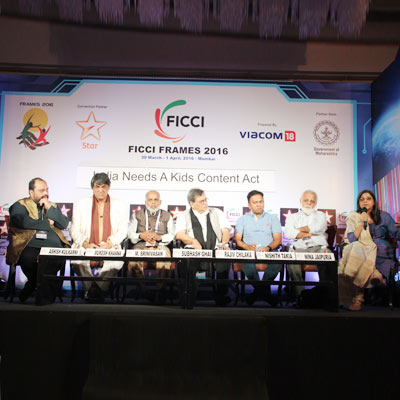
    Discussing future trends to grow this market, through effective monetization of content, while delivering consumer value, in addition to evaluating various payment models at FICCI Knowledge Series 2016 were Film Producer Vishesh Bhatt, DittoTV business head Archana Anand, Arre co-founder and CEO AJay Chacko and Eros Digital COO Karan Bedi.

    Sparking the discussion was Bhatt who observed how this conversation flagged off last year with everyone talking about content that has come to a point where it’s annoying. He is of the opinion that serious content makers fuelling the various platforms have to first understand the ecosystem. “In my opinion, even the platforms have not taken initiatives to educate the content makers. The ecosystem currently is extremely poor. The content makers have to understand the economics first or open my own platform to air content and then make money out of it.”

    Various content monetization options are being explored with the rapid adoption of digital platforms. Ad remains the major source of advertising. Short format made-for-digital content is being leveraged for immediate monetization opportunity. Existing content is being repackaged and delivered across digital platforms owned and 3rd party (YouTube, Mobile Apps, etc.). Existing content infrastructure is being leveraged to create purpose built content (interactive shows, online polls, etc.).

    The focus has now shifted to original/exclusive content for digital media, to drive subscription revenues

    Enlightening the audience further, Chacko pointed out how the content consumption medium has evolved from print to broadcast and now to digital. While there is 70 per cent investment in content creation for digital, the showdown does not stop there. “Investing more on content is the rule.”

    Citing the example of Pokemon Go, Bedi asserted how the game is earning roughly 1.6 million per day which is just 10 per cent of what they can make if monetised properly. “The cost of data, infrastructure, etc, remains an issue for us. We are definitely not there yet with the subscription model, but it’s not far.”

    Anand though strongly surmises that platforms need to set their strategies right. “You have to establish with masses first to get subscribers. We followed the consumer behaviour trend on mobile and made it affordable for them. Like anyone else, we never told them to download our app, rather gave them the option to give a miss call to download it. To solve bandwidth constraints, we tied up with Telcos and payment wallets and the usage has been phenomenal.”

    dittoTV has a clear road map set wherein it has first focused on getting eyeballs to its platform. Anand also opined that the platform does not have to necessarily follow a linear model in future.

    But how will the value change make money? Answering that, Bedi said that the three levers- revenue generation, content creation and marketing acquisitions. “Netflix does not invest on marketing acquisitions. In the end, it depends on the platform to decide what model it wants to follow and it has to make it work right.”

    “SVOD also allows multiple things to be done. There is an inherent ability to share piece of profit with partners by tying up with various partners”, added Anand.

    With various global players like Netflix, Amazon Prime Video, etc, entering India, the players will have to focus on producing original quality content to drive viewers. But is it beneficial to the creators here to put their content on the different platforms. Bhatt strongly affirmed that the West has made its content makers worth. It’s no more only about money but about environment.

  • Can OTT players leverage market opportunities & rationalize rising content costs?

    Can OTT players leverage market opportunities & rationalize rising content costs?

    MUMBAI: In a bid to grab eyeballs, spending on digital advertising is on the increase, but this increase also comes with challenges, if KPMG is to be believed.

    KPMG director Girish Menon said that digital advertisement is likely to cross Rs 25,500 crore in 2020, but digital ads do not come without challenges with major concerns being inability to track mobile activity, ad fraud, ad blocking and measurement.

    Making a presentation at an event organised by FICCI here yesterday, Fast Track India: Bolstering Growth in the Digital Content, Menon added, “OTT video is likely to become the holy grail in digital media. The advent of OTT services and on-the-go content, aided with competitive tariffs and falling average retail price of smartphones, has helped to drive video consumption in India.”

    According to him, approximately 40 per cent of mobile data traffic is being driven by video and audio consumption.

    The Indian market is highly price sensitive and broadcast services are well accepted, making the growth and profitability of OTT video players an uphill task. As digital media consumption grows in the country, content owners and delivery platforms need to reflect on innovative ways of monetizing digital content. OTT players need to leverage market opportunities while rationalizing rising costs of acquiring or producing digital content.

    “Profitability still continues to be a major challenge coupled with infrastructure and affordability of data tariffs and payments models. It is imperative for the OTT players to address these concerns through innovative means to achieve the medium’s full potential,” added Menon.

    Discussing future trends to grow this market, through effective monetization of content, while delivering consumer value, in addition to evaluating various payment models at FICCI Knowledge Series 2016 were Film Producer Vishesh Bhatt, DittoTV business head Archana Anand, Arre co-founder and CEO AJay Chacko and Eros Digital COO Karan Bedi.

    Sparking the discussion was Bhatt who observed how this conversation flagged off last year with everyone talking about content that has come to a point where it’s annoying. He is of the opinion that serious content makers fuelling the various platforms have to first understand the ecosystem. “In my opinion, even the platforms have not taken initiatives to educate the content makers. The ecosystem currently is extremely poor. The content makers have to understand the economics first or open my own platform to air content and then make money out of it.”

    Various content monetization options are being explored with the rapid adoption of digital platforms. Ad remains the major source of advertising. Short format made-for-digital content is being leveraged for immediate monetization opportunity. Existing content is being repackaged and delivered across digital platforms owned and 3rd party (YouTube, Mobile Apps, etc.). Existing content infrastructure is being leveraged to create purpose built content (interactive shows, online polls, etc.).

    The focus has now shifted to original/exclusive content for digital media, to drive subscription revenues

    Enlightening the audience further, Chacko pointed out how the content consumption medium has evolved from print to broadcast and now to digital. While there is 70 per cent investment in content creation for digital, the showdown does not stop there. “Investing more on content is the rule.”

    Citing the example of Pokemon Go, Bedi asserted how the game is earning roughly 1.6 million per day which is just 10 per cent of what they can make if monetised properly. “The cost of data, infrastructure, etc, remains an issue for us. We are definitely not there yet with the subscription model, but it’s not far.”

    Anand though strongly surmises that platforms need to set their strategies right. “You have to establish with masses first to get subscribers. We followed the consumer behaviour trend on mobile and made it affordable for them. Like anyone else, we never told them to download our app, rather gave them the option to give a miss call to download it. To solve bandwidth constraints, we tied up with Telcos and payment wallets and the usage has been phenomenal.”

    dittoTV has a clear road map set wherein it has first focused on getting eyeballs to its platform. Anand also opined that the platform does not have to necessarily follow a linear model in future.

    But how will the value change make money? Answering that, Bedi said that the three levers- revenue generation, content creation and marketing acquisitions. “Netflix does not invest on marketing acquisitions. In the end, it depends on the platform to decide what model it wants to follow and it has to make it work right.”

    “SVOD also allows multiple things to be done. There is an inherent ability to share piece of profit with partners by tying up with various partners”, added Anand.

    With various global players like Netflix, Amazon Prime Video, etc, entering India, the players will have to focus on producing original quality content to drive viewers. But is it beneficial to the creators here to put their content on the different platforms. Bhatt strongly affirmed that the West has made its content makers worth. It’s no more only about money but about environment.

  • GroupM Malaysia names Robin Bach Kolling as head of Connect

    GroupM Malaysia names Robin Bach Kolling as head of Connect

    MUMBAI: GroupM Malaysia has appointed digital strategist Robin Bach Kolling to the recently revamped role of head of Connect.


    Bach Kolling has moved into the new role from the Netherlands where he has been in the digital industry for the past 15 years. As head of Connect, he will be responsible for overseeing all of GroupM’s paid digital media services, including Search, Performance, Paid Social and the agency’s rapidly growing Programmatic services.


    In the Netherlands, Bach Kolling has covered all corners of the digital field including content, social media, mobile, e-commerce, performance marketing and programmatic buying. He is an experienced digital strategist and has headed several digital units in previous roles. His last position before moving to GroupM was head of digital at strategic media agency M2Media, where he also was responsible for building the new programmatic specialist unit.


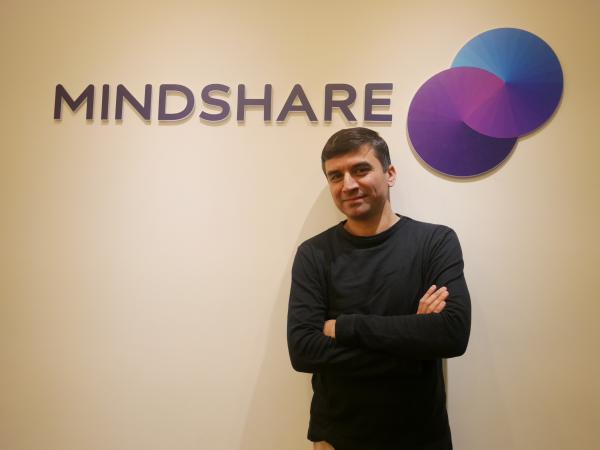
    GroupM Malaysia CEO Girish Menon said, “Our shared digital services were earlier hubbed under the brand name Interaction. Earlier this year, we restructured and grouped all paid digital media capabilities under the newly created umbrella of Connect. As the digital marketing space becomes increasingly complex, we recognise the need to build deep specialisations, but also synergise across these verticals to provide clients with as seamless a digital journey as possible. This is Robin’s key responsibility.”


    Bach Kolling said, “By having all biddable digital media consolidated in Connect we can provide synergy for our clients to fully adapt to the demands and opportunities of the fast emerging real-time media era. We can guide our clients in the opportunities that data-driven marketing can bring by combining our extensive shared digital experience with innovative tech solutions to reach our client’s business objectives. Connect will continue to focus on securing a ‘brand safe’ environment in the programmatic landscape by building Trusted Marketplaces with quality inventory from premium publishers. With the resources of GroupM and the capabilities of Connect and Xaxis, we will be able to maintain our market leader position in Malaysia by adapting inventory to the highest viewability standards and by pro-actively preventing ad fraud, which will clearly stay a fast growing industry challenge. As an industry we definitely have some exciting times ahead.”