Tag: Ghajini

  • 10 TV shows that can taste success in video gaming

    10 TV shows that can taste success in video gaming

    MUMBAI: In India, many a movies have touched new heights at the box office year after year. Filmmakers leave no stone unturned to promote their movies and making a video game around it has been just one way to create that added buzz and get the publicity juggernaut rolling. Over the years, the digital media has unleashed newer avenues to create more buzz for movies. Movies like Ra.One, Ghajini, Dhoom 3 or the very recent super hit flick Baahubali to name a few have rolled out video games to capture the pulse of the audience before the movie’s theatrical release.

    Video games have been a growing phenomenon since the mid 1980s and are still sprouting at a fast pace in India. From kids to teenagers to collegians to seniors, everyone is glued to their smart phone screens engrossed in playing games. With vast improvements in technology, the video gaming industry has evolved from a simple two dimensional games to realist, fast paced, life like experiences. Be it online or offline, gaming remains as the favourite past time for everyone to kill time or for plain entertainment.

    Movies aside, television shows too have the potential to be turned into video games and we at Indiantelevision.com put our heads together to chalk out ten television shows that can make a graceful transition into video games.

    From detective series to mythos, there’s something in here to cater to the tastes of one and all. Read on for the list of programmes, which we think deserve to join the glamorous realm of gaming:

    1) Agent Raghav

    This crime fiction television series if turned into a game would definitely earn a fortune seeing the craze amongst the young players in the society over a famous game becoming viral each passing day. The game would involve the player face personal challenges with non-stop adventure, tremendous pressure and risk, all in the name of duty, to find and catch the criminal(s) led by the smallest of clues. The video gamers would be the Indian Sherlock Holmes to deduce significant information from small insignificant looking clues.

    2. Byomkesh Bakshi

    The fictional detective series Byomkesh Bakshi revolves around a detective who takes up spine-chilling cases where he lets the perpetuator die by manipulating the circumstances. This ‘truth seeking’ show, if made into a game would yet again gain high popularity as the players would have to trigger their mental capability by observe every minute details attached with a case, studying it to the core, taking into account all perspectives and then finally coming to a conclusion. This brainstorming game would also give the players a push by using their own methods as redemption and to deliver justice for the victims in absence of evidence.

    3. CID

    Daya, kuch toh gadbad hai!! We’ve grown up watching this iconic television show, which has been running successfully for 18 years now on Sony Entertainment Television. It is now the Sony’s longest running show. Yet another detective television anthology series, CID is all about the Criminal Investigation Department and how do they solve a ‘not-so-easy’ case. The show if converted into a video game will also enjoy the same amount of followers as the television show has garnered over the years. In the CID game, players will have to study and observe the entire criminal case from the root to the tip thereby catching the accused or the criminal mind(s) behind it.

    4. Everest

    Everest was a TV show about a group of people undergoing training before attempting to climb Mount Everest. Think of a game wherein the players can have the control over the training that is required for the people who aspire to reach the peak of the highest mountain in the world. Hang on, why not try going international with this idea as well? A game with all possible obstacles, ups and downs, twists and twirls, replete with avalanches and snow storms that will also enable players with an option on which mountain they would want to climb! Now that’s an idea!

    5. Fear Factor: Khatron Ke Khiladi

    What fun would a video game be, which give its players an adrenaline rush in the veins! Fear Factor: Khatron Ke Khiladi is a stunt reality game show, which is full of adventure and breathtaking stunts. This show makes it to this list without any doubt. A powerful online video game full of action and bundles of surprises wherein gamers can overcome their fears when they face extreme situations, confronted with danger and challenges. The fears can be either given by the other players playing in that round or through a small smart quiz taken up by the player themself.

    6. Mahabharat

    Gaming draws inspiration from a variety of sources. Current socio-political issues, the works of established authors and to the delight of many I know, ancient cultures. One of the most important and the costliest TV show to be produced is Mahabharat.

    Based on the Hindu epic of the same name, Mahabharat is the epic story of the family feud between the noble Pandava princes and their scheming cousins, the Kaurava kings. This gigantic mythological TV show full of revenge, anger and fights can be converted into an episodic game, with each episode focusing on one of the multiple named characters. A game to see how they get along as the play shifts perspective from one group to the other, telling the myriad story from many sides. If made into a game, this will be a sure shot retreat to the gamers with its plush visual effects.

    7. Roadies

    Oh yes! Who hasn’t heard about this show?! Many people wish to and even have tried to be a part of this reality television show. The craze among the youth for this show, which has been running for the last 12 years is never-ending. Think of an online video game on a show you have followed crazily. A game full of travel, adventures, action, manipulation and also a slight touch of voyeurism wherein a player will have to do every possible thing to survive and win the ultimate title.

    8. Shaktimaan

    Andhera Kayam Rahe!! Yes, our very own superhero Shaktimaan. Everyone is a superhero fan. Some accept it, some don’t. Love for superheroes in Indians range from Batman to Shaktimaan with Krrish hanging somewhere in the middle. Imagine an opportunity where you can replace the superhero you have adored in your childhood days. A game wherein you will have all the superpowers trying to finish or may be at least reduce corruption and injustice in society and fight the evil prevailing in the world.

    9. The Adventures of Hatim

    Don’t we remember our childhood hero Hatim, the Prince of Yamen, who went on a journey to solve the seven riddles in order to destroy the evil sorcerer Zargam. Imagine how will it be if this TV show is turned into a video game. A fantasy game full of fights, mysteries, puzzles, magic and blood. Like Hatim, the player will have hands on a magical sword and will set out on a journey, which requires both mental and physical strength. How interesting will it be to discover this ultimate mission by solving the seven riddles to attain the seven virtues to be able to defeat the evil sorcerer? A game wherein you can fight against all the darkness striving toward light with bravery?

    10. 24

    24 is a series, which has penetrated successfully pan India airing 24 episodes covering 24 hours in the life of Jai Singh Rathore aka Anil Kapoor in the Indian version of the international show. Think of a game where a player has to race against the clock as he attempts to thwart multiple terrorist plots, including presidential assassination attempts, weapons of mass destruction detonations, bioterrorism, cyber attacks, as well as conspiracies, which deal with government and corporate corruption. Wouldn’t that be better than the same old games that we have been playing over a decade now?

    *The shows are listed alphabetically in ascending order
  • ‘Augmented reality will become a big part of the film marketing & promotions:’ Merzin Tavaria

    ‘Augmented reality will become a big part of the film marketing & promotions:’ Merzin Tavaria

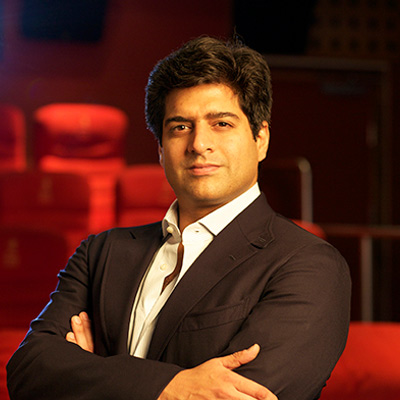
    Anything is possible” is the powerful thought that Prime Focus co-founder & chief creative director Merzin Tavaria lives by. His colorful career, which spans over almost two decades took a different turn when he partnered with Prime Focus founder and CEO Namit Malhotra, and co-founders Prakash Kurup and Hufeza Lokhandwala to set up the digital solutions provider that brought about a creative revolution within Bollywood and the entertainment industry in India before moving on to become an international success.


    Tavaria has donned several roles through his journey with Prime Focus, though his biggest contribution to the company and to the world of entertainment remains as a creative leader. His ability to think out of the box allowed him to experiment with the technology was available two decades ago to push the boundaries of special effects on screen. He was instrumental in guiding Prime Focus through its many phases — starting from editing TVCs in a small garage in Mumbai to packaging for channels like MTV and Channel [V], to making India cinema more familiar with motion control technology… the list goes on. Today Prime Focus is a key provider of visual effects and digital conversion solutions globally.


    Their work on film projects like Gravity, Guzarish, Ghajini, Avatar and Blue speak highly of the quality and handwork that Prime Focus puts in them, and there is no question about Tavaria’s role as a creative genius in their success. 


    In a free wheeling conversation with Indiantelevision.com’s Papri Das, Tavaria speaks on recent projects, the ever changing landscape of technology as well as on the emerging trends in VFX in India and Hollywood.


    Excerpts:


    Take us through Prime Focus’ journey and how the company became an international name?


    The big change that happened in the usage of visual effects in Indian cinema was in 2006. From 50 to 100 shots per film, we jumped to 1500 shots. VFX became a part of the entire film making process rather than coming in only during post production. However when recession hit in 2008, the entire progress that we had made till then, came to a stand still. With budget cuts, visual effects dropped low on filmmakers’ priority list. That’s when we started our foray into the international market and things started looking bright for us as a digital solutions provider. We were proud to be part of Avatar in 2008, and by 2010, we had established our market abroad.


    The year 2010 saw us introducing the concept of conversion, from 2D to 3D and that opened up a myriad of new opportunities for us. Before that movies were shot in 3D but after Avatar, filmmakers in Hollywood wanted to explore conversions.


    What are the current international trends in visual effects?


    3D is pretty big internationally and it is going hand in hand with virtual reality. That would be the next big thing. Augmented reality too is picking up pace, not just in movies but in many other different arenas. Augmented reality combined with virtual reality can work wonders for films. It was a phase that came in a few years back and quietened down but I think augmented reality is going to make a huge come back as we have seen it emerging in a big way this year.


    Virtual reality will push the budget of the films up by quite a few notches as well as it’s a new medium that needs to be explored. That said, augmented reality will become a big part of the film marketing and promotions, and bring it into your house, in malls or just outside theatres. It will add another way to engage the consumers and so the entire landscape needs to be changed to prepare for its wide range of applications.


    What new is happening with 3D in Indian cinema?


    Unfortunately, emerging trends in 3D are mostly global. Nothing interesting is really happening in the Indian landscape. I feel bad about that because there is so much we can explore with 3D and filmmakers must realise that it’s not just about releasing movies in the 3D format. 3D is a very immersive experience and some of our action films can greatly benefit from it wherein viewers can become part of the whole experience. I don’t see that happening in India soon but I hope the situation changes.


    What is the current demand for VFX in Indian cinema? 


    India has always been a try and test market, before going forward. We have seen a big change in the last two years when it comes to demand, specially in mainstream blockbusters like Bang BangKick and even recently released films like Bajrangi Bhaijaan and Phantom. All these movies have started using technology in a big way. Brothers is another big example where without the use of visual effects, the movie would not have been what it is. Technology played a huge part in the production and narrative process. The crowd that is seen in the film was not just about crowd multiplication but crowd stimulation, which was done through Computer Graphics (CG). It was a big project for us to use VFX at that scale and volume.


    How far behind is Indian cinema from its international counterparts? Are you happy with the kind of budgets Indian films set aside for VFX?


    It is unfair to compare the two because one is an Indian audience and the other is global. When you are making films for a global audience, your opportunity and footprint is much wider so the final revenue cannot be compared to that of India. 


    However, I feel that we need to do a bit of rationalisation and work on how producers locate their resources including VFX within their available budget. We are working with certain filmmakers and producers to create awareness for visual effects and the many ways that they can use it to enhance their films. They also need to budget for visual effects upfront rather than at the end, so there are no hidden surprises as far as cost is concerned.


    On the brighter side, filmmakers are starting to acknowledge the role VFX that plays in a film’s success. For example, scenes that were supposed to be shot in Shimla in Bang Bang, were actually shot in Delhi. It would have taken a huge hit on the film’s budget to shoot the entire thing in Shimla. The complete landscape had to be changed to make Delhi look like Shimla. We had to place mountains and rivers and the entire terrain needed to be changed. There was definitely a monetary benefit in it for the film’s producers.


    What are types of VFX that are popularly being used in India now?


    Right now whats popular is embedding VFX in scenes, specially to enhance action sequences. We are also seeing demand for the type of technology that we used for Brothers


    In general, there are two primary ways in which VFX is used in films. One would be the ‘in your face’ visual effects that we are so used to seeing in sci-fi and superhero movies. The other, which is increasingly becoming more popular in India, is visual effects blended in the narrative to enhance the entire look and feel of the film.


    The reason why we don’t see the other type more often is simply because we are not making too many films like AvengersIron Man, or Gravity here. Of course, when films like Ra.One or Krrish are made, we do use in-your-face VFX. But those films are rare and come out after long intervals unlike in Hollywood. If you take their summer line-up for 2015, there were multiple VFX and CG heavy films like Ant Man, Jurrasic World, Avengers and Transformers amongst many others. India is more into action and dramas.


    Why do you think India shies away from producing movies like Ant Man or Jurassic World? Do you think India picking up?


    It’s an evolution that needs to happen. Hats off to Rakesh Roshan, who reinvented himself to do projects like that. We need more pioneering people like him in the industry to actually attempt that type of filmmaking. We also need the right kind of script that supports such visual effects. It can’t be forced into a script, which has no room for such effects.


    We have enough super hero characters in our mythology, which haven’t really used to their potential. Baahubali would be a good example, and those films need to be taken seriously going forward. We haven’t been able to cash in on that yet but there is scope for sure. It takes investment of money and time, and the minute you short circuit that, the outcome isn’t that good. Filmmakers immediate knee jerk into thinking that those type of films don’t work, when in reality you need more patience for the formula to work. It just takes someone to do that.


    Why do you think Indian cinema are obsessed with mythology? Why don’t we make enough sci-fi films?


    Writers need to think big and make a story that is fit for sci-fi like visual effects. It starts with storytelling without which you can’t move forward in that direction. With mythology, they have a ready script and a story, which has worked for ages and their characters are ready as well. Our filmmakers like the tried and tested formula route and shy away from experimenting. We often hear people saying that India doesn’t have the technology to do so, which is wrong. If we had a ready script that allowed us to use special effects in a more futuristic way, we would absolutely love to do that for India. If we can do it for the rest of the world, why can’t we do it for India?


    Can you see VFX playing a role in Indian television?


    Visual effects plays a big role in television globally. I am not happy with its use in India though. There is so much more that producers can do with it. It requires the same seriousness, which they give to producing a show in general. Once we get used to a certain quality and see that it has worked, we often don’t want to put in an effort to upgrade.


    Visual effects and CG on international television has grown by leaps and bounds as compared to India. There are so many TV shows that cater to the super hero genre and sci-fi, like Star Trek. India isn’t looking at those kind of projects and therefore there is no opportunity to bring in such technologies to television here. Additionally, the narrative of technology is also limited because of the kind of stories we consume on television, if you consider just fiction.


    Tell us about Prime Focus’ new production facility in Mumbai?


    That is the part of our whole expansion measure. Through out last year we have been consolidating our visual effects team with Double Negative in London, which is one the leading studios in the world. Everything from Terminator to Avengers have done by Double Negative. The idea has always been to do some of that high end work and bring that to India. The merger deal we did with film city also brought up this property that we aim on redoing for launching this studio. We will be using Double Negatives technology and experience of years on the bigger Hollywood projects


    Which movies according to you have made good use of visual effects?


    There are quite a few that have caught my eye and it is always a learning experience to see our others use VFX. Transformers, for example, is a beautiful movie and use of CGs is completely mind blowing. Michael Bay is a an amazing story teller and he has done a good job with VFX too. Then there’s the new Star Trek that comes out as well as the new Avengers. They just keep surprising you with new ways to use visual effects. The icing on the cake was Dawn Of The Planet of Apes, which brings reality so close to you that you forget after five minutes into the movie that the characters are all created in CG.


    What are the upcoming projects that Prime Focus is working on?


    We are working on quite a few projects both here and internationally. However, I can’t name some of them due to non disclosure agreements.


    We completed working on Mission Impossible 5 and we should be working on Snow White and the Hunstmen Part II as well as on Inferno, which is the part three of The Da Vinci Code.


    In India, we have a whole line up of releases, one of them being the Shahid Kapur and Alia Bhatt starrer Shandaar. We also worked on the recently released Katti Batti and Hero. There are many more to come.

  • Kerala govt honours Asin Thottumkal

    Kerala govt honours Asin Thottumkal

    MUMBAI: The government of Kerala has honoured film star Asin Thottumkal by awarding her for her achievements and success in the field of entertainment.

    The annual award is presented to women who are true icons for young women in Kerala. “I‘m honoured and humbled. It was amazing to receive the award on home soil,” avered Asin.

    She was conferred the award at a special ceremony which was attended by the state bigwigs. Added Asin, “Though I have attended several award ceremonies and bagged several honours all these years, this was singularly unique for me. It was special even for my family. Being recognised by people in the place where you come from has special significance.”
    Born and brought up in Kochi, the actress‘ first acting assignment was in a Malayalam film when she was still a teenager. Asin who began doing South films, crossed over to Hindi films with Aamir Khan in Ghajini in 2008.

  • Murugadoss mulls Hindi remake of Ramanna

    Murugadoss mulls Hindi remake of Ramanna

    MUMBAI:Director A.R. Murugadoss, known for the hit film Ghajini, is in plans to remake his Tamil hit Ramanna in Hindi.


    The film is about a college professor who decides to abolish corruption with the help of his ex-students who work in various government offices. The reason behind this powerful decision is told in flashback.


    It is said that not many were interested to make a film of that nature. But now that people have been awakened about corruption due to the Anna Hazare‘s India Against Corruption movement, filmmakers want to encash on the situation and are keen to give the film a Hindi makeover.


    After the Tamil version became a hit, the film was in Telugu as Tagore and in Kannada as Vishnu Sena.

  • ‘Scaling up through film acquisitions is a risky model’ : Mahesh Ramanathan- Big Pictures COO

    ‘Scaling up through film acquisitions is a risky model’ : Mahesh Ramanathan- Big Pictures COO

    Rock On! was only the beginning. After going on to create a new set of cult audience with their first co-production, Reliance ADAG's Big Pictures is bullish on its 18-movie slate for 2009.

    On the distribution front, Big Pictures rode on the success of Ghajini at the fag end of 2008 to get a slice of the overseas business with Rs 390 million. The challenge this year is to step up the film production and distribution business.

    In an interview with Indiantelevision.com's Anindita Sarkar & Gaurav Laghate, Big Pictures COO Mahesh Ramanathan talks about the company’s production plans and the revenue scope that the film business offers as different studios scale up.

    Excerpts:

    Big Pictures had made a grandiose announcement of producing 18 movies in 2009. But with the economy slowing down, is there a revised plan?
    With the Indian film industry growing at a CAGR of 17 per cent, which is almost double the GDP growth rate, box office definitely remains unaffected. Though there is a slowdown in the economy, that definitely does not lead to any de-growth in demand. If the content remains right, there can't be any downturn in consumer sentiments when it comes to movies.

    Having the financial muscle of Reliance ADAG, why has Big Pictures gone in for six Bollywood co-productions out of this roster of 18?
    Co-production deals for us actually bring in a perfect marriage between creativity and commercial acumen. While we bring in certain virtues like financing, marketing, promotion and distribution of content through our various platforms (online, home video, mobile, DTH), the director still calls the shots. However, he has to align his creativity with us to bring in the viability for the product for commercial exploitation.

    You will also be producing seven regional films this year. What kind of potential do you see in the regional film space?
    The regional film space currently accounts for 50 per cent of the Indian film market and is growing. While there is a huge appetite for Bengali films, the Southern region is definitely a huge market to tap. Marathi film industry is also revamping. So the potential to commercially exploit these markets remains huge.

    Any plans of entering the Bhojpuri market?
    We don't plan to step into the Bhojpuri market as of now as there are huge distribution challenges.

    Recently, we have seen a lot of small and mid budget films raking in good numbers at the box office which also includes your first Hindi production Rock On. Do you plan to create more small budget movies?
    Our business model is not based on budgets. While we do have a few low budget films like Sikander and Chaloo lined up for 2009, we will begin the year with our big budget Luck By Chance. Budget is purely a derived figure based on the demands of the script. Our approach is more towards building a portfolio across a variety of genres that include small, medium and mid-budget movies.

    'Our business model is not based on budgets. Our approach is more towards building a portfolio across a variety of genres that include small, medium and mid-budget movies'
     

    Year 2008 was a year of film acquisitions for some major studios. Why did you decide to stay away from it?
    Scaling up through film acquisitions remains a very risky model. When you are acquiring a film, there is a lot of producer profit that is built in which jacks up the price. Our business model focuses on creating original content. Not only can you keep your costs low but also ensure that the viability of the film remains secured.

    If you are into acquiring of films, you are entitled to exploit the product only for a stipulated time period. This is not the same case with content creation. Original content helps you build your own catalogue and once the catalogue is built you can use it to create more revenue streams.

    What role does marketing and promotion play in increasing a film's occupancy in theatres and multiplexes?
    Huge! Take Ghajini for example. The pre-release marketing and promotional activities for the film induced extreme interests amongst audiences and as a result Ghajini witnessed almost 100 per cent occupancy in its first week at theatres. The marketing activities that we did across 40 territories overseas also helped us generate a lot of eyeballs. So marketing is definitely very important to tap the right audiences.

    How difficult is it to tap the right set of audiences?
    Because of media fragmentation, it is becoming very difficult to reach the right set of audiences and engage them. Today, you cannot pin your hopes onto only the press and television. You have to have a 360 degree approach and mass customise your communication to audiences – and this is where we score. We have a presence across almost all media and entertainment platforms – be it radio, home video, online, mobile, social network etc. Thus, synergising all these platforms helps market and promote our films in a much focused way. It is also very cost effective.

    How do you strategise your film marketing activities in the international space?
    Unlike India, it is more of micro-marketing in the overseas market where you target the diaspora. Hence, the choice of media vehicles is more local there. You have to be aware of the local newspapers and have to have a local expertise and channelise them smartly.

    Though in terms of value the Indian film industry is only 2 per cent of the entire global box office, it is generating interests across international studios. Why?
    When it comes to the number of films produced in a year, we are definitely the largest in the world. India produces over 1000 films a year. We are also the largest box office in the world with 3.5 billion admissions a year. While Hindi films account for approximately Rs 50 billion, a similar amount is generated from regional movies. So it's definitely an attractive market for international studios that have long term plans in this country.

    When it comes to value, our box office stands at only 2 per cent of the global box office. But that is because our collections are still dependent a lot on single screens where ticket rates are really low. However, with the establishment of 3700-3800 multiplex screens in the next five years, we will see a lot of value being added to the box office.

    How much of the revenue generation potential of a film is inflicted by piracy?
    Between theatrical, home video and cable, it is estimated that the overall piracy eats away almost 80 per cent of the film's entire revenue potential.