Tag: Germany

  • ‘Star Wars: The Force Awakens’ takes biggest ever opening weekend

    ‘Star Wars: The Force Awakens’ takes biggest ever opening weekend

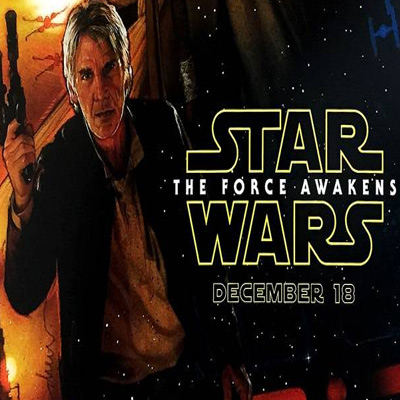
    MUMBAI: The opening weekend for Star Wars: The Force Awakens is officially the biggest in North American box office history, ahead of its India release on 25 December.

     
    The movie’s first weekend in theaters, the seventh film of the franchise brought in $238 million. The previous record-holder was Jurassic World, which made $208.8 million during its debut weekend over the summer.

     
    Globally, Star Wars brought in $517 million, coming in just under the $525 million that Jurassic World made. However, the latter had the advantage of opening in China as well; The Force Awakens doesn’t come out there until 9 January, 2016.

     
    Star Wars: The Force Awakens posted the highest Thursday preview gross ($57 million), the highest single-day and Friday gross ($120.5 million), and it is the first film to surpass $100 million in a single day. It also posted the highest theater average for a wide release with $57,568.

     
    Marking the biggest opening weekend ever in numerous key territories, including the UK, Germany, Australia, and Russia, Star Wars: The Force Awakens posted an estimated international opening weekend of $279 million (third highest reported opening weekend in industry history, behindJurassic World at $316 million including around $97 million China and Harry Potter and the Deathly Hallows Pt 2 at $314 million) and topping the previous December record held by Avatar ($164.5 million).

     
    Star Wars: The Force Awakens storm-trooped its way across the global landscape (except for China) this weekend to post an amazing estimated $517 million global gross.


    Star Wars: The Force Awakens also generated a record-breaking estimated $48 million from Imax screens globally, beating the previous Jurassic World record of $44 (which included China).


    Star Wars: The Force Awakens was on over 30,000 screens internationally this weekend. It opened at #1 in all markets throughout the world with the exception of Korea and Vietnam, where it was the #1 western films.


    In the Asia-Pacific, the movie raked in $75.7 million, whereas in Latin America, it totted $36.0 million.

     
    Star Wars: The Force Awakens is directed by JJ Abrams and stars Harrison Ford, Mark Hamill, Carrie Fisher, Adam Driver, Daisy Ridley, John Boyega, Oscar Isaac, Lupita Nyong’o, Andy Serkis, Domhnall Gleeson, Anthony Daniels, Peter Mayhew, and Max von Sydow.


    The movie opens in India on 25 December in English, Hindi, Tamil and Telugu.

  • Digital pushing growth even as linear content consumption declines

    Digital pushing growth even as linear content consumption declines

    SINGAPORE: Interesting revelations came forth on Day 3 of Asia TV Forum (ATF) 2015 where formats were the pivotal topic of discussion. 


    At the onset was a presentation by Eurodata head of global research and content strategy Sahar Baghery, who spoke about a few trends that are currently worth making note of. 


    According to a study by Eurodata, consumption of linear television is on the decline across progressive nations like France, Germany, Canada and US among others; whereas there is only a marginal growth in the consumption patterns even in countries in Asia and Africa. “What this study suggests is that even though linear consumption is witnessing a downward trend, digital consumption is on the rise,” Baghery stated.


    What was even more interesting is the fact that countries like France, Netherlands, Sweden and UK are working on evaluating the viewership of content across screens to give a better understanding to content creators as well as brands advertising on the various platforms about the presence and viability of their investments. Sahar also touched upon the fact that a lot of kids content is now being exclusively produced by OTT players like Amazon and Netflix as they believe that is the future of content consumption by millennials.


    The study further educated about the various genres of shows that are currently doing well across the European and American circuits. “Stories dealing with corruption, a spy drama and crime thrillers are doing the best in terms of viewership across popular regions as of now.” She added that anthology series were also doing well as a format and could be further explored by other markets as well.


    The next couple of sessions for the day dealt with how leaders in Asia, primarily South Korea, are creating content that travels the world. The Korean wave has been sweeping the world and it was no different at ATF either. In a session, which spoke about the trending shows in South Korea, various case studies were discussed as to what led to their success domestically and how that translated into deals with European, Middle Eastern and US markets. CJ E&M manager Spencer Craig Thomas said, “We are very confident of our linear distribution presence, and thus are now looking to grow our content exponentially on the digital side. Our belief is that by creating follow-up or catch up content for our already existing properties on digital, we are only going to increase our consumption traction further.”


    On the other hand, Indonesia’s MNC Group VP content Hendy Liem stated that international content is only capable of gaining eyeballs but can’t be monetised well. “It’s important to understand pricing and return on investments in the first place before venturing into international syndication deals or spending heavily on creating content without knowing its monetising capabilities.”


    On the kids’ front, a panel discussion was held on the possibilities and success stories of some of the formats, which have been led by kids as the main protagonists. According to research data by Eurodata, 40 per cent of content, which has kids as their protagonists are fictional; 39 per cent is in the entertainment genre and the remaining 21 per cent are factual shows.


    The conclusion of the panel was that though the protagonists of shows like The Voice Kids, Super Kids and Master Class are children or young adults, they look at targeting families and not only kids for gaining that many more eyeballs and touch the empathy chords with their viewers.


    That brings us to the end of the TV market at ATF 2015; ScreenSingapore will take centre stage tomorrow. Stay tuned for more updates!

  • Consumers expect more devices to be connected with netizens as forerunners: Ericsson report

    Consumers expect more devices to be connected with netizens as forerunners: Ericsson report

    MUMBAI: A research conducted by Swedish telecom gear maker Ericsson Consumer Lab named ‘A Networked Life’ stated that consumers expect more devices to be connected as there are endless options for connectivity. It also predicts that more connected devices will ultimately lead to redefined networked lifestyle needs.

    Consumers have only now begun to enter the era of networked lifestyles, and they expect greater mobility and an increasing number of devices to become connected.

    The report states that consumers recognize the benefits of various devices in their life becoming connected; the analysis has been broadly classified in three categories viz. overall, un-recognised and netizens.

    Data for the report has been gathered through 45,290 face-to-face and online interviews with people form the age group of 15-69 years old, representing about 1.2 billion people across 24 countries including Brazil, Canada, China, France, Germany, India, Indonesia, Italy, Japan, Norway, Sweden, the UK and the US.

    Chile with 32 per cent, South Korea with 29 per cent and Brazil with 28 percent have the highest penetration of internet users.

    The forerunners of the networked lifestyle are the netizens who spend more time online on a wider range of services than others. They comprise 17 per cent globally.

    The report says that 65 per cent of netizens participate in a sharing economy, compared to 9 per cent of un-networked. They spend the most amount of time on the internet.

    Also that 98 per cent of netizens own more than one device (smartphone and other devices like a laptop or tablet).

    For instance, research and analysis showed 52 per cent surveyed internet users want their TVs to be connected to the internet. Whereas 24 per cent of consumers also state that they are using services that allow them to use a movie, TV show or video on one device and then resume playing from another device.

    Based on research in 12 countries, it was found that the average number of devices connected to the internet has increased to 4.1 devices in 2015 as compared to 3.1 devices per household in 2014. Because of this, consumers are spending more time online incorporating digital services and devices with everyday activities.

    The report says that video streaming apps have the potential to become main stream on a global scale in the near future; which could potentially have large ripple effects on the entertainment industry.

    In terms of India the report states that the percentage of Netizens in India stood at 48 per cent. And it has one of the highest levels of peer-to-peer sharing at 79 per cent among the local netizen community. A sizeable 56 per cent of people in India feel it is easier to find products and services on the internet than through friends and family.

    Ericsson Consumer Lab Director Vishnu Singh said, “The reason for people’s increasing use of the internet is that their perceived value of it is growing along with the rise in usage. The networked lifestyle is all-inclusive because the benefit for each individual user increases as more people participate in the internet.”

    The report states that Brazil, China and Colombia are the countries to have high numbers of netizens who use the internet less than once a week or not at all.

    Whereas countries like Germany and US with lower proportions of netizens in highly industrialized countries are balanced by a larger distribution of those who use the internet with some regularity.

  • I want to restore choice and option for consumers, says Netflix’s Ted Sarandos

    I want to restore choice and option for consumers, says Netflix’s Ted Sarandos

    CANNES: For Netflix chief content officer Ted Sarandos this is the golden age of storytelling. Sarandos was giving a keynote on day two of MIPCOM 2014.


    Talking about Netflix and its engagement with the audience, he said, “We have been able to innovate and advance technology that favours the consumer. We have been able to innovate the audience, who are on-demand viewers.”


    Netflix which has 50 million paid subscribers in 40 countries, recently launched in France and Germany. Talking about the viewership pattern Sarandos said, “We have been very encouraged with viewing behaviour in France and unsurprisingly, Orange is the New Black is the most watched show in France and Germany for Netflix, in the first couple of weeks and we are excited about it since the shows have not been previously available in these markets.”


    According to Sarandos, what works for Netflix is the fact that it caters to the desire of people who have heard about shows, but not been able to see it. 


    Netflix offers 70 per cent TV shows and 30 per cent movies, “and that’s the way people watch as well,” he informed.


    On his catalogue being small at the time of launch, he said, “What we launch within a new territory is half of the programming that the territory will have in the next 12 months. And we are literally adding content everyday wherever we launch.”


    For Sarandos, it is each passing day that gives him the idea of the viewing habits of consumers. “So what you see at the launch is what we know pretty much about the market without even being there and then depending on the viewing behavior, we licence content that people want to see.  So it is an intentional move to launch with less content,” he added.


    Netflix also recently launched in Germany and talking about the lessons from the market he said that viewing hours per subscriber was very impressive.


    The platform offers consumers the level of choice that they haven’t seen yet. “So while there are a lot of pre-conceived notions, one needs to have dubbed content while also have subtitled programming.”


    The platform may also have plans for original French production. “We have found large audiences for existing French content around the world already. We have started working with French animation houses for co-productions,” he said while adding that they have already aggregated a lot of audiences around the world for French shows.  

    So is the business profitable overseas? Answered Sarandos, “We are investing continuously in expansion, we want to be a global company. We are at serious investment phase.”


    Sarandos believes that Netflix is a destination for content, for ability to choose and enjoy in one’s own timetable.


    The platform which is now also moving into making movies, but doesn’t get involved in writing the script, aims to be active on distribution. “We pick storytellers and let them tell the stories. We don’t dictate creative storytelling,” he said.


    Netflix doesn’t want to kill windowing, instead wants to restore choice and option. He also touched upon the point of Netflix’s data analytics. “We use the data to help determine the potential size of the show. The ability to invest in the show was because of the data we had. We didn’t use the data to influence the creative of the show,” he clarified. 


    Will Netflix move to sports and news as well? Sarandos quickly said, “It is on-demand that makes Netflix desirable and sports and news are linear events, so we can’t do anything interesting in sports and news right now.”

  • Xbox One TV tuner to launch in Europe in October

    Xbox One TV tuner to launch in Europe in October

    MUMBAI: Microsoft recently announced that it is going to release a digital TV tuner adapter to allow people in Europe to experience premium live TV features on Xbox One. Launching in October in France, Italy, Germany, Spain, and the UK, the digital TV tuner adapter will allow European Xbox One owners to turn their consoles into a TV set-top box.


    Announcing the news on its website, Xbox said, “Xbox One users in those markets will get an over-the-air digital terrestrial TV experience through the USB single tuner, an alternative to accessing TV content from a cable or satellite set-top box connected through the HDMI-In port. The new digital TV tuner will also support free-to-air DVB-T, DVB-T2 and DVB-C television standards.”


    This will give users the features like voice control through OneGuide, watching TV while in Snap mode, pause live TV, viewing TV listings in the OneGuide, OneGuide on Xbox SmartGlass , creating personal favourite channels and even checking TV On demand.


    The Xbox One Digital TV tuner will go on sale priced at Euro 24.99 in the UK and Euro 29.99 in France, Italy, Germany and Spain.

  • Amagi Cloudport enables Horse & Country TV to broadcast Rolex Grand Prix Live

    Amagi Cloudport enables Horse & Country TV to broadcast Rolex Grand Prix Live

    MUMBAI:  Horse & Country TV (H&C TV) and Amagi announced successful broadcast of The Rolex Grand Prix Live from the CHIO World Equestrian Festival held at Aachen, Germany on 20 July using Amagi Cloudport, a cloud-enabled remote playout management platform.


    Talking about the successful braodcast, H&C TV CEO and chairman Heather Killen said, “At Horse & Country TV, we strive to be in the vanguard of adopting new and efficient technologies such as the Cloudport infrastructure for broadcasting. Along with our playout partner Amagi, we have now demonstrated to the broadcast industry that live events can be managed by remote playout systems.”


    Wallace Broadcasting founder and technical advisor to H&C TV John Wallace said “We chose the Amagi channel playout platform as it gave us the flexibility to cost-effectively manage localised playout of different H&C TV channels in individual countries. We now have the desired flexibility and robustness even for live events. Our teams are quite pleased with the event broadcast.”


    Rolex Grand Prix from Aachen was broadcast for the first time in the UK by H&C TV. The entire playout was managed remotely by Amagi from its operations center in Bengaluru, India. The CHIO World Equestrian Festival held at Aachen is the first event of the prestigious Rolex Grand Prix, attracting over 40,000 spectators and millions watching on TV. The Rolex Grand Prix is the highlight of nine days of intense competition across multiple disciplines in Aachen.


    “Managing live feeds, inserting graphics, and dynamically altering the playlist based on how an event unfolds, is complex, especially when the playout is managed remotely. We are breaking a new ground with this innovation on the Cloudport platform. We are quite delighted with the flawless telecast of the live event on Horse & Country TV.” said Amagi Media Labs cofounder and CTO Srividhya Srinivasan.

  • Social Media-the stadium for 2014 World Cup

    Social Media-the stadium for 2014 World Cup

    MUMBAI: Brazil had a reason to cheer this FIFA World Cup season. While it lost the big title, it was still the hub of all the excitement related to the football extravaganza. What is interesting to note is that social media platforms like Facebook and Twitter became another venue where the action unfolded with an audience comprising global fans.


    The entire span of the World Cup saw a total of 672 million tweets being sent out: the highest number, Twitter has announced so far related to any event.


    Of the 672 million tweets, a bulk of the conversation was during the live matches. The semi-final between Brazil and Germany saw fans sending out more than 35.6 million tweets —setting a new Twitter record for a single event.


    The other top four matches were Germany versus Argentina with 32.1 million tweets. Next was Brazil versus Chile which garnered 16.4 million tweets followed by the match between Netherlands and Argentina receiving 14.2 million tweets. Finally it was the Brazil versus Colombia game which got 12.4 million tweets.


    Three of the top five most-tweeted moments occurred during Brazil’s 7-1 semi-final loss to Germany on 8 July, while the other two moments came in during the final match. The top five moments that generated the biggest peaks of Twitter conversation, measured in tweets per minute (TPM), during the entire tournament was Germany defeating Argentina to win the World Cup final with 6,18,725 TPM. Next was Germany’s Sami Khedira scoring a goal assisted by Mesut Ozil during the semi-final versus Brazil which got 5,80,166 TPM. Germany’s Mario Gotze scoring the winning goal of the World Cup on 13 July generated 5,56,499 TPM. Germany’s Toni Kroos scoring his second goal in the semi final against Brazil was fourth in line with 5,08,601 TPM. Finally, Toni Kroos scoring his third goal during the same semi-final match against Brazil garnered 4,97,425 TPM.


    The top 10 mentioned players in India during the WC were Lionel Messi, Luis Suarez, Cristiano Ronaldo, James Rodriguez, David Luiz, Robin Van Persie, Neymar Junior, Mesut Ozil, Pepe and Wayne Rooney.


    While Twitter was buzzing, Facebook wasn’t far behind. 350 million people joined the conversation during the entire span of the World Cup generating 3 billion interactions (posts, comments and likes).


    Brazil’s demolition by Germany spurred around 66 million people to create more than 200 million Facebook interactions in the semi final match. People thronged to the platform: 10.5 million people from the US in the final and host country Brazil with 10 million. Men in the age group of 18-24 posted on Facebook the most as compared to any other demographic. This was followed by men aged 24-34, women aged 18-24, women aged 24-34 and men aged 13-17.


    NeymarJr saw the most fan growth on his page since approximately 15 million fans ‘liked’ his page since the beginning of the World Cup.


    Meanwhile, to give  a perspective of the  fervor and excitement surrounding FIFA World Cup – Vdopia a leader in online and mobile video advertising recently released an info-graphic calling it ‘The ultimate multi-screen event’ after  examining the impact of online and mobile devices on fan interaction with the World Cup.


    The report found that fans across the Asia Pacific (APAC) region and India were following the FIFA on multiscreens like TV followed by mobiles and then laptops. The most significant trend the report noted was a paradigm shift in consumer’s video consumption behaviour termed as “multi-screen intake” or “platform agnostic” intake. Simplified, it means a typical consumer who was watching the match, checked FIFA updates and shared highlights of his favourite match on his mobile, updating them on Facebook, looking up for some information on their tablet or just sending an email – all during the same time.


    Some of the finds mentioned that the mobile has become the second most preferred medium in APAC after television with 80 per cent of the respondents looking at television+smartphones. It also said that 2,50,000 Indian unique viewers visited football sites everyday via their mobile. It says that the social buzz volumes in India were the highest between 8:00 pm to 4:00 am.


    The report further mentions that India saw one of the highest ever online sports audiences in May with 6.5 million viewers who watched 59.7 million sports related videos in May 2014.  The report appropriately sums up that the 2014 FIFA World Cup has been regarded as the ‘most social event ever.’

  • FIFA World Cup Final sets Twitter, Facebook abuzz

    FIFA World Cup Final sets Twitter, Facebook abuzz

    Mumbai: Football is fodder for social buzz. And when a European team and a Latin American team are battling to take home the FIFA World CUP, it can scale new heights. As it did in the case of the final last night when Germany emerged triumphant by sneaking a goal in in the second half of extra time. According to both Twitter and Facebook, the World Cup Final has set new records for them as far as social engagement is concerned.


    Twitter announced the  game peaked at 618,725 tweets a minute, smashing the previous record of 580,166 tweets per minute set during Germany’s wipeout of Brazil in the semifinal. The total number of tweets: 32.1 million during the game.  But the German-Brazil match holds the record at 35.6 million tweets for the most socially active sports event ever.


    Facebook said that its timeline was buzzing like never before with 88 million users making a record 280 million interactions (posts, likes, comments) when the Germans and Argentinians chased the ball on the field during the final.  The previous highest was 245 million interactions, which was registered during the SuperBowl in 2013.

  • LIV Sports attracts 20 million page views during 2014 FIFA WC

    LIV Sports attracts 20 million page views during 2014 FIFA WC


    MUMBAI: The official mobile and internet broadcaster of 2014 FIFA World Cup LIVSports.in attracted 20 million page views during the month long sporting extravaganza. On an average, viewers spent 28 minutes watching the live streaming of the matches across online, mobile and the tablet LIV sports app.


    Sony Entertainment Network executive vice president-new media, business development and digital syndication Nitesh Kripalani said, “The 2014 FIFA World Cup digital viewership is a gratifying proof of LIV Sports’ success since its launch a little over a month ago. Our goal was to redefine the way sports content is viewed and consumed in India via a new category – ‘Sportainment.’ We are glad to see that sports fans have engaged with LIV Sports.”


    The top three matches, by time spent were the finals between Germany and Argentina with 48 minutes. Next was the semi finals between Netherlands and Argentina with 42 minutes and finally, the quarter finals between Netherlands and Costa Rica with 42 minutes.


    Of the total traction observed on LIV Sports, the maximum percentage of unique views came from the six metros with 53 per cent  with Mumbai and Delhi in the lead (13 per cent each), followed by Bengaluru (10 per cent). 83 per cent of the total viewers in the country were within the age bracket of 18-34 years. The FIFA World Cup on LIV Sports also attracted 25 per cent  female viewers due to engagements like the ‘Predictor’, ‘Mohit Bana Messi – Jerseyfy Me’ and ‘Pehchaan Kaun’


    Its blogger outreach programme enabled a reach of over 2.85 million.


  • Germany Wins FIFA World Cup 2014

    Germany Wins FIFA World Cup 2014

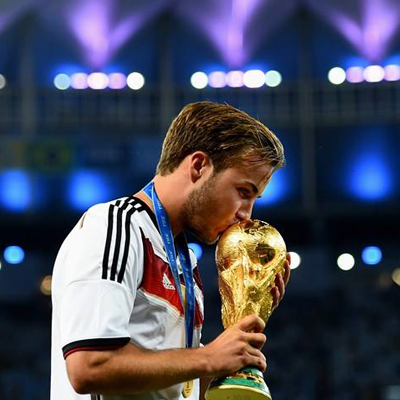
    MUMBAI: In a nail biting finish, after 64 matches spanning a period of one month, Germany on Sunday night was crowned FIFA World Cup 2014 champions. It won thanks to a lone goal, courtesy from substitute Mario Goetze who scored smoothly during extra time, anointing the Germans as the first European team to win the title on South American soil.


    In the 113th minute, Gotze took a pass from the left from Andre Schurrle, trapped it on his chest and swiveled it past Sergio Romero and effortlessly kicked it into the net. This was enough for the Germans to start celebrating and Argentina to begin wailing.


    For Goetze it was dream come true as he expressed “I’m more than happy and I’m happy with the team and what happened here in Brazil. I guess it’s more or less indescribable how I feel. It is absolutely sensational.”


    While Messi and the Argentineans’ had the best early chance, the Germans were too strong in every way with the best all-round collection of players. But for Messi there was some rejoicing, as he was declared the Best player of the Tournament receiving the Golden ball. Germany’s Manuel Neuer received the Golden Glove as he was declared the best goalkeeper.


    In India, Prime Minister Narendra Modi and Indian cricketer Yuvraj Singh both tweeted about the World Cup match. While Modi wished both Argentina and Germany for the final, Yuvi congratulated Germany and said it brought back the 2011 world cup final memories for him.


    The most mentioned players on twitter from the winning team were, Mario Gotze, Manuel Neuer, Christoph Kramer. From the Argentinan team it was Lionel Messi, Gonzalao Higuain and Javier Mascherano.


    This wasn’t the first time the two giants have met in a final. In 1986, Argentina beat Germany in the final in Mexico. Four years later, Germany was crowned world champions after beating the South Americans in Italy. Sundays match again saw the two lock horns with Germany winning their fourth title besides winning in 1954, 1974 and 1990.