Tag: Generative AI

  • Pocket Entertainment names Umesh Bude as CTO to lead AI-powered storytelling revolution

    Pocket Entertainment names Umesh Bude as CTO to lead AI-powered storytelling revolution

    MUMBAI: In the world of audio-led content, Pocket Entertainment just rewrote the tech playbook. The company has elevated Umesh Bude to chief technology officer (CTO), tasking him with steering its ambitious journey into the future of AI-powered storytelling.

    The move places Bude at the helm of the company’s end-to-end technology strategy across all platforms—Pocket FM, Pocket Toons, and Pocket Novel. As CTO, he will lead efforts to craft intelligent, emotionally attuned user experiences by blending generative AI with scalable product design.

    “It’s a privilege to take on this responsibility at such an exciting time for Pocket Entertainment. I look forward to driving the next wave of innovation, where technology and AI are not just enablers, but storytellers in their own right”, said Bude.

    With nearly 20 years of experience across engineering, platform security, and data science, Bude has played a key role in scaling Pocket Entertainment’s tech infrastructure from scratch. His elevation underscores the company’s ambition to lead at the intersection of entertainment and machine intelligence.

    “We are at a pivotal moment in our journey where technology and creativity are deeply intertwined. As we reimagine storytelling for the AI era, technology is the foundation”, said Pocket Entertainment co-founder Prateek Dixit. “Umesh’s elevation is a reflection of our ambition to lead this transformation from the front. His leadership will be central to creating intelligent, emotionally aware experiences that push the boundaries of what storytelling can be”.

    Bude will continue reporting to Dixit as he leads initiatives to strengthen the company’s generative AI muscle, ensure seamless cross-platform integration, and pioneer tools that empower storytellers and users alike. With this shift, Pocket Entertainment reaffirms its commitment to turning code into creativity—one line, one story at a time.

  • IAB Tech Lab lays down new rules to stop AI from eating the web’s lunch

    IAB Tech Lab lays down new rules to stop AI from eating the web’s lunch

    MUMBAI: When your content becomes someone else’s main course, it’s only fair to send them the bill. Publishers and advertisers have long played the thankless role of feeding the internet’s knowledge machine. But with the rise of large language models (LLMs) and AI agents hoovering up open web content without so much as a nod—or a rupee—the tables are finally turning.

    The IAB Tech Lab, the global technical standards-setting body for digital advertising, has taken a firm stand against the unchecked rise of generative AI. In a bold move, it announced a new framework dubbed the LLM Content Ingest API Initiative, aimed at helping publishers and brands monetise and manage how their content is consumed by AI systems.

    “It is clear that AI agents powered by large language models are shifting how users engage with content”, said IAB Tech Lab CEO Anthony Katsur. “While this is a promising new way for people to access information, we have also seen data showing publisher traffic decreases at 15 per cent or higher, and revenue is down. Meanwhile, AI platforms are growing on the back of open web content, impacting publisher revenues and misrepresenting advertisers. This initiative is about giving publishers and brands a path forward that is fair, enforceable, and grounded in technical standards”.

    The new framework targets AI’s relentless content scraping. It proposes a structured technical solution that ensures publishers get compensated for their content and brands control their digital reputation in AI-generated search summaries and chat responses.

    At the heart of the initiative is the LLM Content Ingest API, a tool that enables content owners to manage how AI models ingest and present their material. The framework seeks to stem traffic and revenue losses and aims to empower publishers with tools to govern bot access, track AI scraping, and monetise their digital assets more effectively.

    “The LLM Content Ingest API is one part of the framework to address the challenges publishers and brands face from the growing use of AI-based tools by consumers”, said IAB Tech Lab EVP, product & COO Shailley Singh. “The proposed technical framework is designed to foster better collaboration between LLMs/AI agents and content owners and to lay the foundations for fair value exchange for content, two of the biggest challenges that have emerged since the proliferation of generative AI and endanger the web economy as it works today”.

    The IAB Tech Lab plans to kick off the effort with a workshop, bringing together publishers, brands and AI developers to co-create solutions. Among the talking points: managing bots that mine data without permission, building AI-friendly but fair delivery mechanisms, and ensuring brand information isn’t lost—or worse, misrepresented—in the LLM ether.

    With publisher traffic already dipping by 15% and revenues following suit, the initiative couldn’t have come sooner. The Lab’s approach blends technical pragmatism with economic common sense, aiming to strike a balance between innovation and ownership in a world where chatbots can mimic your writing but never pay your bills.

  • Infosys turbocharges Formula E with AI-powered stats centre

    Infosys turbocharges Formula E with AI-powered stats centre

    MUMBAI: Infosys has launched an AI-powered Formula E stats center to electrify fan engagement for the world’s premier all-electric racing championship. The digital services giant has partnered with the ABB FIA Formula E World Championship to create an interactive platform that transforms complex racing data into digestible insights for motor racing enthusiasts.

    The new platform, powered by Infosys Topaz, uses generative AI to deliver dynamic stat cards and AI-generated narratives across Formula E’s decade-long history. Fans can track their favourite drivers and teams through current and past seasons via a trendy bubble chat format that serves up curated questions about stellar performances and key milestones.

    Says Formule E chief executive officer Jeff Dodds,:  “Fans are at the heart of what we do, and we’re thrilled to offer them a new and engaging way to connect with the sport. As our first technical partnership with Infosys, we’re showcasing how innovation and technology can elevate the experience for everyone who loves Formula E, by making race data more accessible and easier to understand. Fans will be able to  follow their favorite driver and team with in-depth insights and track their performance over the seasons ahead.”

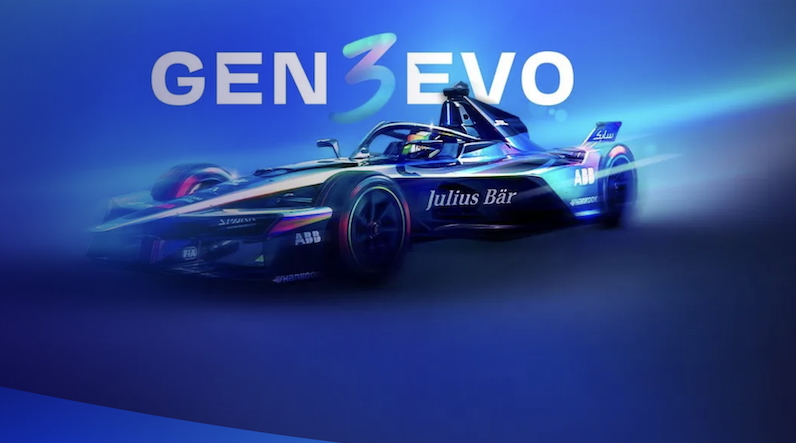
    The tech partnership coincides with Formula E’s introduction of the lightning-quick Gen3 Evo vehicle in Season 11. This engineering marvel accelerates from 0-60 mph in a jaw dropping 1.82 seconds—30 per cent faster than current Formula 1 cars—while maintaining the championship’s commitment to environmental responsibility.

    Adds Infosys EVP & chief marketing officer  Sumit Virmani: “Our partnership with Formula E
    proves how technology can revolutionize fan engagement. The AI-powered Stats Center, fueled by Infosys Topaz, transforms raw data into compelling narratives, offering fans an immersive journey through driver and team performance, celebrating key milestones and unlocking compelling stories. From dynamic stat cards that adapt to the race timeline to an AI companion that prompts engaging questions, we’re supercharging the Formula E fan experience, making its rich history, and exciting present more accessible and engaging, ultimately raising the bar for digital fan engagement.”

    Infosys has also helped shift Formula E’s central datalake to Google Cloud, creating a robust architecture for the racing series’ marketing, business intelligence and sporting operations.

    The collaboration represents another lap in Formula E’s race to combine cutting-edge motorsport with sustainable innovation, giving fans more reasons to get charged up about the electrifying championship.

  • Experian report highlights Generative AI’s growing role in fraud attacks

    Experian report highlights Generative AI’s growing role in fraud attacks

    MUMBAI: Experian, has released its latest research, offering insights into how Generative AI (GenAI) is reshaping the fraud landscape. Conducted by Forrester Consulting, the study surveyed 449 senior fraud protection professionals across multiple countries, including India, uncovering a surge in fraud losses due to identity theft and the critical need for AI-driven security measures.

    The report highlights a shift from individual fraudsters to organised crime syndicates, with GenAI accelerating this transformation. In India, 85 per cent of businesses agree that GenAI has permanently altered the fraud landscape, making attacks more complex. The rapid industrialisation of fraud enables criminals to mass-produce deepfakes, synthetic identities, and large-scale scams. Alarmingly, 50 per cent of firms struggle to detect GenAI-driven fraud or quantify its financial impact. To counter this, businesses must implement AI-powered fraud prevention tools, adopt integrated security measures, and enhance fraud orchestration strategies to bolster detection and reduce costs.

    As fraud tactics evolve, businesses are recognising the need for external collaboration and advanced fraud prevention technologies. In India, 77 per cent of fraud decision-makers stress that partnerships with external organisations are vital for tackling fraud effectively. Additionally, 61 per cent support data-sharing consortia as an effective method for tracking emerging fraud trends. Encouragingly, 74 per cent of Indian firms report a positive return on investment from participating in such initiatives, underlining the benefits of collective action.

    The study underscores the importance of integrating diverse data sources into supervised and unsupervised Machine Learning (ML) models to enhance fraud detection. However, 48 per cent of Indian firms struggle with ML implementation due to a lack of training data, while 60 per cent cite poor data quality as a barrier. Developing in-house ML models is complex, making customisable, off-the-shelf ML solutions a faster and more effective alternative.

    Experian India country managing director Manish Jain commented, “At Experian, we are committed to staying ahead of emerging threats by leveraging advanced technology, data analytics, and industry consortia. Our ML-based tools, such as the Mule Risk Indicator, integrate traditional and non-traditional data points to help financial institutions identify and mitigate fraud. By promoting these advanced solutions, we empower businesses to navigate an increasingly complex fraud landscape while ensuring data security.”

    Experian EMEA & APAC chief operating officer Shail Deep, added, “The integration of ML-driven fraud prevention is no longer optional our research shows that 85 per cent of fraud experts believe GenAI has fundamentally altered the threat landscape, with over 52 per cent reporting increased fraud losses in the past year. Businesses must act now by adopting flexible, cutting-edge fraud prevention tools. At Experian, we remain focused on innovation, ensuring our technology continues to strengthen detection capabilities and create a safer digital environment for clients and consumers alike.”


  • Ajio crashes prices and breaks barriers with AI-generated ad campaign

    Ajio crashes prices and breaks barriers with AI-generated ad campaign

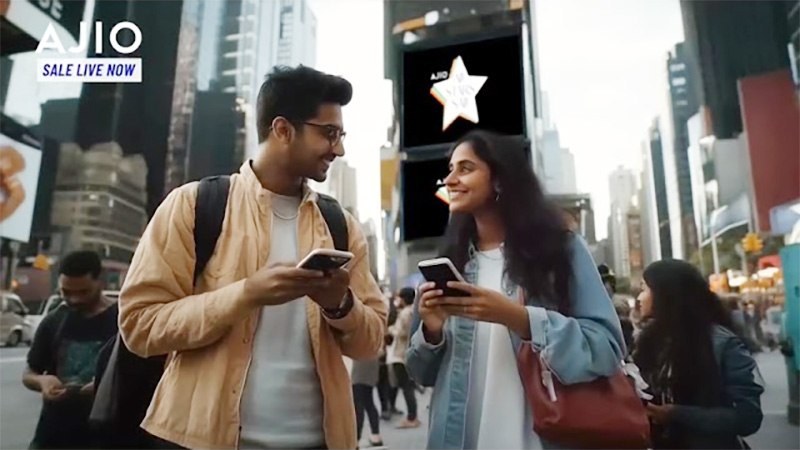
    MUMBAI: What happens when artificial intelligence meets high fashion? A campaign so cutting-edge, it practically stitches itself. India’s premier fashion e-tailer, Ajio, has made history with ‘The Great Fashion Price Crash’, its first-ever AI-created mass media campaign, proving that technology isn’t just reshaping fashion—it’s remodelling the way it’s sold.

    As a brand known for pushing creative boundaries, Ajio leveraged generative AI to craft a campaign that mirrors the rollercoaster emotions of stock market crashes—only this time, it’s fashion prices tumbling, not shares. With discounts from 50 per cent to 90 per cent on top international brands, this isn’t just a sale; it’s an economic reset for your wardrobe.

    Ajio’s AI-powered creative process was nothing short of a technological marvel. Over 2,000 AI-generated images were transformed into 200+ video clips, culminating in a stunning 22-scene film. AI also orchestrated the campaign’s music and voiceover, thanks to advanced tools like Kuki (Eipi Media’s proprietary text-to-music tool) and Elevenlabs for voice synthesis. And if that wasn’t mind-blowing enough, the entire production cycle—from script to post-production—wrapped up in just four days.

    “At Ajio, we constantly look for ways to innovate, both in the way we connect with our audiences and how we execute our storytelling,” said Ajio CMO Arpan Biswas. “Leveraging Gen AI for this campaign has allowed us to create high-quality content with exceptional production value while staying true to the consumer sentiment that drives our sales. ‘The Great Fashion Price Crash’ is a bold reflection of the times we live in, and we are thrilled to offer unmatched deals to our customers while setting a new benchmark in advertising.”

    Visually, the film delivers a striking narrative: a financial market in freefall, except this time, instead of plummeting stock prices, fashion prices nosedive. The high-octane AI-powered visuals bring the metaphor to life, showing premium fashion becoming more accessible with every price drop.

    “This project has been an exciting challenge,” said Eipi Media founder & CEO Rohit Reddy, the agency behind the campaign. “AI has given us the flexibility to create a visually compelling, high-production-value campaign at an unprecedented speed. The ability to iterate, refine, and execute at scale has been remarkable. While the entire campaign was AI-generated, our expertise in filmmaking played a crucial role in screenplay, direction, and cinematography, ensuring a polished final output. We’re proud to be part of Ajio’s journey in pioneering AI-driven advertising.”

    The campaign employed a fleet of AI tools, including Chatgpt, Perplexity, Midjourney, Kuki, Elevenlabs, Hailou AI, Runway ML, Kling, and Pika Labs, each playing a pivotal role in scripting, image generation, animation, voice synthesis, and post-production.

    Beyond the ad, the Ajio All Stars Sale is shaping up to be the retail event of the year, featuring 6,000+ brands and 2.2 million curated styles across apparel, accessories, footwear, and beauty. Shoppers can grab exclusive discounts, limited-period deals, and an extra 10 per cent off on select bank credit and debit cards.

    By fusing AI with fashion, Ajio isn’t just riding the tech wave—it’s leading the charge, proving that the future of fashion advertising is digital, dynamic, and driven by data.

    If this campaign is any indication, the industry should brace itself—because ‘The Great Fashion Price Crash’ is only the beginning.

  • India leads in global app usage and downloads but trails in user spending

    India leads in global app usage and downloads but trails in user spending

    MUMBAI: When Mukesh Ambani unleashed Reliance Jio onto India like a storm on 5 September 2016, it wasn’t just a telecom revolution—it was the dawn of a digital obsession. Cheap data plans and free calls? Indians grabbed them faster than a free plate of samosas at a wedding. Apps, once exotic creatures of the tech-savvy elite, became everyone’s new best friends, spreading like wildfire across cities, towns, and even the smallest villages.

    Fast forward to 2024, and India isn’t just flirting with mobile apps—it’s a full-blown love affair. The country now holds the crown for the highest global app downloads and usage, clocking in a jaw-dropping 1.12 trillion hours glued to screens. But here’s the plot twist: while Indians swipe, scroll, and stream like pros, they aren’t exactly reaching for their wallets. In-app purchases? Still a shy, hesitant nod rather than a full embrace. Turns out, we’re better at clicking than cashing in.

    According to Sensor Tower’s State of Mobile 2025 report, India recorded 24.3 billion app downloads last year, down slightly from 25.6 billion in 2023. However, the time spent on apps climbed significantly from 991 billion hours in 2023 to 1.12 trillion hours in 2024—a staggering demonstration of just how glued to screens Indians truly are.

    Globally, in-app purchases surged 13 per cent year-on-year (YoY) to reach $150 billion, but India fell behind, failing to make the top 20 countries in IAP revenue. For context, the United States led the pack at $52 billion, followed by China at $25 billion.

    But India had its bright spots: IAP revenue in the media & entertainment (M&E) category (dating apps, specifically) jumped 25 per cent YoY to $55 million, with Bumble leading the charge. Similarly, IAP revenue in the social media category climbed 29 per cent YoY to $54 million, led by YouTube. The film & TV streaming segment saw the most significant growth, with IAP revenue skyrocketing 86 per cent to $45 million, dominated by Disney+ Hotstar.

    Social media and entertainment apps still rule

    Social media and entertainment apps continued to dominate user preferences, with Instagram and Jiocinema topping the charts. However, downloads in these categories slipped, with social media app downloads dropping 10 per cent to 1.19 billion and M&E app downloads dipping 8 per cent to 663 million.

    Despite this dip in downloads, Youtube and Whatsapp retained their positions as the undisputed leaders in user engagement, cementing their status as essential apps for entertainment and communication.

    Generative AI apps steal the spotlight

    Generative AI was the showstopper in 2024, with downloads soaring to 177 million—a jaw-dropping leap from 75 million in 2023. Revenue in this category also tripled, reaching $12 million, driven by the success of apps like Chatgpt and Gemini. Clearly, India’s appetite for AI-powered tools has grown, and it shows no signs of slowing.

    Gaming hits a speed bump

    India’s mobile gaming market, which generated $3.8 billion in revenue in 2024—a 22.6 per cent increase from 2023—has hit a roadblock as downloads fell by 11 per cent year-on-year to 8.5 billion in the same year.

    Despite gaming remaining a vital part of India’s app ecosystem, this drop in downloads suggests a possible shift in user behaviour or preferences. This trend raises questions about the sustainability of growth in the mobile gaming sector amidst evolving market dynamics.

    With 900 million internet users, India’s mobile app market continues to thrive, even as it grapples with challenges in monetisation. The data tells a compelling story:

    1    Total downloads in 2024: 24.3 billion
    2    Time spent on apps: 1.12 trillion hours
    3    IAP revenue in M&E (dating): $55 million (+25 per cent  YoY)
    4    IAP revenue in social media: $54 million (+29 per cent  YoY)
    5    IAP revenue in film & TV streaming: $45 million (+86 per cent  YoY)
    6    Generative AI app downloads: 177 million (+136 per cent )

    As India’s app-hungry users swipe, scroll, and binge their way through the digital universe, one thing is clear: the potential here isn’t just big—it’s mind-bogglingly massive. All that time spent on apps isn’t exactly translating into cash for developers yet. It’s like owning a cricket team full of star players who can’t find the boundary.

    The question now is, can 2025 be the year India’s digital ecosystem finally hits a six? With generative AI promising to spice up content and app developers scheming to turn downloads into dollars, the stage is set. The world’s watching, India’s clicking, and app creators are sweating it out like it’s the IPL finals.

    Who’ll crack the code to India’s app goldmine? Stay tuned, because this is one game where the ads might just be worth watching.

  • NeuralGarage finalist at SXSW Pitch 2025 with revolutionary VisualDub tech

    NeuralGarage finalist at SXSW Pitch 2025 with revolutionary VisualDub tech

    MUMBAI: For NeuralGarage, to revolutionise entertainment, the answer lies in VisualDub, its groundbreaking technology addressing the age-old problem of visual dissonance in dubbed content.

    Now, this Bangalore-based Generative AI start-up is set to showcase its innovation on the global stage as a finalist at SXSW Pitch 2025, competing in the ‘Entertainment, Media, Sports & Content’ category.

    VisualDub synchronises the lips and jaw movements of actors with dubbed audio, creating a seamless viewing experience for audiences without compromising the original resolution. Built for films, streaming platforms, broadcast networks, and advertising, this technology transforms how content is localised, enabling brands to produce native, authentic visuals in multiple languages—without skyrocketing production costs.

    “VisualDub is production-ready and meets the exacting standards of the entertainment industry,” said NeuralGarage co-founder & CEO Mandar Natekar. “Generative AI will rapidly change the way content is created, distributed, and consumed. With VisualDub, we are poised to drive this change from the front. We can’t wait to showcase the full spectrum of our technology at SXSW 25 in their pitch event.”

    VisualDub already has a proven track record, having been used by major global brands to adapt ad films into multiple languages seamlessly. This innovation reduces the need for costly re-shoots while delivering content that feels native and immersive to diverse audiences.

    VisualDub is the brainchild of IIT Kanpur alumni Subhabrata Debnath, Subhashish Saha, and Anjan Banerjee, along with media veteran Mandar Natekar. Together, they have built a product that has the potential to reshape the global entertainment and media landscape.

    On 8-9 March 2025, NeuralGarage will pitch VisualDub before a live audience of expert judges, including heavyweights like Esther Dyson of Wellville, Arlan Hamilton of Backstage Capital, and Jessica Robinson of Assembly Ventures. Hosted by Jim Breyer of Breyer Capital, SXSW Pitch promises unparalleled exposure to Hollywood power players and global investors.

    In an age where content localisation is a must for global reach, VisualDub offers a revolutionary way to make dubbed content visually cohesive and engaging. Will it win over the SXSW judges? With its cutting-edge technology and strong use cases, NeuralGarage is ready to take the leap.

  • ANI lawsuit against OpenAI for copyright infringement

    ANI lawsuit against OpenAI for copyright infringement

    MUMBAI: Cheating may seem harmless until the consequences come crashing down—a classic case of “play stupid games, win stupid prizes”.

    Imagine the titan of artificial intelligence, the very force reshaping our understanding of innovation, now standing accused of stepping over the ethical boundaries it once sought to redefine.

    With a jaw-dropping market cap of $157 billion as of October 2024, OpenAI—the so-called savior of human progress—is now grappling with a high-stakes copyright infringement lawsuit filed by Asian News International (ANI) in India.

    This legal clash, steeped in complexity and a touch of irony, pits the ambitions of cutting-edge AI against the enduring principles of intellectual property rights. Could this be a case of progress overstepping its bounds? Or a necessary infringement in the name of human advancement?

    ANI has taken OpenAI to court, accusing the tech giant of unauthorised use of its copyrighted content to train its large language model (LLM). The case not only raises pressing questions about copyright infringement and fair use but also dives deep into the murky waters of territoriality and intellectual property in the age of artificial intelligence. The stakes? Nothing less than the future of AI innovation and creators’ rights in one of the world’s fastest-growing digital economies.

    ANI accused OpenAI of using its copyrighted material without permission and highlighted the inadequacy of OpenAI’s opt-out policy, which ANI claims fails to prevent its content from being scraped through third-party websites. ANI also alleged that OpenAI’s models produced outputs either verbatim or substantially similar to its copyrighted content, further compounding the copyright violation. Additionally, ANI flagged fabricated responses generated by ChatGPT that falsely attributed interviews or news stories to the news agency.

    OpenAI defended its practices by citing fair use, which permits limited use of copyrighted material under specific conditions. It argued that its models do not reproduce content verbatim and that it sufficiently transforms language to comply with copyright exceptions. On fabricated responses, OpenAI stated it resolved issues flagged by ANI and committed to addressing such problems promptly in the future.

    ANI is seeking an interim injunction to prevent OpenAI from storing, publishing, or reproducing its content and has requested a prohibition on accessing ANI’s material through any channel, including subscribers. OpenAI countered by asserting that no legal action could apply within India, as its data processing and model training occur outside the country, with no offices or servers in India.

    The lawsuit brings two critical issues to the forefront: the balance between copyright infringement and fair use, and the challenges of territoriality in data storage. India’s existing copyright law lacks explicit provisions regarding AI training, making the applicability of fair use a grey area. Moreover, the absence of text and data mining (TDM) provisions complicates the country’s approach to fostering innovation while safeguarding content creators’ rights.

    The territoriality argument further underscores complexities in applying local laws to global AI platforms. Data sovereignty issues arise as distributed AI models utilise data generated in India but processed across international cloud environments, challenging traditional legal frameworks.

    Globally, AI platforms and news publishers have clashed over the use of copyrighted material. While some publishers have entered licensing agreements with AI firms, others, such as The New York Times, have pursued legal action. ANI’s lawsuit reflects a broader struggle over how GenAI platforms interact with intellectual property.

    India’s policymakers face the task of balancing innovation in AI with content creators’ rights. A permissionless innovation approach, which allows experimentation with new technologies while addressing harms retrospectively, may provide a pathway for advancing AI while protecting intellectual property.

    This lawsuit will likely serve as a landmark case in determining the accountability of AI developers for content generated by their platforms. As the first legal action of its kind in India, the outcome will influence how AI platforms navigate copyright, fair use, and territorial regulations in the country.

  • Ad film maker Rohit Reddy and his magical AI series Mahabharat

    Ad film maker Rohit Reddy and his magical AI series Mahabharat

    MUMBAI: We all know of him as the husband of Anita Hassanandani, the actress who tends to spew venom as the negative lead in many an Ekta Kapoor show. As well as her dance partner some years ago on Nach Baliye and a part time actor-model. But EiPI Media founder & CEO Rohit Reddy has a lot more to his credit. Apart from having a long-running corporate career which he gave up to turn entrepreneur and offer branded solutions from the time he set up his agency along with his wife in 2018.

    EiPi Media  has been working on adding that additional layer of gee whiz CG imagery, VFX, and mixed reality  to make TV commercials and social media campaigns stand out.  This apart it has been working with several influencers to create influencer marketing videos.  Among the influencers it has been working with feature: Varun Dhawan, Soha Ali Khan, Shakti Mohan, Neeti Mohan, Kareena Kapoor Khan, Konkana Sen Sharma, Sanaya irani, Barun Sobti, Alanan Panday, Sanya Malhotra, Shivam Dube, Arjun Kapoor, Parineeti Chopra, Tiger Shroff, Varun Sharma – the list could go on. 

    Among the ads and vertical videos that Rohit and team EiPi have worked on include:  Adidas and the reveal of the blue team jersey, Too Yum with Varun Dhawan,  TruNativ and Kareena Kapoor Khan, Euro Pratik with Hrithik Roshan, LensKart kids glasses , Fossil, BBlunt – and scores of other campaigns.

    MAHABHARAT THE ETERNAL WAR

    But what has sent Linkedin on fire  in the past two  days is Rohit’s recent post of a teaser for a series we are all so familiar with – the epic Mahabharat. What makes the trailer special, says Rohit, that it has been totally generated using generative artificial intelligence. Seven generative AI tools have been used to produce the sizzle reel in which the characters look so real it makes some of the earlier productions which have come on television with actual  human actors  look rather primitive. It even has a feel of the DI heavy film 300.

    Rohit has not revealed much about the project excepting to say that it is coming soon, labelling it as an EiPi Media project. The reel ends with the caption: “Mahabharat. An Eternal War.”

    The post has been viralised on linkedin, generating numerous likes, comments and reposts. 
    We, at indiantelevision.com,  tried to reach out to Rohit, but could not get a hold of him at the time of writing. However, you can continue watching this space when we do.

    In the meantime, to get a dekko of the teaser click here: Mahabharat

  • Generative AI can significantly address the challenges faced by modern contact centers: Ganesh Gopalan

    Generative AI can significantly address the challenges faced by modern contact centers: Ganesh Gopalan

    Mumbai: In today’s digital world, contact centers face challenges from rapid technology evolution and changing customer preferences. High call volumes, driven by digital channels, lead to long wait times and lower satisfaction. Managing inquiries across diverse channels adds complexity, risking inconsistencies. Meeting customer expectations for personalized, timely responses while maintaining efficiency is a hurdle. Furthermore, ensuring data security and compliance amid sensitive information collection remains crucial.

    Gen AI aims to provide valuable solutions to the challenges faced by contact centers in today’s digital landscape. They excel in contact centers by leveraging advanced technologies like NLP and DLLP to automate tasks, deliver personalized interactions, streamline operations, and enhance data security, ensuring contact centers thrive in the digital age.

    The company also covers a complete automation and analytics experience encompassing omnichannel AI automation, voice biometrics, agent assist, and omnichannel analytics.

    Indiantelevision.com caught up with Gnani.ai co-founder & CEO Ganesh Gopalan where he delved more into how Gen AI is tackling the challenges faced by contact centers and driving advancements in customer care automation in today’s digital era, ultimately aiming to enhance customer satisfaction.

    Edited excerpts

    How do you leverage generative AI to address the challenges faced by modern contact centres?

    Generative AI can significantly address the challenges faced by modern contact centers. Gnani.ai’s product, Automate365   is a voice-first omnichannel automation platform that automates tasks like responding to common customer queries, generating personalized responses, and providing real-time assistance to agents during calls.  Our product, Assist365 is a real-time agent assist tool that acts like a co-pilot and empowers customer service representatives with real-time insights and suggested responses based on contextual information and historical data, enabling more personalized and effective service delivery. Gen AI helps reduce operational costs, enhance customer experience, and improve agent productivity by offering instant solutions and suggestions based on historical data and context. It also enables predictive insights, helping contact centers anticipate customer needs, improve resolution times, and streamline workflow management, all while maintaining consistency across communication channels.

    What specific advanced technologies do you use to ensure personalised customer interactions and improve efficiency?

    At Gnani.ai, we use our proprietary small language Gen AI models that are tuned to specific domains. In addition, we have multiple patents in speech recognition, voice biometrics, handling multi-lingual conversations, speech activity detection and more. These innovations have significantly boosted efficiency and customer satisfaction in Gen AI-powered contact centers, improving overall consumer experiences. Notably, we helped one of India’s top 10 banks collect over $1B last year using our generative AI voicebots, achieving high conversion rates at reduced costs. Additionally, for one of the largest banks in India, our generative AI voicebots automate customer service, cutting costs by over 30 per cent while ensuring secure conversations through voice biometrics technology.

    How does Gnani.ai differentiate itself from other players in the market?

    Gnani.ai is a leading deep tech voice-first generative AI company with multiple patents that set it apart from competitors. We have patented unique technology solutions for handling multi-lingual conversations and speech activity detection for streaming speech recognition. Owning the entire conversational AI pipeline—from streaming audio to proprietary speech-to-text AI models, text-to-speech systems, small language generative AI models tuned for specific domains, —Gnani.ai stands uniquely capable of delivering the most accurate conversational AI systems with the lowest latency possible.  Gnani.ai also uniquely offers multiple deployment options on public, private and hybrid cloud engagements. Our deployments are cloud-agnostic and can reside in any cloud platform in addition to on-prem deployments.

    How does Gnani.ai’s omnichannel approach integrate with existing contact centre systems to streamline operations?

    Gnani.ai’s omnichannel approach integrates seamlessly with existing contact center systems to enhance operational efficiency by unifying customer interactions across channels—voice, chat, email, and social media—into a single platform. Our Aura365, an advanced omnichannel analytics tool, provides detailed insights from these interactions, tracking key metrics, identifying trends, and enabling businesses to refine their strategies, personalize customer experiences, and drive growth. This comprehensive integration streamlines workflow, optimizes agent performance, and reduces operational costs, ultimately delivering a more efficient and satisfying customer service experience.

    Data security and compliance are crucial for contact centres. How do you address these concerns while handling sensitive information?

    We prioritize customer data privacy and hold certifications like ISO, SOC2, HIPAA, PCI-DSS, and more. We don’t store or use customer data on our cloud for AI model training. We are cloud agnostic and offer multiple deployment options for our end customers. Our voice biometrics platform enhances security for customer authentication during voice interactions.

    We also offer multiple deployment models including private cloud options for our enterprise customers. With transparent data policies, we foster trust and confidence in our services.

    We offer a bundle of voice biometrics along with our voice bots to add an additional layer of security for automated voice conversations and prevent voice phishing and other attacks.

    With the contact centre software market expected to grow significantly, where do you see the biggest opportunities for innovation and growth in the coming years?

    There are huge opportunities to redefine the customer experience space, both within and beyond contact centers. Traditional contact centers, as we know them, will evolve into something entirely new. Anonymous chatbots will soon be replaced by video avatars and contact centers will automate key tasks while using agent assist to address current challenges like training and hiring. Multi-channel engagement with customers will soon be common For instance, instead of just calling support for a laptop issue, you’ll soon be able to send a video of the damage and receive an automated solution. In short, customer experience will become more automated, personalised and multi modal.