Tag: Gender

  • ASCI bats for better inclusion in advertising, to clamp down on discriminating ads

    ASCI bats for better inclusion in advertising, to clamp down on discriminating ads

    Mumbai: The Advertising Standards Council of India (ASCI) has updated its code to add greater inclusivity in advertising depictions. The ASCI code already required ads to not deride anyone based on race, caste, creed, gender or nationality. However, new areas of possible discrimination or derision have now been included such as gender identity, sexual orientation, body shape, age, and physical as well as mental conditions.

    Advertisements that mock or deride anyone on these bases will now be considered in violation of the ASCI Code. Talking about the changes, ASCI CEO & secretary general Manisha Kapoor said: “We have seen consumers call out ads that mock or deride people, or portray them in unfavourable ways. And it is only right that advertising becomes more inclusive and sensitive to this.”

    “It is not acceptable, for example, to associate characteristics such as sluggishness with a certain body shape. Similarly, to deride someone with a physical or mental ailment, or their gender identity would now violate the ASCI code,” she continued.

    “With this change, ASCI hopes to ensure that advertising becomes more inclusive and sensitised to all sections of our country, and does not perpetuate certain portrayals that have no place in a progressive society,” Kapoor added further.

    The changes to the ASCI code were approved by the board recently. This clause is now updated as part of Chapter 3 about advertisements that cause harm, which reads as follows:

    3.1. No advertisement shall be permitted which:

    (b) Derides any individual or group based on race, caste, colour, religion, gender, body shape, age, sexual orientation, gender identity, physical or mental conditions or nationality.

    As a future-facing organisation, ASCI works to ensure that its guidelines keep pace with the ever-evolving society, the advertising industry watchdog said in a statement. As consumers are becoming increasingly concerned about unfavourable depictions of certain sections of society, this change ensures that advertising keeps pace with these rightful expectations.

  • International Men’s Day: Brands challenge stereotypes, start conversation on mental health

    International Men’s Day: Brands challenge stereotypes, start conversation on mental health

    Mumbai: “Real men don’t cry. Real men are tough, real men don’t seek help, real men are self-sufficient. Be strong. Be a man.”

    When it comes to gender-based stereotypes, it’s not just women, but men who also become victims of rigid and deeply entrenched cultural expectations. We live in a society where the identities and roles of individuals are often linked to their gender. That’s why it’s important to question these biases and normalise conversations around positive masculinity and manhood.

    This International Men’s Day, that’s what several brands did as they raised awareness on men’s issues that are normally brushed under the carpet.

    Man Matters

    The home-grown digital health platform for men launched a digital campaign #MenDontTalk. The brand roped in Mirzapur fame actor Divyenndu Sharma to encourage men to speak up and start conversations around their health and well-being. The digital film executed by Spring Marketing Capital addresses how socially recognised ideas about masculinity are proving painfully slow at changing the mindset. The archaic concept of ‘Alpha’ is compelling men to impose self-enforced silence on issues related to mental health, medical problems, intimacy, and other struggles. The campaign seeks to break this unhealthy cycle of stigma and urges men to open up and normalise conversations around one’s wellbeing.

    The campaign also sheds light on statistics revealing that 28 per cent of men don’t seek medical help for mental health conditions while 35 per cent wait more than two years or have never disclosed a mental health problem to a friend or family member. As per another recent survey conducted by a brand, over 80 per cent of the men do not express their emotions for the fear of being judged or getting embarrassed in front of their peer group.

    Bombay Shaving Company

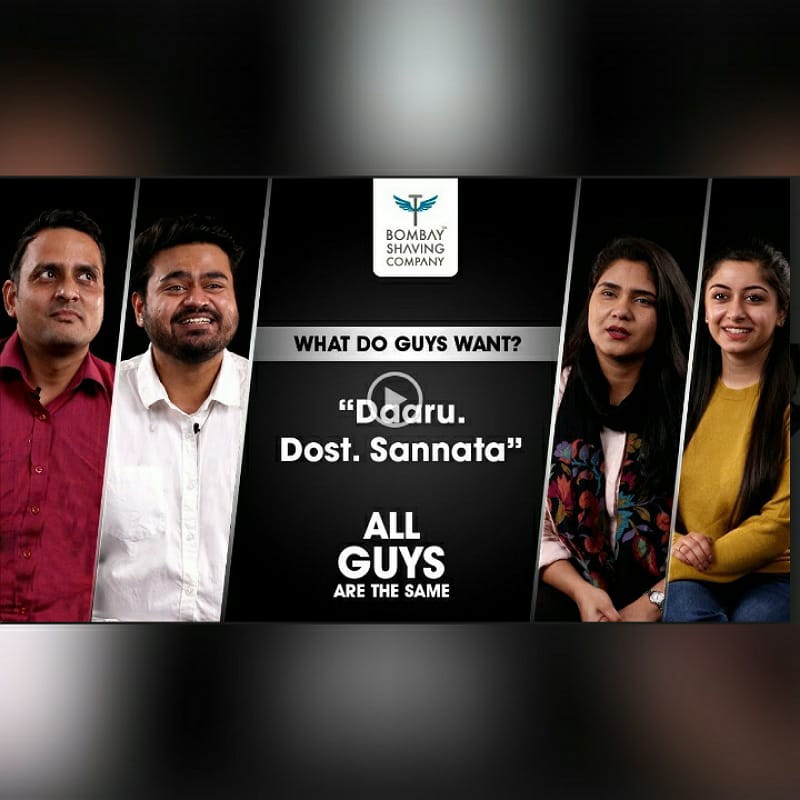
    The men’s grooming brand celebrated International Men’s Day by rolling out a campaign video #AllGuysAreTheSame. The video highlights archaic generalisation and preconceived notions about men and their emotional, behavioural, and social orientation, which results in all men being boxed into the same labels.

    The campaign conceptualised and developed in-house by the Bombay Shaving Company team tries to get close to the truth by interviewing nine men and eight women and asking them revealing questions about men. The difference in the unfiltered and heartfelt responses of these men and women highlight the misconceptions about men in our society, revealing that ‘all men are not the same’. Amusing yet thought-provoking, the film reveals some home truths about men, their struggles, insecurities, vulnerability, and stacks of self-doubt.

    SBI General

    SBI General highlighted the important and diverse roles that men play in our lives. From being a responsible sibling to a dependable husband and caring father and a son, it’s the little things men do that make them the original providers of ‘Suraksha aur Bharosa dono’ for their loved ones. The campaign by Tonic Worldwide emphasise the struggles men go through while safeguarding their families, even as they ensure to provide Suraksha and Bharosa.

    Mankind Pharma

    The importance of starting a conversation about positive masculinity can go a long way in shaping the gender notions for the coming generations. It is equally crucial to call out toxic masculinity when one sees it. Society is often guilty of turning a blind eye to a man’s not-so-gentlemanly behaviour under the guise of tropes like ‘Men will be men’.

    This International Men’s Day, Mankind Pharma tackles this unpleasant, difficult but more relevant than ever subject through its campaign  #NahiChaltaHai. It encourages people to educate themselves and be aware of the behaviours that can be uncomfortable and are downright wrong. The video featuring actor Adil Hussein urges us to talk with the men and growing boys around us to tell them about the acts that are unacceptable while promoting gender equality and improved gender relations to create a safe and better world for everyone.

    Kotak Mahindra

    The bank paid a sweet tribute to different roles played by a man in easing the lives of their families with a social media post that goes: “Thank you for loosening the tight jars, reaching the top shelves of the cupboards, being our go-to heroes, and helping us be our best selves every day”

    Onsurity

    The homegrown digital monthly employee health benefits subscription platform for SMEs & start-ups has launched a digital-first campaign #ManItsOk to mark International Men’s Day. The campaign encourages men to be vocal about their emotions and express themselves, driving the core messaging that it’s perfectly ‘OKAY’.

    The #ManItsOk campaign will run for a week, starting from 18 November to 25 November kickstarting with a social story campaign encouraging men to share stories that resonate with the theme, leading to a weeklong employee and their family engagement initiatives.

  • IAA to host panel discussion on gender sensitisation in media on 27 July

    IAA to host panel discussion on gender sensitisation in media on 27 July

    Mumbai: The India Chapter of the International Advertising Association (IAA) is all set to host a high-powered virtual panel discussion with leaders of the Marcom industry on 27 July. The session on- ‘Gender in media and the impact on children and their future’ will begin at 3:30 pm.

    Discovery Communications India MD-South Asia and IAA president, Megha Tata, said, “A few weeks ago we released the top lines of the results of a unique market research conducted on 1,000 Indian advertisements by UNICEF and the Geena Davis Foundation. The IAA had facilitated this important research on gender representation in Indian advertising. On 27 July, UNICEF will present the results in depth, and then there will be a discussion on the implication of these findings on gender in media and the impact on children and their future. This will truly represent the industry as the Voice of Change.”

    The panelists include AAAI treasurer and Havas Group CEO, India, Rana Barua, ASCI chairman and BBH and Publicis Worldwide, India, chairman Subhash Kamath, BYJU’S head of marketing, Atit Mehta, filmmaker, artist and writer Ashwiny Iyer Tiwari, Ogilvy India chief creative officer, Kainaz Karmakar and Population First director Dr A L Sharada and Viacom18, head- Hindi Mass Entertainment and Kids TV Network, Nina Elavia Jaipuria, and UNICEF, senior advisor Shreyasi Jha.

    Speaking about the initiative, Viacom18 head – Hindi Mass Entertainment and Kids TV Network and IAA co-chair – Women Empowerment Committee, Nina Elavia Jaipuria, said, “Conversations and actions go hand in hand when tackling an issue as important and nuanced as gender representation in media and its impact. We are thus bringing together leaders across the ecosystem who can not only identify the change in discourse needed but also have the power to actually bring about that change.”

    “Gender-related stereotypes are formed at a very young age and prevent adolescents and young people from reaching their full potential. Advertising and media, more broadly, play a key role in forming and perpetuating stereotypes. UNICEF is delighted to be the knowledge partner with IAA and its members for this important event that is the beginning of a very important journey to promote positive gender roles and practices through advertising so every young person can live a life free from stereotypes and achieve their full potential” says UNICEF, senior advisor, Shreyasi Jha.

    The discussion has UNICEF as its knowledge partner, Colors as the industry partner, Havas Group as an Associate partner, and Clutter Cutters as the on-ground knowledge partner.

    Registration link:  https://bit.ly/IAAVoiceOf

  • FICCI FLO Film Festival to host Global Symposium on Gender in Media

    FICCI FLO Film Festival to host Global Symposium on Gender in Media

    MUMBAI: The first FLO Film Festival organized by FICCI Ladies Organisation(FLO), Mumbai Chapter, the women’s wing of FICCI, today announces a new partnership with the Geena Davis Institute on Gender in Media that will see the Festival host the Institute’s first Global Symposium on Gender in Media in Mumbai, India in February 2016.

    Speaking about the partnership, Academy Award-winning actor and founder and Chairman Geena Davis said, “Media images have a huge impact on our perceptions, and on our social and cultural beliefs and behaviours. Our new global study, explores how global films may be reinforcing negative gender stereotypes with movie audiences of all ages.” The Institute is the only research-based organisation working within the media and entertainment industry to engage, educate, and influence the need to dramatically improve gender balance, reduce stereotyping and create diverse female characters in entertainment.

    FLO National President Archana Garodia Gupta said, “FLO has been working to empower women, and erase gender stereotypes for three decades. Films are a very powerful medium, and have a major role to play in our perception of the world. They can help redress the balance or reinforce negative gender images. We are very excited to bring this issue to the fore in the Film Capital of the world, and hope to improve the image of women in Indian films.”

    At the 3rd Global Symposium on Gender in Media, the Institute will present new global research which explores the influence of film audiences in the UK, India, Nigeria, France and Brazil funded by the Oak Foundation.

    The Festival will open with the Symposium, (the Symposium is sponsored by Independent Television Service Inc- ITVS), which will convene eminent entertainment content creators, business leaders, actors, directors, media personalities, policy makers, to engage in dialogue around the institute’s global research along with two panel discussions from leading entertainment industry personalities, content creators, along with gender in media related subject matter experts.

    CEO Geena Davis Institute Madeline Di Nonno said, “We are honoured to be partnering with FLO. They have been working for the education of the girl child, mentoring women entrepreneurs and many initiatives to empower women since the past 32 years. Our Symposium and the Film Festival are great platforms to discuss the depiction and representation of women and girls and how films can influence social and cultural views and beliefs. We are also very excited to continue our long partnership with ITVS.”

    FLO Member of the Advisory Panel Amruta Devendra Fadnavis said, “Films are an integral part of our culture. The Movies have made us laugh, cry, they have inspired us and have been an important constituent in the cultural evolution of our society. “Objectifying” women in films should be done away with and be replaced by the characterisation of strong women, which will create a very positive subconscious impact on the society as a whole.”

    FICCI Ladies Organisation Chairperson Falguni Padode said, “The FICCI FLO Film Festival hopes to create an impact that will mobilize and inspire audiences to bring about a paradigm shift in their perception towards crucial female-centric issues in India and across the globe.”

    The films, national as well as international, features, shorts, documentaries, animation and digital films will focus on Women Empowerment spanning subjects of Skilling and Vocation, Educating the Girl Child, Hygiene and Wellness, Self Esteem and Economic Independence, Mental Health and Sexual Exploitation.

    FICCI FLO Film Festival Creative Director Rashmi Lamba said, “For the first time in India, the FICCI FLO Film Festival aims to be the ‘Catalyst For Change through Film’ and will provide a platform to bring together the voices and expertise of leading Indian and global media institutions and organisations working towards creating gender sensitivity and women empowerment.”

    Leading global and Indian Film and Media Institutes and Organisations that include Whistling Woods International, Women Make Movies, ITVS, Population First, Tata Institute of Social Sciences, and Point of View will showcase selected films and hold a series of strategic Workshops during the FLO Film Festival to focus on gender sensitivity, skill development, outreach and social impact, to enable audiences to become discerning viewers and critically reflect on their media consumption and how it influences them.

    A special screening of the acclaimed movie – He Named Me Malala was held as a special event to announce the Partnership and Film Festival.With a presence in 14 locations across the country and over 4,000 members, FLO boasts of some outstanding work in the field of women empowerment.