Tag: Gen Z

  • GUEST ARTICLE: How to evaluate the effectiveness of mobile marketing strategies and campaigns

    GUEST ARTICLE: How to evaluate the effectiveness of mobile marketing strategies and campaigns

    Mumbai: In the modern era driven by technology, organisations across sectors and industries are leveraging tech-enabled solutions to streamline business operations. The surge in digital transformation is also changing the metrics of key business areas, including product development, marketing, and communication, among others. Brands have been readily using the advantages of digital presence for awareness, promotion, and establishment. Soaring digitalisation has reluctantly changed the patterns of customer behaviour along with their needs. New-age tech-savvy users such as gen-z and millennials are now reliant on digital devices, and among them, smartphones have become the most preferred device for online shopping, news, utility, payment, shopping, entertainment, games, finance, etc. Therefore, to cater to the needs of these modern-day netizens, brands are using mobile marketing strategies to connect with them at multiple touch-points and lure them into the marketing funnel via personalised content (ads). However, the main point to ponder is how the effectiveness of the marketing campaigns is measured and the methods to optimise them according to the changing demands of the customers. 

    Key metrics to measure the effectiveness of mobile marketing campaigns 

    Mobile marketing is gaining momentum to be a comprehensive marketing strategy thanks to the rise of smartphones, internet accessibility, and social media. The measurement typically points out the customer’s behavioural pattern and lets the brands know their problems to improve. For instance, if the interface of an application is lagging, the customer might bounce back to other competitors, leading to the declination of reputation and sales. Therefore, to determine whether a brand is performing well in the market, it is essential to segregate a few pre-requisite metrics on which the campaign’s success can be measured. These KPIs help to determine the performance of the marketing strategy in terms of customer acquisition, loyalty, retention, awareness, etc.

    The effectiveness of the marketing campaign must align with the end-mile goals of the brand. These goals can include: driving sales of the product or service; initiating support for customer engagement and retention; increasing brand awareness and promoting the business via ads across viable platforms. There is also a need to analyse these goals at a regular interval of time to address the progress and optimise the strategies for desired outcomes.

    Social metrics to hear customer’s voice

    Until this day, word of mouth is considered a well-recognized metric to determine a product/brand’s popularity. This metric usually indicates how well a brand is performing on social media platforms. Modern-day marketers often use social media monitors to track how well the organisation, brand, or product is perceived by prospective customers online. The collective measurement is in the gist of audience sentiment, whether positive or negative. It is a crucial criterion as the marketers must take hold of the time and effort they are spending, which can directly affect the ROI. However, social media conversations are dispersed and far-flung, making it difficult for marketers to consolidate the information in a meaningful way. With social media analytics tools, they can gather data and make advances in data visualisation, analysis and predictive modelling to convert scattered information into useful statistics. By successfully implementing these techniques, the effectiveness of mobile marketing strategies can be measured efficiently and insight into the customer’s needs can be congregated. 

    Retention for measurement of churn rate

    While launching an application, a brand must know how the user is meant to interact with it. Customer retention rate is an essential metric which sheds light on why and how users stay on the app over a long timeframe. However, sometimes the app experiences a churn, which is a measure of how many potential customers have stopped using the app in a given period of time (one day, seven days, and 30 days). App retention is calculated by dividing monthly active users by monthly installations.

    The strategy can be structured based on the user-base the brand is targeting i.e. android or iOS. This can also include the measurement of CPI (cost per install) and CPLU (cost per loyal user) in response to seeing an advertisement. Both of these metrics when used ARPU (average revenue per user) determine the return on investment for the brand’s marketing efforts. The crucial element is to reduce the CAC (customer acquisition cost) and calculate the ROAS (return on ad spend), which is the measure of revenue earned for cost spend on the advertisement campaign.

    Measuring user engagement to build a ‘cohort’ 

    A brand employs a variety of strategies to capture the attention of netizens and convert them into loyal customers. This method can include curating content that is personalised and targeted based on an analysis of the visitor’s behaviour. Engagement is a strategy in which the brand wants customers to use the application frequently and for longer periods of time. The most important metrics to monitor are session length, session interval, and application screen per session, as well as the conversion rate in the case of an event, interaction rate, and opt-ins and opt-outs.

    Engaged customers act as bread and butter for the brand. They not only give decent reviews of the application/product/service but also recommend them to other users, making the campaign profitable. With cutting-edge strategies such as offers and discounts, these customers can be ‘cohorted’ to unwind the behavioural trends and gain insight into the actions that lead to higher engagement.

    All things considered 

    The main things that count in any marketing strategy are agility, flexibility, and creativity. Measuring the effectiveness of marketing campaigns can save a brand from exhaustive decision-making and save costs, which sharply leads to higher ROI. KPIs also help the brand to create better content (text, video, etc.) and measure what is performing well, engaging better customers so that the underperforming content can be eliminated. A brand must create an emotional connection with its customers in order to expect loyalty. 

    Personalisation and localisation are crucial factors in creating several touch-points under a marketing strategy. Audio, video, blogs, and content partnerships are some of the methods to make brand communication mobile-friendly. Organisations must be updated with megatrends such as multi-device behaviour, omnichannel approach, attribution strategies, A/B testing etc., to optimise advertisement campaigns for cost-effectiveness. 

    According to Statista, mobile advertising spending will surpass $339 billion by 2023 and the mobile marketing market size will nearly double by 2024, clearly stating how deeply mobile technologies are embedded in digital infrastructure. Therefore, with its growing significance, brands must make sure to use it efficiently and make the most of its potential to retain a competitive edge in the digital space.

    The author of this article is XY Ads head of supply Girish Chowdhary.

  • Authenticity drives brand affinity for Gen Z: BBC Studios study

    Authenticity drives brand affinity for Gen Z: BBC Studios study

    Mumbai : BBC Studios has released a new study titled “Brands, News and Gen Z,” focused on revealing the preferences and motives of a new generation with purchase power, making it easier for advertisers to target an emerging, commercially receptive segment. The study offers advertisers deeper insight into what motivates Gen Z, how this generation engages with the news and what influences their decision-making process for purchases.

    The study shows that despite growing up in a digital, filtered and increasingly volatile world, Gen Z are grounded, self-assured, ambitious and steadfast in their values, which align most closely with those of the boomer generation while incorporating the sensibilities of younger generations.

    Authenticity, as defined by Gen Z, is about honesty, originality, trust, and quality. For Gen Z, brands aren’t just an expression of what they like; they’re an expression of what they value. They are more inclined to consume brands that are authentic, as they come closer to representing their values, beliefs, and sense of community. The research found that 80 per cent of India’s Gen Z respondents said that authenticity plays an influential role in their choice of brands. If a brand is genuine, Indian Gen Z are more likely to be loyal to it (81 per cent), recommend it to others (78 per cent), and purchase their products and services again (73 percent).

    The research found that globally, Gen Z is more likely to trust the content of media platforms that they find authentic. This preference for authenticity also extends to where Gen Z obtains their information, with only 18 per cent of them being inspired by someone they follow on social media. Despite growing up in a digital world, Gen Z believes social media has created pressure to ‘present’, ‘perform’ and ‘perfect’, making it much harder to be authentic. In order to be authentic, Indian Gen Z respondents agree that it is crucial for news publishers to provide readers with a 360-degree perspective (64 per cent), give a platform to people whose voices are trusted (63 per cent), and publish fact-checked stories (61 per cent).

    When a news media brand is trusted and perceived as authentic, Indian Gen Z prefers to engage with advertising and branded content presented by that news media brand. 60 per cent of the Gen Z respondents in India said they try out the brand they see on the authentic news media brand, and even more, 73 per cent engage further with other content that the news media brand produces or reports on.

    BBC News APAC SVP commercial development Alistair McEwan said, “This research is particularly prominent in India, where the results show increased importance placed on authenticity by Gen Z compared to the rest of the world. We are always striving to learn more about the composition of our audience and the Gen Z cohort is an important emerging segment, and this research highlights that there are many similarities with older cohorts. These insights will help brands better understand the nuances of marketing to Gen Z and assist in creating effective policy settings and appropriate messaging.”

    Aspirations in life for Gen Z are being successful, being authentic (true to yourself) and being content. The study found the Indian Gen Z to be the most ‘driven’ cohort among all in terms of their ambition to ‘be successful’ in life. The most popular definitions of authenticity among global Gen Z are embracing who you truly are (44 per cent), and remaining honest in all circumstances (40 per cent).

    ‘Being a good friend’ is rated highly as being one’s authentic self by Indian Gen Z, and 58 per cent consider their career to be an important aspect of their life. Being successful is very important for Indian Gen Z, which is much more important than the global average, 49 per cent vs. 29 per cent.

  • Skybags launches #BackToCool campaign to showcase latest collection

    Skybags launches #BackToCool campaign to showcase latest collection

    Mumbai: The youth-centred brand from the illustrious house of VIP Industries, Skybags has launched new #backtocool campaign to unveil the stylish 2022 backpack collection. The campaign is all set to help the nation’s Gen Z celebrate a stylish return to normalcy.

    Capturing the thrill of finally going back to normal life after the pandemic, the chic new #BackToCool campaign highlights how Skybags’ backpacks are synonymous with style among the discerning Gen Z. 

    Shot in a vibrant, colourful and edgy style, the commercial features all the exciting aspects of this special time- reuniting with friends in real time, playing team sports together, partying and socialising with the squad, and celebrating together in-person after a long hiatus- all while sporting the contemporary backpacks from Skybags’ latest collection.

    This campaign aptly showcases Gen Z as they truly are – bold, vivacious and always on the move! The audacious new video also demonstrates how perfectly Skybags backpacks fit into their lives and focuses on riveting features that the brand offers such as built-to-last straps, premium back support with air mesh, rain covers and a 12-month international warranty. Complete with a young cast and hip music, the campaign aims to celebrate people’s desire to get back to normal life with a bang and will resonate with Gen Z audiences as they return to life as it was before the pandemic.

    For over 50 years, VIP has revolutionised the luggage category with continuous product innovations, adherence to quality and international aesthetics. Their youth focused brand Skybags is a pioneer in the Indian market, offering distinctive designs, innovative features and appealing aesthetics for younger audiences. Building upon the success of their previous campaigns, the brand has raised the bar with the #BackToCool campaign by combining the joie de vivre of Gen Z with the effortless style of Skybags.

    Backpacks are quickly becoming an essential fashion accessory for youngsters across India. Cognizant of this need, Skybags’ latest collection boasts of an exciting range of cool backpacks, trendy laptop backpacks and stylish rucksacks. With new price points and new categories like PU backpacks, biking backpacks and daypacks, Skybags’ 2022 collection has something stylish to cater to every need. 

    At the launch of the #BackToCool campaign, VIP Industries vice president marketing Praful Gupta said, “At Skybags, we recognise that the backpack is now a go-to accessory for Gen Z and millennials. Staying true to our philosophy of ‘Move in Style’, the #BackToCool campaign aims to help our youth make a stylish return to normalcy post-pandemic. Both the campaign and the 2022 collection are deeply reflective of our audience- stylish and functional, discerning but playful, and conscious yet fun! Behind the sleek aesthetics of our new range lies over decades of design and engineering innovation, and we are excited to introduce this to the market in such a fun manner. We’re confident this campaign will resonate deeply with India’s Youth.”

  • Livon chooses to #ExpressWithPride, presenting Uncut on YouTube and Instagram

    Livon chooses to #ExpressWithPride, presenting Uncut on YouTube and Instagram

    Mumbai: India 2022 is seeing a world of changes in terms of how we perceive things as well as how we express ourselves. As we continue pride celebrations, the voice of the queer community is getting louder and prouder, rising above every obstacle and naysayer.  

    Livon, in collaboration with the Ogilvy Content Force, takes ‘the Pride month’ to move away from the cookie-cutter, age-old definition of self-expression and representation, breaking away from a world of binaries to truly celebrate the rainbow side of life. 

    Uncut, the brand new series by Livon, is an initiative to freely talk about things that are usually swept under the rug. But being true to the brand ethos of “self-expression”, they have launched the series with #ExpressWithPride, co-creating with a host of young, opinionated and talented queer creators who have spoken their minds about a lot of pertinent issues starting from what it’s like being non-binary in India to how their professional lives are impacted by their sexuality. 

    The activity has been rolled out in an integrated manner, starting with videos and promos on YouTube with teasers on Instagram as well as Spotify ads to have maximum impact and reach.  

    The campaign has struck a chord with the audience due to the sheer unfiltered and fresh nature of its content which steers away from the usual tokenism seen prevalent during Pride. For the first time ever, a brand was not just turning into a rainbow sign or talking about their coming out story but instead, highlighted not just major issues pertaining to the LGBTQIA+ community but all the little things that matter as well.

  • boAt rolls out campaign to celebrate the Gen-Z smart way of life

    boAt rolls out campaign to celebrate the Gen-Z smart way of life

    Mumbai: boAt has rolled out a new campaign promoting its Alexa Built-in smartwatch, boAt Xtend, that put the spotlight on GenZ and how they like to extract the most out of every hour, every day. 

    Titled as #MoreInEveryday, the campaign effectively brings out the various intelligent features of the watch such as setting reminders and counting calories that complement the GenZ way of life. 

    The brand roped in influencers like RJ Kisna and Divija Bhasin to bring out the content creators’ POV of doing more with an Xtend. They even collaborated with digital channel Filter Copy with millions of viewers to bid goodbye to all things made redundant when their watches enabled voice commands. To generate more relatability among the Indian audience, boAt pushed out a series of influencer-led videos highlighting the quirks around ‘Stuff Indians ask Alexa’. 

    Designed for a tech-savvy generation, the smartwatch can be operated with simple voice commands to Alexa, which is its standout feature. 

    Speaking about the campaign, boAt brand manager Siya Wadhawan said, “We get this generation. We know what makes them tick. The Xtend watch with Alexa Built-in has been designed to fit perfectly into their lifestyle, and we’re pretty sure that the campaign will resonate with them and make voice-enabled smart wearables mainstream.”

    Digitas chief operating officer Sonia Khurana, added “#MoreInEveryday was a reminder for every GenZ, every hustler, and every doer, of all the things they can achieve with an Alexa on their wrists. It was a treat to partner with boAt to create yet another exciting campaign.”

    Amazon India head of Alexa skills and voice services Teena Sidana added, “Customers in India interact with Alexa millions of times every day to ask for information, start their workout and manage their day with reminders, to-do lists, alarms and more. With the boAt Xtend smartwatch customers can interact with Alexa on the go, wherever they are, and continue to make the most of their day. We are sure this campaign will resonate with GenZ and they will be able to see a little bit of themselves in the videos.” 

  • Lakmé Academy ropes in Ananya Panday as its youngest brand ambassador

    Lakmé Academy ropes in Ananya Panday as its youngest brand ambassador

    Mumbai: Lakmé Academy powered by Aptech has signed Bollywood actress Ananya Panday as the brand ambassador. The association comes after a long-standing relationship of the actress with the brand. Appealing to a young, Gen Z audience with her quirky, cute and charming demeanour, Ananya is a recognised youth icon in India.

    The Rs 25,000 crore professional beauty and wellness industry in India, which includes salons, spas, parlours, men grooming outlets & skin clinics, amongst others, has grown at a compound annual growth rate (CAGR) of 12 per cent over the last decade. The industry is extremely fragmented, but it is believed to have over one million outlets employing almost 15 million people, of which nearly 65 per cent are women. For a young country like India, with nearly 700 million individuals below 25 years of age, the beauty and wellness industry has the potential to generate livelihoods in small towns without promoting mass-scale migration to large metros.

    Focusing on professional training and providing opportunities in the space, Lakmé Academy powered by Aptech, with over 130 centres in 100 cities+ across India, has added tremendous value in not only upskilling thousands of students with their industry-relevant curriculum but also giving them hands-on experience of becoming professional artists beautifying their future and that of the industry as well.

  • Vidnet 2022: Gen-Z, millennials driving OTT consumption pattern along with non-urban audience, says Carat report

    Vidnet 2022: Gen-Z, millennials driving OTT consumption pattern along with non-urban audience, says Carat report

    Mumbai: The OTT ecosystem in India has been evolving by leaps and bounds in recent times with amazing and diverse content being churned out on the plethora of platforms on the connected web today. Even as the OTT subscription market in India continues to grow at a gradual pace, it remains an exciting prospect for an increasing number of marketers and advertisers who are keen to promote their brands and ads on these emerging platforms.

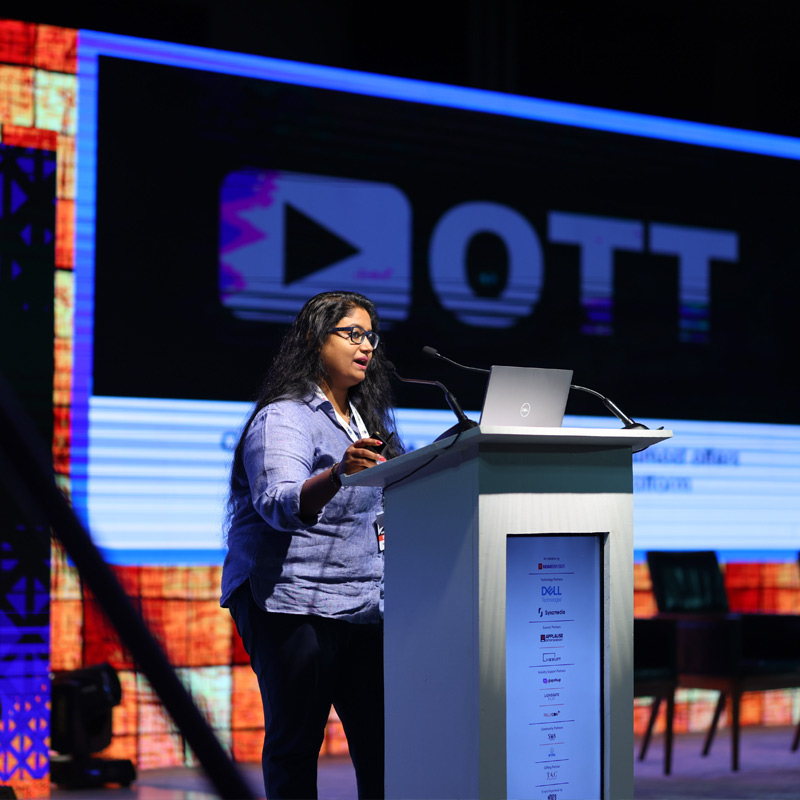
    IndianTelevision.com organised the sixth edition of its Annual Vidnet Summit with an aim to have an in-depth look at the way forward for the OTT ecosystem and all the platforms on it, and the opportunities and the challenges in the space. The two-day summiit had technolgy partners Dell Technologies and Synamedia, summit partners Applause Entertainment and Viewlift, industry support partners Gupshup, Lionsgate Play and Pallycon, community partners Screenwriters Association and Indian Film and Television Producers Council and gifting partner The Ayurveda Co.

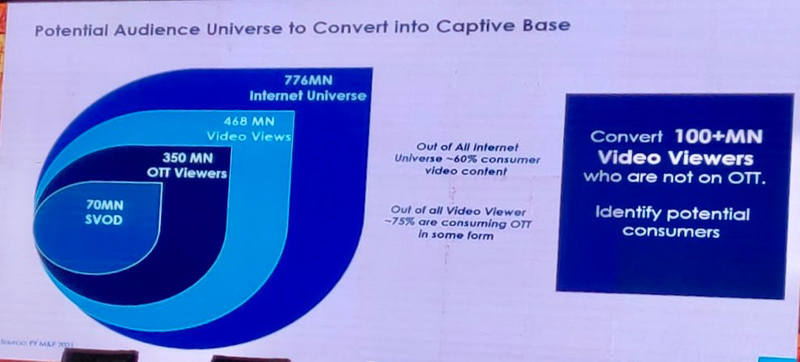
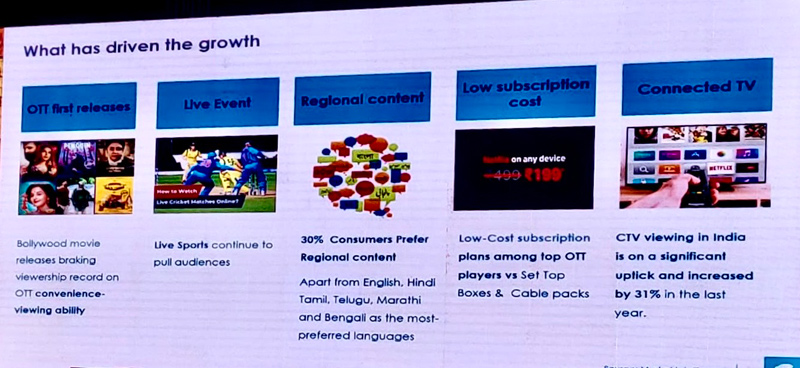
    The first day of Vidnet 2022 saw an interesting mix of sessions on the subject with bristling conversations from industry experts and stakeholders on the various panels. The day’s sessions kicked off with an informative report on ‘OTT Consumption & Advertising Trends’ presented by Carat India associate vice president- strategy Sayami Podder. The report provided insights on the key factors that have driven the growth in the space such as OTT first releases, low subscription cost, regional content, live events and Connected TV. The report also looked at who is driving the growth and estimated that the large potential audience base of 70-80 million paid subscribers comprises the age group of 15-35 years, while amongst women consumption is driven by the 25-35 years age group.

    The report also estimates that the viewing time spent on these streaming platforms have gone up from two hours pre-covid to 4.45 hours, even as the minutes of consumption have spiked from 181 to 204 billion minutes in 2021.

    Video consumption of non-fiction content beyond television on streaming platforms is also on the rise, as per the report, with the viewership for such series on Netflix alone growing by over 250 per cent.

    Digital viewership of non-cricket sports too saw an increase of 310 per cent, according to the report, while the IPL audience is expected to become even bigger with a 20-30 per cent spike in match watch time over IPL 2021 on Disney+ Hotstar.

  • Podcast Advertising: Opening new doors for marketers

    Podcast Advertising: Opening new doors for marketers

    Mumbai: With ABP Live, Clubhouse, and other similar platforms making the right noise, the long format of audio content has gained popularity, and drawn the attention of marketers too. Previously, podcasts were mostly extended content pieces coming out of radio channels because of their understanding of the medium. However, they have grown immensely over the last few years.

    According to KPMG, India is the third-largest podcast-listening market globally and is expected to be valued at Rs 176.2 million by 2023, growing at a CAGR of 34.5 per cent. The audio was also noted as the most preferred medium among listeners as well as advertisers last year. As per eMarketer’s report from April 2020, 49 per cent of users prefer using audio platforms. According to experts, the age group of 18-25 years has formed an important and growing audience set in the last year for this type of content, while the age group of 35-45 years is positively moving towards consuming podcast content, which is a great platform for brands to be present.

    ABP Live Podcasts: A new favorite for advertisers

    ABP Live podcast has found a loyal listener base too, proving its immense growth potential.  By offering advertising opportunities, the podcast is emerging as an influential platform. The key reason behind brands’ interest and increasing spending on podcast advertising is that it works, and it works more effectively compared to the traditional advertising mediums that have become increasingly less effective. It is a popular medium especially among millennials and GenZ as the medium lets them learn more about self-love, discover something new, cope with anxiety, or simply entertain themselves.

    As one of the leading players in the industry offering a comprehensive platform for advertisers, ABP Live brings a plethora of audio-based content, quenching listeners’ thirst for knowledge, entertainment, sports, news, health, and business. The popular podcast by ABP Live- ‘Car Mein Patrakaar’, has also won wide recognition.

    The podcasts provide a diversity of original content to the listeners that are smart, culturally relevant, highly information-driven, and filled with invigorating conversations. ABP Live has about 30 podcasts under its umbrella as of now which translates into 150 hours of audio content, which further opens doors for advertisers. Furthermore, the ABP Live Podcasts team has also been innovating in the podcasting space by fusing ASMR in their content and audio dramas, to provide the listeners with an immersive storytelling experience.

    Apart from podcasts on Personal Finance, Health, Explainers, Motivation, ABP Live includes “Car Mein Patrakar”– a talk show wherein ABP News’ star anchor Sumit Awasthi indulges in a candid conversation with a popular celebrity. “FYI-For Your Information”– a series of audio explainers which talk about everything under the sun that holds relevance for the common man. “Bollywood, Binge and Beyond”– an English podcast that gives  a detailed hawk eye view about everything from the world of entertainment. “Sange Suman” projects major news and debates from West Bengal, hosted by noted journalist Suman De.

    Opening Doors For Advertisers

    Considering the growing demand for podcasts in India, ABP Live has provided a significant opportunity for advertisers. However, before we decide whether to invest in podcast marketing, we must first understand what, how and what the results could be. Here are the things that make podcasts an ideal medium for advertising:

    ●      Great hosts make great deals : Listeners might skip what a 30-second spot is narrating but they pay high attention to unique, live ad reads narrated by their favorite trusted hosts.

    ●      Higher attention span than radio: Unlike radio listeners, podcast listeners are dedicated enough to tune in at a particular time to listen to their favorite show. Hence, they are much more likely to pay attention. They do not skip ads, simply because they do not want to miss out on any part of the show they’re listening to.

    ●      Hosts make a personal approach: Word of mouth is important in advertising and it becomes 10x more important when it comes from a trusted host. People tend to develop personal relationships with their hosts or podcasts personalities. It’s a psychological process that unknowingly takes place over time. Subsequently, the host becomes an important person to disseminate brands’ messages to the listeners.

    Podcasts like ABP Live podcasts have reached masses and seen tremendous results for early-stage brands who conduct marketing programs that are synergetic to their target profiles. Interestingly the channel has gone too narrow in terms of marketing. It has regional podcasts which allow brands to tap into niche marketing.

    An Opportunity To Tap Into Regional Market

    ABP Network has a language-first approach. Starting from the culturally rich state of West Bengal, the network serves regular content in Hindi, English, and Bangla and is equipped to handle content in all Indian major languages. In the past, ABP Live has created innovative audio content in Marathi and Bangla too. Also for a brand or advertiser, they get to deliver their message directly to their target audience in the language they speak and understand. This opens a big door of opportunities for regional podcasters who can leverage this by keeping a ‘language first’ approach.

    This format of regional language content creation is beneficial for the podcaster in terms of reach maximisation and also revenue growth. Regional podcasters can create their own set of loyal audience bases and can attract brands and advertisers to be associated with them. Going forward, we expect podcasters to grow by exploring innovation in the audio content space.


  • Majority of millennials, Gen Zs prefer buying products directly from brands: Report

    Majority of millennials, Gen Zs prefer buying products directly from brands: Report

    Mumbai: More than two-thirds (68 per cent) of Gen Zs and over half (58 per cent) of millennials have ordered products directly from brands in the past six months, compared to 41 per cent on average across all age groups. The findings were published by Capgemini Research Institute in its latest report.

    The report titled ‘What Matters to Today’s Consumer’ explores the impact that the pandemic has had on consumer behaviour and buying trends. According to it, consumers have reported a better buying experience, and access to brand loyalty programmes, as a major factor compelling them to bypass traditional retail channels.

    Interestingly, the report also found that almost half (45 per cent) of all shoppers they interviewed said they are willing to share data on how they consume or use products and more than a third (39 per cent) say they are willing to share personal data such as demographic information or product preferences. However, 54 per cent of all shoppers say that offers, deals, and/or discounts would make it more likely for them to share their data directly with brands.

    “Younger consumers’ willingness to go straight to brands when purchasing goods presents a real opportunity for consumer product companies. This enables them to collect consumer data and helps create a more mature direct-to-consumer channel,” said Capgemini head of consumer goods and retail Tim Bridges. “Being data-powered enables the consumer product and retail organisations to translate supply and demand trends into intelligent decisions on where best to stock their products, customise products and services, and enhance customer experience.”

    Online not likely to replace in-store shopping entirely

    Contrary to popular notions, the report also found that the majority of consumers (72 per cent) expect to have significant interactions with physical stores after the pandemic subsides. In fact it indicates that the surge in e-commerce over the last two years due to safety concerns and the desire to avoid physical stores has now plateaued, and more consumers anticipate a return to in-store shopping experiences.

    At least 72 per cent of all shoppers expect to have significant interactions with physical stores once the pandemic subsides – up from 60 per cent pre-Covid levels. Globally, all age groups expect their level of in-store interactions post-pandemic to be higher than their online interactions.

    Delivery and fulfillment services gain importance in certain segments

    With convenience remaining a key priority for consumers, delivery and fulfillment are increasingly being transformed from a cost center to a growth driver for many organisations. In the health and beauty and grocery segments, shoppers place greater importance on delivery and fulfillment than in-store experiences. This is especially true for groceries shoppers across all age groups, where 42 per cent of shoppers say that delivery and fulfilment are the most important service attributes.

    To add to it, convenience of delivery is a major factor that can push shoppers to try new and emerging models of shopping. Slightly less than half of consumers (47 per cent) who have purchased products via subscription services do so for the convenience of home delivery.  However, shoppers are less willing to pay a premium for fast delivery. Across all shoppers, 3.3 per cent of the total cost is the average they would be willing to pay for two-hour delivery, down from 4.6 per cent in 2019. While younger shoppers with children remain the most willing to pay a premium, consumers increasingly expect fast delivery as a standard part of the customer experience.

    Health and sustainability are top of mind for consumers

    Health and sustainability look set to continue influencing consumer decisions going forward, and organizations should consider investment in empowering customers to make informed choices around these, cites the report. At least, 44 per cent of consumers are willing to pay a premium for grocery products that have sustainable packaging. This is more pronounced amongst Gen Z (64 per cent) and Millennials (54 per cent) than older generations like Boomers (30 per cent).

    As many as 10,000 consumers over the age of 18 years were surveyed by  Capgemini Research Institute in 10 countries around the world, including Australia, Canada, France, Germany, Italy, Netherlands, Spain, Sweden, the United Kingdom, and the United States. Consumers were qualified as “shoppers,” meaning they must have made a purchase of groceries, household and toiletries products, and/or health and beauty products at least once in the past six months.

  • Skybags celebrates ‘New Normal’ with Gen Z in new campaign video

    Skybags celebrates ‘New Normal’ with Gen Z in new campaign video

    Mumbai: Skybags, the brand from the house of VIP Industries has come out with its latest campaign titled #MyDripMySkybags targeting Gen Z. The campaign shows some youngsters celebrating the reunion of friends after more than a year and a half of online classes.

    The music video, choreographed by Shashank Dogra, is created keeping in mind the GenZ lingo like ‘What’s your drip Yo!’, and aims to connect with the brand’s target audience. ‘Drip’ which implies a cool sense of style refers to the way someone carries themselves.

    Directed by Keith Gomes and produced by Prime Focus Limited, it shows four buddies celebrating together after a long time. The campaign aims to emphasise the way the youth is celebrating the transition from #NewNormal to #BackToNormal highlighting the excitement felt by youth, who have been locked up at home due to the pandemic concerns. The hook line of the song ‘whats your drip yo’ strikes an exuberant expression of joy and optimism; for the youth preparing to reunite in the new normal.

    The video shows them sharing their excitement by slinging their college backpacks, jumping on the streets, dancing their hearts out. Through this campaign, the brand has tried to bring this imaginary story to life through music, choreography and catchy lyrics that goes with the flow of irreverent youth and their lingo.

    “We believe in the philosophy of ‘Move in Style’. To turn this thought into action, we are launching a brand anthem, #MyDripMySkybags across all our channels. The idea is to get our Gen Z audience to own their style and flex it,” said VIP Industries Limited vice-president marketing Praful Gupta. “We witness a massive potential in the backpack category that is emerging as the go-to piece of accessory for every youngster. With our new campaign we are looking at establishing a stronger presence in this space.”