Tag: GECs

  • Avian Media further strengthens leadership team in Mumbai

    Avian Media further strengthens leadership team in Mumbai

    MUMBAI: With an aim to further strengthen its consumer practice in Mumbai, Avian Media has appointed Shalmana Tendulkar as Group Business Director, Consumer practice.


    Shalmana brings wealth of knowledge and domain experience of over 17 years. Having worked as an independent consultant and with agencies, Shalmana has in-depth knowledge of the media and broadcast industry having consulted general entertainment channels (GEC), news channels, radio channels, as well as niche channels in the action, movie, music and kids genre. Shalmana has also led publicity of feature films and managed celebrity brands.


    Over the years, Shalmana has also worked on consumer brands, having handled campaigns for large FMCG companies like HUL, Kellogg’s and Colgate. Adding to her dynamic portfolio, Shalmana has a number of special events like the tours of Def Leppard, Ricky Martin and Elton John to her credit.


    Nitin Mantri, CEO, Avian Media, said: “We are very pleased to have Shalmana join our growing Mumbai office. With her vast experience and expertise, we hope to boost the capability of our already successful consumer practice. Over the years, while working with some of the leading consumer brands, we have built the right talent and expertise to deliver successful PR campaigns for our clients. Under Shalmana’s tutelage, we will continue to accelerate this growth and deliver impactful campaigns for our clients.”


    Commenting on the appointment, Shalmana Tendulkar, said, “I am really excited to be a part of Avian Media and its talented team that has a proven track record of delivering successful PR campaigns and servicing standards. Avian Media is currently well positioned to write a new chapter in the growth story and I look forward to contribute to the augmentation of the firm by expanding the Consumer practice offerings.”


    In her role as the Group Business Director of the consumer practice at Mumbai office of Avian Media, Shalmana will bring in a renewed focus and direction to the existing client campaigns, harnessing the in-house talent and growing client base in the vertical.

  • Zee News unveils new colours and dynamic energy through TVC

    Zee News unveils new colours and dynamic energy through TVC


    NEW DELHI: Weeks after it decided to get the youngsters of the country hooked on to its Hindi news channel, Zee News, Zee Media Corp (ZMCL) has launched a new television commercial unveiling the channels’ new look.


    A set of vibrant colors are being used to promote their philosophy that ‘News is never black and white; there are many shades, many hues to news’. The new TVC that has been created by the agency Bang in the Middle at a cost of nearly Rs 20 – 30 lakh will run for a month across multiple platforms like GECs and multiplexes besides leveraging its own networks to target the masses.

    In a press release, Zee News said it was committed to provide viewers with various aspect of news, which has been highlighted through the TVC.


    Speaking on this occasion ZMCL marketing and distribution VP Rohit Kumar said, “Under the revamp, the focus is on the youth. As always, we have striven to stay focused and relevant. With this new campaign the objective is to influence youth and their conscience. Our attempt is to strike a chord with them, their thoughts and attitude through this campaign.”


    The channel underwent a brand name change last year as Zee News changed to Zee Media Corp and saw a 15 per cent rise in viewership. For this new gamble they have taken, it will take three to six months for the effects to be seen.

  • Zee TV and Sony witness a dip in Week 51

    Zee TV and Sony witness a dip in Week 51

    MUMBAI: We are almost nearing the year end and interestingly there hasn’t been much change in the TAM TV ratings through the year. However, the Week 51 has been a good week overall for the general entertainment channels (GECs) as almost all the channels have witnessed a growth in its viewership.

    As per the TVT data sourced from the channel for week 51, Star Plus remains at the first position with 599,179 GVTs (579,369). The new show on the channel Yeh Hai Mohabbatein maintains stable position with 2,836 TVTs (2,821). However, its celebrity dance reality show Nach Baliye 6 saw a drop with 3,766 TVTs (3,918). The epic series Mahabharat continues to grab eyeballs and reported 7,662 TVTs (7,412).

    Colors too maintained its second position with 488,005 GVTs (448,658). The channel has witnessed a hike in almost all its properties. While Bigg Boss seven reported 5,989 TVTs (5,706), 24 scored 3,493 TVTs (2,862) and Comedy Nights with Kapil garnered 8,818 TVTs (7,425).

    At the third position, Zee TV saw a fall in its viewership and marked 408,807 GVTs (439,271). The channel’s sitcom Bh se Bhade witnessed a drop in its viewership and reported 1,459 TVTs (2,021). Its popular dance reality show Dance India Dance 4 lost on its viewership on Saturday and scored 4,061 TVTs (6,304) and remained almost stable at 3,870 TVTs (3,821) on Sunday.

    Life OK stood at number four with 325,759 GVTs (312,956) followed by Sab with 308,658 GVTs (291,060). Sony witnessed a drop in the number of GVTs and scored 254,912 GVTs (266,525). Its non-fiction property, Boogie Woogie Kids Championship saw a drop in its second week and marked at 3,232 TVTs (3,612).

    Sahara One is still lagging behind and is at the bottom of the ratings list with 36,673 GVTs (36,001).

    In the movie channel genre, Zee Cinema reported 222,208 GVTs (208,530); Star Gold registered 163,219 GVTs (167,279) and Movies OK scored 125,734 GVTs (123,361). On the other hand, &pictures notched up and scored 79,261 GVTs (70,567), Zee Anmol marked 64,638 GVTs (65,618) and Max scored 214,123 GVTs (172,165).

  • Week 50 ratings: Major GECs register a hike

    Week 50 ratings: Major GECs register a hike

    MUMBAI: In the week 50 of TAM TV ratings, Zee TV, which has reported consistent growth over the past few weeks, saw a fall in viewership. Life OK too witnessed a drop in its viewership. As for the other channels, it was a good week as they saw an increase in the ratings.

    As per the TVT data sourced from TAM subscribers for week 50, Star Plus remains at the number one position with 579 million TVTs as compared to last week’s 561 million TVTs.

    Colors reported 449 million TVTs, as compared 480 million in week 49. Zee TV slipped to the third position, seeing a decline in viewership at 439 million TVTs as compared to last week’s 456 million TVTs.

    Life OK was at number four position with a fall in the viewership and reported 313 million TVTs, as compared to 325 million TVTs last week. Sab occupied the fifth position, however the channel recorded hike in the viewership with 291 million TVTs, as compared to 261 million TVTs last week.

    Sony witnessed a growth in the viewership but still continued to occupy the number six position with 267 million TVTs, as compared to 241 million TVTs last week.

  • Zee TV is the only gainer in Week 48

    Zee TV is the only gainer in Week 48

    MUMBAI: As the alleged rape case involving Tehelka founder Tarun Tejpal and a female journalist working with the magazine unfolded last week, the focus of Indian television viewers seem to have shifted from the general entertainment channels to the news channels.

    Otherwise there’s no reason for almost all the general entertainment channels (GECs) to witness a drop in its ratings in the week 48 of TAM TV ratings. It was just Zee TV that has gained with 448,553 GVTs (433,447), though it maintains its third position in the chart. Star Plus continues to lead with 548,331 GVTs (560,497) followed by Colors that has registered 478,534 GVTs (513,415).

    Life OK continues to be at number four with 334,327 GVTs (335,013), Sab TV with 269,269 GVTs (308,133) is at number five. Sony continues to be at number six with 238,987 GVTs (269,332). Sahara One is still lagging behind and is at the bottom of the ratings list with 33,691 GVTs (30,429).

    Coming back to the chart topper, Star Plus, its most popular and loved show in the prime-time slot seems to be losing out on viewers. This time Diya Aur Baati Hum has registered only 11,449 TVTs (12,298). Yeh Rishta Kya Kehlata Hai, another popular offering from the channel too registered 7,329 TVTs (7,863). Even the viewership of Pyar Ka Dard Hai went down as it scored 6,661 TVTs (7,351). However, Sath Nibhana Saathiya managed enough to balance it out. The show registered 8,683 TVTs (8,290). The epic series Mahabharat too notched up and scored 7,170 TVTs (6,835). And surprisingly, the ratings of Saraswati Chandra too went up. It registered 5,367 TVTs (5,071). The ratings of popular celebrity dance reality show, Nach Baliye, however didn’t witness much change and registered 4,267 TVTs (4,736).

    Colors longest running and the most popular fiction series, Balika Vadhu generated 6,513 TVTs (6,684), while Madhubala – Ek Ishq Ek Junoon scored 4,329 TVTs (4,749). Uttaran that has been on-air on the channel since quite some time now also witnessed a significant rise and rated 4,031 TVTs (3,645). However, Comedy Nights with Kapil that has been tickling the funny bones of the audience and has been really popular seems to have lost its charm this week and has witnessed a drop with 7,851 TVTs (8,464). The international series 24 starring Anil Kapoor has also failed to click with the audience and has registered 2,797 TVTs (3,058 TVTs). The unfolding romance and drama in the celebrity-reality show Bigg Boss too hasn’t worked too well for the channel as even that has lost out on viewers. Bigg Boss registered 5,102 TVTs (5,491).

    For Zee TV, its period drama Jodha Akbar seems to have worked well. The ratings of the show notched up taking its tally to 10,182 TVTs (9,801). Its sitcom Bh se Bhade too managed enough viewers and scored 2,079 TVTs (1,650). Even the ratings of Qubool Hai registered 5,862 TVTs (5,830). The ratings of Pavitra Rishta and Do Dil Bandhe Ek Dori Se escalated as well with 5,468 TVTs (5,043) and 5,369 TVTs (5,019) respectively. Its popular dance reality show, Dance India Dance 4, however witnessed a drop and scored 4,323 TVTs (4,666) during the weekend.

    Fourth placed, Life OK witnessed a slight rise in its popular mythological series Mahadev and managed 3,312 TVTs (3,212). Even its new horror series Khauff Begins fared well in the first week with 2,539 TVTs. The ratings of Ek Boond Ishq and Do Dil Ek Jaan remained stable with 2,833 TVTs (2,834) and 1,491 TVTs (1,494) respectively. Crime-based show Shapath witnessed a huge drop and generated 3,055 TVTs (4,057). Crime-based show Savdhaan India scored 3,024 TVTs (3,035). Tumhari Paakhi managed to grab enough eye balls to take its TVT to 2,183 TVTs (1,877).

    Sab’s fiction show, Taarak Mehta Ka Ooltah Chashmah that has been keeping viewers in splits since last few years, has lost viewership it seems as it registered just 7,647 TVTs (8,856). Even Chidiya Ghar saw a significant drop and generated 2,935 TVTs (3,479). Lapataganj saw a slight dip as well and generated 1,769 TVTs (1,921). Baalveer registered 2,643 TVTs (3,293).

    Almost all the shows on Sony witnessed a drop in its ratings. Even its longest running crime series CID that has been really popular with the viewers witnessed a drop with 4,600 TVTs (5,254). Even Crime Patrol managed just 2,964 TVTs (3,255). The channel’s historical show Maharana Pratap recorded 2,733 TVTs (3,054), while quiz show KBC witnessed a drop and registered 3,248 TVTs (3,738). Other fiction shows either maintained a stable position or dipped marginally during the week. Its horror flick, Bhoot Aaya doesn’t seem to entice viewers as it registered only 1,423 TVTs (1,662).

    In the movie channel genre, Zee Cinema reported 253,575 GVTs (197,512); Star Gold registered 181,167 GVTs (178,122) and Movies OK scored 133,805 GVTs (127,470). On the other hand, &pictures witnessed a huge drop and scored 81,291 GVTs (112,609), Zee Anmol registered 55,524 GVTs (46,088) and Max scored 129,948 GVTs (200,508).

    While all the GECs have maintained a stable position this week with only Zee TV gaining few extra points, let’s see what’s in store for the channels in the coming weeks.

  • TDSAT-Ad cap: 2nd amicus curiae done, channels turn now

    TDSAT-Ad cap: 2nd amicus curiae done, channels turn now

    MUMBAI: The second amicus curiae Aman Ahluwalia continued his arguments today in the TDSAT-ad cap hearing. After giving the legal perspective yesterday, today he focused on the commercial implications of the ad cap regulation.

    Ahluwalia said that the Telecom Regulatory Authority of India (TRAI) has the power to implement licensing under section 11 (1) (a) of the TRAI Act as well as enforcing it on broadcasters through section 7 (11) of the Cable TV Networks (CTN) Act. There is no need for it to choose the CTN act. The TRAI’s procedure may have been faulty but the bench should not strike down the ad cap regulation on account of this.

    The bench wondered that when a licence is issued, the terms and conditions need to be read properly, and if the ad cap regulation issued by TRAI adds anything to section 7 (11) of the CTN act, then should it be accepted. The agreement between the licensor and licensee is only for section 7 (11) and if points like clock hour and reporting to TRAI come into the picture, it is in excess of the section.

    The bench said that one cannot change, modulate or supplement the terms of the licence. If TRAI had implemented it under sections 11 and 12 of the TRAI Act that address the issue of licensing and advertisements then such problems wouldn’t have come up.

    The amicus curiae read out the final draft report of the convergence bill which gives the definition of ‘broadcasting services,’ as it doesn’t have an exact one. He said that content, distribution and technical components all come under the TRAI act and content and distribution together mean carriage. By reading out reports such as the Nariman report, he chose to interpret broadcasting services to include content.

    Ahluwalia then proceeded to the commercial aspects. He told the bench that after reading the code in the UK, he saw that the ad cap may work for GECs while the news channels that have less viewership will be most affected by it. The only way revenue can be raised is either by digitisation when subscription revenue will go up, or by raising advertising rates. However, if subscription rates are jacked up, viewers may not pay, and resort to cord cutting, resulting in lower viewership, and comitantly lower ad revenues as they depend entirely on viewership.

    To support his statement, he also produced financial reports of Zee TV and the Sun Network which showed that their ad revenues were high as compared to news channels. Sponsored shows could be a way out for news channels to generated additional revenues but this could turn out to be dangerous as news could become coloured. And thus he suggested that genres should be dealt with differently.

    According to him, English news channels will be the most affected because advertisers will start turning the screws on them as viewership will quite likely drop off the cliff. The scenario could improve when DAS is implemented completely all over the country as by then subscription and ad revenues each will contribute equally to a company’s top line.

    Reading from an Ofcom (independent regulator and competition authority for the UK communications industries) report, he emphasized that TRAI’s ad cap regulation needs to be more precise in terms of the number of ads per half an hour, duration of the promos etc. Till DAS isn’t complete, it should not be implemented as, under Article 19 of the Constitution, broadcasters have the right to disseminate information and viewers have the right to receive plurality of information giving them the power to choose.

    If the regulation comes into effect now, many smaller news channels may shut down and the existing ones will generate less revenue and hence news could end up being coloured as only a limited number will be left to provide news.

    After Ahluwalia concluded, the News Broadcasters Association (NBA) counsel presented the rejoinder. He argued that TRAI’s analysis of the ad cap violations was incorrect.

    His second argument was that TRAI has the power to implement the terms and conditions between the licencee and licensor under section 4 A of the Telegraph Act that talks about teleport licences. It cannot implement it on the basis of the uplinking and downlinking policies.

    Teleport licences do not mention the CTN act at all and when TRAI is enforcing it on the basis of licensing then its line of reasoning needs to be read in the context of teleport licensing.

    The NBA counsel stated that TRAI cannot act against broadcasters under the uplinking/downlinking policy since it falls under the ambit of the Ministry of Information and Broadcasting.

    During its arguments, TRAI mentioned that broadcasters had suppressed documents related to licensing. The NBA counsel clarified that the data was about OB vans and teleports, which was available in the public domain.

    He added that, according to Ofcom, UK channels were allowed ad commercials of 9-12 minutes averaging and not per clock hour. Also, if TRAI were to enforce the ad cap, it should be under the teleport licence under section 4 A of the Telegraph Act.

    The NBA will continue its rejoinder tomorrow as well.

  • NBA concludes arguments, hearing to continue on Monday

    NBA concludes arguments, hearing to continue on Monday

    MUMBAI: It took four days for the News Broadcasters Association (NBA) to present its arguments in the ad cap case against the Telecom Regulatory Authority of India (TRAI) to the Telecom Disputes Settlement Appellate Tribunal (TDSAT). But it finally concluded presenting the news industry’s viewpoint on it in terms of existing regulation. After pointing out how the proposed ad cap was reportedly in violation of statutory and constitutional law, its lawyers today highlighted the commercial compulsions and problems that news broadcasters face.
        

    One of the major points highlighted that was drawn out is the issue of high carriage fees that is crippling the whole news industry. News broadcasters have to pay about 30 percent and sometimes even 50 per cent of their revenues as carriage fees while for the GECs it is about 20 per cent.

    “Although they might be paying the same amount as carriage fees, their revenue is higher and instead of regulating something as important as this, TRAI is trying to impose ad cap,” says a news broadcaster.

    TDSAT has asked NBA to file affidavits on Monday to demonstrate the commercial impact any changes in air time will have on their survival. This includes tabulating the revenues they generate in a non-12 minute per hour ad cap scenario and what they expect these to drop to on its imposition.
    With the NBA concluding its presentations, it will be on to the other channels and the TRAI to state their case when hearing begins from Monday – after tomorrow’s recess.

  • The puzzling case of TRAI’s ad cap

    The puzzling case of TRAI’s ad cap

    MUMBAI: The Telecom Regulatory Authority of India (TRAI) found some unlikely supporters on the ad cap issue last week. On the one hand, Zee Entertainment, Star India and Viacom18 approached the Telecom Disputes Settlement and Appellate Tribunal (TDSAT) saying that they were in favour of a limit to how much advertising should be allowed per hour and that they would like to become respondents to the cases filed by other broadcasters. Among these figure the News Broadcasters Association (NBA), regional and music channels all of whom have been opposing the regulation and have sought relief from the tribunal. The other supporter of the ad cap is an NGO called MediaWatch which said the ad cap should be extended to cable TV also and that TRAI should also ensure that broadcasters don’t cross the line on audio levels of commercials and also specialised ad formats on the TV screen.

    Though the intervention filed by Zee, Star India and Viacom18 was rejected in the hearing that took place on 31 October, the tribunal has asked the networks to file a separate application, which would be heard only after the main case filed by NBA, music and regional channels, the next court hearing for which is 11 November.

    “Well! We had filed for an intervention which was postponed,” is what Star India president and general counsel – legal and regulatory affairs Deepak Jacob said when Indiantelevision.com contacted him to enquire more about the case. However, he refused to divulge any more on the matter.

    The three mainline Hindi GECs have been following the 10+2 ad cap regulation since 1 October, which was the deadline set by TRAI.

    Industry watchers are asking what is it that made the three networks come out so blatantly in support of the ad cap when fourth network Sony Entertainment has not been following the TRAI diktat at all?

    “They are in a position of strength as they have a tremendous share of viewer eyeballs,” says a media observer. “Hence, they can afford to take a hard stance in favour of the ad cap. Their belief is that advertisers have no alternative but to advertise on their channels. Their following the ad cap allowed them to jack up air time rates which more than made up for the drop in inventory. They would ideally like the status quo of lower advertising time to continue as it has benefited them and will continue to benefit them because paucity will result in better yields and rates.”

    Another media observer believes that the approaches that the leading GECs have taken will add to the chaos and confusion. “The TV broadcast industry seems to have learnt very well how to stall any disruptive regulatory changes,” says a media planner laughingly. “You have several opposing and pro-voices speaking up at the same time which tends to lead to policy paralysis.”

    She elaborates: “On the one side, the advertisers, agencies, news broadcasters, music channels and niche channels are against the TRAI ad cap. One of the major networks are also opposing it; while the other three are showing that they want it. It will be tough for anyone to decide which direction should things move. If the ad cap is on – in an election year – the news channels will take umbrage and the government cannot afford to have a negative fallout in an election year. If the ad cap is stalled for a while, that is good for everyone: the leading GECs have already got rate hikes of some sort; Sony can join in and hike rates and finally the news channels will not be faced with shriveling air time revenues. So they will be happy.”

    “We are also taking a leadership position by complying with the TRAI regulations,” says an executive with one of the three networks. “We believe the time for change on TV advertising is now and hence are supporting it.”

    What move will the telecom industry’s conscience – the TDSAT – and the regulator – TRAI- make next? Our guess is as good as any, but the ad cap game play is surely beginning to resemble a very complicated game of chess.

  • Marathi TV: The BTL surge

    Marathi TV: The BTL surge

    MUMBAI: While shows such as Bigg Boss and Dance India Dance are capable of drawing eyeballs on their own steam, they owe their popularity, at least in part, to extensive marketing and promotion undertaken by the Hindi GECs in question.

    Contrastingly, the Marathi GEC space is not too well known for going aggro on advertising, however, there’s one element of the marketing mix which even these channels resort to frequently in order to connect with its audiences.

    Viacom 18 EVP and ETV Marathi business head Anuj Poddar says, “On-ground activities integrate elements of emotion, logic, and general thought processes to connect with the consumer. The goal is to establish the connection in such a way that the consumer responds to the show offering at both an emotional and rational response level.”

    Poddar gives the example of Kon Hoyil Marathi Crorepati(KHMC), ETV Marathi’s flagship programme, which garnered high views. He says a KHMC van with a ‘hot seat’ travelled to 90 markets in the state, with people getting an opportunity to experience the thrill of being in the coveted seat answering questions.

    On the other hand, Zee Marathi, which leads the genre, has on-ground activities weaved into its shows such as Home Minister, which is entering its tenth year and involves meeting women in their homes on a regular basis; Aamhi Saare Khavaiyye and Madhali Sutti to name a few. During rainy season events are conducted indoors while during other times they are outdoor.

    Zee Marathi claims to have touched all of Maharashtra’s prime markets, whereas ETV is looking to expand its on-ground activities, mainly in towns and villages. Both the channels undertake these activities on its own. Zee Marathi says the local part is taken care of by local agencies such as booking places.

    Most of the times, the cast also accompanies in such activities for which they are also paid. “The casts of the shows are a major crowd puller and play an important role in driving audience for any on-ground activity,” says Poddar.

    “Our audiences don’t sit in Mumbai and Pune and so, our on-ground activities are targeted at other towns,” points out Poddar, adding that the channel is currently into on-ground operations for its upcoming dance show, Mhanjech Assal Dancer (MAD).

    “On-ground activities, especially experiential marketing, will play a pivotal role in all marketing campaigns as we move from mere product attribute communication to focusing on delivering experiences that develop relationships and bonds that enable brands to grow over time,” he adds.

    It turns out ETV devotes 10 per cent of its entire marketing budget to on-ground.  Zee Marathi refused to comment on how much it spends on below the line activation. Sources however peg total on-ground expenditure at around Rs 3-5 crore per annum. Again, the expenditure may vary depending on the scale of the show.

    Zee Marathi business head Deepak Rajadhyaksha is of the opinion that the impact of on-ground activities is almost always visible. “We get to understand what people like and don’t like as well as the impact of the channel. Viewers give us a clear picture.” All marketing activation of the channel is done under the brand name Utsav Natyancha, involving games, acts and prizes along with discussions. Utsav Natyancha’has travelled to more than 11 towns across the state, claims Rajadhyaksha. He discloses that the channel resorts to close to 15-20 BTL initiatives each year. ETV Marathi says that it selects locations on the basis of viewership contribution as well as market classification.
    People participating in the KHMC activity, organized by ETV Marathi

    Madison COO Karthik Lakshminarayan says that more than the Marathi channels Hindi TV channels normally go into a greater overdrive on this front and hence get a lot more visibility amongst lay consumers.  “Such activities create a lot of buzz for the TV channel and show,” is Poddar’s stated view.

    So what happens once an event is done? “We conduct a survey by distributing forms to people asking them about the show,” says Rajadhyaksha. During the course of the event, games are conducted in which contestants are asked questions pertaining to the channel’s shows after which winners get prizes. All contact details of the people is piled into a database and they are informed and invited the next time Zee Marathi does an event.

    Same goes for ETV Marathi. Feedback from an event is used in the next event they undertake. Regular mailers, SMS updates, Facebook uploads and Twitter tags are used to build curiosity among the viewers.
    “What such kind of marketing does for the channel is that it gives it an opportunity to tailor messages in a personal manner. It also gives marketers valuable insights into their ROIs,” says Poddar.  So while print, TV and radio form the main chunk, channels seem to be waking up to the possibilities offered by on-ground as a critical component of reaching out to consumers. Marathi TV appears to be on the road to getting the fourth ‘P’ of its marketing mix right.

  • Afternoon slot: Siesta time for GECs?

    Afternoon slot: Siesta time for GECs?

    Back in the nineties, afternoon shows enjoyed their heyday when women, once done with household chores, settled down, lunch in hand, sometimes maid in tow, to watch their favourite serials including Shanti and Itihaas.  

    Two decades later, the once-popular afternoon slot seems to have lost its relevance, with a majority of broadcasters choosing to air re-runs of prime-time shows rather than focus on fresh content.

    The decline of this slot can be attributed to a number of reasons. Firstly, while there’s now a rash of channels, there seems to be precious little to excite a large section of women post their morning routine. Secondly, many more women are now at their workplace at this time of the day. Thirdly, several news channels may be airing more interesting shows at the same time.

    While this is broadly it, indiantelevision.com decided to look closer at the changing trends of the past two decades to get a better idea whether it’s really curtains for the afternoon slot.

    Popularity graph

    It is not that there is no potential in the afternoon slot. But, its about priority. There is more scope for improvement if we try to capture viewers in the prime time slot, says Nikhil

    Madhok

    In 1994, Shanti and Swabhimaan – two serials aired on Doordarshan – captured a nation’s imagination, catapulting the afternoon slot into the limelight. This was when cable television had just arrived on Indian shores and private satellite channels were focused on building their primetime band as also building viewership in the afternoons.

    In 2000, Sony tried to dominate the afternoon turf with Ghar Ek Mandir, which lasted for a good two years. Meanwhile, most other channels stuck to re-runs during that time band.

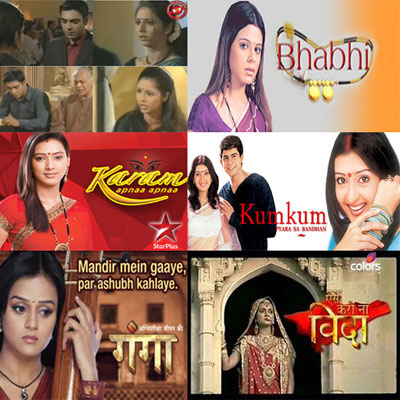
    The channels however soon woke up to the fact that it was the homemaker who had the potential to draw advertisers. With this realisation came the game of one-upmanship among Hindi GECs. Around the same time, a slew of shows mushroomed including Kumkum – Ek pyaara sa bandhan (2002 – 2009), Bhabhi (2002 – 2008), Karam apna apna (2006 – 2009) and Humari Devrani (2008 – 2012). They came to be known as the K shows and saw a long innings with increasing visibility year-on-year.

    Another landmark came in the form of Zee Woman, Zee’s pioneering effort to bring a women’s magazine on television. Launched on 12 July, 2004, Zee Woman revolved around the homemaker and occupied the 12:30 pm to 3:00 pm slot. It offered everything a women’s magazine does – features and tips on beauty, interiors, cookery, good house-keeping and the latest fashion trends.

    We are the service providers. If broadcasters need that service, we will be happy to bring alive that slot, says Sudhir Sharma

    Three years later, Zee Woman suffered a blow from two shows – Meri Doli Tere Angana (2:00 pm) and Rakhi (1:30 pm) – both having fresh content. By contrast, GECs like SAB and Life OK preferred to play re-runs of their most popular shows.

    In February 2010, Colors too jumped onto the bandwagon. The channel produced two shows – Agnipareeksha Jeevan Ki… Ganga (1:30 pm) followed by Aise Na Karo Vida (2:00 pm), packaging the duo as Saanjhi Dopahar. While the shows got a good viewership in the first week, there was a dip in viewership, second week onward.

    All say, the afternoon slot was created mostly for women, especially homemakers. With a majority of soaps revolving around women and their issues, the shows found instant connect. In fact, some of the afternoon shows fared better than their prime-time counterparts. For example, Kumkum which ranked fourth among Star Plus’s top ten shows of all time and was the country’s fourth-longest running serial as well.

    It was sometime after 2010 that Hindi GECs started losing interest in making new shows for the afternoon slot. Television channels including Sab, Sahara One, Life OK and Zee went back to airing re-runs of prime-time soaps in the afternoon.

    Why did the afternoon slot die?

    Today, we dont have enough good writers and ideas for us to put content for the afternoon slot, says Ajit Thakur

    The reason, according to Colors weekday programming head Prashant Bhatt is: “Afternoon slots were extremely popular when there were not many GECs. Fewer channels meant fewer options for people to choose from the available shows aired across channels. This gave channels an opportunity to air fresh content in the afternoon slot. But the scenario has changed now.

    Viewers have an option to watch eight programs during prime time but end up watching only one. So channels telecast re-runs of their prime time shows in the afternoon, so viewers can catch up on them.”

    Examples of this are Balika Vadhu on Colors, which is repeated five times in a day and accounts for 25 per cent of the channel’s viewership and Sony, which aired re-runs of its crime fiction series CID (1998 till the present) for four to five hours in the afternoon slot.

    According to Bhatt, there’s so much original programming in terms of prime time shows that there’s no need for original programs in the afternoon. With re-runs of prime time shows during the afternoon, audiences get to catch up with what they haven’t been able to watch.

    With too many GECs comes growing competition among them. This means they might focus on the marketing and promotion of evening prime time shows that bring more viewership and consequently, more money.

    The afternoon slot should have more dramas that appeal to women. The content should include more of romance and cast eye candy men, says JD Majethia

    So have producers and directors lost interest in producing shows for the afternoon slot?

    “Definitely not,” shoots back Sunshine Productions owner Sudhir Sharma, adding: “If broadcasters see the need, if broadcasters do any business henceforth, then we will be ready to do it. We are the service providers. If they need that service, we will be happy to bring alive that slot.”

    According to Star India vice president marketing Nikhil Madhok, the channel is first trying to strengthen its evening slot rather than bring fresh content in the afternoon. “In Star Plus, we have initiated expansion of our programming time with the launch of Ek Ghar Banaunga during early prime time at 6:30 pm,” he says. : “It is not that there is no potential in the afternoon slot. But, it’s about priority. There is more scope for improvement if we try to capture viewers in the prime time slot. Also, it is more important from a financial perspective and viewership availability,” he adds.

    Afternoon slots still hold promise, but it is a bit risky proposition as the shows need to generate sizably better ratings than the repeat ones, says Navin Khemka

    Madhok is also quick to point out that the channel is open to innovative ideas and experiments with different time slots. “We had filmed Satyamev Jayate at the 11:00 am slot when we found potential in that. It was followed by Lakhon Mein Ek, which ran for certain number of weeks and then we didn’t follow up. We have also opened up the weekend 7:00 pm slot, where we air content related to our reality shows,” he says.

    For a newly launched channel like Life OK however, fresh programming in the afternoon slot does sound interesting. “Yes! Definitely! But, it is about funding.  And if there is already enough good content that can be picked up from the prime time and aired in the afternoon, there is no point in airing fresh content. Also today, we don’t have enough good writers and ideas for us to put content for the afternoon slot,” says Life OK general manager Ajit Thakur.
    Thakur though did say it was an important slot and it was just a matter of time before it would come back.

    What about DD, which in a sense, pioneered the afternoon slot? Says Doordarshan director general (programming) Mukesh Sharma: “In DD National, our afternoon slot is flooded with strong Hindi programming. Though we air repeats, it is doing extremely well for us. To be practical, viewers don’t watch all the shows that are aired on television during prime time. Taking that into consideration during afternoon, mostly women who have missed out on their favourite shows have an option of watching it in the afternoon. And this works perfectly for us.”

    Afternoon slots were extremely popular when there were not many GECs. Fewer channels meant fewer options for people to choose from the available shows aired across channels, says Prashant Bhatt
    Speaking about DD’s big properties like Saraswatichandra, Tum Dena Saath Mera, Aur Ek Kahani and Hari Mirchi Lal Mirchi that are well adapted by the audiences in the afternoon, Sharma says:

    “These soaps are doing well on the track as the target audience is women (housewives).”

    ZenithOptimedia senior vice president Navin Khemka has a different view. “If any Hindi GEC launches afternoon show/s, it will definitely work as there is a good chunk of audience sitting there and FMCG advertisers want to dominate this slot and would like to invest in full force.

    Afternoon space should focus more on family and drama series that adds value to the content.

    Afternoon slots still hold promise, but it is a bit risky proposition as the shows need to generate sizably better ratings than the repeat ones,” he says.

    So if the afternoon slot were to be reconsidered by broadcasters, what kind of content would work? Says Hats Off Productions owner and actor/director JD Majethia: “The show’s topic, subject, and the small aspects should all be women-oriented. The afternoon slot should have more drama that appeals to women. The content should include more of romance and cast eye candy men. These are things women cannot watch during the evening time with their family. The content can also be inspirational and designed differently to attract the audience during the afternoon slot.”

    In most cases women who have missed out on their favourite shows have an option of watching it in the afternoon, says Mukesh Sharma

    Apart from broadcasters not giving enough importance to the afternoon slot, the other reasons for its decline include the rise of shows like Saas Bahu Saazish on news channels. While the then Star News (now ABP News) started the trend of airing ‘behind the screen’ gossip from various shows, other news channels too caught on. Soon enough, women were glued onto these shows, many a times preferring these to daily soaps.

    While there are different views on the relevance of the afternoon slot and whether broadcasters should reconsider fresh content during afternoons, whether channels will ever get back to brand new content in this time slot, only time will tell.