Tag: GECs

  • Prasar Bharati sets a higher reserve price for Hindi movies & devotional channels in its 61st e-auction

    Prasar Bharati sets a higher reserve price for Hindi movies & devotional channels in its 61st e-auction

    Mumbai: Public broadcaster Prasar Bharati has invited applications for allotment of vacant MPEG-2 slots of the DD Free Dish free direct-to-home (DTH) platform for the period 17 August 2022 to 31 March 2023. The 61st e-auction process will be tentatively held on 10 August.

    The public broadcaster has categorized the vacant MPEG-2 slots under six buckets including Bucket A for all Hindi movie channels, Bucket R1 for devotional channels, Bucket A+ for all Hindi general entertainment (GEC) channels, Bucket B for all Hindi music channels, Hindi sports channels, Bhojpuri GECs, Bhojpuri movies and Hindi teleshopping channels, Bucket C for Hindi, English and Punjabi news and current affairs channels and Bucket D for remaining genre language channels.

    The reserve price of the MPEG-2 slots is set as high as Rs 14.37 crore and as low as Rs 4.40 crore. Notably, the prices for Hindi movie channels and devotional channels are the highest while Hindi GECs and news and current affairs channels are low-priced in comparison.

    Prasar Bharati recently concluded its 60th e-auction where it allotted two MPEG-4 slots to the channels Swaraj Express SMBC and Sanskriti 24×7 for the period 5 July 2022 to 31 March 2023.

    In a recent interview, former Prasar Bharati CEO Shashi Shekhar Vempati revealed that the public broadcaster earned as much as ~Rs 750 crore from the sale of vacant DD Free Dish slots in 2021.

    With an estimated reach of 50 million viewers, DD Free Dish is the largest DTH platform in the country. The platform has 167 TV channels including 145 channels in standard definition (SD) MPEG-2, 21 channels in SD MPEG-4 and one channel in high-definition (HD) MPEG-4. The public broadcaster intends to expand its overall number of channels to 200.

    Also Read: Prasar Bharati has seen a big change in its revenue in the last five years, says former CEO Shashi Shekhar Vempati

  • TV Brand Fest 2021: GEC space remains unchallenged in building mass reach, say marketers

    TV Brand Fest 2021: GEC space remains unchallenged in building mass reach, say marketers

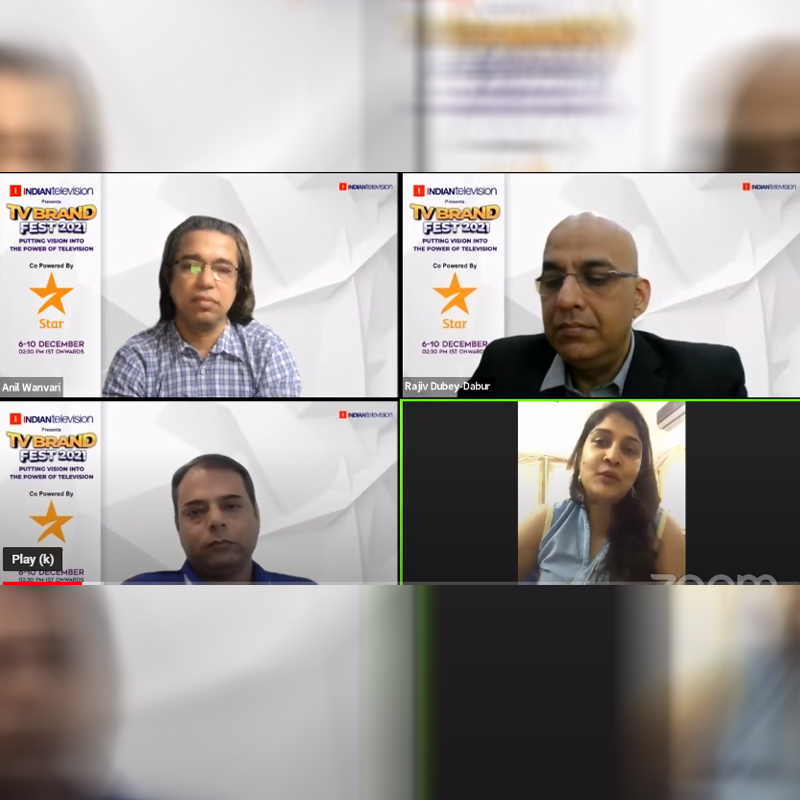
    Mumbai: On day three of the TV Brand Fest 2021, media and marketing heads of prominent organisations discussed the merits and challenges of fiction and nonfiction content as a vehicle for brand messaging. The five-day event being organised by Indiantelevision.com is co-powered by Star India.

    The panel consisted of Dabur head of media Rajiv Dubey, Yamaha Motor India head – marketing Vijay Kaul, and Dr Reddy’s Laboratories marketing head – OTC, emerging markets Prachi Mohapatra. The session was moderated by Indiantelevision.com Group founder CEO and editor-in-chief Anil Wanvari.

    The discussion began with trying to understand the relevance of GECs which remain unchallenged despite the existence of a plethora of niches. Last year they had almost 50 per cent genre share as far as weekly viewing minutes were concerned, and therefore, any brand looking for a mass reach cannot afford to miss out on them.

    “GECs are cost effective, and they give high reach for businesses like us who want to communicate to the masses repeatedly. Niche channels, on the other hand, are not consistent performers,” said Dabur’s Dubey.

    EMBED: Panel image

    Sharing her experience of using GECs, Mohapatra added, “They are a great way to build trust for your brand. GECs work extremely well when you have to change the brand imagery and also with tactical campaigns where the objective is to reach out to the right kind of consumers in a time-bound manner.”

    Even though the auto category uses quite a balanced mix of fiction and non-fiction content, GECs are a staple in the media plan for mass or unisex products such as scooters. Elaborating further, Kaul stated, “GECs are the right choice for mature brands with a country-wide footprint. That’s where we expect a lot of sales volumes. When the idea is to launch a new brand, the media plan depends on the sales target being huge as in case of unisex or mass commuter brands.”

    Mohapatra shared a similar opinion on the kind of products (based on the life cycle stage) that are best-suited for fiction content. “GEC are trust builders with a huge reach, and hence apt for mature brands as well as brand extensions. Taking a new brand/product directly to GECs is not feasible due to the high costs involved,” she observed.

    For Dabur though fiction/GECs is the medium of choice for all kinds of brands barring a few like a men’s hair removal crème. This is because of the female-centric nature of content.

    This insight from Dubey steered the conversation towards the importance of the content (message) and brand ethos being in sync with each other. While ratings and minimisation of duplication are Dabur’s primary concerns, Yamaha’s Kaul asserted that “in the automobile segment it becomes necessary to evaluate the nature of content because one is looking at a long association with a brand/product whose ticket value is huge.”

    Non-fiction content on niche channels has thus been integral to Yamaha’s media plans. Sharing the example of Yamaha YZF R15, the brand that was built on one niche sport brand – MotoGP – alone, Kaul added, “MotoGP complemented the (high) price (Rs. 1.8Lakh) and the DNA of the brand perfectly. We went for live programming as well as repeats with bundled deals on EuroSports, never using any GEC for it.”

    He cited another example, that of Yamaha Fascino Miss Diva Universe where the “fashionable scooter was embedded in the fashion property one year before its launch.” “Longevity is key here; one can’t have big-ticket integrations for six months, it needs at least four-five years for the association to build.”

    Concurring with Kaul, Mohapatra noted, “With such high-decibel programs consistency is extremely important, otherwise even as you work on creating the brand image, recall fades out very quickly.”

    As regards non-fiction on GECs such as ‘KBC’, and ‘Bigg Boss’. the panel believes that it brings in a fresh set of viewers, and a large number of eyeballs at the same time. It also offers more scope and solutions in terms of brand integrations and product placements.  “Used in combination with fiction, weekend non-fiction properties are a great source of incremental reach,” stated Dubey.

  • TV ad volume grew by 21% from 2016 to 2019

    TV ad volume grew by 21% from 2016 to 2019

    MUMBAI: The year 2019 was all about NTO and its impact; the transition period and the black-out threatened to bring down TV viewership. But despite all these, TV viewing minutes in India remained stable at 48.4 trillion in 2019, and in the last four years, television viewership has grown by 38 per cent. However, in the last four years the ad volumes has also grown  by 21 per cent from 2016 to 2019 but if compared to last year (2018) 1.64 billion seconds of advertising has fallen to 1.59 billion seconds of advertising in 2019.

    The BARC Yearbook 2019 -What India Watches shows that 634 channels generated 48.4 trillion television viewing minutes and 1.59 billion seconds of advertising. The year had many peak viewing moments, while overall viewership and advertising remained largely stable.

    BARC India chief executive officer Sunil Lulla says, “Viewership has grown 38 per cent over the last four years, and a total of 48.4 trillion viewing minutes were consumed on television in 2019. Each household watches 5 hours, 11 minutes of television every day and as many as 222 million individuals tune in to primetime television at any given minute. And with over a 100 million homes in India yet to get a TV set, growth continues to be ahead of us.”

    He adds, “BARC India now samples from a panel of 185,000 individuals across 44,000 homes and before the year ends, we will be in 55,000 homes. To enable its constituents to understand viewers and their engagement better, BARC India has introduced need-based products and tools that are gaining in popularity.”

    In 2016 India recorded 35 trillion TV viewing minutes which grew to 42.3 trilliom in 2017. In 2018, it further grew to 48.1 trillion and remained stable at 48.4 trillion in 2019. In the last four years GEC witnessed 28 per cent growth in TV viewing minutes from 2016 to 2019, movies grew to 47 per cent, news to 46 per cent, kids to 56 per cent, music to 53 per cent; sports to 89 per cent and niche/others to 52 per cent.

    The major growth driver for increase in TV viewership was Lok Sabha Election Counting Day (23 May) as it registered 59 billion viewing minutes for the news genre, which contributed to 38 per cent of total TV viewership for the day. In 2019, 26,080 movies were aired on TV. The four south Indian languages (Tamil, Telugu, Kannada and Malayalam) contributed to 48 per cent of these unique movie titles.

    The advertising volumes on TV have grown 21 per cent from 2016 to 2019. Increasing share of advertising across most languages is another indicator of the growth of regional television. In 2016 TV generated 1.31 billion seconds of advertising which grew to 1.43 billion seconds in 2017 and 1.64 billion seconds in 2018 but in 2019 it has fallen to 1.59 billion seconds.

    There has been an increase in advertising volume across languages. Apart from Hindi, the share of advertising volume has grown in Bangla, Kannada, Malayalam and Punjabi market over the previous year but the share of ad volumes has shrunk in Tamil, Telugu and English markets.

  • TRAI tariff order impacted uptake of niche channels: KPMG

    TRAI tariff order impacted uptake of niche channels: KPMG

    MUMBAI: Even as TRAI is mulling over changes to its existing tariff order, a report by KPMG, India’s Digital Future, highlighted that niche channels were affected especially due to lesser focus on such channels in broadcaster packs.

    “The uptake of niche channels has suffered in the new regulatory environment as broadcasters focused on creating packs that ensured pick-up of their GEC and movie channels with DPOs building on top of them with FTAs at their disposal. While niche channels belonging to larger broadcasters are likely to do better than others in the long run owing to the network effects enjoyed by their parent company, they will still need to be innovative in order to survive and remain relevant in the long run,” the report read.

    According to the report, niche genres on TV in this new era are expected to be under pressure from rival offerings on digital platforms. It also added the English channels are also likely to encounter challenges in terms of viewership and subscription in the new regime. But the uptake of pay regional channels, especially top GECs and movie channels, has remained firm in the regional markets in the new regime, particularly in the Southern markets.

    Despite the tariff order giving consumers options to choose channels, the report noted that initial trends indicate that the monthly bills of viewers wishing to watch the same number of channels as earlier has gone up significantly. However, the ARPUs have increased across all the markets with phase III and phase IV markets witnessing massive growth of 30-35 per cent in average realisations.

    “This choice of channels has come at a dearer price for individuals at the lower end of the ARPUs who are either paying more for watching the same number of channels or are content with lesser number of channels at their disposal. As per industry discussions, some choice is taking place at the higher end of the subscription pyramid, leading to lower TV bills, however, the same is definitely accompanied by a lower number of viewable channels at the disposal of the consumers,” the report added.

    It went on to say that viewership and reach for the TV universe is likely to change as the effects of NTO start to play out. But it also added that the broadcasters will need to renew focus on content quality to ensure survival and pick-up of their channels.

  • Dangal TV prepares to scale up ambition with new play

    Dangal TV prepares to scale up ambition with new play

    MUMBAI: When it comes to general entertainment channels (GECs), hitting the sweet spot isn’t all that easy. Creating unique yet mass content continues to remain a challenge for creators in the industry. While there are tried and tested formats of kitchen politics, dramas and reality shows, building products like Zee’s Kumkum Bhagya, Colors’ Naagin 3 and Dance Deewaneand Star Plus’s Yeh Rishta Kya Kehlata Hai requires a golden touch.

    In a bid to compete with the big boys and capture the imagination of India’s rural populance, Enterr10’s free to air (FTA) channel Dangal TV is in the process of making an interesting play.

    The channel is set to undergo a face lift along with the addition of new original shows to its bouquet of offerings.

    Speaking to Indiantelevision.com, Dangal TV MD Manish Singhal said, “We will not change the name of the channel, only the logo, tagline and the entire graphics of the channel, the kind of promos that we make, etc will be changed in a bid to make the classier version and which will define its personality of Dangal TV. We will not change the programming line-up, instead, we will launch the show one by one and will go with it slowly and gradually,” he said.

    The channel will launch a show titled Pakistan ki Dulhania from the Jay Mehta production stable, to be aired by August end. Sagar Arts will produce Shani, which will take two more months to go on air, while Jaani Dushman, produced by Contiloe, will be aired mid September.

    The channel also has plans to launch yet another show (name hasn’t decided yet) based on the story of Naagin, produced by Dinesh Bansal, to be aired on 30 July.

    When it comes to promoting and marketing the channel's brand, Singhal stated that he believes in the power of word of mouth. He also confirmed that the rebranding process could take up to a month.

    Dangal TV stood at sixth position from seventh position in the BARC week 28 in the GEC rural market as compared to the previous week with 244443 impressions (000s) sum.

    Enterr10 intends to dive deeper into the regional space with the launch of its Bengali GEC and a movie channel, set to go on air within the next four months.

    The company also operates Bhojpuri and Marathi movie channels Bhojpuri Cinema and Fakt Marathi respectively.

    Editor's note: The spokesperson of Contiloe has denied being in talks with Dangal TV on any show

  • Endemol Shine sees scripted shows as new area of growth

    Endemol Shine sees scripted shows as new area of growth

    MUMBAI: Endemol Shine India (Endemol Shine), best known for producing shows such as Bigg Boss, Master Chef, Khatron Ke Khiladi and Dance India, has a lot going for it this year. The company will produce the second season of The Test Case for Balaji Telefilms’ OTT platform ALTBalaji after tasting success in the first season. Moreover, the production house is planning a slew of originals after securing book rights from Indian authors and publishers.

    In an interaction with Indiantelevision.com, Endemol Shine CEO Abhishek Rege said that while the focus remains on unscripted shows, it is the scripted shows that will help the company grow leaps and bounds. During the conversation, Rege revealed that Endemol Shine could dabble into owning an IP for a show if there is scope for pre-selling the material to broadcasters.

    Recently, the company joined hands with the premium video-on-demand service Viu to produce a localised, ten-episode adaptation of global phenomenon The Bridge. Going forward, the production house has set its sights on producing more original shows.

    Edited excerpts:

    Tell us about your plans for 2018.

    We are discussing the next subsequent series for The Test Case with ALTBalaji. We are also looking at a lot of developments in terms of originals, based on book rights with Indian authors; I think we will be able to make an announcement by May. We have tied up with Indian authors and publishers for the same. It’s still in the development stage; it could be in the international production level as well. We have reached non-scripted shows and will continue to grow with the same format. Having said that, what will help us grow is scripted shows. We treat digital or traditional TV platforms as scripted. Those are the growth areas that we see. As a company, we want to produce more original shows. We are expecting an increase, both in terms of revenue and bottom-line.

    What is your take on production houses retaining show IPs?

    If a project comes by and if we are allowed, we could take that risk but, ideally, not right now. The story should be good enough to take it to the international markets. We could do a pre-sale because we have the backend to do that. We could flip the model a bit, but broadly the same model applies that the Indian broadcaster would be paying much lesser than the cost.

    What do you think about GEC viewership being impacted during IPL season?

    We have probably moved past that thanks to the second screen. Largely, sports and news are already consumed on the phones. At the end of the day, traditional TV still survives because it’s the mass promotion mix. Whatever you do with the IPL, you have to advertise on the screens. Every individual will have their own screen. They have sports, Olympics to watch on one screen, they will have traditional TV to watch for something else. So, Amazon and Netflix are not affected and TV is also not affected.

    What is your take on mythological shows?

    As they say ‘old is gold’, all the old songs still work. Ten to fifteen years back, 18-20 year olds also watched that. Your grandparents taught you about mythology for your understanding; some are forced to consume these shows, while some willingly watched it. For instance, take a show named Jai Malhar, grandparents forced the youth to watch this show. The youth didn’t go to watch it, it was the pre-teens and the younger lot, in the evening, after coming back from playing or school, their grandparents have the TV on with Jai Malhar.

    What is your thought on content segmentation strategy?

    I don’t think that really exists. It used to be 10 years back. The assumption was that the channel wanted to keep their viewers to them, it was never a fight about the product, it was a fight about the channel. So, the idea behind it was, no one moves to another channel as the control shifts, the housewives will take over or the grandparents will take over…that was the theory earlier as it was channel to channel. Later there were many shows on different channels. So, right now it is more of a psychological thing rather than a strategy.

    Also Read :

    History TV18 focuses on relatable local content

    Cartoon Network HD+ adds Tamil, Telugu feeds

    Sony Yay banks on originals with a slew of fresh content

    No reason for GECs to panic as IPL grabs eyeballs

  • Animation sees an uptick despite expensive production

    Animation sees an uptick despite expensive production

    MUMBAI: When it comes to popular content on TV in India, general entertainment channels (GEC) lead the way. Primetime shows are most watched, most-earning and most talked about since the early years of the saas-bahu serials.

    Animation as a genre is sidelined to the kids’ channels but producing it involves tons of cash, which may not necessarily be recoverable so easily. At first, India was content with syndicated content like Tom & Jerry, Mickey Mouse, etc and only in 2008 did we get our most pride-worthy IP Chhota Bheem.

    A media professional quoted the price for producing 2D or 3D animated content to be Rs 10-20 lakh or above for one 11-22 minute show. Initial episodes entail an even higher spend at Rs 20 lakh. The cost depends on the number of characters, background, etc. Another professional estimated it to be between Rs 30-50 lakh for shows that top the chart. If we produce it with the intent of selling it to the overseas market, the investment could skyrocket to Rs 1 crore. Compare these staggering numbers with just Rs 7-8 lakh needed for a single GEC episode.

    Green Gold Animation chief strategy officer Srinivas Chilakapudi said that GECs will raise the cost depending on the quality they wish to achieve. With Netflix and Amazon bringing in high value content, TV channels will be compelled to add visually appealing elements as well. He says that the case is similar with animation.

    It took a while for producers to realise that owning IPs was more profitable than syndicating animation content. However, Green Gold has a balance of local and syndicated shows. By playing shows at different times and watching where the ratings come from, the production house does its budgeting. Older shows like Luv Kush or Arjun are syndicated at a lower price.

    GEC ad rates are four times that of kids’ channels due to the viewership they command. Brand-building founder Ambi Parameswaran says, “It will be a much lower cost per thousand to reach kids through channels focussed on them. Obviously, GECs have huge barriers to entry and while they may deliver good number of kids, you are also reaching homes without kids.”

    He says that as the penetration of TV grows, there will be a growth of sub genres like kids, sports, religion, travel etc. There has also been a growth of Indian language niche channels that will further lead fragmentation of audiences. “Surprisingly multiple TV homes are still a rarity. I expect this to change in the next five years. From the current low level of multiple TV homes (less than 5 per cent) we can expect this to go beyond 15 per cent in the coming decade,” says Parameswaran.

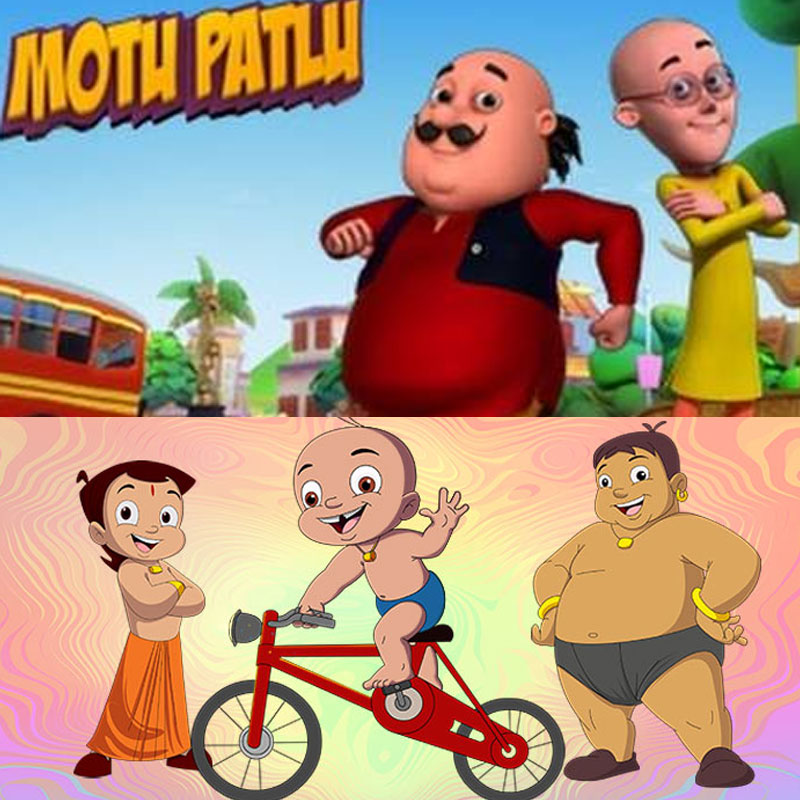
    Viacom18 kids entertainment head content Anu Sikka says that kids love animation as it allows them to step into an imaginary world with their favourite characters. “Kids love stepping into Furfurinagar with Motu Patlu or riding a cycle in Vedas city with Shiva. Also, the repeat value of animation content is high, which increases the shelf value of the show. This, in turn, allows broadcasters to produce hours of original content that can be played on the channel for years bringing in a great success thereby reducing the cost average.”

    She further added that connect of an original Indian show with Indian characters is higher given that there is better connect and relatability to the environment. “Also creating content locally and owning the IP’s gives us more control over the creative of the show, which then can incorporate the local sensibilities thus making the show more endearing to the audience.” She added that the turn-around time for local show is much faster compared to international shows, which is the need of the hour, especially in India, as today kids are always looking for refreshed and newer content. Today, there’s a dearth of international shows, which has a strong universal appeal and which can match the success of some of the earlier acquisitions like Ninja Hattori or Oggy and the Cockroaches. “If we own the IP, it opens up more streams of revenue for the broadcaster, especially in CP, digital platforms, licence products, etc.”

    In an earlier interview, Shemaroo Entertainment head-animation business Smita Maroo and Green Gold Animation VP-content sales Bharath Laxmipati agreed that anything that is made for the own territory is far more expensive than syndicated content.

    Sikka also agrees with Maroo and says that today there’s a strong potential as the content is being viewed on multiple platforms world over in various languages. “If the content and the characters are universal enough, the potential of them being acceptable in the international market goes up substantially.” She said that an Indian show, Pakdam Pakdai was renamed as Rat-a-Tat and was sold to 30 territories worldwide, the concept was developed by Nick and executed by Toonz animation.

    Vaibhav More Films founder Vaibhav More takes a different view. He said that GECs are expensive than animation production. “In GECs the actors are charged high. Not only this, the equipment costs, editing, post-production activities, etc are also taken into consideration.” He feels that some stories live longer via animation.

    When asked about the ways you keep the production cost low, Sikka said that today it’s increasingly becoming difficult to keep down the cost of animation series in India as there’s been a surge in demand for local animation content in India. This requirement for local content is coming not just from the broadcasters, but also from digital platforms as kids are consuming content from all these mediums. “There’s also a shortage of big animation studios which can deliver the product from scratch to the end while maintaining a certain benchmark in terms of quality,” she says. She further added that one way to control the cost is by commissioning and committing to a certain number of episodes, which allows the studios to re-use the assets which in turn keeps the cost in control. “The other option that can always be explored is to go with 2D animation, which is cheaper in comparison to 3D show, provided the concept allows you to do so.”

    Though animation is a more intense and cost-expensive content, broadcasters and creators see potential in it, especially with the growth of digital and the global reach that popular ideas are likely to get.

    Also Read :

    Japanese kids’ content going strong despite home-grown onslaught

    20 years later, ‘The Powerpuff Girls’ still breaking stereotypes

  • Disney India launches a magical campaign for Frozen merchandise

    Disney India launches a magical campaign for Frozen merchandise

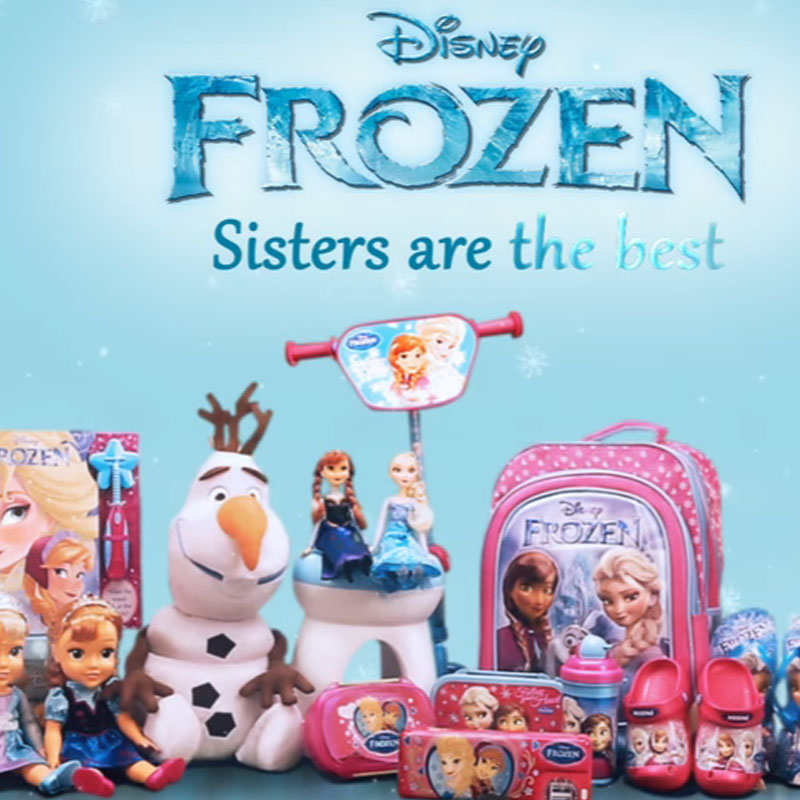
    MUMBAI: Disney India has introduced two magical Frozen TVCs’ on 7 September to celebrate the spirit of sisterhood, featuring two young daughters and how they get inspired by the Frozen sisters in their everyday lives. The TVCs’ showcase the happy conversations, secrets and promises shared between sisters. 

    A three-week campaign, during which the commercials will be aired across top television networks including kids channels, Disney Channel, Cartoon Network, Nick, Pogo, GECs, SAB TV and Colours, with as many as 18+ exposures a day on the channels and expected reach of 3Cr+ individuals, has been planned.

    The campaign will also bring alive the magic on social media as the ads simultaneously premiere on the Disney India Facebook page, which will be further enhanced with a Disney Frozen store during the Flipkart Big Billion Days sale. Disney plans to launch a wide collection of Disney Frozen dolls, apparel and exclusive offers on the e-commerce platform.

    All the fans and girls will also get an opportunity to meet Elsa at the Magical world of Disney in Hong Kong on purchasing Disney Frozen products on Flipkart during the Big Billion Days sale.

    Short format content around the Frozen theme will be published on social media, promising engaging contests with exciting giveaways. The products are available at Hamleys, Flipkart and all leading stores.

  • Guest Column: What keeps broadcasters from cracking factual entertainment

    MUMBAI: Worldwide, the business of broadcast is typically categorized into three verticals: the entertainment piece (GECs, English, Hindi, Regional, Music and other entertainment), the News & Sports piece (mostly events driven and current affairs driven) and the Factual Entertainment piece.   

    Factual entertainment refers to ‘lifestyle’ entertainment and ‘Information & Knowledge’ category. Worldwide it is monopolized by the four majors: Discovery, History, National Geographic and Scripps.

    The business of factual entertainment worldwide commands 11.5% of the audience share while contributing nearly 20% of the advertising sales revenue pie.  This business is seen to be an attractive segment therefore. No major TV broadcaster from India or the Eastern part of the world has yet cracked it. Why?

    In India, the ratios for both the above parameters is approximately 1.5% and 2% respectively.  In terms of audience numbers, even as it is bigger than most of the English News Channels and other English entertainment, the ad revenue contribution remains highly under-performed.

    The way to crack this business requires one to reimagine the business of factual entertainment aben issue.

    Business Insights

    Two insights are important for this business to be understood:
    1.    Brand –Unlike GECs where individual programs pull their own weight, in the business of factual entertainment, the Channel is the brand. Channel = Brand. The shows are incidental. The audience is loyal to the channel and not necessarily to an individual program. The genre provides high engagement value and the audience profile can be decoded from channel personality and hence the advertising brand fits. The brand is expected to deliver certain standards and hence no daily valuations and audience ratings do not matter much.
    2.    Imagery – Not only are the content costs high but the marketing investments are also higher as imagery – leading to perception – is everything. You do not have viewers in this category…you need to create fans.

    Reimagining the Business Model

    The business model needs to be looked at absolutely differently as compared to other segments. The revenue streams need to come from five different sources:
    1.    Pre-Sales
    2.    Co-Production
    3.    Broadcast
    4.    Formats, and
    5.    Syndication

    public://Untitled-3_16.jpg

    In this model, while individual contribution shares may vary, broadcast is seen to contribute no more than 25-30%. The shelf life of content is far longer and investments in quality content need to pay off through several channels as above. Example – Co-production can help set-off high initial content costs. No wonder then that Discovery’s annual content budgets are in excess of a few billion dollars.

    The broadcast players therefore need to decide to invest in Brand and Content as above. Most of all they will need to understand that this business has a long gestation period as getting the three unique factors – Audience communities as Fans, impeccable Brand integrity and cutting-edge Content – right makes the business thrive. Over and above this, the business model needs to follow the Five-Point Strategic approach rather than being looked at as a pure-play broadcast business.

    public://Untitled-4_3.jpg

    (Piyush Sharma, a global tech, media and entrepreneurial leader, created the successful foray of Zee Entertainment in India and globally under the ‘Living’ brand. The views expressed here are of the writer’s and Indiantelevision.com may not subscribe to them.)


  • Star Plus maintains lead; Ind vs Sri T20 brings back DD National in Top 10

    Star Plus maintains lead; Ind vs Sri T20 brings back DD National in Top 10

    MUMBAI: Star Plus continues to rule the Hindi general entertainment channels (GECs) genre even after witnessing a dip in ratings. While the India – Sri Lanka T20 match helped DD National to make a comeback in the top 10 channels, according to Broadcast Audience Research Council (BARC) All India data of week 6. 

    Star Plus saw fall in ratings but was perched in the numero uno position with 711158 (‘000s) as against 724223 (‘000s) in week 5. Second in line Colors also shed some ratings but managed to secure its slot with 689432 (‘000s) as against 713106 (‘000s) in the previous week. 

    Zee Networks’ Hindi entertainment channel Zee TV bagged the third slot with an increase in ratings at 686349 (‘000s) followed by Zee’s free to air (FTA) channel Zee Anmol on fourth spot with 669828 (‘000s) and Star India’s FTA channel Star Ustav at number five with 437543 (‘000s). 

    Life OK fell to the sixth spot from five and scored 437228 (‘000s) whereas Sony Pal climbed up at number seven from its last week’s ninth position with 397413 (‘000s). Sony Entertainment Television stood at number eight with 349537 (‘000s) while its sister channel Sab exited the list. 

    DD National came back in the top ten channels in Hindi GECs and grabbed the ninth slot with 348202 (‘000s) followed by Rishtey in the tenth slot with 343724 (‘000s).