|
These are challenging times for pan Asian broadcasters. The economic downturn has meant that ad revenue targets will not be easy to meet. And for the action-oriented broadcaster AXN, this is more so with its parent Japanese electronics major Sony scaling back as it posted its first loss in many years. Sony Pictures Entertainment (SPE), however, is looking at opportunities to snap up assets in the Asian region that would come at an attractive price.
AXN, which launched in 1998 as an Asian channel, has grown in stature and moved to the matured markets, attracting male audiences. Localisation has also worked as a strategy.
In an interview with Indiantelevision.com‘s Ashwin Pinto, Sony Pictures Entertainment (SPE) Networks Asia senior VP, GM Ricky Ow elaborates on the channel‘s brand positioning, growth, challenges and expansion plans.
Excerpts:
In addition, new media offers opportunities for the brand to go beyond television – for content to be consumed anytime, anywhere, in many forms. At this time, however, all players in the industry are still in the race to find the perfect business model that will work for new media platforms.
We also wanted to offer high quality English entertainment to audiences in India as well as the rest of Asia that is growing in sophistication and affluence. We felt that a channel with unique content of distinguished quality will not only excite the top end of the market, but also markets that are as a whole more mature, with viewers that are sophisticated and well-travelled. I believe that these goals have also been achieved today.
The best evidence of that was seen during the ban on AXN in India some years back. Viewers missed AXN and wanted the channel back on TV. This was strong testimony that AXN has indeed done well as a brand.
Investments of the earlier days into on-ground events, then into original programming, and more recently into the Action Awards, have all worked out well for what AXN stands for.
We have created original content like AXN Asia‘s The Amazing Race Asia. The reality race has been one of the most difficult to produce, and yet we have done well at it. In doing so, we have achieved our goal of creating original Asian productions which are good enough to be watched around the world.
AXN Asia‘s sister channel Animax, Asia‘s anime and youth entertainment channel, has also made breakthroughs. In 2009, Animax offered content in shortened broadcast windows, via simulcast deals with Japanese studios and broadcasters. Shows like InuYasha – The Final Act and Fullmetal Alchemist Brotherhood have been broadcast within the same week as the Japanese broadcast, and Tears to Tiara in a same-time-as-Japan simulcast. This has been a big step to ensure fans and viewers catch the shows on the channel and nowhere else.
AXN and Animax were among the first channels in the region to provide mobile offerings. Animax Mobile 3G streaming service was launched about two years ago, while AXN also had mobile-based content for its top shows. A highlight of AXN‘s mobile venture include exclusive video footage which was unavailable on TV, for The Amazing Race Asia in ‘The Host‘s Diary‘ where show host Allan Wu shared his thoughts and added to the entire show viewing experience for AXN viewers.
The ads that we have created over the years have always been outstanding, and can capture viewers‘ attention and excitement of the channel, but never offensive. We have been consistently doing so and AXN is one of the few TV networks in Asia that have pursued such aggressive marketing strategies.
Back then, drama series such as 24 and Alias were not as well watched as movies, but seeing that the quality of production in such series were as good as some movies, we were confident viewers would take to the new drama series on AXN.
Indeed, movies widen the overall reach of channels. However, our reduction in movies has not affected AXN‘s reach in this case; movies continued to be part of the programming mix. The increase in drama series offerings enhanced AXN‘s connection with viewers at the top end of the market. This is difficult to measure by ratings, but there are considerable viewers that AXN reaches out to. They are opinion leaders and trend-setters, and they demand such content.
AXN‘s ability to successfully market such drama series has also contributed to greater viewer ‘stickiness‘ to the channel. While a movie is a one-off show, drama series average 13-15 episodes per season, and that has worked to keep audiences coming back to AXN.
Local events, local shows and regional shows with local elements have all brought different types of experiences and enjoyment to Indian audiences. With India becoming an increasingly important market for everyone including SPE Networks – Asia, we expect to offer more of the three different initiatives – local events, local shows and regional shows – in time to come to provide even more connectors with AXN.
The economic downturn has helped SPE Networks – Asia as a whole to refine our plans. It has helped us re-set our priorities, re-evaluate our templates of success, and rethink if we can do things better. The economic downturn has definitely impacted us and everyone else, but we believe we can derive a positive outcome from it by re-examining what we assumed had worked in the past, and come up with new strategies to move forward.
In addition, we have introduced English subtitling in India to enable viewers who may not be used to some of the accents to still enjoy the shows on AXN.
All three have been some of the most sought-after street magicians. With Cyril, his exposure in India has been limited so far, but with the upcoming production, viewers can see for themselves his brand of magic.
In addition to the three magicians, we also premiered Breaking the Magician‘s Code. Unveiling the secrets behind the illusions and tricks, the show is able to really bring in both the high-end viewers as well as a wider audience base. I have high hopes that the series will do very well in India.
A second new initiative that AXN has embarked on is the expansion of AXN‘s reality block to three-hours. The key difference here is that a large number of channels are now offering reality programming that have been successful on AXN, but audiences still recognize that we brought them the original, and continue to do so, and hence viewers are still watching AXN. Anchoring this block are good shows such as So You Think You Can Dance? and the latest reality game show WipeOut, which is produced by the same team that brought on Fear Factor.
Thirdly, we have also increased our movie slots over the weekends to offer a wider appeal to audiences and broaden the viewership base.
Indeed, the cost of programming has gone up over the years. But since this has been what we have been doing all along, the increased cost continues to be within our expectations.
New media adoption however, differs from market to market. Infrastructure, strategies, timelines, and market forces determine the rate of new media adoption in individual markets. Korea and Japan are leading at this point in time as early adopters of new media, while smaller markets like Singapore and Hong Kong are also ahead as these are smaller markets that offer ease of policy implementation and infrastructure establishment.
We believe that there will be a lot more experimentation with new media in the next few years as the world races to find solutions to tap into new media platforms. As for India, it continues to be a volume game due to the size of the market. We are optimistic that with the right pricing, consumers will be persuaded to use new media, and because of the size of the market, the returns can still be very attractive for firms. We believe that once the necessary infrastructure is in place, there could be an explosion in new media take-up in India.
We believe that with the right partners who have the necessary expertise, coupled with the right level of commitment they put behind our brands, such a business opportunity will prove an interesting proposition. We have had some discussions so far, but we believe we have yet to find the right partners at this point in time. |
Tag: GEC
-

‘AXN prides itself on always being a challenger brand’ : Sony Pictures Entertainment senior VP, GM Ricky Ow
-

‘We believe our prime time has more potential’ : Ashvini Yardi – Colors senior VP and head of content and creative
Colors is celebrating its first year sitting at the top of the ratings cliff. A late entrant, with 10 Hindi general entertainment channels launched before it, the Viacom18 channel climbed to the No. 1 position in 38 weeks time, enjoying the fastest ride to success with backing coming from “disruptive and differentiated” programming, strong distribution and heavy promotions.
From 81 GRPs (gross rating points) and the No 3 position in first week, Colors crossed the 100 GRP mark in its second week; 200 GRPs in the ninth; and 300 GRPs in the 32nd week.
Critics have accused the channel of pumping in huge monies behind high-cost shows. That seems to be paying off, at least for now.
Post a big bang launch with Khatron ke Khiladi, Colors programming team under the stewardship of Ashvini Yardi, former Zee TV creative head, weaved a series of daily and weekly shows that gradually built a loyal viewership base for the channel. Within nine months of launch, shows such as Balika Vadhu, Jai Shri Krishna, Uttaran and Na Aana Is Des Laado, along with non-fictions, are kicking in around 250 GRPs.
In an interview with Indiantelevision.com’s Gaurav Laghate, Colors senior VP and head of content and creative Ashvini Yardi talks about the strategy behind the programming and the channel’s plans ahead.
Excerpts:
Colors launched exactly a year back. What have been the important landmarks for you?
Well, occupying the third spot in the launch week itself, crossing the 100 GRP mark and then to finally becoming the number one channel within a span of eight months has surely been some of the milestones for us. But for me, apart from all these, it was more about meaningful programming.We created thought provoking subject-based shows like Balika Vadhu, Uttaran and Na Ana Is Des Laado. And we believe that Colors has raised the bar for quality programming, both in fiction and non-fiction shows.
But don’t you think it adds on to the audience fatigue?
Not really. On the contrary, it is good for viewers as every channel tries to come up with something different and better in quality. Overall, it gives the viewers an expanded choice.What has been Colors’ strategy behind selecting particular shows?
We knew that we were the 11th player foraying into the GEC clutter. And therefore, to break into this clutter we wanted to offer something different to viewers. However, that different element was always within the same boundary. You see, every show is different, and yet full of emotions. Look, concept or idea remains the same; what matters is the treatment.We also encouraged new talents.
But on the creative side, how do you decide on the progress of the storyline?
Generally, while a producer thinks only about the show, the channel has a holistic approach towards it. But at Colors, we strongly believe that for any show, vision has to be one person’s. And in Colors’ case, it is bound to be ours. We look after every show with the perspective of the whole channel.‘Celebrities have fitted in very well for Colors. They, as brands, blended with the channel’s property and also helped as promotional vehicles‘In that case, creative differences won’t emerge?
Well, our creative team sits with producers to discuss and chalk out everything in detail. But we do make our vision for the show very clear.And what about deadline pressures? Producers always accuse channels for changing storyline at moment’s notice and that they don’t get enough time.
For a daily soap, pressure is always there. And that is true for all channels. Even if we have a bank of episodes, there can be last moment changes. Sometimes, on realising that a particular character is getting better response, we decide to increase its length. Or for that matter, if some property is not delivering up to its potential, we may suggest for a change in the storyline or sub plots. The daily soaps are designed in such a way that you can take it to any level. That is the beauty of soaps.Precisely, that’s why some shows run for years and viewers don’t enjoy “happy endings”. What about finite shows?
We have Balaji Telefilms’ Koi Aane Ko Hai, which is a finite show and is seasonal. So it will go off air after completing its first season and will come back again. Also, keeping a bank is possible in finite shows. But a channel has to give a staple diet of fiction, non-fiction and movie content to viewers.Is the accusation true that Colors is putting in large monies for big ticket shows and spoiling the market?
That is not true. Our programming budget is not more than any other top channel. It is a perception play that we have high-cost shows because of the scale and quality we stress upon. On actual basis, the cost is on par with other shows.But you roped in stars like Akshay Kumar and Shilpa Shetty for your properties. Don’t they hike your budgets? And how important is the star value for you?
For Colors, these celebrities have fitted in very well. They, as brands, blended with the channel’s property. Akshay is known for his khiladi image, so he was the best option for Khataron Ke Khiladi.Shilpa, on the other hand, had won Big Brother in its original format at that time. So, who better than her to host Big Boss. Moreover, these shows with celebrities also helped as promotional vehicles for the channel.
Channels are adopting films into soaps. Your Jeevansathi had striking similarities with the movie Hum Dil De Chuke Sanam.
Well, people find connect. Jeevansaathi was a love story, and Indian films have tried so many plots based on love stories that there are bound to be similarities. In the beginning, because of the cast and plot of Jeevansaathi, viewers thought it is like the movie. But it changed entirely. Moreover, an idea can come from a film. But daily soaps have much more than a three-hour plot. So there is a lot more to play with.But some of the shows are not delivering. Don’t you think you should replace them like you did with four other shows?
We believe in giving every show a fair chance. If we see any potential, we go ahead with that show. Right now we are concentrating on the shows which are giving average ratings and have the potential.The four shows that we have replaced were not getting enough response, so we ended the story logically.
Now that you have a stable GRP base of 250 from programming and movies, what next?
Our aim is to continue delivering on viewer’s expectations and to consolidate the primetime. We believe our primetime has more potential than this.And what about launching the afternoon band?
As I said, there is a lot of scope in primetime; therefore, first we are taking care of this band. After that, we will get into the afternoon band. Moreover, our repeats during afternoons are getting us ratings; so we can wait for some more time before launching shows for this band.
We have also launched the Sunday morning band and are getting good response from it.Any big idea behind launching the Sunday morning band?
It is in sync with our disruptive and differentiated programming. Sunday morning was a major slot in the 90’s. It is still a time when families sit together and watch television, including kids. So we decided to design programmes for this untapped slot.Our shows Vikram aur Betaal and Shri Swaminarayan are targeted at family viewing with a focus on kids.
Also, now we have launched our weekend primetime with India’s Got Talent, Chhote Miyan season 2 and Mahaveer Hanuman. So we are on course with our plans.
Has the economic slowdown played a dampener on your budget and growth plans?
Well, we are ahead of our targets and, thus, have not curtailed any of our plans.How important is it to be in the top three in the highly competitive Hindi GEC space?
It is a cycle. It is very important to be in the top league in this game. If you are there, you can attract big chunk of revenues to invest in good shows, which ultimately gives you good ratings. -
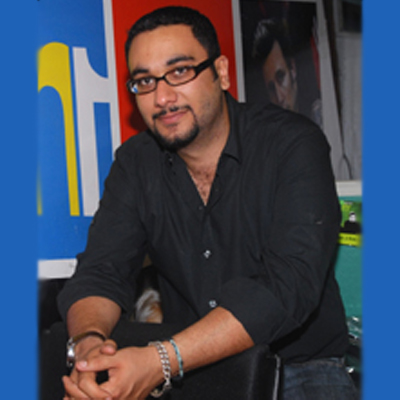
‘We are getting into the broader international entertainment space’ : Ferzad Palia – Vh1 India associate GM
In May, Viacom18’s international music and lifestyle channel Vh1 started the makeover process. Repositioned as an international entertainment channel, it ushered in new shows and introduced a new tag line ‘Vh1 – Get with it’.
Vh1 will, thus, stand on three legs – music, shows, and fashion and lifestyle. Music, however, will still constitute 50 per cent of the programming mix.
In an interview with Indiantelevision.com’s Ashwin Pinto, Vh1 India associate GM Ferzad Palia says 25 shows will be launched during the fiscal and the new-look image will result in a 100 per cent revenue growth.
Excerpts:
What factors prompted the rebranding of Vh1 to an English GEC?
We launched in 2005 when there was a need to fill the gap for international music. Music channels had all gone desi and mass. Vh1 came in as a flanker and a need gap fulfiller for lifestyle and international music. It has now been four years and we have achieved our targets. We have repopularised international music. We have also ensured that good international acts come into the country.In 2008 we did research as we felt there was a new need gap. The lifestyle shows on our channel like Pimp My Ride were popular. The audience felt that we were taking the lead towards differentiated international entertainment. This buoyed us into getting into the broader international entertainment space.
Music still constitutes 50 per cent of our mix. But now we are also going towards international entertainment with a renewed vigour.
What about content repositioning?
The channel has a new look and feel to it. Our tagline is ‘Get with it’ and is demonstrative of our brand, personality and content that is new and cutting edge. We bring in trends from across the world. We have launched four reality shows in the Monday-Thursday 11 pm slot. We also launched an animation show, South Park. The good news is that these shows cut across our TG.Our focus for the next few weeks will be to launch content that allows people to gather information on entertainment on a real-time basis. We will look at new gadgets, gizmos, Formula One and Hollywood.
Vh1 currently stands on three legs – music, shows, and fashion and lifestyle.
What is the brand philosophy of Vh1?
Vh1 is a combination of entertainment and edutainment. The brand is young and vibrant. The tagline, ‘Get with it,’ expresses that.What value is Vh1 looking to bring to the English general entertainment landscape?
While other general English entertainment channels run similar shows, our product mix is different and daring. Nobody has taken the lead on international music. Going forward, you will see that Vh1 will cover the fashion and lifestyle segment the most.I don’t think that we fit into the English GEC space per se. Our focus is on international entertainment and it covers different formats.
Who is your TG?
Our TG is 15-45 SEC A,B. Most of our viewership comes from the southern metros. The interesting thing is that the mature audience from 25-45 watches us as much as the youngsters do due to the variety in our offerings.Our audience is 60 per cent male. We talk to different audiences at different time bands. Youngsters watch us in the morning, early in the evening and also after 11 pm which is when we air reality shows. The mature audience tune in at around 9 pm and, to an extent, early in the morning. While we do Hip Hop hustle for the youth, we also have Vh1 Jazz Masters for the older and more discerning viewer. Our analysis tells us that our audience watches news to get information – and then for entertainment they tune in to Vh1.
‘We have 110 advertisers on board. We expect 100 per cent revenue growth for the year‘Could you talk about the shows that allow Vh1 to be differentiated and daring?
Pimp My Ride is about taking a thrashed automobile and making it a wow machine. The audiences took note of us with this show. Then our positioning got accentuated with a show called Yo Ma Ma (it is about kids trash talking each other). This concept had never entered India. This was a big point. All our shows have had some sort of twist. Punked with Ashton Kutcher gave birth to MTV Bakra. The difference is that Kutcher punks his celebrity friends. We launched Saturday Night Live.We will launch 25 shows this fiscal.
What are the plans for the weekend?
Sunday Brunch with Jim Morisson will return. This airs rare, unseen footage about an artist. We are launching a party block from 10:30 pm-2 am on Saturday and Sunday. We also air stacks of episodes of shows like South Park on the weekend for people who might have missed out on episodes over the week. At the same time we are conscious of not repeating our content too much.You had mentioned giving people the latest news on fashion and Hollywood. How would this work?
Content will be filmed and shown weekly. So we will launch a weekly show on Hollywood called The Scene over the next 10 days. We have a daily show at 10 pm from Monday to Friday, Daily 10, which is about the 10 top things that have happened in the world of entertainment. It is slightly gossipy in nature. Then there is The Fabulous Life which is one of our flagship shows. It takes you into the lives of the rich and famous celebrities. We also have a show that profiles what happens each week in the world of fashion. Another show BG Racing on Track is about Formula One. It tells you what happened in the previous race and also goes behind the scenes with the drivers and sees what they are doing and where they are partying.What marketing activities is Vh1 doing to spread awareness among viewers and advertisers about the repositioning?
We have done a high decibel outdoor campaign. We used radio. We tied up with about 50 gyms and salons across the country. We use this as an activation platform. We are also on Facebook and Yahoo.Are you looking at creating local versions of any of your international shows?
Yes! However we will be very selective in what we do or else there will no difference between us and competition. We are in the process of finalising a few concepts. A Pimp My Ride India is a distinct possibility.Then we will be doing an initiative called India Rules later this year. Here we will take Indian Acts abroad and give them an international platform. For us , it is a reverse migration and cross pollination of ideas.
We have a lot of local talent but there is no platform to allow it to go to the next level. We feel that it is our responsibility to give them a platform. This I would like to clarify will not be a hunt for a rock band. Anybody with musical talent can approach us. Our message is that the world is waiting for you.
What are Vh1’s plans on the events and digital space?
We constantly do on-ground experiential events. We bring down international artists often. We are now looking at the consumer product space. A lot of brands have evinced interest in associating with Vh1 as there is synergy. We are looking at like minded brands. They have to be premium and have a certain amount of audience respect. Categories could be telecom, handsets, apparel, footwear. The tie ups will be in the nature of products and services.We will also make a big play on the digital space. It could involve packaging content for the mobile and the Internet.
Do you see the brand tie up business growing to become a significant source of revenue, apart from advertising?
It will eventually be a big source of revenue. At this point of time, our objective is to build the brand.How is the channel being pitched to advertisers?
It is being pitched as a unique content channel. The way we integrate brands sets us apart. These days you have to work harder for every rupee. Nokia has an express music phone. We created a show Nokia Vh1 Playlist. Viewers decide what plays here; they send us their playlists. Nokia’s brand proposition is touch, play, share. On Nokia’s site you can see the playlist. When we play the song, your mug shot comes along with a few lines like why you like Bryan Adams’ song Summer of 69. You could dedicate it to your girlfriend.We started it last year as a weekly and now as it worked, we have made it a daily show. With Airtel we have an initiative Hello tunes Made Easy.
How many clients do you have?
We have 110 advertisers on board. We expect 100 per cent revenue growth for the year. The client list is diverse from a 50 paise candy to a Rs 500,000 jewelry set. We have not been affected by the slowdown to the extent that we had originally feared. -
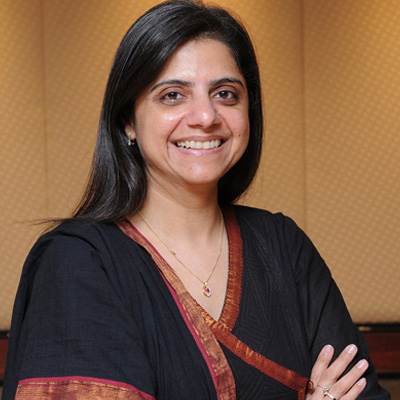
‘The kids market remains hugely under indexed’ : Nina Elavia Jaipuria – Nick India VP and GM
It has been a phenomenal journey for Nick in India. From being a channel that was residing at the bottom of the heap, the nine-year-old player has finally emerged as the leader on top in the Hindi speaking market, edging out long-standing market leader Cartoon Network.
And now, having captured the HSM space, the channel is readying to spread its wings across the southern-language market by 2009-end. The next in step is to challenge Cartoon Network which rules the all-India market.
Nick has also made its foray into local content for the Indian market with Little Krishna, acquiring the show’s TV rights for two years for the South Asian territory.
In an interview with Indiantelevision.com’s Anindita Sarkar, Nick India SVP and GM Nina Elavia Jaipuria reveals the strategies that have worked for the channel and how she plans to grow in a fiercely competitive marketplace.
Excerpts:
Nick has emerged as the number one kids channel in the Hindi speaking market. What contributed most towards this growth?
There are a couple of differentiators and unique activities that the channel has done very consistently over a period of time. The biggest differentiator for the channel has been Nicktoons – characters that have helped Nick establish space and engagement with the kids leading to an increase in the stickiness of the channel.Secondly, we have managed to take Nick beyond television, thus making it more tangible. And I think we did that very successfully with our experimental 360 degree marketing philosophy – we wanted to be in every place where children are. So we were there promoting ourselves right from schools, cinema houses, malls, cable television to comic books, van activation and general entertainment channels.
We also increased our consumer products activities – be it in the form of storyboards, storybooks, activity books, toys with Mattel, clothes with Weekender, linen with Portico, etc. And now that schools are opening, we will be soon coming out with stationary and back-to-school items.
We also intensified our engagement and connection with children through constant promotions, polls, votes, contests and festivals including father’s day, mother’s day, Raksha Bandhan, Holi and so on. We celebrated every festival that was important to kids.
Why did you choose GECs as a promotional platform?
In a one-television household, it is but natural that kids are watching Hindi GECs along with their families. So, we know that today’s kids watch a Balika Vadhu or a Star Plus or Zee TV for that matter. So we decided on this medium as we would be able to capture the entire gambit of captive audience.But don’t you think that GECs today have actually emerged as contenders to the kids channels?
If you see, even with the emergence of so many GECs, the kids’ category remained almost unaffected. This is because eventually kids come back to watch what is tailormade for them. And, no matter how hard a GEC tries, it cannot attract any child’s absolute attention. He/she at most will continue to remain only a passive viewer. GECs cater to the family as a whole and their content is not custom-made for kids unlike a kid’s category which targets only the kids.With Little Krishna you finally forayed into local animation. What took you so long to take this decision?
Well, we had been looking for something that was built on a very strong narrative so that it carried not one single hint of boredom. This is because a kid’s attention span is very limited and you have to engage them within the first ten seconds. So, our hunt went real long. And then, finally we came up with Little Krishna, in both English and Hindi, which not only has a very compelling narrative, but is also supported by seven years of extensive authentic research (without any distortion) conducted by Iscon. The show has captured Krishna in various facets and every episode is a standalone. So, you don’t have to know what has happened before or after. Also, the script is extremely strong and tight and with the quality of animation that it has, the show is sure to make it to the overseas market.What was the need for localisation?
Well, there was not really a need for localisation because as a broadcaster I want content that entertains children and also gets rid of two things – boredom and stress. Yes, I do agree that some amount of local character would surely add some local flavour. But in content, that is not at all a necessity to have. Its more about the localisation of the channel which comes with how you dub, the language you speak, and the promos that the channel lines up.‘Even though the kids segment contributes 7 per cent to the total television viewership, our revenue share is less than 2 per cent‘How has the co-viewing pattern helped the channel to grow?
Today as a channel, we have the gatekeeper’s (parents) trust. We do not carry any form of content that could be harmful to the kids. We are responsible broadcasters and because of this parents allow their kids to watch our channel. In order to spend time with their kids, they also end up spending a lot of time on the channel. Also, animation as a category is today appealing to adults. Thus, a lot of co-viewing is taking place.Are advertisers taking advantage of this trend?
Definitely! In fact, in the last one year, we have more than quadrupled our sales revenue as advertisers have found value in what Nick has to offer. We have done a lot of value addition and brand integration with all the categories that have come on board through sampling and on-ground activations. As a result, from 17 brands that we began with, we have now extended to over 75-80.Are brands confined to the kids’ category alone or is the base expanding?
Absolutely! Two years ago, our reach was 13 per cent and today it is 32 per cent. With a lot of co-viewing happening, advertisers today understand that kids’ channels are also an effective medium to reach out to their target buyers. Also, the mere pressure of pester power that kids have on their parents decisions have pulled a lot of FMCG, insurance and telecom brands on board.With recession hitting hard, what kind of impact did it have on your advertising revenues?
Look, television is the cheapest medium to reach out to the masses. For every other medium, there is an extra amount to be paid. Manufacturers understand this and they have also recognised our growth. And, thus, even during recession we have doubled our rates. Nick has performed all through and I did not want to succumb to this economic slowdown. Yes, instead of annual deals a lot of quarter deals were being cracked, but this could always be reviewed. As a broadcaster Nick did well and we surely deserved the revenues we generated.How has the backing from Viacom and Network18 helped in Nick’s growth in India?
The network has been an absolute might. If you go through our tent pole projects in the last quarter, you will see that a lot of awareness and sampling has been created through Colors, IBN7, CNBC Awaaz and MTV amongst family and children outside of the kids’ category. All of them are passive viewers and, therefore, the network has only helped us promote ourselves.How well are you distributed across the country?
We have got approximately 70-75 per cent all band connectivity wherein we are available in almost 26 million households. We are very well distributed all over the country in various town sizes. While 30 per cent of our ratings come in from metros, 35-40 per cent of the contribution comes in from the 1 million-plus cities and the remaining balance is attracted from the 1-10 million.So what are your plans going ahead?
Well, until now our focus was to get a foothold in the Hindi speaking market. And now that we have done it, our first plan is surely to continue our growth and sustain our leadership position in this space. Our next plan now is to look South, which is certain to happen by the end of this year. We will head for all the southern markets – Tamil Nadu, Kerala, Karnataka and Andhra Pradesh. We will cater to them with the same content. We will initially begin with English and then move on to the regional languages with dubbed content as we get a foothold.However, the major challenge there is going to be distribution because unlike the HSM market, we are not distributed there at all.
Is there any change in the ratio between advertising and subscription revenues?
Advertising still remains the predominant one, contributing over 60 per cent to our revenues. Distribution, meanwhile, is a constant revenue stream that you get year after year, but it’s the biggest payout as well. We have also taken baby steps in consumer products. When we started off with 2-3 products in the consumer product business, it was only a marketing tool. But now I think its time that it will start paying off. We are already available across 17 categories and will soon be launching in stationary, plush and home DVD with Excel. This year, therefore, we will see revenues flowing in from this stream as well.Why do you think that even after witnessing a growth in viewership, the kids category has not grown in terms of revenue share?
The kids market remains hugely under indexed. Even though the kids segment contributes 7 per cent to the total television viewership, our revenue share is less than 2 per cent. This is because of the baggage that the space has been carrying over the years where advertisers are used to paying to the GECs.But with a lot of co-viewing happening now along with integrated value addition to brands and the pester power of kids, I think we are ready to shed that baggage.
How has the interactive media contributed towards Nick’s growth?
Our website has about 10 per cent penetration with kids today – and this is growing. But I have to say that at the end of the day, everything feeds into one another. Therefore, it’s very essential for us to go multiplatform. -

‘It is better to play in the tier 1 GEC game and go out with full ammunition’ : Rajesh Kamat – Colors CEO
Viacom and Raghav Bahl-promoted Network18 are furiously working together to create an entertainment conglomerate in India. The central piece in their build-up plan is a Hindi general entertainment channel (GEC) that would support other blocks like a Hindi movie channel and a clutch of regional entertainment channels.
Colors has had a dream nine-month run, ending Star Plus’ nine-year rule to become the No. 1 GEC for two consecutive weeks. Puffed with big reality format shows and movies, the channel has made a mark with “disruptive” and “differentiated” content. Family dramas like Balika Vadhu, which are contrarian to Balaji Telefilms’ “K” soaps, have been lapped up by audiences.
Driving Colors’ growth is Rajesh Kamat, the strategist behind the big bang theory who loves to fire at his enemies from all sides. Crafting a plan built on costly but calculated bets, Kamat has shown that a direct play in the tier I GEC space is safer than a cautious, cost-conserving approach. Playing in the tier II game can extend the channel’s break even by four more years while the revenue upside for the tier I GEC is huge, he says.
No wonder Colors is eyeing a revenue of Rs 5 billion and a fourth-quarter break even this fiscal as the channel sits on a stable GRP (gross rating points) base of over 250.
Timing has been key to Kamat’s success as has been the ability to take risks. When Colors launched last year, TV audiences were already showing fatigue symptoms with an overdose of look alike, urban soaps. The movie syndication business had also caught on, allowing Colors to line up a formidable “second run” movie strategy within reasonable costs. Studio18, a sister company engaged in the movie production and distribution business, also churned out hits during the year.
Having spent his previous years at Rupert Murdoch’s Star India, Kamat has learnt the art of scaling up. He is ready to stitch advertising deals that would place Colors in the big league with revenues of over Rs 5 billion, kick in pay income, and take it to the international markets.
The distribution deal with TheOneAlliance, which has Indian Premier League (IPL) content through Max channel, will help Colors in making a smooth transition to pay. Besides, the deal guarantees the Viacom18 channels of Colors, MTV, Nick and VH1 a subscription revenue of Rs 3 billion over three years.
In an interview with Indiantelevision.com’s Sibabrata Das, Colors CEO Kamat talks about the challenges that Hindi GECs face in a ring that has three close competitors.
Excerpts:
How significant a feeling is it to end Star Plus’ nine-year rule as the No. 1 Hindi GEC and yet continue to fight weekly for the top slot?
For a challenger brand like Colors, it was important to breach the psychological barrier and feel life at the top. But we realise we are entering into a bloodbath as there would be no undisputed leader in the Hindi GEC space. From now on, it will be a weekly battle as Star Plus will not give up its nine-year rule so easily. Zee TV is also in the race. Like in the US, we are headed for a confused leadership status with dependence on spikes and seasonality.So you are still in an uncomfortable position?
Not really. We have reached a stable base of 250 GRPs (gross rating points) from our programming. And we are not banking only on Balika Vadhu, which is the biggest perception driver show for us, for our ratings. We have a basket of shows that rate over 3 TVR. With movies, we are stable in the 280-300 GRP band.There are other healthy indicators. Our reach at 73 per cent is higher than that of Star Plus. Our prime time GRPs are also higher.
Movies seem to be a divider between Star Plus and Colors at this stage. But isn’t this a fickle GRP base?
Even if we fall by half, we will have around 25 GRPs from movies. And then there will be spikes. We have created a stable base for us. The idea is to grow from this.Are you in a position now to play first run movies on your channel?
Absolutely. After establishing a base of over 250 GRPs, we are in a position to upgrade to a first run of movies on Colors as we can monetise our investments on such big premieres. Our plan is to have at least eight premieres in a year. Ghajani and Jaane Tu…Ya Jaane Na are steps in this direction.There is also the flexibility of launching the afternoon band. When will you be playing this card?
We do 22-23 hours of weekly programming as against 33-38 hours done by Star Plus and Zee TV. Our weekends are not full blown and we have the afternoon band to create. So when the need arises, we can increase original content on our channel to drive in more GRPs.We were actually tempted a couple of months back to firm up our afternoon strategy. But we decided instead to replace our weaker prime time content at 9.30 pm and 10.30 pm as they were not delivering to the potential. The rejig strategy worked for us as Naa Ana Is Desh Ladoo started delivering. Since the afternoon slots are also doing well with repeats, we can launch an assault with original shows when the need arises. That part of the arsenal we are yet to use.
‘After establishing a base of over 250 GRPs, we are in a position to upgrade to a first run of movies as we can monetise our investments. Our plan is to have at least eight premieres in a year‘Stable GRPs, movies, afernoon band yet to launch – are these the selling points to advertisers?
When we launched last year, we were clear in the head that we would only do short term ad deals and at rates we were comfortable with. The channel, in any case, was growing and we believed our product offering was worth much more. We did not want a hangover of the old deals. Come 1 April and we are operating on effective rates which is clearly off old deals. It’s a free run this year and we have stitched new deals at rates which have come from a position of over 250 GRPs. Yes, we tell advertisers that we are stable on GRPs, we have 14 hours to launch, and we have these rockets in form of reality shows which are to come up each quarter.Is Colors targeting a revenue of Rs 5 billion and a fourth-quarter break even this fiscal?
I can’t comment on the financials, but monetising of GRPs is our primary task now. This year will become the base and benchmark for us. For our big properties, we have already signed with Idea as title sponsor for Khataron Ke Khiladi (Fear Factor) and Maruti Suzuki for India’s Got Talent.Is it true that Colors’ programming budget this fiscal is Rs 4.25 billion and the running cost is at 20 per cent above rival GECs?
When I was at Coca-Cola, I learnt how they used to pump in 70 per cent of their ad budgets in seasons. That is what we did; our annual budget is like the other big GECs while the perception we have built in the market is that we spend big monies on content. You either pump in the money upfront or spread it out. When we launched, we had Khataron Ke Khiladi and backed it with Bigg Boss 2. We fired two missiles, hoping at least one would hit. As it turned out, both became hits. And we used Akshay Kumar for our content, which also helped in marketing our channel. Obviously, non-fiction can’t sustain on weekdays. But we used Bigg Boss to build Uttaran.Also, our concept of cost control is reducing the number of hours of original content. Unlike conventional media thinking, we provided alternative time slots for our prime time content and introduced repeats in the afternoon band. At a time when there is so much of audience fragmentation, this worked and maximised our reach. The afternoon repeats got us good ratings.
Considering the Hindi GEC ecosystem, is it not strategically imperative to go for a big bang theory than fiddle in the mid-rung space with low costs?
It is better to play in the tier 1 game and go out with full ammunition than take a cost-conserving approach and prepare for gradual growth. The revenue upside is much higher if you have touched 250 GRPs. By playing in the tier II race, you are effectively pushing back your break even by four more years. You would probably save in programming costs, but distribution expenses would be the same for both the players. And if you haven’t quickly moved from a consumer push to a pull situation, you would continue to pay high on distribution. In case of Colors, we will be actually reducing our payout to cable operators in the second year. On top of that, we could turn into a pay channel.Were you not fortunate in that viewers were looking for a change from the ‘K’ soaps (Kyunki…, Kasauti… and Kahani…) and nobody was willing to take a risk in providing differentiated content?
The time was favourable in that there was a fatigue built in for the kind of soaps that were running on Indian television. We made disruptive and differentiated content our main plank. We were willing to take a calculated risk; our concepts were different and on the riskier side. But they worked.Even the movie syndication business caught on at the time of your launch. How helpful was this?
The strategy was to go second run on movies. We could play on that gameplan because the syndication market opened up. This made it feasible for new players like us to keep our movie slot alive within reasonable costs.How was the content strategy drawn?
Broadly, between 7 to 9 pm, we placed shows that had strong appeal among non-metro masses as that is the time zone which attracts viewers from smaller towns. The 9-10 pm slot had content tailored for smaller towns as well as metros as there is an overlap of viewership. The more urban shows like Fear Factor and Sajid’s Superstars were placed at 10 pm.More specifically, we knew there was a vacuum, particularly among the Gujarati viewers, in the 8.30 pm slot after the exit of Kasauti. We placed Jai Shri Krishna (JSK) in that time slot. we worked out such micro details while planning our programming grid.
When Star Plus launched Kaun Banega Crorepati, it built lead-in slots. Wasn’t your strategy different in that your showpiece programme Khataron Ka Khiladi was at 10 pm while the other main shows were before that?
We couldn’t have launched Khataron Ke Khiladi at 9 pm; it had to be 10 pm. It was our differentiator show and Akshay Kumar gave it the scale.Our first task was to get noticed, invade into single TV households in prime time, and shake up the house. Outside this, we built slots through a different kind of programming slant. Balika Vadhu, for instance, was a family drama based on child marriage and carried a social message. What followed was the lead-in concept. We now own 8-9 pm and 10-10.30 pm.
Any specific strategy for timing the launch of Colors on 21 July?
Since IPL (Indian Premier League) was in April-May, we knew it would disrupt GEC viewership. We saw that as an opportunity to launch Colors post-IPL. It was also 2-3 months before the Diwali season, a hot time for advertisers. That gave us a window to settle in.The market talks of Rs 800 million as your distribution cost for the first year?
Without getting into figures, let me tell you that we took a conscious decision to take space on cable networks next to Star Plus and Zee TV. That outlet was reasonably expensive, but it gave us strategic reach.Why did you decide on TheOneAlliance to distribute Colors when it turned pay?
Besides the monetary offer (rumoured to be Rs 3 billion over three years for the Viacom18 channels of Colors, MTV, Nick and VH1), it was the IPL that swung the deal in favour of TheOneAlliance. Since we turned pay on 1 April and the IPL kicked off on 18 April, it was a good window to make the transition and yet not see impact on the ratings.Will there be any revenue inflow from subscription this fiscal or will it be offset against carriage fees?
We may not see any net gain from pay revenues this fiscal, but we have a step up plan and the second and third years would be crucial. For the first six months, in fact, what we payout will be more than what we collect. If the cable operator switches us off, he will stand to lose more. This will act as a disincentive for him to switch us off. Importantly, we have done almost 80 per cent of the cable deals.Is Colors planning to spread its wings outside India?
We will be launching in the US within 3-6 months. We then plan to reach Dubai before we land in the UK. International revenues fall straight into the bottomline.Colors has also opened up syndication revenues with JSK being licensed to Raj TV. How aggressive will you be on this?
We are looking at syndicating our other shows like Balika Vadhu. We are getting queries from Doordarshan and other networks for some of our content. We are also eyeing the global syndication market. But we have to be careful and conscious that this doesn’t jeopardise our beam syndication plans.Will Viacom18 launch a Hindi movie channel and enter into regional language channels?
Before diversifying into new products, we want to build on Colors. We want the international distribution and market to stabilise before we launch anything. We will prioritise then, based on which is the most growing pocket – a Hindi movie channel or regional channels. That is a call we will take at that stage. -

‘The Hindi GEC market can only grow between 10-15 per cent’ : Anita Nayyar- Havas Media CEO
The Indian advertising and television industry has started to feel the heat of the global economic slowdown. With advertisers trimming their ad budgets and postponing launches of products and services, the entire sector is beginning to feel the pinch.
In an interview with Indiantelevision.com’s Anushree Bhattacharyya, Havas Media CEO Anita Nayyar speaks about how the Indian television and advertising industry is trying to cope with this financial crisis.
Excerpts:
How much has the global financial crisis affected the Indian advertising industry?
The Indian advertising industry, pegged at Rs 160 billion, has been clearly affected by the global economic meltdown. The television segment, which accounts for Rs 72 billion, was growing at 18-20 per cent. Given the current situation, growth will slow down.Lots of big launches of products or services have been postponed. Advertisers are waiting till the first quarter of next year to see how the market is going to evolve. It is too early at this stage, thus, to quantify the pace at which the ad industry will grow.
Looking at the current economic crisis, how deeply hurt will be the TV sector? Are the Hindi general entertainment channels (GECs) headed for further trouble due to the on-going dispute between the TV producers and workers?
Out of the Rs 72 billion television ad industry, almost 50 per cent (Rs 36 billion) comes from the Hindi GECs. Looking at the current strike and the global financial crisis, the Hindi GEC market can only grow between 10–12 per cent. The strike between producers and Federation of Western India Cine Employees (FWICE) is, however, a temporary phase and would not continue for long. So the GEC market would pick up pace once again, after the strike in Mumbai gets over.FMCG is the category that advertises mostly on GECs. And presently it is one of the least impacted category. Hence advertising will gain momentum once the strike gets over.
Will the TV news channels feel the pinch?
It is true that the five to six categories that include banking, insurance, automobile, aviation and real estate are the worst hit by the global financial crisis. And so news channels would be affected. The news television market could see a 5-7 per cent growth. Interestingly, I think now is the time for the banking sector to advertise to regain the confidence of its clients. But it seems like banks are restraining from further advertising spends in a major way.What about the growth of sports and movie channels?
Sports and movie channels are based on events and film titles. Channels like these will not get affected to a large extent and will grow between 5-10 per cent, each time they show events or big titles. Thus for sports channels, the more the sports events they have, the more they will get a chance to grow. In sports, cricket will keep bringing the advertisers in. However since the TV rights acquisition cost for live cricket is very high, it will be difficult for broadcasters to break even.Do you feel you have been able to bring Havas out of Euro RSG’s basket?
I don’t think that we have ever tried to project that Havas Media works under the limelight of Euro RSCG; in fact we are trying to bring Havas Media out of the shadow of Euro RSCG. Today we have Havas Media as the umbrella brand which has various other brands like Euro RSCG, Havas Sports, Havas Entertainment, MPG, Media Contacts etc. Thus wherever there is an opportunity, we try to bring the Havas brand in front.Havas Media has clients like Reckitt Benckiser, which is our biggest client. It also has Voltas, Bank of Baroda, Air France, ibibo.com and Hindustan Motors as its clients.
‘News channels will feel the heat as banking, insurance, automobile, aviation and real estate are the worst hit by the global financial crisis‘Interestingly, when you moved out of Starcom you were blamed for taking away both people and accounts?
I don’t know how to answer these allegations. There were people who had shifted from Starcom even before I had joined Havas Media. Nevertheless for people who joined Havas after me, all I can say is that they were all intelligent people and no one has brainwashed them. So they were aware of their decision.As for the businesses that I got from Starcom, those moved based on pitches. But this also proves another point – that I share a very good relationship with the clients.
Havas Group introduced Havas Sports in India. How has sports marketing picked up in India, especially after IPL?
Sports marketing always existed in India. However thanks to the Indian Premiere League (IPL), it gained recognition. Sports marketing companies like Total Sports Asia and Globosports have been investing in sports like Golf tournament, Tennis matches, marathon etc. After the success of IPL, companies have openly accepted sports as an event to endorse their products or services. Cricket, however, continues to hog the limelight.We at Havas Sports have clients like Good Earth products, A1GP, etc. Havas Sports is also involved in celebrity endorsement.
How are your clients reacting to this financial crunch?
Fortunately for Havas Media, clients have not yet decreased their advertising budget or postponed launch of their products. So far, we have not seen our clients reducing their budgets.How is Havas Media tackling the situation, because sooner or later your clients will also reduce their ad budgets?
We are looking at various cost efficient alternatives like internet, multiplex, radio and below the line activities. -
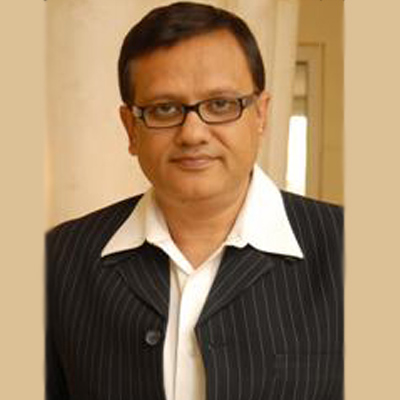
‘We are targeting 20 per cent revenue growth this fiscal’ : Anooj Kapoor- Sab senior vice president & business head
From launching new shows to experimenting with new genres and time slots, Sab has been running from pillar to post to get the ratings right.
Post Sony acquisition, Sab has been dabbling with an ‘identity crisis’. From being a comedy channel to a youth-centric channel and now returing to its original positioning, Sony Entertainment Channel’s sibling channel has seen it all. It has experimented with various genres – youth-centric patriotic shows, stand-up comedies, reality-based acting shows and detective stories.
In conversation with Indiantelevision.com’s Nasrin Sultana, Sab SVP and business head Anooj Kapoor shares the channel’s programming strategies.
Excerpts:
Sab has been accused of experimenting too often with its positioning. How long will this new positioning last?
We have repositioned ourselves as a complete comedy channel. It is the only channel in the country which does linear family comedy shows. All comedy shows in India are episodic. After the repositioning, we are doing light-hearted soaps like other Hindi general entertainment channels (GEC), but in the positive manner.We have recreated the concept of soaps. The shows can be watched by the entire family. All the other soaps till date have upheld the joint-family system as a negative institution with so much added conflict in it. In our shows, we are upholding the virtues of a joint family.
Unlike other soaps on Hindi GECs, new shows (Lo Ho Gayi Pooja Is Ghar Ki, Mein Kab Saans Banoogi? and Jugni Jali Jallandhar ) on Sab have a woman protagonist; but she does not indulge in kitchen politics.
Our content is fresh and differentiated. We have decided not to go by the Amar-Akbar-Anthony route which every GEC is treading upon. Wherein Amar is reality show, Akbar is mythology and Anthony is fiction.
What kind of new shows and segments of comedy will you be introducing?
We will get into various kinds of comedy. Gradually, we will be introducing horror comedy, courtroom comedy, hospital comedy and the likes. We have many surprises to unveil.With so much of comic content being thrown in by different channels including news channels, do you think there is still enough space for a complete comedy channel?
Viewers are ready to digest a complete comedy channel. As far as comedy on news channels is concerned, they feed on GECs. GECs are not showing comedy content in the truest sense but only have stand-up comedy shows. We have amalgamation of all, which is working well for the channel.Earlier all comedy shows were targeted at male audiences while GECs were meant for the females. There was no channel to fill up this gap. We are providing content for happy family viewing.
How have viewers taken to Sab’s new positioning?
The new positioning has really worked well for us. Our GRPs also have seen a boost after the change in positioning.Our driver show Taarak Mehta Ka Ooltah Chashmah has been garnering 0.8 TRPs and is currently the most watched family comedy show on Indian television. After Wagli Ki Duniya, Taarak Mehta … is one of the most successful comedy shows adapted from a book (column in this case). It is compared to cult shows like Office Office.
Are new advertisers hopping on?
Definitely we are attracting more and new advertisers. New brands are coming on.‘For a channel, youth positioning is not a feasible biz model in India‘Will Sab see revenue growth as a result or are you dealing with falling rates to fill up your inventory at a time when the whole industry is set for a slowdown?
With the new positioning, we are targeting 20 per cent ad revenue growth this fiscal.How are you pushing forward your new shows? Which cities are your touch points?
We have rolled out our new marketing campaign Asli Mazaa Sab ke Saath Aata Hai. Sab (meaning everybody in Hindi) is a key word in the entire campaign. Very logically, we derived this theme and our attempt is to convey the message that it is complete entertaining when you are together with your family.We are targeting all the Hindi speaking markets in India like Delhi, Mumbai, Gujarat, Maharashtra, UP, MP, Punjab and Rajasthan.
We will be indulging in various forms of on-ground activations like wall painting etc. India has laughter clubs in many towns and cities, we are trying to get associated with all the laughter clubs. We are going to malls, beauty parlours, grocery shops and ladies coampartment in local trains for a Sab experience by distributing gifts.
With so many show launches and changes in positioning of the channel, isn’t it natural that your marketing costs have to be pushed up?
Yes, in marketing our new shows we are investing a considerable amount. But we are able to convert it into profits.What are the difficulties to sustain as a youth channel?
India still has single-TV homes wherein the remote is still with the women of the house. So what pleases her is watched by the entire family. And as far as a youth viewer is concerned, he has many more modes of entertainment – irrespective of he coming from a small town or a metro. Youth positioning of a channel is not a feasible business model in India because of the consumer behaviour that this segment is exposed to.As per our internal research, people still associate Sab brand as a comedy rather than a youth channel. So we decided to go back to our original positioning.
What all innovations you are introducing after the establishment of the new positioning?
For the first time in India, we are introducing jokes in the mobile platform. These jokes will be edited clippings from our comedy shows which can be downloaded from the mobile operator. We are in talks with various telecom operators. -
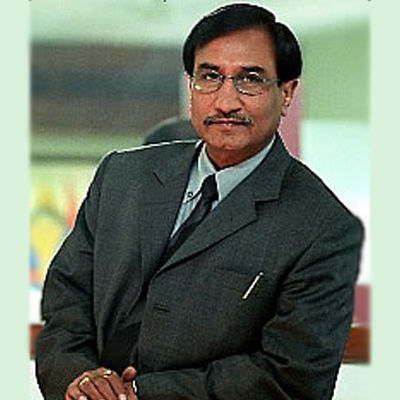
‘We are open to a foreign equity partner for the English channels’ : Laxmi Narain Goel – Zee News Ltd MD
Zee News Ltd (ZNL) plans to invest Rs 5 billion in a slew of channels over two years, expanding its presence in regional markets and new segments.
Immediately on the agenda is the launch of a Tamil general entertainment and a Telugu news channel. Plans are also afoot to launch an English business and a global news channel.
The company is also bringing to its bouquet mix a clutch of regional movie channels. It will soon apply for a Bengali movie channel while Zee Talkies is being transferred from sister company Zee Entertainment Enterprises Ltd.
In an interview with Sibabrata Das, Zee News Ltd managing director Laxmi Narain Goel chalks out the company’s growth roadmap.
Excerpts:
When Zee News Ltd was spun into a separate entity a few years back, it was making a loss due to the Telugu channel. How did things turn around?
The losses from the new businesses have substantially reduced. Zee Telugu, in fact, should break even in the third quarter of this fiscal and Zee Kannada in the subsequent quarter. Our turnover has also gone up from Rs 2 billion to Rs 3.58 billion (standalone) for the fiscal ended 31 March 2008, with Zee Marathi and Zee Bangla seeing exponential growth in the last one year.Is the company still taking a cautious approach and waiting for some recent channels to break even before launching new ones?
We are launching a Tamil general entertainment channel (GEC) with an investment plan of Rs 900 million in September as the Telugu and Kannada channels are close to earning profits. The Telugu news channel will launch in October while the Malayalam GEC should make its appearance in the next fiscal.ZNL is also planning to launch an English business and a global news channel. Do you see this the right stage for the company to leap into such high-cost investments?
We plan to invest Rs 5 billion by FY’10 which will include the launch of several channels. Our intention is to have a complete presence in all the segments.The company is on a high growth curve and expects to clock Rs 3.55 billion in advertising revenues for FY’09, a 25 per cent jump over the prior year. Subscription revenues are expected to grow even faster, soaring to Rs 1.19 billion (from Rs 667.5 million in FY’08). The Telugu and Kannada channels have started generating pay revenues from the last quarter of FY’08 and would only add to this growth.
Will you be inducting a foreign equity partner for the English channels?
We are open to bringing in an equity partner. But all will depend on what proposals we receive from whom and what model is on offer.ZNL so far has been a mix of news channels and regional language GECs. Will we also see regional movie channels forming the bouquet?
We will soon be applying to the information and broadcasting ministry for clearance to operate a Bengali movie channel. We are also transferring Marathi movie channel Zee Talkies from Zee Entertainment Enterprises Ltd (Zeel) to Zee News Ltd. The broad plan is to bring regional movie channels under the company. This will give us a unique mix and add to the growth of the company. ‘We plan to invest Rs 5 billion. Our intention is to have a complete presence in all the segments‘
Zee News has also started a franchising model to enter into new markets. Will you restrict this to smaller markets where it doesn’t make commercial sense for you to enter directly?
The first such channel will roll out in Chattisgarh with SB Multimedia as our local partner. We will be leveraging our brand while the local partner will make the investments. We hope to strike such deals with other players in these smaller markets. Once we have a cluster of such channels, we can sell as a package to advertisers and command better rates. Significant revenues can then flow in from the franchising model. It can turn out to be a successful business model.What made Zee change the positioning of its flagship Hindi news channel?
We have relaunched as a serious news channel and see it as a differentiator in a segment that is witnessing lots of competition. We have decided not to go the tabloid or sensationalism way. This is not the first time that we are changing our positioning. But our motto continues to be the same: We will show what interests the masses and is in the interests of the nation.When you dramatised the ‘Gudiya’ story, was this to do more with ratings than anything else?
We saw the story as having a genuine mass interest among our audiences. It was a national interest story.Isn’t it time for the Hindi business news channel to get a makeover?
We will be relaunching Zee Business and making it more market-oriented. But we will not just be a stock market channel; we will address all kinds of markets and segments.Do you see the surge in personnel and distribution costs upsetting the profitability of the TV news business?
There is a lot of new manpower and talent available in the market today. The supply can only increase. I believe that manpower costs as a share to revenues will not go up, but indeed fall.As far as distribution expense is concerned, the industry will take 3-4 years to settle down. But with DTH (direct-to-home), HITS (Headend-In-The-Sky) and new platforms emerging, we could see carriage costs peaking once the digital systems take off in a big way.
Zee is continuing to bleed in the Gujarat market. Are there plans to address this by launching a Gujarati news channel to support the GEC?
Zee Gujarati is making a small loss. The local viewers watch a lot of Hindi entertainment content. But we have no plans to launch a Gujarati news channel.Why is the ZNL scrip lowly priced in the market?
Zee News Ltd is a terribly undervalued stock. It is a profitable company in the news business, has leading regional GECs, and will continue to post strong subscription growth. The market should adequately react to this. -

‘We’re not going in with a pistol, we’re going with a cannon’ : Rajesh Kamat – Colors CEO
Rajesh Kamat, CEO of Viacom18’s Hindi GEC Colors, has a clear mandate – to ensure his upcoming channel a position amongst the top 3 players in the category within a year of launch.
In a genre where Colors is the 10th entrant, Kamat has his task cut out and will have to bring to bear all the experience he garnered in earlier stints as MD of Endemol India and senior VP commercial & business planning at Star India.
Speaking to Indiantelevision.com, Kamat gives his take on the whys and wherefores of the most expensive channel launch activity ever undertaken by a Hindi GEC.
Excerpts:
What would you term as the core TG for Colors?
While we propagate programming that appeals across, if I have to specify a core TG, 15 to 34 is a number I would peg ourselves on.In a GEC, the 15 to 34 is what gets you your first one third. The 25 + is where the loyal audience starts. What we’re doing is, we’re getting the early adaptors and the initiators in the first phase. Once we get that, we’ve made our entry into the single TV households. That’s when you start consolidating. And the consolidation phase is actually your 25+ female. Though males would come in, that consolidation phase would focus on the female.
That aspect of your programming focus is not reflected in either Fear Factor or in Mohe Rang De, the two shows that have been showcased thus far?
Not right now. What happens is, with these differentiated and disruptive programmes is that you lock in your first eyeballs. With big movies as well.So you will have a big band for movies?
Absolutely.But where will they come from? Isn’t the market more or less locked in as far as movie titles are concerned?
These will be new ones. Now the market is moving towards syndicated movies – first airing, second airing, third airing… So there are quite a few lots floating around.Your entry into viewer mind space will therefore be with these tent pole shows and movies?
I would not say entry into mind space. But the invitation card to viewers, if I can put it this way, would possibly have highlights on these. Because these are the ones that will actually draw the attention of the early adaptors and initiators.But while doing this, we will have the conventional shows that we believe will compete in the long running rating game.
‘Audience flow at an earlier point used to be from a Kasautti… to a Kahaani… and then on to a Kyunki. Because they (the majority) liked the same kind of shows. Those days are gone‘Will you be putting out your big movie titles in this six month window?
Absolutely. Be it big ticket reality shows, be it events, be it movies; that’s where you’ll get the sampling. As for differentiated content, it would be a Mohe Rang De, typically.We see it that 300 GRPs is the target. But it is all this activity in the initial six months that will give us the 100 GRPs (base to build on).
How will you crack the balance 200?
Once you cross 100, it is all about adding 3, 5, 10 GRPs week on week That is what will take time. This is not a T20 game.Isn’t that something that all the channels in the chasing pack (to Star Plus and Zee TV) have failed to crack? How to cross the 100 GRP barrier?
Imagine is three-four months old. I take it as a compliment (to them) when somebody tells them that they can’t go beyond a 90 or a 100. To get to a 90 was not simple. A Star One with all the clout of the Star network behind it opened with a 19 GRP, 9X was 20. Imagine opened at 55, and went to 89 in a short time. But from now on, the growth will be slow.Which raises the question for you? These past three months has seen Imagine make a fast take-off and 9X slowly and surely build its story. That means among the new entrants two have already succeeded and are fighting it out for the third position. And way above them we have the strong number 1 and 2. Is that how you’re looking at it in terms of the distance you have to cover?
Not quite. It is not necessarily going to be a 2 + 2. It could well be a 1 + 3. If that becomes the game, the difference between a 300 and a 150 might grow larger. And Star might gain back whatever its premium was, if at all. That remains to be seen.But if we have such a scenario, the balance three, 150 and 300, or 150 and 100 or 150 and 120 there’s a game. Two players at 120 each and one player at 80, is better than one player at 150.
Again, this whole game is about sustenance. It’s financial investors versus strategic investors. What is the mindset? Are you looking at ‘first year I have to extract this much money’?
You’ve identified six months as the time frame to embed yourself in viewer mind space. That all three new entrants might succeed is not a scenario that most experts have even considered, let alone thought possible?
If you take the US as an example, three networks used to account for 90 per cent eyeballs. Today the same three networks get 35 per cent eyeballs.Even in India, where people used to talk about 70 per cent of the audiences flowing from one show to another, is a thing of the past. Now, there is nothing like saying I go from this show to this show on the same channel. It doesn’t go vertical. You actually migrate between channels based on the shows you like. That’s how the viewership pattern is going.
And it’s not also as if the same person in the same household is watching. You’re aggregating different types of eyeballs. There is no linearity in terms of audience flow.
Audience flow at an earlier point used to be from a Kasautti… to a Kahaani… and then on to a Kyunki. Because they (the majority) liked the same kind of shows. Those days are gone.
So if we were to draw a one liner on why players like yourself believe you are not too late getting into this game, it would be because linearity in terms of watching schedules are a thing of the past?
Absolutely. People will watch shows and come in and go out. That’s what it is and that’s what we’re moving into as a market. -
Marathi GEC space: Zee Marathi winner in numbers game
First the good news. The Marathi general entertainment space is expanding. The market is currently estimated to be above Rs 2 billion for 2007-2008. Now the bad news (for the current players). New entrants are eying a share of the pie.
At present, there are just four players in the space – Zee Marathi, ETV Marathi, Sri Adhikari Brothers Mi Marathi and public broadcaster DD Sahyadri.
A point of note is that apart from GEC, Marathi broadcast arena also includes three players in news – Star Majha, Zee 24 Taas and new entrant IBN-Lokmat. Additionally, there is Zee Talkies which enjoys a monopoly of being the only Marathi movie channel.
Backgrounder:
 In the first phase of launches in this space there was DD Sahyadri, Zee Marathi, ETV Marathi, Tara Marathi and Prabhat.
DD Sahyadri was launched in 1998 followed by Zee Marathi in 1999. Later ETV Marathi, Tara and Prabhat joined the arena between 2001-02.By 2003, Tara Marathi and Prabhat channels had gone off air.
In 2007, Mi Marathi entered the fray.
Position as of now:
In the fiscal 2007-2008, If we check the Tam data for Maharashtra market in cable and satellite homes (4+ TG, 1st April 2007 to 29 March 2008), it has clearly been a two-horse race between Zee Marathi and ETV Marathi, as 1st and 2nd respectively. Though ETV Marathi got the better of the ratings in the period June-August 2007, it started losing ground after that and Zee Marathi emerges the clerar winner in the numbers game. (See the table).
Channel share %Zee Marathi ETV Marathi DD10 Sahyadri (Marathi) MI Marathi Apr ‘07 51 28 13 8 May ‘07 45 39 9 6 Jun ‘07 41 41 12 6 Jul ‘07 39 43 13 5 Aug-07 41 43 12 5 Sep-07 44 39 12 5 Oct-07 52 36 8 4 Nov ‘07 45 38 11 6 Dec-07 48 35 11 6 Jan ‘08 51 32 11 7 Feb ‘08 51 32 12 6 Mar-08 48 33 12 6 Source TAM:- Market: Maharashtra Mkt TG: CS 4+ years Period: 1 April 2007 to 29 March 2008 ETV chief producer Manvi admits, “We were on top from June till August in 2007. However, because of some connectivity and distribution issues we have fallen behind. Zee Marathi is doing well and it is not easy, but we are trying hard, to regain the lost position.”
 Among the other players, DD Sahyadri is maintaining its channel share of 12 in the market. However, also ran MI Marathi has not shown any growth and is stuck with an average channel share of 5. MI Marathi, despite having 3,000 hours of content and boasting of strong brand value among Marathi people, has not managed to get significant viewer eyeballs.
All year performance:
Zee Marathi is leading in this market with an average of almost 46 per cent channel share. At the beginning of April, it was holding 51 per cent market share, but slid after that to a low of 39 per cent in July, wherein ETV surged ahead. On the back of movies, reality and soaps, Zee Marathi had regained its lead position by September and has remained close to an average of 48 per cent ever since. ETV Marathi, meanwhile, has a channel share of 33 in March 2008. The average channel share of ETV Marathi is around 37 for the fiscal 07-08.
DD Sahiyadri had average channel share of 11 for the whole year. While 6 per cent went to MI Marathi.
Content:
So what is it that clicks with the viewer? Is it a feature film, reality show, or fiction based daily soap?
From Tam top 100 programmes for the period under review, Marathi feature film Subh Mangal Savadhan has got the highest TRP of 7.85 on Zee Marathi in April. Second and third were reality shows based on comedy (Hasyasamrat) and dance (Eka Pekshya Ek). Event show Swartarang was fourth while ETV Marathi serial Hya Gojirvaanya Gharat made it to fifth in the Top 5.
Data from the month of march depicts that apart from dance reality show Eka Pekshya Ek, soaps from Zee Marathi like Avghachi Sansaar and Vahini Saheb are also getting an average rating of 5 and 4 respectively in the All Maharashtra Market.
Zee Entertainment Enterprise Ltd (ZEEL) director (Zee regional channels) Nitin Vaidya told Indiantelevision.com, “Zee Marathi is offering viewers variety with quality and continuity. Viewers are very smart and demanding, so we are offering them a mix of reality and fiction. This explains why we are on top.”
Talking about content, here it is interesting to note that Marathi soaps do not focus on so much on saas-bahu tussles and kitchen politics like Hindi GECs.
“Maharashtra is a state of progressive minded people. They don‘t like the typical Hindi saas-bahu sagas. Viewers can see completely different programming on Zee Marathi,” explains Zee TV programming head (till recently Zee Marathi VP) Ajay Bhalwankar.
That makes sense. But are daily soaps or reality shows the ticket to success? Bhalwankar says, “For Zee Marathi both the genres are working.
For ETV Marathi however, it is the soaps that are working. Its soaps Char Diwas Sasuche, Hya Gojirvaanya Gharat and Kata Rute Kunala are getting decent TRPs of 4, 3.3 and 2.6 respectively.
But to be on top, Manvi believes that his channel will have to ramp up its reality quotient. “Reality shows are in. Audiences like to watch dance and music shows rather than fiction. So we are putting emphasise in this genre.”
Will reality help ETV turn the tide in its favour? Time will tell.