|
Sony Pictures Television is on a major expansion course in Asia. It has widened its portfolio with the launch of a new channel, ONE. AXN HD has also launched in several markets.
The key strategy is to up localisation in language, on-air presentation and local original production so as to make the channels more relevant.
In an interview with Indiantelevision.com‘s Ashwin Pinto, Sony Pictures Television SVP, GM, Networks Asia Ricky Ow elaborates on the company‘s brand positioning, growth, challenges and expansion plans.
Excerpts: |
|
|
How would you describe the performance of SPE Networks Asia over the past couple of years?
In addition, we have expanded our portfolio by entering the Asian GE content space with the launch of our new channel, One. In a nutshell it has been a good couple of years with strong growth and expansion. |
|
|
What are the priorities and key strategies for it going forward? |
|
|
To what extent was the company affected by the economic downturn?
While there was some loss in ad sales momentum, it was nothing too drastic. We have always had a strong culture of prudence and the downturn actually provided us a great opportunity to further build our brand and engage our audiences by revisiting some of the basics in how we connect with them. |
|
|
Are things back to normal now or are some Asian markets still feeling the impact? |
|
|
How has SPE Networks Asia grown the number of feeds over the past couple of years? |
|
|
|
|
Could you talk about the growing importance of HD for SPE?
AXN is a channel brand that is very relevant to early technology adopters and we have already launched AXN HD in Korea and several Southeast Asian markets. We have plans to bring it to India as well. |
|
|
When he was in India, Sir Howard Stringer mentioned the importance of 3D for Sony. What role will this technology play in your broadcast business in the coming two to three years? |
|
|
The last time we spoke you had mentioned revenue leakage from piracy being a concern. Is the growing digitisation in India addressing this problem? |
|
|
There are synergies that exist between the broadcast business and other business verticals of Sony in India and across Asia. Could you talk about how this area is being exploited? |
|
|
We are seeing more players enter the English GEC space in India after a long time when there have been just three players. What impact will this have?
With greater competition and more choices, the overall English GE viewership can expand and everyone wins. |
|
|
From a programming perspective is AXN‘s template going to stay the same or are you looking to innovate?
An example comes in the form of AXN‘s Minute to Win It for India, which serves to localise the entertainment experience on the channel and make the content more relevant for Indian audiences. |
|
|
Other English channels have introduced subtitling. Is AXN also doing this? |
|
|
With CBS having launched channels in India, how will this affect deals you do with them? Will new seasons still be available? |
|
|
On the localisation front, how has the response been to Minute To Win It India‘?
We are glad that Indian viewers have readily come forward to offer their honest feedback on Minute to Win It, without our having to ask. This points to real excitement and following for the show and format. We will be taking some of the suggestions to make Minute to Win It even better next season. |
|
|
What is next on the local front? |
|
|
You devised a social media strategy to push this show. How effective is social media in communicating AXN‘s brand message? |
|
|
Social media means that brands lose control to an extent in terms of how information filters down and is disseminated to the consumer. That makes some companies insecure. How does SPE Networks Asia view this medium?
If responses received are negative, then we know we have to improve. Vice versa, if feedback is positive and we can continue in the direction which we know is right. We are never afraid of negative reactions and welcome all feedback.
Only when viewers engage with our channel brand do we understand them better and social media has enabled us to do this like never before and we will continue using it. |
|
|
How is AXN perceived as a brand by viewers and advertisers? Has the perception changed over the past few years?
However, the definitions of ‘Action‘ and ‘Adventure‘ have probably evolved over the years. As audiences have grown increasingly sophisticated and mature in their choice of content, ‘Action‘ and ‘Adventure‘ may no longer be the same hard-boiled, head-on action in AXN programmes of yesteryear.
Instead, we find viewers embracing values such as courage, determination and irreverence embodied by key characters of popular AXN shows such as the CSI franchise, NCIS: LA, Leverage and Justified. This is also true when you consider the great support and following for local heroes from across the region who embark on the race of their lives in AXN‘s original production, The Amazing Race Asia. |
|
|
What work has been done in the new media area by SPE Networks Asia in other Asian markets like Taiwan and Korea and what have the learnings been?
For SPT Networks Asia, we operate the Animax Mobile 3G streaming service as well as online catch-up TV for selected channels and programmes in various markets. We have found that these work for the youth who tend to be more active online and on mobile. |
|
|
Is SPE Networks Asia going to launch more channels in India like AXN Beyond with digitisation growing? |
Tag: GEC
-

“We will be looking into more original productions that are local and relevant to Indian audiences” : Sony Pictures Television SVP, GM, Networks Asia Ricky Ow
-

‘The ad market will grow by 13-15% this year’ : Lodestar Universal CEO Shashi Sinha
Cricket is expected to earn an advertising revenue of Rs 18 billion from its television telecast this year, up from Rs 15 billion in 2010, as it showcases the World Cup and the Indian Premier League (IPL) in back-to-back events.
The World Cup will be bigger for ESPN Star Sports than it was for Sony in 2007. Digging into the game are a lot more advertisers, offering the telecast rights owner a wider plate to bargain from. The telecom and auto categories, which are the two big cricket spenders, have also grown.
Ad monies will not shift dramatically from other genres to the World Cup. There is no real worry for the Hindi general entertainment channels (GECs) as the ad market is expected to grow between 13-15 per cent. Cricket will get its share of ad revenue growth, but it will not substitute the Hindi GECs.
In an interview with Indiantelevision.com‘s Ashwin Pinto, Lodestar Universal CEO Shashi Sinha talks about the advertising opportunities cricket throws up and the impact it could have on the other genres of television content.
Excerpts:
The cricket genre is expected to get a big boost with the World Cup and the IPL happening in the same year. Will we see a big ad shift to cricket this year?
Our estimate is that this year cricket will earn Rs 17-18 billion from television telecast. The World Cup and the IPL will each get around Rs 6-7 billion.How much will ESPN Star Sports make from the World Cup?
Eighty per cent of the figure I earlier mentioned will go to them. The balance will be shared between Doordarshan and news channels.The World Cup this year will be far bigger than in 2007. There is an 80 -100 per cent increase in rates compared to what was paid in 2007.
The logic is that today there are more advertisers. In 2007, there were three telecom companies; today, there are 15. There were five auto companies then; today there are 15. Reach has also gone up. There are at least 60 per cent more TV homes today compared to 2007. I expect ESPN Star Sports to make at least double of what Sony managed to garner in 2007.
Cricket is pre-sold. Eighty per cent of the ad inventory has been pre-sold for this World Cup, which is what also happened in 2007. It is the client and agency‘s gamble on the property when it is pre-sold.
Was there hesitation on the part of advertisers after the disaster of 2007?
It is a question of demand and supply. Also, the issue of India going out after two games does not arise this time (Last time in seven days India was out and people lost interest in the remaining games). Now the schedule has been done smartly. If India goes out, it will be in the third week of March. You are not just sustaining India but also the other teams around India. People, for instance, will follow Australia in anticipation of India meeting them later on, though they are not in our group. Advertisers see a great opportunity in the World Cup. They look at what the scene is today.The advantage of the World Cup is that there is more inventory for clients to get on-board. It is not like the 20:20 format; there are more secondages here.
When people talk about how so much inventory will be sold, they have to keep in mind the fact that the advertising landscape has changed. Advertising was a Rs 160 billion business industry in 2007. Today, it is sized at Rs 280-290 billion. The male dominated categories have grown faster than the female categories. The telecom and auto categories, which are the two big cricket spenders, have also grown.
Is there any performance guarantee in deals done with ESS?
There isn‘t any in cricket. It is easy to say that there should be. If supply outstrips demand, then a broadcaster will ensure that there is performance guarantee. If 10 companies are waiting to take sponsorship, why would there be a performance guarantee? Some Indian advertisers don‘t understand that the dynamics of advertising has changed. It is about the supply and demand ratio.Are we going to see ad monies shifting from other genres to the World Cup?
I don‘t think that the shift will be dramatic. There will be a temporary blip, but overall the ad market will grow by 13-15 per cent this year. That makes a big difference. If it was static, I would worry. Around Rs 35 billion will be added this year. It is not like it is not growing like the US – or is shrinking. Cricket is getting its share of ad revenue growth; it is not that it is substituting the Hindi GECs.
‘Our estimate is that this year cricket will earn Rs 17-18 billion from television telecast. The World Cup and the IPL will each get around Rs 6-7 billion‘How will news channels fare during the World Cup?
They have built specials around it. CNN-IBN, for instance, is doing programming that is different.The news channels will make some money, but the genre is a small part of the overall television advertising expenditure; they earn Rs 8 billion of ad revenue in combine. They will gain but in the larger scheme of things, the gain will be small.
News channels will make around 10 per cent of what the live World Cup broadcast earns. It is a complementary activity for some clients; others take it as it is less expensive.
Hindi GECs say that they will hold on due to the women audience. What do you see happening?
There will be a problem as 75-80 per cent of the Indian homes are single TV. But it depends on who controls the remote. If it is the woman, then the Hindi GECs will be watched. If it is the man, then cricket will gain.From an ad revenue perspective, due to competitive pressures people are advertising more; there are more companies coming in. There is no problem in the larger scheme of things. If this was 2009 or five years back, I would have spoken differently.
How does the World Cup compare to the IPL?
They are different properties and they do not happen simultaneously. I don‘t know why people compare them. If extra money is coming into cricket advertising, then how are they competing?Both properties have relative strengths. If a company is in one property, then its rival will be in the other. IPL gives sustained viewership. In the World Cup, you have to factor in the non India viewership. If India wins, the hype will be much bigger and there will be more eyeballs.
What difference will there be between India and non India games?
There will be a dramatic difference. When India plays, there will be an expectation of a national rating of six to seven. If the hype is generated to ensure that non India games deliver a rating of two, then we will be alright. It should not be that non India games give a rating of just 0.5 or 1.How do you see this event faring vis-?-vis 2003 and 2007?
2003 was very good as India reached the final and the tournament was held in South Africa; the telecast timings were very good. 2007 was a disaster and we went out in the first round after two games. This time India would have to be unlucky not to reach the quarter-finals. We play six to seven matches.The problem is that with the World cup taking place in India, the hopes are higher. In South Africa, the ratings built up slowly and picked up when India played Pakistan and England. With the event being in India, there is more hype. You are seeing different commercials being created. The bad news is that India has to perform. That is the issue.
How important will the audience delivery of World Cup be for the ODI format?
I feel that ODIs are here to stay. People earlier said that Tests would disappear. But it remains healthy, if you look at the India versus South Africa ratings. All depends on the contest and the performance of the teams. In 2009 when Australia came here, people wondered what would happen. Each game was thrilling.Your client Amul has sponsored the Holland team. Could you talk more about this?
It was a bit of a punt taken, but at this point of time the sponsorship is paying off. Holland is a milk producing country. And this is a low cost sponsorship that has been done.What kind of activation is being done by companies?
The ICC should be better organised from an activation standpoint. A key component of activation is tickets. Castrol and other companies are running competitions where people can get tickets. Then you go to the stadium and make a noise, generate excitement.The fact, though, is that there are not enough tickets available. I have sat in meetings where ICC sponsors have jumped around and said that tickets are not available. Activation is a weak area in this World Cup.
Sony is using Dhoni in a campaign while Coca-Cola is doing gully cricket. Can this be construed as ambush marketing?
No! Coca-Cola did the initiative in the past also and it is for the IPL. Ambush marketing is when you are doing activities in a stadium. While Reliance is an ICC sponsor, if a competitor does something in the stadium that is ambush marketing. It is very direct. These examples that you have given do not constitute ambush marketing.There was ambush marketing done in the past. Now the rules are very tight and corporates realise that it is not worth the risk. Big corporates are careful about their reputations. For brands that want recall, it boils down to how good the commercial is. Does it have a good story to tell? That is what consumers will react to rather than anything else.
Didn‘t LG make a mistake by not taking on-air sponsorship for the World Cup?
I am sure that LG would have thought about it. Being an on-ground sponsor, the first right of refusal for on-air would have been theirs. As sport gets more official, ambush marketing is getting difficult. LG would have realised that if they did not take the on-air sponsorship, there would be five other television manufacturers waiting.In terms of ROI, how is cricket faring?
Cricket gives instant reach, eyeballs and passion. The disadvantage is that the entry cost is high. With cricket you do activities in a four-to-six-week period. If you want to do activities for a sustained period, then you have to look elsewhere. Cricket is too expensive to use across the year.Has there been a fatigue in cricket viewership?
In India, there is no sport apart from cricket. In the US, you have four games competing; there is an audience for all of them. Here there is a lack of sporting content. The Indian cricket team cannot play for more than 150 days.Are advertisers looking at other sports?
As sports develop, advertisers will come; they chase eyeballs. In the 15-18 demographics, EPL has become big in Mumbai and Delhi. Clients are looking at it. Tennis and F1 may be very niche, but for certain clients associating with them makes a lot of sense. I expect football to become big here – as it has globally. -
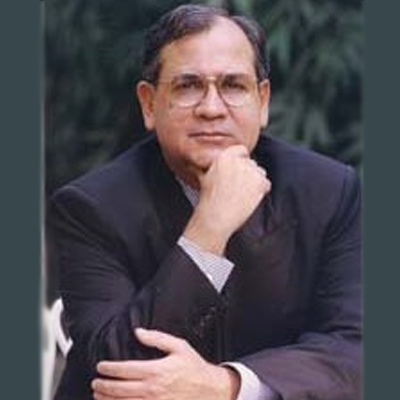
‘We are refreshing BBC Entertainment in January’ : BBC Worldwide Channels director South Asia Deepak Shourie
BBC Worldwide Channels is looking at cracking the Indian market a lot more seriously. The two channels, BBC Entertainment and CBeebies, were almost invisible for three years with a sole presence on Tata Sky, a DTH service provider.
Now a lot more investments are being planned and the focus will be on beefing up the content and distribution of these two channels.
BBC Entertainment is being refreshed in January and programming will be designed based on time bands for India.
A local feed for CBeebies in Hindi is being examined, though a definite plan on this is some time away.
For BBC Worldwide Channels, Asia is the fastest growing market. And within this region, India is emerging as an important market.
While India has been flooded with American English entertainment content, BBC believes that the British flavour will be its big differentiator.
In an interview with Indiantelevision.com‘s Ashwin Pinto, BBC Worldwide Channels director South Asia Deepak Shourie elaborates on the India plans for the two channels.
Excerpts:
How has BBC Worldwide grown its channel business over the past couple of years across Asia?
The BBC Worldwide Channels business is ?262.5 million, up from ?225.5 million in the earlier year. The revenue from Asia grew from ?19 million to ?37 million. Asia is, thus, growing faster compared to the rest of the world.BBC is investing in new channels and geographies. About 35 per cent of BBC Worldwide‘s revenue comes from the channel business.
In India, people say we are too late to enter. Are we? Global media companies are looking at India now. English content is watched by the affluent class. But is there space for everybody? People will have to find their strong propositions. BBC Entertainment will appeal to audiences who watch factual, entertainment and lifestyle content. We are bringing all of these genres into one channel. Our aim is to be a one stop destination.
How important is India as a market for the BBC compared to that of Hong Kong and Singapore?
The size is attractive. It is a market that is hot now. The other markets are good, but small demographically. India will be a very important market for us going forward.What is the roadmap that BBC Worldwide has set for their channel business in India?
BBC World News is already there distributed in 34 million homes and holds its own as a premier news channel.As far as BBC Worldwide‘s channels are concerned, we have had BBC Entertainment and CBeebies in the market since 2007, but only as a small presence on DTH. They have not been mainstream. These two channels have had no advertising.
We are refreshing BBC Entertainment in January with the tagline ‘Seriously Entertaining.‘ Our TG is 15-34 SEC A,B. In the daytime, viewing is leisurely. So we have lifestyle shows like Grand Designs that has Kevin McCloud following homebuilders. In the evening, we have factual entertainment like wildlife. Lifestyle content also airs like Extreme Makeover: Home Edition. At night, from 10 pm onwards, we have shows like Spooks, Top Gear and Sherlock.
But why wasn‘t a push made earlier?
That is always going to be a million dollar question. Should we have pushed earlier or is now the right time? The English market is expanding rapidly. So there is nothing wrong in entering now. The BBC Worldwide team in the UK is looking at India seriously now.How much is being invested in India and when do you expect to turn profitable?
I cannot talk about numbers. However, all that I can say is that we see an opportunity here. Any market takes time to mature. Viewership traction has to be built along with the advertising base.
‘Research has confirmed that the audience we look at does not want localisation. There is enough local content around. The English audience wants international content‘Is the look and feel of BBC Entertainment being changed?
The whole look and feel will change. The aim is to make it more vibrant and colourful.And from January, we will design programming based on time bands for India. There will also be a lot of fresh content and new shows.
From 6-11 am, you have will light content like Trish‘s Fresh Country Kitchen. Early evening from 7 pm -10 pm will have a mix of lifestyle and factual shows like BBC Earth. Post 10 pm, we move towards more edgy, fast paced content like Luther which is about a detective who is fascinated by the darker side of human nature. London Live, which looks at the music scene, will also air at this time.
The English GEC space is known for having ‘snacking‘ viewers. How do you plan to build loyal viewers?
People want quality entertainment. It is not so much about storyline building as it is in the Hindi GEC space. People will come back to the show because of quality – there are shows like Wonders Of The Solar System and Human Planet. The key is to reach the audience with relevant content and, thus, offer advertisers relevant eyeballs. If you do this, then loyalty will automatically build.Is having a British flavour going to be your USP?
That is important. Most content on air is from America. The BBC produces a wide ranging amount of content which has not been seen like Wallander, with Kenneth Branagh playing a detective in Sweden. The channel will give you everything.You also have other players coming into this genre like Big CBS. Do you see viewership growth happening as a result or will there simply be fragmentation?
Viewership will change and grow. The question is whether everybody will get the viewership they are targeting. Fragmentation is a challenge. To counter it we are giving consumers everything in one channel. Our aim is to make an impact in the English entertainment space. The more you fragment by focusing on one genre, the chances are that people will see it.Are you selling BBC Entertainment to advertisers?
Yes! The response is encouraging. We want to fill our inventory with quality clients. You have premium brands coming into the country. The world‘s most expensive car, Bugatti Veyron, has just been launched. They need to reach out to the relevant audience who are upscale. We will provide this audience segment. BBC Entertainment is being pitched as the Best of the BBC.The English space is worth $200 million and I see it growing. The nature of the market is such that you will depend more on advertising. Digitisation needs to spread for subscription revenues to really pick up.
What are the synergies between BBC Worldwide Channels and the other businesses of BBC Worldwide?
The magazine business has properties that the channels can exploit. An example of this is Top Gear.English GECs have started following a stripped strategy where one show airs at a time block across the week as opposed to a different show airing each day. Is BBC Entertainment doing something similar?
A stripping strategy is good if you have long running shows. If it is not there, then it will not work as a concept. It depends on the concept. You can have factual content at a certain hour across the week, which we do. A documentary, though, cannot have that. The runtime is limited.Will localisation play a role in your strategy?
No! Researchhhas confirmed that the audience we look at does not want localisation. There is enough local content around. They want international content. The English audience is getting more confident. They are world citizens. They want world programming. Local shows will add a lot of cost for us, but not much value.
What is being done for CBeebies?
We could look at launching a local feed for it in Hindi in due course. As of now, we have not come up with a strategy for it.Are you launching more channels in India like BBC Knowledge?
Not at the moment. BBC Entertainment has everything. When the time comes to have a wider bouquet of channels, we will look at it.BBC is launching BBC HD in more territories this fiscal. Is HD still some time away for India?
HD is the future. Right now there is a bandwidth issue. Also, there are not many consumers who have HD ready television sets. When these two issues are sorted out, you will see a push for HD content. There will come a time when SD becomes HD.How will you leverage the mobile with 3G coming in?
We will focus on this when the time comes. We know that people will want not just news but other genres like factual content.There will come a time when SD becomes HD. -

‘We want to be the No. 1 channel in two years’ : Sony Entertainment Television business head Ajit Thakur
Struggling to jump into the top Hindi GEC league, it was a year back when Sony Entertainment Television decided to undergo a complete overhaul. New programmes were introduced and a new association was inked with the biggest film production house, Yash Raj Films, to produce soaps that were different both in narration and production value. While not all could fetch the requisite numbers for Sony, they did help the channel cover quite a distance – from a 80 GRP mark to a peak of 180 GRPs.
Now as Sony enters into its next phase of growth, it is betting big on the decade-old KBC, helmed by Bollywood legend Amitabh Bachchan. Sony believes that the property, infused with fresh innovations,will do more than just getting the numbers: it will help the channel change its fortunes.
In an interview with Indiantelevision.com‘s Anindita Sarkar, Sony Entertainment Television business head Ajit Thakur speaks about the channel‘s programming plans at large.
Excerpts:
How challenging has been the last one year for you at Sony?
Sony is a great brand but in the last couple of years it had not lived up to its potential. Now as I look back one year from the time I joined, we have achieved a lot and the credit goes to the brand. It has always been so strong that every time we do something that is targeted at our audience right, we always get results.
So what has been the focus for Sony?The focus in the last one year has been on three things. The first one of these has been research. Audience taste in this country is shifting every 1-2 years and, therefore, we were very clear that everything that we do has to be supported by rigorous consumer testing and extensive research to enhance our consumer focus. And research is not just to track but also to forecast the future trends.
The second focus for the channel has been to strengthen as pioneers in new programming. We got in a wide variety of shows ranging from the Yash Raj banner which were very diverse in terms of content and production value to something like Crime Patrol. We also made Aahat into a daily and Indian Idol, which had been traditionally a weekend property, was shifted to weekdays to give audiences a new experience. Also, no other channel has a daily thriller like CID.
The third very important and conscious thing that we are concentrating on is to produce content that entertains the entire family – and is not just exclusive to women or men or kids. Also, the content should do more than just entertainment.
But even after so many launches in the past one year, the channel is still perceived to be synonymous with CID while also deriving ratings from Indian Idol. Why so?Yes, CID is our flagship property and has been doing very well for us. So, if we have a strong property, why not build on it? We have extended the property to CID gallantry awards and we are thinking of CID comics towards the end of the year.
Meanwhile, the growth has not come just from one property. We are slowly and steadily expanding on our properties. Now we have Indian Idol, then we will have KBC and we will be building one property at a time.
Our other shows – Aahat, Crime Patrol and Boogie Woogie – are also fairing well for the channel. Baat Hamari Pakki Hai is picking up. And if you see, none of our shows is similar to the other.
But you still weak on fiction as compared to the rest of the competitors…Look, it has been a very conscious part of our strategy to give audience differentiated content. So, if you see, our programmes are very different from what is happening on all the other four channels. The fact is that from last June to this June we have seen an almost 100 per cent growth. Also, our primetime GRPs have grown from 40-75 GRPs. Meanwhile, in DTH households, we are the number two channel already. And DTH is a controlled environment where everything is in place and it is no more a Bombay-Delhi phenomenon. This shows that our content has future potential.
Does that mean you do not want a successful soap on the channel?
We do want to do a successful daily soap and build more on fiction but it has to be unifying and should be carrying a message. Also, we will not look at dragging a soap just for the sake of TRPs. We will look at finite properties that will help build the brand Sony and stand for it. We are expected to bring variety and target younger people. India has a lot more people below the age of 35 and Sony has a very high skew towards this audience segment.
‘Now that it is time to enter the second phase of our growth, we want to kickstart it with KBC ‘
Then why is it that even after bringing in young and differentiated content with the YRF shows and some other new ones too, it did not do much well for the channel?When we launched YRF, Seven and Mahi Way did fairly well. But all of them were not up to the expectations that the market wanted. However, when we went for it we actually knew that the content is ahead of its time in comparison to current television in terms of narrative as well as treatment. So we were the early adopters and the ratings did not come in the first season. But we have learnt that they will work if we be at it for some time and bring back new seasons.
Also, another learning for us is that we shouldn‘t launch multiple properties together. Which is why this time we will bring back the shows one by one so that the audiences grow on them.
When do you plan to bring back the new YRF shows?
We will be launching two new shows from the YRF stable by the end of this year and the new seasons of two more properties will be launched next year. Apart from these, we will also be launching two other fiction properties by the year-end.
Why did you decide to bring back KBC despite it being an old property?
The difference between reality shows and game shows are that reality shows are often very edgy and not suitable for the whole family. And since we are targeting the entire family, we knew it was time to bring back a game show on the channel.
When we did our testing for KBC, everyone said that they would watch the show because it has knowledge, entertainment and Mr Bachchan. So they encapsulated the show for us very well and that has a huge implication for us. We are sure that apart from numbers, the show is going to generate huge eyeballs for the channel.
Also, now that it is time to enter the second phase of our growth, we wanted to kickstart it with KBC.
What is your scheduling strategy? Which time bands do you concentrate on?Because a lot of our focus is on research, our scheduling strategy is pretty much about what is happening in the household. So we start our early primetime with soaps that are for the regular family and then as we go through the day, we move into non-fiction that is Indian Idol. Towards the end of the day, there is Crime Patrol, Aahat and CID as there is more of older audiences and men coming into the channel.
Also, we are trying to keep as much of content on the channel to keep the family together. Earlier, it was just the weekends that would look at keeping everybody together – but now it‘s weekdays too.
And the third thing is that while a lot of the channels are doing afternoons, we have opened up the late primetime at 11 pm as an original time band.
What are your movie plans?We are actually looking at doing less and less of movies. About a year back, we were doing 4-5 movies a week. But now we are doing only two movies a week. And within this, we are looking at interesting titles. We have about eight programmes on the channel and we will repeat that during off primetime. We are also looking more at events.
What are the challenges and opportunities for Sony in this cluttered market?
We want to maintain a steady growth curve upwards. We want to take optimal decisions in terms of investments and programming and don‘t want to take away the positioning of the channel. Our daily worry is what is the next new innovative programming that we need to bring in and what is the next new insight we need to catch from the consumers.
The challenge for us will be to continue retaining our present viewers while getting in new audiences. We will also have to continue to build on our youth base – more from the smaller towns.
So is there a GRP or position you have in mind?
We want to be the number one channel in two years.
-
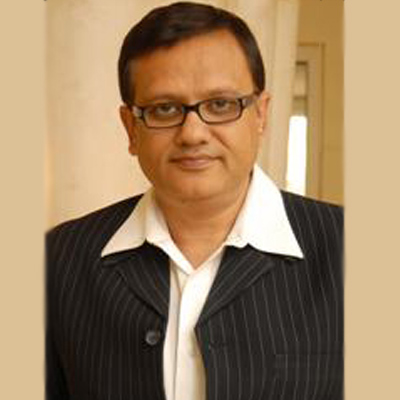
‘Sab is the only channel in India that is doing daily comedies’ : Sab EVP and business head Anooj Kapoor
The top three Hindi general entertainment channels punched hard at the second-tier channels with differentiated content, high-cost reality shows and big ticket movies. Barring Sab, the others such as Star One and Sahara One cracked under pressure.
So what did Sab do right? It correctly positioned itself as a family comedy entertainment channel and brought in light-hearted content that worked.
Sab had a basket of shows that crossed 1 TVR, catapaulting the channel to 101 GRPs for the week ended 12 June.
The channel will stick to its low-cost programming but also introduce family-based reality shows.
In an interview with Indiantelevision.com, Sab EVP and business head Anooj Kapoor talks about how the channel progressed in a difficult environment and what content is planned for its growth.
Excerpts:
The top three Hindi general entertainment channels are seeing high drama. How has Sab managed to march ahead in this adverse environment for the second-tier GECs?
The channel has traveled a long way since its 28 GRP days that it used to collect two and a half years ago. We have even crossed 100 GRPs. Our progress happened after we repositioned Sab as a family entertainment channel. We aired daily family comedy shows, showcased warm and lovable characters and mixed differentiation with familiar content.The familiarities come in the form of joint family settings, female protagonists, and linear shows running from Monday to Thursday. The differentiating part is content that is light hearted and positive. We have the only set of shows where the consumer and ‘sasural‘ both love the female protagonist and the channel is as such the only one which has a brand slogan in the GEC sector. This helps in our positioning and it is now clear, specific and well defined.
What led to this change of positioning of SAB from a youth to a comedy channel?
Earlier the wisdom in the channel was one which felt the TG should be between the 16-25 years age group. But we forgot that the viewership pattern in India is different. There are more single TV households and it is the women who control the remote.Thus all prime time spots need the women onboard as that is the key. That‘s why all shows depicting women suffering, like dowry issues, female infanticides etc. which are such deep rooted stigmas, strike a chord with the audience that is predominantly female, and can empathise and relate easily to what‘s shown.
We, on the other hand, are addressing the fact that times have changed, families are now more nuclear, and there is more balance and light-heartedness. We have barely done 50 per cent of what we can do, but consumers have understood the message we are sending-“Laugh as a family, than cry alone.”
Has this led to an increase in advertisement revenues?
Yes, in the last 30 months our advertising revenues have increased as well. Earlier we had just about 35 advertisers on board, but right now we have more than 60. Back then, Star One and Sahara were in the 70s and 80s as far as GRP‘s go and now they are nowhere close to us, even though they have bigger budgets. In fact even NDTV Imagine, which we are only marginally behind on the overall GRPs and now ahead of in the primetime Monday-Thursday slot, has a seven times higher budget than ours.Are you looking to come out with some high cost production shows in the future, seeing the current trend in GECs?
No, we are not looking to do any high cost productions since they are currently not needed, as we have not yet hit the stagnation level and are still growing at a steady pace. We are also not looking for funding of any kind.How has the journey into the comedy space been for SAB?
We are currently the only channel in India that is doing daily comedies. Most channels will run a weekly comedy at the most. Apart from this, our silent comedy, Gutur Gu, is only the second ever silent comedy to be really successful, after Mr. Bean, and we are now going to sell the show abroad via syndication. So, I‘d say the journey into this genre has been hugely satisfying, successful and fun for all of us.‘We are on the lookout for non-fiction or reality shows. Our plan is to have a family-based concept for a reality show‘Have the lower budgets hampered on the production value?
Well not really, as we have been able to manage our costs very well, even though the sets we create and use are very huge too. In Lapataganj we have created an entire village, while in Tarak Mehta Ka Ultah Chasmah the set is an entire colony. And to top it all in our newest show to be aired, Papad Pol Shahuddin Rathod Ki Rangeen Duniya, we have created an entire town as the set!Thus we have been able to improve at an operational level without compromising on our sets or production values, while maintaining a tight budget and getting the desired results.
What are you the most proud of when it comes to SAB‘s current standing and position in the market?
Currently 5 of our shows have a 1+ rating and this is really quite an achievement. I say this not only because it is quite difficult to have shows with even a rating of 1, but more so as we achieved this irrespective of the huge constraints we face as a channel. These include us not having an afternoon slot. Due to budgeting, our programming is restricted predominantly from Mondays-Thursday; the number of hours of programming and even our overall reach are all major hurdles we are currently faced with.What areas are you concentrating on in terms of investments why?
We are going to invest a lot in distribution. Trying to move from the 38 to 55 per cent reach is the first gap we are hoping to plug. In just a few weeks of work, we have already managed to move from 38 to 41. We are also going to improve the placement of the channel.Besides, we want to expand our programming to 6 days, including Saturdays, without trying anything different in terms of genre.
The current flavour of all channels has been reality shows and non-fiction. Is SAB going to venture into that space as well?
As far as non-fiction or reality shows go, that is definitely on the cards too, and is a genre we would like to look at. We are, in fact, on the look out for a family-based concept for a reality show but are yet to come across something.SAB is one of the few channels that markets the entire channel and not just shows. What are the initiatives you are currently involved in?
We are in the midst of many marketing initiatives right now, specifically in places where families will be together like theatres, bus shelters and other OOH areas.We even had a SAB mela in Ahemdabad which was a family fair attended by 27000 people and this was truly a one of its kind consumer connect campaign.
The fair was another platform for family entertainment where people even got to meet and spend time with many of the artists from the shows they like. The fair also had a school connect program, where different schools and college teams participated in entertainment activities like group dance performances. We also had a lot of local artists and cultural flavours at the fair, and the overall response was so encouraging that we have decided to repeat this initiative in 15 more cities this year.
Our other marketing plans as a channel include a radio promo, SAB ka Damadji wherein the “damadji” character created comes on air and talks to a group of ladies who ask him questions and he answers them via jokes and funny anecdotes.
Also the virals we have been airing have done very well and have helped get in more viewers.
Tell us a little about your new show, Papad Pol Shahuddin Rathod Ki Rangeen Duniya, that will be aired soon?
We like taking renowned pieces of literature and using it for our shows. This is the basis of our new show too, which Shahuddin Rathod, an author with global following, has penned. His humour is warm, family based, closed knit and has a message.Papad Pol is like a street or machala where most of the people living are in the papd business. It is their lives and day-to-day interaction that forms the show.
What‘s next for SAB viewers to look forward to?
Next in the line for SAB is another silent comedy which will hopefully hit the air by July. The pilot has already been shot and approved. Apart from that, another show along the lines of Pink Panther, which is about a bumbling detective who solves crimes, will be specifically for weekend viewing. -

‘Success of a TV channel is to find homogeneity in a heterogeneous market condition’ : Sony Entertainment Television VP marketing Danish Khan
2009 was an eventful year for Sony Entertainment Television (SET). Languishing behind the top three Hindi general entertainment channels (GECs) and even newcomer NDTV Imagine, the channel relaunched with a bunch of differentiated shows. Some worked, some didn‘t, and the programming overhaul failed to lift the ratings to any position of strength.
Sony then discovered the value of its old horses in C.I.D and Aahat. The channel zoomed to a GRP (gross ratings point) of 180 and the road ahead looked promising with the launch of YRF shows. But the leading film producing house evoked a tepid response among audiences for its TV shows, leaving Sony in hunt for new properties that would aid it to move up the ratings ladder.
Marketing several new properties and the relaunched channel has been a challenging task under these circumstances.
In an interview with Indiantelevision.com‘s Anuradha Ramamirtham, Sony Entertainment Television VP marketing Danish Khan talks about the strategies that Sony adopted during this period as it searched for width and depth of reach across markets.
Excerpts:
How tough was it to market Sony Entertainment Television in a year when a bruising battle was fought at the top among the three leading Hindi general entertainment channels?The GECs were in a growth mode last year and the leadership battle became intense. Marketing, thus, became much more strategic and key to a channel‘s fortune. Sony was clearly on the growth path and we were able to build the brand with high impact campaigns for our bigger properties like Indian Idol 4, Dus Ka Dum, Bhaskar Bharti, Aahat -the all new series and Iss Jungle Se Mujhe Bachao. We also rejuvenated the brand CID. All these shows were successfully marketed in challenging times and conditions.
What exactly were you looking at marketing when the channel went for an overall overhaul?SET has existed as a brand for long and our aim was to refresh the look and feel of the channel. The relaunch wasn‘t just of getting a bunch of new shows to appear on the channel; it was also about refreshing the channel‘s identity. While we retained the logo, we went for a new packaging and brand identity. On the programming front, we retained some of our old properties like CID, Boogie Woogie and Comedy Circus and introduced some new fiction shows including Bhaskar Bharti and Ladies Special. This helped us in improving the channel‘s ratings by over 150 per cent over a nine-month period.
Did your marketing spend expand during this makeover period of the channel?The channel‘s marketing budget stayed almost flat. We were fortunate in that for the first half of the year, the media cost was stagnant due to recession. We also changed our media buying mix a bit by increasing our exposure to low-cost mediums like digital and experiential marketing. We could have a similar impact at lesser cost. The marketing was much more rigorous and we did all to stretch the value of every rupee that we spent.
With the Tam panel expanding and new markets opening up, will you have to tweak the marketing plan for the channel?With the TAM panel expanding, it‘s going to be a challenge not only for us but for all marketers in the channel space. Thankfully, we have a strong distribution network. In 2003, when Tam was moving to smaller cities and towns, Sony was the fastest to reach to new markets and develop a strong brand affinity. With the new markets opening up, it will be a good opportunity for us.
How different is it to market in smaller towns as compared to tier I cities?The tier I cities and metros are mature markets and are organised in nature. In these markets, there are multiple media options available to reach to the consumer like availability of FM stations and organised outdoor media. Consumers in these markets are early adopters to new trends and there are huge amounts of touch points available to reach out to them. Hence, these markets are easier to monitor.
These markets are, however, cluttered. The challenge here is not restricted to reaching to the consumers but also creating a high impact as they are bombarded today with hundreds of messages. In addition to availability of multiple media options, the markets have also become expensive. So, the challenge is both being impactful and cost effective.
The smaller markets are not organised. There is lesser number of touch points and everyone wants to reach there. Experiential marketing works wonder in small towns if it is sprinkled with mass media applications. Consumers here are fresh to meeting celebrities and such activities are hugely accepted and help in creating the right buzz.
‘For the first half of the year, the media cost was stagnant due to recession. We also changed our media buying mix a bit by increasing our exposure to low-cost mediums like digital and experiential marketing‘
What was the most cost effective medium for marketing during recessionary times?Recession or no recession, television is the most cost effective medium for marketers. Thankfully, we have a very robust network with five performing channels; these form the base for all our marketing plans. Outside television, we use different mediums. In 2009, Internet and mobile (digital medium) were used more judiciously to reach to the youth who are tech savvy. Also, experiential marketing (BTL activities) was pushed hard last year and they yielded good results.
With advertisers spreading their focus into smaller markets, how will GECs and particularly Sony benefit from this?Like television, most categories and brands today have a pan India presence. TV is increasingly becoming relevant across categories as its spreads out both geographically and demographically. Like any other marketer, Sony is also keen on small towns. Besides, the channel enjoys a robust distribution platform across India.
How do you address such a heterogeneous market?
The success of a television channel is to find homogeneity in a heterogeneous market condition. In India, the markets which we cater to are extremely heterogeneous in nature. A Punjab market, for example, will think and behave differently than a Maharashtra market which, in turn, will be different from Uttar Pradesh. But there are certain universal themes that work across markets. The content and communication has to be based on this. Media behaviour and mediums can differ. As far as the message is concerned, it should always be built around something that works universally. That applies to successful shows as well; they have messages that are universal.
YRF is a strong movie brand. What marketing steps did you take to extend it into a television brand?It was challenging to work on the YRF shows. These are early days yet and the five weekend shows have started attracting a definite set of loyal audiences. We are doing a lot of on-air promotions and experiential marketing to build the popularity for these shows.
-
GEC 2009: Changing trends and confused leadership
Year 2009 shall be a year to recall…if not for all, at least for the Hindi general entertainment channels!!!
Even through the recession fever, and the debacle of three channels, the Hindi GEC genre has roared to an eleven per cent growth over the previous year. According to Tam data for Hindi speaking market (HSM), the share of Hindi GEC, which stood at 34.59 per cent in 2008, has moved up to 38.39 per cent in 2009.
Despite a strong cricket calendar, audiences batted for entertainment content on the GECs. While daily soaps generated interest with their varied range of focus, reality content brought in male and younger viewers.
The fragmentation, led by Colors, helped the Hindi GEC ad market to grow. Says Zee Entertainment Enterprises Ltd (Zeel) chief revenue officer Joy Chakraborthy, “We expect the Hindi GECs to take away Rs 24 billion in ad revenues during FY‘10, up from Rs 19 billion a year ago.”
A more conservative estimate would put the Hindi GEC ad pie at Rs 23 billion, miles away from the competing genres in the broadcasting space.
The genre did not just see ‘masala‘ content but also twists and turns in the ratings turf as Colors overturned Star Plus‘ nine-year monopoly to stay at the top.
Also, with recession being the talking tale for ‘09, the general entertainment space faced hiccups galore. And yet with them came intelligent designs that broadcasters and markets corroborated to fight back the downturn plague.
So how did the genre fair in the calendar year 2009? What were the major trends? How did the Top 3 channels – Colors, Star Plus and Zee TV – play the game? Did the economic downturn hamper growth plans? Read on…
A Bird‘s eye View
A major part of the year saw a raging ratings war between Colors, Star Plus and Zee TV as the channels used all the ammunition from their armoury for the great GEC battle. Be it staple fiction shows, reality, big movies, scheduling, marketing and promotions!
Source : TAM 
As the GEC space opened up and audiences got more choices in terms of fresh programming and more channel options, the game was set to change in the GEC room with viewers asking for more. Competition increased as contenders for the top spots transformed as well.
Also, in the month of May, Sony Entertainment Television (Set) overhauled its programming. During the course of the year, Sony‘s old horses – CID and Aahat – delivered and the channel moved from 80 to 180 GRPs to occupy the fourth spot.
 NDTV Imagine fought on and came up with Rakhi ka Swayamvar to grab its peak ratings. The channel gained in mindshare though in the ratings ladder it still has a long way to go.
Meanwhile, Sab, Sony‘s sibling channel, donned the family comedy hat and started experimenting with different strands within the genre to surge ahead of Star Plus‘ second GEC Star One.
The year also saw the death of Zee Next, while Real (a Turner -Alva joint venture) and 9X (launched by Indrani Mukerjea and Peter Mukerjea with a promise of nine times more) await a verdict on their existence.
Opines Lodestar Universal COO Nandini Dias, “Despite two channels almost on the verge of closing down and a couple of channels not doing well at all in 2009, the genre saw a growth in its market share. This is because the gap has been compensated by the top 3-4 channels in the genre, which have performed fairly well during the year.”
Surge in Reality Quotient
Unlike 2008, when television predominantly targeted female viewers with high-voltage drama soaps, 2009 saw a huge surge in reality content in the overall GEC programming. And the format, coated with not just drama but controversies too, had an impact beyond its ratings. Result? Not just women but men too were driven to the genre. The share of reality shows, which was 4.3 per cent in 2008, increased to 6.9 per cent in 2009, a jump of almost 60 per cent (Tam data, HSM, for top five channels).
Source : TAM, Top 5 GECs 
Elaborates Dias, “Unlike 2008, when the shows were more about Kyunki‘s and Kahani‘s that were mainly woman skewed, 2009 saw the launch of a slew of shows, especially reality that targeted both the woman and the men audience equally like Sach Ka Saamna and Khatroan Ke Khiladi.”
Adds Sony Entertainment Television business head Ajit Thakur, “2009 saw GECs experimenting with non-fictions by launching reality shows other than the usual singing and dancing format.”
 Thus, while viewers were subject to some new and interesting formats like Rakhi Ka Swayamwar, Sach Ka Saamna, and Pati Patni aur Woh, there were a few that failed to catch attention like Perfect Bride and Iss Jungle Se Mujhe Bachao.
Not to forget, some old formats did get bigger in their sister seasons like Bigg Boss, Khataron ke Khiladi, India‘s Got Talent and Entertainment Ke Liye Kuchh Bhee Karega.
Additionally, dance-and-music-based reality shows too saw their ultimate high points on Zee TV with Dance India Dance and Saregamapa (with kid anchors).
Says Star India EVP marketing Anupam Vasudev, “In order to appeal to urban viewers, we saw differentiation and innovation in the reality space. And thus, apart from the regular singing/ dance based shows, this year saw more experimentation with shows which created buzz for the channel and attracted a lot of eyeballs.”
The Fiction Saga
Well, the year surely reaffirmed the fact that fiction shows are the staple diet for Indian audiences. Tam data suggests that the share of daily soaps in GECs remained 60.4 per cent in 2009. The trend, however, shifted away from the saas-bahu sagas and the K-series to more meaningful and issue-based programming.
“Television content has moved away from the unrealistic and over-the-top depiction of stories and characters. The focus is now on realism, socially relevant themes, positivity and family values,” suggests Vasudev.
The trend was started by Colors and picked by all. Earlier in an interview with Indiantelevision.com, Colors CEO Rajesh Kamat had said, “There was a fatigue built in for the kind of soaps that were running on Indian television. We made disruptive and differentiated content our main plank. We were willing to take a calculated risk; our concepts were different and on the riskier side. But they worked.”
Zeel COO and Zee TV business head Nitin Vaidya notes that Indian television saw an interesting turning point with a different kind of story-telling that emerged with newer shows. “Variants like Balika Vadhu and Agle Janam Mohe Bitiya Hi Kijo brought in an all-new flavour to the primetime,” says Vaidya.
Source : TAM 
The new breed of fiction shows saw historic high points in terms of ratings. The top highest rated fiction shows in the year, as per Tam, were Balika Vadhu (10.2 TVR), Uttaran (9.6 TVR), Bidaai (9.5 TVR), Yeh Rishta (8.1 TVR), Pavitra Rishta (7.1 TVR) and Naa Aana Is Desh Laado (7 TVR).
Avers Vaidya, “With subjects ranging from those of historical importance and social awareness to differential talent, Zee TV‘s shows have been appreciated and acknowledged across the nation. Each of our new properties yielded results and there was no show that had to be withdrawn during the year.”
Adds Vasudev, “With competition heating up and the saas-bahu image that Star Plus had to shake off, we came up with a host of innovative, fresh and creative content to entertain our audiences this year.”
Movie game heats up
For a major part of the year, movies acted as a differentiator for the leading channel in the GEC genre, adding to the spikes.
The movie syndication model allowed the Hindi GECs to spread their risks as they narrowed the window between theatrical releases and their TV premieres for new products. Explaining the movie syndication model, Dias says, “Unlike earlier days, when buyouts happened for the entire movie, 2009 saw buyouts happening in number of airings as the costs had really shot up during the year. So you saw films like Jab We Met running across multiple channels at the same time.”
Cost corrections happened and the big bets on movies were taken by Colors and Star Plus. Some movies were aired even without breaks, facilitating weekends to see an upsurge in viewership.
It is interesting to note here that post the two-month standstill in movie releases due to the producer-multiplex tussle, Colors ramped up its movie slate and aggressively purchased the first airing rights of many recent releases including Blue and Ajab Prem Ki Gajab Kahani.
Scheduling strategy and break-free content
With competition in full force and consumers moving the stick hard, broadcasters surely did not want to kick their buckets soon. In a bid to maintain a steady presence, many channels reviewed their programme scheduling strategies and also began running break-free content.
For starters, channels began pooling their full content strength onto the 7 to 9 pm band that appealed to the non-metro masses, attracting viewers from smaller towns.
Also, the 9-10 pm content was tailor-made for both smaller towns and metros to bring in an overlap of viewership. Meanwhile, the more urban-centric shows were moved to the 10 pm slot.
The second major change was the scheduling transformation of hour-long episodes. The concept was first sketched by Colors, as the channel asked producers to give a special one-hour episode in a month. The idea was to increase sampling and retain viewership.
The same design ran through Star Plus and Zee TV. “These are tactical steps taken to ensure viewers are retained on the channel and there is a seamless flow of audiences from one slot to another,” says Vasudev.
Vasudev, however, believes that these tactical schemes cannot be sustained for long. “While one-hour specials give channels incremental GRPs, they do not impact much of the viewership in the original slot,” he says.
Star Plus had moved one step ahead and extended their popular shows, Bidaai and Yeh Rishta, to seven days a week. However, as the model was not sustainable, they went back to four days a week.
 Says Thakur, “Scheduling of specials is a practice done by GECs nowadays to get a spike. It‘s a stunt, a smart move but isn‘t sustainable in the long run. For five episodes a week, you have to shoot for 210 minutes. You have to shoot 50 minutes daily for such spikes and that isn‘t possible in the long run.”
Ad volume grows
Hitting straight into the economic downturn, there was a huge concern at the beginning of 2009 that GECs would go through an ad slump and rates would tumble. That proved wrong and though rates were under pressure, ad volumes grew.
Says a senior media specialist from a top media buying firm, “FMCG, which accounted for about 38-39 per cent of the total advertising spend on the Hindi GEC space in 2008, moved up to about 50-54 per cent in 2009. It is important to note that FMCG looks at cost efficiency and spends if there is a return on investment. Automobile and telecom sectors were also big spenders and were looking for impact.”
Adds Dias, “With FMCGs primarily spending on the mainline GEC genre along with a growth in the genre share itself, the GEC space has certainly seen growth over others. But it may have been a more polarised growth. In absolute revenues the top three – Star Plus, Colors and Zee TV – have had a much larger pie than Sony, Star One, Sab, and NDTV Imagine. Colors has surely yielded revenues, quite equivalent to that of Star and Zee.”
The market seems to have eased and the last three months of the year have seen a big jump in advertising revenues.
Shaping up in Twenty10
The GEC space can be exposed to pressure points in 2010 amidst fragmentation and stiffening competition. The fight at the top among Colors, Star Plus and Zee TV promises to get bitter. And while Sony threatens to enter the top-rung, NDTV Imagine is readying to shape its destiny under a new owner in Turner International.
“If it is a fight amongst five strong players, then advertisers can make better use of the fragmentation. It is going to be a dog fight. But the GEC genre is set for growth,” says a media analyst.
Agrees Vasudev, “Channels have to outdo themselves in terms of their offerings – leave alone outdoing their competition – to attract eyeballs and to keep them glued to their channel.”
Media experts say advertisers will be willing to pay more in 2010 as the economy improves. “The GEC genre could post 20 per cent ad revenue growth in 2010. Hopefully, we will see clients willing to invest money in brand building. The channels, in turn, will need to reciprocate it with quality programming. Also we are slowly getting a sense that there maybe a fatigue setting in with respect to reality shows. Also believability is reducing. So maybe channels will need to look hard for the next thing now,” says Dias.
As the overall GEC genre grows, Madison Media Group CEO Punitha Arumugam is optimistic that the profitability will also go up. “Since other genres have also started growing, 2010 will not see a very dramatic increase in the GEC genre revenues. The trend, instead, will be a fight over market share and every player will try to grab more eyeballs. But yes, profitability of the channels will increase due to renegotiation of programming and staff costs,” she says.
-
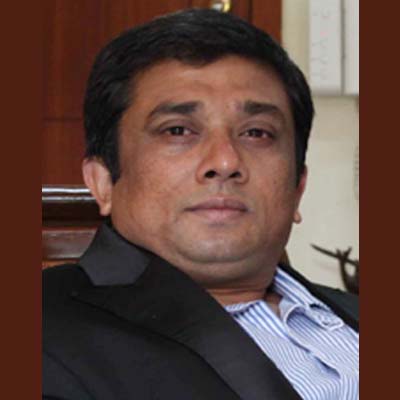
‘Fragmentation has actually helped the Hindi GEC ad market to grow’ : ZEEL Chief Revenue Officer Joy Chakraborthy
Zee Entertainment Enterprises Ltd (Zeel) has a pool of channels that would drive its topline. The transfer of the six regional entertainment channels from Zee News Ltd (ZNL) would reduce Zeel‘s dependence on Zee TV as Zee Marathi, Zee Bangla and Zee Telugu write good revenues. The gain could be to the tune of Rs 4.4 billion on an annualised basis.
Zeel went through a second wave of consolidation when it decided to bring under it ETC‘s broadcasting business. while ETC Music will complement Zing, ETC Punjabi stays as a strong force in the Punjabi market.
Zeel‘s south story is set to bloom. With market leader Sun TV deciding to up ad rates across its network channels after a gap of two years, Zee Telugu is in a strong position to shore up its revenues on the back of soaps, movies and a dance-based reality property in Aata. Zee Kannada is also on the growth track.
Competition from the two Star regional channels could hurt Zee Bangla and Zee Marathi in the long run. Star Jalsha has become a clear No. 1, but Zee Bangla is currently holding on to its revenues due to unduplicated viewership and a smart utilsation of inventory and ad pricing. The Bengali general entertainment channel (GEC) ad market could, however, expand.
Despite Star Pravah‘s rise, Zee Marathi continues to be in leadership position and is aided by Zee Talkies.
Bruised by a weak property in Indian Cricket League (ICL) that ran out of action last year, Zee has plans to launch a few sports channels.
Maximising the company‘s value share is Zeel chief revenue officer Joy Chakraborthy. His academic armoury includes graduation from National Defence Academy, masters in marketing management from NMIMS and, more recently, the Advanced Management Program from Harvard Business School.
In an interview with Indiantelevision.com‘s Sibabrata Das, Chakraborthy talks about the company‘s focus on revenues, profitability and monetisable GRPs.
Excerpts:
How much topline growth would come to Zeel due to the transfer of six regional entertainment channels from Zee News Ltd?
Zeel would be a big beneficiary as the six regional entertainment channels are riding good revenues. They will also help us offer complementary media propositions to our advertisers. We expect Zeel to add about Rs 4.4 billion on a full year basis due to this transfer.
So Zeel‘s dependence on Zee TV will reduce?One can‘t undermine the contribution of our flagship brand in our bouquet of channels. With the regional GECs, we will, of course, have more driver channels in the bouquet such as Zee Marathi, Zee Bangla and Zee Telugu. Nonetheless, Zee TV’s contribution to the overall ad pie of Zeel will be in the region of 35-37 per cent.
Doesn’t that spread out Zeel’s risks at the right time when we are seeing the emergence of a new star in Colors and further fragmentation in the Hindi general entertainment channel (GEC) space?
With the industry maturing, fragmentation is obvious. In fact, fragmentation has actually helped the Hindi GEC ad market to grow. The introduction of Colors has transformed the GEC space from a bi-polar into a tri-polar segment with each of the three players creating their own relevance. As such, we expect the Hindi GECs would take away Rs 24 billion in ad revenues during FY’10 (i.e. up from Rs 19 bn in PY). And going forward, this space is bound to grow if all players get their pricing strategy right.
But hasn’t the 3-horse race for the top slot in the GEC space damaged the pricing power and impacted Zee TV?
Zee TV is the No. 1 revenue channel. It gets maximum campaigns and advertisers spend due to two key reasons: consistency in ratings and effective leverage of a huge network. Also, we sell more on plain vanilla FCT (free commercial time) with few but quality innovations.While our rival networks have taken to very expensive programming, we have delivered with soaps and reality content without flashing Bollywood stars. We have developed Dance India Dance and Saregamapa into our strong reality properties. We have also stayed away from buying GRPs through movies. Our focus is profitability – and not just simply becoming a No 1 GRP channel.
Also, advertisers don’t buy GRPs; they want relevant ratings. A lot of channels are running break-free content. What is the use? An afternoon GRP is not the same in value as a primetime GRP. And Zee TV has been leading consistently in primetime. So, the point is to develop “monetisable GRPs”.
What about the economic downturn?
There is no doubt that broadcasters have experienced a tightening of their revenues. But the slowdown has resulted in a host of positives (especially for television – as a medium).Clients and agencies have intensely evaluated their ad-spends and experimented with mediums. They have invested in value-for-money genres where risks were low like GECs and movies. High value flashy investments were curtailed. They have looked at TV a lot more optimistically than print. While ad spends on TV will end at Rs 91 bn for the year, (up from Rs 83 bn in PY), print will grow only marginally from Rs 98.20 bn to Rs 99.30 bn.
In fact, the last four months have been particularly good for us. Being the largest network has helped us in attracting advertisers. Though we saw a slump in ad spends from real estate, banking & finance sectors, it has been compensated by FMCG, telecom and auto, which have been high spenders on GECs.
‘A lot of channels are running break-free content. What is the use? An afternoon GRP is not the same in value as a primetime GRP. The point is to develop monetisable GRPs‘
Has cricket eaten into the GEC space?
We had expected that our biggest threat would come from cricket. But it has under-delivered. Cricket has taken a severe beating, resulting in some channels offering guaranteed CPRP deals. As such, advertiser confidence on GECs has been high.On the whole, with Tam expanding its panel this year and the economy improving, GECs will stand to gain.
Have the movie channels also been hit by recession?
Advertisers in this downturn have realised the true potential of television in terms of reach. With consumption expected from every nook and corner, the Hindi Cinema genre, which is high on reach, played a very crucial role in the marketer‘s overall communication scheme. This has led to the Hindi Cinema genre witnessing significant growth in revenues despite a marginal fall in GRPs. This growth has come from rate increase as inventory has always been 100 per cent utilised.. Though GECs have been the first to air big ticket movies, movie channels, being well penetrated, go beyond Tam markets, and are value-for-money proposition for advertisers. Zee Cinema’s consistent performance is due to its strong presence not only in the metros but also in the smaller towns and rural markets.
Sun TV network has increased its ad rates after two years. Will this augment Zeel‘s revenues from its south-language regional channels?
Despite being a leader, Sun TV’s pricing has always been highly cost-effective. For any market to expand, the leader has to take a leap in pricing. Hence this initiative by Sun TV will only help the entire Southern market grow further. We are doing particularly well in the Telugu space and are highly optimistic on Zee Kannada as well. South will be the big story for us in the years to come. The transfer of the southern channels to Zeel will help our regional sales team as they can offer a complete regional package.
Will the rise of the two Star regional channels hurt Zee Bangla and Zee Marathi?
In the Bengali GEC space, Zee Bangla has lost its leadership position to Star Jalsha, but, over the last couple of months, we have undertaken new initiatives and the channel is looking up again. More importantly, our focus has been to ensure profitability and towards that end we are, even today, writing much more revenues than Star Jalsha. This is primarily because of our two-pronged strategy: optimal inventory utilisation and appropriate pricing. One of the noteworthy propositions of Zee Bangla is its high unduplicated viewership. All of this has helped us ensure against loss of any campaign. Having grown, we now hope that Star Jalsha increases its rates to sustain the market expansion.In Marathi, we are almost three times that of our nearest competitor. Zee Marathi is a clear leader and is well complemented by Zee Talkies, both in terms of revenues and viewership.
Zee‘s sports business falls under your ambit. Are there plans to launch more channels?
The various sports-led initiatives of Zee that straddle not only on-air (Ten Sports & Zee Sports) but also on-ground properties like Mumbai FC, AIFF (All India Football Federation) and cricket (Zimbabwe & Sri Lanka) are a part of my Sales responsibility. Print properties like All Sport Magazine also come under me.In our sports business, our focus has always been to look beyond cricket. So, our sales approach will also be one that is inclusive of all sports genres wherein we shall bundle various properties. And, yes, given the potential that we foresee in the near future, we are in the process of evaluating new channels.
With the producers going on strike and Bollywood having less releases and hits this year, what has been the impact on music channels ETC and Zing?
For the film-based trade genre, ETC is a must-have. Moreover, in this genre the buying parameter is not GRP-led; instead, the trade evaluates the channel‘s brand equity. Being the undisputed leader in this space, ETC has performed exceedingly well.Post relaunch, Zing has aggressively followed an approach of co-creating value propositions that are customised to its business constituents’ communication objective. This approach has helped showcase a much greater value proposition to our advertisers, insulating us from the vagaries of hits and flops. The channel has posted higher revenues.
-
‘NDTV is a debt-free company and we are sitting on a cash pile of $70 million’ : NDTV Group CEO KVL Narayan Rao
Two years back, Dr Prannoy Roy-promoted NDTV Ltd crafted a growth path in the entertainment business. Riding a bull run, the news broadcasting company launched NDTV Networks Plc to house subsidiary arms NDTV Imagine Ltd and NDTV Lifestyle.
NBC Universal invested a whopping $150 million for an indirect 26 per cent in NDTV Networks at a time when valuations were running high. Besides, NDTV raised $100 million in step-up coupon bonds.
The global downturn led to the exit of NBCU, freeing NDTV to scout for investors for its non-news verticals. US-based Scripps Networks snapped up 69 per cent stake in NDTV Lifestyle while Turner International agreed to take 92 per cent of NDTV Imagine.
So where does this leave NDTV? Are its growth wings clipped?
In an interview with Indiantelevision.com‘s Sibabrata Das, NDTV Group CEO KVL Narayan Rao says at the end of a whole chain of transactions NDTV is left with a cash pile of $70 million to focus on its news business while retaining portions of the non-news business.
Excerpts:
What prompted you to get out of the entertainment business?
We wanted to focus on what we are best at: running news operations. We are a credible news organisation and there is enough scope to grow that. Besides, we will still retain 5 per cent stake (3 per cent post issue of primary shares to Turner) in NDTV Imagine. As for the Hindi GEC space, it was clear that a strong international strategic partner would bring in funding and global expertise. We are delighted that we have this deal with Turner.
Did the global downturn and the exit of NBC Universal spur the chain of events?
No. We bought out NBCU‘s stake. As a result, we got the opportunity to find a good investor who would run the company.
NBCU had invested $150 million for the 26 per cent stake. Did you pay $25 million to buy back their stake?
The deal is confidential. I can‘t comment on that.
Was the deal with Turner dependent on repurchasing the bond holders who would have held 20 per cent in NDTV Networks?
We had set out to do a few things. Buying back the bond holders was part of that process. We paid $72.4 million for that. This allowed us to pursue investors for our different verticals.
But wouldn‘t the payout have been $115 mn (along with interest payments)?
There was a negotiation that took place. We bought out the bonds and that allowed our subsidiaries the flexibility for restructuring and financing the businesses including being able to access bank finances for working capital and other requirements.
‘We wanted to focus on what we are best at: running news operations. We are a credible news organisation and there is enough scope to grow that‘
Did you decide to retain a higher stake in NDTV Lifestyle because it would involve less funding while NDTV Imagine would guzzle in more money?
We entered into an agreement with the US-based Scripps Networks which has experience in creating lifestyle brands. They took a 69 per cent stake and the transaction value was $55 million.
Will NDTV get $30 million while the balance go as investments into NDTV Lifestyle?
I can‘t comment on the specifics.
Two years back, NDTV decided to expand because of a bull run. The market tanked and the scenario changed dramatically. Was it a mistake to expand into the non-news business?
We have completed a chain of transactions. But at the end of it, NDTV is a debt-free company and we are sitting on a cash of $70 million. Perhaps, we are the only TV news organisation that would be sitting on such a large cash pile. We will still have some non-news businesses running. We also have NDTV Convergence. We have a decent future to look forward to.
NDTV had posted a standalone net loss of Rs 731.8 million on a turnover of Rs 3.09 billion for the fiscal ended 31 March 2009. How do you plan to turnaround in the news business?
For FY‘09, we had a one-time cost of around Rs 400 million. We have taken substantial cost-saving measures this year.
Do you have major plans to invest in NDTV Convergence?
It is one of our important properties. A lot, though, will depend on getting the right revenue model.
NDTV has shut down MetroNation Delhi. Do you have any revival plans?
It is too early to comment on this. -
Sony Entertainment Television back on track
Yes, the Hindi GEC space is witnessing the rule of the top three. But old-monk Sony Entertainment Television is racing quite hard to get into that inner ring that includes Colors, Zee TV and Star Plus.
Sony has done the catch-up exercise with some of its old-running programmes gaining ground while a few of its overhauled prime-time shows have started delivering.According to the latest Tam data, Sony has earned 183 gross rating points (GRPs) for the week ended 7 November, up 23 points from the earlier week.
Says Set business head Ajit Thakur, “We know that Sony is a stronger brand than what the numbers are showing and in the months to come we will push hard for faster growth.”
 Sony had relaunched on 26 May with a new slate of five dailies for the 8-11 pm time zone, donning the tagline, ‘Badal Rahe Hain Hum‘. The channel also lined up two weekend shows, one of which was the return of the big-ticket reality show Dus Ka Dum in season 2 with Salman Khan as the anchor. The revamp strategy also involved the axing of all its weekday prime time content except its age-old shows Boogie Woogie and CID.
With the new line up, Sony‘s ratings shot to 97 points in week 22 from 78 in the previous week.
Says a source in the company, “As we were back to our basics, we had to evaluate what was working for the channel and what was not. According to the research we have done, our old properties like CID, Boogie Woogie, Aahat and Dus Ka Dum had worked for us. Hence, step one was to bring these properties back.”
 Backing this statement is Tam data, which reveals that C.I.D., Boogie Woogie and Dus Ka Dum were the top contributors to the channel grades. The last five-week average TVR for C.I.D stands at 3.4, while Dus Ka Dum is at 2.1 and Boogie Woogie at 1.5.
Though Sony did witness an upward swing instantly post relaunch, it wasn‘t a continuous upward drive. For the following weeks, the channel‘s GRPs dipped to 90 and 82 points for week 24 and 25 respectively.
And then the tide turned and Sony crossed the 100-GRP mark to pocket 108 grades in week 27.
As reality became the staple flavour for GECs this season, Sony decided to create the big property, Mujhe Iss Jungle Se Bachao, as part of its relaunch strategy. However, the property failed to perform.
“Among the fiction shows, Rani Padmini and Palampur Express flopped and therefore they were axed immediately. The other two shows, Bhaskar Bharti and Ladies Special, was performing average for the channel and hence, some investments have been done around that,” says a senior executive in Sony on request of anonymity.
 Still believing in the power of reality, the channel went forward to launch its newest property, the Dance Premier League (DPL).
“We realised that we had to strengthen some of our stuff quarter-by-quarter. Hence, we gave Boogie Woogie a break and got DPL. The property has done fantastic for us, not only in the form of garnering advertising revenues but in ratings growth. Beginning with a TVR of around 1, it has grown to an average 1.5,” the executive says.
Meanwhile, to tighten its week-day fiction line up, the channel got on board Balaji Telefilms‘ Beyttaab Dil Kee Tamana Hain and Pyaar Ka Bandhan to firm up the 10-11 pm band. While the former has delivered an average TVR of 0.64 for the week, Pyaar Ka Bandhan has fetched 0.56 average TVR.
“We are looking at a new fiction line up altogether. This week we launched Sukh By Chance in the 9 pm band and we will be launching two more shows in the next four weeks,” the executive elaborates.
For the weekend, Boogie Woogie will come back next year while Sony will currently focus on DPL to increase the scale of the 8 pm slot.
The next few weeks will tell how intense is Sony‘s recovery as it steps up the gas to put up more popular shows.

