Tag: GEC

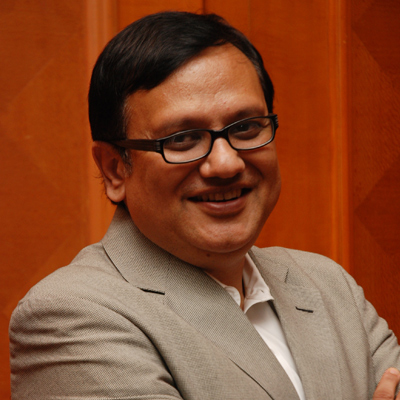
  • “Sab will be among the Top Three Hindi GECs”:EVP and business head of Sab Anooj Kapoor

    “Sab will be among the Top Three Hindi GECs”:EVP and business head of Sab Anooj Kapoor

     From being a copywriter, director to business head, the soft-spoken Anooj Kapoor has worn various hats. But what makes him different from others is the way he manages the work-life balance. He proudly claims that in his more than 20 years of career there has rarely been a day when he has been in office later than 6 pm. Even today, he leaves office at six in the evening and on weekends he switches off from work, unless required. Someone who believes in working hard hasn‘t forgotten to live to the fullest too…

    Indiantelevision.com’s Meghna Sharma spoke to the executive EVP and business head of Sab Anooj Kapoor about the channel‘s current plans,the reason for there being no other channel like Sab and the channel‘s future plan.

    Excerpts:

    The channel underwent a revamp recently, was it really needed? 

    Nothing we do here is what everybody else does, starting from our programming which is totally differentiated from the rest in the GEC space. So, this revamp is not because others have done it too. All we have done is revamped the packaging of the channel. The last revamp was done almost six years ago, and we thought we have had a wonderful growth in the past five years. So we wanted the packaging to be more colourful. We have retained the old colours and added more colours to our package to convey freshness, more audience on the channel as well as more people sitting together to watch our shows. It can convey a lot of things, but essentially, we wanted a fresh look.

    You said you are adding more people who are watching your channel. So through the revamp and apps are you targeting youth now? 

    Asli maaza sab ke saath aata hai… has stood true for us. The entire family comes together and watches TV. We have a mix of audience, from males, females to kids. We also have a healthy mix of Sec A, B and C. So we are not trying to broad base our TG, it is already 4+.

    However, we cannot deny that new things always appeals to people. In the age-group of 4-14, we are the number one channel. In the last TAM rating, we were ahead of Star Plus. In the higher age-group, 15-24, we are fairly strong but we realised there is a need to engage audience on fresher platforms – facebook, comics, SABurbia and other apps. And the age-group after that, we keep appealing through our ads where the whole family comes together.

    Our other initiative ‘Sab ki Saafari‘, is also first of its kind. The idea was to get people from smaller towns meet their favourite characters or watch a shoot. Through this initiative we get our loyal audiences to meet their favourite characters and also show them what goes on behind the camera. We have another loyalty program called SABprise wherein the more you watch the channel the more you get rewarded for it. We feel that today it has to be a two-way communication. If they have given us so much and helped us grow 600 per cent in five years then we should also give them something in return.


    With the awards season on, when can we get to see Sab ke anokhe awards? 

    We are coming back with Sab ke anokhe awards in August. The first round did well for us as we got a rating of 2.8 which I‘m not going to compare with other award shows, but for a channel like ours which has a limited reach it is a very healthy rating. It was purely because of the uniqueness of the show. We came up with categories which went beyond the clichéd categories. This time we are going to add even more categories and try to be as anokha as possible. We will be sticking to our strategy of being different and innovative.


    What kind of weekend programming does the channel currently have? Any plans to introduce new shows?

    Currently, we have two silent comedies on Saturday –Guttur Gu and Malegoan ka ChintuGuttur Gu has been recognised as the longest running silent show in the world by the Limca Books of Records, and then we have Waah Waah Kya Baat Hai which consistently rates among the top five shows in the non-fictional category on the weekend. So, we have fresh weekend programming. We might add new programs in the future wherein we will look at reality or mix of unique concepts like silent comedy but nothing is crystallised yet.


    “We touched our highest rating of 159 in February this year and now with digitisation when we are far better placed”


    SAB is the only comedy-centric Hindi GEC, wherein other networks have second GEC channels, why do you think there aren‘t many players in this genre? 

    We are the number one comedy channel in the world. We are the only channel in the world which does daily comedy shows. If you will look at channels like Zee Café or Star World, the sitcoms they have are weekly and have seasons. We have Tarak Mehta Ka Ooltah Chashmah which has done 1200 episodes now, Lapataganj in its first avatar had done 850 episodes and FIR will be touching 1000 soon (in September). So while we have been able to be innovative, we have also done successful programming. All this while we know that there is a limited pool of comedy actors, writer, directors and producers.

    Also, before SAB, comedy wasn‘t seen as an important genre by GECs. We have been able to reign in that limited talent and try to cultivate a few more. With the limited pool I don‘t think there is enough talent for more than one channel to survive. And secondly, we have a DNA which has gotten us consistent success. There is no doubt that other channels have dabbled into comedy especially after seeing SAB‘s success, but all the top three or four GECs have not been able to succeed. And, therefore they are apprehensive.


    Do you work with a certain set of production houses or open to others as well? 

    We have always encouraged new producers, but at the same time we have certain set of producers that have consistently worked for us. We also have people who have never done comedy before and doing it successfully for us. For instance, Malegaon ka Chintu is produced by Deepti Bhatnagar Production which hasn‘t done comedy in the past,Gutur Gu is done by Fireworks who have in the past doneCID and Aahat. And of course, we have Asit Modi, JD Majathia, Vipul Shah and Ashwini Dheer. So, we have been able to mix both.


    You are also available in the US, UK and Europe, what has been the response there? 

    We are extremely popular abroad. In the UK we are the fastest growing channel.

    It is a fact that we have created almost 7,000 hours of original programming and when we compare data with other channels dedicated to comedy we are miles ahead of them. From the 70s, since DD started, no channel has claimed or can claim to be the number one channel based out of India but we can!


    It‘s going to be a year now since digitisation took place. How has it helped the channel? 

    We have a business model which by definition doesn‘t afford us very high rates and because we also have to keep our profits in mind, we couldn‘t place ourselves where top three or four GECs could. This meant, we could not be well placed in the analog. However, with digitisation, we now fall in the GEC cluster. Now our sampling will soar up. We also strongly feel that our trial retention rate is high.


    Currently, which are the weak slots that you would like to strengthen?

    The difference between manufacturing and television is – that in manufacturing you can perfect a formula whereas in our industry, the same raw material will go to the same factory but the end product sometime works and sometime fails.


    Lastly, when do you see Sab among the top three? 

    We are well on our way. We have never stopped growing. We touched our highest rating of 159 in February, this year and now with digitisation when we are far better placed, I hope we will one day be among the top three.

  • Life OK’s Sunday programming experiment

    Life OK’s Sunday programming experiment

    Attention! An experiment is about to hit Indian televisionscreens come Sunday 23 June. If you‘ve not been switching on your television set on Sunday morns or noons for want of there being any original programming – apart from movies, and have had enough of watching singing and dancing shows in the evenings, then Life OK may be your new destination this weekend.

    Bringing a new kind of programming, extending its spheres, Life OK promises uninterrupted entertainment 12 noon to 12 midnight (baara – se – baara) on 23 June. Life Ok general manager Ajit Thakur is bracing himself for this Sunday gamble…

    But is this attempt a first of its kind? A recap of Sunday programming tells us that there was a time in India, a couple of decades ago; when streets were deserted owing to the single channel king Doordarshan and its strong Sunday programming. Flashing forward from the era of a single channel universe, leading general entertainment channels (GECs) like Star Plus and more recently, Colors have also encroached this territory.

    While Star struck an emotional chord with the nation by launching the very successful Aamir Khan anchored social show Satyameva Jayate, Colors had started airing non-fiction award shows in the early afternoon, followed by a movie screening and concluding it with a soft scripted drama cum reality show- Zindagi Ki Haqeeqat Se Aamna Saamna. Zee TV has Ramayan, a mythology show in the morning slot which, however, is not living up to audience’s expectations.

    Yet, generation of 12 hours full of fresh content is somewhat a brave initiative by Star Plus’s sister GEC.

    Life OK, over the past couple of weeks has grown steadily in terms of GRPs (though it shed GRPs in week 24). The weekend slot of the channel is grabbing more and more eye balls with each passing week. With this as an opportunity, Life OK thought of going all the way and see if it works.

    Life OK GM Ajit Thakur is taking a punt with his baara – se – baara initiative on this Sunday (23 June)

    Thakur states: “I am quite delighted with the way we have received responses from the viewers over the past couple of weeks. Talking about 12pm to 12am, on weekends, we have found a bit of a gold mine as people are available throughout the day. Unlike other markets, in LC1 markets there is a lot of viewership happening. Everybody is doing show launches and wants to target between 8pm – 12am time slots so we thought to bring a change by extending our programming which has not been done by anybody till now.”

    The channel aims to own this Sunday with a combination of crime, terror, mythology programming. Audiences will get to see Savdhaan movie- part 2, which is going to be much more informative and different from the first one.

    New reality series on the list include Police dial 100, a new innovation where the channel crew will accompany the Delhi cops, running behind them, observing how they solve the cases and recording them. The reality show, produced by Endemol, will occupy a double slot along with the Savdhaan movie -Part 2. The channel had already shot 10 episodes of the show at the time of writing.

    The channel will also air fresh episodes of Mahadev and Shapat.

    More on the entertainment side, Life OK also plans to air a special Bollywood movie to garner more eyeballs.

    “Let’s raise the ambition with maha – thriller weekend baara – se – baara.” asserts Thakur when asked why he chose particularly Sunday and not Saturday as part of his weekend programming. “Saturday in terms of viewership, is not that high as Sunday. Besides, a large chunk of India works on Saturday’s and it‘s a humongous task for me to ask my team and my producers to do such a hectic programming, as 12 hours is a lot of time.”

    What is rather disappointing is the fact that this unique 12 hour programming is slated only for the coming Sunday. Thakur reasons: “To be frank, we want to test it first, this is the trail run. I wanted advertiser’s feedback and we attained success when we did 6am -6pm on 2 June. We received good responses in terms of viewership and advertisers as well. So we thought of further strengthening it by bringing baara – se – baara and I am sure we will get good responses for this as well. And when we do might it make it a regular initiative at least once a month.”

    The channel plans to promote the weekend initiative largely in the coming three days. However, the focus will be more on promoting across social media platforms rather than on-ground activities. Its management plans to leave no stone unturned to make its presence felt on digital media by targeting fan driven pages and profiles of their flagship shows likeMahadev and Savdhaan. To top it all, the channel is also buying air time on other channels, out of which, the promotion will be huge on Star network channels while few news channels and youth-based channels are also being approached.
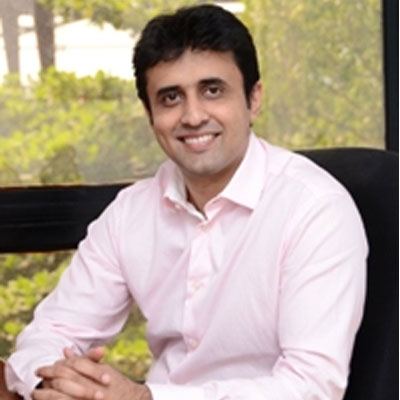
    When asked what makes Life OK and Star Plus different in terms of content and programming Thakur says: “Star plus targets women in the household a lot more and that has always been Star’s strength. On the other hand, Life OK targets the whole family. In terms of content, Star talks about aspirations and about new Indian relationships whereas Life OK deals with crime, mythology, terror, spirituality and cops. Star Plus talks about relationships between Nanad – Bhabhi and new thinking and that is why ‘nayi soch’ whereas Life OK talks about today’s reality of life through our stories and what makes life OK on a daily basis. Life OK tries to inspire people by picking up serious social topics.”

    Further elaborating on the fact that this Sunday is an experiment, Thakur shares: “For us it is the experiment to change the rules of the game. I always have the support of Uday Shankar (Star India CEO) and Sanjay Gupta (Star India COO). And yes it is a big risk I am taking as nobody has gone into 12 hours of programming. Some would say wow great… while some would say it is too much. While, everybody is giving repeats to the audiences and we are giving original programming. What is more important for us is how our viewers will react to it.”

    Vivaki Exchange CEO Mona Jain says the experiment should do well for Life OK

    But will this trial run work for the channel? Vivaki Exchange CEO Mona Jain asserts: “There are many channels which are plugging in for reality shows on Sunday’s. Life OK is taking a good initiative by coming up with 12-hours of programming to create more impact with the audiences at large, where most of the people are at home resting. Mahadev and Savdhaanare high property shows and are taking the same route that is weekend slots, making it easy for them to spot on the ratings. And people who are loyal audiences of Life OK will watch these shows no matter what. Thus I am quite sure that this kind of experimentation should do well.”

    We, along with team Life OK, wait with anxious eagerness to know the result of this experiment…

  • “We hope to reach a mature solution on the TAM ratings issue”

    “We hope to reach a mature solution on the TAM ratings issue”

    There are two kinds of individuals out there. Those, who lead their lives on their own terms and others, who lead their lives according to the terms set by the rest of the world. And then there is Sam Balsara, who creates benchmarks for the rest through his feisty attitude!

    Rated as amongst the top media professionals in the world, MadisonWorld chairman & managing director Sam Balsara is no stranger to a challenging situation. He is known to speak his mind without mincing his words. The media vet has worn many hats in various industry associations and committees over his very long career, which began at Sarabhai’s in the late sixties, early seventies and ended with him setting up Madison 25 years ago.

    Here, in an exclusive interview, Balsara opens up on the heated issue of Broadcasters v/s TAM Media. Who else can give us a better perspective than the advertising genius himself. Sit back, read and enjoy his engaging responses from this free wheeling chat indiantelevision.com had with him.

    Excerpts:

    What is your take on Indian Broadcasting Foundation (IBF) members deciding to discontinue subscribing to TV ratings provider TAM?

    It is very clear ratings are very important not just for advertisers and agencies alone, but for the whole industry which includes broadcasters who have worked so hard to built the industry to Rs 12,000 crore. If there are no ratings the confidence in TV advertising will go down.

    Take a look at radio and out of home; they have no robust measurement system, hence they account for just five per cent of the media spends. Television does have a robust measurement systems and it accounts for a sizeable 45 per cent.

    You don’t have to throw the baby out with the bathwater. If there is something wrong, you fix it. We have to remember that the TV ratings that come out every week are a sample not a census. At times, if it does not do justice, you don’t shut it down. The long term solution is definitely BARC…till then we have to have TAM.

    But then how do you address the problems that the IBF and the government has with the ratings?

    Let the IBF put out a paper on what their view is on what is wrong with the ratings methodology and what needs fixing. We can give our view on what can be done or should be. The answer is not stopping a rating system.

    Why do you say that?

    Stopping a ratings system would hurt the broadcast leaders in their respective individual genres, they would lose their leadership perception and this would hurt them. I think it is a very unwise decision.

    Let the IBF put out a paper on what their view is on what is wrong with the ratings methodology and what needs fixing. We can give our view on what can be done or should be. The answer is not stopping a rating system.

     
    Let’s say the TAM meltdown continues and you don’t have ratings, is historical data a valid barometer for buying TV advertising time?

    Historical data around TV viewership is not an option and is unacceptable to the buyer. I would not work with historical data for buying. If I am buying IPL this year, why should I use last year’s data? Why should and how can I use historical data for how a serial is performing? We know that viewership habits move around.

    Then what is the solution?

    If there is something seriously wrong with TAM’s data, methodology, we should sit together, highlight the problems, diagnose the imperfections and come up with answers. We need to give a patient hearing to each other as to why it’s going wrong too!

    I am aware that TV ratings have been going down because of the rejig of the sample, digitisation and also LC1. But every time you go for a change in a changing environment, the findings are also going to change.

     
    But the dropping ratings are hurting broadcasters and they are saying how is that possible when we are paying for the measurement?

    That brings us to the fundamental question: should media owners pay for the ratings system? Maybe you are right! Media owners should not be involved in media measurement. But the fact is that no media owner has found fault with the ratings system when they are at No 1.

    But Star India which is the leader in the GEC space is also likely to discontinue its TAM subscription…

    Hmmm. The only thing I have to say is that if there is no viewership data, the TV industry is going to suffer.

     
    Is making the advertiser/ad agency pay for the data a solution?

    As far as the advertising industry is concerned, we don’t really care who pays for the data, we are concerned that we get the data. We are absolutely certain that we need the ratings.

    I am aware that TV ratings have been going down because of the rejig of the sample, digitisation and also LC1. But every time you go for a change in a changing environment, the findings are also going to change.

     
    What if broadcasters continue to refuse to accept TAM as the currency and want to do transactions for TV adverts with agencies and advertisers?

    For a deal to take place, each seller has to make something available to the buyer and the latter has to see value in it to pay for it. Both parties have an objective and as long as it is met a deal happens. You see if Dove is priced at Rs 30, and you see merit in buying it you will pay for it, if you don’t, you won’t. Similarly with us, we need a measurement metric before we buy media.

     
    The IBF seems to be pushing the agenda on various fronts. For instance, in the case of net billings it was the IBF which had its way by forcing the advertising industry to accept net billings? Will it do so even in TAM’s case?

    There is no question of IBF having its way. The AAAI, ISA and the IBF found a mutually acceptable solution. Some of our full service advertising agency members wanted the 15 per cent mention to be in the bills and we got that in. It was a mature solution that met the needs of all concerned. We similarly hope to reach a mature solution on the TAM ratings situation too.

  • Clash of the Titans

    Clash of the Titans

    what more?! DID Supermoms is going to have an impact on the digital space with a roadblock of two major portals in India – youtube.com and yahoo.com (YouTube mast head and Yahoo super take over). Its micro site has various engagement platforms for ‘netizens’ where all the super moms can upload their dancing video on the DID title track. A video wall with all these entries would be published during the sustenance of the show.

    Sony has had a successful integration with its network channel’s popular IPL show called Extraaa Innings T20 on Max. Besides, there is a countdown bug on the channel and a very high ratio of promo slots devoted to IIJ launch.

    The smartest move by Colors is that of the show’s Grand Premiere which is aimed at garnering maximum eye balls. The launch episode will be as big as the show itself.

    Kick starting the show will be dancing queen Madhuri who will team up with Ranbir for a stunning performance on their new item number- Ghaghra. Next to enthrall viewers will be an entertaining performance by Sushant Singh Rajput and actress Jacqueline Fernandez who will be introducing the 12 celebrity contestants.

    The launch episode week will also see the three Deols – Sunny, Bobby and Dharmendra shake a leg with the Jhalak contestants adding on to the commencement of the power packed journey of Jhalak Dikhhla Jaa.

    To further heat up the competition, Star Plus is upping the ante on its dance reality show India’s Dancing Superstar (IDS) which has been on air since 27 April at 9.00 pm. It has planned a special maha episode. Explains Star India vice-president marketing Nikhil Madhok: “For 1 June, IDS will have a two and a half hour dance ka maha episode which will start at 8 pm. The episode has one of the legends of dance, Govinda, doing something he has never done before on Indian television. Viewers will see him play a double role in an extremely entertaining dance act. The episode will also see the beginning of the face-off round, which is a very unique concept for a dance show in India.”

    Star marketing head! Nikhil Madhok

    Sounds great, but what is the media view of all these intense content creation and marketing initiatives that the GECs have drawn up?

    Madison’s Banerjee proffers a perspective. Says he: “Such overcrowding of reality shows on weekends will lead to cannibalisation both in terms of viewership and also revenues. Channels need to understand that with such high investment they should look for a clean window or time-bands that assures them of the best return.”

    He further points outs: “These shows can coexist with smarter planning. Next season, even advertisers will get wary of investing if average ratings of these shows come down.”

    Now that’s a piece of advice, none of the GEC players should ignore!

  • RBNL’s Big Magic inks distribution deal with Airtel Digital TV

    RBNL’s Big Magic inks distribution deal with Airtel Digital TV

    MUMBAI: It‘s worked its magic. Big Magic, the general entertainment channel (GEC) for the core Hindi heartland of Uttar Pradesh (UP), Madhya Pradesh (MP), Bihar and Jharkhand – from the stable of Reliance Broadcast Network Ltd (RBNL) has signed a distribution deal with Airtel Digital TV, the DTH service arm of the leading telecom operator Bharti Airtel.

    Airtel Digital has 375 channels and services including 17 HD channels and six interactive services. With this strategic agreement, Big Magic will now have access to the 8.1 million customer base that Airtel boasts of (as on March 2013).

    RBNL‘s carriage deal with Airtel for Big Magic, makes it the second Indian DTH operator to carry the channel, apart from Reliance Digtial TV.  Viewers can now tune into Big Magic on their Airtel Digital TV on channel no 631 from today. The channel airs a mix of  locally relevant entertainment, including drama, crime, socio-mytho, game shows and talent shows.

    Says  RBNL CEO Tarun Katyal: �As a broadcaster, we’d like to reach maximum audience and we are glad to be associated with Airtel.�

    Adds a media observer: “The deal is significant as Airtel has a sizable subscriber base in the markets that Big Magic is targeting. The expectation obviously is that the extra audience will lead to extra advertising revenues.”

  • Hindi GECs make a comeback; Star plus continues to lead

    Hindi GECs make a comeback; Star plus continues to lead

    MUMBAI: The Hindi general entertainment channels (GECs) have roared back in week 18 (28 April-4 May 2013) of the Tam ratings roster. Last week, Max had taken them to the cleaners by registering a 32 gross rating points lead over leader Star Plus. But in week 18 Max shed some points and Star Plus gained nine points to come level with it with 224 GRPs.

    As per TAM data (HSM including 5 new LC1 markets, C&S, 4+) sourced from a channel, the new Star Plus talent hunt-cum-reality
    show India‘s Dancing Superstar notched up a 2.6 TVR even as fiction shows such as Ek Hazaaron Mein Meri Behna Hai and Diya Aur Baati Hum showed improvements in their ratings from 1.2 to 1.4 and from 3.7 to 4 TVR respectively.


    Despite shaving 16 GRPs, Zee TV continued to occupy the second spot on the Hindi GEC charts with 175 GRPs. Zee TV‘s top performer was the fiction series Sapne Suhane Ladakpan Ke (it scored a TVR of 3) which also occupies the No 2 spot amongst all Hindi fiction shows. Its reality talent hunt India‘s Best Dramebaaz showed a growth in viewers on Sunday from 1.4 to 2.4 TVR even as it delivered lower ratings of 1.9 on 4 May Saturday (2.4 last week). Most of the other Zee TV shows had ratings being nibbled off them.

    Colors added a couple of GRPs to close the week with 166 GRPs (last week 164). It aired a special event Sitaare Zameen Par which notched up a 1.2 TVR even as fiction show Sasural Simar Ka went up by marginally.

    Sony too gained four GRPs at 154 on the back of a good showing of its non-fiction shows such as CID Chote Heroes and CID Mahaepisode (1.8 TVR), CID (2.2 vs 2.0), Crime Patrol (2.0 vs 1.8) and Comedy Circus (1.5 vs 1.2). Its fiction shows either stagnated or dipped marginally during the week.

    Sab gained six GRPs as it ended the week at 131 GRPs. Its leading fiction show Taarak Mehta Ka Ooltah Chashmah inched up marginally (2.9 vs 2.8) and Chidiya Ghar gained (1.5 vs 1.4).

    Meanwhile, Star India‘s second rung Hindi GEC Life OK closed the week with 102 GRPs (last week 101).

    Sahara One with 15 GRPs (last week 20) remained at the bottom of the GEC heap.

    Hindi movies seemed to have become a hit with viewers last week as viewers sought entertainment other than cricket and drama series, with channels such as Zee Cinema (110 vs 105) and Movies OK (60 vs 52) showing healthy gains.

  • IPL hits Hindi GECs hard, knocks off 110 GRPs

    MUMBAI: The Indian Premier League (IPL) has come back to haunt the Hindi general entertainment channels (GECs) again as the cricketing extravaganza has shaved off 110 GRPs from the Hindi GECs in the week ended 6 April.

    The genre has seen a greater loss this year as compared to last year when it lost 51 GRPs in the opening week of the tournament.

    According to ZenithOptimedia managing partner Navin Khemka the IPL matches this year are more interesting and hence are attracting more viewers. “IPL this season has gained at the cost of Hindi GECs. This year has seen considerable increase in the viewership as the quality of the matches have improved.”

    When asked if Hindi GECs were not prepared for IPL, Khemka averred, “If the matches are more interesting and are doing well, I don‘t think Hindi GECs can do much to retain their audiences.”

    The week saw a shuffle in the ranking of top four Hindi general entertainment channels as Sony Entertainment Television (Set) went past Colors adding an extra eight GRPs to occupy the third spot on the Hindi GEC hierarchy.

    As per TAM data (HSM including 5 new LC1 markets, C&S, 4+) sourced from a channel, Star Plus continued to maintain its leadership position. The broadcast of Salman Khan-starrer Dabangg 2 on 31 March notched up 4.9 TVR. The channel lost seven GRPs to clock 284 GRPs.

    Star Plus had also launched a new dance reality show titled ‘Nach Baliye Shriman vs Shrimati‘, an extention of Nach Baliye, that debuted with 2.3 TVR on 6 April.

    Following Star Plus is Zee TV that lost 22 GRPs to register 185 GRPs. All the shows of the channel have seen loss in viewership.

    Meanwhile, despite the loss of 11 GRPs, Set managed to move a step ahead, displacing Colors at No. 3. Its crime-based properties Adaalat ( 1.2 TVR), CID ( 2.2 TVR) and Crime Patrol (2 TVR) continue to drive majority of the audience for the channel that closed the week with 164 GRPs (last week 175).

    Colors lost the most this week as it lived without a single 3+ TVR show. All the shows of the channels have seen drop in numbers. The channel had earned a few points last week as it had aired Femina Miss India 2013 on 24 March. For the week under review, Colors lost 35 GRPs to record 156 GRPs.

    Set‘s sister Hindi GEC Sab maintained its grip at the No. 5 spot despite losing more audience than Star Plus‘ second rung Hindi GEC Life OK. Sab lost 22 GRPs to end the week with 137 GRPs, while Life OK ended the week with 110 GRPs (last week 119).

    Sahara One with 18 GRPs (last week 22) stood at the bottom of the ladder.

  • Ormax launches diagnostic tools for Hindi GECs

    MUMBAI: Media and entertainment research firm, Ormax Media, has launched a new product for Hindi general entertainment channels called Showbuzz Ad-vantage.

    The diagnostic tool will equip broadcasters with detailed diagnostics and recommendations for their new launches, in both fiction and non-fiction genres. Based on weekly consumer research across 14 cities, the product will enable Hindi GECs to monitor their launch campaigns and take corrective action, both on-air and off-air, towards maximizing the launch viewership of new programmes.

    Ormax Media research head – television Anurag Bakhshi said, “In 2009, we had launched Showbuzz for awareness tracking of Hindi GEC launches. Showbuzz Ad-vantage is a natural but powerful product extension. While Showbuzz allows GECs to track the buzz around their new launches, Showbuzz Ad-vantage will take it one step further by highlighting the strengths and weaknesses of the campaigns, leading to sharp recommendations.”

    Showbuzz Ad-vantage tracks parameters like genre comprehension, promo-wise reach and likeability, sources of awareness, programme appeal, drivers and barriers, channel and day-date-time cut-through.

    Showbuzz Ad-vantage is available to Hindi GECs for subscription on a per-programme as well as annual basis.

  • Kids TV genre needs to expand amid more channel launches

    Kids TV genre needs to expand amid more channel launches

    The media and entertainment (M&E) industry comprises several powerful vehicles – many of which are much older than television. But it is television that commands a place of pride in the business pecking order. Today, television is estimated to account for almost half of the Indian M&E revenue and is projected to be over twice the size of print media by 2015.

    The kids entertainment industry although largest in viewership after general entertainment channels (GEC), saw a year like none before. The viewership pie of this genre grew by a meagre 4 per cent over 2011 but the industry saw the entrance of four channels.

    With more channels in the market, the industry waited with baited breath for the overall genre to grow. But after two launches and no growth by the third quarter of 2012, competition became more aggressive. Now, as we come to the end of the year with two more channel launches, the need to expand the genre becomes dire. It has truly been a year of more of less with more channels fighting for a small share.

    In an effort to grow the pie, an interesting move by broadcasters this year has been to target younger kids with preschool channels. In the year to come, the performance of these channels will pave the way for other competitors to consider investing in this new demographic of television audiences.

    Personifying ‘more of less’ has been the consumption habits of kids. Over the year, a prominent trend that has emerged has been that kids prefer watching more of fewer shows as opposed to watching a bouquet of shows. It is for this reason that shows like Chhota Bheem and Doraemon dominate 60-80 per cent of their respective channel schedules and have emerged as iconic characters amongst kids.

    2013 – The year of plenty

    The upcoming year brings a lot of hope for broadcasters of the kids genre. With the first phase of digitisation complete, it will be interesting to see the level of set-top box (STB) penetration thereby determining reach of all genres including kids. Digitisation will also determine the effectiveness of the current revenue model. The current advertising driven model under-values and under-prices the kids genre. With a subscription based revenue model, broadcasters will hopefully receive a fair share of the revenue pie. The need of the hour, however, is to go beyond television and explore revenue optimisation from online, mobile and licensing and merchandising as well.

    However, to keep the kids engaged in today’s world, the content needs to be even more engaging and relatable. Simplicity of storytelling and relatability of characters need to continue as focus from the content point of view.

  • GECs, movies rule the roost on Ditto TV

    GECs, movies rule the roost on Ditto TV

    MUMBAI: The Hindi general entertainment channel (GEC) genre is the most popular on over-the-top (OTT) platform Ditto TV with 43 per cent of the total time consumed being spent on these channels, as per findings of user-generated data by Ditto TV.

    GECs are followed by movies as the next preferred choice at 16 per cent. At 14 per cent of total time consumed, regional channels are the third most preferred genre followed by news which garnered 13 per cent.

    These findings are collected from over 4,25,000 Ditto users who have downloaded the Ditto TV application to their mobiles, tablets and computers. Ditto TV is the OTT platform from Zee New Media, the digital arm of Zeel.

    Every third Smartphone user in India uses an Android-based handset to access live entertainment content online while every fifth user prefers a Symbian platform. Blackberry users claim a close third spot, garnering over 17 per cent of the OTT viewership space.
    While Mumbai retains its front line position in terms of adoption of new technologies with 16 per cent of the user base, overall the metro circles, with 26 per cent of the total user base, look to be facing stiff competition from states like (rest of) Maharashtra (11 per cent) and even Rajasthan (7 per cent).

    The markets of Mumbai, Maharashtra and Gujarat together account for nearly 40 per cent of the total user base. Interestingly, the total time spent on the content in Mumbai is double that in Delhi.

    Not surprisingly, the maximum usage happens on PCs accounting for 30 per cent of the user base but over 50 per cent of total usage. Android is a close runner up accounting for 25 per cent of overall consumption. Symbian trails with 10 per cent just behind Apple (11 per cent).

    Zeel Business Head-New Media Vishal Malhotra elucidating the findings said, “OTT service providers such as Ditto TV are redefining the way consumers are viewing TV today. With people being always on the go, getting the right content to the public becomes even more important today. The findings of this data sifted from consumers’ mobile TV data usage have implication for stakeholders that go beyond only the content providers.

    "Handset manufacturers will need to take note of why and how their products are being assessed by their customers. Similarly, the service carriers will have to ensure that they have the capability and bandwidth to seamlessly support such services. The biggest beneficiary of this study remains the Consumer since his tastes and preferences will now have to be considered.”