Tag: GDP

  • Could India be the M&E destination by 2020?

    Could India be the M&E destination by 2020?

    MUMBAI:  It’s a good time to be in India for someone in the media and entertainment industry, be it in print, digital or television, especially for the next five years. As per PwC’s Global Entertainment & Media Outlook 2016-20 report, India will be one of only seven countries to achieve double-digit growth. Could India be a major M&E destination by 2020 because of that?

    The industry is set to surpass USD 40,000 million by 2020 growing at a compounded annual growth rate of 10.3 per cent, whereas the global M and E industry will grow at 4.4 per cent in the next five years, from USD 1.7 trillion in 2015 to USD 2.1 trillion in 2020. Assuming this estimate is correct, Indian media and entertainment industry will contribute almost 2 percent to the global revenues by 2020. A number of international players already have presence in India. The PWC report statistic could entice newer players as well encourage the existing players to take India more seriously with come up with some serious expansion investments.

    “Given India’s overall growth in GDP (Gross Domestic Product) and Per Capita Income (PCI), it is not surprising that India is amongst the top 10 markets for growth in the Sector. Although, in India traditional media like newspaper publishing and cinema, has always shown strong growth, we expect that even in terms of absolute total USD spend, it should get into the top 10 in the early part of the next decade. What would be more interesting, however, is how rapidly India would catch up with global trends, where traditional media is finding it hard to remain relevant, and the digital sector is leading the growth trajectory and consequently bringing in continuous disruptions. That will all depend on how quickly the Indian digital/broadband ecosystem matures, and how the Indian players adapt and drive business models in what would be a rapidly changing environment for consumption of data/content fashioned largely by India’s under 35 population,” shared PwC India Partner & Leader – Entertainment & Media Frank D’Souza.

    With all eyes on India’s smartphone blitzkrieg and internet penetration, recently emerged digital businesses banking on the medium’s growth can expect mobile advertising to grow at a rate of 18.5 per cent CAGR as per the PwC forecast.

    “Paid search Internet advertising revenue will rise to USD 492 million by 2020. Online spend on display ads in India has witnessed strong growth in the historic period and revenue has almost tripled since 2011, reaching USD 200mn in 2015,” the report pointed out.

    Keeping in line with what several industry veterans believe, the digital explosion in the country will only augment the television sector, with digital upgrades focused on the cable and satellite industry.

    “India will be one of only seven countries to achieve double-digit growth over the forecast period at an 11.7% CAGR driven by its television advertising revenues.  This will generate revenue of USD 5.54bn in 2020, compared with USD3.19bn in 2015,” the report read.

    The report also pointed out that with no DTT (Digital Terrestrial Television) launch, TV advertising revenue is driven primarily by the subscription sector. “Multichannel TV advertising revenue reached USD 2.91bn in 2015 and will grow at a 12.1 per cent CAGR to generate revenue of USD 5.13bn in 2020,” report highlighted.

    As far as the publishing industry is concerned, global trends of advertising in the magazine, books and newspaper publishing are at near flat or negative growth trajectory. However, there is still much hope in the industry’s Indian counterpart as Indian publishing remains one of the fastest growing in the world. The growth could be credited to the increasing literacy rates, educational needs, and strong desire to consume news and content in local languages, combined with nascent digital/broadband penetration, that would further fuel the growth and keep it relevant over the 2016-20.  In 2015, the overall publishing revenues were at USD 6133 million, an increase of USD 302 million over 2014 as per the report.

    (Source: Highlights of PwC’s Global Entertainment & Media Outlook 2016-20 released on its website) 

  • Could India be the M&E destination by 2020?

    Could India be the M&E destination by 2020?

    MUMBAI:  It’s a good time to be in India for someone in the media and entertainment industry, be it in print, digital or television, especially for the next five years. As per PwC’s Global Entertainment & Media Outlook 2016-20 report, India will be one of only seven countries to achieve double-digit growth. Could India be a major M&E destination by 2020 because of that?

    The industry is set to surpass USD 40,000 million by 2020 growing at a compounded annual growth rate of 10.3 per cent, whereas the global M and E industry will grow at 4.4 per cent in the next five years, from USD 1.7 trillion in 2015 to USD 2.1 trillion in 2020. Assuming this estimate is correct, Indian media and entertainment industry will contribute almost 2 percent to the global revenues by 2020. A number of international players already have presence in India. The PWC report statistic could entice newer players as well encourage the existing players to take India more seriously with come up with some serious expansion investments.

    “Given India’s overall growth in GDP (Gross Domestic Product) and Per Capita Income (PCI), it is not surprising that India is amongst the top 10 markets for growth in the Sector. Although, in India traditional media like newspaper publishing and cinema, has always shown strong growth, we expect that even in terms of absolute total USD spend, it should get into the top 10 in the early part of the next decade. What would be more interesting, however, is how rapidly India would catch up with global trends, where traditional media is finding it hard to remain relevant, and the digital sector is leading the growth trajectory and consequently bringing in continuous disruptions. That will all depend on how quickly the Indian digital/broadband ecosystem matures, and how the Indian players adapt and drive business models in what would be a rapidly changing environment for consumption of data/content fashioned largely by India’s under 35 population,” shared PwC India Partner & Leader – Entertainment & Media Frank D’Souza.

    With all eyes on India’s smartphone blitzkrieg and internet penetration, recently emerged digital businesses banking on the medium’s growth can expect mobile advertising to grow at a rate of 18.5 per cent CAGR as per the PwC forecast.

    “Paid search Internet advertising revenue will rise to USD 492 million by 2020. Online spend on display ads in India has witnessed strong growth in the historic period and revenue has almost tripled since 2011, reaching USD 200mn in 2015,” the report pointed out.

    Keeping in line with what several industry veterans believe, the digital explosion in the country will only augment the television sector, with digital upgrades focused on the cable and satellite industry.

    “India will be one of only seven countries to achieve double-digit growth over the forecast period at an 11.7% CAGR driven by its television advertising revenues.  This will generate revenue of USD 5.54bn in 2020, compared with USD3.19bn in 2015,” the report read.

    The report also pointed out that with no DTT (Digital Terrestrial Television) launch, TV advertising revenue is driven primarily by the subscription sector. “Multichannel TV advertising revenue reached USD 2.91bn in 2015 and will grow at a 12.1 per cent CAGR to generate revenue of USD 5.13bn in 2020,” report highlighted.

    As far as the publishing industry is concerned, global trends of advertising in the magazine, books and newspaper publishing are at near flat or negative growth trajectory. However, there is still much hope in the industry’s Indian counterpart as Indian publishing remains one of the fastest growing in the world. The growth could be credited to the increasing literacy rates, educational needs, and strong desire to consume news and content in local languages, combined with nascent digital/broadband penetration, that would further fuel the growth and keep it relevant over the 2016-20.  In 2015, the overall publishing revenues were at USD 6133 million, an increase of USD 302 million over 2014 as per the report.

    (Source: Highlights of PwC’s Global Entertainment & Media Outlook 2016-20 released on its website) 

  • Discovery to showcase Indian content across the world, to further strengthen local programming

    Discovery to showcase Indian content across the world, to further strengthen local programming

    MUMBAI: The flagship Discovery Network is all set to optimise the content programming and channels under its stable, even as the network foresees a growth in India’s GDP in the year 2016 and plans to broaden its portfolio in the nation.

    The network is re-focusing on expanding its scale in India by coming up with better programming line-up, catering to the regional market and by going local using the local talent available in India.

    Discovery Communications, which launched in India back in 1995 with only one channel, has now grown into a conglomerate with as many as 11 channels in five languages. The leader in the factual entertainment genre, Discovery roughly has 550 advertisers on board with approximately 275 million cumulative households across India.

    The company’s portfolio in South Asia comprises Discovery Channel, Animal Planet, TLC, Discovery Science, Discovery Turbo, Discovery Tamil, Discovery Kids, Investigation Discovery, and three high-definition channels namely Discovery HD World, Animal Planet HD World and TLC HD World.

    “No other market in the entire world has shown a growth like India. We want to become a multi-genre platform and want to grow as a media company. With the fresh content line-up, we are broadening our portfolio from what it looks like and are targeting the local audience”, said Discovery Networks International president J B Perrette.

    The network believes that the strong brands under them are extremely powerful and are doing economically well for them.

    Discovery Networks is also considering launch of its over-the-top (OTT) platform in India soon once the bandwidth stabilizes and once 4G gets in place in the country. The network is dependent on the response from the market rather than following one particular model.

    The network already has two direct-to-customer OTT products offering in Europe – Dplay and Eurosport – which are doing exceptionally well for them. “The consumption of video content is rapidly increasing in Norway. The country has proved to be a beneficiary market for us”, added Perrette.

    Known for providing high quality content to its viewers across the nation, Discovery is embarking on a very ambitious content production programme with $2 billion global investment. “We are seeing enormous traffic in India. This year, we have invested $2½ billion on our content programming globally to provide good quality shows on our flagship channels”, added Perrette.

    As it is not a platform only for documentaries, the network will bring new non-fiction genres like sports, kids, non-organic fiction, etc to India. For the first time, the network will broadcast shows produced in India to the rest of the world.

    “Over the years we have increased our local productions in India, and will continue to invest in content to better serve our viewers and clients. Some of the local programmes also find resonance around the world, just like the global content which is viewed in India,” Perrette said.

    Targeting the younger generation at large, the network plans to providing content across all its platforms in an easy, simple, accessible way providing various options of entertainment.


  • Discovery to showcase Indian content across the world, to further strengthen local programming

    Discovery to showcase Indian content across the world, to further strengthen local programming

    MUMBAI: The flagship Discovery Network is all set to optimise the content programming and channels under its stable, even as the network foresees a growth in India’s GDP in the year 2016 and plans to broaden its portfolio in the nation.

    The network is re-focusing on expanding its scale in India by coming up with better programming line-up, catering to the regional market and by going local using the local talent available in India.

    Discovery Communications, which launched in India back in 1995 with only one channel, has now grown into a conglomerate with as many as 11 channels in five languages. The leader in the factual entertainment genre, Discovery roughly has 550 advertisers on board with approximately 275 million cumulative households across India.

    The company’s portfolio in South Asia comprises Discovery Channel, Animal Planet, TLC, Discovery Science, Discovery Turbo, Discovery Tamil, Discovery Kids, Investigation Discovery, and three high-definition channels namely Discovery HD World, Animal Planet HD World and TLC HD World.

    “No other market in the entire world has shown a growth like India. We want to become a multi-genre platform and want to grow as a media company. With the fresh content line-up, we are broadening our portfolio from what it looks like and are targeting the local audience”, said Discovery Networks International president J B Perrette.

    The network believes that the strong brands under them are extremely powerful and are doing economically well for them.

    Discovery Networks is also considering launch of its over-the-top (OTT) platform in India soon once the bandwidth stabilizes and once 4G gets in place in the country. The network is dependent on the response from the market rather than following one particular model.

    The network already has two direct-to-customer OTT products offering in Europe – Dplay and Eurosport – which are doing exceptionally well for them. “The consumption of video content is rapidly increasing in Norway. The country has proved to be a beneficiary market for us”, added Perrette.

    Known for providing high quality content to its viewers across the nation, Discovery is embarking on a very ambitious content production programme with $2 billion global investment. “We are seeing enormous traffic in India. This year, we have invested $2½ billion on our content programming globally to provide good quality shows on our flagship channels”, added Perrette.

    As it is not a platform only for documentaries, the network will bring new non-fiction genres like sports, kids, non-organic fiction, etc to India. For the first time, the network will broadcast shows produced in India to the rest of the world.

    “Over the years we have increased our local productions in India, and will continue to invest in content to better serve our viewers and clients. Some of the local programmes also find resonance around the world, just like the global content which is viewed in India,” Perrette said.

    Targeting the younger generation at large, the network plans to providing content across all its platforms in an easy, simple, accessible way providing various options of entertainment.


  • FX & FX HD to premiere ‘Lilyhammer’

    FX & FX HD to premiere ‘Lilyhammer’

    MUMBAI: FX and FX HD will premiere the crime comedy series Lilyhammer on 14 and 15 November with Season 1 and 2 airing back to back on both days as part of the channel’s exclusive property – FX Top Rated.


    Incidentally, Lilyhammer was Netflix’s first exclusive content, which paved the way for many more cult shows like House of Cards andOrange is the New Black, etc. What’s more, Lilyhammer also became the biggest television series ever produced in Norway and a batch of episodes in Season 3 boasted of a budget bigger than Norway’s GDP.


    Steven Van Zandt is cast as the lead role in the show. With edge-of-the-seat entertainment, a bold and bloody plot quotient and its incredible comic quotient, the show displays some unforgettable characters, endearing performances and some of the best snowscapes on television.

  • ‘M&E industry’s $100 billion dream remains elusive with choking of investment:’ Star India COO Sanjay Gupta

    ‘M&E industry’s $100 billion dream remains elusive with choking of investment:’ Star India COO Sanjay Gupta

    MUMBAI: Despite the India Shining and Digital India waves that the country has been witnessing, the $100 billion dream has remained elusive for the Indian media and entertainment (M&E) industry.

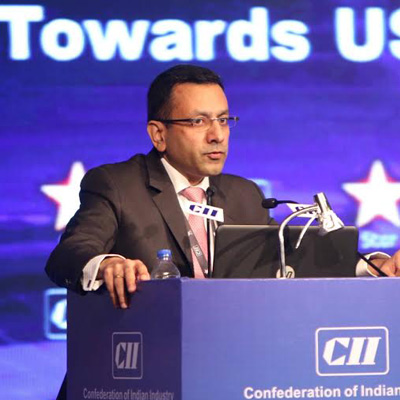
    Speaking at a CII conclave in New Delhi today, Star India COO Sanjay Gupta lamented this fact that saying that from 0.8 per cent of GDP three years ago, the industry had resolved to grow to 1.5 per cent within a decade. However, in the past three years, media as a percentage of GDP has instead fallen by two basis points and the $100 billion dream has continued to remain distant.

    “The biggest hurdle has been the choking of investment. To meet ambitious targets, a business either needs to generate large profits internally, which are then invested back into the business or they grow on the back of external investments – national or international. But the M&E industry boasts of neither,” he said

    CII National Committee on Media and Entertainment and Group CEO, Viacom 18 Group CEO and CII National Committee on Media and Entertainment chairman Sudhanshu Vats, Prasar Bharati CEO Jawahar Sircar, Information and Broadcasting Ministry special secretary JS Mathur and Minister of State for Information and Broadcasting Rajyavardhan Singh Rathore were among those present at the summit.

    During the past 15 years, the M&E sector has barely seen any new entrants and only around $4 billion in foreign direct investment (FDI). To garner $100 billion, the industry needs to invest at least $50 billion over the next decade – something that seems farfetched, given the present circumstances. “With M&E remaining an unattractive destination for investments, investors have no interest to invest in a fragmented and unprofitable business. Despite the 12 per cent year-on-year growth touted for the industry, the sector is paradoxically riddled with a host of unprofitable verticals. For example, sports is a $2 billion industry that could easily grow to around $10 in the next five years. Be it Hockey, Football, Kabaddi or Badminton, the new sporting leagues are being lapped up by the audiences,” Gupta said.

    Yet, the M&E industry has been unable to take off on the back of these investments. “Although Star India has been investing almost Rs 200 crore every season for the past two years, dividends are not commensurate. For this to happen, one needs to scale up the volume of content. In other words, more teams, more players and more days of Kabaddi are required annually to capitalize on this opportunity,” Gupta added.

    “A bizarre challenge confronts us here, however. Although Punjab and Haryana contribute large numbers of Kabaddi players, one cannot add more teams based in either of these two states because they do not have a single indoor stadium that could host a Kabaddi match. In Mumbai, the game is hosted at the NSCI Dome, but the biggest constraint is the availability of this facility for a reasonably long period of time. One venue for a city with more than 1,000 Kabaddi clubs simply does not make sense. In this case, consumer interest and the ability to invest are no hurdles, but the fact that the sporting infrastructure required is simply non-existent. Worse, there are no plans to address this situation,” Gupta continued.

    The movie business is no different. With around 7,000 screens, India has one of the world’s lowest screen densities. Despite breakthrough movies such as Queen, PK or Bajrangi Bhaijaan, revenues are stagnant, although the cost of producing these movies has soared dramatically in the past decade. Therefore, a $2 billion industry that sets a billion hearts racing earns zero profits.

    Even news channels fare no better. Without a robust business model, news channel have no money to invest in their business. Whether English or regional, number one channel or last, none of the channels make any money because none earn any money from subscription. Globally, subscription contributes as much as 60-70 per cent of the total earnings of a news channel.

    Television distribution is roughly a third of the total value of the media industry. In the past few years, immense investments have been made in both direct to home (DTH) and the cable business. But the tragedy of this sector is that even after many years of continued investment not a single company or business makes any money. Since the sector is considered a basic need from a consumer viewpoint, the prices at which content is sold by creators to platforms is regulated – prices frozen in 2003 haven’t changed in the past 12 years. In the same 12-year period, even the price of milk has jumped from Rs 12-15 a litre to Rs 35-40 a litre. 

    “Such anomalies are making the sector bleed. But no one seems to care,” Gupta lamented. “In Delhi, for example, the new government has doubled entertainment tax. Consequently, almost 30 per cent of revenue is paid as entertainment tax. The lack of political alignment and consistency of policy in the sector makes it impossible to plan a sustainable business model.”

    In 2015, where millions across the country receive their daily dose of news from Facebook feed, radio broadcasters can only air news snippets from All India Radio (AIR). “In the US, radio has gone hyper local and people spend an hour daily listening to radio. This gives a fillip to local brands since a quick and cheap platform is available to build their business. In India, conversely, there are a limited number of radio stations and limited content that can be aired – and without any news. It is no surprise then that even in large cities where FM exists, the time spent on radio per person is five minutes. Can any industry on Earth make money in such circumstances?” he asked.

    Gupta concluded by asserting, “Unless we unblock minds, we cannot unblock capital.”

    Accordingly, there is an urgent need to make distribution profitable, position animation as the next wave of export-oriented growth, support a serious scale-up of exhibition screens and sports stadiums and allow content innovation in radio. A hugely attractive pitch for domestic and international investors is required, giving them clarity on the policy environment for the next 10 years and confidence of generating sizeable returns on the investments.

    All stakeholders, businesses, policymakers and regulators need to stop being happy with the status quo and incrementalism. In the new era backed by technology, every sector from automobiles to financial institutions and even grocery shopping have witnessed dramatic growth and serious disruptions on the back of serious flow of capital.

    “M&E too needs to see brave new entrepreneurs, disruptive ideas and unconventional business models but this will only happen if we unblock the capital,” stressed Gupta.

  • Hathway to demerge broadband business to subsidiary company

    Hathway to demerge broadband business to subsidiary company

    MUMBAI: Hathway Cable & Datacom is planning to demerge its broadband business into its wholly owned subsidiary Hathway Broadband Private Limited.


    The company’s board of directors have given in-principle approval to demerge, transfer and vest the company’s entire broadband business into its wholly owned subsidiary, subject to requisite approvals from the shareholders, creditors, High Court(s), Department of Telecommunications, Stock Exchanges, Securities and Exchange Board of India and other applicable regulatory governmental authorities.


    The carving out of the broadband business is aimed at accelerating value creation for Hathway shareholders. The separation will allow Hathway to aggressively focus on the significant growth potential for high speed data and related services in India. Globally, wireline or fixed broadband has emerged as a key driver of technology adoption and overall, GDP growth. India lags most countries including countries in Asia in wireline broadband penetration reaching only about eight per cent  of the potential universe.


    Hathway Broadband intends to take the lead in driving wireline broadband penetration in India and become a key player in Prime Minister Narendra Modi’s Digital India initiative. The company believes that its hybrid fiber coax infrastructure on DOCSIS 3.0 platforms is the most effective and sustainable technology in a price sensitive market like India.


    Hathway Cable & Datacom MD & CEO Jagdish Kumar said, “We are uniquely placed to leverage our leading position in the cable television industry and our brand to provide Indian subscribers with a world class broadband experience. This restructuring recognises that the market dynamics of the broadband business are unique as compared to our parent cable television business. The separation is a step towards increasing the broadband business’ customer focus and market competitiveness and in delivering a superior value proposition to our subscribers.”

  • Sports industry a key to sports development in India: CII-KPMG report

    Sports industry a key to sports development in India: CII-KPMG report

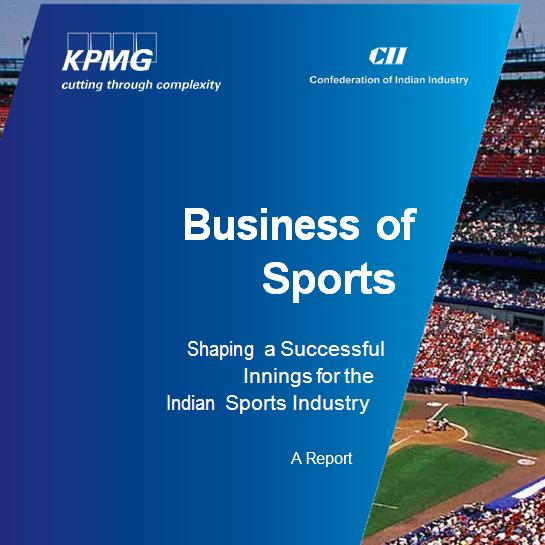
    MUMBAI: KPMG under the aegis of CII released a report titled Business of Sports – Shaping a Successful Innings for the Indian Sports Industry. The report identifies key issues in the sports ecosystem and explores measures to develop a private-investment led sporting scenario in the country – one that helps imbibe a sporting culture and achieve the country’s vision of excellence in sports.


    The report states that resource scarcity in India makes it difficult for the government to attain the above objectives and calls for collaborative efforts of both the government and private sector towards strengthening the sports ecosystem. Long term sustainability of commercial ventures in the Indian sports sector would require sustained audience interest driven by India’s winning performances at international sporting events.


    Sports not only boost the youth and instil pride among citizens, but also facilitate social and economic development of a nation. Sports sector is seen to have a significant socio-economic impact worldwide contributing to 1-5 per cent of national GDP.  This can be achieved by building a sporting culture in the country.


    However, in India sports is not recognised as an industry yet, limiting corporate investments except in cricket and a few other leagues. Being home to various upcoming leagues and the youngest population in the world, India’s sports sector offers tremendous growth potential.


    Ministry of Youth Affairs & Sports Secretary Ajit M Sharan, released the CII – KPMG report at the Scorecard 2014, CII’s National conference on Sports. 


    Earlier CII National Committee on Sports and Group (Asia) president and Coca Cola Company chairman Atul Singh highlighted Industry’s role of ‘going beyond Sponsorships and CSR activity and the need for a policy shift to recognize Sports as an industry’.  He said: “This would help actualise the India@75 vision for broad-basing sports in India, and promote excellence in Sports, by promoting infrastructure development, providing technical support for athletes, as well as grooming talented sportspersons”.


    “Corporate funding in sports may be the answer to ignite sports development in India. The gestation period for realizing return on such investments may be long, but global experience shows us that it could be potentially rewarding”, added KPMG partner in India Jaideep Ghosh.


    Global sports industry is estimated to be worth around $ 600 billion and growing at a rate higher than national gross domestic product rates around the world. While direct sports revenues are dominated by gate collections, sponsorships, media rights, the sports sector may comprise several segments such as sports tourism, sporting equipment manufacturing and retail, sports apparel, recreational sports, high school and college athletics, as well as associated businesses such as sports marketing, sports medicine, venues & infrastructure, hospitality and merchandising.


    Click here for the Key issues and recommendations

  • Havas Media Group India Tops Performance Charts in 2013

    Havas Media Group India Tops Performance Charts in 2013

    MUMBAI: In the midst of a slow-subdued industry and economy where GDP hit a decade low of 4.5%, Havas Media Group India on the other hand has had an exceptional year in 2013.

    Today it is right at the top of the performance charts of media agencies.

    Besides retaining existing clients, Havas Media Group has had strong new business success.

    The company stood at No. 2 Media Agency position in the recently declared Agency Report Card 2013 by Campaign India – garnering 8 out of 10 points. It was also shortlisted for the Agency of the Year 2013 Awards.

    RECMA 2013 Compitches has graded Havas at No.1 in YTD new business achievements in both the 2013 preliminary reports.

    The company took home two wins at the DMA ECHO Awards India 2013 and was on the shortlist at India Radio Forum’s ERA (Excellence in Radio Awards) 2013.

     “2013 proved to be a good year where our state of the art product, our dedication and hard work paid. We thank all our clients for trusting us with their businesses in an otherwise tough year and our media partners for their unflinching support at all times”, said Anita Nayyar, CEO, Havas Media Group India & South Asia.

    “Given our Meaningful Brands research and other ‘thought leadership’ tools, we are confident that we will replicate the success of the past years. Our ‘Digital at the Core’ avatar is in sync with the current market realities and is finding a lot of interest and traction among the clients. At Havas Village, we are consolidating creative and media through our unique Meaningful Connection Planning offering”, she added.

     “Taking from our Meaningful Brands framework we impart holistic solutions to brand marketing which has been the value differentiator. We believe in client delight and will continue to deliver in 2014” explained Mohit Joshi, Managing Director, Havas Media India.


    Havas Media Group bagged significant new businesses – Emirates, Voltas, Amway, Aspiring Minds, Shaadi.com, Wonder Cement, Neo Milk Products, Halonix, Simmtronics, Mobis and Bloomberg TV India amongst others with a roster of clients including Hyundai Motor India, Parle Products Ltd., MTS India, Quikr.com, Taj Hotels, Capgemini India, etc.

    Arena India was also launched under Havas Media Group to take on the responsibilities of the global LG Electronics win.

    The specialist brands Mobext India for mobile solutions and Ecselis for performance marketing are a part of Havas Media Group India.


  • When Arnab vanished, almost

    When Arnab vanished, almost

    What happens when the nation’s most vociferous, most articulate news show anchor goes missing? Well, the nation goes into overdrive, demanding to know the whereabouts of the host it has come to love, or hate, as the case may be.

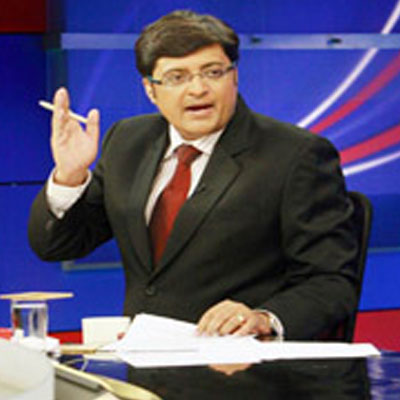
    We’re talking about Arnab Goswami, Times Now Editor-in-Chief and presenter of The Newshour, one of the most widely-watched and debated shows on the channel. Goswami’s disappearing act last week, though brief, was enough to set off a cacophony of telephones ringing at the Times Now office. And much like Arnab’s familiar rant on the show ‘The Nation wants to know’, viewers wanted to know where in God’s name was Arnab?

    Unable to deal with so many telephone calls, The Newshour even put out a tweet saying: “Our viewers have been asking about Arnab. To them, we would like to say that he will be back on Monday at 9pm on show again”. However, the calls continued unabated. A Times Now employee described the number of calls and emails inquiring whether Arnab had taken ill as ‘astonishing’ and that “Only celebrities get such calls, don’t they?”

     
    Forget the cold vibes between BJP prime ministerial candidate Narendra Modi and the party’s tallest leader LK Advani, it was Arnab who was the topic on social media.
     

    The twitterati took to their favourite website with a vengeance, sending out both love and hate tweets for the man who loves to play devil’s advocate on The Newshour. Some went on to draw parallels between Arnab’s absence from The Newshour with that of say a Salman Khan from Bigg Boss or Amitabh Bachchan from KBC. Others made unfavourable comparisons with other news anchors in tweets like: “Barkha Dutt to undergo a face implant to look like Arnab Goswami to boost NDTV TRPs” and even derided tongue-tied panellists as: “Panellists on The Newshour speechless as they’re used to speaking for just 10 seconds with Arnab around…”.

    Still others heaved a sigh of relief as “they could finally turn up the volume of their television sets rather than turn down.” Forget the cold vibes between BJP prime ministerial candidate Narendra Modi and the party’s tallest leader LK Advani, it was Arnab who was the topic on social media. So with such an iconic presence missing, did the channel lose out on TRPs or did other news channels make most of the opportunity. Only next week will tell… that is when the TAM ratings are out…

    The collective impact of regulation and the creeping tyranny of the minority have stifled innovation in our industry and, dare I say, in the economy as whole. At 15 per cent, we may grow at thrice the rate of the GDP but that is more a reflection of our topline economic growth than the health of our industry. At this rate, it will take us another 15 years to hit $100 billion in value and by then, we will be just three per cent of the world media market. This is just unacceptable.

    Till then, both those who love and hate Arnab can sit back and watch his shenanigans as he returns today same time same show on your favourite news channel…